Tag: chat

  • Google rolls out Chat integration to all Gmail users

    Google rolls out Chat integration to all Gmail users

    Gmail has been enriched with a lot of additional functions over the years, as Google is trying to build an entire ecosystem around one of the most popular email apps on the market. Google Meet, Chat, and Rooms are just some of the features that Gmail users can access without having to leave the app.

    Unfortunately, some of the features are only available to those with G Suite accounts. However, Google has decided that at least one of these extra features should be accessible by everyone, not just those with Google Workspace accounts.

    XDA Developers reports Chat integration, a feature that was made available to Google Workspace accounts last year, is now rolling out to those with Gmail personal accounts. Spotted by a Twitter user, the new Chat integration is expected to become available to the rest of Gmail users in the coming days.

    Keep in mind though that to use Google Chat in Gmail, you’ll first need to enable it from the Chat option in the app settings. If the Chat option doesn’t appear in your Gmail for Android app, it means it hasn’t been updated with Chat integration yet.

    Once you enable Chat integration in Gmail, make sure to turn off duplicate chat notifications so that you won’t be notified twice for each chat message. Finally, if you notice any issues with Google Chat, know that the feature is still in beta.

  • WhatsApp is working on encrypted chat backups, disappearing photo feature

    WhatsApp is working on encrypted chat backups, disappearing photo feature

    We’ve got a bit of welcome news from a WhatsApp leak today, especially in this era of constant bombardment with news about data spills and app security breaches all over the place.

    “WhatsApp is working on cloud backups encryption,” the independent but reliable source WABetaInfo claims in the Twitter leak. Apparently, WhatsApp is introducing a new password-protected chat backup feature on their messaging app. You can choose to lock any of your chats behind a password, and not even WhatsApp will have access to these private passwords. Upon reinstallation of WhatsApp, or installation on a new device, you will receive a password prompt to unlock your protected messages.

    Although the chat database is already encrypted, the encryption does not extend to shared media, and according to WABetaInfo, the algorithm is reversible and not end-to-end encrypted.

    The cloud-backup encryption feature should become available on a future update for both Android and iOS.

    This is not the only security update news we’ve got from WhatsApp, however. A few days ago, it was revealed WhatsApp is also testing a function for sending messages which disappear after 24 hours, as well as self-destructing photos—Snapchat-style.

    In order to use any of these features, though, you will have to agree to WhatsApp’s new privacy policy before the May 15 deadline. Failing to do so will make you lose the functionality of the app and all upcoming features.

  • Google Messages gets new features including some from Apple’s Messages app

    Google Messages gets new features including some from Apple’s Messages app

    On Wednesday, Google finally announced a feature we told you was being tested for Google Messages since back in May. Now when Android users receive a chat message, a video, or a photo, they can respond to it in a second. A long press on the message will show a box with animated love, laughter, surprise, sadness, anger, and dislike emoji. The reactions are available on those handsets that have chat features enabled. That is just one change out of a series of five new features now available for the Google Messages app.

    For example, if you have Smart Reply enabled, you can now send an animated sticker instead of using your words. The stickers will show up as you are texting so the perfect one will be ready right away for your use. The suggested stickers are currently available in English only.

    Ever want to personalize a conversation by including a photo that you marked up just for the occasion? Google has a media editor built into Messages. Simply take a photo using the in-app camera and type text or use brushes to paint on the image. You can share these with friends and family so you need to do your best to make them witty.

    Why type a message when you can say it better? Holding down the microphone button inside the compose bar will now allow you to record and send a voice message instead of having to type out a text.  Now let’s say that you’re engaging in an exchange of texts with someone and you want the conversation to continue as a video. Tapping the video call button at the top right of the app will activate Google Duo and allow you to see in real-time the person you have been chatting with.

    Make sure that you have the Google Messages app installed if you want to use all of these new features. Some carriers have their own messaging app, so check to see whether your phone has Google Messages installed. It can be downloaded on your Android phone. To make it your default messaging app, install it on your device, and go to Settings > Apps & notifications > Advanced > Default apps. Make sure that Google Messages is listed as the default SMS app on your phone.

  • More people used Snapchat last quarter although more red ink was spilled

    More people used Snapchat last quarter although more red ink was spilled

    The parent company of social-media app Snapchat, Snap, reported its second-quarter results after the market closed today at 4 pm EDT. During the three months including April, May, and June, Snap reported a 17% hike in revenue year-over-year to $454 million. However, the net loss increased from $255 million during last year’s second quarter to $326 million during the same quarter this year. Snap’s red ink rose 28% from 19 cents per share during the second quarter of 2019 to a loss of 23 cents per share for this year’s second quarter.

    Snapchat had 238 million Daily Active Users during the second quarter, 35 million or 17% more than the 203 million DAUs it reported during the same quarter last year. In North America, Europe, and the Rest of the World, DAUs increased both year-over-year and sequentially during Q2. The number of daily active users also rose year-over-year and sequentially on both the iOS and Android platforms. During the quarter, Snapchat users opened the app nearly 30 times per day on average.

    CEO Evan Spiegel says, “We continued to grow our community and business in a challenging and uncertain environment. I am proud of our team for innovating on new experiences for our community and driving value for our partners, demonstrating the importance of our service in people’s lives. We are grateful that the resilience of our business has allowed us to remain focused on our future growth and opportunity.”

    Some of the Q2 results released by Snap seem promising as the daily average number of users watching Shows rose 40% year-over-year. The daily average of Snapchat users over the age of 35 who were viewing the app’s Discover news feed rose 40% on an annual basis during the second quarter. And Snap also announced expanded multi-year content partnerships with Disney, ESPN, NBC, ViacomCBS, the NBA, and the NFL.

    Snapchat has sure come a long way since it was known as the app that automatically deleted photos in 10 seconds leaving no trace of the X-rated material that was just disseminated. A rumor that circulated in 2013 claimed that Facebook offered $1 billion for Snapchat proving that sometimes the best deals you make are the ones that never get done. On the other hand, Facebook made an amazing deal when it purchased Instagram for $1 billion in 2012. At the time, the latter was known for its camera filters and had about 30 million users. In 2016, Instagram stole Stories from Snapchat; these are visual messages that stay on the app for 24 hours. Instagram now has over 1 billion users and a valuation in excess of $100 billion.

    Snap CFO Derek Anderson said that the early bounce that Snapchat received when the pandemic forced people to stay at home has ended. Anderson also pointed out that things have yet to return to normal making it hard to forecast what the current quarter’s results might be. He stated that “At the onset of widespread shelter in place orders, as people sought to stay connected and entertained from home, we observed an increase in daily active users that informed our initial estimate. This initial lift dissipated faster than we anticipated as shelter in place conditions persisted.

    Advertising demand in Q3 has historically been bolstered by factors that appear unlikely to materialize in the same way they have in prior years, including the back to school season, film release schedules, and the operations of various sports leagues. At this point in time, it is difficult to predict how these factors may impact advertising demand in the remainder of Q3.” The company said that so far in Q3, revenue is up 32% from the previous year, but it expects that growth to slow down through the rest of the quarter, ending up with an increase of 20% in advertising revenue for Q3.

    Investors aren’t grasping the future potential of Snapchat based on the larger flow of red ink. After hours when the report was released, the shares dropped over 6% to $23.20 a share.


  • Hong Kong’s Landmark mall launches ‘e-chat ’ retail initiative

    Hong Kong’s Landmark mall launches ‘e-chat ’ retail initiative

    Hong Kong’s Landmark mall has launched the city’s first luxury “e-chat shopping” service on its mobile app.

    The service is an enhancement of Landmark’s online shopping concierge that enables customers to select, reserve or purchase their favorite items online via WhatsApp, enabling one-on-one communication with in-store sales staff

    Users of the app can receive fashion advice, trend tips and other assistance via the online concierges while browsing more than 500 items available from more than 48 of Landmark’s luxury fashion and lifestyle tenants. Participating brands include Fendi, Bottega Veneta, Tory Burch, Chopard, De Beers, Roger Vivier and R Sanderson.

    Orders and payments can be made directly online, with purchases available for collection in-store or delivered directly to shoppers’ homes or choice of destination in Hong Kong within 48 hours.

  • Google testing iMessage feature for RCS Chat

    Google testing iMessage feature for RCS Chat

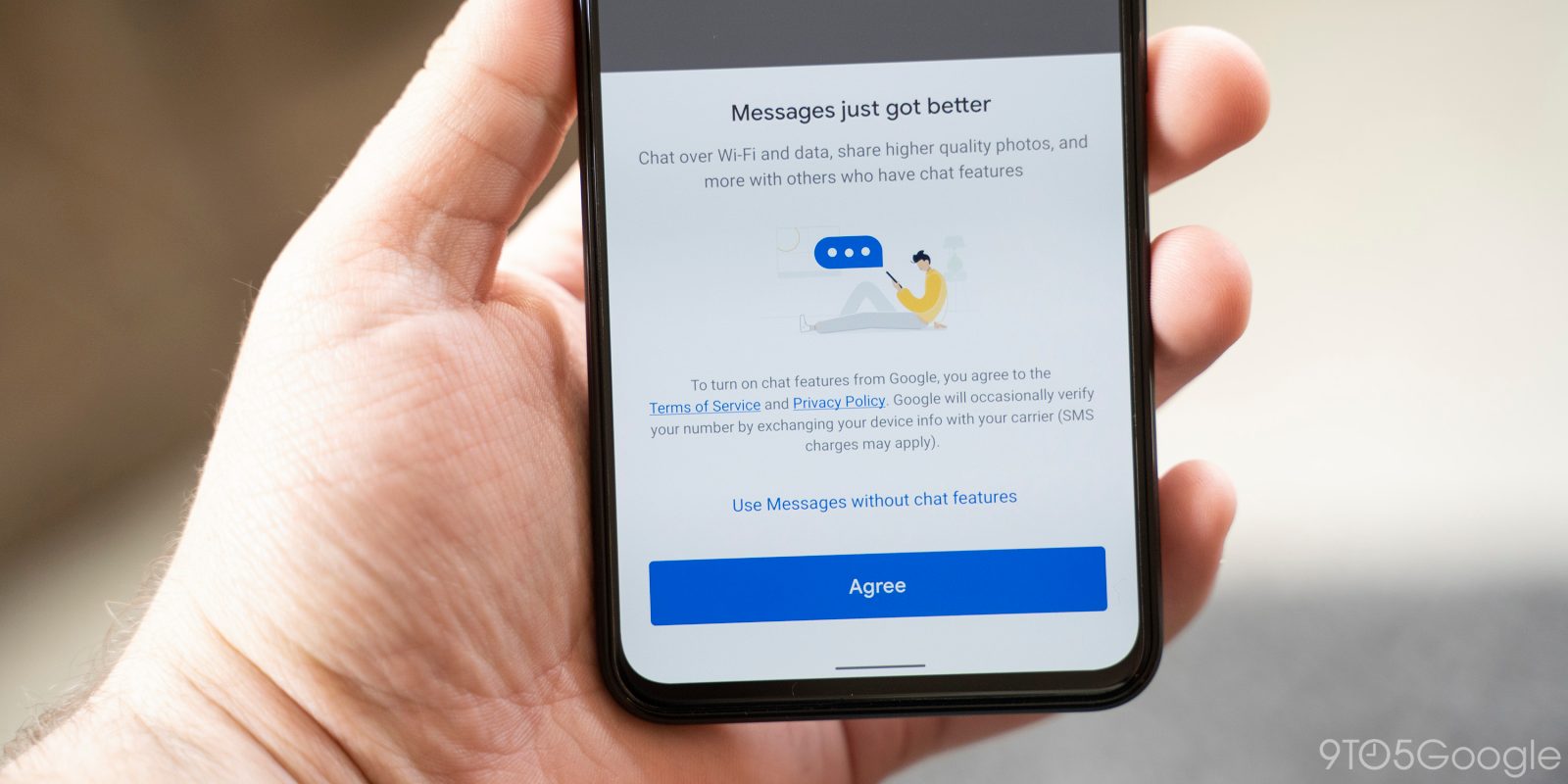
    The four major U.S. carriers are planning to roll out a Rich Communication Services (RCS) app later this year. This allows Android users to send and receive messages via a phone’s data connection instead of its cellular connection. However, Google has already updated its Android Messages app by enabling RCS Chat on all Android phones. Messages between two RCS users can be as long as 8,000 characters instead of 160. Additionally, a user will know if his messages have been read thanks to read receipts that he will receive.
    Other improvements that Android users will see is the ability to share larger video files, host group chats with as many as 100 participants, and have RCS chats run through a Wi-Fi network. Android users have long wanted a messaging platform with some of the advanced features that iOS users have enjoyed with the Messages app. And the carriers plan on monetizing RCS by using the platform to allow companies to reach Android users. We could even see Android users order a Lyft or Uber rideshare through their RCS Chat app.
    Google is testing one feature found in iMessages for its RCS Chats. An Android user sporting a OnePlus 7 Pro on T-Mobile has the beta version of Google’s Messages app installed and discovered that he could respond to a Chat with an emoji reaction. That is a feature available to iOS users via iMessage. Android users engaged in an RCS chat (again, both sides of the convo must be using RCS) long-press on the last message received and they will see seven different emoji that they can choose from for their emoji reaction. The one they select will end up on the lower right side of the last message sent by the other party.
    While Google just sent out a beta update to the Messages app, the emoji reaction has not appeared on all Android phones that were updated. This would seem to indicate that a server-side update is at play here. You can check out whether you have this feature the next time that you’re in the middle of an RCS Chat by long-pressing on a message you’ve received. If you don’t see the options for an emoji response, you do not have it yet. If Google decides to add this as a permanent feature you will eventually have the ability to use an emoji to convey your emotions about a message that was sent to you.
    One thing to keep in mind is that you cannot use RCS Chat if the texting platform you use now is one provided to you by your carrier. For example, Verizon Messages will not work with RCS. If you don’t have the Google Messages app on your Android handset, you can install it from the Google Play Store.
    There are some things that are not perfectly clear from the testing. One is whether there are only seven emojis that will be made available for the user’s reaction. The seven that were seen in the screenshot shared by a Redditor include ThumbsUp, HeartEyes, Laughing so hard you’re crying, Surprised, Sad (with one lonely tear), Anger, and ThumbsDown. That pretty much covers a wide multitude of emotions.
    If you are an Android user, you’ll know whether you are messaging someone using RCS because of the dark blue background of the text balloons. If you’re exchanging messages with someone who is not a phone enthusiast, it is possible that even if you ask them outright, they might have no idea what platform they are using and whether they have RCS.
  • Facebook launches Messenger Coronavirus Community Hub

    Facebook launches Messenger Coronavirus Community Hub

    Facebook, just like many other big companies, are trying to ease the transition to social distancing by offering free services and products. But people need to stay informed about what’s happening in the world even when they’re self-isolating.

    In that regard, Facebook launched recently the so-called Messenger Coronavirus Community Hub, which offers users tips and resources that should help them stay connected to their friends, family, and community in general.

    The new Messenger Coronavirus Community Hub will also act as a tool to prevent the spread of misinformation, as it explains how people can recognize and avoid scams and fake news. Beyond that, Facebook’s new hub is about serving its users as they try to maintain their communities and social connections even when they can’t be together in real life. On top of that, you’ll be able to find accurate and reliable information about COVID-19 developments, as well as tips to help you prevent the spread of fake news.

    Last but not least, the Messenger Coronavirus Community Hub will also act as a communication bridge between important organizations like WHO (World Health Organizations) and CDC (Centers for Disease Control) with Facebook’s developer partners with the purpose of helping these organizations to share information more effectively.
  • Chat-to-checkout app lets shoppers interact real time

    Chat-to-checkout app lets shoppers interact real time

    Tech startup OneDash has unveiled a chat-to-checkout service which eliminates the need to quit a chat session to complete a purchase.

    The OneDash app also enables interactive video so shoppers can connect with retailers in real-time and interact personally.

    Oleksandr Matviishyn, CTO of OneDash, says one of the motivations behind creating the chat-to-checkout app was to address cart abandonment, a major problem for online retailers.

    “With the global growth of video content and the promotion of short videos by platforms such as Instagram and TikTok, we realized that the hidden costs are enormous. We were driven by the idea of making video more affordable and providing the ability for every business to create, distribute, and monetize their video content, while at the same time, improving the production speed of interactive video content,” he said.

    “During the implementation phase, we came up with a few additional ideas like advertising, Messenger commerce, and live streaming to make the platform even more robust.”

    Initially only available for Apple devices, OneDash will be released on the Android Play store in July.

    An early adopter of the app is Vanessa Martinelli Fine Jewellery, whose CEO Vanessa Martinelli, said she was looking for a new way to talk about her creative world and showcase her jewelry.

    “I tell my story through a video and the spectators can interact at the same moment,” she said. “In just one click they receive all the information on a specific featured product and they can purchase it right at that moment, without breaking the momentum.”

  • Chatbots aren’t going away any time real soon

    Chatbots aren’t going away any time real soon

    Much-maligned chatbots are not about to go away anytime real soon, suggests new research.

    Consumer retail spends via chatbots is likely to reach US$142 billion within four years, according to the Juniper Research report, “Chatbots: Vendor Opportunities & Market Forecasts 2020-2024”. It revealed that the industry can expect an average annual growth of 400 percent from last year’s total of just $2.8 billion as a result of software advances in natural language processing, which enable the bots to efficiently process human inputs and more accurately respond to user requests.

    That argument is backed by a senior Microsoft executive, Raj Raguneethan, regional business lead, retail and consumer goods, at Microsoft Asia, said that while the early generation of chatbots may have had their day the concept is not yet dead. He said while the standard chatbot “question-and-order queue format” is gone, advanced deployments of chatbot which can fully integrate into the whole call-centre back office and all the way online will take their place.

    According to the Juniper report, technological advances in the software will see more than 50 per cent of retail chatbot interactions completed successfully by 2024, without the need for human intervention. Eighty per cent of global consumer spend over chatbots will be attributable to discrete chatbots within this period, which are embedded directly into a retailer’s mobile app rather than accessed via a browser or messaging application.

    The research suggests that 70 percent of chatbots in 2024 will be attributable to the Far East and China, with more than $80 billion spent via chatbots in China. This will account for more than 55 percent of global chatbot spend in that year.

  • Facebook launches faster, cleaner Messenger app for iOS devices

    Facebook launches faster, cleaner Messenger app for iOS devices

    It will probably take a lot of time for Facebook to integrate all its services into a single app, and we don’t even know if it will eventually succeed. But every major endeavor starts with a small step, and today Facebook made one.

    The social network giant has just announced it has launched a brand-new Messenger app for iOS devices, which is cleaner, smaller and faster. The new Messenger for iOS is just 1/4 the size of the previous app and contains just 360,000 lines of code, down from 1.7 million.

    Because of that, the app will load twice as fast and will consume a lot fewer resources while it’s running. Another important aspect is that Messenger for iOS is now simpler than ever. Facebook reduced the contact list from 40 versions to just one.

    Although the app has been rebuilt from the ground up, some features might be temporarily unavailable, but Facebook promised to bring them back as soon as possible, so if you notice that something is missing, then you’ll have to wait for developers to add it.

    Facebook has already started the rollout of the new Messenger for iOS, but it will take a few weeks for the app to appear for everyone, so give it time if you don’t see it in the App Store yet.

  • Chatbots still have their place, according to Microsoft

    Chatbots still have their place, according to Microsoft

    The early generation of chatbots may have had their day – but the concept is not yet dead, says a senior Microsoft executive.

    Raj Raguneethan, regional business lead, retail and consumer goods, at Microsoft Asia, told Inside Retail Asia that the standard chatbot question and order queue format is gone.

    “But we have advanced deployments of a chatbot which can fully integrate into the whole call-center back office and all the way online. You can ask questions, it will connect back to your back office systems tell you when your order is going to be delivered, you can ask questions and it tells you that you can buy this product from this store, and here is a promotional offer for you.”

    Early renditions of chatbots often succeeded in only infuriating consumers with clumsy interfaces, irrelevant answers and being all-too-obviously artificial. The end result: consumers often consider old-style chatbots as insincere, an image unsurprisingly transferred to the brand itself.

    “We have seen customers continue to use them,” says Raguneethan. “It’s not so much chatbot, it’s about cognitive services which are fully integrated.”

    He explains that advanced cognitive services-based solutions that are connected to the same system used by customer call centres, can use chatbots that provide real service and assistance to shoppers.

    “So it’s how you deploy and how you leverage them that is the key. If you just deploy them for an FAQ, it’s probably not interesting. But if you really deploy them connecting into all the systems you have, then you are delivering a superior experience.”

    Raguneethan says new-generation chatbot technology should be able to provide customers with real-time, accurate information about the delivery status of a product they have ordered.

    “Or, I should be able to come in and say ‘I want to buy a shirt, I’m looking for this brand’, you should be able to tell me sorry it’s not here in this store, you can order online, or you can go to this store, or we will place an order for you to pick up from this store.”

    “If you deploy chatbot technology in those scenarios, you will definitely see a difference.”

  • Cebu Pacific introduces online chatbot for customer support

    Cebu Pacific introduces online chatbot for customer support

    Philippines-based low-cost carrier Cebu Pacific has launched its online travel assistant, Charlie the Chatbot, to provide 24/7 support for customers.

    Charlie, now available on the airline’s website and official Facebook page, can help answer customers’ frequently asked questions, which include flight bookings, inflight meals, baggage allowance and so on.

    Customers who need help can type in their queries in English one at a time, or choose from a variety of suggested topic options when they open the chatbox.

    Charlie’s capabilities also include assisting passengers with their flight check-in, providing flight itineraries and boarding passes, and sharing details of the airline’s ongoing seat sales and promotions.

    “We’ve always talked about being an enabler of fun and accessible travels, and as part of our thrust to enhance customer experience with the airline, we created Charlie,” said Candice Iyog, vice president for marketing and customer experience at Cebu Pacific.

    “As we officially launch our chatbot, we hope to offer convenience and helpful information within our travelers’ fingertips.

    “Charlie still has a long way to go in terms of learning – just like any chatbot. Rest assured, we are continuously working on expanding Charlie’s knowledge in order to provide our passengers with the best customer experience possible.”

    The airline says Charlie has engaged with more than 393,000 passengers since its inception in January this year.

  • Telegram’s new update includes a powerful new feature for group owners

    Telegram’s new update includes a powerful new feature for group owners

    The Telegram messaging app, with its end-to-end encryption and the ability to host group chats of any size, is more popular overseas. According to Staista, at the end of March, it was the 11th most popular messaging app in the states with 2.67 million unique users each month. As of last month, it was the eighth-most popular global messaging app with 200 million monthly active users.

    Telegram announced an update that includes a new feature called Slow Mode. This allows an admin to lengthen the time a group chat member must wait between sending messages. The time period can range from no delay to as long as one hour between comments. Telegram says that it is offering Slow Mode to “make conversations in the group more orderly while raising the value of each individual message.”

    The update also adds Silent Messages. This is how you can send messages on the sly to contacts you know are attending a meeting, a class, or are in a situation where superfluous noise would be looked down on. So to have a message delivered silently, holding the send button will deliver the message without noise, even if the recipient did not enable Do Not Disturb. This feature is also available for group chats.

    Telegram is also giving group owners the ability to set custom titles. This can be done by going to Group Settings and editing the admin’s rights. In addition, videos now have a thumbnail preview and adding a timestamp to the caption will turn that time into a link. Tapping on the link will start the video from that precise moment. Telegram users sharing a YouTube video can also create a timestamp link as well. Animated emoji is now available and the stickers settings have a new toggle for looped playbacks. When toggled off, a sticker will play once and then remain static.

    Android users will notice a new attachment menu with larger thumbnails for photos and videos, making it easier for them to select media they want to share. Swiping up will reveal the entire gallery. And lastly, the new dark mode in iOS can be changed to create different background hues.

    Telegram users should find the update hitting their iOS or Android phone soon. For those who have yet to try Telegram, it can be downloaded from the App Store or Google Play Store.

  • Telegram update adds location-based chats

    Telegram update adds location-based chats

    What not as popular in the U.S. as it is overseas, the Telegram messaging app offers end-to-end encryption and no limits on the number of people you can chat with or broadcast to at one time. It’s no wonder that protesters of all types outside of the states love to use Telegram. And today, the company announced some changes that will be found in version 5.8 of the messaging app.

    You’ll notice that all new chats have a new button on the top of the screen that says “Add to Contacts.” This feature will allow you to quickly add to your Telegram contacts list a person who has sent you a message on the platform even without knowing their phone number. Another option also available at your fingertips will let you block someone who has sent you a message. And let’s say you’re at a party and want to add someone who you’ve just met to your contacts list. Going to Contacts > Add People Nearby will allow you to exchange information with another Telegram user as long as they are standing right next to you (and have the same feature open on their phone).

    The People Nearby section allows you to find location-based group chats and even create one. As Telegram notes, “This update opens up a new world of location-based group chats for anything from conferences, to festivals, to stadiums, to campuses, to chatting with people hanging out in the same cafe.” The latest version of the app lets you transfer ownership of a group or channel to another Telegram user and toggle on or off message previews for specific chats using the Notable Exceptions feature.

    Those using Telegram on an iOS device can now open the Appearance page to see what a new theme will look like before they apply them. After installing version 5.8, iOS users can choose which icon they want on the home page from four different options. And Telegram users with the iPhone or iPad can arrange to open chats hands-free using Siri shortcuts.

    The new update just hit the Telegram app on our Pixel, so keep your eyes peeled for version 5.8 rolling out now. Telegram can be found in the App Store for iOS or the Google Play Store for Android.

  • Valve launches Steam Chat app for Smartphones

    Valve launches Steam Chat app for Smartphones

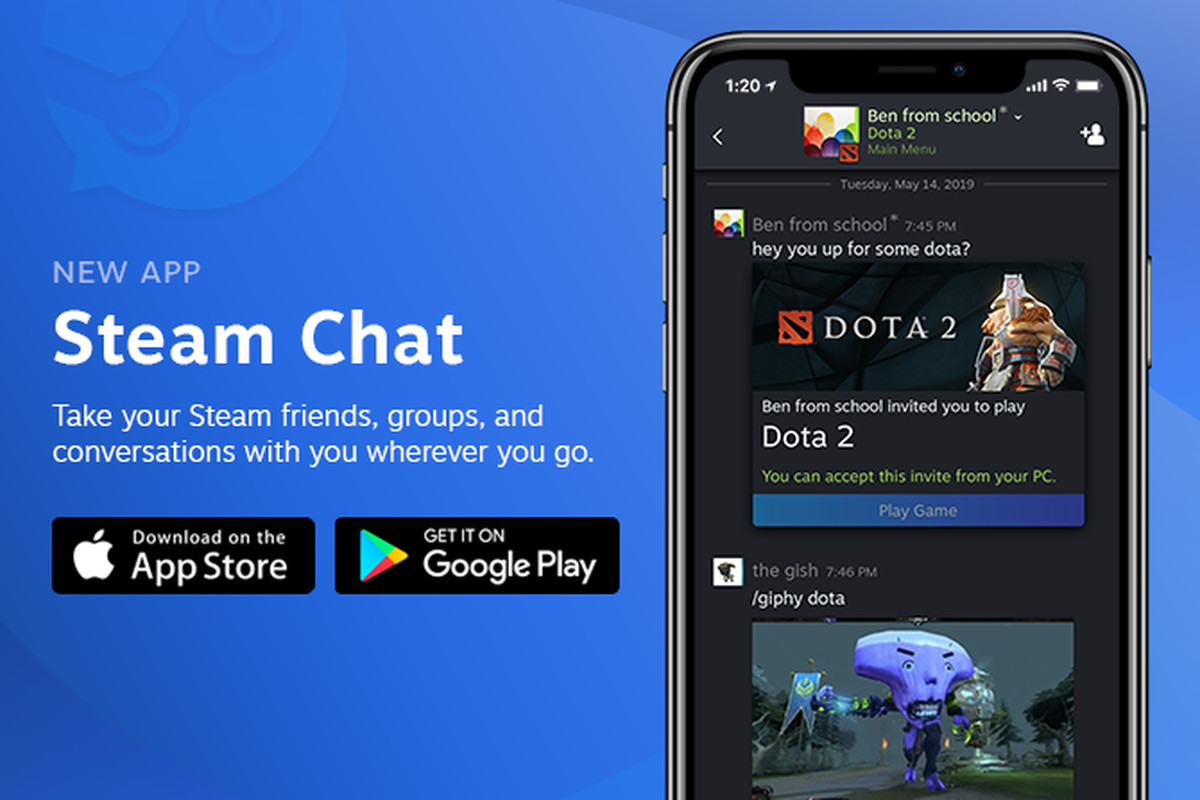
    After bringing Steam Link app to gamers and the option play all games from their Steam library on mobile phones, Valve releases another app that’s meant to modernized Steam chat experience. The new Steam Chat mobile app is now available for free on both Android and iOS platforms via Google Play Store and App Store.

    Among the many features it offers, it’s worth mentioning the customizable notifications, which will prevent users from missing a message or game invite. These notifications can be customized per friend, group chat, and chat channel.

    Obviously, you’ll be able to see who’s in game or online before you start chatting with your Steam friends. Furthermore, Valve promises a rich experience thanks to higher fidelity links, videos, tweets, GIFs, Giphy, Steam emoticons, and more.

    The Steam Chat mobile app will also allow users to add new friends on Steam with a link. You’ll just need to generate an invite link to send via text or email. Last but not least, the app features support for group chats.