Retail News CRM

Tag: chip

  • Qualcomm and Intel comply with the White House ban

    Qualcomm and Intel comply with the White House ban

    As if the maker of the world’s most popular mobile operating system cutting you off wasn’t unpleasant enough for Huawei, US chip makers will also be forced to do so, or risk the wrath of the current White House administration.

    Qualcomm, the maker of all things Snapdragon and 4G/5G modems, as well as Broadcom, a supplier of Wi-fi and other connectivity chips, will also have to deal with the administration’s thinly veiled restrictions for doing business with precisely Huawei.

    Intel is in the mix, too, just when Huawei laptops started getting glowing tech reviews for their design, battery longevity, and value-for-money configurations. Infineon, the German modem maker that Intel bought in 2011, has also received marching orders to cut supply to Huawei effective immediately.

    Needless to say, Huawei makes its own mobile processors and has a 5G connectivity modem already in retail devices, so it wouldn’t be as worried about US chip makers shunning its business. Moreover, it has apparently anticipated the chip ban and stockpiled a three-month supply, but Google’s move is potentially much more devastating as it will be hard to find a replacement.

    Not of the Android system per se, as Huawei has been working on an alternative for a while now, but for the apps it launches. On the plus side, excellent phones like the P30 Pro may become much cheaper now. Morbid humor, but Google isn’t cutting Huawei off completely until Android Q rolls in. That is a few short months from now, though, so it will be interesting to follow China’s reaction to this hostile US attitude and Huawei’s ban as collateral damage in the larger trade war between the two nations.

  • Apple’s 5G iPhone Using Samsung Modems to be released in 2020

    Apple’s 5G iPhone Using Samsung Modems to be released in 2020

    In one fell swoop, Apple cut the Gordian knot of 5G modem supply and it is smooth sailing from here, as it paid Qualcomm undisclosed amount to settle the patent litigation and secure a multi-year contract for 5G iPhones.

    “It’s personal. I don’t see anybody who can bridge this gap,” tipped the WSJ recently about Apple and Qualcomm CEOs relationship but the big boys ironed out their differences quickly. Apple could have tried Intel, Samsung or Huawei, but each of those choices comes with drawbacks.

    Intel threw in the towel on 5G modem development when it learned that Qualcomm resolved its patent issues with Apple, while America’s homeland security institutions would balk at Huawei’s involvement due to geopolitical considerations. Despite all rumors, Huawei company reps said during its Analyst Summit 2019 yesterday that they have “no communication with Apple on 5G modems.”

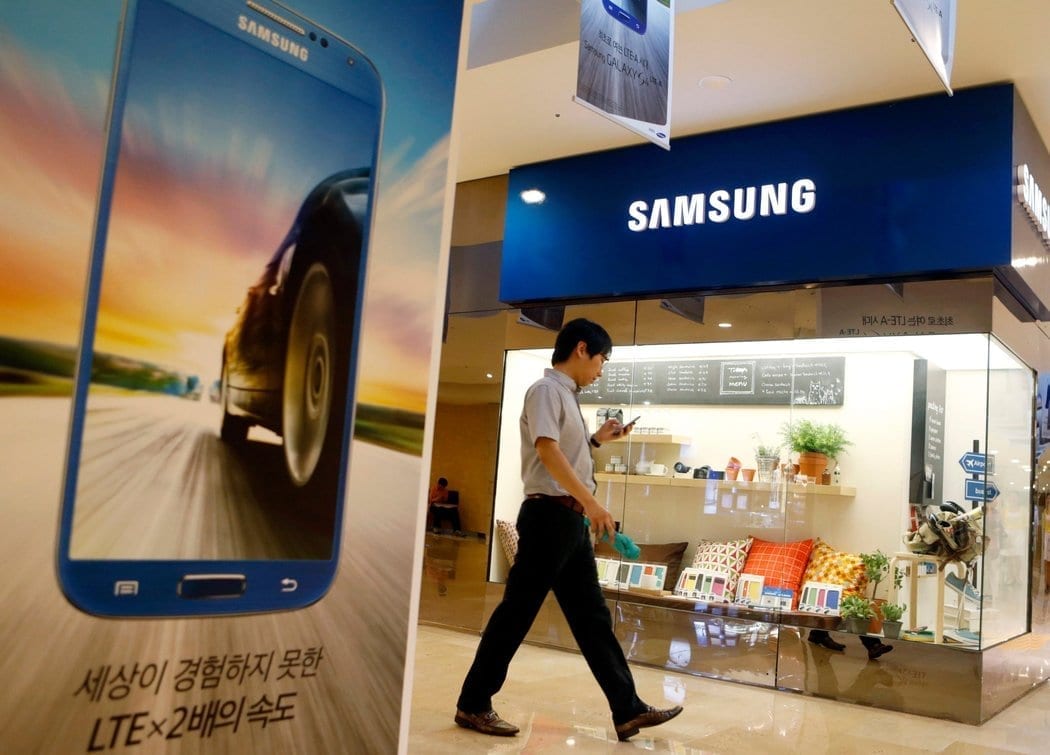
    Samsung, on the other hand, simply can’t make enough of its own 5G modems to exclusively supply huge customer like Apple. It recently declined Apple’s advances for its Exynos 5100 5G modem. Not only does the company need its production for the Galaxy S10 5G that is now shipping, but it could very well need it for the Note 10 Pro, too, and others down the line.  According to one “electronics industry official” there:

    Apple inquired about the supply of 5G modem chip from Samsung Electronics System LSI division. However, we know that Samsung Electronics System LSI answered that the supply volume of its smartphone 5G modem chip is insufficient.

    Well, the most renowned Apple supply chain analyst, Ming-Chi Kuo of TF International Securities, has spoken, and Apple will seemingly hedge its Qualcomm bets with Samsung as a side dish. If you are wondering why, Apple is most likely planning to use the more advanced Qualcomm modems in placed where mmWave spectrum 5G networks are being established, while Samsung’s likely cheaper solution will remain for the sub-6 GHz crowd.

    Apart from all these juicy dual supplier predictions, Ming-Chi Kuo is advocating for a fall 2020 release date of the future 5G iPhones. That’s the same timeframe as before but this time around, Apple is in a position to use the best that the 5G market can offer without triggering the NSA, CIA and other three-letter agencies’ wrath.

    South Korea just launched its nationwide 5G network, with the Galaxy S10 5G being its poster child. Upon the phone’s release there, Korea will have all of its largest networks offering 5G plans. In fact, Korea Telecom announced three 5G price tiers. Among those, there is a “Super Plan” that offers truly unlimited 5G data without speed caps, and this one will go for the equivalent of $70, a pretty good price no matter how you slice it. In fact, the Super 5G Plan is somewhat cheaper than the current unlimited 4G LTE plans in Korea, so the 5G future seems bright, and we are expecting more and more 5G handsets to enter the fray this year, especially towards the tail end of 2019.

    A true nationwide shift to 5G networks is not happening this year in the US anyway, so iPhone users won’t be missing all that much until then. Next year, however, most of the flagship phones of the spring season will probably have some sort of 5G connectivity support, be it with a Qualcomm, Samsung or Huawei modem, and Apple could feel the pinch in that regard.

    Had Apple gone alone in developing a 5G modem, either by acquiring Intel’s wireless modem assets, or starting from scratch, it would have taken it years to reach a sufficiently good unit that is worthy to put in millions of iPhones. Wireless connectivity modems are perhaps the most complex of chips in a phone, and 5G ones require so much filters and software control to avoid interference and still be backwards compatible that this option would have meant either a lot of extra expenses for Apple in order to deliver a 5G iPhone in 2020, or falling behind the competition by launching one that is a cycle or two behind.

    “Apple knows our phone number, we are still in San Diego,” tipped Qualcomm recently, giving a glimmer of 5G hope, and patching thing up with Qualcomm turned to be the smartest solution, just as we expected. There you have it – Apple resolves the bad blood between the companies, Qualcomm is likely to assist it with the 5G push, and Samsung will be its sidekick. The 5G future is so bright, we have to wear shades. According to Kuo, the launch of the 5G iPhone is expected to unleash a big upgrade cycle for Apple, and he upped his forecast for iPhones sold in 2020 to the whopping 200 million, from the current 190 million prognosis.

  • Apple’s main chip supplier on track to make next-generation 5nm silicon

    Apple’s main chip supplier on track to make next-generation 5nm silicon

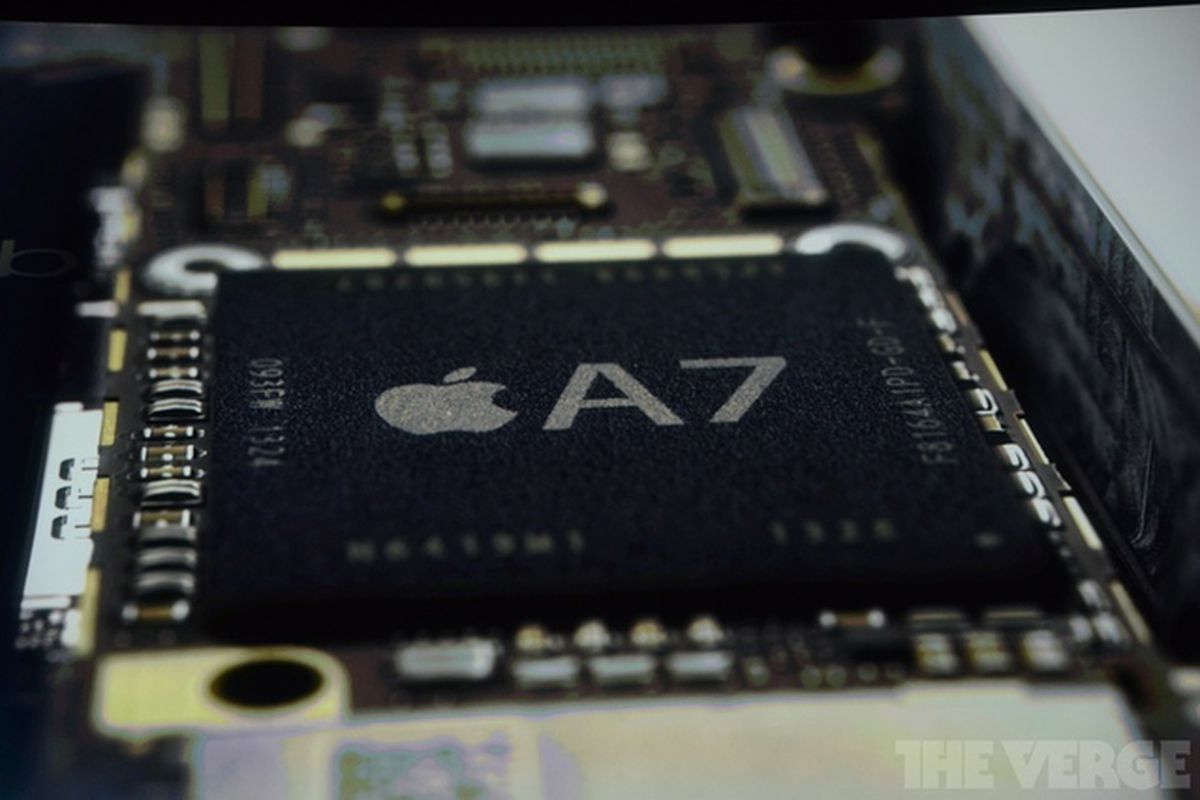
    Semiconductor manufacturers might not be following Moore’s law to a T, but that doesn’t mean they’re not making good progress. Last year, we saw the first mobile chips using the 7nm architecture: Apple’s A12 and HiSilicon’s Kirin 980, followed by the Snapdragon 855. It was expected that processors will remain on that level for a while, considering that producing smaller transistors gets exponentially harder with the reduction of their size.

    Turns out, we might not have to wait as long as we thought. News coming from Taiwan, raises hopes that the next jump might be just a year away. TSMC, one of the world’s biggest semiconductor manufacturers and the main chip supplier for Apple’s own A12 and upcoming A13 SoC, has announced that its design infrastructure for 5nm chips is now available for potential customers to download and start working with.

    This means that TSMC clients, such as Apple, now have the tools to design their next-generation chips. This will likely allow TSMC to secure orders from Apple for at least a couple of years. But what would the new architecture mean for performance?

    Exact gains are hard to predict, but what TSMC says is that it will be able to fit 1.8 times more transistors within the same surface and expects about 15% speed gain in ARM’s Cortex-A72 Cores. Power efficiency will also be higher than that of 7nm chips, which should lead to better battery life.

    TSMC is also proud of the progress it’s making in terms of yield, which was one of the main problems with the mass production of 5nm chips. Using EUV lithography, which replaced FinFET as the size decreased, the company is able to achieve yields comparable to those of its larger nodes when they were at the same stage of development. This means, of course, there’s still work to be done before the chips can enter mass production, but the important takeaway is that the technology is advancing on schedule.

    The potential arrival of the 5nm chips in 2020 is actually good news for Apple. This year we expect to see the major design changes coming with the iPhone 11, leaving the performance improvements to be the major selling point of the 2020 iPhone 11S. In other words, business as usual.

    Of course, other manufacturers will also be able to benefit from TSMC’s developments, but only if they manage to secure any of its production capacity, for which Apple is paying top dollar, we’re sure.

  • Apple could end up buying 5G modem chips from unlikely sources

    Apple could end up buying 5G modem chips from unlikely sources

    You might know that Huawei manufacturers handsets and networking equipment. At the end of last year, it was the third largest smartphone company in the world and the top provider of networking gear. What you might not know is that Huawei designs its own chips. Its Hi-Silicon unit created the Kirin 980 SoC which is currently found powering up the Huawei Mate 20 Pro and the Huawei P30 series. It also will be used to drive the foldable Huawei Mate X. While Huawei designs the chips, they are actually manufactured by TSMC.

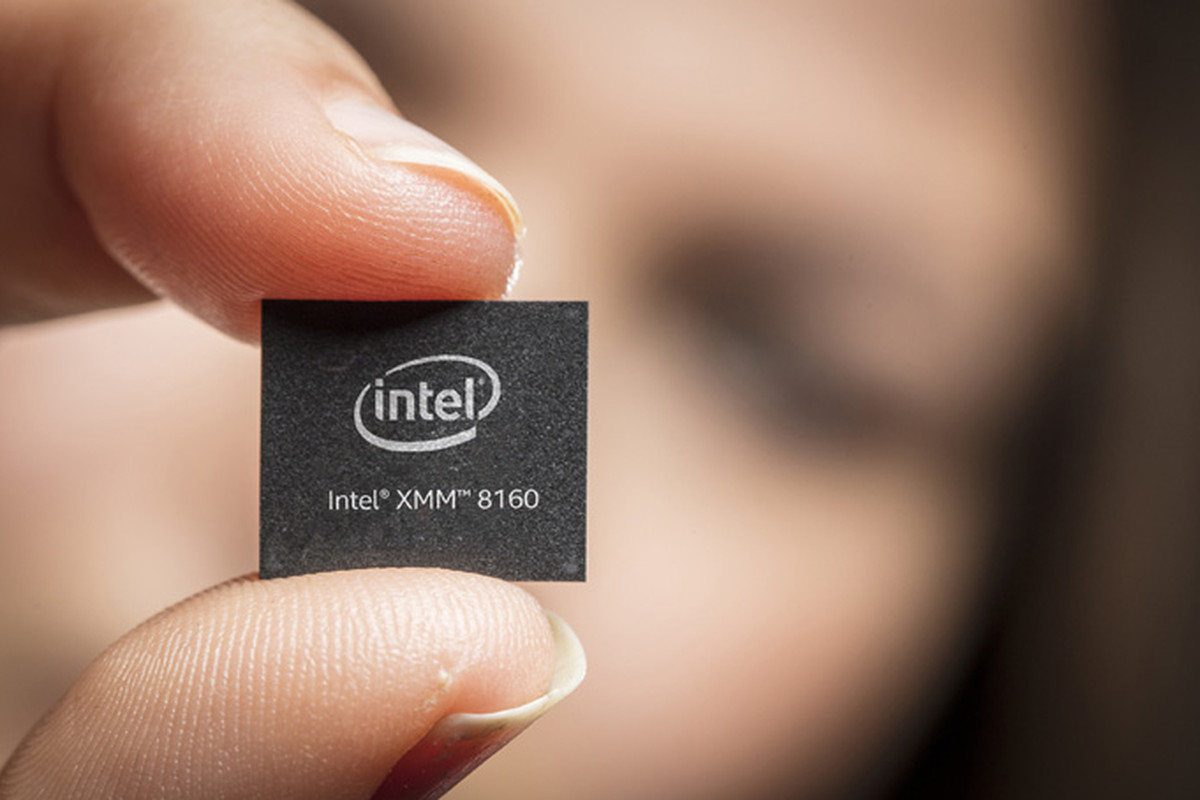
    Now as we discussed yesterday, Apple is relying on Intel to have its XMM 8160 5G modem chip ready in time for its 2020 iPhone models. There are conflicting reports about whether Intel will deliver the component in time, and as a result, we have seen rumors that a 5G iPhone might not surface until 2021. Intel says that it will be shipping the chip later this year, but just in case there is a problem, Apple has found an unlikely friend in Huawei.

    Huawei would consider selling its 5G Balong 5000 modem chips to Apple. The report cites a source who has “knowledge of the situation.” This is an unusual thing for Huawei to do considering that an executive said earlier this year that “Balong is mainly for supporting Huawei’s smart products, such as phones and IoT products, and is currently for Huawei’s internal use only.” It also seems strange considering that Huawei is looking to leapfrog over both Apple and Samsung to become the global leader in smartphones by 2020.

    Apple could turn to Qualcomm, but that is unlikely to happen since both firms have been squaring off in court over patent infringements, antitrust claims, and royalty payments, In fact, a week from today a courtroom in San Diego will host a multi-billion dollar trial between Apple, its contract manufacturers like Foxconn and Wistron, and Qualcomm. At stake are unpaid royalties amounting to billions of dollars. Qualcomm CEO Steve Mollenkopf said back in November that his company was “on the doorstep” of resolving its differences with Apple; we now know that this was not the case.

    While it seems that Huawei would be “open” to selling Apple its 5G modem chips, the other side of the equation is whether the gang in Cupertino would be willing to buy them. During the FTC v. Qualcomm case, Apple supply chain executive Tony Blevins testified that Apple was considering the use of 5G modem chips from Samsung or MediaTekfor the iPhone. Even though Apple currently uses only Intel modem chips for its handsets, Blevins talked on the stand about “Project Antique.” This was Apple’s attempt to find a second supplier to provide it with modem chips. As Blevins noted, “No offense to (Intel) but we don’t want to be single supplier with them. We wanted both Qualcomm and (Intel) in the mix.”

    Huawei’s Balong 5000 modem chip supports both mmWave and sub-6GHz 5G networks. It also is compatible with 4G LTE, 3G, and 2G networks. The important thing about using Huawei’s modem chip is that Apple could get its hands on it earlier than Intel’s chip and have more time to test a 5G iPhone. The Balong 5000 5G modem chip will debut on Huawei’s first phone to support the next generation of wireless connectivity. That device happens to be the foldable Mate X.

    Apple wouldn’t be the only one in such a partnership to benefit. Huawei would get to widen the use of its chips beyond its own devices, and you can just imagine how much revenue would flow into the company’s coffers. It also might play well in China after U.S. government attacks on Huawei have led some Chinese consumers to unofficially boycott Apple products.

    There is a huge unknown here, and that is how the Trump administration might react. Huawei is considered a threat to U.S. national security and allies have been warned not to use Huawei’s networking gear to build out 5G networks. That’s because the law in China requires a company like Huawei to gather intelligence if requested to do so. Considering that we are talking about the modem chip, a major component in communicating voice and data, there are bound to be concerns about the use of Huawei’s component inside the iPhone.

  • Mass-production of a key component for 5G Apple iPhone about to Start

    Mass-production of a key component for 5G Apple iPhone about to Start

    Since Apple is expected to use Intel’s modem chips for its first batch of 5G compatible phones, we know not to expect 5G iPhones to be unveiled until 2020. That’s because Intel won’t have its modem chip for the next generation of wireless connectivity ready until next year. The chip maker will start work next quarter on the engineering projects it needs to finish in order to begin volume production of its 5G modem.

    Once Intel starts producing its 5G modem chip in 2020, it will compete with Qualcomm’s recently introduced Snapdragon X55 5G modem, the sequel to the Snapdragon X50 5G modem. The latter will be used on most 5G Android phones this year. It also will go up against the 5G modem chip designed by MediaTek. All three firms could still be in play to become the source of Apple’s 5G modem chips, although previous reports state that Intel has already won this battle. Sources cited in yesterday’s report say that Intel will also continue to generate revenue from selling its 4G modem chips to Apple for older iPhone 7 and iPhone 8 models.

    Apple currently has a contentious relationship with Qualcomm; over the last few months both sides have squared off in court on issues ranging from patent infringement to royalty payments. Just yesterday, one judge ruled that Qualcomm owed Apple close to a billion dollars in royalty payments it promised to rebate to the company (the actual figure is much. much higher says FOSS Patents). Meanwhile, a jury in San Diego yesterday ordered Apple to pay Qualcomm $31 million after it found Apple liable of infringing on a trio of patents. On March 26th, the International Trade Commission will rule on Qualcomm’s request for an exclusion order to be imposed on the iPhone in the U.S. Such an order would result in a sales and import ban of certain iPhone models in the states.

    Intel is now the exclusive source of modem chips for the iPhone

    During yet another trial held earlier this year (FTC v. Qualcomm), the plaintiffs called Apple supply chain executive Tony Blevins to the stand. Blevins testified that Apple had looked at sourcing 5G modems from Samsung and MediaTek. There is also speculation that Apple will design its own 5G modem chip, like it does for the A-series chipset that powers the iPhone and iPad. But Apple isn’t expected to deliver an in-house 5G modem design until 2021 at the earliest.

    From 2011 to 2015, Qualcomm was the exclusive provider of modem chips for the iPhone. That changed in 2016 when both Qualcomm and Intel were responsible for the modems used on the iPhone. That continued in 2017, and last year Apple sourced all of the modem chips used on the latest iPhone models from Intel.

    Apple is expected to be among the last major phone manufacturers to produce a 5G phone. Samsung has already unveiled its first 5G phone, which will debut on Verizon this summer. Huawei, LG and Oppo should also release 5G phones this year, and the 5G Moto Mod will allow the Motorola Z3 to support the faster data speeds as soon as Verizon flips the switch to turn on its new service. Once 5G service becomes more mainstream and less a curiosity, the faster data speeds will allow new services and businesses to be created. With 5G, a television series that takes 10 minutes to 15 minutes to download over 4G, will take only seconds to complete the task.

    When the industry transitioned from 3G to 4G LTE, Apple was one of the last major manufacturers to deliver a phone that supported the then-new technology. While a number of Android phones were launched with support for 4G LTE in 2011, Apple didn’t release a 4G LTE enabled handset until 2012’s iPhone 5.

  • Samsung to sell latest generation chip to IBM

    Samsung to sell latest generation chip to IBM

    Samsung Electronics will supply next-generation microprocessor chips to IBM, which will use the chips for artificial intelligence (AI) computing and cloud system applications, both companies said Friday. The product Samsung will manufacture for IBM is a seven-nanometer processor made by extreme ultraviolet (EUV) lithography technology. The seven-nanometers in the name refers to the width of the circuit through which electricity flows on the semiconductor. The dominant product until recently has been rated 10-nanometer.

    Narrower circuits ensure faster data processing speeds, less electricity consumption and higher area efficiency, with more transistors printed on a given amount of silicon, the base material for semiconductors.

    IBM said in a press release that the strategic partnership will position the two companies to lead “the new era of high-performance computing specifically designed for AI.”

    “IBM selected Samsung to build our next generation of microprocessors because they share our level of commitment to the performance, reliability, security and innovation that will position our clients for continued success on the next generation of IBM hardware,” said John Acocella, vice president of Enterprise Systems and Technology Development for IBM Systems.

    The U.S. company and Samsung have been research and development partners for 15 years.

    For Samsung, the deal is a significant milestone for its foundry business, which is to manufacture semiconductors for external clients that do not have chip fabrication facilities.

    The company is already a leader in DRAM and NAND memory chips, but it is now focusing on the fast-growing foundry market. IHS Markit estimates that the subsector will grow an average of 7.8 percent a year until 2021-which is faster than 5.3 percent expected for DRAMs and 6.1 percent for NANDs.

    Samsung is currently ranked global No. 4 among foundries, with a market share of less than 10 percent. As it works to climbing up the rankings, a client like IBM helps establish momentum for future deals.

    In February, Samsung signed a foundry deal with Qualcomm to supply seven-nanometer processors for 5G mobile devices. The company hopes the seven-nanometer processor chip will help as it works to expand its market share. It is currently one of two foundries known to manufacture the product. The other is Taiwan Semiconductor Manufacturing Company, the No. 1 semiconductor foundry with more than 50 percent market share.

    Samsung’s EUV lithography technology was developed earlier this year to mass produce seven-nanometer semiconductors, as the conventional way of printing circuits on 10-nano chips were not sophisticated enough to print thinner circuits.

    A new facility specializing in EUV lithography is under construction at Hwaseong, Gyeonggi, and is due for completion by the second half of next year. Samsung also revealed in May that it plans for the mass production of three-nanometer processors by 2020.

  • Myanmar to adopt UnionPay chip card standard

    Myanmar to adopt UnionPay chip card standard

    The Myanmar Payment Union (MPU) and UnionPay International (UPI) have teamed up to implement a common UnionPay chip card standard in the country.

    The UnionPay chip card standard complies with the global EMV chip card standard, and will be adopted by all banks operating in Myanmar.

    The UnionPay chip card standard emerged as the standard of choice after stringent reviews and extensive consultations with Central Bank of Myanmar, MPU and major financial institutions.

    Following this process, the current local chip card standard will be upgraded to the new UnionPay chip card standard which offers enhanced security. In addition, Myanmar Cardholders can use the locally-issued cards featuring the new UnionPay chip card standard anywhere in the world, at locations that accept the EMV chip card standard.

    This announcement follows the implementation of the UnionPay chip card standard in Thailand and Laos in recent years. In Thailand, all new locally-issued debit cards will need to carry the Thai Bank Chip Card Standard starting August 2017, a chip card standard licensed by UPI and run by Thai Banker Association. In Laos, UnionPay provides support for the construction, operation and maintenance of the local payment systems.

    In 2016, UPI also signed a chip card standard licensing cooperation agreement with seven other member institutions of Asian Payment Network. With this collaboration, the major switch networks in Singapore, Thailand, South Korea, Malaysia, Indonesia and the Philippines will adopt UnionPay chip card standard in card acceptance and card issuance.

    Acting Chairman of MPU, U Zaw Win, said, “The UnionPay chip card standard brings the Myanmar Payments industry to the world stage as it complies with international EMV standard and security. The tripartite collaboration on the chip standard lays a strong foundation for innovation, value-added services, and increase convenience for Myanmar consumers and businesses.”

  • Delphi, Mobileye to use Intel chip for self-driving car system

    Delphi, Mobileye to use Intel chip for self-driving car system

    Auto parts maker Delphi Automotive and Israeli technology firm Mobileye NV will put an Intel Corp chip at the heart of their joint effort to produce self-driving vehicles by 2019, the companies said on Tuesday.

    The move is a boost for the world’s largest semiconductor maker, which is also working with German luxury car maker BMW AG and Mobileye on self-driving technology, but has not been able to extend its broader chip dominance into the fast-emerging autonomous vehicle market.

    Companies from Alphabet Inc’s Google to Uber Technologies and Tesla Motors are vying to put autonomous vehicles on U.S. roads, which could radically reshape transportation across the country.

    Intel will provide a “system on chip” for autonomous vehicle systems that Delphi and Mobileye are developing together, Glen De Vos, Delphi’s vice president of engineering, told Reuters.

    UK-based Delphi is talking with established automakers and new or niche vehicle companies, such as manufacturers of commercial vehicles, interested in automating vehicles, De Vos said.

    The system Delphi and Mobileye are developing would likely come to market first in a commercial vehicle operating in a limited area, such as an airport shuttle or a ride-hailing service, DeVos said.

    Delphi is testing autonomous driving technology in vehicles in Singapore. By the end of this year, Delphi hopes to choose a city in the United States to launch a test fleet of self-driving cars during 2017, De Vos said. The company is also looking for test site in a European city.

    “We are looking at Pittsburgh and Boston and a couple of others,” De Vos said. Pittsburgh is where ride services company Uber is testing its own self-driving vehicles.

    Delphi and Mobileye will stage a demonstration of their self-driving vehicle system at the Consumer Electronics Show in Las Vegas in January, De Vos said. That system will use current, electromechanical laser imaging technology, or LIDAR, that is too expensive for use in consumer vehicles, he said.

    Delphi is also working with Quanergy Systems, a maker of solid-state LIDAR systems, De Vos said.

  • Broadcom to acquire Brocade for $5.9b

    Broadcom to acquire Brocade for $5.9b

    Chipmaker Broadcom has announced a $5.9 billion deal to acquire network equipment manufacturer Brocade to enhance its position in the storage networking business.

    The acquisition, which involves $5.5 billion in cash and the assumption of $400,000 in debt, includes the assets of Ruckus Wireless, which Brocade purchased for $1.2 billion earlier this year.

    But Broadcom has announced that it intends to divest Brocade’s IP networking business, which includes wireless and campus networking, data center switching and routing, as well as SDN. This represents a substantial part of the Ruckus Wireless assets.

    Broadcom anticipates that Brocade’s remaining fiber channel storage area network (FC SAN) business will contribute around $900 million to the company’s ebitda for its 2018 fiscal year.

    “This strategic acquisition enhances Broadcom’s position as one of the leading providers of enterprise storage connectivity solutions to OEM customers,” Broadcom president and CEO Hock Tan said.

    “With deep expertise in mission-critical storage networking, Brocade increases our ability to address the evolving needs of our OEM customers. In addition, we are confident that we will find a great home for Brocade’s valuable IP networking business that will best position that business for its next phase of growth.”