Retail News CRM

Tag: chip

  • Qualcomm Snapdragon 875 will be unveiled in December

    Qualcomm Snapdragon 875 will be unveiled in December

    Qualcomm has started sending out invites for a two-day digital event that will kick off on December 1 and although the chipmaker hasn’t confirmed this, it’s a given that the Snapdragon 875 will be unveiled during the Tech Summit.

    Per rumors, the Snapdragon 875 will be Qualcomm’s first SoC to employ the 5nm manufacturing process. It is expected to have one Cortex-X1 core, three Cortex-A78 cores, and four Cortex-A55 cores. The chip will reportedly be manufactured by Samsung.

    We can expect it to be around 20 percent more power-efficient than the Snapdragon 865. Performance could get a 10 percent boost.

    The Snapdragon X60 5G modem will apparently be integrated within the chip.

    It is not clear at the moment if Qualcomm also plans to announce other chips during the event. The company is apparently working on its first 6nm chip dubbed Snapdragon 775G which will succeed the Snapdragon 765G. Another 5nm silicon and an entry-level chip are also in the pipeline reportedly.

    A couple of reports suggest that Snapdragon 875 powered phones will be faster than the iPhone 12. While Android users may rejoice at the prospect, the alleged high price of the chip could prevent some Android manufacturers from equipping their 2021 phones with the SoC.

    For instance, the grapevine has it that only the highest-end Samsung Galaxy S21 model will be powered by the Snapdragon 875, and the rest will either employ an in-house chip or settle for the Snapdragon 865.

  • Tipster says that Samsung will soon introduce the chips that will power the Galaxy S21 line

    Tipster says that Samsung will soon introduce the chips that will power the Galaxy S21 line

    A tweet disseminated on Saturday by tipster MauriQHD (@MauriQHD) says that the next Exynos chipset will be introduced by Samsung at any moment. According to the tweet, the Exynos 2100 will be the successor to the Exynos 990. A recent Geekbench test of the Exynos 2100 allegedly running on the Galaxy S21+ had a single-core score of 1038 and a multi-core score of 3060. That pales in comparison to the Geekbench results recently posted for the Apple A14 Bionic SoC that will power the iPhone 12 series. That chip, tested while powering an iPad, had single-core and multi-core scores of 1583 and 4198 respectively. At this point, it is possible that the Exynos 2100 score is based on a test using unoptimized firmware so we need to hold off on making any direct comparisons.

    Both the A14 Bionic and the Exynos 2100 will be manufactured using the 5nm process which means that more transistors will fit inside a square mm allowing for greater performance and improved energy consumption. Like the Exynos 2100, the Qualcomm Snapdragon 875 chipset will be manufactured by Samsung Foundry using the 5nm process node. We could see the new Snapdragon flagship chip unveiled in December during the Snapdragon Summit.

    The tipster also said in his tweet that the Exynos 2100 should be “way better” than the Exynos 990. Considering that the latter was manufactured using the 7nm EUV process (EUV is a technique used to mark wafers with very thin ultraviolet beams allowing more transistors to be placed inside a chip) compared to the more powerful and energy-efficient 5nm Exynos 2100, this is pretty much a sure thing.

    The Exynos 2100 and Snapdragon 875 will both be found in consumer devices starting early next year. The A14 Bionic, which Apple already introduced when it unveiled the fourth-generation iPad Air last month, could be in consumers’ hands as soon as later this month as the chip will power both the aforementioned tablet and the 2020 iPhone models, both of which are expected to be released later this month. Another 5nm chip manufactured by TSMC this year is Huawei’s Kirin 9000 chipset. The chip will power the Huawei Mate 40 line and the Huawei Mate X2 foldable model. But due to a change in U.S. export regulations, Huawei can no longer get deliveries of this chip sent to it by the foundry. The Chinese manufacturer has been building up a stockpile of Kirin 9000 chips that it will be able to use until the inventory is all gone.

    So how will the Exynos 2100 compare with the Snapdragon 875? Both 5nm chipsets, as we pointed out, will be manufactured by Samsung, but Twitter tipster Ice Universe said back in August that while Samsung will close the gap, the Snapdragon 875 will still be the superior chip (note that the Exynos 1000 is a rumored name for the same chip that we are calling the Exynos 2100). While Samsung is moving to AMD for the GPU on its new component, Qualcomm is debuting the 7 series for the Adreno GPU found inside the Snapdragon 875.

    The Exynos 2100 SoC will most likely make its debut on the Samsung Galaxy S21 line which will probably include the Galaxy S21, Galaxy S21+, and the Galaxy S21 Ultra. If Samsung sticks with tradition, the Exynos 2100 will power the vast majority of Galaxy S21 series models; those in the U.S., China will get the version of the phone powered by the Snapdragon 875. However, for the Galaxy S20 line this year, Samsung equipped all of the units shipped everywhere but Europe with the Snapdragon 865. That humiliated Samsung employees in the company’s home country of South Korea. But the Exynos 990 just did not have the performance capabilities that Sammy’s executives were hoping for. This year, we could see Samsung return to the Exynos chip for its first flagship line of the year in most markets

  • Snapdragon 875 will likely be followed by Snapdragon 775G, a 6nm flagship-rivaling chip

    Snapdragon 875 will likely be followed by Snapdragon 775G, a 6nm flagship-rivaling chip

    The upcoming Qualcomm Snapdragon 875G will also be available in a Plus variant, claims tipster Roland Quandt. The Snapdragon 875G is apparently codenamed SM8350 and it is internally known as Lahaina. Based on what we know so far, it will be made using Samsung’s 5nm EUV process as Taiwan Semiconductor Manufacturing Company (TSMC)’s entire 5nm capacity has been reserved by Apple for the A14 Bionic and other proprietary chips.

    5nm chips are expected to be around 25 percent smaller and 20 percent more power-efficient than 7nm SoCs. And, of course, we can also look forward to performance gains. The Snapdragon 875 will likely feature an Arm Cortex-X1 core, three Cortex-A78 cores, and four Cortex-A55 cores. The X60 5G modem will presumably be embedded within the chip.

    If history is any indication, Qualcomm’s upcoming flagship chip will be unveiled in December.

    It will probably be refreshed in July 2021, and per Quandt, the overclocked version is internally known as Lahaina+. The leaker also mentions the rumored Snapdragon 775G, which will likely succeed the Snapdragon 765G that powers midranges 5G-enabled phones like the OnePlus Nord and LG Velvet. The chip will reportedly not share the stage with the Snapdragon 875, and we can expect it in early 2021.

    The chip is reportedly going to be a massive upgrade over its predecessor, and will probably have more in common with the Snapdragon 875 than its 7-series stablemates. According to today’s leak, it will support 120Hz displays, 12GB LPDDR5 RAM, and 256GB UFS 3.1 storage.

    This chip will reportedly be based on a 6nm architecture and it will have a 40 percent faster CPU and 50 percent better graphics than the Snapdragon 765G. This may make it more power-efficient and faster than the Snapdragon 865.

  • Qualcomm’s newest 5G chipset is announced

    Qualcomm’s newest 5G chipset is announced

    Qualcomm unveiled a new 5G enabled chipset from the Snapdragon 7-Series. The Snapdragon 750G enables “truly global gaming” according to the San Diego-based company, along with True HDR gaming (with 10x brighter colors), and on-device AI. The chipset supports both sub-6GHz and mmWave 5G; the latter delivers signals that travel far, easily penetrate structures but provide slower 5G download data speeds than what is available from mmWave 5G signals. The Snapdragon 750G chip offers some features from Qualcomm’s Snapdragon Elite Gaming that allow for smooth gameplay with low latency.

    The Snapdragon 750G comes with the Adreno 619 GPU providing users with as much as a 10% hike in graphics rendering compared to the Adreno 618 GPU found on the Snapdragon 730G. Qualcomm states that the new chipset delivers “stunning, life-like imagery” and the 5G support allows users to play multiplayer contests or stream games through their smartphones using 5G cloud gaming platforms.

    AI tasks will be handled by the fifth-generation Qualcomm AI Engine supporting voice translation, smart camera, and video, AI-enhanced gaming experiences and advanced AI-based imaging. The AI Engine handles up to 4.0 Trillion Operations Per Second (TOPS), a 20% improvement compared to Snapdragon 730G. The chip is powered by the Kryo 570 CPU core allowing for a 20% hike in “enhanced user experience,” also compared to the Snapdragon 730G. Integrated into the Snapdragon 750G is an AI-based audio and voice communication suite that allows users to hear speech loud and clear despite dogs barking in the background, the sounds of construction, loud traffic, and more.

    The Qualcomm Spectra 355L Image Signal Processor produces noise-reduced sharp images and 4K HDR videos can be recorded. The chip will work with image sensors supporting a pixel count of up to 192MP.

    The CPU runs at a clock speed as fast as 2.2GHz and works with Bluetooth 5.1. It is Wi-Fi 6 ready and does work with a 120Hz rapid refresh rate on screens with a resolution of FHD+. The maximum display that can be driven by the Snapdragon 750G is QHD (1440p) with a standard 60Hz refresh rate. The chip is manufactured using an 8nm process node and the first devices to be powered by the chip are expected to be commercially available at the end of this year.

    Verizon’s Chris Emmons, executive director device and product marketing, says, “As Verizon continues to lead 5G innovation with 5G Ultra Wideband and our soon-to-be-launched 5G Nationwide network, we know we can count on technology partners like Qualcomm Technologies to provide the superior solutions for sub6 and mmWave spectrum needed to run the next-generation 5G devices our customers rely on.”

    >Andreas Bussmann, program manager 5G Devices Deutsche Telekom, states that “Deutsche Telekom and Qualcomm Technologies have a strong strategic collaboration in driving innovation together. We are excited as this announcement will further help scale 5G for everyone and improve the overall consumer experience.” Lastly, Quanxin Wang, general manager of product and technology, Xiaomi International, said that “Xiaomi is committed to developing cutting-edge devices to address the growing consumer demand for 5G. We are proud to work with Qualcomm Technologies to launch the first commercial smartphone based on the latest Snapdragon 750G to consumers.”

    Speaking of 5G, the Snapdragon 750G offers peak speeds of up to 3.7Gbps (download) and 1.6Gbps (upload) with 5G connectivity. Peak LTE speeds are up to 1.2Gbps (download) and 210Mbps (upload).

    So now we know that a Xiaomi branded 5G handset will be the first powered by the Snapdragon 750G when the integrated circuit is released later this year.

  • Qualcomm’s new Snapdragon gaming chip is official and we know which phone it will debut on

    Qualcomm’s new Snapdragon gaming chip is official and we know which phone it will debut on

    On Monday, Qualcomm introduced its latest gaming chipset the Snapdragon 732G. This is a sequel to the Snapdragon 730G and comes with an upgraded GPU and CPU compared to the older chip. The 2.2GHz clock speed on the Kryo 470 CPU Prime core on the previous generation’ chip is surpassed by the 2.3GHz clock speed on the Snapdragon 732G and the “bolstered” Adreno 618 GPU delivers a 15% improvement in graphics rendering.

    The first phone to use the Snapdragon 732G will be an upcoming Poco phone set to be released in India soon. Kedar Kondap, vice president of product management at Qualcomm Technologies said that the “Snapdragon 732G will deliver a powerful gaming experience, sophisticated on-device AI, and superior performance. We’re excited to work with Poco on the new Poco smartphone powered by the enhanced Snapdragon 732G globally.”

    Poco’s head of products, Sam Jiang, states, “We are extremely excited about the upcoming Poco smartphone and our collaboration with Qualcomm Technologies that allowed us to create the first device on the market with the latest Snapdragon 732G Mobile Platform. We believe the device will set a new benchmark in the mid-range category, completely redefining the relationship between a phone’s price and its capabilities.”

    The Snapdragon 732G allows certain “players to experience seamless and ultra-realistic gameplay in over a billion shades of color” thanks to True HDR Gaming. Thanks to the Qualcomm Game Jank Reducer and Physically Based Rendering (PBR), gameplay is more realistic and smooth. The Snapdragon X15 LTE modem delivers download LTE speeds of up to 800Mbps. The Computer Vision ISP will support images from a single camera of up to 192MP and 4K HDR Video at 30fps.

  • Google helps you remember what you searched for with search terms chip feature

    Google helps you remember what you searched for with search terms chip feature

    Last year, Google updated the tab overview in Chrome with a nifty Grid Layout. Now comes another improvement to the search experience of the browser. The new feature, still in an experimental phase, adds a little search term chip on each tab in the preview screen showing the term you’ve used to get there.

    To activate the new feature, you should head to the chrome://flags page (type it in the address bar) and search for the Tab Grid Layout field. Tap on it and choose Enabled Search term chip from the drop-down menu. You have to Relaunch the browser to activate the change. After you complete these steps, whenever you perform a search through Chrome’s address bar, the search term will appear on the thumbnail for the tab of the page you opened. The feature works with other search engines as well, as long as you’re using the Chrome browser.

    The little term chip appears at the bottom of the thumbnail when you tap on the tab switcher icon. If you tap on the search term itself, you will go back to your search results on Google. This feature can be extra useful if you like to open dozens of tabs in Chrome and sometimes wonder what brought you to a specific page.

  • Apple could use powerful 5nm A14X Bionic chipset for 5G iPad Pro in 2020-2021

    Apple could use powerful 5nm A14X Bionic chipset for 5G iPad Pro in 2020-2021

    When Apple introduced the new 2020 iPad Pro tablets last month, we were surprised to find that instead of an A13X Bionic chipset, both the 11-inch and 12.9-inch models were equipped with the A12Z Bionic SoC. Apple quickly stated that the new slates deliver the “highest performance ever in an iPad.” And that may be true, but a tweet disseminated the other day by TechInsights states that the GPU architecture used on the A12Z Bionic is the same as the one used on the A12X Bionic found inside the 2018 iPad Pro units.

    The A12X Bionic and A12Z Bionic are both built with the same 7nm process node by TSMC and have the same octa-core configuration (four high-performance CPU cores and four energy efficient-cores) and memory. The only difference is that seven of the eight GPU cores on the A12X Bionic were activated while all eight are activated on the A12Z Bionic. Both chips have a maximum CPU clock speed of 2.49GHz.

    >Perhaps we will see an A13 Bionic chipset on a new iPad mini that might surface later this year. TF International’s Ming-Chi-Kuo says that in 2020, Apple will unveil a 7.9-inch iPad mini tablet sporting a mini-LED display. The latter will be used as Apple slowly transitions to micro-LED screens; mini-LED screens are similar to AMOLED displays in that they offer a wide color gamut and do not require the use of a backlight. This means that like OLED panels, the color black is created by turning off pixels in the appropriate area. Dark Mode reverses the look of the UI from black text on a white background to white text on a black background; this prevents the blinding white background from hurting and irritating eyes in a dark room or at night. Those using Dark Mode will see a slight improvement in the battery life of their tablet since pixels turned off do not draw on the device’s battery.

    If Apple decides to introduce a new iPad mini this fall, it would probably be equipped with the same A13 Bionic that currently powers the iPhone 11 family. After all, Apple equipped last year’s iPad mini with the A12 Bionic.

    There is speculation that Apple decided not to create an A13X Bionic for the new iPad Pro units because outside of adding the LiDar depth sensor and the improved camera setup on the back, nothing on the updated units require additional heavy lifting by the processor. It also gives Apple the chance to design its first chipsets for the iPad that will be produced using TSMC’s 5nm process node (the A14X Bionic).

    The 2020 iPhone 12 series will be powered by the 5nm A14 Bionic. With an 84% increase in transistor density, the A14 Bionic could contain as many as 15 billion transistors each compared to the 8.5 billion shoehorned into the A13 Bionic and the 10 billion transistors found in the A12X Bionic. While this much power would seem to be overkill for a new iPad mini, it would be perfect for the next variant of the iPad Pro. And the latter could be coming later this year if Apple decides to ship a 5G version of its top-of-the-line tablet. The A14X Bionic could make its debut on 5G versions of the 11-inch  and 12.9-inch iPad Pro tablets.

    While tablet sales have been struggling for years, the iPad had a couple of good quarters during the second half of fiscal 2019. And thanks to the coronavirus outbreak, game-playing teens, those taking classes or working from home, and people who enjoy viewing streamed content are now in the market to buy their first tablet or to upgrade an older model.

  • Apple’s chip supplier sees strong demand for 5G phones

    Apple’s chip supplier sees strong demand for 5G phones

    Despite the current coronavirus pandemic, trade wars, and uncertain economic times ahead, the world’s largest independent foundry sees strong growth in the near future. Taiwan Semiconductor Manufacturing Company (TSMC) is sinking billions more into its chip manufacturing business. Last week, the firm’s board of directors announced that it was going to budget $6.74 billion to build more fabrication facilities and increase its production capacity.
    Last month, the company said that it planned on spending between $14 billion and $15 billion for capital expenditures this year up from the $10 billion-$11 billion it spent last year. The 2020 spending includes $2.5 billion for its 5nm process chips and $1.5 billion for its 7nm chips. Let’s back up a bit. What TSMC does is manufacture chips for companies that design their own components but don’t have the facilities to actually produce them. That includes some of your giant tech companies like Apple, Qualcomm, Huawei, and others. Last week, TSMC said that the coronavirus has not led to any reduction in orders from its customers.
    The process node refers to the number of transistors that can fit into a dense area like the inside of an integrated circuit. The lower the number, the larger the number of transistors inside a chip. That is important because as more transistors are placed inside an IC, the more powerful and energy-efficient it is. For example, Apple’s current A13 Bionic SoC containing 8.5 billion transistors is manufactured using TSMC’s enhanced 7nm process.
    Starting in the middle of this year, the company will begin producing 5nm chips and the Apple A14 Bionic will reportedly be packed with 15 billion transistors making it more powerful and energy-efficient than the A13 Bionic. This means that Apple could have a huge performance lead over most Android phones when it releases the 2020 iPhone models later this year. That’s because the Qualcomm Snapdragon 865 Mobile Platform, the chip that will power most flagship Android phones in 2020, is manufactured by TSMC using its 7nm process node. The only Android phones that could match the 2020 iPhone’s performance this year could be the Huawei Mate 40 line. That’s because Huawei’s 5nm flagship chipset is due to roll off of TSMC’s assembly line later this year.
    Speaking of the A13 Bionic, Apple recently said to increase the production of the chip due to higher than expected demand for the iPhone 11 series. Additionally, the upcoming iPhone 9, due to be introduced next month, will employ the A13 Bionic chip. Reliable TF International analyst Ming-Chi Kuo believes that Apple could sell as many as 30 million iPhone 9 units this year and each one will be powered by the A13 Bionic chip. With a price rumored to start at $399 and up, the iPhone 9 will look just like the iPhone 8 but will sport the more powerful chip and include a 50% hike in memory from 2GB to 3GB of RAM.
    As for the A14 Bionic, TSMC sees strong demand for the new 5G iPhone models that will be powered by this SoC. The latest rumor has Apple releasing four iPhone models this year including the iPhone 12 (5.4-inch screen, dual cameras), iPhone 12 Plus (6.1-inch screen, dual cameras), iPhone 12 Pro (6.1-inch screen, triple cameras) and the iPhone 12 Pro Max (6.7-inch screen, triple cameras). All four will be equipped with the TSMC built Snapdragon X55 5G modem chip which supports both sub-6GHz and mmWave 5G spectrum. That means the new iPhones will be compatible with the 5G signals disseminated by all four major U.S. wireless carriers.
    Last year, the semiconductor industry had its worst year since the dot com collapse of 2001 with revenue declining 12% on an annual basis to $412 billion. But TSMC’s decision to throw billions into new production facilities indicates that at least one of the industry’s leading firms is confident that the business is turning around.
  • Qualcomm has started a price war that will impact prices of 5G phones

    Qualcomm has started a price war that will impact prices of 5G phones

    A report issued by reliable analyst Ming-Chi Kuo says that a price war has begun in the 5G chip industry. Kuo’s note to clients, says that Qualcomm has cut pricing for its mid-range 5G Snapdragon 765 chipset after sales of high-end 5G smartphones fell short of expectations. By cutting the cost of its mid-range 5G chips to manufacturers, Qualcomm is trying to get these firms to produce more affordable 5G handsets to entice the public. The price cuts will also extend to Qualcomm’s low-end chips as well.
    As a result of the price cut, Kuo sees MediaTek facing pricing pressure for its Dimesnity line of 5G chips three to six months earlier than expected. Instead of achieving gross margins of 40% to 50% for its chips as the consensus expects, the analyst sees MediaTek’s margins dropping to less than 30%-35%.
    Qualcomm has reportedly cut the price of the 5G Snapdragon 765 chipset (SD7250) by $25-$30 to $40. MediaTek’s Dimensity 1000 5G chipset costs the company $45-$50 to make and it sells for $60-$70 per chip. As a comparison, Qualcomm’s top-of-the-line Snapdragon 865 Mobile Platform with the Snapdragon X55 5G modem costs $120-$130 and has not had its price cut. The company’s flagship chip outperforms the MediaTek Dimensity 1000 and Qualcomm sees no need to drop the price of its high-end chipset.
    The recently announced MediaTek Dimensity 800 chipset, which supports only the slower sub-6GHz 5G signals, is due to be released in May. This chip, developed for lower-priced 5G handsets, is expected to be sold at a price of $40-$45 per chip and costs MediaTek $30-$35 to make. There might not be that much room for MediaTek to maneuver in response to Qualcomm’s pricing actions.
    The pricing shakeup could cost MediaTek some business. The company’s major 5G chip customers like Oppo, Vivo, and Xiaomi are said to be switching orders for 20 million to 25 million chips from MediaTek to Qualcomm. These components are scheduled to be shipped next month.
    The Snapdragon 765 SoC is equipped with eight Kryo 475 CPU cores running at a clock speed as fast as 2.4GHz. It features an integrated Snapdragon X52 5G modem that supports both mmWave and sub-6GHz 5G signals, and sports the Adreno 620 graphics processor. There is also a Snapdragon 765G for gaming phones that is equipped with an enhanced version of the GPU offering 10% faster graphics rendering compared to the standard Snapdragon 765 chipset.
    The Dimensity 1000 also has an integrated 5G modem and is packed with four performance Cortex-A77 CPU cores running at a clock speed of up to 2.6GHz. Four efficiency Cortex-A55 CPU cores are also included. This SoC is equipped with the ARM Mali-G77 MC9
    Qualcomm’s salvo would have less of an impact on the market if MediaTek’s margins were a little wider. A larger margin would allow the company to take a hit and still thrive. But the Dimensity 1000 brings $10-$25 per chip to MediaTek’s bottom line and the Dimensity 800 garners profits of $5-$15 per chip.
    MediaTek’s Dimensity 1000 and Dimensity are manufactured by TSMC using its 7nm process. The Snapdragon 765/765G will be manufactured by Samsung using its 7nm process. The flagship Snapdragon 865 Mobile Platform is also a 7nm chip, and it also will be produced by TSMC. Qualcomm originally planned to have Samsung’s foundry roll out the Snapdragon 865, but the chipmaker was concerned about allowing Samsung to get a peek under the hood of its top chipset for 2020.
    Chip prices might also run into pressure halfway through this year when TSMC starts producing more powerful and energy-efficient 5nm chips. Among the first to be manufactured will be Apple’s A14 Bionic and Huawei’s next high-end IC expected to be named the Kirin 1020.
  • New chipset announced today will make 5G easier for consumers to afford

    New chipset announced today will make 5G easier for consumers to afford

    Chip designer MediaTek impressed many when it introduced its new flagship Dimesnity 1000 SoC. The chipset includes an integrated 5G modem chip that supports both sub-6GHz and mmWave 5G, and LTE. Additionally, the Dimensity 1000 has four high-performance Cortex-A77 CPU cores running at a clock speed of 2.2GHz and four Cortex-A55 efficiency CPU cores running at 2GHz. ARM’s Mali-G77 MP9 graphics chip is included. The chip is manufactured by TSMC using its 7nm process.
    MediaTek unveiled the Dimesnsity 800, a chipset designed for lower priced 5G handsets. This will help bring the faster 5G data speeds to those who normally wouldn’t be able to afford a device that supports the next generation of wireless connectivity. While the company claims that the integrated 5G modem chip is more efficient when it comes to battery life, there is a catch. The modem on the Dimensity 800 does not support mmWave 5G signals, which deliver the faster 5G data speeds. This means that devices powered by the MediaTek Dimensity 800 SoC can connect in the states with T-Mobile’s nationwide 5G network and AT&T’s consumer 5G network. However, Verizon’s 5G mmWave network is out.
    The Dimensity 800 will feature four Cortex-A76 CPU cores running at a clock speed up to 2GHz and four Cortex-A55 CPU cores also running up to 2GHz. MediaTek says that with four performance cores, demanding gaming applications will launch faster. The chip supports displays carrying a resolution up to FHD+ (1080p) with a refresh rate of up to 90Hz. It will drive a quad-camera setup with a primary sensor up to 64MP and handle camera-based AI, facial detection, automatic noise reduction, and white balance.
    Qualcomm’s Snapdragon 765 Mobile Platform and its gaming enhanced Snapdragon 765G might have only half the number of performance cores as the Dimensity 800 sports, but it does support some higher-spec’d phones. Qualcomm’s chips handle both sub-6GHz and mmWave 5G signals. The Snapdragon 765/765G will be equipped with a pair of Cortex-A76 CPU cores, one running at 2.3GHz, the other at 2.2GHz. Six Cortex-A55 cores running up to 1.8GHz are also included. The component also supports QHD+ resolution displays (1440p), 192MP camera systems and video at 4K.
    MediaTek hopes to have its flagship Dimensity 800 inside devices launching in the first half of this year. TL Lee, the head of MediaTek’s wireless business unit, said, “MediaTek already launched its flagship 5G smartphone solution, the Dimensity 1000, and with the 800 series 5G chipset family, we are bringing 5G to the mid-tier and mass market. Everyone should have access to great technology. The Dimensity 800 Series will power the New Premium segment for 5G, bringing consumers flagship smartphone features and performance at mid-range price points.”
  • Qualcomm’s anti-competitive business practices get support from the Trump administration

    Qualcomm’s anti-competitive business practices get support from the Trump administration

    Back in May, Judge Lucy Koh (of Apple v. Samsung fame) made a ruling that still might change the way Qualcomm sells its chips to phone manufacturers. The judge ruled in favor of the Federal Trade Commission and against the chipmaker after a 10-day non-jury trial was held at the beginning of the year. The FTC argued that Qualcomm’s “no license, no chips” policy is anti-competitive.
    Other Qualcomm policies attacked in court included the way royalty payments are calculated based on the entire price of a phone instead of the chip being used. And Qualcomm was also cited for not licensing its standards-essential patents (SEP). These are patents that must be licensed by rivals to guarantee that their products meet technical standards; as a result, they are supposed to be licensed on a fair, reasonable and non-discriminatory fashion (FRAND). In its defense, Qualcomm says that the argument of royalties is an issue of contract law that should not be heard in a forum designed for antitrust cases. And it also says that there is nothing wrong with getting compensated for the money it spends on R&D.
    In her decision, Koh said that Qualcomm needs to renegotiate its current contracts with phone manufacturers. In her written decision, Judge Koh said, “Qualcomm’s licensing practices have strangled competition in the CDMA and the premium LTE modem chip markets for years, and harmed rivals, OEMs, and end consumers in the process.” As you might expect, Qualcomm has appealed the decision and even managed to get the Ninth U.S. Circuit Court of Appeals to issue a stay. This prevents Qualcomm from having to follow Koh’s orders until all of its legal options have been exhausted. The firm did have a compelling reason to request a stay; it would be a waste of time and energy to renegotiate all of its contracts only to win on appeal and reverse all of the changes made.
    And speaking of the appeal, the FTC is actually on the opposite side of the Trump administration. Before Judge Koh released her decision, Trump officials asked her to limit any penalties that she was planning to impose on the chipmaker. And now that the case is being heard in appeals court, the administration is concerned that a Qualcomm loss will negatively impact America’s global leadership in technology and national security. And the Justice Department, under the leadership of U.S. Attorney General William Barr, has contradicted the FTC by stating that there is nothing anti-competitive about Qualcomm’s business practices. That is unusual because the FTC and the DOJ both handle antitrust cases. The Justice Department is joined by the Defense Department and Energy Department which told the appeals court that a ruling against Qualcomm could affect the country’s military and its energy and nuclear infrastructure.
    But perhaps even more important to the Trump administration is the possibility that should Qualcomm lose on appeal, it will negatively impact the rollout of 5G in the states. The next generation of wireless connectivity will initially deliver download data speeds 10 times faster than 4G LTE and will lead to the creation of new businesses and industries. The nations that harness 5G first will have a big advantage in the global economy. Qualcomm’s Snapdragon X50 and X55 modem chips allow smartphones to connect to 5G networks. The former is compatible with the super zippy ultra-high mmWave spectrum while the latter works with both mmWave and sub-6GHz  airwaves.
    But as far as the FTC is concerned, Qualcomm and the Justice Department have not shown how Judge Koh’s ruling “threatens national security in any way — or how those considerations could justify allowing Qualcomm to continue to violate” U.S. antitrust law. The 9th circuit appeals court, located in San Francisco, could start hearing arguments in February and issue a ruling sometime in 2020. For Qualcomm, there is plenty at stake.
  • Qualcomm could unveil its next-gen flagship chip on September 24th

    Qualcomm could unveil its next-gen flagship chip on September 24th

    There is speculation that the chip designer will unveil the Snapdragon 865 Mobile Platform. Expected to be found inside high-end Android devices next year, the new chipset will be manufactured by Samsung using its 7nm EUV process. The smaller the process number, the more transistors fit inside the chip making it more powerful and energy-efficient. And extreme ultraviolet lithography (EUV) is a more precise method of marking up a chip die for transistor placement. Qualcomm’s current top-of-the-line-chipset is the Snapdragon 855+, an overclocked version of the Snapdragon 855 Mobile Platform that offers a 15% improvement in graphics capabilities.

    However, there could be another reason for the announcement. As it turns out, some new Android handsets are expected to be unveiled on Tuesday including a pair from Xiaomi (Xiaomi Mi 9 Pro 5G and Xiaomi Mi MIX Alpha), the Sony Xperia 5 and the Realme X2. Taking this into consideration, the buzz around the water cooler suggests that one or more of these devices could be the reason for the teaser that Qualcomm posted yesterday for the upcoming event. All of the aforementioned phones will employ a Snapdragon SoC with the 855+ expected inside the Mi 9 Pro 5G and possibly the Mi MIX Alpha. The regular Snapdragon 855 SoC will power the Xperia 5 with the Snapdragon 730G chip driving the X2. There must be a connection between the number “3” used in Xiaomi’s teaser and the three smartphone manufacturers we’ve been discussing in this paragraph.

    While Samsung is doing the fab work and manufacturing the Snapdragon 865, Qualcomm will be returning to Taiwan Semiconductor Manufacturing Company (TSMC) for 2021’s Snapdragon 875 Mobile Platform. The world’s largest independent foundry, TSMC rolls chips off the assembly line for companies that design their own chips, but don’t have the facilities to make them. For example, both Apple and Huawei design their own SoCs like the A13 Bionic and Kirin 990 respectively. But both rely on TSMC to churn out the chips they’ve designed.
    As for the Snapdragon 865, traditionally Samsung’s new Galaxy S phones have been the first with a global release to sport the latest Qualcomm Snapdragon chipset, and that most likely won’t change next year. The very first phone to be powered by the Snapdragon 855 Mobile Platform was the Xiaomi Mi 9, but this device was not offered worldwide.
    2019 has been quite a tumultuous year for Qualcomm. It started with the chip designer in the midst of a feud with Apple and both companies were getting ready to square off in court multiple times. Qualcomm also was the defendant in an antitrust case brought by the FTC. The non-jury trial in January was presided over by Judge Lucy Koh (of Samsung v. Apple fame). During the proceedings, Apple and other firms testified against Qualcomm’s sales practices including its “No license, no chips” policy, the computation of royalties based on the retail price of a phone, and its failure to license its standards-essential patents in a Fair, Reasonable and Non-Discriminatory (FRAND) manner.
    Things took a turn for the better in April (as far as Qualcomm is concerned) just as a court battle with Apple was wrapping up; the two outfits agreed on a settlement. All legal action between the companies was dropped and Apple paid Qualcomm an undisclosed amount believed to be $4.5 billion; in return, Apple received a six-year license (with a two-year option) and a multi-year chip supply agreement.
    And so Qualcomm sailed along, but only for a month. In May, the verdict was in and Judge Koh ruled that Qualcomm had engaged in anticompetitive behavior. Losing this court case could force the chip designer to overhaul its current business practices. And while Judge Koh refused to grant Qualcomm a stay that would allow it to continue the status quo until all of its appeals have been exhausted, last month the Ninth U.S. Circuit Court of Appeals granted the stay.
    If Qualcomm does not get Judge Koh’s ruling overturned on appeal, it faces the long, complex and difficult task of renegotiating all of the current contracts it has with phone manufacturers. The chip designer asked for the stay because it did not want to go through this process, win on appeal, and then have to come to terms on a whole new set of contracts.
  • 2021’s Snapdragon 875 will reportedly be produced by TSMC using its 5nm process

    2021’s Snapdragon 875 will reportedly be produced by TSMC using its 5nm process

    he Qualcomm Snapdragon 865 is expected to be the chip designer’s next top-of-the-line mobile chipset designed for 2020’s high-end handsets. For those unaware, Qualcomm designs its chips but doesn’t own the facilities to manufacture them. For the last two years, it has turned to the world’s largest independent foundry, Taiwan Semiconductor Manufacturing Company (TSMC), to manufacture the Snapdragon 845 and 855 chipsets. Before that, Samsung made the Snapdragon 820 and 835 SoCs.
    Qualcomm is returning to Samsung to produce the Snapdragon 865. The South Korean tech giant will produce the chip using its 7nm EUV process. The 7nm figure relates to the number of transistors that are shoehorned into a chip. The lower that number, the higher the number of transistors that can fit inside a chip; the more transistors in a chip, the more powerful and energy-efficient it is. Moore’s Law, an observation made by Intel co-founder Gordon Moore back in 1965, calls for the number of transistors in integrated circuits (like chips) to double every other year. To show you how far we’ve come, the Texas Instruments OMAP 3430 chip that powered the Motorola DROID back in 2009 was built using the 65nm process!
    The EUV part of 7nm EUV stands for extreme-ultraviolet lithography. This is a technology that uses ultraviolet beams to more precisely mark up the silicon wafers used to create chips with patterns. These patterns determine where the transistors will be placed inside a chip, and when short wave-length beams (like the ones used with EUV) are used to etch these patterns on a wafer, more transistors can be stuffed inside it. Using EUV is expected to provide a performance bump of 20% to 30% and a 30% to 50% improvement in energy consumption for the Snapdragon 865. Those are not numbers to take lightly. The Snapdragon 865 Mobile Platform will probably debut on the Samsung Galaxy S11, which most likely will be unveiled around February 24th when the 2020 MWC show in Barcelona kicks off. The chip was recently spotted on the Geekbench benchmarking site where it produced a multi-core score of 12,496. That compares to the score of 10,946 produced by the Snapdragon 855+ Mobile Platform. The latter is an overclocked version of the Snapdragon 855.
    While 2020’s Snapdragon 865 will be made by Samsung, the report reveals that there will be two different versions of the chipset codenamed Kona and Huracan. Both will support LPDDX5 memory chips (RAM) and the UFS 3.0 flash memory. However, one of them will be integrated with a 5G modem chip and the other one won’t. Last week, Huwaei released a teaser for its upcoming Kirin 990 SoC that will be unveiled on September 6th. The component, expected to power the manufacturer’s next high-end Mate 30 phone line and the foldable Mate X, will also have an integrated 5G modem chip. This removes the need for a separate component and should also lead to improved battery life on devices that employ these chipsets.
    Sina.com says that for 2021’s Snapdragon 875 Mobile Platform, Qualcomm will once again call on TSMC to produce the component. The report adds that the Snapdragon 875 chipset will be manufactured using TSMC’s 5nm process. If that is indeed the case, the chip will sport 171.3 million transistors per square millimeter. Thus, the component should be more powerful and energy-efficient than its predecessor.
    So will Moore’s Law continue to be valid? Last year Samsung revealed a roadmap leading to 3nm production by 2022 and TSMC is also looking for ways to stuff more transistors inside chips. The latter is examining ways to change the packaging of chips and is also looking at stacking transistors vertically instead of side-by-side.
  • Japan okays one shipment of material Samsung needs for its most advanced chips

    Japan okays one shipment of material Samsung needs for its most advanced chips

    The term Free trade has become an oxymoron. Just look at the mess that is taking place with the U.S. and China. As we’ve pointed out countless times, the tariffs that the U.S. is imposing on imports from China are import taxes that are paid by U.S. corporations. The latter can decide to eat some or all of the additional taxes lowering their profit margins or pass along the higher costs to U.S. consumers. China is retaliating by devaluing its currency, the Yuan. This makes Chinese goods cheaper to buy in the states but will force Apple to raise the price of the iPhone in China.

    This isn’t the only trade war going on. Japan and South Korea have been fighting since last October. That’s when a South Korean court ruled that South Koreans forced to work for Nippon Steel during World War II must be compensated for their labor. Calling the decision “unthinkable,” Japanese authorities said that the issue had already been decided when the two countries restored diplomatic ties in 1965.

    To retaliate against the court decision, Japan started restricting the export to South Korea of materials like fluorinated polyimide and resist, and high-purity hydrogen fluoride (HF). These are used in the production of chips used inside smartphones, and for smartphone displays, respectively. Beginning last month, companies looking to ship these materials to South Korean phone manufacturers like Samsung and LG need to apply for permission to do so. Receiving such approval could take as long as 90 days. That’s because Japan has removed South Korea from its “white list” of trade partners that have fast-track trade status. South Korea plans on discussing the removal of Japan from its “white list” but has tabled the matter for a future time. It does plan on tightening regulations on some of Japan’s exports into South Korea for materials used in other industries besides tech.

    For the first time since announcing the restrictions, Japan has approved a shipment of EUV photoresists to South Korea. Samsung uses this material to help it mask or map out designs on the silicon that ends up in chipsets. These show the placement of billions of transistors and EUV, or extreme ultraviolet lithography allows for more precise designs to be made. This leads to the design of more powerful chips that consume less energy. Japan controls as much as 90% of the global market for this material, so Samsung cannot simply move on to another country to source the EUV photoresist it needs.

    “Usually, we don’t announce each time we give export permission. However, the South Korean government has referred to our moves as an embargo on exports, which is unfair criticism.”-Hiroshige Seko, Japanese Industry Minister

    “Even if there are any gains, it will be short-lived. In the end, it is a game without winners, where everyone, including Japan itself, becomes a victim.”-Moon Jae-in, president, South Korea

    However, it doesn’t seem as though this approval changes anything between the two countries. A South Korean senior trade ministry official pointed out that Japan “approved only one out of a number of items,” and a presidential official said that  Japan’s actions “doesn’t mean that uncertainties have been completely removed for the other items.” While these materials can be used to produce smartphones, they also can be used to manufacture weapons.

    Apple iPhone models that sport an OLED display and those expected to be equipped with such a screen (iPhone 11, iPhone 11 Max) could be affected by this trade war. That’s because, as we’ve mentioned, high-purity hydrogen fluoride (HF) is used to produce smartphone displays. As one of the materials that Japan will no longer allow to be shipped to South Korea without permission, both Samsung and LG could face delays in obtaining it. And that could mean that Apple, which purchases its OLED panels for the iPhone from both South Korean firms, could find itself scrambling for this important part as production gears up for the 2019 iPhone models.


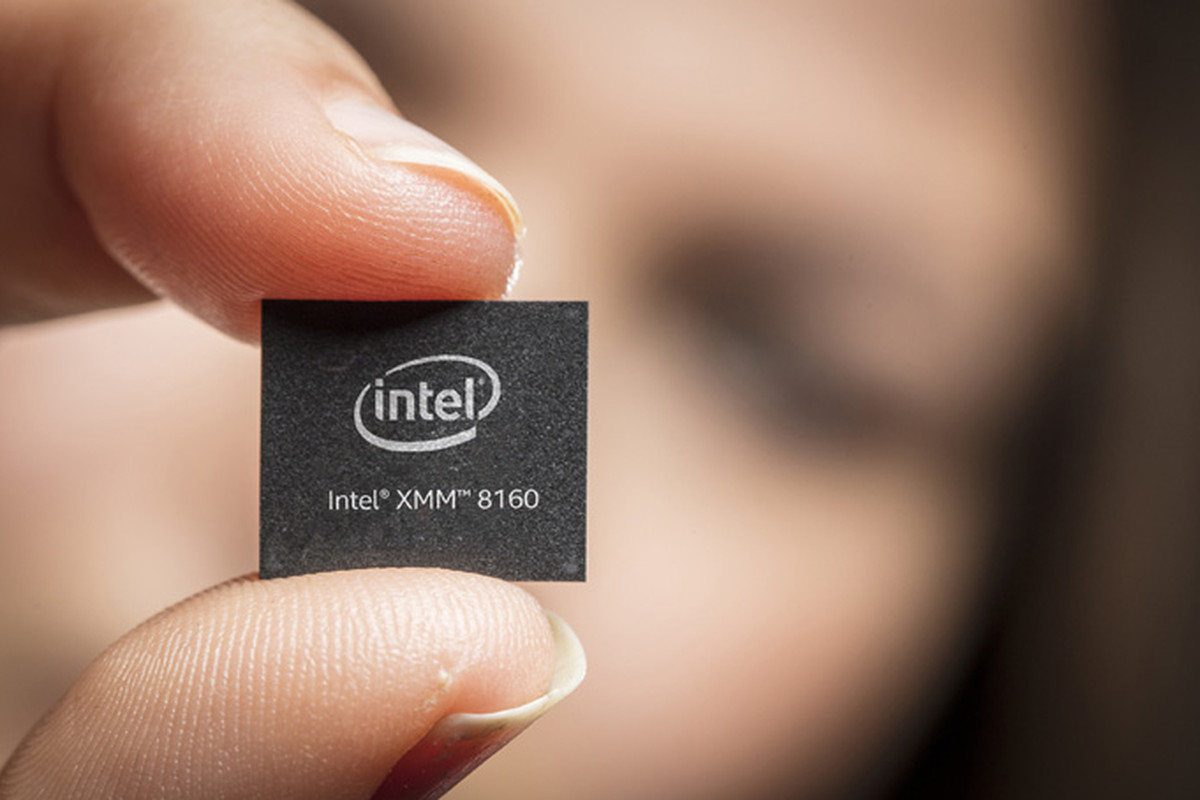
  • Apple reportedly is close to buying Intel’s modem chip business

    Apple reportedly is close to buying Intel’s modem chip business

    By April of this year, Apple was desperate. It was embroiled in a fight with Qualcomm that was playing out in numerous lawsuits including one that was taking place in San Diego with billions of dollars at stake. With Qualcomm apparently unwilling to sell it 5G modem chips, Apple was relying on Intel, the company that supplied it with the 4G LTE modem chips used on the 2018 iPhones. But there were questions about whether Intel could deliver a 5G modem chip in time for Apple to release a 5G iPhone by 2020.

    On April 7th, Intel said that it would be able to supply Apple with its 5G modem chip in time for the first 5G iPhone to be launched next year. But just nine days later, while closing arguments were taking place during the trial in San Diego, a blockbuster announcement was made; Apple agreed to pay Qualcomm an undisclosed amount (believed to be $4.5 billion) and in return Qualcomm gave Apple a six-year license (with an option for two additional years) and a multi-year chip supply agreement. All lawsuits were dropped. Intel could see which way the wind was blowing and later that same day, the chipmaker announced that it was quitting the 5G smartphone modem business. And last month, the rumors started about Apple buying Intel’s smartphone modem business. Such an acquisition, if completed, would help Apple achieve its goal of producing its own modem chips.

    The talks between Apple and Intel have heated up to the point where they are now classified as “advanced.” The deal, said to be valued at $1 billion or more, could be announced as soon as next week. This would be a big transaction for Apple as the company usually makes small purchases. For example, in 2012 Apple bought biometrics firm AuthenTec for $356 million and Touch ID debuted a year later on the iPhone 5s. In 2015, Apple paid a reported $20 million for imaging firm LinX. The acquisition helped Apple immediately step up its camera game.  The most money that Apple has ever shelled out to buy another company was the $3 billion it spent to buy Beats Audio in 2014. While most of these deals had almost immediate payoffs for Apple, even with Intel’s smartphone modem chip business, it might not be until 2022 or 2023 before Apple is able to be self-sufficient in this area.

    Apple has been hiring engineers, including some from Intel, and plans on opening an office in San Diego with 1,200 employees. If a deal is reached, Intel will be getting rid of a business that has been losing $1 billion a year. And while it will no longer be producing chips for smartphones, it will still work on 5G based components for other devices. Meanwhile, Apple is looking to move in-house as much of the iPhone’s supply chain as possible. Last year it spent $600 million to purchase facilities and engineers from Dialog Semiconductors so that it could start producing internally the battery-management chips that it had been buying from Dialog in the past.

    While Apple appears to have this deal locked up, when Intel first announced that it was exiting the business, it received indications of interest from other companies. Should Apple and Intel fail to come to an agreement, another buyer could step in to take Apple’s place. Meanwhile, investors rightly regard this as potentially bad news for Qualcomm. When the story broke after the 4 pm EDT close of the NYSE, Qualcomm’s shares dropped 1.8% to $74.55.

    If Apple ends up buying Intel’s smartphone modem chip business, it can easily afford it. After accounting for debt, Apple had $113 billion of cash available as of March 30th when its fiscal second-quarter came to an end.