Retail News CRM

Tag: chip

  • Intel to build chips for Qualcomm; hopes to rival TSMC

    Intel to build chips for Qualcomm; hopes to rival TSMC

    TSMC and Samsung, the two top contract foundries in the world, will soon have a new rival. Reuters reports that yesterday Intel announced that it will start producing chips for other companies such as Qualcomm and Amazon. Intel expects to challenge TSMC and Samsung by 2025.

    Intel was once the T-Rex of chipmakers, but Taiwan’s TSMC has become the global leader with Samsung right beside it. Both of those firms produce chips for Apple, Qualcomm, AMD, and other top tech companies. The pair also currently manufacture chips using 5nm process nodes and have roadmaps down to 2nm. As an example of what each of the two foundries can offer,  TSMC is the foundry rolling out Apple’s M1 chip that carries a whopping 16 billion transistors (no typo here folks) in each chip.

    Intel says that over the next four years, it will introduce five new technologies related to the production of these vital components. One of the five is the introduction of Intel’s first new transistor design in ten years. As early as 2025, Intel will get its hands on ASML’s next-generation extreme ultraviolet lithography (EVL) machines that place on the silicon an image of where the circuitry will be placed.

    The EVL machine is important because it needs to produce extremely thin lines as transistor size shrinks allowing foundries to pack more transistors inside the components they manufacture. Intel also plans on revamping the way it names its chips to be more in line with TSMC and Samsung. Dan Hutcheson, chief executive of VLSIresearch, an independent semiconductor forecasting firm, said that Intel’s current naming protocol gave the impression that the company was less competitive.

    The larger the number of transistors that fit inside a square mm, the more powerful and less energy-guzzling a chip is. And while Intel has been losing the process node war with TSMC and Samsung, it does plan to reveal a design for transistors smaller than 1nm by 2024.

    Intel’s first major new customers will be Qualcomm and Amazon. The former is known for the Snapdragon chips that drive mobile phones with some helping to connect handsets to 5G networks. These chips will use Intel’s 20A manufacturing technique that will produce chips that consume less power than current components thanks to the use of new transistor technologies.

    Amazon plans on using Intel’s packaging technology for the components it produces itself for the data center chips used for its Amazon Web Services. Intel Chief Executive Pat Gelsinger stated that “There have been many, many hours of deep and technical engagement with these first two customers, and many others.”

    While some analysts remain cautious about whether Intel can deliver on the promises it has made, Real World Technologies’ David Kanter said that the chipmaker is being more cautious than it has been in the past. He says, “Intel is absolutely going to catch up, and be ahead in some dimensions, with TSMC over the next few years. Intel really does have people who spend all their time looking at how to deploy new materials and technology to juice their performance.”

    You might recall that a legal feud between Apple and Qualcomm had Apple scrambling for a 5G modem chip to replace the one it wanted from Qualcomm. Apple planned on using a new 5G modem chip designed and produced by Intel. But Apple wasn’t thrilled about this and eventually reached a settlement that allowed it and Qualcomm to bury the hatchet resulting in the use of Qualcomm’s 5G modems on the iPhone 12 line, the first iPhone models to support 5G.

    Eventually, Apple plans on designing its own 5G modem chip and ended up purchasing most of Intel’s smartphone modem business in July 2019 for $1 billion.
  • Samsung expects 53% increased profits amid the global chip shortage

    Samsung expects 53% increased profits amid the global chip shortage

    Samsung is reportedly expecting a notable 53% increase in its quarterly profit following a very healthy demand for memory chips during the global semiconductor shortage. One of the largest electronics manufacturers in the world forecasts a profit of nearly $11 billion for the quarter that ended with June.

    This uptrend can be attributed to strong sales of memory chips, which is offsetting the weakened sales of TVs, phones, and other electronics in the first couple of months into the coronavirus pandemic and is shaping up to be Samsung’s biggest quarter since 2018. As more and more people stayed and worked from home, the demand for electronics has surged, and Samsung is finally bringing home the bacon thanks to this. This is all despite the chip shortage that’s plaguing not only the smartphone but many other industries and businesses as well.

    Of course, the exact figures remain to be confirmed in the financial report released later this month, but Samsung will easily beat analysts’ expectations by a lot.

    Samsung is one of the largest semiconductor manufacturers globally, a leading contractor that produces chips for Apple, Qualcomm, and others. Samsung is reportedly working closely with its overseas partners to mitigate any supply disruptions that may arise as a result of the disruption.

    Recently, we’ve heard rumors that Samsung might have been forced to postpone the release of its anticipated Galaxy S21 FE to Q4 2021 due to the chip shortage. Another concession is reportedly resorting to using Exynos chips alongside Qualcomm’s Snapdragon solution. There are even rumors that the phone could skip some markets due to the same reasons.<

  • Details of new upper mid-range Samsung chip emerge

    Details of new upper mid-range Samsung chip emerge

    Samsung appears to be testing a midrange Exynos chipset. Dutch website Galaxy Club has reported the existence of a new chip with the model number S5E8825.

    The Exynos 2100 that fuels the Galaxy S21 is known by the model number S5E9840 and its successor, colloquially being referred to as the Exynos 2200, is apparently the S5E9925.

    Previously, leaker Ice Universe had said that Samsung would release three chips this year: a flagship Exynos 22xx SoC, a mid-tier 12xx processor, and an entry-level 8xx silicone. Judging by the model name, it seems that the newly discovered S5E8825 is a midrange chip that Samsung might call Exynos 1200. It looks like it will slot below the Exynos 2100.

    In the past, it was relatively easy to differentiate between premium and mid-range chips. The Exynos 990, which powered the Galaxy S20 series, was known as the S5E9830, and the Exynos 9820 that underpinned the Galaxy S10 series had the model number S5E9820. Mid-tier Galaxy A50’s Exynos 9610 had the model number S5E9610.

    Starting last year, Samsung stopped using its proprietary Mongoose cores and adopted Arm’s designs instead. That could be why it has slightly changed the model name nomenclature too as the models seem more aligned now.

    The Exynos 1200 will presumably succeed the Exynos 1080 – a 5nm mid-tier chip that was announced late last year. It seems to be in the advanced stages of development as it is allegedly undergoing extensive testing.

    The chip reportedly has a built-in 5G modem and per a separate report, it may come with an AMD GPU. If a recent report that doesn’t come from a verifiable source is to go by, this new processor could use Arm’s Cortex X1 as the main core.

    As good as that sounds, Samsung may not use the Exynos 1200 for its phones and instead sell it to Chinese smartphone makers, as was the case with the Exynos 1080.

  • Intel CEO says chip shortage will continue throughout this year

    Intel CEO says chip shortage will continue throughout this year

    As many of you know, we are in the middle of a chip shortage that has been impacting automobile and consumer electronic manufacturers. Intel CEO Pat Gelsinger sees the shortage continuing throughout the remainder of this year, bottoming out during the second half of 2021 before things start to improve. In fact, the executive doesn’t expect the supply-demand picture to return to normal until 2023.

    Gelsinger said, “I don’t expect the chip industry is back to a healthy supply-demand situation until ’23. For a variety of industries, I think it’s still getting worse before it gets better.” Last month, we told you that the lead time, the time it takes between placing an order for semiconductors and actually receiving them, hit 17 weeks in April; that was the longest lead time recorded by Susquehanna Financial since 2017 and was a big jump compared to the previous year’s 12.53 figure.

    Unlike fabless manufacturers like Apple, Qualcomm, MediaTek, and others, Intel owns its own factories (aka fabs, short for fabrication plants). A company like Apple designs its own chips, but without the means to manufacture them itself, the company turns to the world’s largest contract foundry, Taiwan Semiconductor Manufacturing Company, Limited (TSMC Ltd.) to produce them.

    Gelsinger says that thanks to Intel’s ownership of its fabs, it is more able to keep up with demand for chips than those who are outsourcing production to another foundry. The executive says that demand for chips will continue to be strong over the next 10 years thanks to expected growth in demand for 5G smartphones, AI, and electric vehicles. Intel’s CEO is on the side of those industry executives who see the current demand for chips continuing into the future.

    Other executives don’t believe that the industry can sustain the growth of more than 5% on an annual basis. Broadcom Inc. CEO Hock Tan is one such executive. Even though his firm reported a 15% revenue hike for its latest quarter, Tan says chip production is a mature industry that will revert back to low growth.

    There is no denying though, how important chips are to the global economy. The U.S. leads the way in the sales and design of chips although production is led by Taiwan’s TSMC and South Korea’s Samsung. TSMC will be opening at least one fab in Arizona no later than 2024.

  • Bosch Opens German Chip Plant

    Bosch Opens German Chip Plant

    Robert Bosch opened a 1 billion euro ($1.2 billion) chip plant in Germany on Monday, a record investment by the leading automotive supplier as it stakes a claim to equipping the latest electric and self-driving cars. The plant, located in a semiconductor hub near Dresden, opens as the automotive industry battles a global chip shortage, and will increase Bosch’s ability to serve carmakers directly, relying less on third-party manufacturers.

    “Every chip that we make here in Dresden is one chip less that is lacking. That helps,” management board member Harald Kroeger told Reuters in an interview.

    Addressing an online opening ceremony, Chancellor Angela Merkel said semiconductor shortages were hampering Germany’s economic recovery, and that it was important to strengthen resilience against external supply disruptions.

    “We aren’t in pole position – we have to catch up,” Merkel said. “We must be ambitious. Our competitors around the world aren’t sleeping.”

    The Bosch plant will make specialist power-management chips and Application Specific Integrated Circuits (ASICs) that are designed to carry out a single task, such as triggering a car’s automatic braking system.

    It will not however address shortages of products like microcontrollers which have forced automakers to halt production and are expected by industry leaders and analysts to extend into next year.

    “The fab (chip fabrication plant) may help to insulate Bosch and its key customers somewhat,” said Asif Anwar at Strategy Analytics. “But it is unlikely to serve as a gap filler to the current shortages being experienced in the automotive market.”

    The Bosch plant, which received 200 million euros ($243 million) in state aid under a European Union investment scheme, will start making chips for power tools in July, with output of automotive chips to follow from September.

    “The state-of-the-art technology in Bosch’s new semiconductor factory in Dresden shows what outstanding results can be achieved when industry and government join forces,” said European Commission Vice-President Margrethe Vestager.

    Kroeger said Bosch supported a broader strategic push by Brussels to revive Europe’s semiconductor industry. A recently unveiled plan targets doubling the region’s share of global chip production to 20% by 2030.

  • Intel Reiterates Chip Supply Shortages Could Last Several Years

    Intel Reiterates Chip Supply Shortages Could Last Several Years

    Intel Corp’s CEO said on Monday it could take several years for a global shortage of semiconductors to be resolved, a problem that has shuttered some auto production lines and is also being felt in other areas, including consumer electronics. Pat Gelsinger told a virtual session of the Computex trade show in Taipei that the work-and-study-from-home trend during the COVID-19 pandemic had led to a “cycle of explosive growth in semiconductors” that has placed huge strain on global supply chains.

    “But while the industry has taken steps to address near-term constraints it could still take a couple of years for the ecosystem to address shortages of foundry capacity, substrates and components.”

    Gelsinger had told The Washington Post in an interview in mid-April the shortage was going to take “a couple of years” to abate, and that it planned to start producing chips within six to nine months to address shortages at U.S. car plants.

    Intel announced a $20 billion plan in March to expand its advanced chip manufacturing capacity, building two factories in Arizona and opening its plants to outside customers.

    “We plan to expand to other locations in the U.S. and Europe, ensuring a sustainable and secure semiconductor supply chain for the world,” Gelsinger said, without elaborating.

    Intel’s plans could directly challenge the two other companies in the world that can make the most advanced chips – Taiwan Semiconductor Manufacturing Co Ltd (TSMC) and South Korea’s Samsung Electronics Co Ltd.

    The two have come to dominate the semiconductor manufacturing business, moving its centre of gravity from the United States, where much of the technology was once invented, to Asia, where more than two-thirds of advanced chips are now manufactured.

  • Chip delays reach crisis territory; Apple, Qualcomm and others are affected

    Chip delays reach crisis territory; Apple, Qualcomm and others are affected

    The worldwide chip shortage is about to hit a benchmark indicative of more serious problems ahead for tech companies. This benchmark measures the lead times for chip orders, or the time it takes between ordering semiconductors and actually receiving the shipment. Bloomberg reports that this measure hit 17 weeks last month according to Susquehanna Financial Group which says that it is a sign that users are getting desperate to obtain the needed components

    Su.squehanna Financial notes that the 17 weeks is the longest period of time it has recorded for this measure since it started tracking it in 2017. Based on that figure, the research firm says that when it comes to purchasing sufficient chips, consumer electronic firms and automobile outfits are in “the danger zone.” Last year at this time, the lead time was 12.53 weeks.

    Susquehanna analyst Chris Rolland disseminated a note to clients yesterday in which he wrote about lead times for analog chips, power management chips, and others. “All major product categories up considerably. These were some of the largest increases since we started tracking the data,” he stated. Apple has said that it could lose up to $4 billion in revenue during the current quarter thanks to shortages of chips and other components, while automakers are on track to report a revenue shortfall of $110 billion this year.

    Rolland wrote that demand for chips might be overstated by actions taken by customers afraid of missing out on supplies. “Elevated lead times often compel ‘bad behavior’ at customers, including inventory accumulation, safety stock building and double ordering. These trends may have spurred a semiconductor industry in the early stages of over-shipment above true customer demand.”

    The analyst said that the 17 week lead time expanded from the previous 16 week lead time and marks the fourth consecutive month that lead time has risen by a “sizeable” amount. Power Management chips lead time weighs in at 23.7 weeks, up about four weeks over the last month. Industrial microcontroller’s order lead times have recently risen by three weeks.

    Susquehanna says that delays are longer for smaller manufacturers; for example, headphone manufacturers have lead times longer than 52 weeks! The expanded lead times has forced firms to redesign, and even drop projects. Rolland says that 70% of the companies he tracks in the chip industry are reporting expanding lead times while 20% have seen lead times drop.

    NXP Semiconductors NV, a company that supplies chips to automakers, has seen lead times rise from 12 weeks late last year to 22 weeks. And STMicroelectronics, another chip supplier for the auto industry, had its lead times rise by 4 weeks in April to 28 weeks.

    Taiwan, the home of the world’s largest independent foundry TSMC, has been dealing with a couple of issues that could impact chip production in the country. The number of COVID-19 cases in the country has been rising and in addition, drought has impacted the country. Water is an important ingredient when it comes to chip making and TSMC has ordered huge deliveries of the ultra-pure water required to run its assembly lines.

    TSMC has plenty of important customers that rely on it to turn chip designs into chips. Among those firms are Apple, Qualcomm and MediaTek. Today, Taiwan’s Centers for Disease Control raised the island’s alert level which spreads COVID-containment measures to the whole country.

    Also today, Taiwan’s Water Resources Agency said that the country needed to use more aggressive water-saving methods thanks to the low amount of rain that has fallen in the country. TSMC responded by saying that it will continue to tighten up its water usage, although it doesn’t believe that it will have to make any changes to its operations even with the countries’ new measures announced today.

  • Daimler Cuts Hours For Up To 18,500 Workers Over Chip Shortage

    Daimler Cuts Hours For Up To 18,500 Workers Over Chip Shortage

    Daimler will cut working hours for up to 18,500 employees and temporarily halt production at two plants in Germany due to a shortage of semiconductor chips that has hit global car production, it said on Wednesday.

    “Currently, there is a worldwide supply shortage of certain semiconductor components,” a spokeswoman said. “We continue to play things by ear.”

    “The situation is volatile, so it is not possible to make a forecast about the impact,” she added.

    Daimler, which makes Mercedes-Benz cars, said workers at its plants in Bremen and Rastatt would have their hours shortened.

    The global shortage stems from a confluence of factors as carmakers, which shut plants during the COVID-19 pandemic last year

    The move will halt production at the factories but allow staff to continue working on special projects. The production halt will take effect from April 23 for one week, initially.

    The global shortage stems from a confluence of factors as carmakers, which shut plants during the COVID-19 pandemic last year, compete with the sprawling consumer electronics industry for chip supplies.

    Cars have become increasingly dependent on chips – for everything from computer management of engines for better fuel economy to driver-assistance features such as emergency braking.

    The shortage of chips has hurt vehicle production at carmakers including General Motors Co, Volkswagen AG and Ford Motor Co.

    Earlier on Wednesday, automaker Stellantis said it would replace digital speedometers with more old-fashioned analogue ones in one of its Peugeot models, in a fallout from the shortage of semiconductor chips.

  • Hyundai To Suspend Production At South Korea Plant Due To Chip Shortage

    Hyundai To Suspend Production At South Korea Plant Due To Chip Shortage

    It was earlier this week when Hyundai Motor suspended production at its Asan plant because of a chip shortage. The South Korean carmaker has announced that it will again halt production at its Sonata-producing plant for two days next week due to an electric parts shortage. According to a report from IANS, the automaker will stop operation at its Asan plant on Monday and Tuesday. This Hyundai plant is located around 100 km south of Seoul that produces the Grandeur and Sonata sedans.

    Hyundai has seven plants in South Korea, of which five are located in Ulsan whereas the other two facilities are located in Asan and Jeonju. Moreover, the company has ten overseas plants wherein four facilities are in China and one each in India, Brazil, Czech Republic, Turkey, Russia, and the US. The combined capacity of these plants is around 5.5 million units.

    The carmaker expects the four-day suspension will result in over 4,000 vehicles in production losses. Moreover, the company had also suspended operations at its Ulsan plant, situated 414 km southeast of Seoul, from April 7 to April 14 due to a parts shortage. Moreover, Hyundai produces Ioniq 5 and Kona EV cars at its Ulsan plant.

    The suspension comes because of a shortage of semiconductor parts used in Kona’s front vehicle camera system, along with an issue in Hyundai Mobis Company’s production line, which rolls out the traction motor for the Ioniq 5. The carmaker expects production losses of 6,000 units of the Kona and 6,500 units of the Ioniq 5.

  • Qualcomm scores a major legal victory that might hurt phone manufacturers

    Qualcomm scores a major legal victory that might hurt phone manufacturers

    Back in 2019, Judge Lucy Koh ruled in favor of the Federal Trade Commission over chipmaker Qualcomm. The judge said that the way Qualcomm does business, from its “no license, no chips” mantra, to its refusal to license standards-essential patents with other chipmakers on a Fair, Reasonable, and Non-Discriminatory (FRAND) basis, and the way it calculates royalties based on the retail price of an entire device (instead of the much smaller price of Qualcomm’s components) were anti-competitive. While Qualcomm gets the majority of its revenue from selling chips, the bulk of its profits come from licensing its library of telecommunication patents. The FTC accused Qualcomm of obtaining excessive licensing fees from those manufacturers.
    Phone manufacturers had testified against Qualcomm during the brief trial since they were the ones being subjected to monopolistic behavior on the part of the San Diego-based outfit. In her 2019 ruling, Judge Koh said that she ignored the testimony of Qualcomm executives as the judge noted that their testimony was contradicted by emails and notes written by others at the company.
    But Qualcomm, whose entire process of selling chips was on the line, was not going to go down so easily. It filed an appeal and won over a three-judge panel in California’s Ninth Circuit; the trio tossed out the original decision. The Ninth Circuit shot down each charge against Qualcomm stating that each one was not anticompetitive. For example, it said that since the company had no duty under antitrust law to license chips to competitors, the company’s licensing at the manufacturer level was legal. The appeals court also ruled that Qualcomm’s “no license, no chips” policy is not anticompetitive and does not “undermine competition.” As for its inability to offer standards-essential patents at FRAND (Fair, Reasonable and Non-Discriminatory) terms, the appeals court said that a remedy can be found by filing a different type of lawsuit with a different court. The FTC asked that the appeals court decision be reheard, last August it was turned down.
    And that brings us to Monday when FTC Acting Chairwoman Rebecca Kelly Slaughter announced that she has decided not to petition the U.S. Supreme Court to review the case. In a statement, Slaughter said, “Given the significant headwinds facing the Commission in this matter, the FTC will not petition the Supreme Court to review the decision of the Court of Appeals for the Ninth Circuit in FTC v. Qualcomm. The FTC’s staff did an exceptional job presenting the case, and I continue to believe that the district court’s conclusion that Qualcomm violated the antitrust laws was entirely correct and that the court of appeals erred in concluding otherwise. Now more than ever, the FTC and other law enforcement agencies need to boldly enforce the antitrust laws to guard against abusive behavior by dominant firms, including in high-technology markets and those that involve intellectual property. I am particularly concerned about the potential for anticompetitive or unfair behavior in the context of standard setting and the FTC will closely monitor conduct in this arena.”
    Slaughter was not a member of the FTC when the lawsuit was originally filed in January 2017 during the waning days of the Obama administration. Now that the FTC has decided not to take the case to the Supreme Court, it can be considered a complete vindication for the chip maker whose style of doing business was criticized by the entire mobile industry. The company would always defend itself by noting that it used licensing fees and royalties to fund its R&D to help it create faster and improved components for its customers.
    Qualcomm, of course, was pleased by the agency’s decision to drop the case. Don Rosenberg, general counsel of Qualcomm, stated, “Qualcomm got to where it is today by investing tens of billions of dollars in R&D and inventing technologies used by billions of people around the world. Now, more than ever, we must preserve the fundamental incentives to innovate and compete.”
  • Snapdragon 888’s successor may feature Leica technology

    Snapdragon 888’s successor may feature Leica technology

    Qualcomm appears to be gearing up to release a toned-down version of the Snapdragon 888 (SM8350) chip. The news comes from leaker Roland Quandt, who says that unlike the flagship Snapdragon 888, the stripped-down variant will not have an integrated 5G modem.

    The new chip (SM8325) will apparently power budget flagship phones and it is not clear how it would differ from the Snapdragon 870. Since it’s been billed as a lower-specced version of the Snapdragon 888, it’s likely that it will be based on the 5nm process. The SoC might be meant for developing markets where 5G networks have not been rolled out yet.

    Quandt has also learned that Qualcomm has started testing early samples of the Snapdragon 888 successor. The chip is apparently internally known as ‘Waipio’ and its model number is SM8450. It will likely be unveiled towards the end of 2021, as is the norm.

    The company is currently testing samples that are compatible with 12GB of LPDDR5 RAM and 256GB of storage. The next-generation chip’s camera capabilities are also expected to get a major boost and it seems that Qualcomm has teamed up with optics specialist Leica for this purpose. Current testing is apparently centered on a module internally known as “Leica1.”

    The Snapdragon 888 was made by Samsung and the recently announced 5G modems (Snapdragon X62 and Snapdragon X65) are based on the chaebol’s 4nm process. It’s not known if Snapdragon 888’s successor will also be built on a new process node.

    A recent report says that Qualcomm will stick with Samsung’s 5nm tech for this year and go back to TSMC in 2022 for a 4nm flagship SoC.

    Quandt has also revealed the existence of a mid-tier chip. The SM7325 apparently features one core running at 2.7GHz, three cores with clock speeds of 2.4 GHz, and four cores with frequencies up to 1.8 GHz. The test platform supports up to 12GB of LPDDR5 RAM and 256GB of UFS 3.1 storage. The final product may support up to 16GB of RAM.

    A 5nm upper-midrange chip called Snapdragon 775 (SM7350) is also reportedly in the pipeline.

  • Samsung could release three Exynos chips this year

    Samsung could release three Exynos chips this year

    Samsung will unveil three Exynos chips this year, claims leaker Ice Universe. The 2021 lineup presumably includes a flagship SoC (Exynos 22xx), a mid-tier chip (Exynos 12xx), and an entry-level silicone (Exynos 8xx).

    The Exynos 22xx will likely succeed the Exynos 2100 that powers the European version of the Galaxy S21 series. It supposedly has the model number 9925 and it may feature an AMD GPU.

    The Exynos 12xx will apparently replace the Exynos 1080, and it will probably also swap out the Mali GPU for AMD’s graphics.

    The Exynos 8xx is new on the radar, and we wonder if it has anything to do with a chip recently spotted by Galaxy Club.

    The chip bears the model number S5E5515, which is not very telling, thanks to Samsung’s inconsistent naming convention.

    It does not seem to be a high-end SoC as the model number is not in line with recent flagship chips: Galaxy 10’s Exynos 9820 had the number S5E9820, Galaxy S20’s Exynos 990 had S5E9830, and Galaxy S21’s Exynos 2100 has S5E9840.

    S5E5515 is not consistent with recent mid-tier Exynos chips either. The Exynos 1080 is S5E9815, the Exynos 980 is S5E9630, and Exynos 850 is S5E3830.

    The publication has made a wild guess and believes that the S5E5515 is a lower-mid-tier chip that will sit between the Exynos 850 and Exynos 1080. It is also expected to have an integrated 5G modem.

    The SoC could also turn out to be a non-smartphone chip. Samsung is already believed to be working on a new processor for wearables like AR glasses.

  • MediaTek teases unveiling of new flagship chip

    MediaTek teases unveiling of new flagship chip

    Last month, we might have surprised you by passing along Counterpoint Research’s third-quarter report on the top suppliers of chips to the smartphone industry. Instead of seeing Qualcomm’s name at the top, MediaTek led the way by supplying manufacturers with 31% of the smartphone chips sent to manufacturers during the quarter. And now the chip designer has put up a teaser on its official Weibo account calling for a January 20th announcement of new Dimensity chipsets.

    The company wrote on Weibo “On January 20, the new products of the Dimensity series will meet with you. Brand new products, superior technology, and upgraded experience. While MediaTek didn’t reveal much information about the component, sources are saying that one of the new chips will be the MT689X. The latter could be MediaTek’s next flagship chip manufactured using the 6nm process node.

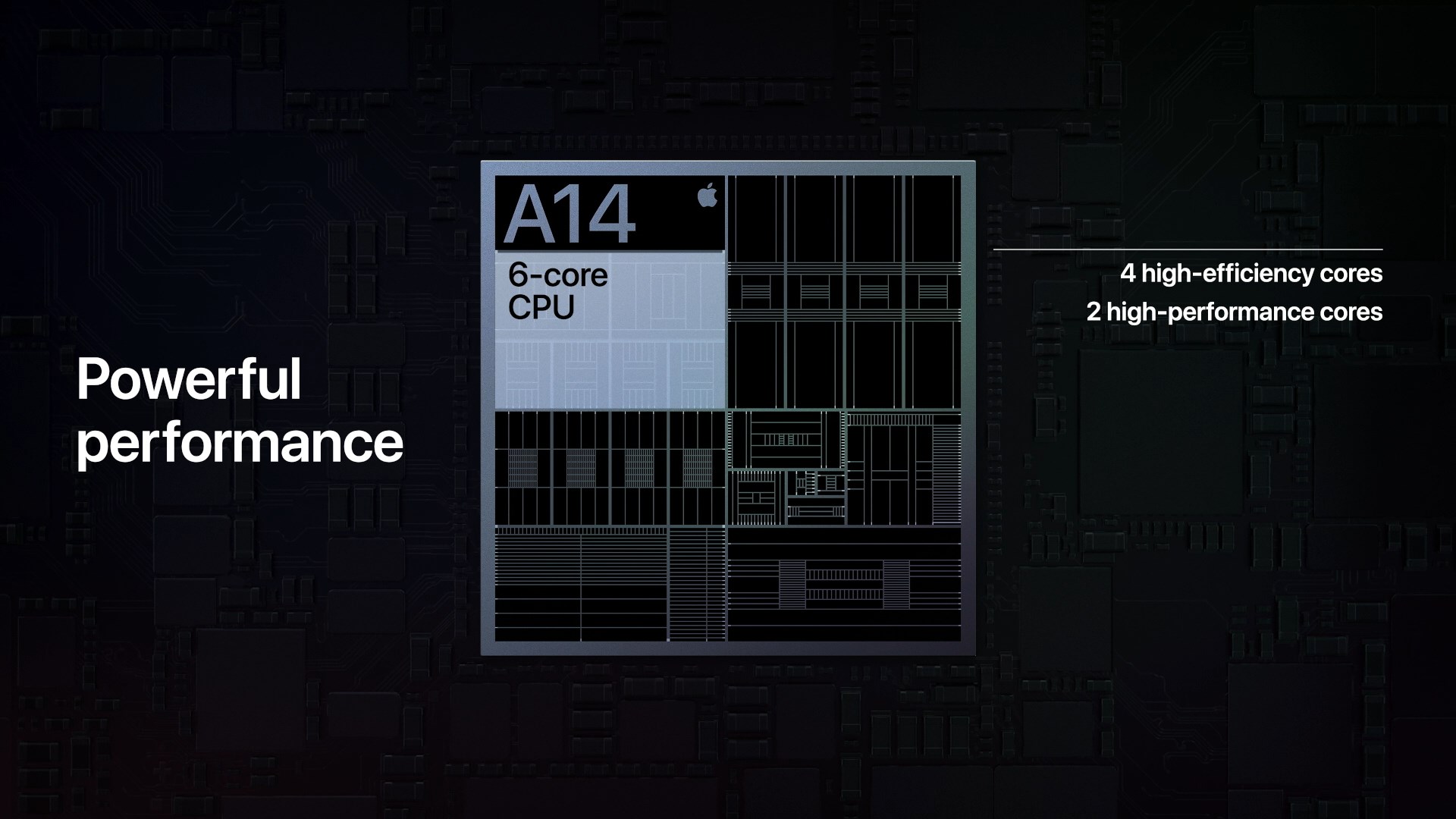
    The 5nm A14 Bionic chipset used on the Apple iPhone 12 series is the most cutting-edge chip used on a smartphone at the moment. Soon, the 5nm Exynos 2100 and Snapdragon 888 will be employed on the Samsung Galaxy S21 line. The lower the process number, the higher a chip’s transistor density and the more powerful and energy-efficient a chip is.

    MediaTek’s 6nm chip, the MT689X, will feature the Mali G-77 GPU. ARM’s high-performance Cortex-A78 core will also be included. And based on an Antutu benchmark test, the new chip will be similar in performance to Qualcomm’s top-of-the-line 2020 chip, the Snapdragon 865+. The new 6nm chip is expected to be employed in smartphones that are priced in the neighborhood of $300.

    The fact that the chip designer’s components find favor with manufacturers producing lower-priced devices is one of the reasons why MediaTek’s Dimensity line has been so successful. In the middle of a global pandemic that has destroyed consumers’ finances, many are settling for lower-priced handsets and tablets, especially in developing countries.

  • Qualcomm is no longer the top supplier of chipsets for smartphones

    Qualcomm is no longer the top supplier of chipsets for smartphones

    There has been a change in the smartphone industry. During the third quarter of this year covering July through September, MediaTek overtook Qualcomm to become the top provider of chipsets for the smartphone industry with a 31% share of the market. Counterpoint attributes MediaTek’s success to strong sales of phones in the $100-$250 price range amid strong growth in the top two smartphone markets in the world; that would be China (#1) and India (#2). As a developing country, Indian consumers prefer value brands many of which use MediaTek chips instead of Qualcomm’s pricier Snapdragon silicon.

    This is not to say that Qualcomm couldn’t find a sweet spot for growth in Q3. With 39% of the market, the chip maker is the leading provider of 5G chipsets for phones and this is a market that doubled during the third quarter. Counterpoint says that 17% of  all phones sold during the third quarter supported 5G. That figure is expected to rise to 33% for the current quarter that started in October and concludes at the end of the year. With strong growth in 5G shipments for the fourth quarter, Qualcomm does have a chance to take back the crown that MediaTek took away from it.

    MediaTek’s leading 31% share of the smartphone chipset market was a 19% percent gain from the 25% share that the Taiwan based firm had last year. During the same time period, Qualcomm’s slice of the chipset pie for handsets declined from a leading 31% to the current 29%. Apple was third as its A-series chips, built exclusively for its phones and tablets, garnered 12% of the market. That put Apple in a three-way tie with Samsung and Huawei’s HiSilicon unit.

    Counterpoint Research Director Dale Gai pointed out that “MediaTek’s strong market share gain in Q3 2020 happened due to three reasons – strong performance in the mid-end smartphone price segment ($100-$250) and emerging markets like LATAM (Latin America) and MEA (Middle East and Asia), the US ban on Huawei and finally wins in leading OEMs like Samsung, Xiaomi and Honor. The share of MediaTek chipsets in Xiaomi has increased by more than three times since the same period last year. MediaTek was also able to leverage the gap created due to the US ban on Huawei. Affordable MediaTek chips fabricated by TSMC became the first option for many OEMs to quickly fill the gap left by Huawei’s absence. Huawei had also previously purchased a significant amount of chipsets ahead of the ban.”

    Gai also noted that, “On the other hand, Qualcomm also posted strong share gains (from a year ago) in the high-end segment in Q3 2020, again thanks to HiSilicon’s supply issues. However, Qualcomm faced competition from MediaTek in the mid-end segment. We believe both will continue to compete intensively through aggressive pricing, and mainstream 5G SoC products into 2021.”

    Counterpoint Research Analyst Ankit Malhotra added, “Qualcomm and MediaTek have both reshuffled their portfolios, and consumer focus has played a key role here. Last year, MediaTek launched a new gaming-based G-series, while Dimensity chipsets have helped in bringing 5G to affordable categories. The world’s cheapest 5G device, the realme V3, is powered by MediaTek. Using his crystal ball to look into the future, Malhotra said, “The immediate focus of chipset vendors will be to bring 5G to the masses, which will then unlock the potential of consumer 5G use cases like cloud gaming, which in turn will lead to higher demand for higher clocked GPUs and more powerful processors. Qualcomm and MediaTek will continue to contend for the top position.”

  • Apple ties up much of TSMC’s 5nm chip production for next year

    Apple ties up much of TSMC’s 5nm chip production for next year

    These are the Golden days for Apple’s in-house chipsets. For example, benchmark tests reveal that the A14 Bionic used to power the iPhone 12 series outperforms the upcoming Snapdragon 888 chipset (which will be found in 2021 Android flagship phones). Even more interesting, last year’s A13 Bionic, which drives the iPhone 11 family, also produced a better score than the Snapdragon 888. Both A-series chips are designed by Apple and are produced by TSMC, the largest independent foundry in the world. The Snapdragon 888 is designed by Qualcomm and will be manufactured by Samsung using its new 5LPE process node.

    Apple happens to be TSMC’s largest customer; Huawei was second until the U.S. changed an export rule that now blocks foundries using American-made tech from shipping chips to the Chinese based manufacturer. TSMC’s advanced 5nm production capabilities for 2021 have been “booked out.” Apple has reserved much of this production (80% according to the report) for 5nm A14 Bionic and A15 Bionic Application Processors for the 2020 and 2021 iPhone models. Apple also has booked 5nm production for its ARM related M1 computer processor. Apple replaced some Intel processors for new MacBook models with the home-grown M1; the latter contains a whopping 16 billion transistors inside. The higher a chip’s transistor density (number of transistors packed inside a dense square mm space), the more powerful and energy-efficient the component is.

    TSMC’s revenue is expected to hit an all-time high this year with another record high due for 2021. The company also plans to begin Risk Production of 3nm chips next year. Part of the process of designing and manufacturing new chips includes Risk Production. These are cutting-edge chips that are sold to manufacturers willing to buy them without having to go through testing. That puts the risk squarely on the buyer. The foundry says to expect a performance boost of 10% to 15% with its 3nm chips along with a 20% to 25% increase in energy-efficiency.

    Last month, a report stated that the A16 Bionic chip for the 2022 iPhone 14 will reportedly be manufactured using the 4nm process node. However, this past summer another report said that the A16 Bionic would be manufactured using the 3nm process node. Next year’s iPhone 13 line will be powered by the A15 Bionic and produced once again by TSMC using the 5nm process node.

    To show you how far this technology has advanced over the last decade, consider the Apple A4 chip. Designed in-house for the very first time, the A4 was manufactured for 2010’s iPhone 4 by Samsung using the latter’s 45nm process node. Speaking of Samsung, the company and TSMC are the only foundries currently capable of producing 5nm chipsets.