Retail News CRM

Tag: chips

  • TSMC founder Chang says that the U.S. has the world’s best chip designers

    TSMC founder Chang says that the U.S. has the world’s best chip designers

    The two most advanced chip foundries in the world at the moment are Taiwan’s TSMC and South Korea’s Samsung. With both providing phone manufacturers with chips produced using their 3nm process node next year, TSMC recently said that it will start shipping 2nm chips to customers in 2026.
    In theory, the lower this process node number goes, the smaller the transistors used in these chips become. That allows chip designers and manufacturers to put more transistors in these integrated circuits allowing them to be faster and/or more power-efficient.
    The U.S., concerned about geopolitical events putting a crimp in the supply chain for chips (especially the possibility of China making a move on Taiwan) would love to become self-sufficient in the design and production of chips. Design is actually not an issue as U.S. firms like Apple, Qualcomm, Intel, and others have no problem designing chips (more on this later). But building a foundry takes oodles of money and time. It also requires proximity to a reliable supply chain.
    TSMC is working with the U.S. to build a fab (a plant that manufacturers chips) in Arizona. The facility should start producing chips by 2024 although production will reportedly be limited at first to 5nm chips which will have been replaced by the 3nm process node by the time the fab starts running in the states.
    But TSMC founder Morris Chang considers the U.S. attempt to be relevant in chip manufacturing to be “a wasteful, expensive exercise in futility.” According to The Register, Morris spoke as a guest of the Brookings Institution think tank and stated that the U.S. does not have the talent pool necessary to create a thriving business in the states manufacturing chips.
    Chang cited Taiwan’s large population that helped TSMC become the world’s top independent foundry. While the U.S. moved away from producing manufacturing professionals, Taiwan was loaded with talent. As we mentioned earlier in this story, where the U.S. does have the talent is in chip design, something that Morris isn’t shy about saying.
    The 90-year-old Chang has high praise for the chip design talent in the U.S. calling it “the best in the world.” He adds that “Taiwan has very little design talent, and TSMC has absolutely none.” As an independent foundry, TSMC wouldn’t be expected to produce its own designs since its job is to produce chips designed by other companies like Apple, Qualcomm, MediaTek, and more.

    Talking about the costs of running a fab in the U.S., Chang says that the small plant in Oregon that TSMC has run for 25 years is making money but not enough to justify expanding the facility. “We were extremely naive,” said Chang, “in expecting comparable costs, but manufacturing chips in the US is 50 percent more expensive than in Taiwan.”

    U.S. experts happen to agree with Chang’s take on the situation with one think tank expecting several thousand unfilled positions in any new U.S. based fabs. With Chang’s comments in mind, why would TSMC lay out $12 billion to build the Arizona factory? “We did it at the urging of the US government, and TSMC felt we should do it,” Chang said.

    Morris also pointed out that while chip production state-side will certainly see an increase, “there will be a high per-unit cost increase, and it will be hard for the US to compete internationally.” Chang also worries about a possible war between China and Taiwan. If there is a war, U.S. chip production might prove to be profitable with TSMC possibly not able to continue normal production.

    He adds that if there is a war between China and Taiwan, “the U.S. will have a lot more than chip manufacturing to worry about.” Back in December, we passed along a stat that said 90% of the world’s most advanced chips are shipped from Taiwan. Worried about how vulnerable that makes the country, and in turn big chip consuming nations like the U.S., foundries need to work in advance on contingency plans in case Taiwan-based fabs are damaged or destroyed in a war.
  • Qualcomm’s new smartwatch chips will reportedly be built using 4nm process node

    Qualcomm’s new smartwatch chips will reportedly be built using 4nm process node

    Qualcomm is looking to take its Snapdragon Wear chipset to a higher level while replacing the current Wear 4100 platform. Built on the 4nm process node, the Snapdragon Wear 5100 and 5100+ are both expected to improve the performance of Google’s wearable operating system thanks to the manufacturing process being used.

    While Samsung Foundry will reportedly build the chips (it should be noted that Samsung manufacturers the Snapdragon 8 Gen 1 SoC used on most flagship Android devices), this doesn’t mean that they will be used on any Samsung timepiece. Being built on the 4nm process node, the Snapdragon Wear 5100 and 5100+ should be more energy-efficient than the current 4100 chip which is built on the 12nm process node (and compared to the 28nm process node used on the Snapdragon Wear 3100).

    The difference between the 5100 and the 5100+ is in the packaging with the former separating the SoC and the PMIC (power management integrated circuits). The latter is known as a Molded Embedded Package (MEP) where everything is packaged together. The more powerful of the two chips features an “ultra low power deep sleep mode” that will allow for Bluetooth or Wi-Fi connectivity even when employed.

    The “Plus” chip also will include technology from ARM that supports heart rate and fall detection and will deliver improved haptics. Both variants include four Cortex-A53 cores running at a clock speed of 1.7GHz. In addition, both chips will feature the Adreno 702 GPU running at 700MHz.

    The Snapdragon Wear 5100 and 5100+ will both support up to 4GB of LPDDR4X RAM and eMMC 5.1 storage. This happens to be the same core as the Wear 4100+ although it would seem that Qualcomm is counting on the reduced process node to cover some of the improvements found in the newer chips.

    The ISP will support dual cameras in the 13MP and 16MP range and the thought is that watches will be used for video conference calls in the future. The 5100 line of Snapdragon chips can be used not just to power a Wear OS device, but also can drive an Android device as well.

    The 5100+ will include the QCC5100 co-processor which adds a 22nm Cortex-M55 ultra-low-power processor to help reduce the consumption of battery power. Speaking of which, it seems that the move to use a 4nm process node to build the two variants is a recent change from the 5nm that Samsung was going to use to produce the silicon.

    There is no word when the chips will be available for use on consumer devices. It doesn’t appear that the components will be available to be used on the rumored Google Pixel Watch. The rumor mill has worked overtime to produce renders of what is supposedly the Pixel Watch with a circular watch face. The speculation calls for the timepiece to be unveiled in May, possibly during the Google I/O Developer Conference.

    The device will reportedly be equipped with the capability to allow Google Assistant to process speech on-device. Not only can this speed up the time it takes for the digital helper to respond to queries, it also could allow users to speak to the Assistant even when offline.

    Tipster Max Weinbach disseminated a tweet a few months back that said the Pixel Watch will be powered by a Samsung Exynos chipset similar to the 5nm Exynos W920. The latter is the silicon used with the Galaxy Watch 4 line, but it will carry the Tensor name. That is the name used by Google for the AI-focused SoC that debuted on the Pixel 6 series.

    Google might want to keep the Tensor branding on the chips that power its devices in order to give the public a certain expectation about the AI features that will be available on its products and to present a certain aura of premium quality.

  • TSMC To Expand New Japan Chip Factory, Denso Takes Stake

    TSMC To Expand New Japan Chip Factory, Denso Takes Stake

    Taiwan Semiconductor Manufacturing Co (TSMC) said on Tuesday that the chip plant it is building in Japan with Sony Group will expand, with an extra $1.6 billion in spending, while auto supplier Denso Corp will take a 10% stake. TSMC, which is the world’s largest contract chipmaker, announced the $7 billion factories in southern Japan in November and construction is scheduled to start this year, with production beginning by the end of 2024. That announcement was welcomed by the Japanese government which wants TSMC to build plants to supply essential chips to Japan’s electronic device makers and auto companies as trade friction between the United States and China threatens to disrupt supply chains and demand for the component grows.

    TSMC said in a statement on Tuesday that to meet market demand, it had decided to enhance the plant’s capabilities and increase monthly production capacity to 55,000 12-inch wafers, putting the new total cost at around $8.6 billion. It was originally due to have a monthly production capacity of 45,000 12-inch wafers. The company, which is also a major Apple supplier and produces some of the world’s most advanced semiconductors, said that Denso would invest $350 million for a more than 10% equity stake in the Japanese plant.

    Automakers have been particularly badly hit by the global chip shortage, which have seen some production lines halted. “Through this partnership, we contribute to the stable supply of semiconductors over the medium to long term and thus to the automotive industry,” Denso’s CEO Koji Arima was quoted as saying in the TSMC statement.

    Taiwan, home to chip makers such as TSMC, has become front and center of efforts to resolve the chip shortage. TSMC last year pledged to spend $100 billion over the next three years to expand chip capacity and is building a $12 billion chip fabrication plant in the U.S. state of Arizona.

  • Tesla Launches New Model Y and Model 3 With AMD Chips

    Tesla Launches New Model Y and Model 3 With AMD Chips

    Tesla had launched the new Model S and Model X which were equipped with AMD RDNA 2 based GPUs that deliver performance that’s comparable to the PlayStation 5 (PS5). And now, as revealed by a leak from its test program in Europe, it has also launched new models of the Model Y and Model 3 which have the very same chip powering the infotainment screen. This is true for models that have been manufactured in China. This is particularly true for the performance edition of the Model Y in China.

    Now, this is interesting as authorities in the US have opened an investigation into Tesla’s implementation of triple-A games that operate from the main infotainment panel facilitated by this AMD GPU that packs 10 teraflops for computing power. Tesla has even said that it will be pushing out a software update in the US to disable this feature.

    But it looks like Tesla is going ahead with the implementation of this feature in markets outside of the US. And considering the global semiconductor shortage, this chip must have been hard to procure as both Sony and Microsoft can’t get enough for the PlayStation 5 and Xbox One Series X – so Tesla could’ve gone for something not as powerful but it is motoring ahead.

    In addition to this chip, these new cars also come with a new 12-volt battery system that will be susceptible to fewer failures. Tesla’s have been prone to battery issues which is why this is a welcome change and will make the Tesla experience more reliable.

  • Microsoft is reportedly working on a chip for its Surface devices

    Microsoft is reportedly working on a chip for its Surface devices

    Microsoft could be working on its own chips for future Surface devices, a LinkedIn job listing suggests. It reveals that the company is looking for a Director of SoC Architecture.

    Although the LinkedIn post by no means proves that Microsoft is working on a custom chip, it’s appearance roughly coincides with a rumor about Microsoft and AMD’s collaboration on an Arm processor for laptops. Apparently, it will lead to better graphics performance than Qualcomm silicon manufactured on older architecture. Per that report, the chip will use last year’s Cortex-X1 core and mRDNA 2 GPU, and it will feature an Exynos modem for 5G connectivity.

    Here is what the job listing says:

    Are you passionate about building cool devices and technologies? The Surface team is lighting up Microsoft experiences with the next generation of devices. A fundamental part of our strategy is bringing productivity and mobility together through devices that enable new experiences – helping people and organizations unlock their creativity, passion, and potential.

    Bloomberg said back in December 2020 that Microsoft was working on in-house chip designs for server computers that run its cloud service and was also exploring a chip for powering some of its Surface computers. At that time, the chip design unit was allegedly reporting to the head of the Azure cloud business, and not Surface boss Panos Panay.

    Microsoft has seemingly also poached processor engineers from Intel, AMD, Nvidia, and Qualcomm.

    The Surface Pro X that was announced in October 2019 is fueled by a custom chip known as the Microsoft SQ1 that the company jointly developed with Qualcomm.

    An in-house chip will help Microsoft reduce its reliance on third-party vendors and it will also give it greater control over performance and costs.

    This is something some of its industry peers are already doing. Apple is highly likely to announce its second-generation Arm-based chip tomorrow for the new Macs and possibly next year’s iPad Pros. Google has also made an in-house chip for its 2021 flagship smartphones.

  • Huawei’s chairman says that sourcing chips is its biggest problem

    Huawei’s chairman says that sourcing chips is its biggest problem

    Let’s use our imagination a little, shall we? Had the U.S. not placed Huawei on the Entity List for security reasons in 2019 and followed that up exactly a year to the day by changing Export rules banning Huawei from receiving chips from certain foundries using American technology, the smartphone market “league tables” would be different. Huawei would not have sold sub-brand Honor and would most likely be the top handset manufacturer on this planet.

    But the truth brings a harsher reality to Huawei as the manufacturer is predicted to finish the year as the seventh-largest smartphone shipper with Honor right behind it. Still, the company’s current rotating chairman (the position rotates, not the actual executive) Guo Ping is determined that Huawei will never drop out of the smartphone industry. Citing the U.S., Guo says that the policies of individual countries have no impact on Huawei’s place in the world and the firm will never limit its business to selling in China only.

    This morning, Guo told new Huawei employees that “The U.S. has created many difficulties for Huawei but they are solvable. It is in the supply chain where the US has a big impact on Huawei. We need more investment and innovation to deal with the US sanctions. Huawei has established and helped its industrial chain partners to solve the problems of supply continuity and competitiveness.”

    The Chairman said that Huawei employees should have the attitude that “what does not kill me makes me stronger,” and added that “if every employee works diligently and effectively and makes achievements, Huawei will become better and the U.S. will not be able to beat us.” For those who believe that the company should give us its mobile phone business, ponder this statistic.

    After real estate and automobiles, the mobile phone sector is the third-largest “industrial sector” in the world. This calls to mind the famous quote from bank robber Willie Sutton who was once asked why he robbed banks. “Because that’s where the money is,” was his reply. Why should Huawei give up on making phones when it still is where plenty of money lies.

    While being placed on the Entity List makes it hard for Huawei to access the U.S. supply chain, Guo says that the major issue affecting Huawei is its inability to buy chips. The chairman says, “At present, the biggest difficulty for us is the mobile phone business. As we all know, chips for mobile phone need advanced technology as they are small and have low power consumption. Huawei can design its own chip but no one can manufacture it for us. That’s where we (are) stuck.”

    As a country, China has been hoping to become self-sufficient when it comes to manufacturing chips. This would prevent tech companies in the country from having to worry about having their businesses held hostage. “Technology should be used to give full play to its value. It is imperative to combine 5G with artificial intelligence, cloud and enterprise application scenarios to unleash the potential of Internet of Everything and Intelligence of Everything,” said Guo.

    “Huawei phones have a lot of unique technologies of their own. We are looking forward to the day when the core problem of chip manufacture will be completely solved in China,” Huawei’s current chairman states. Huawei’s Chairman is also thinking ahead about 6G. He sees 5G becoming the universal global network that most people envision it becoming. But as for 6G Guo, sees the next generation of wireless connectivity being used as a regional network for industrial use.

  • Intel to build chips for Qualcomm; hopes to rival TSMC

    Intel to build chips for Qualcomm; hopes to rival TSMC

    TSMC and Samsung, the two top contract foundries in the world, will soon have a new rival. Reuters reports that yesterday Intel announced that it will start producing chips for other companies such as Qualcomm and Amazon. Intel expects to challenge TSMC and Samsung by 2025.

    Intel was once the T-Rex of chipmakers, but Taiwan’s TSMC has become the global leader with Samsung right beside it. Both of those firms produce chips for Apple, Qualcomm, AMD, and other top tech companies. The pair also currently manufacture chips using 5nm process nodes and have roadmaps down to 2nm. As an example of what each of the two foundries can offer,  TSMC is the foundry rolling out Apple’s M1 chip that carries a whopping 16 billion transistors (no typo here folks) in each chip.

    Intel says that over the next four years, it will introduce five new technologies related to the production of these vital components. One of the five is the introduction of Intel’s first new transistor design in ten years. As early as 2025, Intel will get its hands on ASML’s next-generation extreme ultraviolet lithography (EVL) machines that place on the silicon an image of where the circuitry will be placed.

    The EVL machine is important because it needs to produce extremely thin lines as transistor size shrinks allowing foundries to pack more transistors inside the components they manufacture. Intel also plans on revamping the way it names its chips to be more in line with TSMC and Samsung. Dan Hutcheson, chief executive of VLSIresearch, an independent semiconductor forecasting firm, said that Intel’s current naming protocol gave the impression that the company was less competitive.

    The larger the number of transistors that fit inside a square mm, the more powerful and less energy-guzzling a chip is. And while Intel has been losing the process node war with TSMC and Samsung, it does plan to reveal a design for transistors smaller than 1nm by 2024.

    Intel’s first major new customers will be Qualcomm and Amazon. The former is known for the Snapdragon chips that drive mobile phones with some helping to connect handsets to 5G networks. These chips will use Intel’s 20A manufacturing technique that will produce chips that consume less power than current components thanks to the use of new transistor technologies.

    Amazon plans on using Intel’s packaging technology for the components it produces itself for the data center chips used for its Amazon Web Services. Intel Chief Executive Pat Gelsinger stated that “There have been many, many hours of deep and technical engagement with these first two customers, and many others.”

    While some analysts remain cautious about whether Intel can deliver on the promises it has made, Real World Technologies’ David Kanter said that the chipmaker is being more cautious than it has been in the past. He says, “Intel is absolutely going to catch up, and be ahead in some dimensions, with TSMC over the next few years. Intel really does have people who spend all their time looking at how to deploy new materials and technology to juice their performance.”

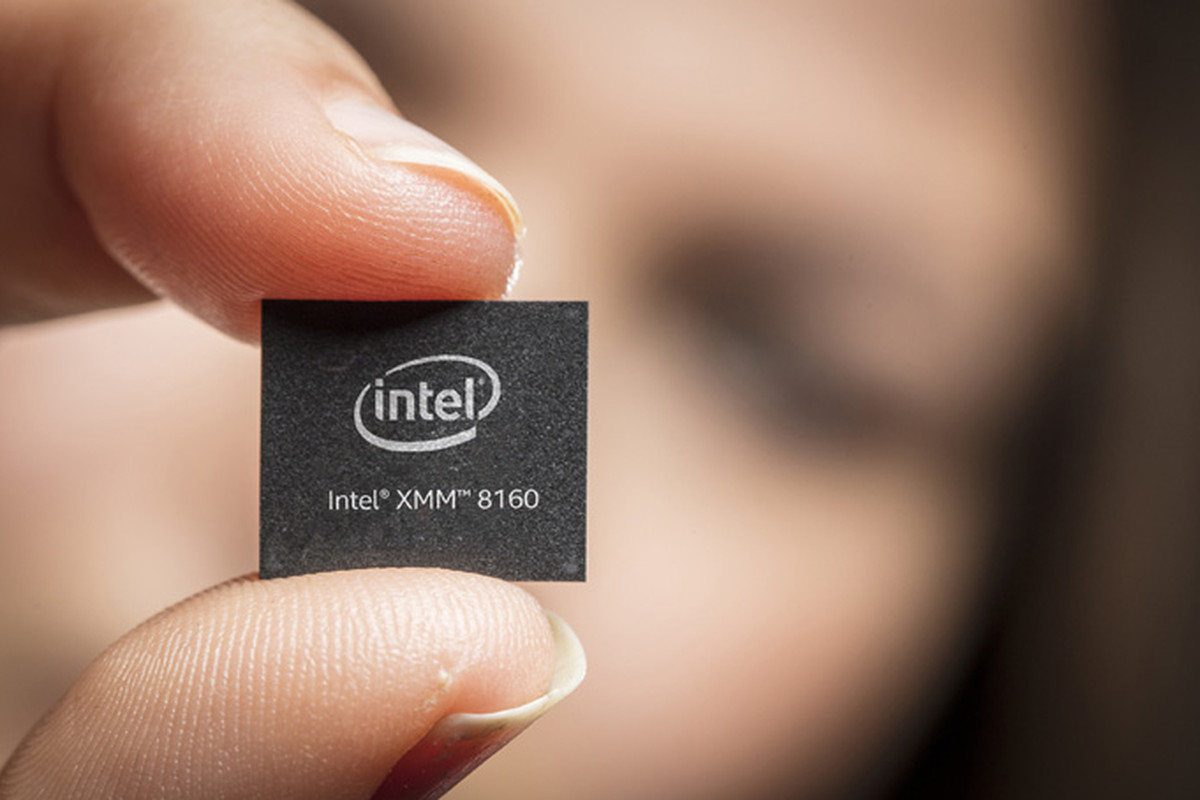
    You might recall that a legal feud between Apple and Qualcomm had Apple scrambling for a 5G modem chip to replace the one it wanted from Qualcomm. Apple planned on using a new 5G modem chip designed and produced by Intel. But Apple wasn’t thrilled about this and eventually reached a settlement that allowed it and Qualcomm to bury the hatchet resulting in the use of Qualcomm’s 5G modems on the iPhone 12 line, the first iPhone models to support 5G.

    Eventually, Apple plans on designing its own 5G modem chip and ended up purchasing most of Intel’s smartphone modem business in July 2019 for $1 billion.

  • Intel CEO says chip shortage will continue throughout this year

    Intel CEO says chip shortage will continue throughout this year

    As many of you know, we are in the middle of a chip shortage that has been impacting automobile and consumer electronic manufacturers. Intel CEO Pat Gelsinger sees the shortage continuing throughout the remainder of this year, bottoming out during the second half of 2021 before things start to improve. In fact, the executive doesn’t expect the supply-demand picture to return to normal until 2023.

    Gelsinger said, “I don’t expect the chip industry is back to a healthy supply-demand situation until ’23. For a variety of industries, I think it’s still getting worse before it gets better.” Last month, we told you that the lead time, the time it takes between placing an order for semiconductors and actually receiving them, hit 17 weeks in April; that was the longest lead time recorded by Susquehanna Financial since 2017 and was a big jump compared to the previous year’s 12.53 figure.

    Unlike fabless manufacturers like Apple, Qualcomm, MediaTek, and others, Intel owns its own factories (aka fabs, short for fabrication plants). A company like Apple designs its own chips, but without the means to manufacture them itself, the company turns to the world’s largest contract foundry, Taiwan Semiconductor Manufacturing Company, Limited (TSMC Ltd.) to produce them.

    Gelsinger says that thanks to Intel’s ownership of its fabs, it is more able to keep up with demand for chips than those who are outsourcing production to another foundry. The executive says that demand for chips will continue to be strong over the next 10 years thanks to expected growth in demand for 5G smartphones, AI, and electric vehicles. Intel’s CEO is on the side of those industry executives who see the current demand for chips continuing into the future.

    Other executives don’t believe that the industry can sustain the growth of more than 5% on an annual basis. Broadcom Inc. CEO Hock Tan is one such executive. Even though his firm reported a 15% revenue hike for its latest quarter, Tan says chip production is a mature industry that will revert back to low growth.

    There is no denying though, how important chips are to the global economy. The U.S. leads the way in the sales and design of chips although production is led by Taiwan’s TSMC and South Korea’s Samsung. TSMC will be opening at least one fab in Arizona no later than 2024.

  • Intel Reiterates Chip Supply Shortages Could Last Several Years

    Intel Reiterates Chip Supply Shortages Could Last Several Years

    Intel Corp’s CEO said on Monday it could take several years for a global shortage of semiconductors to be resolved, a problem that has shuttered some auto production lines and is also being felt in other areas, including consumer electronics. Pat Gelsinger told a virtual session of the Computex trade show in Taipei that the work-and-study-from-home trend during the COVID-19 pandemic had led to a “cycle of explosive growth in semiconductors” that has placed huge strain on global supply chains.

    “But while the industry has taken steps to address near-term constraints it could still take a couple of years for the ecosystem to address shortages of foundry capacity, substrates and components.”

    Gelsinger had told The Washington Post in an interview in mid-April the shortage was going to take “a couple of years” to abate, and that it planned to start producing chips within six to nine months to address shortages at U.S. car plants.

    Intel announced a $20 billion plan in March to expand its advanced chip manufacturing capacity, building two factories in Arizona and opening its plants to outside customers.

    “We plan to expand to other locations in the U.S. and Europe, ensuring a sustainable and secure semiconductor supply chain for the world,” Gelsinger said, without elaborating.

    Intel’s plans could directly challenge the two other companies in the world that can make the most advanced chips – Taiwan Semiconductor Manufacturing Co Ltd (TSMC) and South Korea’s Samsung Electronics Co Ltd.

    The two have come to dominate the semiconductor manufacturing business, moving its centre of gravity from the United States, where much of the technology was once invented, to Asia, where more than two-thirds of advanced chips are now manufactured.

  • Intel To Invest $600 Million To Expand Chip, Mobileye R&D In Israel

    Intel To Invest $600 Million To Expand Chip, Mobileye R&D In Israel

    Intel Corp said on Sunday it will invest another $600 million in Israel to expand its research and development (R&D) and confirmed it was spending $10 billion on a new chip plant. The announcement was made during a one-day visit to Israel by Intel Chief Executive Pat Gelsinger as part of a European tour that included Germany and Belgium last week. Intel is investing $400 million to turn its Mobileye unit headquartered in Jerusalem into an R&D campus for developing self-driving car technologies. Another $200 million will be invested in building an R&D centre, called IDC12, in the northern port city of Haifa next to its current development centre.

    Intel said the “mega chip design” facility will have a capacity of 6,000 employees. Gelsinger, on his first European tour since taking charge of the company in February, in a statement issued on Sunday predicted: “a vibrant future for Intel and Israel for decades to come”.

    In recent years, Intel has bought three Israeli tech companies – Mobileye in 2017 for more than $15 billion, artificial intelligence chipmaker Habana in 2019 for $2 billion, and Moovit a year ago for $1 billion. During his brief visit, Gelsinger met with Intel and Mobileye management and Israeli Prime Minister Benjamin Netanyahu. Israel’s Finance Ministry in early 2019 said Intel would get a $1 billion grant to build an $11 billion chip plant, although at the time Intel would not confirm the amount.

    On Sunday, Intel said the investment would be $10 billion and the first phase of construction has begun. Its current Fab 28 plant at the company’s Kiryat Gat site produces 10 nanometres (nm) chips. Intel has not disclosed whether the new plant will produce smaller chips, which can increase efficiency, but in March it said it was building two 7 nm chip plants in Arizona for some $20 billion.

    Intel Israel’s exports grew to a record $8 billion in 2020 from $6.6 billion in 2019, accounting for 14% of total high-tech exports and 2% of Israel’s GDP. Intel is the largest employer of Israel’s high-tech industry with nearly 14,000 workers.

  • Irvins Salted Egg expands into the US via DTC route

    Irvins Salted Egg expands into the US via DTC route

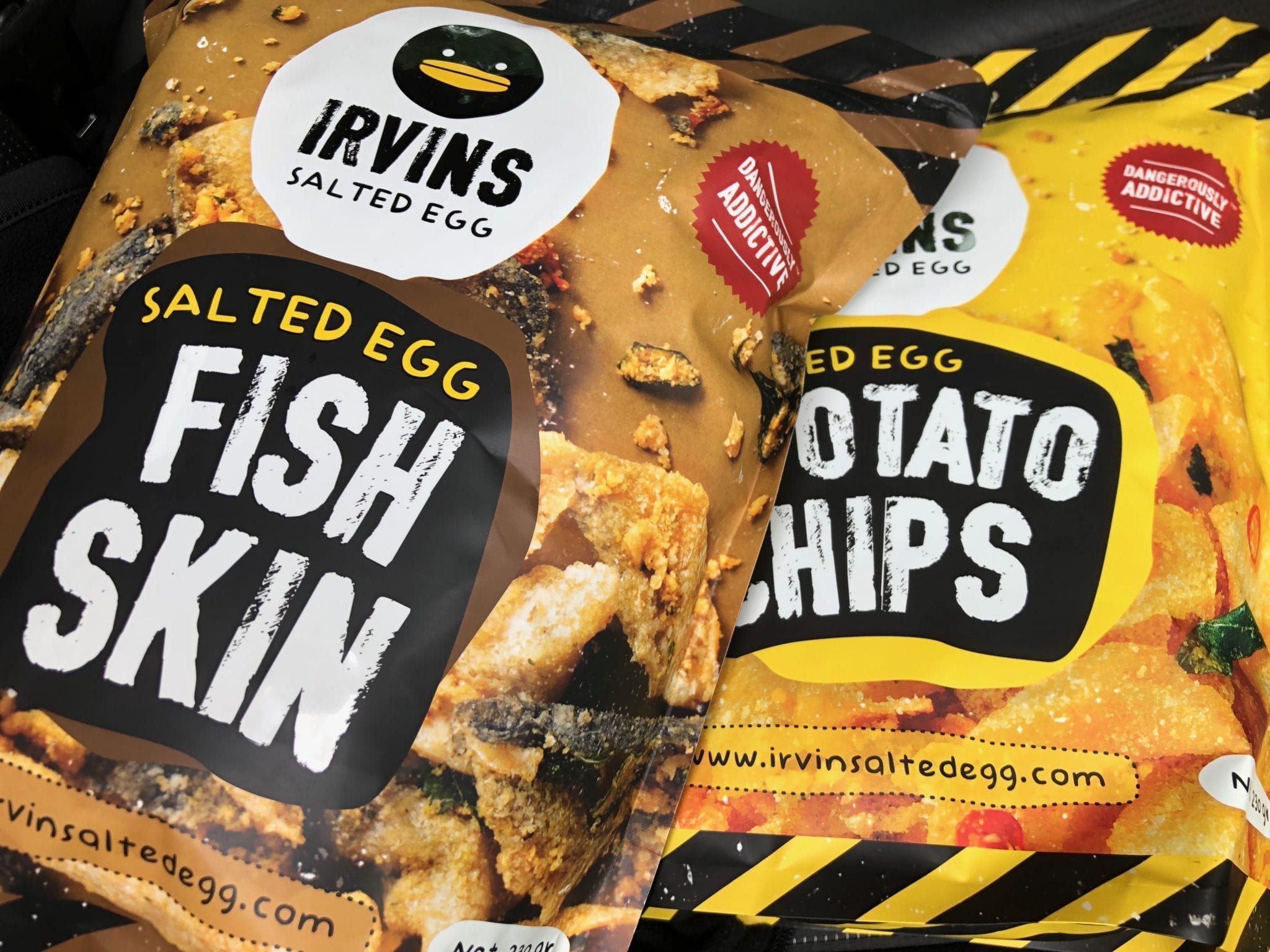
    Singaporean cult snack brand Irvins Salted Egg has expanded online in the US and launching at several Asian specialty stores including 99 Ranch, Seafood City and H Mart.

    The popular brand, which has a cult following in Singapore and Hong Kong, especially, has pop-up style brick-and-mortar stores and sell-through in nine Asian countries. By going online it has taken a direct-to-consumer approach to competing with American snack brands.

    In Australia, it is sold through the e-commerce site Snack Affair.

    “We are ecstatic about our expanded availability in the US. Irvins Salted Egg products bring a distinctive flavor and premium quality to the American snack food market, and we look forward to earning a place in the conversation as more people can try our product,” said Yosuke Yazawa, Irvins chips business development manager of North America.

    Irvins will offer flavors online such as Salted Egg Potato Chips, Spicy Salted Egg Potato Chips, Salted Egg Cassava Chips, Spicy Salted Egg Cassava Chips and Salted Egg Crunchy Roll.

    The salted-egg flavored chips are made in Singapore using Asian flavors such as the salted duck egg yolk, curry leaves, and red chilli pepper without preservatives.

  • VinSmart produces smartphones for US mobile service provider

    VinSmart produces smartphones for US mobile service provider

    VinSmart, a subsidiary of Vietnam’s largest listed company Vingroup, has received a contract manufacturing order for two million smartphones from a major U.S. carrier.

    Le Thi Thu Thuy, general director of VinSmart, without identifying the U.S. company, said Thursday at a press conference that the first consignment was sent a month ago. The phones carry the American service provider’s logo.

    “This is an important step in understanding the U.S. market… before taking Vsmart phones there in future,” Thuy said.

    The U.S. company has such stringent standards that despite having a team in Vietnam to supervise the VinSmart factory 24/7, it still thoroughly inspects the phones once they reach the U.S.

    The contract is for four models, all of them supporting 4G.

    A confidentiality agreement prohibits VinSmart from disclosing the name of its partner.

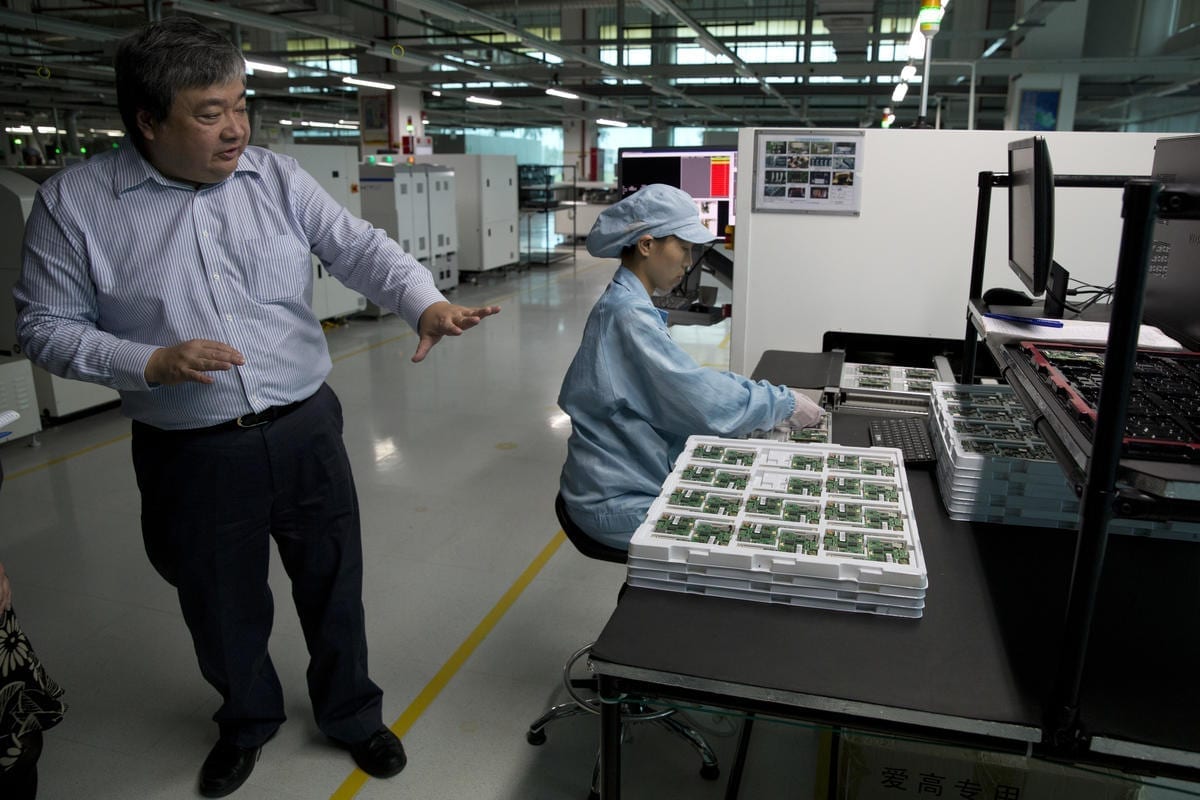
    VinSmart has a plant for manufacturing 125 million phones, IoT devices, and other smart devices per year at the Hoa Lac Hi-Tech Park in Hanoi.

    The brand is currently sold in three countries, Russia, Myanmar, and Spain, but the company expects to sell its Aris 5G in the U.S. by next year.

    VinSmart had a 16.7 percent market share in the first quarter and surpassed Apple to become the third-largest smartphone brand in Vietnam behind Samsung and China’s Oppo.

  • Foxconn eyes development of $319 million workers housing

    Foxconn eyes development of $319 million workers housing

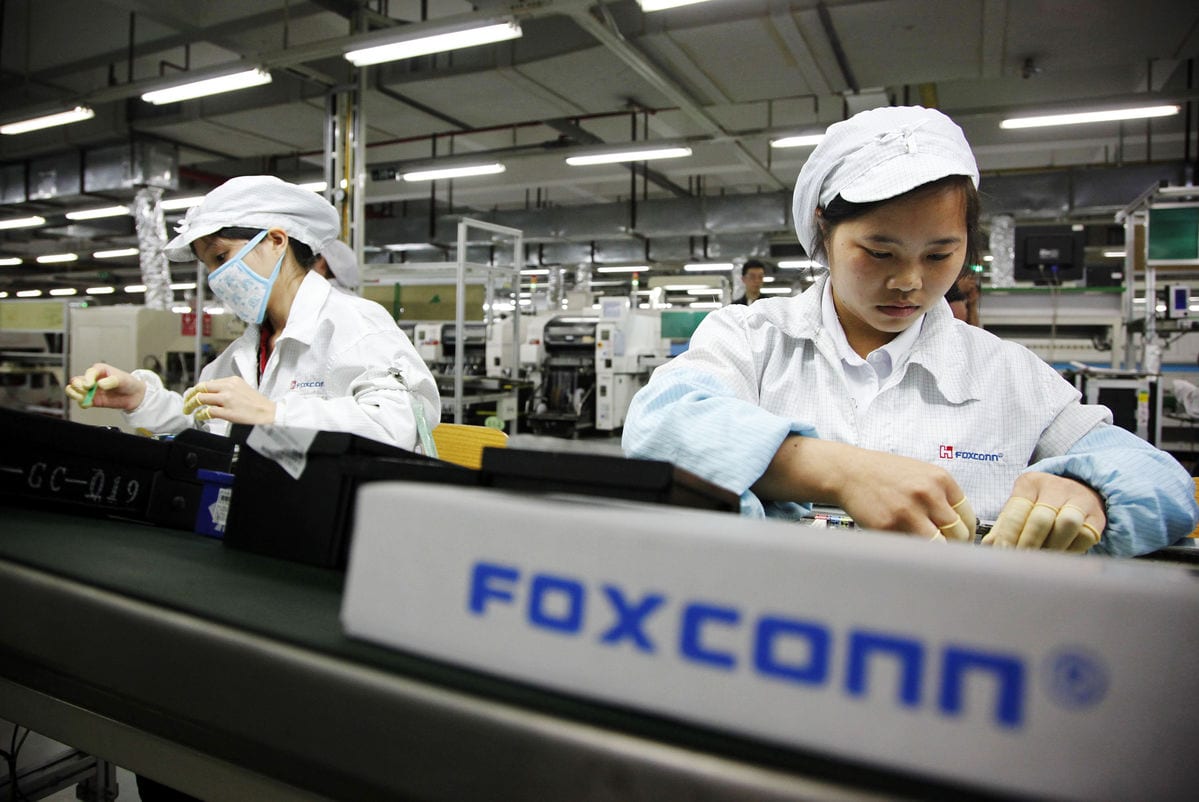
    Taiwan’s Foxconn wants to build housing for workers in northern Vietnam and has made a proposal to the government. The world’s largest contract manufacturer, a contractor for Apple and other global giants seeks to develop three housing projects at a cost of about VND7.4 trillion (nearly $319 million), and has apprised the Ministries of Construction and Planning and Investment of its interest.

    Foxconn wants to build them near industrial parks where it has its plants so that its own workers can also be housed in them.

    If approved by authorities, a project in Viet Yen District in Bac Giang Province will be the largest at 16.7 hectares and have the highest investment of VND3.42 trillion (about $147.4 million).

    Up to VND2.93 trillion ($126.3 million) will be invested in a 6.3-hectare project in Bac Ninh Province’s Que Vo District and the rest of the total investment will be poured into a 9.9-hectare project in Vinh Phuc Province.

    The company said besides apartments they would also have healthcare facilities, schools and shops.

    Since current policies pose certain hurdles, it plans to sell the houses to companies in the industrial zones for them to lease or sell to their employees.

    Foxconn came to Vietnam in 2007, and has been operating mainly in the northern provinces of Bac Ninh, Bac Giang and Vinh Phuc, manufacturing computers and other electronic products and car parts. Last year it expanded to the northern province of Quang Ninh.

    Last week it said for the first time that Vietnam is its largest manufacturing hub in Southeast Asia.

    This year Foxconn expects its exports from Vietnam to double to $6 billion.

  • Apple spends $1 billion to buy most of Intel’s smartphone modem chip business

    Apple spends $1 billion to buy most of Intel’s smartphone modem chip business

    Apple announced that it has agreed to purchase the majority of Intel’s smartphone modem chip business in a transaction that is being valued at $1 billion. Besides the patents, equipment, and leases that will move from the chipmaker to Apple, 2,200 Intel employees will now work for the iPhone manufacturer. The deal is expected to close in the fourth quarter and goes a long way toward helping Apple design and manufacture its own modem chips. Intel will still have the right to produce modem chips for PCs, IoT and self-driving cars.

    The 2018 iPhones all exclusively use Intel’s 4G LTE modem chips and Intel was originally slated to deliver a 5G modem chip to Apple in time for use with the 2020 iPhones. But a settlement between Apple and Qualcomm announced last April allowed both companies to bury the hatchet and end a feud that had kept Apple from sourcing Qualcomm’s 5G modem chips. Apple paid an undisclosed amount of money to Qualcomm, rumored to be $4.5 billion, in exchange for a six-year licensing pact (with an option for two additional years) and a multi-year chip supply agreement. So starting next year we should see a Qualcomm 5G modem chip inside the iPhone models that support the next generation of wireless connectivity. Based on the early rumors, that would be the 5.4-inch iPhone 12 and 6.7-inch iPhone 12 Max.

    Even though Intel said that it would ship its 5G modem chip in time for use inside the 2020 iPhones, it appeared that Apple didn’t fully trust Intel’s design. In February, there was talk about Apple designing its own 5G modem chip and it shifted around personnel in an effort to get the ball rolling on this project. All that Apple seemingly needed was a reliable supplier to get it from 2020 to 2022 or 2023 when the first Apple-designed 5G modem chip could start rolling off the assembly lines. That might have been the impetus behind Apple’s settlement with Qualcomm.
    But with the purchase of the majority of Intel’s smartphone modem chip business, Apple will soon be able to control its own destiny in terms of obtaining this key component. The 2019 iPhones will continue to use Intel’s 4G LTE modem chips; these units will ship before Apple and Intel close on the transaction.
    The bottom line is that even with this purchase, there is still a good chance that Apple relies on Qualcomm to supply it with 5G modem chips for the next few years. But this deal has to make the brass in Cupertino feel relieved. Things were looking desperate at times for Apple. Back in January, during the FTC v. Qualcomm trial, Apple supply chain executive Tony Blevins admitted that the company had talks with Samsung and MediaTek about working out a supply agreement for 5G modem chips.
    The $1 billion price paid by Apple makes this deal one of the most expensive purchases in Apple’s history. The most amount of money that Apple has paid to buy a company is the $3 billion it shelled out for Beats Audio back in 2014.
  • Qualcomm might be able to continue its anticompetitive chip selling policies

    Qualcomm might be able to continue its anticompetitive chip selling policies

    Last month, Judge Lucy Koh finally issued a ruling in a case that could force Qualcomm to change the way it does business. The case, known as the FTC (Federal Trade Commission) v. Qualcomm was originally heard during a ten-day period at the beginning of this year. With no jury seated, the FTC essentially put Qualcomm’s business practices on trial in front of the judge. Qualcomm’s “no license, no chips” policy, the collection of royalties based on the retail price of a phone, and its refusal to license its standard-essential patents were some of the company’s anticompetitive behaviors that were brought up by the FTC.

    Qualcomm has asked for a stay of the ruling so that it can appeal it, although Judge Koh has yet to make a decision on the request. The chip maker points out that if it starts renegotiating contracts as ordered by Judge Koh and then wins on appeal, it might not be able to reverse these deals once again. And Reuters reports that an FTC official thinks that Qualcomm has a good chance at overturning the ruling. FTC Commissioner Christine Wilson, appointed by President Donald Trump, wrote in the Wall Street Journal last week that the ruling against Qualcomm “radically expanded a company’s legal obligation to help its competitors,” and was based on a flawed 1985 Supreme Court decision (more on that later).

    Wilson’s op-ed might give Qualcomm an idea on how to win an appeal of Koh’s decision, according to several antitrust attorneys. Others believe that the appeals courts will find it hard to overturn Koh’s ruling, which some say was based on the judge’s strong fact-finding abilities and her determination about the credibility of those who testified before her.

    The aforementioned 1985 Supreme Court decision ruled that a company that drops a business arrangement that has proven profitable over time could be guilty of violating competition law. How does this relate to Qualcomm? The company once licensed its standard-essential patents to rival chip firms. These are patents that manufacturers need to license to make sure that their products are in compliance with technical standards. As a result, they must be offered to rivals on a fair, reasonable and non-discriminatory (FRAND) basis. In the early 2000s, Qualcomm stopped offering these patents to other chip makers and only licensed them to smartphone manufacturers.

    During the trial, the company denied that it had ever offered full licenses to other chip makers and says that if forced into doing so by Koh’s decision, it would be a new business arrangement, not the resumption of an old one. And that dovetails with Wilson’s op-ed in the Journal in which she wrote that Koh’s decision means that if a company sells a product to a competitor, it would have to sell every product it makes to every competitor or else be charged with violating antitrust law. The FTC commissioner also said that Judge Koh misapplied the 1985 Supreme Court decision.  University of Southern California law professor Jonathan Barnett agrees with Wilson and says that the Supreme Court ruling was supposed to be “very narrow.” He says that there is a good chance that Qualcomm will be able to reverse Judge Koh’s ruling.

    Many investors are hoping the same thing. On April 15th, the day before Qualcomm and Apple reached a settlement on their legal issues, Qualcomm’s shares closed at $57.18. Following news of the settlement, the stock soared peaking on May 1st at $89.29. The day before Judge Koh released her decision, Qualcomm’s shares had already declined to $77.75. Following the ruling, the stock dropped to $65.37. The company’s shares closed last week at $66.82.