Tag: cimb

  • Bursa Malaysia Edges up to 1,596 Points on Bank Gains

    Bursa Malaysia Edges up to 1,596 Points on Bank Gains

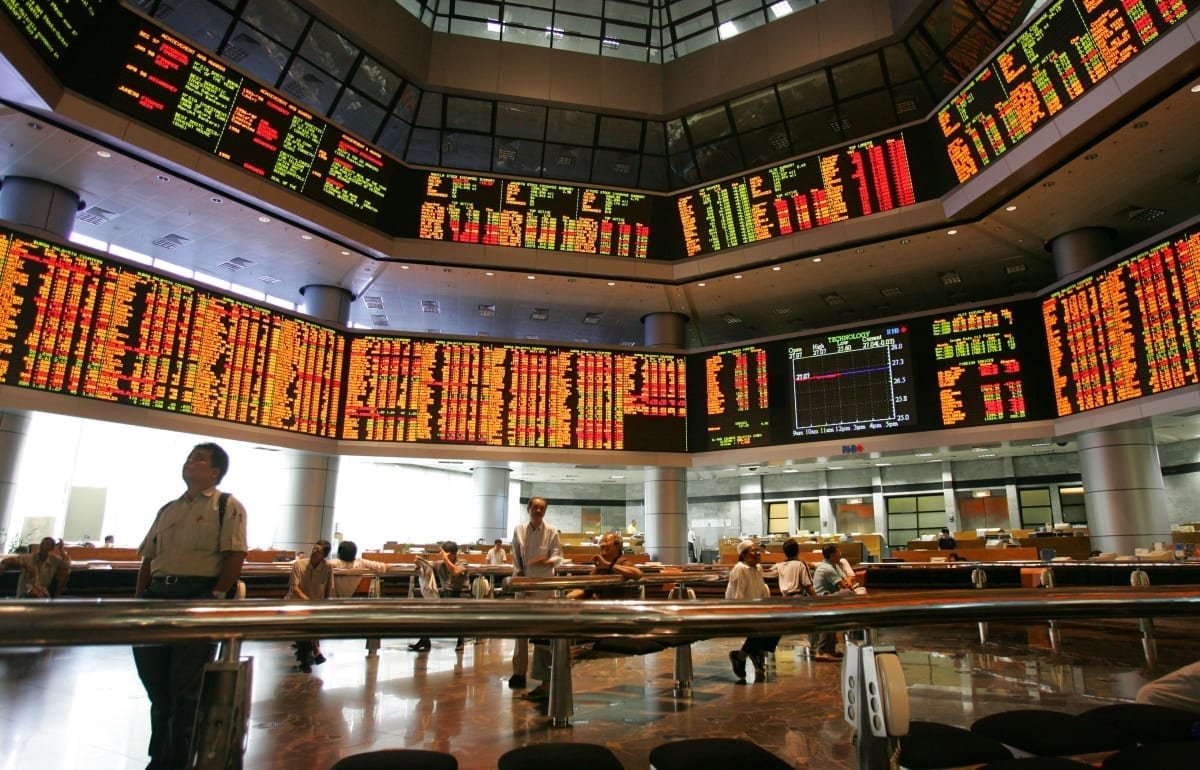
    Bursa Malaysia’s benchmark index edged up 0.36 points to 1,596.11 in early Tuesday trade as gains in heavyweight commercial lenders offset broad weakness across secondary counters.

    The marginal 0.02 per cent advance recovered an opening drop of 3.18 points to 1,592.57, though decliners outpaced advancers 201 to 156 across the broader exchange. Morning volume reached 180.64 million units worth RM90.02 million.

    Trading remained divided between domestic financial counters and export-oriented industrial names. Investors tracking Wall Street overnight gains looked for traction following a 1.11 per cent rise in the Nasdaq Composite and a 0.41 per cent lift in the S&P 500, where buyers returned to artificial intelligence semiconductor and memory hardware producers. That overseas bounce failed to spark a broad rally in Kuala Lumpur, where 302 counters traded unchanged and ten remained suspended.

    Lenders and Consumer Stocks Hold the Line

    Large commercial banks provided the primary support for the headline index during early exchanges. Malayan Banking added four sen to trade at RM9.94, Public Bank picked up one sen to RM4.72, and CIMB Group rose two sen to RM7.17. Hong Leong Bank held steady at RM21.10. Those advances lifted the Financial Services Index by 55.25 points to 18,546.22.

    Consumer and industrial heavyweights also found buyers. Food manufacturing major Nestle climbed 40 sen to RM90.30 to lead the top gainers list. Energy shipper MISC advanced 14 sen to RM9.49, refiner Petron Malaysia added 11 sen to RM3.45, and aluminum producer Press Metal gained five sen to RM6.73.

    Selling pressure hit utilities and infrastructure names, capping the index’s upward room. Tenaga Nasional dropped six sen to RM12.92, while YTL Power slipped five sen to RM5.21.

    Yield Pressure Weighs on Tech and Construction

    Elevated fixed-income yields in the United States continued to cast a shadow over rate-sensitive regional assets. The US 10-year Treasury yield held near 5.15 per cent while the 30-year yield stood around 5.48 per cent, keeping capital cautious toward emerging market equities.

    Technology equipment and assembly counters saw selective selling despite the overnight recovery in US chip stocks. Automated test equipment supplier KESM dropped 15 sen to RM4.54, and engineering solutions group UWC gave up nine sen to RM7.21. In building materials and construction, Kerjaya Prospek shed 10 sen to RM3.22, while ceramic tile manufacturer Kim Hin lost 8.5 sen to 80.5 sen.

    Apex Securities noted the split in investor sentiment as global interest rate pressures collided with domestic capital allocations.

    “the FBM KLCI is likely to trade within a range, with investors remaining selective and favouring domestically driven and defensive counters,”

    the brokerage said.

    Sector Divergence Deepens Across Secondary Boards

    Broader market gauges drifted lower as mid-cap and Shariah-compliant equities failed to mirror the banking index. The FBM Emas Index dipped 1.31 points to 11,908.38, while the FBM Top 100 Index fell 1.18 points to 11,704.04. The mid-cap FBM Mid 70 Index declined 17.71 points to 17,116.03, and the FBM ACE Index eased 1.58 points to 5,391.71.

    Shariah counters faced heavier selling, pulling the FBM Emas Shariah Index down 13.83 points to 11,860.36. The Plantation Index dropped 62.97 points to 8,590.4. In contrast, the Energy Index added 1.67 points to 825.23, supported by global crude prices trading near US$100 per barrel, while the Industrial Products and Services Index crept up 0.40 points to 174.5.

    Speculative retail counters dominated trading volume without driving major index shifts. GIIB rose 1.5 sen to 70.5 sen, and Ni Hsin picked up one sen to 45.5 sen. Zetrix AI and OCR stayed flat at five sen and 4.5 sen, respectively. Medical glove producer Top Glove eased half a sen to 88.5 sen, and healthcare firm LYC fell one sen to half a sen.

    Domestic Defensives Face Real Estate Headwinds

    The morning session shows institutional funds directing liquidity into large-cap balance sheets while avoiding debt-funded expansion plays. In retail, commercial development, and logistics, property developers and real estate investment trusts face higher borrowing costs because US long-term yields remain elevated above 5 per cent.

    Construction contractors linked to hyperscale data center infrastructure maintain a separate stream of domestic order book momentum. Yet the broader real estate ecosystem is operating with tighter capitalization spreads, leaving consumer staples and cash-generative banking operations as the primary defensive refuge for local asset managers.

    Market participants are now watching whether benchmark crude can maintain the US$100 per barrel threshold to support domestic energy counters, while keeping a close eye on the 1,600 psychological barrier for the FBM KLCI.
  • Bursa Malaysia Climbs to 1,635 as Financial Counters Lead Early Trade

    Bursa Malaysia Climbs to 1,635 as Financial Counters Lead Early Trade

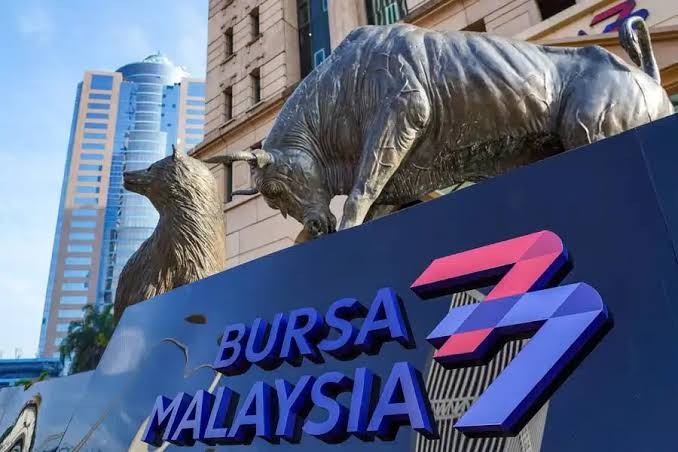
    Bursa Malaysia opened higher on Monday as the benchmark FTSE Bursa Malaysia KLCI gained 5.01 points to reach 1,635.88 within the first ten minutes of trade.

    The 0.31 per cent advance built on the previous Friday’s close of 1,630.87, aided by softer United States payroll figures that dampened expectations of immediate monetary tightening by the Federal Reserve.

    Trading across the Kuala Lumpur exchange showed broad participation in the opening hour. Advancing stocks outnumbered decliners 224 to 158, while 337 counters remained unchanged, 2,054 went untraded and 24 faced suspension.

    Banking and energy counters advance

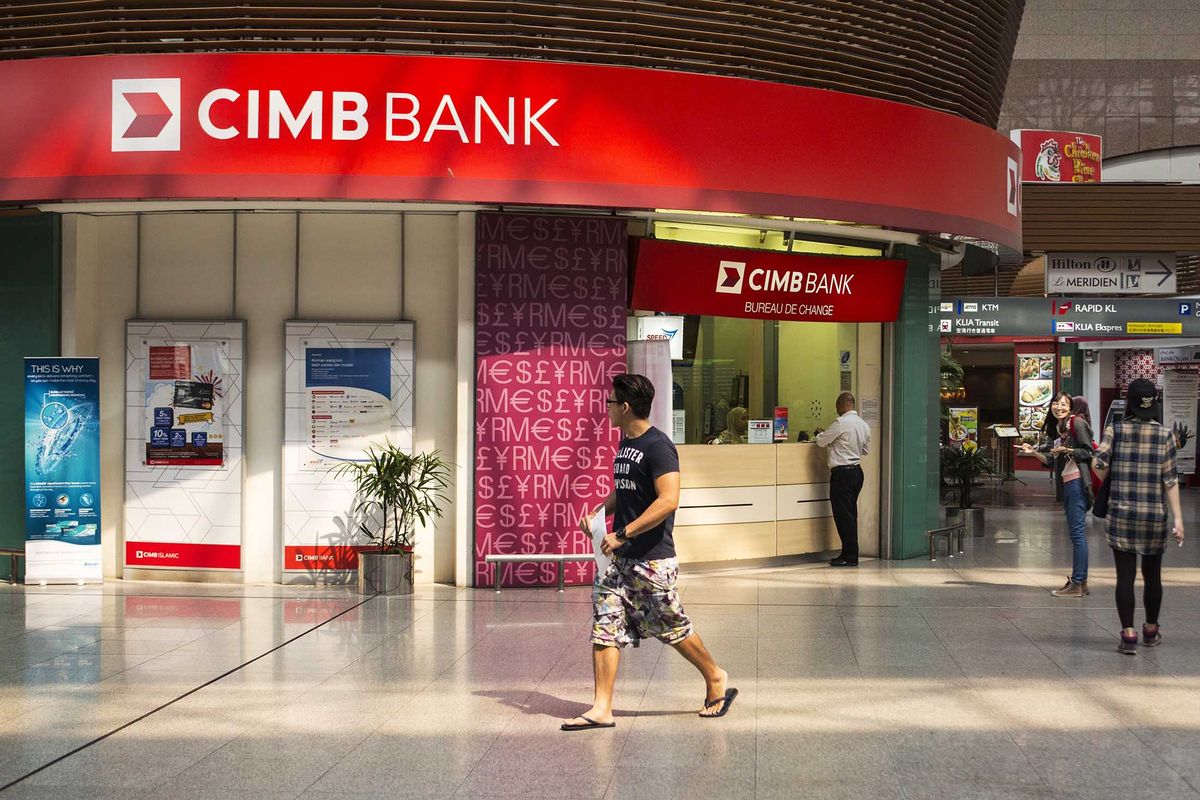
    Lenders provided the primary push for the index. Malayan Banking, Public Bank, and CIMB each climbed four sen to RM10.06, RM4.70, and RM7.69 respectively, driving the Financial Services Index up 97.59 points to 19,138.10.

    Utility giant Tenaga Nasional also added four sen to trade at RM13.00. Energy stocks followed suit, pushing the sector index up 2.57 points to 835.60, while the Plantation Index gained 2.23 points to 9,058.78.

    Healthcare provider IHH Healthcare moved against the upward trend, shedding six sen to RM7.74.

    Trading volume and market breadth

    Total market turnover reached 206.30 million shares valued at RM98.78 million during early exchanges. Technology and manufacturing counters saw heavy volumes among retail and institutional accounts.

    VS Industry gained three sen to 32 sen, while Notion VTec added four sen to 74.5 sen. GB Bond rose half a sen to 23.5 sen, SFP Tech picked up one sen to 28.5 sen, and Dagang NeXchange traded unchanged at 51.5 sen.

    Renewable energy and industrial engineering names led percentage gains. Samaiden climbed 19 sen to RM3.03, UWC gained 16 sen to RM7.73, Critical Holdings rose 15 sen to RM2.61, Mi Technovation added nine sen to RM5.30, and Solarvest advanced eight sen to RM4.25.

    Regional pressures and bond yields

    External macroeconomic indicators continue to dictate capital flows across Southeast Asian bourses. Rakuten Trade equity research head Thong Pak Leng noted that elevated benchmark borrowing costs and commodities keep local sentiment selective.

    Brent crude traded at US$102.25 per barrel while the US 10-year Treasury yield held at 5.28 per cent, maintaining pressure on emerging market valuations. In Hong Kong, the Hang Seng Index slipped below the 24,000 threshold as selling hit technology and financial listings.

    For consumer brands and industrial suppliers across Malaysia, higher bond yields and fuel costs present direct friction against corporate margins and transport overheads. Investors are filtering allocations toward cash-generative banking and energy plays while trimming positions in high-multiple consumer staples.

    Consumer decliners and index levels

    Consumer bellwether Nestle recorded the sharpest decline of the morning, dropping 32 sen to RM89.20. Industrial and tech decliners included Vitrox, down 14 sen to RM10.32, Kobay Technology, losing 12 sen to RM2.18, and Kelington, shedding five sen to RM8.58.

    Secondary indices tracked the main board higher. The FBM Mid 70 Index rose 28.14 points to 17,510.07, the FBM Emas Index added 33.81 points to 12,204.38, and the FBM ACE Index climbed 31.41 points to 5,560.87.

    Rakuten Trade projects the FBM KLCI to fluctuate between 1,625 and 1,635 points through the remainder of the session as bargain hunters test resistance levels.

  • Bursa Malaysia Opens Higher Before Trimming Gains to 1,666.81

    Bursa Malaysia Opens Higher Before Trimming Gains to 1,666.81

    Bursa Malaysia opened higher on Tuesday morning before trimming its advance, with the benchmark index easing 0.13 of a point to 1,666.81 at 9.10am.

    Trading volume reached 314.78 million shares valued at RM148.07 million, supported by selective bargain hunting across consumer, plantation, and financial counters.

    Market breadth stayed positive across the wider exchange in early trade. Advancers led decliners 265 to 150, while 294 counters were unchanged, 2,164 remained untraded, and 11 stayed suspended.

    Consumer and Energy Heavyweights Drive Divergent Moves

    Consumer goods companies posted sharp split movements during the morning session. Food and beverage manufacturer Fraser & Neave led the gainers board, rising 50 sen to RM23.10.

    Packaged food giant Nestle Malaysia moved in the opposite direction, dropping 48 sen to RM89.22. That drop positioned the food manufacturer among the session’s steepest decliners alongside insurer Allianz Malaysia, which fell 20 sen to RM21.10.

    Downstream fuel retailer Petron Malaysia advanced 21 sen to RM4.00, buoyed by shifting sentiment as easing tensions in West Asia pushed Brent crude oil prices lower. Semiconductor and technology equipment makers also found support, with Malaysian Pacific Industries adding 18 sen to RM42.98, while Pentamaster and MI Technovation each rose 16 sen to RM5.56 and RM5.82.

    Banking Stocks Draw Morning Capital

    Lenders provided steady support to the benchmark index as capital rotated into dividend-yielding financial counters. Malayan Banking added two sen to RM10.40, and CIMB Group rose four sen to RM7.69. Public Bank moved lower by one sen to RM4.78.

    Utility provider Tenaga Nasional shed 10 sen to RM12.94, while private hospital operator IHH Healthcare traded unchanged at RM7.62.

    Aviation and penny stocks dominated early trading activity. AirAsia rose two sen to 55 sen, building active retail turnover. Building materials firm BMS gained 1.5 sen to 15 sen, and Kinergy Advancement added half a sen to 40.5 sen. Artificial intelligence plays AIMAX and Zetrix AI traded flat at one sen and 20 sen, respectively.

    Valuations and Sector Rotations

    Rakuten Trade Sdn Bhd vice-president of equity research Thong Pak Leng noted that the domestic equity market presented attractive entry levels following softer trading last week. “Market valuation remains decent, currently at below the 16.5 times price-to-earnings average,” Thong said.

    Institutional and retail flows have increasingly concentrated on domestic-facing cash generators. For retail operators and consumer goods suppliers, pricing discipline and raw ingredient costs continue to dictate corporate margins on the ground, creating clear performance gaps between diversified beverage producers and legacy packaged food manufacturers.

    Plantation operators saw mixed pricing in morning trade. United Plantations fell 12 sen to RM33.30 despite modest underlying gains across the broader agricultural sector. Sunway Healthcare retreated nine sen to RM2.20.

    Mid-Cap and Shariah Gauge Gains

    Broader market indices traded in positive territory despite the slight retreat on the headline composite gauge. The FBM Mid 70 Index climbed 51.93 points to 17,741.07, and the FBM ACE Index rose 19.87 points to 5,336.30.

    The FBM Emas Index gained 12.17 points to 12,410.78, while the FBM Top 100 Index added 8.48 points to 12,198.93. The FBM Emas Shariah Index advanced 8.07 points to 12,244.83.

    Sector-specific indices tracked upward across the board. The Financial Services Index gained 25.65 points to 19,517.12, the Energy Index picked up 2.14 points to 847.57, the Plantation Index added 1.10 points to 9,411.59, and the Industrial Products and Services Index rose 0.69 of a point to 184.19.

    Market participants are tracking whether the benchmark composite index holds within its expected range between 1,665 and 1,680 points as institutional volume builds through the trading week.

  • CIMB Expands Wealth Services into Singapore and Thailand, Targeting Southeast Asias Rising Affluent Class

    CIMB Expands Wealth Services into Singapore and Thailand, Targeting Southeast Asias Rising Affluent Class

    CIMB Group, Malaysia’s second-largest bank in terms of assets, has announced its intention to expand its private wealth business to Singapore and Thailand by the end of the year. This move is part of a larger plan to double the bank’s wealth assets under management by 2030.

    Targeting Southeast Asia’s Growing Affluent Segment

    Haniz Nazlan, the CEO of group consumer banking at CIMB, revealed on Monday that this expansion activity is targeting the rapidly increasing affluent segment in Southeast Asia. This strategic move follows the successful launch of the bank’s private wealth business in Indonesia earlier in the year and in Malaysia on the same day.

    According to Nazlan, the ASEAN economy, worth US$4 trillion, has been experiencing robust annual economic growth rates of approximately 4%, which is significantly higher than many developed markets. This economic dynamism is expected to stimulate a 5% to 6% annual increase in the region’s affluent population. Furthermore, the middle class is projected to comprise between 65% and 70% of the ASEAN population by 2030.

    Factors such as growing incomes, escalating cross-border investments, and a notable surge in intergenerational wealth transfers are propelling the market.

    A New Service for High Net-Worth Clients

    Daniel Cheong, CIMB’s head of consumer banking for Malaysia, revealed that the new private wealth service is tailored to clients who have at least RM1 million ($244,612) in assets under management. This offering is positioned above CIMB Preferred, the bank’s mass-affluent priority banking segment, which requires a minimum of RM250,000 in assets.

    CIMB’s Private Wealth service offers clients dedicated relationship managers, treasury solutions, investment advisors, customized investment products, succession planning, and digital wealth capabilities.

    Nazlan noted that affluent clients are progressively seeking advice that goes beyond mere investment product selection. He explained that they want guidance on wealth protection, preparation of their children’s futures, access to global opportunities, and making informed decisions in an unpredictable world.

    Nazlan disclosed that CIMB’s wealth assets under management (AUM) were approximately RM250 billion in the preceding year. However, he refrained from providing interim growth targets or customer acquisition figures, stating that it is still the early stages of the Private Wealth proposition’s rollout.

    Questions & Answers

    What is CIMB Group’s plan for its private wealth business?
    CIMB Group plans to expand its private wealth business to Singapore and Thailand by year-end, aiming to double its wealth assets under management by 2030.

    Who are the target clients of the new CIMB private wealth service?
    CIMB’s private wealth service targets high net-worth clients who have at least RM1 million ($244,612) in assets under management.

    What are the key services offered by CIMB’s Private Wealth service?
    CIMB’s Private Wealth service offers dedicated relationship managers, investment advisors, treasury solutions, succession planning, customizable investment products, and digital wealth capabilities.

  • U Mobile, CIMB Sign MoU to Support 5G Network Rollout

    U Mobile, CIMB Sign MoU to Support 5G Network Rollout

    U Mobile CEO, Wong Heang Tuck, highlighted the company’s enthusiasm for this strategic partnership with CIMB for the 5G rollout, emphasizing CIMB’s shared commitment to innovation and digital growth. He noted that the financial support would enable a fast, cost-effective deployment, benefiting businesses, consumers, and the public sector.

    Chu Kok Wei, CEO of Group Wholesale Banking, CIMB Group, said, “In line with our shared goal of nation building, CIMB is pleased to support U Mobile in its efforts to connect Malaysians and spur digital innovation through the power of 5G. CIMB is also ready to offer a holistic range of bespoke products and services apart from financing, extending to diverse areas including investment banking and treasury that will spark further innovation and accelerate growth both for U Mobile and Malaysia.”

    Both Tuck and Wei signed the MoU at U Mobile’s Corporate Offices in Berjaya Times Square. The ceremony was attended by U Mobile CFO, Sandy Tsang, and Denise Wong, Head of Corporate Coverage Malaysia at CIMB Group.

    This MoU builds on a longstanding financial relationship between the two companies, including CIMB’s participation in a MYR 1.2 billion facility for U Mobile in 2021, which was increased to MYR 1.4 billion in 2023.

  • DHL Express and CIMB join forces to reduce CO₂e through sustainable aviation fuel

    DHL Express and CIMB join forces to reduce CO₂e through sustainable aviation fuel

    DHL Express has signed an agreement with CIMB Group Holdings Berhad (“CIMB” or “the Group”) to welcome the banking group onboard its GoGreen Plus programme.

    The partnership enables CIMB to leverage the use of sustainable aviation fuel (SAF) to mitigate the CO2e emissions associated with its international shipments. Through the partnership, CIMB will deploy the programme across Malaysia and Singapore.

    CIMB recognises the importance of aligning business interests with climate practice. In September 2022, the Group announced a net-zero by 2050 goal for Scope 3 emissions, emphasising the indirect greenhouse gases generated through transportation and distribution activities. DHL’s GoGreen Plus service helps to facilitate a pathway towards cleaner operations and contributes to scaling the wider SAF ecosystem.

    SAF is considered the aviation industry’s most promising means of decarbonisation. Made from alternative raw materials such as used cooking oil, waste, and hydrogen, SAF cuts approximately 80 percent of carbon emissions for air transport shipments over its lifecycle compared to conventional jet fuel. In collaboration with DHL Express, CIMB expects to lower the carbon emissions of its time-definite international air shipments from Malaysia and Singapore by 20 percent via DHL. An independent auditor, Société Générale de Surveillance, verifies the greenhouse gas emission reductions to be counted against CIMB’s Scope 3 carbon emission footprint.

    “Many of our customers look at sustainability as a business imperative today. In Asia Pacific alone, more than 12,000 customers have signed up for our GoGreen Plus service and this number continues to grow consistently,” said Ken Lee, CEO DHL Express Asia Pacific. “As a leading express logistics company, we always connect people and businesses across borders. GoGreen Plus serves as a vital avenue for businesses to cut carbon emissions, and we are convinced more will come on board.”

    “SAF is widely acknowledged as a truly viable route to decarbonising the aviation sector. There is still significant progress to be made, as SAF makes up only 0.1 percent of aviation fuel consumed today. We are impressed with the leadership CIMB has demonstrated in the sustainability space and we are delighted to have CIMB partner us for this important initiative. This motivates us to accelerate efforts to promote SAF availability, accessibility, and affordability so that our customers realise their environmental ambitions,” said Julian Neo, Managing Director of DHL Express Malaysia and Brunei.

    “Sustainability is a key focus at CIMB and central to that are our 2050 net-zero commitments. In our roadmap to achieve these targets, we have long advocated the need to strategically partner and drive innovative solutions. CIMB is pleased to be partnering DHL in their sustainable fuel proposition that will help us mitigate our Scope 3 carbon emissions and in that regard, help us get closer to our 2050 net-zero commitments. DHL’s innovative solution in bringing such an option to its key clients is commendable and will accelerate the commercialisation of such technology,” said Gurdip Singh Sidhu, Chief Executive Officer of CIMB Malaysia and CIMB Bank Berhad.

    Launched in February 2023, GoGreen Plus is among the DHL Group’s initiatives to achieve net-zero missions by 2050, which is made possible by three of the most significant SAF agreements with bp, Neste, and World Energy. The air freight network accounts for around 70 percent of the company’s carbon footprint, so sustainable air transportation solutions are crucial for greener logistics.

  • CIMB Restructuring Sees Lay-Offs in Singapore

    CIMB Restructuring Sees Lay-Offs in Singapore

    The Malaysian lender is revising its strategy to emphasise sustainable growth, in line with the group’s vision to be a «leading focused Asean bank.»

    CIMB Singapore is laying off staff and will close its Orchard Road branch as part of a restructuring exercise, which will see it optimise its functional set-up and leverage its group strengths through regionalization.

    These will make us more resilient, more productive and better positioned for growth going forward,» CIMB Singapore chief executive Victor Lee said in an internal memo.

    CIMB Singapore will be positioned as an Asean banking hub for the group, with a focus on wealth management, SME (small and medium-sized enterprises) banking, regional corporates and treasury and markets. According to the report, the bank had 1,200 staff in Singapore. Only its Raffles Place branch will remain following the exercise.

    Singapore is a core and important market to the CIMB Group, and we will continue to invest in our key growth areas, CIMB Singapore said in a statement.

    The bank let go of three of its business heads in Singapore in November 2020, following a review of its operations that cited the poor performance brought about by the pandemic.

  • CIMB Restructures Singapore Business

    CIMB Restructures Singapore Business

    The Malaysian bank is letting go of three business heads in Singapore, following a review of its operations.

    Changes are afoot at CIMB Singapore, as the bank has moved to ax its consumer, commercial and corporate banking heads: Josandi Thor, Yong Jiunn Run and Lai Ven-Li, citing an internal memo viewed by the portal.

    The bank cited the poor performance brought about by the pandemic, which required it to reshape its business portfolios to drive cost efficiency across the bank. The bank said it recently adapted its Forward23 five-year growth plan, launched in 2018, in response to the pandemic.

    CIMB Singapore’s posted losses of 939 million ringgit ($229.42 million) for the first half of the year, largely due to impairments.

    However, there have been talks of restructuring since the middle of the year and the possibility of wider layoffs.

    An observer told the publication that CIMB Singapore CEO Victor Lee, who was appointed earlier this year, was looking to restructure the senior management team and bring in people he had previously worked with.

    Given the business pivots moving forward, we have carefully deliberated with group management on the optimal structure to deliver our Forward23+ strategy. This entails streamlining the leadership structure and reducing the CEO’s span of control to focus on key areas impacting the business, Lee said in the email.

  • CIMB Appoints Group CEO

    CIMB Appoints Group CEO

    He succeeds Zafrul Tengku Abdul Aziz, who resigned as group CEO of CIMB Group Holdings and CEO of CIMB Bank in March to join the Malaysian cabinet as finance minister.

    CIMB Group, Malaysia’s second-largest financial services provider by assets, has appointed Abdul Rahman Ahmad as group chief executive officer/executive director for CIMB and CEO/executive director of CIMB Bank, effective June 10, the bank announced in a statement.

    Abdul Rahman brings more than two decades of experience in leadership roles across several industries, including as CEO of Malaysian Resources Corporation, CEO of Media Prima, CEO of government-linked private equity firm Ekuiti Nasional, and president and most recently as group CEO of asset management firm Permodalan Nasional.

    As the industry undergoes fundamental changes, he will bring a fresh perspective to lead CIMB’s continued transformation and build upon its successful ASEAN franchise, CIMB chairman Mohd Nasir Ahmad said in the statement.

    CIMB offers consumer banking, commercial banking, investment banking, Islamic banking, and asset management products and services. Headquartered in Kuala Lumpur, the Group is present in all 10 Southeast Asian nations, with 697 branches as of March 31, 2020.

    Beyond Southeast Asia, the Group has market presence in China, Hong Kong, India, Korea, the U.S., and U.K. CIMB Group operates its business through three main brand entities, CIMB Bank, CIMB Investment Bank, and CIMB Islamic. CIMB Group is also the 92.5 percent shareholder of Bank CIMB Niaga in Indonesia, and 94.8 percent shareholder of CIMB Thai in Thailand.

  • CIMB Singapore Partners Security Token Offerings Platform

    CIMB Singapore Partners Security Token Offerings Platform

    The bank’s partnership with iSTOX will expand private capital markets access for its clients.

    CIMB Singapore is partnering ICHX Tech to allow its clients in the Asean region to raise funds in a faster, more flexible and efficient way on its blockchain-enabled platform, a press release on Wednesday announced.

    The firm operates Singapore-based platform iSTOX, which supports the issuance, custody and secondary trading of digitized securities using advanced smart contracts and distributed ledger technology to streamline the process.

    We are pleased with this partnership to provide our clients with an alternative digital solution as digitization is one of the pillars that we are looking at to build aggressively within the bank in the next few years, Victor Lee, CEO of CIMB Bank Singapore, said in the statement.

    Founded in 2017, iSTOX is backed by Singapore Exchange (SGX), Temasek Holdings subsidiary Heliconia, Japan’s Tokai Tokyo Financial Holdings, Thailand’s Kiatnakin Phatra, and South Korea’s Hanwha Asset Management.

  • CIMB Chief Steps Down To Take Finance Minister Role

    CIMB Chief Steps Down To Take Finance Minister Role

    CIMB Group Holdings announced on Monday that its chief has relinquished his post on Monday, as he has been appointed the new Finance Minister in Malaysia.

    Zafrul Tengku Abdul Aziz , who has been appointed the new Finance Minister on Monday, has resigned as group CEO of CIMB Group Holdings and CEO of CIMB Bank. He has also resigned from all other board positions on the same date, the lender said in a statement on Monday.

    The appointment of Zafrul was announced by Prime Minister Muhyiddin Yassin when he unveiled his new Cabinet. Tengku Zafrul has served the Group for six years when he re-joined in 2014. He has done an outstanding job, shaping CIMB’s transformation under our T18 and Forward23 strategic plans, said Chairman of CIMB Group Holdings Mohd Nasir Ahmad.

    In his place, the board has appointed Omar Siddiq, currently the Group Chief Operating Officer, as Officer-in-Charge for CIMB Group and CIMB Bank Berhad, marking a start in the group’s succession plan.

    CIMB Group is Malaysia’s second-largest financial services provider by assets, offering consumer banking, commercial banking, investment banking, Islamic banking, and asset management products and services. Headquartered in Kuala Lumpur, the Group is present in all 10 Southeast Asian nations (Malaysia, Indonesia, Singapore, Thailand, Cambodia, Brunei, Vietnam, Myanmar, Laos and Philippines), with 702 branches as at 31 December 2019.

    Beyond Southeast Asia, the Group has market presence in China, Hong Kong, India, Korea, the U.S., and U.K. CIMB Group operates its business through three main brand entities, CIMB Bank, CIMB Investment Bank, and CIMB Islamic. CIMB Group is also the 92.5 percent shareholder of Bank CIMB Niaga in Indonesia, and 94.8 percent shareholder of CIMB Thai in Thailand.

  • CIMB Bank Philippines Partners With Jumio

    CIMB Bank Philippines Partners With Jumio

    CIMB Bank Philippines’ all-digital bank has partnered Jumio, a provider of AI-powered end-to-end identity verification and authentication solutions to provide a simple, hassle-free and convenient digital onboarding solution to Filipinos.

    Jumio’s identity verification solution uses machine learning, AI, certified liveness detection and face-based biometrics to ensure the person behind a digital transaction is who they say they are by matching a user’s live selfie with the photo shown on their government-issued ID.

    Our partnership with Jumio has been integral in achieving our milestones so far as an all-digital bank in the Philippines to deliver a safe and secure banking experience. We are very grateful to have them as an ally in bringing Filipinos closer to financial inclusion, said Vijay Manoharan, CIMB Bank PH CEO in a statement on Tuesday.

    In its first full year of formal operations, CIMB Bank Philippines (CIMB Bank PH) signed in almost 2 million Filipinos via the CIMB Bank PH digital platform, 30 percent of which are first-time customers to a bank. CIMB Bank PH is part of the CIMB Group, which has a presence in over 16 global markets.

    The all-digital bank offers one of the most attractive savings interest rates of 4 percent, with zero transaction fees and minimum balance. With the bank’s digital proposition, it takes only 10 minutes to open a safe and secured account and 10-minute approval response for personal loans up to Php 1 million.

    CIMB Bank PH’s mobile app integrates Jumio’s AI-driven identity verification technology to provide a safe, secure and fast digital onboarding experience. What used to take 15 minutes with a video KYC process now takes less than five minutes, resulting in an increase in conversions. «In the Philippines and across the greater APAC region it’s becoming increasingly important for banks to offer a streamlined digital onboarding process,» said Jumio CEO Robert Prigge.

    Leveraging advanced technology including augmented intelligence, AI, biometrics, machine learning, certified 3D liveness detection, and human review, Jumio helps organizations meet regulatory compliance including KYC, AML, and GDPR and definitively establish the digital identity of their customers.

    Based in Palo Alto, Jumio has verified more than 200 million identities issued by over 200 countries and territories from the real-time web and mobile transactions. Jumio’s solutions are used by companies in the financial services, sharing economy, digital currency, retail, travel, and online gaming sectors.

  • CIMB Singapore Appoints CEO

    CIMB Singapore Appoints CEO

    A corporate and retail banking stalwart replaces Mak Lye Mun, who retires after 10 years at the helm.

    CIMB Singapore has appointed Victor Lee as chief executive officer, the Malaysian bank announced on Thursday.

    With the new Industrial Revolution 4.0, we shall need to anchor down on partnerships, technology; customer obsession will be core, and an equally important sustainability agenda, Lee said about his priorities.

    He will concurrently hold the role of CEO of CIMB Group Commercial Banking, and will be a member of the CIMB Group’s senior management team.

    Lee joined CIMB in January 2019 as the bank’s CEO of group transaction banking, based in Malaysia. Prior to joining CIMB, Lee was executive vice president at Fullerton Financial Holdings for three years.

    According to his LinkedIn profile, Lee began his banking career in 1994 at DBS Bank. He has also held roles at UOB, Standard Chartered Bank, Citi and Sumitomo Mitsui.

  • CIMB Ties Up With SESAMi Holding

    CIMB Ties Up With SESAMi Holding

    CIMB Bank Singapore branch on Thursday announced a collaboration with SESAMi Holding to finance digital invoices under an automated workflow.

    Suppliers on SESAMi Holding’s platform will be paid immediately on their outstanding invoices within two business days, as soon as they are on-boarded on to the supply-chain financing program, CIMB Bank and SESAMi Holdings said in a joint statement. SESAMi Holding is an e-procurement platform in Singapore serving the supply chain needs for customers like Singtel, SATS, SIA, and SRC.

    Capital Match, which was acquired by SESAMi Holding, is the re-financing arm leading this initiative. Customer experience is one of our primary focus and the collaboration with SESAMi-Capital Match presents another scalable avenue for us. This is aligned with the government’s framework for e-invoices and call for companies to keep up with innovation, said Victor Lee, CEO of CIMB Group Commercial Banking in a media statement on Thursday.

    Capital Match will be reaching out to the supplier community to initiate this program. «The funding process will be extremely sped up through leveraging on our Early Payment System (EPS) which was launched earlier this year for the SESAMi supplier community. With the supply-chain financing, suppliers only need to submit minimal documents to be on-boarded under the program,” said Sharath Singh, commercial director of Capital Match.

    Our objective is to ensure a cost-efficient solution and non-recourse working capital funding option that supports our customers’ growth, said Lai Ven Li, head of corporate banking at CIMB Singapore.

  • CIMB Wants A Bigger Bite Of Singapore SME Banking Share

    CIMB Wants A Bigger Bite Of Singapore SME Banking Share

    CIMB Bank plans to double its market share from 3 percent to 6 percent by 2021 for its small- and medium-sized enterprise (SME) banking business in Singapore.

    One of the lender’s efforts to do so is the launch of its Asean-China Halal Corridor initiative last year, which is a trade network linking halal businesses across China and the region. The initiative – which encompasses agribusiness, cosmetics, food and beverage, fashion and pharmaceuticals – has seen a growing interest among SMEs here, with strong participation in a recent CIMB halal corridor workshop.

    Among the segments that we see (venturing abroad), a lot of cross-border SME regional flows are manufacturing and trade, F&B (food and beverage) including the halal market, and the agricultural commodity sector, said Yong Jiunn Run, head of CIMB commercial banking.

    China’s halal sector is expected to reach $1.9 trillion by 2021, and there is a potential customer base of 266 million in ASEAN and China. Along the process of aiding F&B companies to obtain halal certification, the bank found that this group of SMEs usually proceeds to obtain Islamic financing to tap potential Muslim investors, giving a lift to its SME banking segment.

    Since 2014, the Malaysia-headquartered bank has seen a take-up rate among SMEs for Islamic financing grow by more than 48 percent per annum in the past five years.

    Besides tapping on Islamic finance, the bank recently refreshed its current account offering for businesses, also known as CIMB BusinessGo (BizGo), to provide a unique offering.

    First launched in January 2017, the new bundle aims to address SMEs’ needs in the market that are not being met by the current incumbents, said Ian Chan, CIMB Bank Singapore’s co-head of transaction banking and regional head of digital banking.

    New features include free FAST (Fast And Secure Transfers) transactions, best forex rates guaranteed for transfers to Malaysia, and interest rates of up to 1.88 percent per annum, amongst the most competitive in the market. It’s a product we revamped for two reasons – first and foremost, it’s CIMB’s 10-year anniversary in Singapore, Chan said.

    Secondly, we also want to shout out to the market that we want to grow our SME segment and help our clients to expand their businesses into ASEAN.

    While CIMB is evaluating an application for the digital banking licenses that are up for grabs in Singapore, Yong is against the idea of pursuing the license just for the sake of it.

    If you want to go into the digital bank arena, what customer pain points are you trying to solve? That’s very key as it goes back to basics. If those basics can be achieved without going digital, then what do you really want to achieve? he asked.