Tag: cimb

  • CIMB Thai’s Q2 profit down 46.4% on higher bad debts, impairment losses

    CIMB Thai’s Q2 profit down 46.4% on higher bad debts, impairment losses

    CIMB Group Holdings Bhd’s 94.11%-owned indirect subsidiary CIMB Thai Bank PCL reported a 46.4% decline in net profit to THB191.2 million (RM23.2 million) for the second quarter ended June 30, 2018 against THB356.6 million (RM43.3 million) in the previous corresponding period, mainly dragged by bad and doubtful debts and impairment losses.

    Its operating income expanded 4.9% to THB3.4 billion from THB3.25 billion for the quarter under review.

    For the six-month period, CIMB Thai’s net profit went down 24.6% to THB 360.1 million, due to higher operating expenses coupled with a 1.0% increase in provisions. Meanwhile, its operating income rose 6.5% to THB6.8 billion.

    CIMB Thai’s net interest margin over earning assets stood at 3.87%, higher than the 3.81% a year ago, driven by more efficient management of funding costs.

    As at June 30, 2018, total gross loans (inclusive of loans guaranteed by other banks and loans to financial institutions) stood at THB215.2 billion, an increase of 1% from December 31, 2017.

    Loan loss coverage ratio decreased to 90.1% as at 30 June 2018 from 93.2% at the end of December 2017. As at 30 June 2018, total provisions stood at THB11.3 billion, translating to a THB4 billion excess over the Bank of Thailand’s reserve requirements.

    Total consolidated capital funds as at June 30, 2018 stood at THB43.9 billion. Bank of International Settlement (BIS) ratio stood at 17%, 12% of which comprised Tier-1-capital.

    At the noon break, CIMB Group’s share price fell 2 sen or 0.3% to RM5.83 on 7.55 million shares done.

  • Sheng Siong targets big expansion in 2018

    Sheng Siong targets big expansion in 2018

    Singapore’s Sheng Siong supermarket group is on track to open its 50th store this year, with bids in play for locations in Bukit Batok and Sumang Lane.

    And an analyst familiar with the business, CGS-CIMB’s Cezzane See, says the group’s pipeline is robust, with at least 10 bids coming up before the year is over.

    “If successful, the wins could take Sheng Siong’s number of stores beyond the 50-store target by the end of FY2018, and beyond six new store openings in FY2018 (just shy of the 8 store additions in FY2012),” See said in a report.

    The supermarket operator ended the first quarter of this year with 48 stores, five more than at the same time last year. It achieves revenue per square foot of $226, according to See.

    The fact Sheng Siong had failed to secure any new sites for about six months was down to unrealistic expectations of landlords, and no cause for concern, said See.

    “We believe this is positive for Sheng Siong as it is generally reluctant to overbid for the sake of expanding. Hence, a rationale bidding environment improves Sheng Siong’s odds of winning store bids, in our view.”

    Sheng Siong’s same-store sales growth in the first quarter was 5.6 per cent, as consumer sentiment recovered, aided by the expansion of its Block 506 Tampines store, the reopening of the Loyang store, and the migration of customers from its closed Verge and Woodlands Block 6A outlets to to Jalan Berseh and Woodlands Block 301.

  • CIMB pledges RM75m to train talent to meet digital ambitions

    CIMB pledges RM75m to train talent to meet digital ambitions

    CIMB Group Holdings Berhad has pledged RM 75 million over the next three years to the CIMB 3D Academy, to enhance the digital quotient in all job roles; to enable the group’s digital transformation; and to build an agile, innovative, tech-savvy workforce across the board.

    The Academy – premised on digital, data and disruption – is aimed at helping CIMB embrace the Fourth Industrial Revolution (4IR) to propel its digital ambitions via a group-wide people development initiative.

    The group aims to equip its 36,000-strong workforce – across all levels and categories – with digital knowledge and skills appropriate to their jobs, by end-2019, through an estimated two million staff learning hours.

    The group-wide people development initiative’s competency framework will be anchored on various pillars including digital world awareness; agile & entrepreneurial thinking; and data science & analytics / data-driven decision making.

    CIMB Group CEO Tengku Datuk Seri Zafrul Aziz said in a statement today, “As a leading ASEAN universal bank, CIMB has always prioritised our most valuable asset, our people. With the 4IR fast eclipsing existing digital revolution, we want to make CIMB the most powerful incubator possible for the development of talent, to propel the Group’s next growth phase. In tandem with the digitisation of our core with a data-first principle, the CIMB 3D Academy is a crucial component to help us develop a workforce with the right skillset to help achieve our digital ambitions.

    Through the Academy, our staff will be trained for agility, adaptability, creativity and an open mind to, among others, think like an entrepreneur and disrupt conventional thinking, in order to identify and reap opportunities to improve the Group’s value proposition for our 13 million customers and stakeholders across Asean.”

    The Academy will spearhead digital training with the goal of enhancing the group’s business powered by improvements in competency, mindsets and relationships within the workforce. A core group of roles to be developed include emerging ones such as agile leader, agile coach, scrum master, scrum product owner, and tech geek. Other digital-centric roles include data
    scientist, data engineer, data analysts, design thinker, UI/UX designer, as well as digital marketer.

    The 3D modules, which will be conducted primarily through a digital and interactive platform, will be developed both in-house and by external curriculum developers.

  • CIMB Malaysia to recognise RM920m gain from disposal of stake in CIMB-Principal Asset Management

    CIMB Malaysia to recognise RM920m gain from disposal of stake in CIMB-Principal Asset Management

    CIMB Group Holdings Bhd is expected to recognise a gain of about RM920 million following the completion of the divestment of its 20% stake in CIMB-Principal Asset Management Bhd and 10% equity interest in CIMB-Principal Islamic Asset Management Sdn Bhd to Principal Financial Group for RM470.29 million today.

    This, however, is lower than the initial expectation of RM950 million.

    The banking group told Bursa Malaysia that its common equity tier 1 ratio will also see an increase of 15 basis points, subject to final adjustments.

    Following the corporate exercise, CIMB’s shareholding in CIMB-Principal Asset Management Group and CIMB-Principal Islamic Asset Management will be reduced to 40% with the balance 60% owned by Principal Financial Group.

    “Asset management continues to be an integral part of our regional banking business and this shareholding realignment enables CIMB-Principal to have more scale and improved global investment expertise. We expect this change to improve our ability to deliver better products to our clients, while creating sustainable long term value for CIMB group,” said CIMB group CEO Zafrul Aziz.

    CIMB and Principal Financial Group have partnered in the region since 2004 and have grown their operations across Malaysia, Singapore, Indonesia and Thailand.

    The CIMB-Principal Asset Management group of companies has more than RM80 billion in assets under management and is one of the largest asset managers in the region.

    At the noon break, CIMB shares gained 8 sen or 1.3% to RM6.13 on some 8.95 million shares done.

  • AirAsia under selling pressure

    AirAsia under selling pressure

    Shares in AirAsia Group Bhd plunged by  nearly 13% or 47 sen on the first trading day after the general election last Wednesday. Selling pressure emerged on counters that are perceived to be linked to the incumbent Barisan Nasional, the low cost carrier is among them.

    Meanwhile, CIMB Investment Bank Bhd downgraded the stock on the back of higher oil prices and a return to losses at its Indonesia and Philippines operations, which was exacerbated by currency depreciation.

    This morning, AirAsia shares opened at RM3.25, down 12.16% from its previous close price of RM3.70.

    However, the shares have since pared down its losses and at 9:57am, the counter was trading at RM3.54. The stock saw 27.2 million shares traded, valuing AirAsia at a market capitalisation of RM11.83 billion.

    “We downgrade our recommendation on AirAsia from Add to Hold on the back of what we believe to be sustainably higher oil prices,” CIMB analyst Raymond Yap said in a note to clients today.

    “Additionally, the Indonesian rupiah and Philippine peso have been showing signs of sustained weakness against the US dollar and the current exchange rates are already weaker than what we have incorporated into our forecasts.”

    In line with the stock downgrade, CIMB has also cut AirAsia’s target price to RM3.84, from an earlier forecast of RM5.31.

    According to CIMB, AirAsia’s core net profit is at risk from the oil price rise, the latter of which have rallied by 15% to US$77 per barrel year-to-date.

    The anticipated lower earnings has prompted CIMB to trim down its forecast of AirAsia’s core net profit by 30% to RM882 million in financial year ending Dec 31, 2018 (FY18), from an earlier forecast of RM1.31 billion, as it take into account of higher jet fuel price assumption of US$85 per barrel from US$75 per barrel previously.

    “Even with our lower core earnings forecasts, it appears that the risks are to the downside,” CIMB added.

    For 2018, CIMB noted that AirAsia, as a group, only hedged about 12% of its jet fuel requirements at an average strike price of US$68.55 per barrel, which was in contrast to the position it took in 2017, where it had hedged 75% of its requirements at an average price of US$60 per barrel.

    “As a result, the AirAsia group is largely exposed to the spot price of jet fuel,” CIMB said.

    Going forward, CIMB assumed that AirAsia will only be able to recoup 15% of the hike in jet fuel prices from higher ticket prices, since the rise in the price of jet fuel has been faster than expected. At present, CIMB said AirAsia does not currently have fuel surcharge mechanisms in place.

    “The impact of higher oil prices will be felt more keenly from the second quarter of 2018 onwards since the pricing of jet fuel purchases tend to be lagged by one month,” it added.

    As for the currency depreciation, CIMB said the US dollar has, since the start of this year, appreciated by 3% against the rupiah and by 5% against the pesos.

    “More upside for the US dollar is possible against these two currencies due to the impact of higher oil prices on their economies,” CIMB said.

    CIMB said the depreciation of these two currencies, in addition to the higher oil prices, is expected to drive Indonesia’s AirAsia and Philippines’ AirAsia (PAA) back into the red for FY18, although both airlines delivered profits in FY17.

    As for PAA, CIMB said it is expected to come under severe pressure from the six-month closure of the Boracay island resort from late-April to late-October 2018, given that the island traffic accounts for 22% of its seat capacity.

    In FY17, CIMB said PAA increased its fleet by three aircrafts and added a staggering four planes in 1Q18F alone, bringing the total fleet to 21 planes.

    “The fleet growth could not have come at a more inopportune time,” it said.

    Despite the higher oil prices, CIMB said PAA should deliver slightly stronger core earnings due to yield recovery in the domestic aviation space as well as continued robust growth of inbound Chinese tourist numbers.

  • CIMB Bank’s digital push

    CIMB Bank’s digital push

    CIMB Bank is ready to disrupt itself and will bank on data as one of the main thrusts in becoming a regional digital banking group at a time when disruptions are fast taking place in the financial services sector.

    On the whole, the group’s digital sales revenue has grown at a rapid phase from financial year 2016 (FY16) to FY17. In Malaysia it grew about 134%, in Indonesia by 200%, in Thailand and in Singapore by more than 1,000% and 464% respectively from FY16 to FY17.

    CIMB Bank Bhd CEO for group consumer banking Samir Gupta says digital sales enablement is the first phase of CIMB’s digital ambitions. Customers are moving away from over-the-counter service to digital transactions, resulting in a close to 35% drop in CIMB’s over-the-counter transactions to 2.9 million in March this year from 4.4 million in September 2016.

    Currently, more than 95% of customers’ transactions are performed via digital or self-service platforms.

    Samir adds that there had been a 27% drop in over-the-counter transactions in the last six months alone – while existing staff are being reskilled and retrained to take on more productive tasks – reinforcing the banking group’s strength and commitment to digital transactions.

    Moving forward, big data will define CIMB’s retail banking as part of the bank’s transformation into a digital banking group in South-East Asia.

    “The usage of data will build, reshape and strengthen the bank’s digital initiatives.

    “Amid the disruptions from fintech, CIMB has made a firm commitment to disrupt itself as this will help us to reach and meet consumers’ demanding needs promptly.

    “Rather than just look at existing competition, the bigger challenge is how fast we can meet consumers’ needs at a fraction of the cost. Big data will allow us to have a full view of customers’ needs and enable us to facilitate faster transactions,’’ he says during an interview.

    CIMB has launched the first big data platform in the country, using open source software and supported by a data science centre of excellence.

    There are plans underway to beef up the group’s big data initiative by hiring a significant number of data scientists and data engineers over the next two years.

    “As almost 90% of global data is unstructured, there is great demand for data scientists and data engineers who has the expertise to combine both data – structured and unstructured – to help banks to have a full view of customers’ needs,’’ he adds.

    Apart from this, the bank will also launch by next month what it terms as a “rules engine” as part of its big data push. This involves the bank’s ability to listen and react to customers’ needs instantaneously in real time.

    Big data initiatives

    The big data initiatives will be carried out at the bank’s operations in Malaysia and other regional markets. CIMB will be launching its digital “challenger” bank in Vietnam in June and in Philippines by November this year. Digital challenger bank refers to a full-fledged digital bank which challenges the traditional way of doing business.

    Commenting on the scope and market of these two countries, Samir says: “They have a combined population of over 200 million and the market is huge and offers great potential.

    “We are moving away from the traditional brick-and-mortar branch model in Vietnam and Philippines. For these markets, CIMB will be bringing totally new systems to support the full-fledged digital proposition which will be led and driven from a customer’s journey view point. We will also be replicating the challenger bank concept in Thailand by year-end.”

    Meanwhile, CIMB Bank recently added new features to its first-in-Asean, innovative and award-winning mobile chat-banking app, CIMB Enhanced Virtual Assistant (EVA), to include Spend Analyser and natural language conversational capabilities.

    With CIMB EVA’s Spend Analyser, customers are able to manage their accounts better and make smarter financial decisions via single-tap spending insights for utilities, petrol, entertainment, dining and travel made on their CIMB debit, credit, and prepaid cards.

    In addition, CIMB EVA’s chat capabilities have been enhanced to cater to a wider range of chat-based transactions, enabling customers to chat with EVA based on words in natural conversations.

    On CIMB’s strategic regional partnership with Japan’s number one insurer, Sompo, Samir comments that “this partnership in our markets in Malaysia, Indonesia, and Singapore not only allows us to optimise regional synergies and operational efficiencies, but also leverage on both parties’ digital capabilities to spur innovation and bring to market products that address customers’ protection needs instantaneously, such as the Travel Care EVA to be launched soon.”

    Soon, CIMB Bank will also be launching its personalized life stage-based holistic financial solutions – based on its F.I.R.S.T. proposition, which stands for finance, insure, returns (investment), save and transact – as part of its initiative to leverage on big data and encourage customer stickiness.

    Thanks to its push towards digital, CIMB Bank was recently awarded, for the second year in a row, the Best Retail Bank in Malaysia, and was also declared winner for The Best Productivity, Efficiency and Automation Initiative, Application or Programme by the prestigious Asian Banker’s Retail Financial Awards 2018.

    CIMB Bank is also the first bank in Malaysia to receive Bank Negara’s regulatory sandbox approval for electronic-know your customer (E-KYC), a paperless and electronic method of verifying the identity of customers, which is set to be a feasible alternative to existing face-to-face verification requirement in today’s traditional banking.

  • CIMB Group opens first retail branch in the Philippines

    CIMB Group opens first retail branch in the Philippines

    CIMB Group is opening up its first retail brands in the Republic of the Philippines. The branch is expected to be fully operational by the fourth quarter of 2018.

    CIMB Bank is the first Malaysian banking group to be granted BSP’s approval to operate under Republic Act No. 10641, an act that allows the entry of foreign banks into the Philippines through the establishment of wholly-owned operations with full banking authority.

    Tengku Dato’ Sri Zafrul Aziz, group chief executive, CIMB Group said, “We are delighted to have received the green light from the Bangko Sentral ng Pilipinas. The awaited missing link to complete CIMB’s ASEAN-10 footprint has now materialized. This will further propel CIMB into becoming the leading ASEAN universal bank, which will further strengthen our value proposition to customers.”

    “The Philippines offers tremendous opportunity with progressive regulation, attractive demographics, relatively lower banking penetration and good talent. Our strategy will see us applying the best of our digital assets from across the region as well as working with key strategic partners locally,” added Tengku Zafrul.

  • CIMB Research starts coverage of CCK with Add rating

    CIMB Research starts coverage of CCK with Add rating

    CIMB Equities Research has initiated coverage on CCK Consolidated Bhd with an Add rating and a 12-month target price of RM1.28. CCK controls about 35% of Sarawak’s poultry market making it the state’s biggest producer. Besides Sarawak, it also has exposure in the poultry markets of Sabah and Indonesia (Jakarta and Pontianak). The group also operates 57 retail outlets, mainly located in its captive market, East Malaysia.

    CIMB Research said the target price of RM1.28 was based on 15 times CY18F price-to-earnings (P/E), a 30% discount to CIMB Malaysia’s consumer sector target P/E of 21.6 times. 

    “The current valuation of 8.8 times CY18F P/E is a 18.5% discount to the stock’s five-year historical mean of 10.8 times. Institutional shareholding is low at less than 0.3% (end-2016). Downside risks to our call are sharp decline in poultry prices and spike in raw material costs,” it said.

    CCK’s key advantage is its retail arm and strong branding. While its peers have limited or no retail exposure, all its poultry products are sold through its strategically located stores.

    The research house said this further complements its integrated supply chain, as shown by its better margins due to stronger pricing power.

    In contrast, its peers rely on third-party distributors and their selling prices are dependent on supply-demand dynamics. Having a retail unit also alleviates oversupply concerns as any excess supply can be absorbed.

    Malaysia ranks fourth globally in terms of poultry consumption per capita. Demand for poultry goods in the country is set to rise, thanks to population growth and urbanisation, especially in East Malaysia.

    “CCK stands to be a key beneficiary of these macro trends as it has a monopoly in Sarawak. Expansion of F&B chains and new mall openings should translate to higher demand for its products, in our view. CCK is also expanding capacity across its integrated supply chain to cater to the expected demand growth.

    “We are of the view that the company is undervalued as the market has overlooked its key advantages such as: i) its wide distribution network of 57 self-owned retail outlets, leading to superior margins vs. its peers; ii) captive market in East Malaysia, with stronger-than-average demand growth spurred by urbanisation; and iii) stronger pricing power, leading to less cyclical and volatile earnings unlike its peers.

  • CIMB-Alipay mobile wallet provides Chinese tourists a more seamless payment experience

    CIMB-Alipay mobile wallet provides Chinese tourists a more seamless payment experience

    CIMB Bank Bhd (CIMB Bank) and Ant Financial Services Group (Ant Financial), the parent company of Alipay, the world’s largest online and mobile payment platform, yesterday announced a collaboration to enable the Alipay mobile wallet in Malaysia as an alternative cashless payment for Chinese tourists.

    CIMB Bank will act as the settlement and merchant acquirer bank to facilitate Alipay payments in Malaysia, to enable Chinese visitors to pay for their transactions in renminbi without concern about exchange rates, through a simple barcode-scanning method that they are used to in China.

    Douglas Feagin, Senior vice president of Ant Financial said, “We are pleased to work with a leading financial institution in Malaysia and Asean such as CIMB Bank to bring the convenience of the Alipay service to our users wherever and whenever they need them. We see CIMB Bank, with its extensive merchant network, as the perfect collaboration partner to provide our payment solutions to Chinese travellers in this region.”

    Tengku Dato’ Sri Zafrul Aziz, group chief executive, CIMB Group said, “The entry of Alipay marks a notable milestone in the growth of mobile wallet payment services in Malaysia. We are excited to work with Alipay to provide Chinese tourists a convenient and secure payment experience while in Malaysia and we target to go live with our merchants by May 2017, having received Bank Negara approval just recently.

    “CIMB’s leading edge expertise in transaction banking is not only supporting Malaysia’s drive for a safe and secure cashless society, but also providing our customers with a seamless banking experience within Asean.”

    Earlier on, an exchange of Memorandum of Understanding (MOU) took place between CIMB Bank and Ant Financial to officiate the collaboration. Ant Financial was represented by Douglas Feagin while CIMB Group was represented by Tengku Dato’ Sri Zafrul Aziz.

    Witnessing the MOU exchange were Dato’ Sri Najib Razak, Prime Minister of Malaysia; Jack Ma, executive chairman, Alibaba Group; Dato’ Sri Nazir Razak, chairman, CIMB Group and Lucy Peng, chairman, Ant Financial.

    Thus far, CIMB is collaborating with Genting Malaysia Berhad, Digi Telecommunications Sdn Bhd, YTL Corporation Berhad and Maxincome Resources Sdn Bhd (which operates the FamilyMart convenience store chain) to be the pioneer merchants to accept Alipay mobile wallet payments in Malaysia.

    Alipay merchants in Malaysia will have the opportunity to deepen their wallet share from Chinese travellers, by providing an alternative payment channel to current cash or dual-currency credit card facilities.

    Genting Malaysia Berhad’s leading integrated resort, Resorts World Genting will be the first merchant working with CIMB to incorporate Alipay as an alternative payment channel for its customers. The award winning resort will have the world’s first Twentieth Century Fox Theme Park, the brand new SkyAvenue mall’s food and beverage and retail outlets, and also hotels under its RM10.4 billion Genting Integrated Tourism Plan.

    Digi Telecommunications Sdn Bhd will enable tourists from China to enjoy the convenience of paying for Digi mobile and data plans through the Alipay mobile wallet, enabling them to stay connected while they are in Malaysia. The Alipay mobile wallet provides customers payment convenience in line with Digi’s strategy to bring a seamless digital experience to its customers.

    YTL Corporation Berhad is looking into welcoming acceptance of Alipay mobile wallet with CIMB, especially for YTL Hotels & Properties, the hospitality arm of YTL Corporation Berhad, YTL Hotels & Properties owns and manages a prestigious collection of award-winning resorts, hotels, boutique experiences and spa villages; as well as Hutong @ Lot 10, and Starhill Gallery in Kuala Lumpur, where many Chinese tourists frequent whenever they visit Malaysia.

    FamilyMart will enable Alipay acceptance in three of its current outlets, located in Wisma Lim Foo Yong, Mid Valley, and KLIA 2, in its continuous efforts to bring more convenience to its shoppers. FamilyMart, which originates from Japan, is the first convenience store chain in Malaysia to bring mobile payment and Alipay to Chinese tourists. The chain targets to open 300 stores in five years.

  • CIMB bags ‘Best Retail Bank in Malaysia’ award

    CIMB bags ‘Best Retail Bank in Malaysia’ award

    CIMB Bank Bhd has won “Best Retail Bank in Malaysia” at the International Excellence in Retail Financial Services Awards Programme 2017 conferred by The Asian Banker.

    CIMB’s Enhanced Virtual Assistant (EVA), the first chat-bot banking application in Asean, also won “Internet Banking Product of the Year” recently at a ceremony held in Tokyo.

    CIMB group consumer banking chief executive officer Samir Gupta said the best retail bank award was reflective of its continuous efforts to deliver great customer experience, in line with today’s consumer expectations and also preference for online and mobile banking.

    “This, coupled with CIMB’s strong Asean network, contributes to a seamless banking experience for over 12 million of our retail customers,” he said in a statement yesterday.

    CIMB EVA, on the converse, is the epitome of banking made simpler, more secure and more convenient, he said.

    “Customers can easily check their current or savings account balances, pay bills and perform mobile top-up through chat,” he said.

    The Asian Banker’s International Excellence in Retail Financial Services Awards Programme is the most rigorous, prestigious and transparent awards programme for consumer banking in Asia-Pacific, Central Asia, West Asia and Africa.

  • CIMB Niaga Syariah reports 165.5 percent rise in profit

    CIMB Niaga Syariah reports 165.5 percent rise in profit

    CIMB Niaga Syariah, the sharia unit of PT Bank CIMB Niaga Tbk recorded a 165.5 percent increase in its net profit to Rp305.43 billion in 2016 from Rp115.03 billion in the previous year.

    Director of the sharia unit of CIMB Pandji P. Djajanegara attributed the surge in profit to 40.2 percent rise in sharia financing to Rp10.21 trillion in 2016 from Rp7.28 trillion in 2015.

    “An increase was recorded in all business segments,” Pandji said here on Monday.

    He said the non performing financing (NPF) of the sharia unit of the bank dropped to 1.15 percent from 1.86 percent despite the surge in financing.

    “The performance of the sharia unit was in line with the management adoption of prudential banking principle while expanding its financing portfolio,” he said.

    In 2017, apart from expanding consumer financing, CIMB Niaga Syariah wanted to increase financing of business segment including corporation, micro, small and medium enterprises (UMKM) and commercial financing, he said.

    He said the sharia business is expected to account for 10 percent of the credits to be provided by PT. CIMB Niaga Tbk.

    The third party fund held by CIMB Niaga Syariah rose 40.2 percent to Rp10.63 trillion in 2016 from Rp7.58 trillion in 2015.

    Pandji attributed the increase in the third party fund partly to the status of the unit as a recipient of hajj pilgrimage payments including regular hajj and special hajj pilgrimage.

    CIMB Niaga Syariah has a product of hajj saving that includes hajj plan saving, and hajj pahala (merit) saving and iB Mapan Wakaf saving.

    With the financing and the third party funds , the assets of CIMB Niaga Syariah rose 40.34 percent to Rp12.78 trillion in 2016 from Rp9.11 trillion in 2015.

    The sharia unit contributed 5.45 percent to the total assets of Bank CIMB Niaga in 2016 , up from 3.90 percent in 2015.

    PT CIMB Niaga is the countrys fifth largest bank in assets controlled by the CIMB Group of Malaysia.

  • CIMB launches mobile wallet app for cashless payments

    CIMB launches mobile wallet app for cashless payments

    CIMB Bank Bhd has launched a lifestyle mobile application, CIMB Pay that provides combine secure cashless payments with deals and offers.

    This enables the bank’s seven million customers to experience faster, easier and more secure payments at over 1,800 contactless terminal-enabled merchants nationwide as well as search nearby location-based real-time deals.

    Group consumer banking chief executive officer Samir Gupta said the launch of CIMB Pay further strengthens its suite of digital offering, reaffirming CIMB’s position as a customer-centric bank with cutting-edge technology in the region.

    “We are proud that CIMB Pay is the first mobile wallet app that enables consumers to not only make cashless payments, but also allows them to take advantage of lifestyle deals.

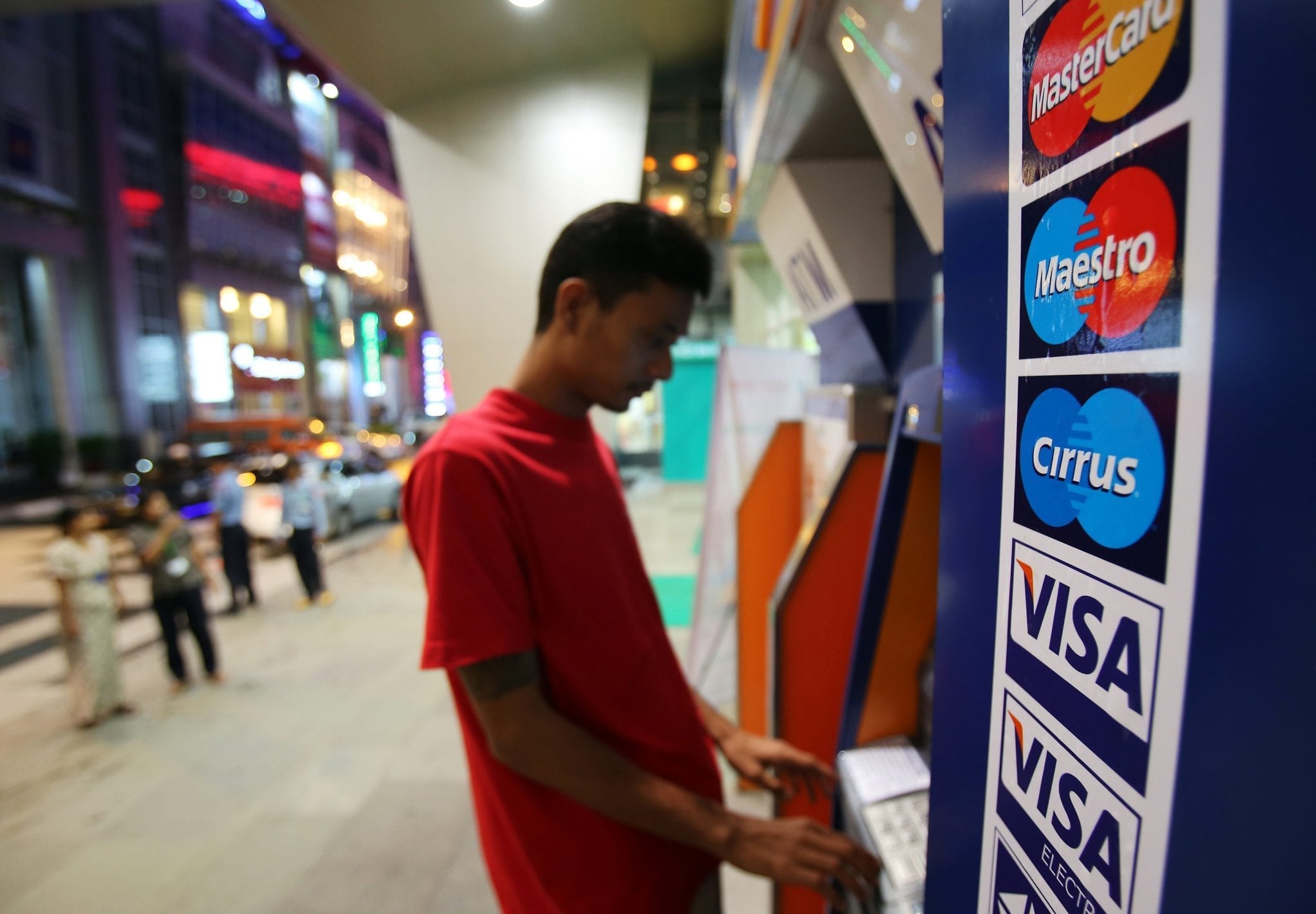
    “Combined with the ability to store cards issued by both Mastercard and Visa, CIMB Pay is the leader among similar apps,” Gupta said in a statement, adding the initiative also supports Bank Negara’s move to go cashless.

    On the app’s security features, Gupta noted that security and privacy are at the core of CIMB Pay and that all card details were tokenised with no information stored on the devices.

    “Users will also be required to authenticate transactions either using the mobile fingerprint or a six digit PIN,” he added.

    In the meantime, Gupta said more functionalities will be added onto CIMB Pay in the first quarter of 2017, including simplified online payment and express checkout solutions powered by Mastercard’s Masterpass.

    With Masterpass, shoppers will be able to use their CIMB Mastercard debit or credit card along with the shipping information saved on the mobile app to complete online transactions.

    Customers can make payments by simply tapping their phone on any contactless terminal based on Near Field Communication technology.

    The app also has an in-built notification system that alerts customers on nearby contactless terminals and flash deals.

    CIMB Pay can be downloaded on Google Play for NFC-enabled smartphones running on Android 4.4 and above.

  • JCB International and CIMB Bank Singapore with Wirecard

    JCB International and CIMB Bank Singapore with Wirecard

    JCB, the international operations subsidiary of JCB, CIMB Bank Singapore (“CIMB”), and Wirecard AG (“Wirecard”) are pleased to announce their signing of a License Agreement to begin JCB merchant acquiring services in Singapore. Through the partnership, JCB card acceptance facilities will be available at CIMB merchants.

    With its ASEAN footprint firmly in place, CIMB is a befitting partner with JCBI on both the local and regional front. Having established similar collaborations in Malaysia and Indonesia, this new License Agreement extends the collaboration into other parts of Southeast Asia and enhances cooperation in the region.

    Tourism is a key contributor to the Singapore economy and the country is a popular destination for regional JCB cardmembers. This new merchant acquisition partnership with CIMB will bolster the JCB card acceptance network in the market and promote new merchants to JCBI’s rapidly expanding cardmember base from Asia during their stay in Singapore.

    Vincent Ling, Managing Director of JCB International Asia Pacific Pte Ltd., commented, “As Singapore continues to be a key tourist destination for Asians including Japanese, Korean, and Chinese, a stronger JCB card acceptance will bring about enhanced convenience to JCB cardmembers. JCBI is pleased to collaborate with CIMB Bank Singapore and we look forward to working closely together to serve our cardmembers, merchants and business partners better.”

    Mak Lye Mun, CEO of CIMB Bank Singapore and Country Head of CIMB Group Singapore said, “As a leading bank in ASEAN, CIMB Bank is proud to expand our payment acceptance offering with JCBI in Singapore. This partnership unlocks opportunities for our merchant acquiring business and I’m confident it will benefit both merchants and JCB cardmembers through greater card acceptance and increased payment options.”

    CIMB Bank Singapore’s one-stop merchant solution is in partnership with Wirecard, a global leader in electronic payment and mPOS technology and infrastructure. Wirecard has been providing an integrated payment platform that supports eCommerce, mCommerce, mobile and traditional Point-of-Sale, to facilitate merchants’ real-time tracking of transactions across multiple sales channels as part of the partnership. Mr Jeffry Ho, Managing Director of Wirecard Singapore, Malaysia, Hong Kong and Australia A&I added, “We are delighted with another milestone of our partnership with CIMB Bank. We believe that the CIMB-JCB initiative will certainly provide a better payment experience for both merchants and JCB cardmembers in Singapore.”

  • McDonald’s Malaysia, Singapore ‘buyer found’

    McDonald’s Malaysia, Singapore ‘buyer found’

    Twenty-year franchise rights for McDonald’s Malaysia and Singapore outlets have been conditionally sold to a Saudi Arabian group for up to US$400 million.

    Reza Food Services, which owns McDonald’s restaurants in Saudi Arabia, is seeking finance from Malaysian bank CIMB to finance the transaction, insiders say.

    McDonald’s is moving to bring in partners as it switches to a less capital-intensive franchise model in Asia, and has said it wants regional family-owned groups and local tycoons as long-term partners.

    Insiders say the basic terms of the agreement with Reza have been finalised, with the deal expected to be completed by the end of the year.

    McDonald’s, which has about 260 restaurants in Malaysia and about 120 in Singapore, is also selling its China and Hong Kong outlets, and has received final bids from at least three groups.

  • Sun Life, CIMB merge life-insurance businesses in Indonesia

    Sun Life, CIMB merge life-insurance businesses in Indonesia

    Life insurer Sun Life Financial Indonesia has officially integrated with Malaysia’s financial group CIMB subsidiary CIMB Sun Life following the Rp 550 billion (US$41.8 million) acquisition of 51 percent shares in CIMB Sun Life.

    Sun Life Financial Indonesia president director Elin Waty said the acquisition, conducted between April and June, was in line with the government’s single presence policy. In the corporate action, Sun Life is now the surviving entity.

    “We warmly welcome CIMB Sun Life’s employees and look forward to working together as a unified business with an even greater ability to serve our clients […] It is also in line with Sun Life Indonesia’s vision to assist people to increase their welfare,” she said in Jakarta on Thursday.

    Sun Life Financial Asia president Kevin Strain added that the acquisition also represented the company’s effort to strengthen its platform across the Asian market.

    “The life insurance sector in Indonesia has enormous potential and is a priority market for our long-term growth in Asia,” he said.

    Strain further said the merger would strengthen Sun Life Financial’s commitment to invest US$40 million to increase its online penetration and strengthen its brand presence in Indonesia.