Tag: consumer spending

  • Lovisa Hits $938.8 Million in FY26 Sales on Fast Jewellery Demand

    Lovisa Hits $938.8 Million in FY26 Sales on Fast Jewellery Demand

    Lovisa posted double-digit revenue and profit growth for fiscal 2026, generating $938.8 million in total sales across its global store network. The result shows budget-conscious shoppers continued buying affordable accessories despite persistent cost-of-living pressure in Australia and key overseas markets.

    Tightened household budgets did little to slow store turnover. Fast-fashion jewellery continues to capture discretionary spending from consumers who pull back on higher-priced apparel and luxury goods, giving mass-market operators sustained foot traffic across shopping centres.

    Demand across budget accessories

    Lovisa relied on its high-turnover model to drive revenue across its retail footprint. Low price points allowed the brand to maintain transaction volume even as inflation squeezed general consumer spending.

    The performance reflects a broader split in retail spending across the Asia-Pacific region. While big-ticket discretionary categories face softer demand, impulse-driven accessory purchases continue to clear inventory rapidly.

    Market rivals and category pressure

    Competition in the affordable jewellery segment is intensifying across major retail hubs. New challenger brands, including ventures launched by former Lovisa executives, are expanding store networks and targeting the same demographic with rapid product drops.

    Sustaining double-digit expansion will depend on how effectively the chain defends mall real estate and controls store operating costs. Market watchers will track upcoming store rollout milestones and regional trading updates in the next financial reporting cycle.


  • Laopu Gold Targets Global Expansion as Sales Growth Moderates

    Laopu Gold Targets Global Expansion as Sales Growth Moderates

    Laopu Gold is pushing ahead with overseas expansion plans to secure new sales channels as top-line retail growth cools across its core Chinese market.

    The Beijing-based luxury heritage gold brand reported a moderating pace of domestic expansion while confirming plans to establish footprints in key international shopping hubs.

    Slowing Domestic Demand

    Consumer appetite for pure gold jewellery in China faced pressure after a prolonged run of sharp price gains. Shoppers who drove previous surges in heritage gold sales have pulled back on discretionary luxury purchases, forcing premium jewellers to adjust their operational expectations.

    Laopu Gold built its brand equity on handcrafted traditional gold ornaments sold at significant premiums through boutique locations. As domestic store productivity normalises, management is looking beyond mainland shopping centres to sustain revenue momentum.

    Pushing Into Global Retail

    International luxury corridors represent the next commercial frontier for the brand. Establishing outposts in regional financial hubs and tourist destinations allows the jeweller to capture affluent Chinese travellers as well as international high-net-worth consumers.

    Rival jewellers across Hong Kong and mainland China have made similar shifts into Southeast Asia and the Middle East over the past two years. For Laopu Gold, competing on international high streets requires convincing foreign consumers to pay luxury design markups on traditional Chinese craftsmanship rather than treating items purely as gold weight assets.

    Execution details on specific international leases and overseas opening schedules will determine whether foreign revenue can counterbalance cooling domestic retail volumes.

  • Philippine Central Bank Lifts Key Rate to 5% to Tackle Sticky Inflation

    Philippine Central Bank Lifts Key Rate to 5% to Tackle Sticky Inflation

    The Bangko Sentral ng Pilipinas raised its benchmark policy rate by 25 basis points to 5 per cent on Thursday. The decision targets persistent price pressures across consumer staples and fuel.

    Overnight deposit and lending facilities climbed to 4.5 per cent and 5.5 per cent. That brings a third straight quarter of tightening, following rate increases in April and June.

    Headline inflation dropped to 6.2 per cent in July from 6.4 per cent in June, easing for a third consecutive month. Core inflation, which strips out volatile energy and food items, edged down to 4.2 per cent from 4.4 per cent. Both figures remain above the government target corridor of 2 per cent to 4 per cent.

    Pressures across food, fuel and wages

    Monetary officials warned that broader price pressures continue to build across supply networks. Volatile global oil benchmarks, potential crop losses from El Niño, and rising agricultural input costs threaten retail food prices nationwide.

    Labor expenses also sit high on the central bank’s monitoring list. A pending minimum wage increase for Metro Manila remains frozen in court. Even so, authorities noted that higher payroll expenses will filter into consumer prices if businesses pass on the cost.

    Bank of the Philippine Islands lead economist Emilio Neri Jr. Pointed out that monetary tightening cannot fix supply bottlenecks. Extreme weather, elevated fertilizer costs, and currency weakness threaten to drive import bills higher for retail operators and food manufacturers.

    Slower growth tests consumer demand

    Higher borrowing costs arrive at a delicate moment for consumer spending and commercial investment. Philippine gross domestic product expanded by 2.3 per cent in the second quarter, decelerating from 2.8 per cent in the first quarter. Gross capital formation shrank 9.2 per cent year-on-year.

    Across Southeast Asia, central bankers are balancing household purchasing power against softening corporate investment. While regional peers have paused rate adjustments to protect domestic commerce, Manila is prioritizing price stability. The focus is on preventing inflation expectations from taking root in retail checkouts.

    Average inflation will exceed the 4 per cent upper boundary through both 2026 and 2027 before settling near the 3 per cent target in 2028, according to central bank forecasts.

  • Japan Warns Natural Disasters Threaten Automotive and Chip Supply Chains

    Japan Warns Natural Disasters Threaten Automotive and Chip Supply Chains

    Japan flagged supply chain risks from recent natural disasters on Thursday, even as the government maintained its assessment that the broader economy continues a moderate recovery.

    The Cabinet Office added the warning to its August report following a magnitude 7.1 earthquake in Kumamoto Prefecture on July 28 and torrential rain across Chiba Prefecture on Aug. 13. Kumamoto forms a major manufacturing hub for semiconductor and automotive components across East Asia. While plants have begun restarting production lines, disruptions to component flow still pose risks to industrial output.

    Supply Chain Knots and Farming Losses

    Kumamoto’s cluster of chip and automotive parts plants feeds assembly networks across Japan and regional export channels. Factory operators resumed output in stages throughout August, but the government warned that bottleneck risks persist. Heavy rain in Chiba damaged regional farming operations, threatening short-term supply for agriculture, forestry, and fisheries.

    Capital expenditure showed resilience despite the disruptions. Corporate investment picked up steadily across the technology sector, driven by data infrastructure spending and demand for artificial intelligence hardware.

    Spending Holds as Rental Housing Stabilises

    Private consumption showed movements of picking up, leaving the official assessment unchanged for the month. Retailers and consumer brands continue to benefit from stable domestic demand, though high material costs kept new builds for owner-occupied houses and condominiums subdued. Stronger demand for rental properties helped lift the overall housing assessment from sluggish to generally flat.

    Corporate earnings delivered solid numbers for the April to June quarter, prompting the Cabinet Office to upgrade its stance on business profits to improving. Wholesale inflation showed signs of cooling, with corporate goods price growth slowing as petroleum-related input costs eased.

    Manufacturers and retail networks now face the test of third-quarter earnings to show whether component delays in Kyushu and agricultural losses in Chiba hit operating margins.

  • South Korea Retail Sales Rose 6.4% in July on Summer Spending

    South Korea Retail Sales Rose 6.4% in July on Summer Spending

    South Korea’s major retailers increased combined sales by 6.4 percent year-on-year in July. Demand for vacation gear, imported fashion, and food delivery services drove the rise.

    Internet platforms handled the bulk of that growth. They captured 60.8 percent of total retail revenue during the month, according to data from the Ministry of Trade, Industry and Energy.

    Department Stores and Convenience Chains Expand

    Brick-and-mortar turnover climbed 3.2 percent from a year earlier. Both department stores and convenience chains extended their unbroken run of year-on-year growth to 13 consecutive months.

    Department stores posted the sharpest gains offline, with sales jumping 17.9 percent. Demand rose across every major category. Imported apparel, summer travel gear, and cooling appliances led the expansion.

    Convenience stores generated a 1.1 percent sales increase over the same period. Foot traffic slipped. Higher spending per transaction kept overall takings positive.

    Online Channels Take Larger Revenue Share

    Digital platforms posted an 8.5 percent revenue increase compared with July last year. Food delivery orders, packaged groceries, and home appliances recorded the fastest category gains across web storefronts.

    Consumer habits in the country continue to split. Digital channels dominate everyday replenishment, while physical stores rely on experiential shopping and premium apparel to draw spending.

    Trade ministry officials will publish the August retail index next month. That report will show whether back-to-school shopping and late-summer promotions sustained the sales momentum.

  • Indonesian Retailers Urge Easing of Import Rules to Hit 6% Target

    Indonesian Retailers Urge Easing of Import Rules to Hit 6% Target

    Indonesian store operators are lobbying the government to ease import barriers, arguing regulatory bottlenecks threaten national retail consumption and the state’s 6 per cent economic growth target.

    Household spending drives more than half of Southeast Asia’s largest economy, yet complex technical permits and shifting product approvals continue to choke supply lines for global brands.

    Speaking at the Indonesia Retail Summit in Jakarta, Indonesia Retail and Tenant Association Chairman Budihardjo Iduansjah pushed for administrative relief on compliant merchandise. He argued that businesses paying duties and taxes should not face arbitrary import caps on goods with no domestic substitutes.

    Diverging fortunes across store formats

    The supply friction hits different store models unevenly. While hypermarkets face sliding footfall and operational contraction, convenience stores and minimarkets continue to add locations.

    Demand across food and beverage, cosmetics, and mobile electronics expanded by more than 10 per cent this year. Chains are using warehouse automation and price promotions to protect margins against rising overheads.

    Retailers across Southeast Asia face similar dilemmas when domestic trade protection policies collide with consumer appetite for international product ranges. In Jakarta, the friction has prompted warnings from policymakers that depleted domestic shelves will simply push middle-class shoppers abroad.

    Stemming outbound tourist spending

    Chief Economic Affairs Minister Airlangga Hartarto acknowledged that thin store inventories push shoppers to spend outside the country. Indonesian citizens spend roughly $6.7 billion annually on overseas travel services.

    Government planners want to retain that cash by developing domestic shopping tourism and expanding inventory depth in major commercial hubs.

    Whether trade regulators shorten import licensing timelines will determine if mall operators can secure sufficient stock ahead of the next fiscal review.

  • Chinese Restaurant Chains Target US Market as Domestic Growth Slows

    Chinese Restaurant Chains Target US Market as Domestic Growth Slows

    Chinese restaurant chains are expanding across the United States to offset slowing growth at home, betting American diners are finally ready to embrace authentic regional menus.

    The push enters a market that already counts more Chinese dining spots than individual locations of almost any major American fast-food chain. For decades, those menus relied heavily on Westernised adaptations like chop suey and fortune cookies, both created in the United States rather than mainland China. Traditional fare struggled to gain traction during the twentieth century as immigrant chefs navigated widespread consumer resistance and discrimination.

    Shifting from takeout staples to authentic menus

    Domestic headwinds across China’s dining sector are now accelerating the overseas push. Operators face tighter consumer spending and intense margin pressure in their home cities, making international expansion an urgent priority rather than a long-term experiment.

    Instead of modifying dishes to suit Western palates, newer entrants are bringing specialized formats straight from the mainland. Concepts range from high-end Michelin-starred Peking duck houses to regional hotpot and noodle formats. The shift reflects growing diner familiarity with authentic Chinese culinary traditions, moving the market away from generic takeout boxes toward distinct regional identities.

    Navigating saturated overseas markets

    Breaking into the American market presents operational hurdles despite the historical presence of Chinese food. Mainland chains must manage higher labor expenses, complex local supply chains, and entrenched domestic competitors while maintaining recipe authenticity.

    The test for Chinese operators is whether authentic regional concepts can capture mainstream suburban foot traffic or remain confined to dense urban centers with established Asian diaspora populations.

  • Australian Certified Organic Sales Hit AU$1.02 Billion

    Australian Certified Organic Sales Hit AU$1.02 Billion

    Australia certified organic sector generated AU$1.02 billion in annual sales during the 2024-25 financial year. The total represents the first time the market cleared the billion-dollar threshold, driven largely by supermarket shelves and household pantry purchases.

    Retail sales for take-home consumption reached AU$657.6 million, climbing 11.9 per cent year on year, according to the Australian Organic Market Report 2026 released by Australian Organic Limited. The growth in household buying outpaced broader packaged grocery volume across major Australian supermarket chains.

    Supermarket Aisles Drive Revenue Gains

    Packaged food and fresh produce accounted for the bulk of retail spend, with shoppers prioritizing chemical-free certifications despite broader inflationary pressures on household food budgets. Certified supply chains kept up with the volume demand, helping standardise shelf placements across national grocery operators.

    The AU$1.02 billion total spans domestic agriculture, food manufacturing and retail channels across the country. Commercial operations continued converting conventional acreage to certified standards to capture premium wholesale margins.

    Wholesale Margins and Export Volumes

    Across the Asia-Pacific region, premium food producers face tight price sensitivity, yet certified organic goods continue to hold distinct price premiums in tier-one retail channels. Australian producers are positioning their certified output against competing high-end food exports from New Zealand and Europe.

    Industry bodies will monitor whether retail volume growth holds through the 2025-26 period as supply contracts renew and private-label organic ranges expand in major supermarket chains.

  • Asia-Pacific Captures 42 Percent Share as Global Retail Hits 31.58 Trillion Dollars

    Asia-Pacific Captures 42 Percent Share as Global Retail Hits 31.58 Trillion Dollars

    Asia-Pacific accounted for 42 percent of the 31.58 trillion dollar global retail market in 2025, cementing the region as the primary revenue hub for consumer merchandise. The sector is expanding at an annual compound rate of 5.35 percent, heading toward 43.17 trillion dollars by 2031.

    Regional momentum stems from dense consumer populations, rapid formalization of modern store networks, strong manufacturing supply chains, and high mobile-commerce adoption across emerging markets. North America held the second spot globally, supported by higher household spending and established warehouse-club networks.

    Shifting Channel Mix and Digital Share

    Digital channels are taking a larger cut of total retail receipts. Global e-commerce penetration reached 23.5 percent in 2025, up from 18.0 percent in 2020, and projections put digital sales at 29.5 percent of the total market by 2031. Retailer-owned e-commerce and online marketplaces represent the fastest-growing routes to market, even as physical supermarkets and convenience formats retain volume dominance in food and grocery categories.

    Average global retail spending per person stood at 3,851 dollars in 2025, with that number forecast to climb to 5,026 dollars by 2031. Food and beverages remains the single largest product category worldwide, driven by everyday repeat demand that cushions operators against cyclical discretionary drops.

    Operational Pressure and Volume Recovery

    For store operators and digital merchants across Asia, top-line growth is shifting away from post-pandemic price inflation toward real merchandise volume gains. Real volume growth is forecast to accelerate from 2.8 percent in 2026 to 3.3 percent by 2030, putting sharper focus on store productivity, automated warehouse replenishment, and private-label margins.

    Global chains including Walmart, Amazon, Schwarz Group, Aldi, and Costco continue to recalibrate inventory to limit shrink and return costs. RetailNews Asia tracking shows regional operators are prioritizing membership ecosystems and in-house retail media networks to defend operational margins as logistics and wage bills rise.

    Merchants face an immediate baseline as global trade volumes, which expanded 4.6 percent in 2025, test supply visibility ahead of the projected 33.27 trillion dollar market turnover mark in 2026.

  • Australian Retailers Face Margin Squeeze as 59% of Shoppers Shun Full Price

    Australian Retailers Face Margin Squeeze as 59% of Shoppers Shun Full Price

    Australian retailers must overhaul operational discipline as 59 per cent of shoppers now refuse to pay full price, according to Grant Thornton Australia’s 2026 Retail Dealtracker analysis.

    Data from Australia Post’s FY26 fourth-quarter e-commerce update shows 46 per cent of consumers will switch stores for a discount, while 32 per cent report increased price sensitivity.

    The advisory firm identified five interconnected capabilities required to protect margins: customer proposition, earnings quality, operating model, technology, and organizational capability. Mounting pressure on household budgets means customer retention, repeat visits, full-price sales ratios, and customer lifetime value now carry far more commercial weight than raw top-line revenue growth.

    Protecting Margins Beyond Top-Line Sales

    Converting sales into profit requires tighter control over inventory, customer acquisition costs, returns, and shrinkage. Tam Goldin, financial advisory partner at Grant Thornton Australia, noted that many merchants need to strengthen fundamental disciplines, including clearer pricing and operating models that scale without adding unnecessary overhead.

    Shrinkage remains a critical operational drain for large physical store networks, while changing wage settings require closer management of store labor deployment. Retailers must track where value is lost across working capital rather than relying solely on headline profit and loss statements.

    Restructuring Operations and Supply Chains

    Scaling businesses frequently outgrow founder-led workflows, creating operational bottlenecks across supply chains and merchandising. Kirsten Ridgway, management consulting partner and head of retail at Grant Thornton Australia, pointed out that the largest opportunities emerge when companies simplify decision-making and align capital spending with actual customer demand.

    Supply chain models require flexible sourcing and inventory visibility to handle fluctuating lead times and freight expenses. Technology investments must resolve specific operational problems, starting with foundational systems such as point-of-sale platforms, integrated inventory tracking, and clean customer data before deploying artificial intelligence for demand forecasting and pricing.

    Across Asia-Pacific markets, rising labor costs and deal-seeking consumer behavior have forced merchants to pivot away from rapid floor-space expansion toward customer lifetime value and strict loss prevention. Retailers now face the next reporting cycle with shrinkage rates, full-price sales percentages, and inventory turns serving as the decisive operational numbers to track.

  • European Luxury Houses See China Rebound as Burberry Sales Climb 9%

    European Luxury Houses See China Rebound as Burberry Sales Climb 9%

    European luxury groups are tracking a tentative rebound across mainland China, led by high-net-worth spending and demand for premium beauty and apparel.

    July retail sales across the country’s top 25 luxury labels dropped more than 10 percent under tighter scrutiny on offshore wealth, but corporate earnings forecasts point to an autumn turnaround. Household spending on cosmetics has begun to stabilize, while quarterly reports from fashion houses reveal pockets of early momentum.

    Divergence Across Brands

    Burberry Group posted a 9 percent increase in Greater China retail sales during its latest quarter, helped by younger shoppers and localized campaigns. The British fashion house partnered with Chinese National Geography magazine on documentary marketing to lift brand engagement among Gen Z consumers.

    Gucci parent Kering expects sales in the region to return to positive growth by the fourth quarter of 2026. Chief Executive Luca de Meo called the country a strategic priority as trading conditions improved steadily through the latest reporting period.

    LVMH reported steadying demand in mainland stores, citing improving figures for its Sephora retail chain and cognac labels. Swiss group Richemont captured higher tourist spending across Hong Kong and Macau, while Moncler gained ground in market niches.

    Uneven Recovery Profile

    The rebound remains concentrated among high-net-worth buyers rather than broad middle-income households. That divide keeps the pace uneven across retail categories and price points.

    Hermes continues to accelerate sales in the region, while Danish jeweler Pandora is seeing sales declines narrow. For retail operators across Asia, the test will be whether luxury spending broadens beyond top-tier VIP clients before fourth-quarter results land.

  • Bank of Korea Projected to Lift 2026 Economic Growth Estimate Past 3%

    Bank of Korea Projected to Lift 2026 Economic Growth Estimate Past 3%

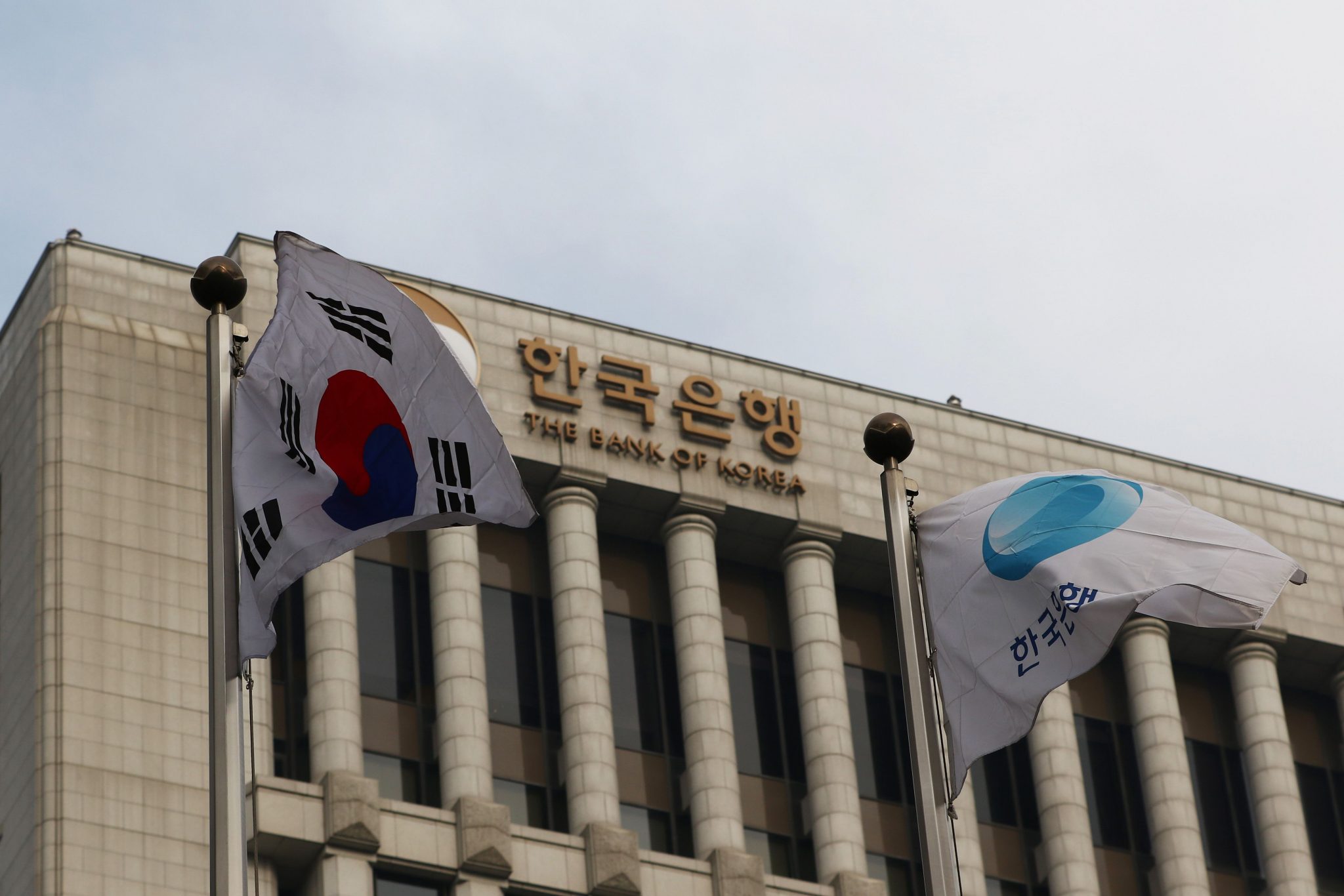
    The Bank of Korea is expected to raise South Korea’s 2026 economic growth forecast above 3 per cent from 2.6 per cent.

    Surging semiconductor exports and recovering domestic consumption are driving private analyst projections as high as 3.4 per cent. Economic forecasters surveyed by Yonhap News Agency anticipate the central bank will adjust its outlook upward during its upcoming revision cycle, reflecting stronger factory output and higher state spending supported by rising tax receipts.

    Semiconductor Supercycle Drives Upward Revisions

    Nomura Securities posted the highest forecast among respondents at 3.4 per cent. Park Jeong-woo, an economist at Nomura, noted that exponential growth in artificial intelligence inference workloads continues to outpace chip production, suggesting supply constraints could extend beyond 2027.

    Korea Investment & Securities analyst Ahn Jae-kyun projected 3.2 per cent annual growth, pointing to a combination of heavy technology exports and a rebound in local consumer demand. Other respondents placed their 2026 projections between 3.1 per cent and 3.2 per cent. Projections for 2027 moderated, landing between 2.2 per cent and 2.8 per cent across the surveyed institutions.

    Some analysts urged caution regarding the duration of the current technology cycle. Joo Won, deputy director of economic research at Hyundai Research Institute, noted that chip exports dipped in August compared to the prior month, suggesting the export boom may reach its peak between late 2026 and early 2027.

    Surplus Records and Consumer Price Pressures

    South Korea’s current account surplus for the first six months of 2026 has already surpassed the 2025 full-year record of $191 billion. Economists expect the central bank to sharply increase its previous $250 billion annual surplus projection published in May.

    For consumer-facing businesses across the region, a stronger macroeconomic baseline in South Korea provides welcome support for retail footfall and high-ticket consumer electronics, though imported inflation limits purchasing power. Central banks across East Asia face similar cross-currents as artificial intelligence hardware spending lifts headline industrial figures while currency volatility keeps domestic borrowing costs elevated.

    Economists expect the Bank of Korea to hold its 2026 consumer price inflation projection at 2.7 per cent, with elevated oil prices and the won-dollar exchange rate serving as the main hurdles to earlier interest rate cuts.

  • Australian Retailers Face Margin Squeeze as 59% of Shoppers Shun Full Price

    Australian Retailers Face Margin Squeeze as 59% of Shoppers Shun Full Price

    Australian retailers must overhaul operational discipline as 59 per cent of shoppers now refuse to pay full price, according to Grant Thornton Australia’s 2026 Retail Dealtracker analysis.

    Data from Australia Post’s FY26 fourth-quarter e-commerce update shows 46 per cent of consumers will switch stores for a discount, while 32 per cent report increased price sensitivity.

    The advisory firm identified five interconnected capabilities required to protect margins: customer proposition, earnings quality, operating model, technology, and organizational capability. Mounting pressure on household budgets means customer retention, repeat visits, full-price sales ratios, and customer lifetime value now carry far more commercial weight than raw top-line revenue growth.

    Protecting Margins Beyond Top-Line Sales

    Converting sales into profit requires tighter control over inventory, customer acquisition costs, returns, and shrinkage. Tam Goldin, financial advisory partner at Grant Thornton Australia, noted that many merchants need to strengthen fundamental disciplines, including clearer pricing and operating models that scale without adding unnecessary overhead.

    Shrinkage remains a critical operational drain for large physical store networks, while changing wage settings require closer management of store labor deployment. Retailers must track where value is lost across working capital rather than relying solely on headline profit and loss statements.

    Restructuring Operations and Supply Chains

    Scaling businesses frequently outgrow founder-led workflows, creating operational bottlenecks across supply chains and merchandising. Kirsten Ridgway, management consulting partner and head of retail at Grant Thornton Australia, pointed out that the largest opportunities emerge when companies simplify decision-making and align capital spending with actual customer demand.

    Supply chain models require flexible sourcing and inventory visibility to handle fluctuating lead times and freight expenses. Technology investments must resolve specific operational problems, starting with foundational systems such as point-of-sale platforms, integrated inventory tracking, and clean customer data before deploying artificial intelligence for demand forecasting and pricing.

    Across Asia-Pacific markets, rising labor costs and deal-seeking consumer behavior have forced merchants to pivot away from rapid floor-space expansion toward customer lifetime value and strict loss prevention. Retailers now face the next reporting cycle with shrinkage rates, full-price sales percentages, and inventory turns serving as the decisive operational numbers to track.

  • China August NEV Retail Sales Hit 1.04 Million as Market Share Reaches 65.8%

    China August NEV Retail Sales Hit 1.04 Million as Market Share Reaches 65.8%

    China’s passenger new energy vehicle retail sales will reach approximately 1.04 million units in August, rising 9.4 per cent from July, the China Passenger Car Association said on Friday.

    The projected rebound lifts new energy vehicle retail penetration to a record 65.8 per cent, up from 65.1 per cent the previous month. Total passenger vehicle retail deliveries are expected to reach 1.58 million units for the month, an 8.1 per cent month-on-month rise that still represents a 21.7 per cent drop compared with August 2025.

    Chengdu Auto Show Drives Volume

    Extreme weather and planned summer plant maintenance slowed showroom traffic in early August, pulling average daily retail volume down to 35,000 units during the first week. Deliveries recovered as typhoons cleared coastal provinces and carmakers rolled out new product campaigns ahead of the Chengdu Auto Show. Daily transactions are projected to reach 77,000 units in the final week of August.

    The divergent performance between powertrains widened through the summer. Retail sales of petrol-powered passenger vehicles fell 40.5 per cent year on year in July to 510,000 units, while electrified models fell 3.9 per cent to 951,000 units over the same period.

    Big-Ticket Spending Faces Drag

    Automotive retail remains the heaviest drag on Chinese consumer spending. Total retail sales of consumer goods across China rose 2.6 per cent year on year during the first seven months of 2026, yet automotive retail revenue shrank 13.2 per cent over the same period.

    For retailers and dealership groups across the region, these numbers confirm that volume growth is now entirely hostage to electrification and replacement subsidies. Pure internal combustion inventory has become a liability on dealer balance sheets, forcing legacy showroom networks into aggressive discounting or outright closure as floor space pivots toward plug-in hybrids and battery-electric models.

    Automakers now face the September-October peak buying season with fresh order books opened at Chengdu, where full-month delivery tallies will show whether state trade-in incentives can offset persistent consumer caution.

  • Yen Weakness Persists Despite Intervention, Raising Concerns for Asia-Pacific Businesses

    Yen Weakness Persists Despite Intervention, Raising Concerns for Asia-Pacific Businesses

    The Japanese yen continues to face significant downward pressure, with a historic joint intervention by the United States and Japan failing to provide lasting relief. Weeks after the coordinated effort, the currency has reversed half its brief gains and is approaching the 160 yen per US dollar mark, having previously hit a 40-year low above 163 yen in late July.

    This persistent weakness is largely attributed to the widening interest rate differential between the US and Japan. US Treasury yields have reached multi-year highs, making dollar-denominated assets more attractive and fueling the yen carry trade. Despite a more hawkish stance from the Bank of Japan, investors continue to prioritize higher US yields, according to market observers.

    Intervention’s Limited Impact

    Market analysts suggest that while currency interventions can temporarily shift market positioning and disrupt momentum, they do not address underlying fundamental drivers such as interest rate differentials. Gary Dugan, CEO of The Global CIO Office, noted that the yen’s continued decline despite direct intervention indicates that US yields remain the primary factor influencing its value.

    The 30-year US Treasury yield recently reached 5.285 percent, while the rate for 30-year Japanese government bonds closed at 4.141 percent. This substantial gap incentivizes investors to borrow in yen at lower rates and invest in higher-yielding US assets, contributing to the yen’s depreciation.

    Implications for Asia-Pacific Retail

    The continued weakness of the yen has direct consequences for businesses operating across the Asia-Pacific region. Japanese companies, from luxury brands to electronics manufacturers, face higher import costs for raw materials and components, potentially impacting their pricing strategies and profitability. Conversely, the weaker yen can make Japanese exports more competitive, which could boost sales for some retailers and manufacturers focusing on international markets.

    For global retailers with a presence in Japan, purchasing power for Japanese consumers may diminish, affecting sales of imported goods. This situation mirrors challenges seen in other Asian markets where local currency depreciation against the dollar has driven up operational costs and consumer prices, requiring careful strategic adjustments from brands and retailers across the region.