Tag: consumer spending

  • Filipinos Tighten Belts as Financial Pressures Mount, Study Finds

    Filipinos Tighten Belts as Financial Pressures Mount, Study Finds

    Filipino households are exercising greater caution in their spending habits, as global and political instability intensifies pressure on family finances. This trend is leading consumers to prioritize cheaper products and purchase smaller quantities, according to the Shopperscope 2026 study by Worldpanel by Numerator.

    The study indicates that Filipinos anticipate a decline in their financial and socioeconomic conditions over the next year. This marks a reversal from 2025, when there were indications of improvement. Many households are now concerned about simply covering daily expenses.

    Shifting Consumer Sentiment And Spending

    Laurice Obana, Worldpanel’s shopper insights director, noted that Filipinos are reverting to a state of financial constraint after a brief period of improvement. This pressure is widely felt across various financial segments: those who are comfortable may see their buffers shrink, managing households could face shortfalls, and struggling families may fall deeper into debt. This increased caution is already evident in consumer spending, with the local fast-moving consumer goods sector showing no growth from March to May compared to the previous year.

    To manage their budgets, consumers are actively looking for promotions and discounts, opting for more economical items, and reducing the size of their purchases. Shopping behaviors are also adapting across different retail channels. Discounters are seeing increased sales of frozen meats and non-sweet snacks, while online platforms are key for baby diaper purchases. Convenience stores, however, experienced double-digit growth in sales of snacks, ice cream, and bread.

    Retailers Must Adapt To New Demands

    For retailers, mere proximity is no longer sufficient to retain customers. Shoppers are now carefully evaluating a store’s product range and the value it offers. This shift necessitates a deeper understanding of how and why Filipino consumers make their purchasing decisions for essential goods.

    Retailers across Southeast Asia frequently encounter similar shifts in consumer sentiment during periods of economic uncertainty. Tracking these changes in purchasing priorities and channel preferences is vital for brands and operators in markets like the Philippines, Vietnam, and Indonesia, which often show parallel trends in consumer resilience and adaptability. Understanding these local nuances allows for more targeted strategies and product offerings.

  • Japan Households Brace for Further Price Hikes Amid Weak Consumer Spending

    Japan Households Brace for Further Price Hikes Amid Weak Consumer Spending

    Japanese households are expected to face increasing financial strain as companies across the nation plan to raise prices for goods and services. These hikes, set to begin this summer, are a direct response to persistently high crude oil prices and other rising operational costs. This development is likely to further dampen consumer spending and could impede economic growth.

    Inflationary Pressures Mount

    The impending price adjustments come at a challenging time for Japan’s economy. The gross domestic product (GDP) for April-June recorded a modest 0.3% quarter-on-quarter growth, translating to an annualised rate of 1.1% after price and seasonal adjustments. However, this growth was not fueled by domestic strength. Both private consumption and corporate capital investment declined during the period, highlighting a significant weakness in Japan’s internal demand. The economy’s expansion was primarily supported by external factors.

    Impact On Retail And Consumer Sectors

    The anticipated price increases are poised to directly affect the purchasing power of Japanese consumers. With households already managing existing cost pressures, new price hikes on essential goods and services will likely lead to a further tightening of budgets. This situation poses a challenge for retailers and consumer brands operating in Japan, as cautious consumers may reduce discretionary spending. Companies will need to strategize carefully to navigate this environment of rising costs and potentially constrained consumer demand.

  • Thai Shoppers Cut Spending as Retail Confidence Declines

    Thai Shoppers Cut Spending as Retail Confidence Declines

    Retail confidence in Thailand saw a notable decline in July, with the nationwide Retail Sentiment Index (RSI) falling 4.9 points to 46.6. This dip was primarily attributed to a sharp reduction in the amount shoppers spent per visit, a trend indicating weakening household purchasing power across the country.

    While consumers maintained their shopping frequency, visits edged down by only 0.4 points, the spending-per-bill component experienced a significant 8.1-point drop, moving from 55.1 in June to 47.0 in July. This divergence suggests that while people continue to visit stores, their spending habits have become more constrained. Confidence in month-on-month same-store sales growth also decreased by 6.4 points to 46.2. All three key metrics now sit below the 50-point threshold, which typically separates expansion from contraction in sentiment.

    Household Spending Under Pressure

    The reduction in basket sizes reflects a broader trend of households limiting purchases to essential goods and cutting back on less necessary items. Consumers are increasingly opting for cheaper brands or private-label products, avoiding discretionary and lifestyle purchases. This behavior points to financial strain rather than a simple shift in preferred shopping channels. Despite government stimulus programs, such as the Thais Help Thais Plus 60/40 scheme, the underlying weakness in household income has not been fully offset. The majority of subsidised spending in July was directed towards fast-moving consumer goods, food, and beverages, leaving little personal spending power for other retail categories.

    Heavy rainfall and localized flooding in July further dampened retail activity by reducing visitor numbers at larger shopping centres. Elevated household debt and high living costs continue to restrain spending on non-essential items like fashion, electrical appliances, and home décor. These categories are crucial profit drivers for department stores, where sales remain subdued. While some recovery has been noted in department stores and lifestyle retailers, their confidence indices are still below 50, with improvements largely concentrated in Bangkok and its surrounding provinces.

    Regional Performance Varies

    Retail formats such as hypermarkets, supermarkets, and convenience stores received some benefit from the government’s stimulus program. However, even these segments experienced lower sales in provincial areas due to reduced customer spending per visit. Construction materials, home improvement, and maintenance retailers saw their confidence recover to 45-48 points after a significant dip earlier in the year, though this sector remains volatile due to its reliance on government budget disbursements and a slow property market.

    Tourism provided a limited boost to confidence in certain regions. Foreign visitors supported the southern Gulf coast and eastern provinces, while domestic travel during holiday periods aided the North and Central regions. Despite these localized improvements, retail confidence remained below the 50-point benchmark across all regions. The Northeast, in particular, faced additional pressure with a fourth consecutive month of declining tourist numbers. RetailNews Asia has observed similar pressures on discretionary spending in other Southeast Asian markets this year, as consumers grapple with inflation and economic uncertainty. The outlook for Thailand’s overall RSI remains cautious, with forecasts for the third quarter of 2026 placing it between 47 and 50, indicating continued hesitancy among retail operators.

  • China’s Smaller Cities Drive Premium Retail Demand Amid Overall Weakness

    China’s Smaller Cities Drive Premium Retail Demand Amid Overall Weakness

    China’s smaller cities are becoming unexpected hotbeds for premium retail, showing stronger consumer enthusiasm compared to the broader national trend of weak demand. Lower living costs, reduced debt burdens, and capital brought back by returning migrant workers are collectively boosting household purchasing power in these areas.

    A notable example is Jingshan, a city in Hubei province with fewer than 600,000 residents. Zhang Liang, a former truck driver, invested 600,000 yuan (approximately US$88,969) in May to establish a reseller shop for Sam’s Club products. He sources items from authorized Sam’s Club stores to cater to local demand for well-known brands and higher-quality goods. Several Sam’s Club resellers already operate in the industrial county, indicating a growing market.

    County-Level Spending Surpasses Major Cities

    This trend is not isolated to Jingshan. Per capita consumer spending among urban residents in five Zhejiang province counties, including Leqing, Yuhuan, Yiwu, Wenling, and Haiyan, exceeded that of Beijing and Shanghai in 2025. Data showed Beijing’s per capita spending at 50,667 yuan last year, while Shanghai’s stood at 54,765 yuan. This indicates a significant shift in economic dynamics and consumer behavior.

    Peng Peng, executive chairman of the Guangdong Society of Reform, a think tank studying regional economic development, noted that smaller Chinese cities increasingly possess the financial capacity and desire to match first-tier cities in their demand for premium products and services.

    Underlying Economic Factors

    The growing financial strength in these smaller urban centers is attributed to several factors. Lower living expenses and reduced financial burdens allow residents more disposable income. Also, capital accumulated by migrant workers returning from larger cities is being reinvested and spent locally, further stimulating the regional economies. This shift highlights a rebalancing of consumer power across China’s diverse urban landscape, creating new avenues for retail expansion and brand engagement beyond traditional metropolitan hubs.

  • Are low spending Chinese shoppers a new normal?

    Are low spending Chinese shoppers a new normal?


    August shopping data from tax refund specialist, Global Blue, indicates a downward trend in tax-free in-store sales of -13% (year-on-year) – the worst decline since the start of the year and a big fall compared with July’s 0% change.

    global-blue-august-asia-3-markets
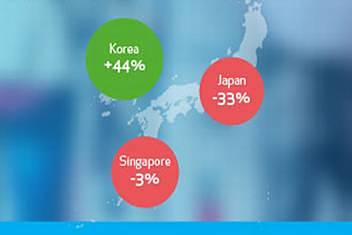
    There are stark differences in August tax-free sales, largely because of the beneficial ‘MERS effect’ in Korea.

    While transactions rose significantly in August by +25%, the decline of average spend at -30% clearly shows that individual travellers are spending less and this is probably due to a combination of factors ranging from China’s customs clampdown, a different passenger profile, and currency influences.

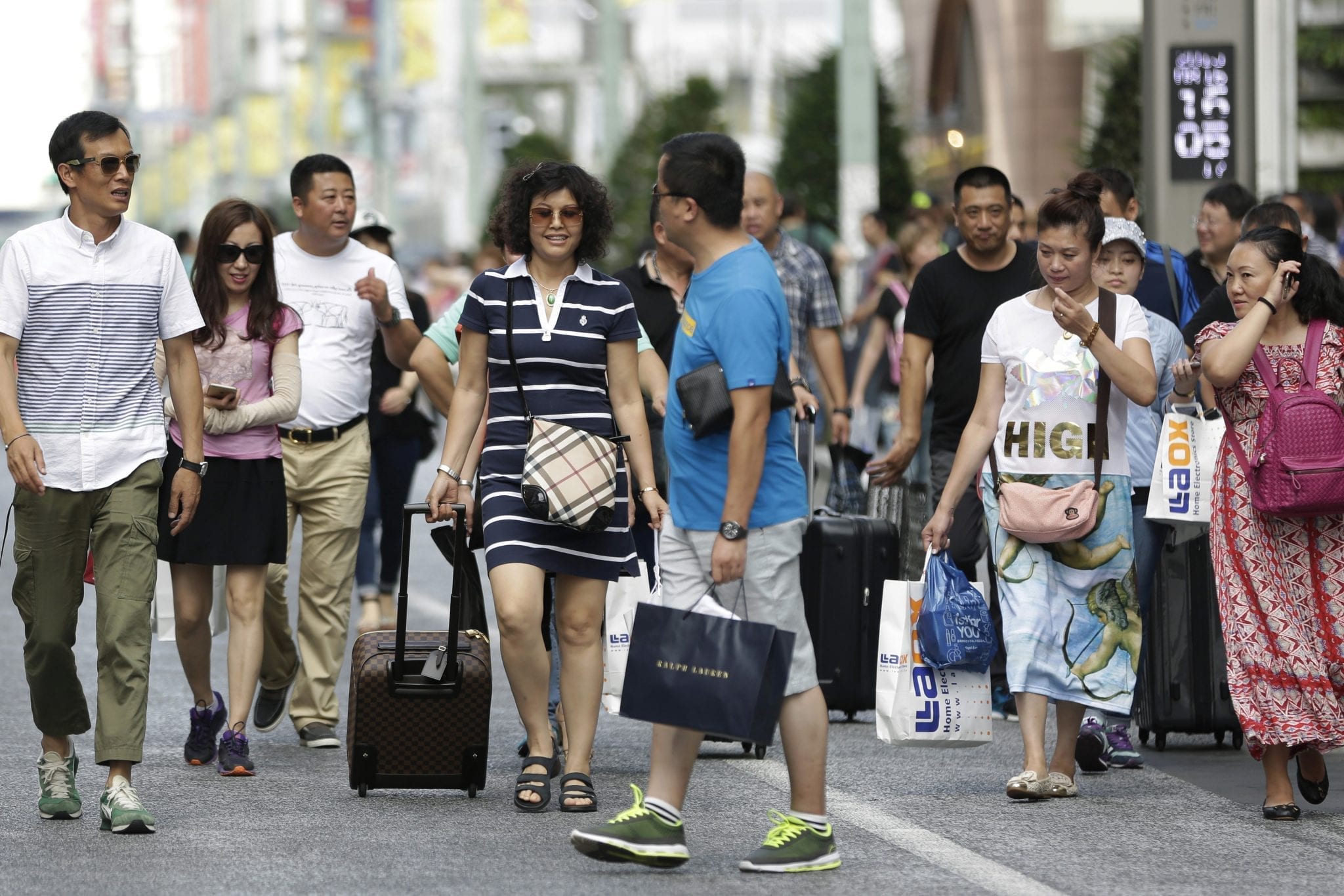
    Global Blue says: “The rise of less affluent middle class Chinese travellers continues to bring down the average spend of tax-free shopping globally, with a sizeable impact in Asia. Across the region more ‘value seekers’ from second-tier and third-tier cities are growing their transactions, but with less affluent spending patterns.”

    Duty free and travel retailers can take comfort from the rising number of travellers in Asia, which correlates with higher numbers of transactions in South Korea, Japan and Singapore. But, says Global Blue, the overall sales performance in the region is significantly limited by the headwinds of a stronger yen in Japan and Chinese spending in the region increasingly being driven by value-seeking shoppers who spend less.

    COMMON THEME IS LOWER SPEND POTENTIAL

    The travel boost is not compensating for the spending fall in key duty free and travel retail locations such as Singapore and Japan – while Hong Kong (downtown) does not even have the benefit of rising traveller numbers.

    All Global Blue’s Asia tax-free shopping destinations rely on increased arrivals and traffic, yet the common theme is lower spend potential. With -33% sales in August, Japan has been affected by the strong currency, which has negatively impacted the number of transactions.

    Global Blue August Asia

    Transactions are strongly up but average spending is even more strongly down.

    Global Blue estimates that 23% of Japan’s negative sales performance this month is driven by the softer yen and the other 10% is due to increased numbers of less affluent Chinese shoppers arriving in Japan (+20 to +30% more in the first half of the year at Narita airport) from second-tier and third-tier cities.

    South Korea’s sales performance of +44% this month (versus an impressive triple-digit growth of +215% for July) is on the back of highly beneficial comparisons to last year when the MERS virus took a big toll on traffic.

    ASIA YEAR-TO-DATE DOWN -21%

    Transaction numbers are significantly up across all globe shopper nationalities in Asia, except for Hong Kong (-10%), reflecting the increase in air arrivals across Japan and South Korea. Taiwanese globe shoppers (+43%) showed the highest transactions growth in the region in August, followed by Chinese (+28%), with Thais and Indonesians up too. However, the decline in average spend per transaction is a long-term trend.

    Global Blue estimates that the new Chinese value seekers are having a negative impact of between -6% and -10% across Asia as their demand for regional travel increases, driven by the Chinese government’s strategy of strengthening the economy by localising discretionary spending.

    Year to date tax-free sales performance across the region is flat and average sales are down -21%. A less favourable economic situation in mainland China is also not helping travel spending: for example Japan’s current picture YTD is a +26% increase in transactions and a decline of -25% in average sales.