Retail News CRM

Tag: consumer

  • Alibaba develops new technology to help the blind shop online

    Alibaba develops new technology to help the blind shop online

    E-commerce giant Alibaba has developed new technology to make it possible for blind and partially sighted people to shop online, according to an article on Alibaba’s news site Alizila. Alibaba plans to launch Smart Touch, an affordable silicone sheet that goes on top of smartphone screens, later this year. The plastic film includes three mini buttons on each side that sensory-enabled. Pressing on each one will trigger a different command, such as “go back”, “return to homepage” and “confirm”.

    Depending on the app, the buttons can lead to different destinations, such as “My Shopping Cart,” “Tmall Global,” and “Tmall Supermarket” in the Taobao app.

    Smart Touch is a joint effort of Alibaba’s Damo Academy and China’s Tsinghua University to improve the smartphone experience for the blind.

    The technology also has an “ear touch” feature, which gives blind and visually impaired users a simple way to listen to text clearly and privately in public, without the need for headphones. It senses when the users is holding the phone to their ear and automatically routes the sound output from the loudspeaker to the earpiece speaker.

    In October last year, Alibaba added Optical Character Recognition (OCR) technology to the pages of its online marketplace Taobao, an artificial intelligence-driven feature that reads text written on images.

    Before adopting OCR, Taobao’s 300,000 daily active users who are blind or have reduced vision would have used screen-reading software that simply announced “image” as it scanned the page. By early December, OCR was being used to read close to 100 million images per day, Alizila reported.

    “Images are becoming ever more important in the shopping experience,” said Wang Yongpan, algorithm specialist who led the OCR upgrade.

    “A typical product page on the site contains about 40 images, and most product specifications and descriptions are often found within images, rather than typed out in plain text.”

    Yongpan said that while Alibaba has been using OCR for many years in various capacities, the technology’s accuracy in reading images has grown exponentially due to advances in machine learning.

    According to Taobao president Jiang Fan, making the platform more inclusive, user-friendly and a home for creativity is part of its larger strategy.

    “If I had to do one thing this year, that would be to make Taobao simpler and bring [us] back to our original purpose,” he said.

    “Alibaba is famously known by its motto, ‘To make it easy to do business anywhere’.”

    The OCR launch was driven by Alibaba’s “Barrier-Free Lab”, which started with a handful of employees in 2011 and has since grown to hundreds of volunteers, ranging from programmers to user-experience designers.

    Now, similar tools can be seen across Alibaba’s ecosystem, expanding from Taobao to B2C e-commerce site Tmall, payments affiliate Alipay, online delivery platform Ele.me, enterprise chat app Dingtalk, navigation firm Amap, music streaming app Xiami and internet browser UC Web, from desktop to mobile.
  • CIMB Thai’s FY18 net profit drops on higher tax expenses

    CIMB Thai’s FY18 net profit drops on higher tax expenses

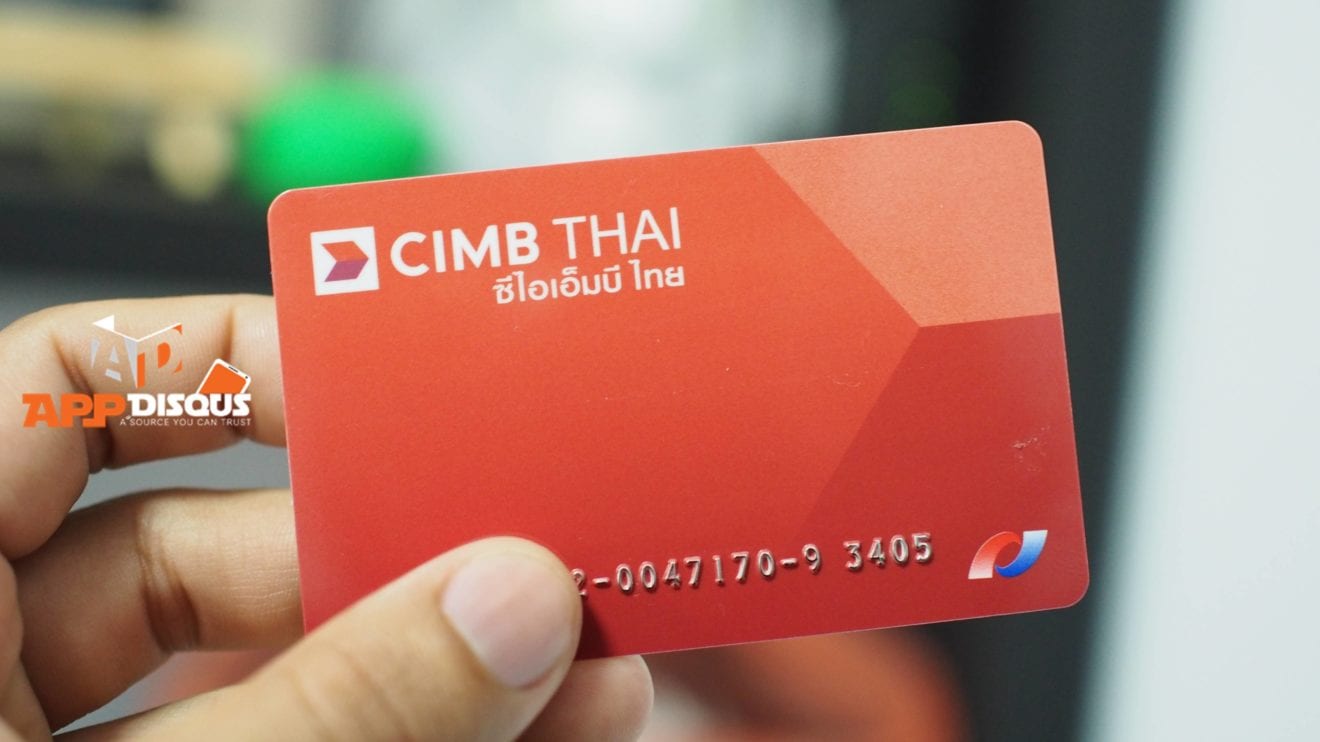
    CIMB Thai Bank PCL’s unaudited con-solidated net profit for the year ended Dec 31, 2018 (FY18) fell 98.2% year on year to 6.9 million baht (RM883,732), dragged down mainly by higher income tax expenses. Profit before tax decreased 44.5% to 271.2 million baht year on year, mainly due to a 9.6% increase in operating expenses and lower net fee and service income and other income of 7.0% and 2.6% respectively. This was offset by a 5.3% growth in net interest income and a 2.6% decline in provisions.

    President and CEO Kittiphun Anutarasoti said CIMB Thai group’s consolidated operating income, on a year-on-year basis, increased 2.9% from 2017 to 13.54 billion baht from higher net interest income of 5.3% on the back of loan expansion and higher interest income on investments.

    Net interest margin over earning assets stood at 3.71% in 2018, compared with 3.89% in 2017 as a result of lower yield on earning asset.

    As at Dec 31, 2018, CIMB Thai’s total gross loans stood at 227.8 billion baht, making an increase of 6.9% from Dec 31, 2017.

    Deposits stood at 234.3 billion baht, an increase of 6.5% from at the end of December 2017. CIMB Thai said the modified loan-to-deposit ratio was higher at 97.2% against 96.8% as at Dec 31, 2017.

    The gross non-performing loan (NPL) stood at 9.9 billion baht, with a lower gross NPL ratio of 4.3% compared with 4.8% as at Dec 31, 2017. The lower NPL ratio was due to more efficient risk management policies, improved asset quality management and loan collection processes as well as the sale of some NPLs in 2018.

  • How Richemont is plotting Yoox Net-a-Porter’s expansion with Alibaba

    How Richemont is plotting Yoox Net-a-Porter’s expansion with Alibaba

    While 2018 saw several luxury conglomerates consolidating their empires through brand acquisitions, others like Yoox Net-a-Porter looked to strategic partnerships. With the new Richemont and Alibaba deal, the company is now able to better bring its retail offerings to the world’s largest luxury audience: China.

    As Richemont’s takeover of e-commerce giant Yoox Net-a-Porter has come to a completion, the Swiss-based luxury group is mapping out its growth ambitions for the platform and working towards solidifying its leadership position in the online space.

    Among Richemont’s top priorities: Tapping into the China opportunity.

    Yoox Net-a-Porter’s presence in the region has been limited to date, as the company lacks the logistical tools to service the market. But as Richemont is looking to scale YNAP post-takeover, China – which is expected to account for half of the global luxury market share by 2025 – can no longer be ignored and provides a viable avenue to achieve the kind of growth the group is looking for.

    Richemont Partnership

    That’s why Richemont formed a strategic partnership with Alibaba earlier this year, that will enable the company to bring all of Yoox Net-a-Porter’s retail offerings to Chinese consumers.

    As part of the joint venture, Alibaba will provide the technology infrastructure, marketing support and payment logistics to power the launch of two new apps, for Net-a-Porter and Mr. Porter.  In addition, both Net-a-Porter and Mr. Porter will open online stores within Alibaba’s Tmall Luxury Pavilion.

    The venture is focusing on YNAP’s on-season, premium luxury sites for the moment. But the company added that in the future Yoox and the Outnet, which sell off-season, discounted stock, and Watchfinder which sells second-hand watches online, will also be able to benefit from the tie-in.

    Johann Rupert, Richemont’s chairman, said that the venture recognizes the growing importance of Chinese consumers both at home and abroad, and readies the company to build up its China business, which is currently still “in its infancy.”

    “We believe that partnering with Alibaba will enable us to become a significant and sustainable online player in this market,” said Rupert, adding that the investment costs of the deal were relatively small and that the company sees clear potential in the tie-in, despite the stagnation in consumer growth in China and the brewing trade war with the U.S. “We would not have done this deal if we could not see potential in the medium and long-term future. Everybody is excited about China and Chinese travellers, and we thought this was the best way to go. We don’t have the tools for China, but Alibaba is a vast ecosystem and marketplace.”

    “Plug and Play” Approach

    The deal has received positive feedback from retail analysts too, who see potential in the strategic marrying of YNAP’s strong brand relationships and curated approach, with Alibaba’s e-commerce leadership in the region, as well as its logistical, technological and marketing capabilities.

    “It’s a sensible move with an obvious appeal, of tapping into Alibaba’s pool of 600 million potential customers,” said Paul Thomas, retail consultant at the U.K.-based firm Retail Remedy, adding that Alibaba’s anti-counterfeiting efforts across all platforms are also more closely aligned with YNAP’s values than other Chinese e-commerce players.

    According to Thomas, partnering with a local player and adopting a “plug and play” approach into China’s bigger digital ecosystem is the best way to go, even for established e-commerce companies.

    “This deal should accelerate YNAP’s top line development in Asia, which only accounted for the group’s sales in 2017,” added Royal Bank of Scotland retail analyst Rogerio Fujimori, explaining that the company is more likely to see sales growth in the long term, given the increasing competition in the e-commerce space.

    The E-commerce Market in China

    Other players like Farfetch, have also been making waves in China.

    The online marketplace – which was valued at $5.8 billion following its IPO – scored a $397m investment from JD.com last year, to help expand its China business. It also purchased Chinese marketing platform CuriosityChina to add to its branding services and be better positioned to help fashion houses amplify their presence in the Chinese market via local social media platforms and digital marketing initiatives.

    “YNAP’s long-term sales potential looks compelling but the increasing competition in the e-commerce space means that higher investment power will be required,” added Fujimori.

    Mario Ortelli, partner at consultancy Ortelli & Co, seconded his thoughts saying that Richemont’s targets to expand into new territories and become more agile are still “a work in progress” and it will take some time until the group can increase value for its shareholders and ensure YNAP becomes profitable.

    For YNAP, the Alibaba deal will also provide an important new growth avenue that will help outweigh the recent loss of a significant portion of its online flagship business. Kering ­– rival luxury group to Richemont – has pulled out of its joint venture with YNAP, through which the company was powering the online platforms of Kering-owned labels such as Alexander McQueen, Bottega Veneta, Balenciaga and Saint Laurent.

    In the longer term, the deal could also provide a gateway into China for Richemont-owned brands such as Cartier, Piaget, Jaeger-LeCoultre and Vacheron Constantin, which have slowly been embracing the world of online commerce joining the carefully curated fine jewellery and watch hubs of Net-a-Porter and Mr Porter – a new, growing category for the platforms that is also providing another additional means of achieving scale.

  • More Chinese seniors embrace WeChat

    More Chinese seniors embrace WeChat

    The ubiquitous WeChat is continuing to expand its reach across all age groups – especially among people aged 55 and above. According to the 2018 WeChat Data Report released at the WeChat Open Class Pro 2019 event in Guangzhou this week, seniors recorded the fastest growth of any age group last year. WeChat says more people are sharing more content on the platform: users are sending more messages, making more voice and video calls, and posting more frequently on their WeChat Moments timelines.

    Figures for September show WeChat had 1.082 billion monthly active users and 45 billion messages were sent daily on the app, up 18 per cent on the previous year. The number of calls daily – 410 million – was double the previous year’s number. From 2015 to last year, the volume of text messages rose 110 per cent, voice messages rose 212 per cent, image volume by 255 per cent and videos by a massive 1900 per cent.

    WeChat Pay is taking an increasing share of payments at retailers, with monthly transactions up 150 per cent in September, compared with the previous year. Transactions by consumers aged 55 and above in department stores rose by 320 per cent year on year.

    More people are using WeChat for work and more businesses are using WeChat to connect with customers and staff, according to the report.

    The company said WeChat Mini Programs, launched two years ago, has been widely adopted by users and businesses with more than 600 million people using Mini Programs at least once a week on services or products from more than 200 industry segments. The number of transactions (by volume) increased sixfold last year.

    In a statement, WeChat said it would continue to create more advanced tools, open APIs and enhanced cloud services so developers can help businesses build Mini Programs more efficiently.

    During the past year, WeChat has introduced features such as Scan-to-Buy enabling users to pay without queueing at cashiers and Smart Recommendations based on users’ past purchases to help merchants increase conversion and operational efficiency, grow their membership programs, reduce manpower costs and deliver more personalised services to customers.

    The WeChat Open Class Pro event is for merchants and developers. The photos accompanying this story are from the event.

  • Malaysian consumer sentiment to remain healthy this year

    Malaysian consumer sentiment to remain healthy this year

    AmInvestment Bank has maintained its “overweight” rating on the consumer sector, as consumer sentiment is expected to remain healthy on the back of recent consumer-friendly initiatives by the government. It said in a report that recent initiatives such as the reintroduction of petrol subsidy, capping of the electricity tariff and introduction of public transport subsidies, have contained the problem of rising cost of living and effectively put more money back into the pockets of consumers.

    “The substitution of the Goods and Services Tax (GST) with the Sales and Services Tax (SST) is a net positive to consumers as the SST has a narrower scope compared with the GST,” it said.

    According to the Malaysian Institute of Economic Research, the Consumer Sentiment Index has recovered beyond the 100-point confidence threshold after three years of a low sentiment trend.

    AmInvestment Bank believes that the positive trend in consumer sentiment will be sustained as consumers become more confident of the government with expectations of more rakyat-centric government policies, better governance and transparency.

    It expects private consumption to grow at 6.5% year-on-year on the back of a healthy labour market and stable inflation.

    While the food and beverage sub-sector does not typically benefit from greater disposable income, AmInvestment Bank has identified Berjaya Food Bhd (BFood), Mynews Holdings Bhd and Power Root Bhd as the top picks for the sector.

    It said that BFood is a beneficiary as improved consumer sentiment will drive discretionary spending while Mynews will be an indirect beneficiary of the public transportation subsidy.

    “We reckon that this measure will boost foot traffic surrounding the train stations. Mynews currently operates more than 30 stores in the MRT, LRT and monorail stations,” it added.

    Meanwhile, Power Root will be a potential beneficiary as it is a producer of staple products. It will also benefit from a stronger US dollar as around 50% of its sales are in exports.

    Downside risks that may prompt it to review its call for the sector are weakening of the ringgit against the US dollar (its 2019 assumption average is RM4.12) and sluggish improvement to economic fundamentals, which could lead to a de-rating of the sector.

    “A sluggish recovery in economic fundamentals such as high operational costs and a weak ringgit may not see consumers fully benefitting from savings tied to the SST reintroduction and consumer-friendly measures, thereby dampening the recovery in consumer sentiment,” it said.

  • Louis Vuitton personalisation service launches in Asia

    Louis Vuitton personalisation service launches in Asia

    Luxury retailer Louis Vuitton is offering a personalisation service for a selection of men’s ready-to-wear items in a limited number of global stores. The My LV World Tour Louis Vuitton personalisation service offers clients the opportunity to customise their purchases with a variety of patches and embroideries inspired by vintage travel labels and varsity lettering of the kind Gaston-Louis Vuitton used to adorn his own luggage. The service was previously limited to leather goods.

    The patch themes include world-famous cities and heritage LV graphics, some of which will be available seasonally as limited-edition items.

    The Louis Vuitton personalisation service is available in only eight Asian stores: Hong Kong’s Canton Road and Pacific Place; Shanghai’s Plaza 66; Beijing’s Shin Kong; Japan’s Omotesando and Shinsaibashi; Singapore’s Marina Bay Sands and Seoul’s Shinsegae Main.

  • Convenience stores a haven for most Saigon youth

    Convenience stores a haven for most Saigon youth

    Increasing numbers of Saigon residents are visiting convenience stores, and most of the youth hangout there. A survey by market research firm Q&Me in December found 80 percent of Saigon residents saying they patronize convenience stores. Of these, 61 percent are youth who also hangout in the stores, using in their eat-in space, attracted primarily by the air-conditioning.

    Fifty-four percent of customers said they use the eat-in space because it is a good place to stay for a short time, while 51 percent said they come for the wifi, said the survey, which polled 500 people aged 16-39 online and 721 visitors at 110 convenience stores in Ho Chi Minh City.

    The majority, 63 percent, of eat-in space customers are estimated to be in their 20s. Those in their 30s account for 16 percent, and teenagers, 15 percent.

    Those who age in their 40s and 50s account for only two percent of eat-in space users.

    Forty-four percent of customers use the eat-in space to drink, and 38 percent to eat and drink. Popular activities are chatting with friends, using their mobile phones and relaxing.

    The most popular foods at eat-in spaces are snacks, instant cup noodles and single customer hotpot. Instant cup noodles are popular during lunch and dinner time, while snacks are taken irrespective of timing.

    The eat-in space is most occupied during lunch time, from 12 p.m. to 1 p.m, with half of the seats taken, on average. The period between 3 p.m. and 7 p.m. also sees a high occupation rate of 33-37 percent.

    The survey found VinMart+ has the highest number of stores at 805, followed by Circle K with 261 and Family Mart with 160.

    Family Mart is the most popular store with 87 percent of respondents saying they have visited it earlier and 12 percent said they recognized it.

    VinMart+ comes next with 84 percent participants visiting and 15 percent recognizing, while the figures for Circle K are 76 percent and 17 percent, respectively.

    The least popular stores are Shop & Go, 7 Eleven and GS25. Forty-two percent of respondents said they recognized Seven Eleven but have never visited a store. This ratio is 36 percent for GS25 and 30 percent for Shop & Go.

    The number of convenience stores in Vietnam has increased by 21 percent year-on-year to 1,819 as of May, the survey found. Most of them are based in Hanoi and Ho Chi Minh City.

    A previous report by market research firm Nielsen Vietnam had said that Vietnamese people have been going to convenience stores more often in recent years. It said that an average Vietnamese shopper make 4.5 trips a month to convenience stores this year, three times that of 2010.

    Since 2012, the number of convenience stores in the country has nearly quadrupled, Nielsen said.

  • Cafe Leitz opens in Raffles Hotel Singapore

    Cafe Leitz opens in Raffles Hotel Singapore

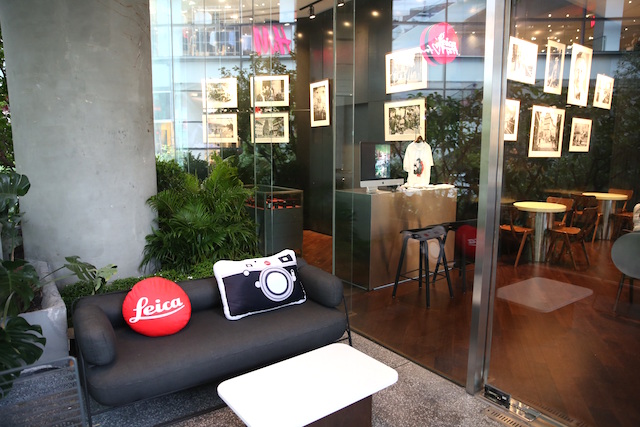
    German photography brand Leica has reopened at Raffles Hotel with a line of wristwatches and a cafe. The opening debuts Leica’s Cafe Leitz in Singapore, based on its German flagship and serving a variety of coffees and petit fours. The store, launched on the site of the brand’s original Singapore location, features a new experiential retail concept that showcases Leica’s iconic cameras while drawing visitors towards its first line of digital watches in Southeast Asia.

    Leica enters the watchmaking industry alongside a pewter and silver collaboration jewellery line with Royal Selangor exclusive to Leica Store Raffles, featuring subtle references to the Leica camera. The store hosts a gallery space for classic Leica photography.

  • Vietnamese consumers among the most optimistic in the world

    Vietnamese consumers among the most optimistic in the world

    Vietnamese consumer confidence has reached a global high thanks to optimism over jobs and personal finances. The Vietnam Consumer Confidence Index has risen by nine points from the second quarter to reach an all-time high at 129 points in the third quarter of 2018, according to the Global Consumer Confidence Survey.

    The survey results have been released by research association The Conference Board in collaboration with global market research company Nielsen.

    The survey ranks the country in second place in the world in terms of consumer confidence, behind India at 130 points.

    While most Asian economies are vulnerable to the ongoing trade dispute between China and the U.S., Vietnam is a possible exception, as it may attract parts of the global value chain that currently run through China, the report said.

    The rise in the confidence index is also due to greater optimism about employment prospects, personal finances and the level of willingness to spend.

    Eight out of ten Vietnamese surveyed said that they were positive about their job prospects, up nine percentage points from the second quarter.

    Eighty-two percent of respondents expected their personal finances will be good or excellent over the next 12 months, up 6 percentage points from the second quarter.

    The majority of them, 63 percent, said that the next 12 months are a good time for them to buy the things that they want and need, 8 percentage points higher than the second quarter.

    Concerns about having a stable job and health (both at 40 percent) remained the top concerns among Vietnamese consumers. The national economy came in third at 27 percent, 5 percentage points higher than the previous quarter.

    Vietnamese consumers continue to take the lead globally when it comes to saving, the survey found. Seventy-two percent of respondents said that they would save their spare cash, up two percent from the second quarter.

    But Vietnamese people are also more willing to spend on big-ticket items. The percentage of people who would spend their spare cash on home improvements increased 10 percent from the second quarter to 48 percent.

    Over half of them, 53 percent, want to spend the money on new clothes, up 7 percentage points from the second quarter.

    Nguyen Huong Quynh, managing director of Nielsen Vietnam, said that when consumers faced multiple concerns, their purchasing decisions will be affected and businesses should always keep a close track on changes in the spending habits of consumers.

  • Global grocery markets growth fuelled by Asia, says IGD

    Global grocery markets growth fuelled by Asia, says IGD

    Global grocery markets are likely to generate an additional US$1.9 trillion in sales by 2023, led by Asian countries, according to new research data. The IGD forecast, based on IMF, World Bank, UN and Oanda base data, predicts Asia will see the strongest real growth – from population growth or consumers spending more on grocery – and is set to account for 47 per cent of the additional spend between 2018 and 2023. The forecast anticipates that nearly half (44 per cent) of extra sales will be created in Asia, which will add more than Africa, Europe and Latin America combined.

    Asia as a region will contain seven of the largest global grocery markets by 2023, with a combined market size of US$3.8 trillion.

    On growth in Asia, Nick Miles, head of Asia Pacific at IGD said: “China’s grocery market is expected to continue growing over the next five years, establishing itself as the largest grocery market globally. While growth varies between markets across Asia, countries such as India, Indonesia, Pakistan and Vietnam will continue to grow in importance for retailers and suppliers given the large populations, improving levels of GDP per capita and the development of modern trade. Retail partnerships have also in some cases helped retailers accelerate growth ahead of the market, and we expect more of these relationships to emerge and develop over the next year.

    “Grocery growth in Asia continues to benefit from a rapidly growing middle class, fast development and adoption of new technology, improved infrastructure and logistics networks, plus improvements to retail standards. Modern trade retailers continue to expand their store networks and improve existing operations.

    Meanwhile, traditional trade still plays a role, with mom-and-pop stores modernising their offerings and tailoring services to local communities. In countries like China and India this is being aided by online retailers such as Alibaba and Amazon.

    “Across Asia the pace of development and focus of retailing varies by market. However, online is expected to be the fastest growing channel regionally over the next five years,” said Miles.

    “Online grocery retailing is already well established in countries like South Korea, Japan and China and we expect the share of sales accounted for by channel in these markets to increase to over 10 per cent by 2023.

    While online grocery retailing is growing rapidly across Southeast Asia we expect it to still account for less than 2 per cent of sales in most markets in five years’ time.”

  • South Koreans spending more on Chinese online stores

    South Koreans spending more on Chinese online stores

    South Koreans are spending more at Chinese online stores, according to credit-card spending data. Purchase records from November 1-26, compiled by the big data centre at Shinhan Card, showed a 9.8 per cent increase from last year in the value of goods bought from overseas internet sites. The number of transactions was up 16.6 per cent year on year.

    Chinese online stores outperformed rivals from other countries. AliExpress took 9.5 per cent of the purchases, up from 6 per cent in 2016 and 6.1 per cent last year. It ranked second after Amazon’s 16.3 per cent.

    Taobao, another Chinese Internet shopping site, grew from 2.3 per cent in 2016 to 3.3 per cent last year and to 4.4 per cent this year, raising it to the third most-used overseas online marketplace. Alibaba made it to the top 10 for the first time this year with 1 per cent.

    The shift is stark when comparing the purchases during Black Friday in the US and Singles Day in China. This year, overseas shopping during Singles Day rose 35 per cent. Black Friday purchases stopped at a 9 per cent gain.

    Data showed 70.8 per cent of purchases during Singles’ Day were for goods priced up to 50,000 won (US$44.32). Shoppers in their 30s and 40s remained the biggest clients, but the number of those in their 20s increased 1.9 percentage points from last year.

  • Who is Hong Kong’s new luxury shopper?

    Who is Hong Kong’s new luxury shopper?

    As one of Asia’s leading retail hubs, Hong Kong has long been a mecca for luxury shoppers. Despite being home to APAC’s most expensive retail real estate (second globally to New York City’s 5th Avenue), there’s a reason why large, sprawling luxury shopping malls continue to dominate in a crowded city.

    Hong Kongers will be glad to know, though, that it holds its own when it comes to homegrown luxury spending, which recently overtook foreign consumption at 55% of total purchases.

    This figure is staggering when considering the total population of Hong Kong is roughly 7.3 million people, less than a quarter of the 60 million visitors it hosts each year.

    For these locally based consumers, luxury isn’t a one-off, aspirational purchase — it’s an innate part of their lifestyle, which explains why 93% of shoppers intend to maintain or increase spending in luxury goods in the next five years.

    This holds true especially for the younger millennial shoppers who will be driving the majority of the growth going forward.

    Source: Think with Google

    The evolving nature of consumers is a common challenge for many marketers, and the luxury industry is no exception.

    The task at hand for brands in Hong Kong is to understand this distinct group of younger customers and the behaviors that shape their expectations when it comes making high-value purchases.

    A curious and demanding bunch

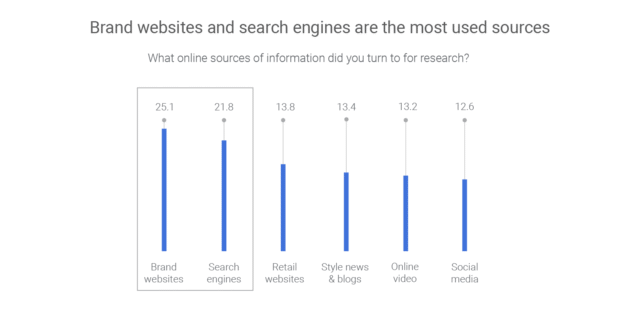
    Reportedly, 90% of luxury shoppers conduct research online before making a purchase, and brand websites and search engines are the two most popular sources people turn to. In fact, they’ve become the digital storefront for this generation of digital natives.

    Source: Think with Google

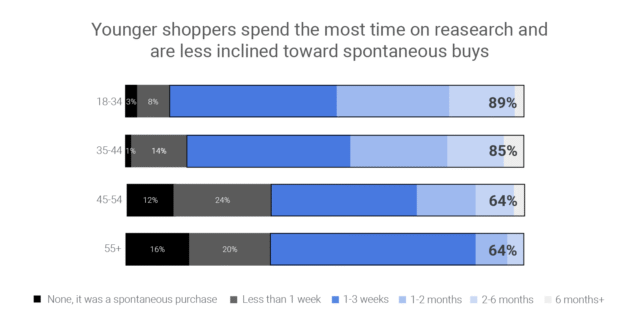
    Having grown up with readily available information online, millennial and Gen Z consumers spend more time on research than ever before.

    In fact, 89% of shoppers aged 18-34 spend up to three weeks researching a luxury purchase. And they’re not alone: 64% of consumers over 45 will spend the same amount of time on research leading up to a purchase.

    Source: Think with Google

    Retailers may have once treated online as a separate channel to physical stores, but this notion is quickly becoming outdated.

    Whether customers are online or offline is a distinction made by businesses, not consumers.

    Online and offline consumer behaviors are increasingly blurring, and the respective experiences need to follow suit, particularly when it comes to the inspiration and research phases.

    In short, consistency across the two worlds is key.

    It’s hard to imagine a luxury label leaving a customer linger unattended to in its boutique, so, by the same token, a customer should never be left unanswered or ignored on Google, YouTube, or social.

    More is more

    With a more exploratory consumer mindset, brand loyalty may be more elusive for brands targeting younger shoppers.

    Engaging potential millennial and Gen Z luxury shoppers constantly by trying to stay top of mind and being always on will be crucial to gaining consideration.

    In today’s environment of fast fashion and overnight style sensations — while couture brands used to produce two collections per year, they now produce five to six — one of every three consumers surveyed said they make luxury purchases to keep up with trends.

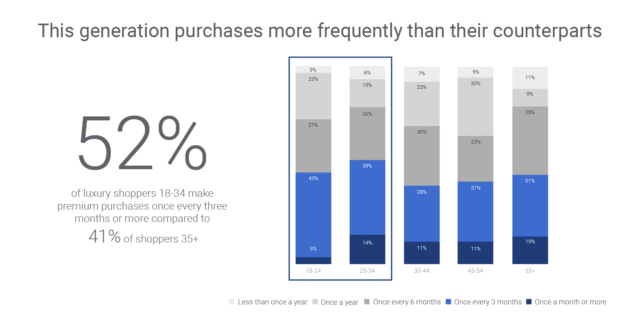
    The tendency to shop more often is evidenced among shoppers aged 18-34, of whom 52% reported making premium purchases once every three months, compared to just 41% of shoppers 35+ who did the same.

    Source: Think with Google

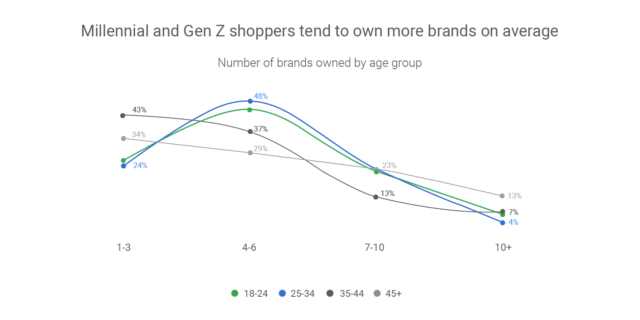
    In addition to a higher frequency of purchase, our research also shows that millennial and Gen Z shoppers are likely to consider a wider breadth of brands. On average, this group owned products from a repertoire of four to six brands; compared to more brand-loyal 35+ shoppers, who owned between one and three brands.

    Source: Think with Google

    Inspiring online with offline

    When it comes to in-store shopping, the aspects that customers value most are: 1) guaranteed authenticity, 2) the ability to touch and feel the product, and 3) personalized customer service.

    How might these values translate online? With 63% of people expecting the same high-touch brand experience online and offline, the challenge is to emulate these qualities and provide satisfying digital experiences.

    Offering free shipping on returns, for example, gives peace of mind to customers wary of counterfeit goods. Similarly, detailed product videos on the brand site or as a pillar of content on YouTube can help shoppers inspect items for quality while engaging them in a rich experience.

    Leveraging customer data, such as previous purchases, to create individualized interactions and recommendations is no longer a nice-to-have, but a must. Just as consumers expect personalized customer service in store, personalization is fundamental for designing a top-notch digital brand experience.

    Source: Think with Google
    The shopping experience begins online for Hong Kong’s luxury consumers.
    Search and brand sites are key because 90% of purchases are digitally influenced.

    Millennial and Gen Z consumers spend the most time on research, so it pays to provide as much information as possible to this group. They also purchase more frequently, and they consider more brands when they do so.

    To stay top of mind, brands should ensure that they are present at as many touch points as possible and that their media strategies are always on.

    Expectations for online shopping are growing higher by the day, and this is especially true for premium brands.

  • aCommerce Launches BrandIQ to Help Brands grow sales

    aCommerce Launches BrandIQ to Help Brands grow sales

    Southeast Asia’s leading brand ecommerce enabler, aCommerce, introduces BrandIQ, the company’s new ecommerce measurement and analytics suite. BrandIQ will enable brands to understand and visualize more than 11 million SKUs across 600 brands and 160,000 sellers online across Southeast Asia, enabling global consumer brands and retailers to grow online sales and market share.

    BrandIQ is envisioned to provide brands in Southeast Asia with measurable data and actionable insights for their online commerce strategy. Using sophisticated ecommerce data collection and proprietary machine learning technologies, BrandIQ will empower brands to monitor online merchandise, analyze competitors, offer better promotions, understand consumer sentiments, and improve the overall ecommerce experience.

    “We are now entering an era where usage of survey data is not sufficient to succeed in Southeast Asia’s growing ecommerce landscape,” said Poonpat Wattanavinit, Regional Director of Product, aCommerce. “BrandIQ is a new technology platform that collects data from all the leading online marketplaces to offer brands real-time insights. Through BrandIQ, brands will be able to benchmark their own performance on marketplaces over time as well as compare against competitors in terms of online sales and share of digital shelf.”

    As part of the launch, BrandIQ is also rolling out additional services to help brands and consumers engage in a more meaningful and personal way. Brands can now discover brand advocates and generate authentic product reviews, reward and retain them, and grow brand advocacy at scale.

    “For the last five years, aCommerce has helped brands in Southeast Asia overcome ecommerce challenges, including physical infrastructure and distribution barriers,” added Phensiri Sathianvongnusar, Chief Executive Officer, aCommerce Thailand. “Throughout these years, we saw that data and information is incredibly important to operate a business. The launch of BrandIQ comes naturally as a stepping stone for aCommerce to utilize data and further advance the success of our brands, along with the right tools, teams, and mindset throughout their ecommerce journey.”

    BrandIQ kicked off its pilot operations in Thailand last year and since then has expanded its presence across the Southeast Asian region covering six countries, Indonesia, Malaysia, Philippines, Singapore, Thailand, and Vietnam. BrandIQ will continue to expand the service to other Southeast Asian countries and marketplaces as the ecommerce space continues to grow throughout the region.

  • Two thirds of the company wrong in measuring customer loyalty

    Two thirds of the company wrong in measuring customer loyalty

    A commissioned study conducted by Forrester Consulting on behalf of Collinson, a global leader in loyalty and benefits, reveals that the majority of organisations do not understand what is driving customer loyalty, and are therefore putting customer relationships and profitability at risk.

    Surveying decision-makers in organisations with revenue exceeding US$300 million, respondents graded their programmes based on a series of measures and also shared their key goals and challenges. The study surveyed and compared the results for a multitude of countries and regions in Asia Pacific (APAC), including Hong Kong, mainland China, Singapore, Indonesia, Japan, Korea and Australia.

    The research found that two thirds (65 per cent) of those surveyed markets in APAC do not understand why their customers are loyal to their organisations. Almost 7 out of 10 (67 per cent) reported that they do not have a proper framework in place to measure loyalty in the context of overall business performance. Remarkably, the research also found a misalignment between the loyalty objectives and the measurement criteria used to determine the effectiveness of their loyalty success.

    Three reasons why organisations may be struggling with customer loyalty

    1. Loyalty strategy without clearly defined business objectives and appropriate metrics

    Loyalty success is led by a holistic loyalty strategy with clear defined goals and measurement framework which needs to be embedded consistently across an organisation.

    Less than half (49%) of the APAC respondents have clearly defined business goals and objectives to define their loyalty proposition, where Hong Kong and Japan have the highest percentage (55%) compared with 39% of respondents in Singapore. Only 40% have cohesive customer loyalty strategy that spans multiple functions and is a top strategic initiative with C-level support.

    From the research, we found there is a clear discrepancy between what people are trying to achieve through their loyalty programmes and the KPIs in places to measure the performance in relation to their objectives.

    The key loyalty objectives and performance metrics shared by our respondents for their customer loyalty programme in APAC are misaligned as shown below:

    Key loyalty objectives The metrics for measurement
    1 Acquiring new customers (53%) Customer satisfaction (62%)
    2 Retaining existing customer (47%) Customer engagement (59%)
    3 Enriching customer relationships (46%) Customer retention rate (57%)
    4 Improving the customer experience (37%) Loyalty programme enrolments (57%)
    5 Increase customer advocacy (35%) Sales & revenue (57%)

    Without appropriate metrics, it could be difficult to know which areas need improvement and understand the impact of customer loyalty on overall business performance.

    1. Without a single customer view to harness data potential

    To appeal to the modern, choice-rich consumers, it is important to engage them at an individual level which means collecting all appropriate data across the customer journey.

    The research found that three-fifths (60%) of respondents in APAC do not have centralised business rules to incorporate all sources of customer data into a single customer view. Less than a half (48%) collect a wide enough range of customer data to run deep analyses, where only 26% of them automate advanced data analytics to optimise their customer strategy, and 35% would use predictive modelling to identify the right existing dynamic content based on customer behaviour.

    Predictive modelling enables brands to make better decisions and run more effective programmes where China has the highest percentage (47%) compared with the rest of respondents in Asia Pacific to harness the value of data for providing personalized offers for each member. It is vital to recognise each customer preference and behaviour to provide a personalised experience that stands out from the competition. This can only be done when brands continuously collect the right information about their customers and using it effectively, to understand what makes them tick.

    1. Competitive differentiation

    Loyalty programmes with reward, point and VIP schemes have been pervasive for years. These tactics are still frequently employed, but the effectiveness is uncertain when they are deployed without a sound loyalty strategy. From the research, we found that brands continue to see competitive differentiation as being vital, with two thirds (66%) of loyalty practitioners in APAC reporting that is a critical or high priority.

    72% in Asia Pacific, 78% in Hong Kong, Indonesia and Korea respondents planned to increase funding for developing new loyalty programme benefits and rewards.  Embracing partnerships with like-minded brands, who can offer unique experiences and access to their customer base, will enhance and strengthen the member’s engagement. It enables partner brands to expand their knowledge of the customer through an integrated cross analysis of buyer behaviour and preferences for personalized, curated communications to increases sales leveraged through the partnership.

    Mary English, Executive Vice President, APAC of Collinson, says, “A clearly defined loyalty strategy provides the foundation to design a proposition for continuous engagement with your customers in a relevant and meaningful way. Data is the fuel for ongoing loyalty to a brand with heavy weighting on a well-structured single customer view to capture, measure, gain insights, and personalise the dialogue with their customers.  Organisations need to put loyalty back on track by becoming better aligned in terms of their objectives, what they measure, and how to differentiate their programmes. There is really no ‘one size fits all’ approach and each organisation must identify their brand’s unique, valuable assets in formulating a strategy that is regularly reviewed and updated to the changing behaviours of their customers.”

    “Creating formalised processes and employing dedicated resources can be a valuable investment and demonstrate your company’s commitment to loyalty. It is logical for companies to consider ‘connected loyalty’ as a goal of their strategy. Customers who feel connected to the organisation become fans, not just purchasers of their products and services. The latter may simply be shopping out of habit or convenience, whereas fans will go out of their way for the brands they love.”

  • New Zealand Consumer spending finished stronger in 2017

    New Zealand Consumer spending finished stronger in 2017

    Consumer spending growth accelerated to five per cent year-on-year in the three months to the end of December last year, with retail trade picking up momentum over the holidays, new National Australia Bank data has revealed.

    Up from three per cent growth y/y in the third quarter, NAB’s latest quarterly customer spending report, which measures around 2.7 million daily transactions through the bank’s facilities, has tracked spending increases across the entirety of metro and regional Australia.

    Retail trade increased 3.4 per cent y/y in Q417, up from 2.4 per cent in the third quarter, while accommodation and food services spending was 10.4 per cent, up 3 per cent.

    The Northern Territory was the strongest growth state for retail trade, up six per cent, offsetting a 0.6 per cent decline in Western Australia.

    Retail trade spending growth was 4.7 per cent in Victoria and 3.3 per cent in NSW. Across the entire economy Victoria was the strongest performer, while NSW and NT lagged.

    Average monthly customer spending during the quarter was up $166 to $2306 in metro areas and up by $104 to $2089 in regional areas.