Retail News CRM

Tag: convenience

  • South Korean convenience stores in delivery-service battle

    South Korean convenience stores in delivery-service battle

    Competition among South Korean convenience stores over delivery services is heating up.

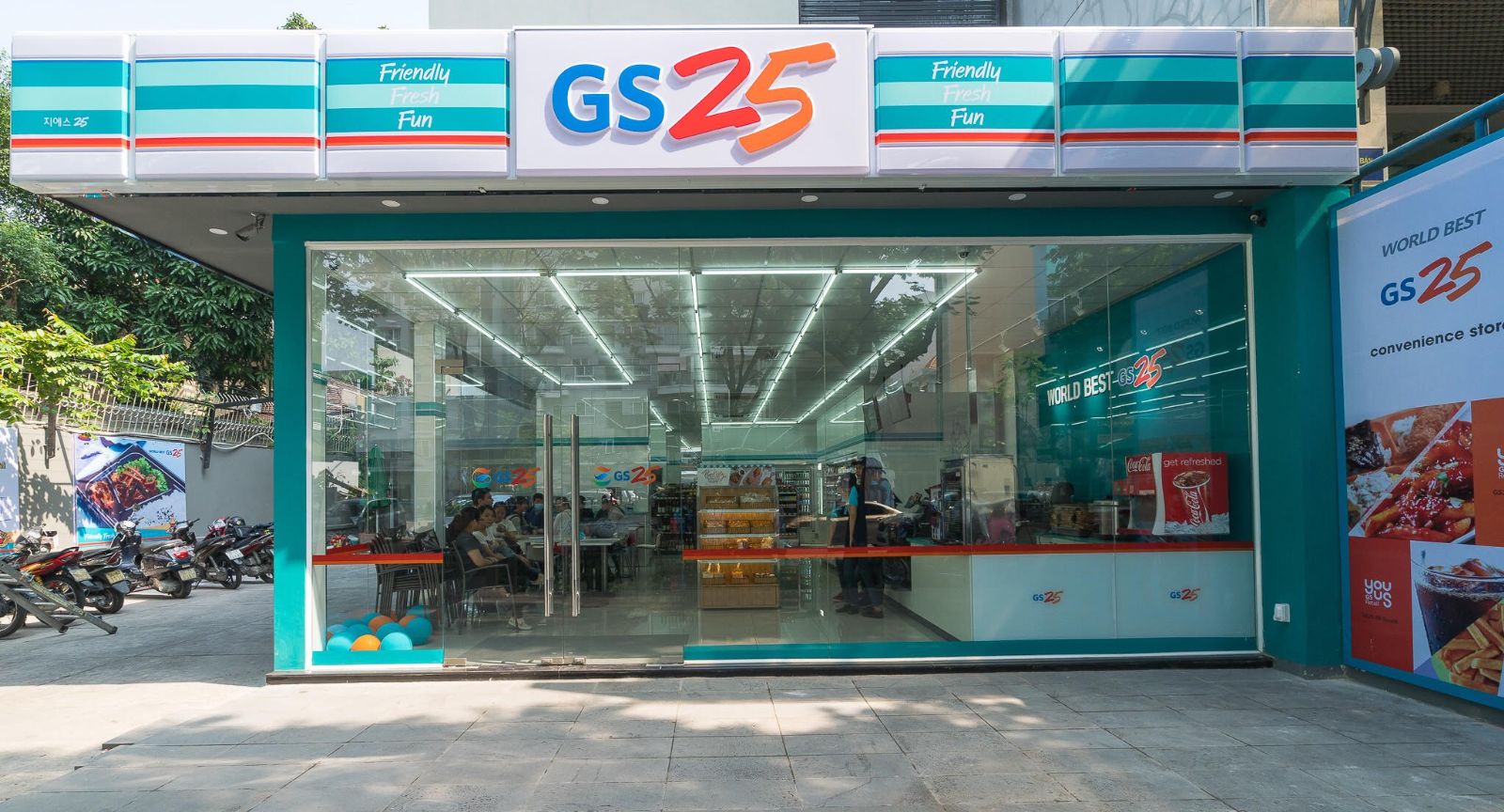
    One chain, GS25, recently launched delivery services from seven stores in Seoul in partnership with food-delivery service Coupang Eats operated by e-commerce giant Coupang.

    First of all, the South Korean convenience store company plans to implement delivery services through Coupang Eats at seven stores in Seoul before expanding the scope of the service to franchise stores nationwide.

    Through the service, customers can receive about 200 products at home, including prepared lunches, sandwiches and beverages that are being sold at convenience stores.

    Meanwhile, GS25 had already launched a delivery service for store products in cooperation with another delivery company, Yogiyo, in April of last year.

    It is running a pilot project at 10 direct management stores, and the service has been especially popular with workers during lunch and dinner time. In the nine months since the service was introduced, the monthly average number of orders reached 3000.

    Furthermore, CU, another convenience store chain, is also working with Yogiyo to provide delivery services at 3000 stores across the country.

    CU plans to increase the number of delivery service stores to 5000 within the first quarter and introduce around-the-clock delivery at some stores centered in the Gangnam area.

    Emart24, a convenience store chain run by large discount store chain E-Mart, on the other hand, has also joined the market by offering delivery services at 35 stores since earlier this year.

    South Korean convenience stores are scrambling to expand its delivery service area due to a growing number of customers accustomed to online orders and deliveries.

    The delivery service also serves as a growth engine in increasing sales at convenience stores. Additional sales are generated from deliveries, and the service is quite popular especially in rainy or cloudy weather.

    “We are planning to expand the number of stores that offer delivery services through various delivery platforms and partnerships to increase sales and secure customers,” a GS25 official said.

  • China’s convenience-store market is booming business

    China’s convenience-store market is booming with rapid sales growth and rapid network expansion ahead.

    Sales through Chinese convenience stores reached US$19.78 billion last year, representing a compound annual growth rate (CAGR) of 24 percent over the past five years, according to new research from Mintel.

    Sales are predicted to grow to $22.75 billion this year and Mintel says there will be more than 117,000 convenience stores in China by 2024 – a huge increase from the 75,000 last year.

    “The convenience store sector has experienced double-digit growth, even at this challenging time for brick-and-mortar retail in China. This is due, in part, to consumers’ continuous pursuit of time efficiency, availability and instant fulfillment,” said Chih-yuan Wang, category research director, retail at Mintel Reports – China.

    She said to meet customers’ ongoing demand, convenience stores in China need to strengthen their social function and provide more types of the shopping experience, including launching themed stores and exclusive products by collaborating with different manufacturers and brands.

    The study shows that more than 61 percent of urban Chinese customers shop at convenience stores several times a week while more than 50 percent of respondents like to window-shop and eat inside convenience stores.

    Young and female consumers are more open to themed convenience stores, according to Mintel. More than half (54 percent) of urban Chinese respondents like convenience stores decorated in different themes.

    Meanwhile, 56 percent of Chinese respondents say that they like to try new products in convenience stores, skewed towards post-90s (62 percent) and female consumers (60 percent).

  • School House creates La Mer retail experience in Shanghai

    School House creates La Mer retail experience in Shanghai

    New York-based creative agency School House has partnered with cosmetics brand La Mer for its Edge of the Sea campaign exhibition at Shanghai’s Power Station of Art.

    The immersive, multi-sensory campaign activation is “designed to explore the joyful, powerfully truthful story of the sea and its role in discovery, healing and recollection,” according to School House.

    “This was the first international exhibition that School House has had the opportunity to conceptualize and produce,” said School House founder and principal Christopher Skinner. “It required us to bridge strategic thinking, retail experience and brand storytelling in a new way, for a new market.”

    Located within and upon the canvas of the Power Station of Art (home of the Shanghai Biennale), Edge of the Sea celebrates La Mer’s signature Creme de la Mer through immersive storytelling art. Inspired by the colliding force of two artistic lenses, the activation features a collaboration by father and daughter photographers Mario and Gray Sorrenti – across two generations and two perspectives, the Sorrentis have captured the impact of the sea and shore on our collective and individual imaginations.

    For the project, School House suspended a projection ring of Sorrenti content, in which consumers could pass through and sit within the 360-degree visual and audio sea-going memories of the father-daughter duo.

    Edge of the Sea opened October 9 and can be experienced through October 23 at Shanghai’s Power Station of Art.

  • CU convenience store chain to open in Vietnam

    CU convenience store chain to open in Vietnam

    South Korea’s CU convenience store chain will expand its footprint to Vietnam, its second international market after Mongolia.

    BGF Retail, the operator of CU, signed a master franchise agreement with CUVN, a Vietnam-based convenience store operator, on Tuesday. CUVN will be in charge of investment and operations in Vietnam market as BGF Retail contributes its brand and business background.

    BGF Retail and CUVN plan to open their first store in Vietnam by June next year.

    Park Jae-koo, CEO of BGF Retail, said the company will continue to expand internationally making forays into growing emerging markets.

    With the new expansion, the South Korean convenience store operator expects to gain a strong position in the Southeast Asian market as Vietnam’s economy has witnessed significant growth during recent years.

    Rival network GS25 has already launched in Vietnam, opening stores in Ho Chi Minh City.

  • JR East metro station outlets opening in Singapore

    JR East metro station outlets opening in Singapore

    East Japan Railway Co. is expanding its operations into Singapore with new JR East metro station stores launching in island’s metro stations.

    The firm is planning to set up store clusters at 27 out of the 32 stations on the Thomson-East Coast Line, which will be partially operational by the end of the year. It is the first Japanese railways firm to start-up commercial operations in another country.

    The firm’s contract to establish JR East metro station stores along the line was secured via its local unit along with SMRT Experience and store chain operator NTUC Fairprice Co-operative for S$24 million (US$17.3 million) last month. The three partners will trade as Stellar Singapore, in which JR East will hold a 35 percent shareholding.

    Under the terms of the agreement, Stellar Singapore will rent 5000sqm of total floor space at the stations under a 16-year lease. The largest single shopping center will cover 1570sqm at Woodlands Station.

  • Domino’s To Use Self-Driving Vehicle To Deliver Pizza

    Domino’s To Use Self-Driving Vehicle To Deliver Pizza

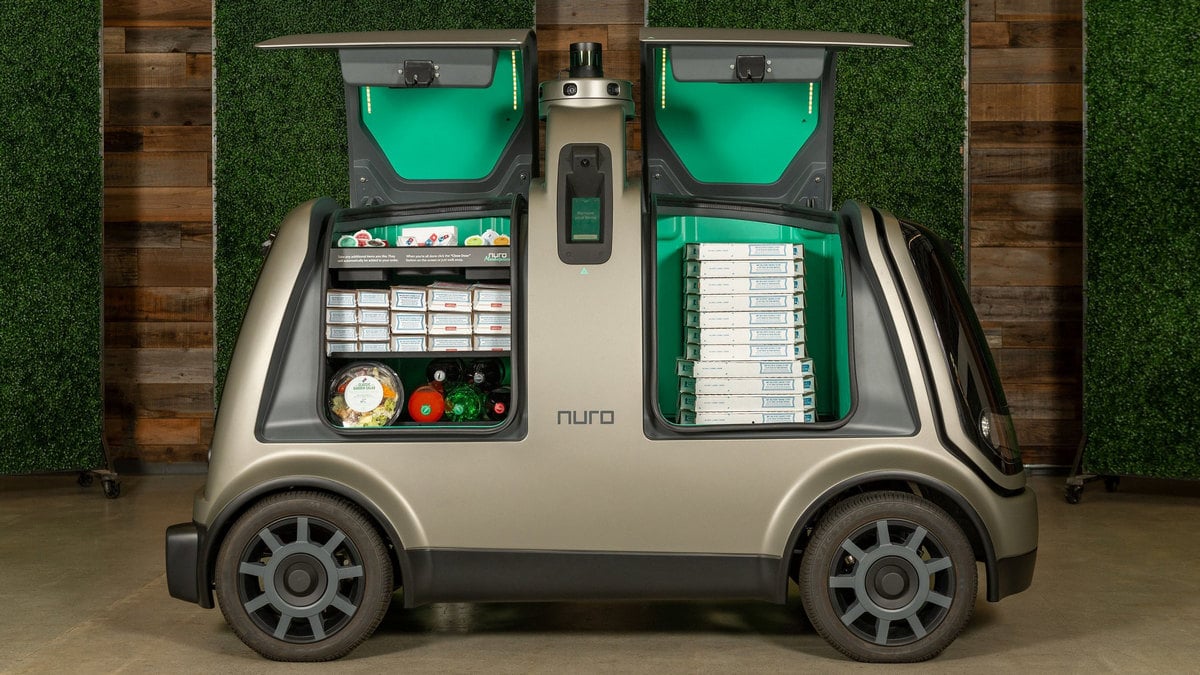
    Domino’s Pizza and Nuro, a robotics company have partnered to bring out an autonomous pizza delivery unmanned vehicle known as the R2. Dominos will use Nuro’s unmanned fleet to serve select Houston Domino’s customers who place orders online. This partnership will expand Nuro’s autonomous delivery operations, which have been running in the Houston metro area since March 2019.

    Select customers who order online from one of Domino’s participating stores will have the opportunity to use Nuro’s autonomous delivery. Once they have opted in, customers can track the vehicle via the Domino’s app and will be provided with a unique pin code to unlock the compartment to get their pizza.

    Kevin Vasconi, Domino’s executive vice president and chief information officer, said, “We are always looking for new ways to innovate and evolve the delivery experience for our customers. Nuro’s vehicles are specially designed to optimize the food delivery experience, which makes them a valuable partner in our autonomous vehicle journey. The opportunity to bring our customers the choice of unmanned delivery experience, and our operators an additional delivery solution during a busy store rush, is an important part of our autonomous vehicle testing.”

  • 7-Eleven Malaysia sales stable

    7-Eleven Malaysia sales stable

    Sales and profit surge in first quarter on new stores, enhanced service.

    7-Eleven Malaysia has achieved sales growth of 9 per cent in the first quarter – and net-profit growth of 24.9 per cent.

    Same-store sales rose 6.1 per cent, the rest of the growth due to store expansion with the convenience store network now numbering 2311 stores.

    But CEO Colin Harvey says more improvement us yet to come.

    “We see opportunities for improvement and confident that our strategy roadmap of strengthening the key areas of assortment, supply chain, operational excellence, store base and digitally enabling the organisation will bear fruit in terms of financial performance and overall customer experience. We continue to look forward to the challenges ahead in ensuring that 7-Eleven remain as Malaysia’s first choice convenience store.”

    Group revenue for the quarter topped RM583.7 million (US$139 million) due to new stores, a higher average spend per customer and increased consumer promotion activity. Revenue from the food service segment of the business grew more than 30 per cent year on year, and now accounts for 3.5 per cent of the overall business.

    Harvey said the company’s board believes trading conditions for the next quarter will remain challenging.

    “We will continue to focus on our customers’ needs, pursuing our core strategy pillars of operational excellence, cost management and commercial innovation, at the same time refreshing the 7-Eleven brand in the mind of customers though refreshed stores, innovations in our pricing, promotions, and developing exciting products.”

  • China is experiencing a convenience-store Expansion

    China is experiencing a convenience-store Expansion

    China is experiencing a convenience-store boom.

    Nearly 12,000 new convenience stores were opened on the mainland last year, according to the China Urban Convenience Store Index, an increase of 18 percent.

    The index, released by the China Chain Store and Franchise Association, showed that new convenience stores took up 62 percent of all new openings in the territory. Around two-thirds of these were opened under a franchise arrangement.

    Typically, franchised convenience stores in China show a return on investment at the two-year mark.

    While first-tier cities are thought to have reached saturation point in terms of convenience-store market penetration, the field remains open for second and third-tier cities.

    “There is a big potential for more regional players to deepen their market penetration,” said secretary general of the China Chain Store & Franchise Association Peipei Liang, adding that hypermarket operators are now turning to smaller-scale and community stores for a new growth point.

    Association figures show that the top 100 chain stores reached sales of CNY240 billion (US$34.9 billion), and an increase of 7.7 percent on the previous year’s results. These players also benefited from a 55.5 percent increase in online revenue.

  • Coles reshaping 200 stores around convenience

    Coles reshaping 200 stores around convenience

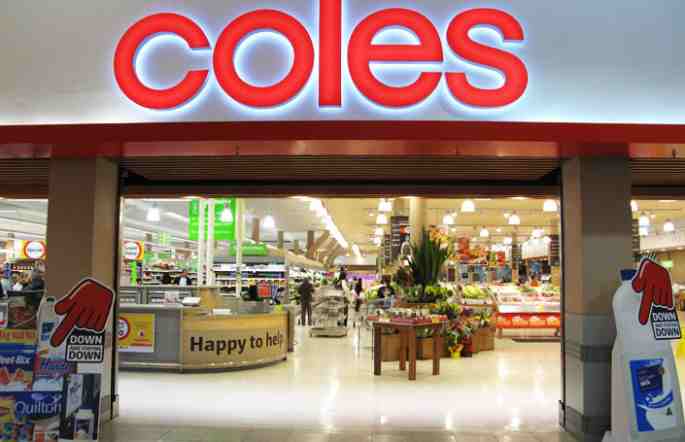
    Coles is ramping up its convenience strategy, with a plan to grow sales on the back of “food-for-now” and “food-for-later” products. As part of this strategy, the brand will convert around 200 Coles supermarkets to a more premium, convenience-focused format, as shift 200 lower-volume stores to a more value-centric format, while adding around 75 new product lines to its existing range for ready-to-eat meals – such as breakfast foods, curries, soups, roast vegetables and stir-fry kits.

    According to the report, Coles chief executive Stephen Cain sees an opportunity through this strategy to grow another billion dollars in sales over the next five years.

    “It’s high growth and it mainly happens outside supermarkets at the moment,” Cain told.

    “Some of it will come from other players in the convenience market, but because it’s value-added it’s also growing the market as well.”

    Cain previously told analysts that the brand was changing rapidly in the space, but was still lagging behind the competition.

    “We are growing our baskets, and we are growing our transactions. We believe that we can do a better job with the convenience customers, and we’re setting up the business to do that going forward,” Cain said.

    Coles’ focus on convenience is not surprising, given the number of partnerships it has forged with third parties, since splitting from former-parent company Wesfarmers in late 2018, to ensure customers can get its products how they want when they want.

    Deals with online marketplace eBay and meal-delivery service Uber Eats are other incentives for Coles to improve its food-for-now and food-for-later offerings by allowing several pillars of the business to utilize the expanded range.

    “Making life easier for our customers means enabling our customers to fulfill their shopping needs ‘anytime, anywhere’,” a Coles spokesperson said.

    “We know our customers’ needs are changing rapidly and we are evolving our offer accordingly.”

    The convenience market is growing rapidly in Asia Pacific, with the region having been named the “largest and fastest-growing” convenience market in the world in a report by GlobalData.

    According to GlobalData retail analyst Honor Strachen, the changes being seen in the region’s convenience offers, such as those outlined by Coles, have been improving store sales and profitability at a time that retail space is becoming more expensive, and margins are increasingly under pressure from inflation and discounting.

  • APAC leads global convenience sector

    APAC leads global convenience sector

    The Asia-Pacific region is the largest and fastest-growing region in the global convenience market, according to a new report by GlobalData.

    The research firm forecasts a compound annual growth rate of 10.6 per cent over the 2017-2022 period, due to local retailers increasing focus on store modernisation, the inclusion of technology, and a shift in consumer spending encouraging an investment in the channel.

    International retailers are beginning to see the necessary changes, GlobalData retail analyst Honor Strachan said, but their efforts are far from the transformation seen in Asia.

    “In a bid to attract new customers and prevent shopper desertion as the market becomes more competitive, convenience retailers are …refurbishing stores to incorporate new ranges (fresh, organic, and free-from are all gaining shelf space),” Strachan said.

    “[As well as] new concepts such as food service, mobile charging points and online purchase collection desks to help drive footfall, average basket size and customer satisfaction.”

    Strachan adds that these changes benefit store sales and profitability in a time that retail space is becoming more and more expensive, and margins come under pressure for inflation and discounting.

    7-Eleven is one such chain, having invested heavily into innovating its convenience offering over the last few years in order to get ahead of the competition – opening unstaffed stores in the region, as well as focusing on improving its delivery service in more populated areas.

    According to 7-Eleven chief executive Angus McKay, customers today want a different retail experience from what has long been expected from convenience chains.

    “You have to be patient and really be on your game and know what the customer wants, and be prepared for them to change their minds,” McKay previously told Inside Retail.

    “We’re investing in becoming better retailers.”

  • Vietnam’s Petrolimex plans Countrywide Convenience Stores

    Vietnam’s Petrolimex plans Countrywide Convenience Stores

    Vietnamese petroleum retailer Petrolimex is planning to build a convenience-store chain.

    After five years of research, the group plans to open stores across its network of 5200 gas locations across the country.

    “Petrolimex will expand into this sector, each store will host 1500 to 2000 products,” a Petrolimex representative said during a conference.

    “Our strategy partner JX Nippon Oil will support us to set up the chain in the most optimal way.”

    Petrolimex has tested the industry with its P-Mart in Hanoi’s Hoai Duc district. The store only sells Petrolimex-branded products such as oils and a limited range of snacks and beverages.

    There is no official information if Petrolimex will base its chain on this concept or build a different one.

    Stepping into the convenience-retailing sector, Petrolimex will compete with experienced players such as Circle K, 7-Eleven, VinMart + and FamilyMart, but none of those brands are affiliated with service stations.

  • Vietnamese good to be displayed at Japanese supermarket chain

    Vietnamese good to be displayed at Japanese supermarket chain

    A week for Vietnamese goods this year will be held at the Aeon supermarket chain in Saitama prefecture and Kanto region in Japan from June 5-12, according to organizers.

    During the week, Vietnamese goods will be highlighted at 40 outlets in the Aeon distribution system, along with many activities such as plant tours, product assessment, and consultations.

    Business-to-business contacts between Vietnam and Aeon importers, the introduction of Vietnamese products and capacity, popularisation of standards for imports, and agreement signing, along with food shows, tourism promotion, and art performances will be held within the framework of the week.

    After the week, enterprises will be supported to connect with Aeon so as to supply their products to the supermarket chain. AEON committed to raising Vietnam’s export turnover through the group’s system to US$500 million in 2020 and $1 billion in 2025, following a memorandum of understanding (MoU) inked between the Japanese group and the Ministry of Industry and Trade.

    In order to help Vietnamese businesses to join the AEON supply chain and become a supplier for the over 1,000 AEON supermarkets around the globe, the group has built a plan including a number of activities to increase the presence of made-in-Việt Nam goods, Yuichiro Shiotani, General Director of AEON Topvalu Vietnam, said at a recent conference in HCM City.

    AEON has also provided technical support to improve the production capability of Vietnamese suppliers and help them access Japanese customers, as well as boost the purchase of Vietnamese goods to sell at its stores in Japan and other countries, he said

  • FamilyMart Japan investing in New Labour Technology

    FamilyMart Japan investing in New Labour Technology

    Japanese convenience store FamilyMart Holdings is preparing to invest ¥25 billion (US$223 million) on labour-saving technologies.

    The firm will partner with tech firm Panasonic to introduce self check-out, digital displays and other similar devices which automate procedures traditionally undertaken by staff.

    The investment is intended to serve the brand’s franchisees who have been burdened with high labour costs in order to keep stores open around the clock.

    Both FamilyMart and its larger competitor 7-Eleven have felt pressured to let go of their 24-hour store policies in the face of a tightening labour market.

    They are also looking at other ways to ease the financial burden on franchisees.

  • Korean GS25 launches shared-bike charging service

    Korean GS25 launches shared-bike charging service

    Starting June, customers of South Korean GS25 convenience stores will be able to charge shared electric bicycles or kickboards.

    GS25 announced on Wednesday that it will set up an electric bicycle and kickboard charging service facility at its stores in partnership with the shared micro-mobility integrated platform “GoGoSing.”

    Under the terms of the deal, GoGoSing will operate 800 shared electric kickboards and shared electric bikes in Gangnam District in Seoul and Pangyo in Gyeonggi Province, while GS25 will set up charging facilities at stores in nearby areas.

    Customers will be able to use an electric kickboard and return it to a nearby GS25 store, and if they need to charge their device, they will also be able to exchange or charge batteries at the stores.

    GS25 expects that this will help convenience stores to move away from their focus on simply selling products and serve as a hub for charging various shared devices, as well as attracting new customers.

    GS Retail has introduced charging facilities for electric vehicles at 45 locales at present, and will offer delivery services for convenience store products since starting from April, in tandem with the delivery application Yogiyo.

  • Philippine Seven chief wins retail award

    Philippine Seven chief wins retail award

    Jose Victor Paterno, president and CEO of Philippine Seven Corp, has been named the NACS Asian Convenience Retail Leader of the Year.

    The award, endowed by PepsiCo, recognises and honours “the most successful and influential convenience industry leader of 2019” in the region.

    It was presented before an international audience of convenience retailers and suppliers at the NACS Convenience Summit Asia this week in Shanghai, China. Paterno joins last year’s winner Richard Yeung, CEO of Circle K Convenience Stores Hong Kong, and Tomoyasu “Tommy” Marutani, president of Secoma, which operates Seicomart in Northern Japan, the year before.

    Paterno was recognised for navigating Philippine Seven through the implementation of one of the most complicated supply-chain networks in Asia. The company operates 13 warehouses nationwide and overcomes the country’s geography to deliver daily to 2600 stores across the Philippines, which comprises more than 7000 islands. The warehouses carry 3000 items. His company uses the network to offer store pick-up points for items ordered online through their CLiQQ Shop and Rewards Program, making the Philippines convenience chain a true online-to-offline retailer.

    “Not only is the dynamism of Philippines Seven’s drive to redefine convenience impressive (eg, the CLiQQ Shop), but Victor’s personal commitment to and support of our global convenience-retail industry is widely respected,” said Henry Armour, president and CEO of NACS.

    A one-time technology entrepreneur, Paterno believes in the potential for technology to transform small-format retail. He is an engineer by education who fell into retailing when he joined the company at his father’s invitation as construction and maintenance manager in 1993. Although the position was supposed to be temporary, Paterno was intrigued by the complexities of retailing and stayed on longer than planned. He was appointed president and CEO in 2005 by majority shareholders President Chain Store of Taiwan.