Tag: crypto

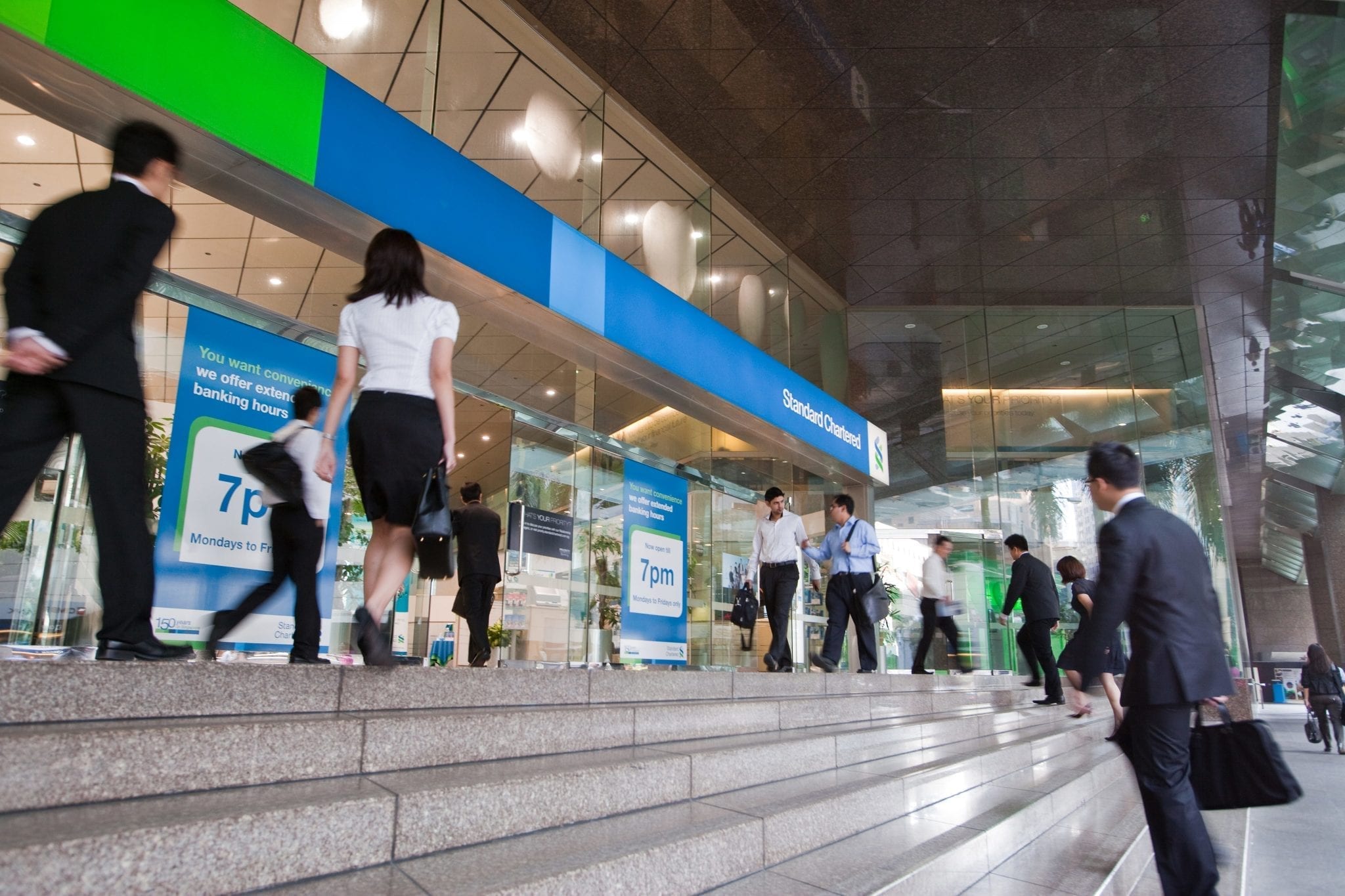
  • Standard Chartered to Pilot Crypto Custody Solution

    Standard Chartered to Pilot Crypto Custody Solution

    The bank’s ventures and innovation platform is reportedly building a crypto custody offering for the institutional market, with a pilot planned for later this year.

    SC Ventures developing a venture to meet the demands of institutional investors for an end-to-end institutional-grade custodian of digital assets, which meets regulatory standards, Alex Manson its Singapore-based global head, told Coindesk earlier this week.

    The custodial solution will be based in the U.K., but will be open to clients from around the world, Manson said, noting interest from 20 institutions.

    Manson highlighted the opportunity to kick-start the institutional adoption of cryptocurrencies by providing the fundamental market infrastructure. He told the blockchain news portal that solutions currently available lack the security required to secure millions of dollars in digital assets, and lack function segregation.

    Complementing its custodial initiative, SC Ventures participated in an oversubscribed $17 million Series A funding round for Metaco, which runs an institutional operating system for digital assets.

    German-based security technology company Giesecke+Devrient led the round, which also saw participation from Zürcher Kantonalbank and venture capital firm Investiere, as well as all existing strategic shareholders Swisscom, SICPA, Avaloq Ventures, and Swiss Post.

    The funds will be used to fuel the next phase of the company’s growth in sales, product, and partnerships, and broaden its presence in the U.S., Southeast Asia, and Western Europe, the announcement last week said.

  • Libra Poaches Top Credit Suisse Crime-Fighter

    Libra Poaches Top Credit Suisse Crime-Fighter

    The bank’s top anti-money laundering executive is leaving for Facebook-backed payments project Libra.

    Sterling Daines is leaving Credit Suisse for Libra, a source familiar with the matter said on Tuesday. The bank had poached Daines three years ago from Goldman Sachs to run its financial crime compliance, or FCC, activities under top compliance boss Lydie Hudson.

    He is the latest representative from traditional finance to head for Libra, an upstart payments system governed by a Swiss-based association. Last month, Libra said it is hiring HSBC’s top lawyer Stuart Levey as its CEO, and also tapped the weighty support of Singapore’s sovereign wealth fund.

    Neither Daines nor Libra responded to a request for comment. A 2018 sanction from Swiss watchdog Finma for several money-laundering scandals fell in the early days of Daines’ tenure at Credit Suisse.

    The Swiss bank is poised to replace him with Tam Ludford, a 12-year Credit Suisse veteran who will add the job to his current role as global head of core compliance, surveillance, and investigations.

  • Ex-Deutsche Banker Kicks Off Japanese Crypto Exchange

    Ex-Deutsche Banker Kicks Off Japanese Crypto Exchange

    Japan’s FXCoin will begin operations after more than two years of building its foundation led by founder and chief executive Tomoo Onishi – ironically an ex-FX sales manager with Deutsche Bank.

    The exchange has begun accepting applications to open accounts and will initially focus on Bitcoin, according to a report – a timely choice given its more than 40 percent surge since mid-March. FXcoin has plans to later expand into other cryptocurrencies like Ripple and Litecoin.

    The firm will also target to increase its headcount to 50 by year-end, from its current 36, and begin profiting by 2021-end with no quantitative earnings target.

    FXcoin, backed by Softbank subsidiary and financial conglomerate SBI, is amongst the 23 exchange operators registered with Japan’s regulator.

    Onishi expects digital currencies to benefit from the ongoing coronavirus pandemic, due to ample cash flooding the market from global stimulus measures. What’s more, he notes that there is evidence that the new asset class’ price movements are uncorrelated with conversational asset prices in the long-term – a key differentiator in a market rushing to find diversification into real alternatives in an increasingly correlated world.

    Despite his bullishness, Onishi still provides the standard investor warning, underlining that no asset is absolutely safe.

  • Crypto Trading In Different Countries

    Crypto Trading In Different Countries

    Cryptocurrency is an acceptable legal tender anywhere in the world. “Anywhere in the world”, does not mean you take ‘cash’ crypto to a pawn shop to get whatever you want. It is an e-currency. Hence, by “anywhere in the world”, it means digital businesses that are run from locations based anywhere in the world. According to a resourceful material on https://insidebitcoins.com/bitcoin-trading, the topmost countries in the world that accept crypto trading, include the US, the UK, Canada, and Australia.

    Crypto Trading in the UK

    Several UK-based platforms allow bitcoin as the legal trading currency. Many of those platforms are regulated by certain guidelines. For most, of all, FCA act as the primary regulator. Most of the UK-based platforms allow different deposit methods, all of which can be linked within a short time. In fact, either deposit is made via euro or pound, or bitcoin, you can also cash out in any of the currencies as well, when you make transactions that can bring money. Binance and Plus500 are the topmost UK online brands where you can make bitcoin trading if you are in the UK. However, Binance is not an actively-regulated site by the FCA; hence, it does not allow trading CFD products, rather the actual bitcoin transaction. 

    In the United Kingdom, cryptocurrency trading can be done by common transactional exchanges between a seller and a buyer, or you can invest in other cryptocurrency trading systems that will give you return on investment. 

    Crypto Trading in the United States

    In the United States, trading bitcoin can happen through different methods. The most widely accepted methods are to make sales and purchases on platforms that allow crypto trading and investing in a cryptocurrency trading platform, based in the US. Interested traders of bitcoins buy bitcoin assets on approved websites and they make trades accordingly, not by price or equivalence with other currencies. Some huge risk-takers afford to go for bitcoin trading robot and they wait to get their returns on investment after a while.

    Certain states in the United States, such as Las Vegas are more liberal and permit online casinos that allow residents within the states to gamble and earn returns in bitcoins. This allows them to gamble and cash out their profits in cryptocurrency or any other means allowed by a specific casinos.

    Crypto Trading in Canada

    Canada is like the United States; similar trading rules and methods apply to both. 

    Crypto Trading in Australia 

    Gradually, bitcoin is becoming an acceptable trading means for online-based businesses. Sadly, bitcoin and PayPal are barred as transaction means in certain regions of the country. Nonetheless, by using Plus500, you can link your PayPal account and fund your Plus500 account. Funds are transferrable between PayPal and the Plus500 platforms. Then, you can use trade with your Plus500 account. With your Plus500 as a major funding source, you can now purchase bitcoin CFDs as instructed. Australians are also able to trade with bitcoin trader robot, maximizing their bitcoin profits and cashing out the equivalent value of their profit.

    Crypto Trading in New Zealand

    Like Australia, New Zealand is gradually embracing cryptocurrency trading. Thus, there are still many platforms where cryptocurrencies cannot be used. Nonetheless, by setting up a funding account source on the Plus500 platform, with PayPal, it becomes possible to trade on several platforms using your Plus500 account. Same conditions are applicable to Australia and New Zealand.

    Crypto Trading in Germany

    Bitcoin trading in Germany is quite technical. Bitcoin trading faces a lot of negative pressures in Germany, but it is not impossible to trade bitcoin. For the few platforms that allow bitcoin trading, verification processes are always rigorous. By leveraging certain global platforms, folks in Germany can make bitcoin trades via credit and debit card, ACH bank transfer, and other transfer means. Berlin accepted Bitcoin, early enough. Most of the cryptocurrency adoption rate from Germany source from Berlin.

    The challenge with cryptocurrency in Germany is that it is not ruled as a financial instrument, even though about 29% of Germans think cryptocurrency is worth investing in, according to a survey by German retail bank Postbank.

    Germany also has bitcoin ATMs where people can make certain bitcoin transactions. Furthermore, there are certain companies where people can transact bitcoins and companies to invest in. You don’t have to necessarily look for a German platform, you can check out global bitcoin trading platforms that are eligible for German citizens. 


  • Binance Unveils Singapore Crypto License Ambitions

    Binance Unveils Singapore Crypto License Ambitions

    Cryptocurrency exchange giant, Binance, has applied for an operating license in Singapore which continues to lure new players following the recent progressive developments in its regulatory regime.

    Founded in 2017, Binance experienced extremely rapid growth before achieving an estimated market cap of $1.3 billion by early January 2018. The Malta-headquartered exchange now has offices located globally including in Singapore where it is backed by Temasek’s venture capital arm Vertex Venture.

    Whilst initially focused only on crypto-to-crypto trading platforms, which allowed Binance to grow without dealing with banks and regulators, the firm began to focus on the development of formal exchanges in jurisdictions with a relevant regulatory regime like Singapore.

    We have already applied,» said Binance co-founder and CEO Zhao Changpeng. «We submitted the application pretty fast. Binance’s Singapore entity has been in close touch with the local regulators, and they have always been open-minded.

    Last month, Singapore introduced the Payment Services Act which will formally regulate companies engaging in activities ranging from digital payments to the trading of tokens like Bitcoin or Ether. In addition to an expanded regime, the Monetary Authority of Singapore’s supervisory powers were also enlarged to cover cybersecurity risks and controls on money laundering and terrorism financing from such activities.

    Greater clarity for businesses through explicit regulation was expected to be a key driver for new entrants. Other reported applicants thus far include Tokyo-based crypto exchange operator Liquid Group Inc and London-based Luno.

  • Australian Crypto Exchange Debuts in Singapore

    Australian Crypto Exchange Debuts in Singapore

    The firm wants to offer its platform and services to a wider audience in APAC, following a number of strategic partnerships and business growth in 2019.

    Sydney-based cryptocurrency exchange Independent Reserve, announced its launch in Singapore this week as a separate entity, which will allow Singapore residents to buy, trade and hold digital currencies like Bitcoin, Ethereum, Litecoin, and XRP, on its platform, with Singapore-dollar trading pairs to be added.

    We felt the time was right to make this move, said Adrian Przelozny, CEO and founder, in a press release, noting the introduction of the Payments Services Act by the Monetary Authority of Singapore, which entered into force on Tuesday. The response we’ve received so far from the Singapore market has been overwhelmingly positive, he added.

    Independent Reserve was established in 2013 and has the backing of the Australian finance industry heavyweights Mike Tilley (ex-CEO of Challenger Financial and Chairman of Latitude Financial), Martin Rogers (KTM Ventures) and Steve James (Seer Asset Management), who are investors and board members.

    The firm has already built a strong presence in Australia and New Zealand, with over 120,000 customers and around 8,000 self-managed super funds (SMSFs), and recently introduced insurance coverage for cryptocurrency held by its clients.

    It has also been working closely with regulatory bodies including AUSTRAC to formulate AML/CTF regulatory frameworks for the industry.

  • Stack Launches Asia’s First Bitcoin Index Fund

    Stack Launches Asia’s First Bitcoin Index Fund

    Stack, an Asia-based provider of cryptocurrency trackers and index funds, has launched the single-asset index fund in response to investor demand. It expects to capture $750 million in assets under management within 2020, Matthew Dibb, co-founder of Stack said.

    The firm hopes to surpass $2 billion in assets under management next year by tapping into the unmet demand from traditional investment vehicles in Asia’s digital asset space. Stack’s list of partners includes financial services providers, BitGo, Silvergate Bank, and Coin Metrics for a custodian, banking, and index solutions, respectively.

    We’ve seen a dramatic increase in the number of investors seeking to diversify their portfolios using bitcoin. Fears of a global recession, combined with deteriorating trade relations globally, are accelerating this process considerably. Bitcoin is one of the best-performing assets in history—with 19x returns since 2014—and is uncorrelated with traditional markets, making it an attractive prospective investment for both individuals and institutions, said Matthew Dibb, co-founder of Stack.

    The launch of Stack comes as the number of long positions being taken within the bitcoin market and demand from institutional investors for access to the digital asset economy increase. In Asia, however, there are virtually no risk-adjusted investment portals for the bitcoin market, leaving investors in Asia with no opportunity to access the potential returns, said Dibb.

    Currently, investors purchasing and custody bitcoin through digital asset management portals or traditionally structured funds pay premiums of 20 to 40 percent over the underlying asset. Wealth management firms have also been capable of charging exorbitant management and performance fees, even for passively-managed single asset portfolios.

    In contrast, Stack’s flagship Bitcoin Index fund (BTCX100) gives investors in Asia a flexible and cost-effective means of gaining exposure to bitcoin which complies with the financial industry’s standards while mitigating the risks inherent to purchasing, transacting, and storing digital assets. With a minimum investment of S$100,000 at 2.25 percent management fee, Stack provides an institutional-grade alternative to the high premiums and barriers to entry which come with current digital asset hedge funds.

    Those who wish to purchase BTC and other digital assets through other available exchanges and portals are often forced to bear the risks of poor security in custody these assets. With the launch of Stack’s Bitcoin Index Fund, investors now have an alternative to these channels, and can now enjoy secure custody with insurance coverage, weekly contributions, redemptions, and reporting, mitigating the risks that come with buying and holding digital assets through other means, said Dibb said.

  • Singapore Helps Global Crypto Firms To Expand

    Singapore Helps Global Crypto Firms To Expand

    Singapore has introduced new payment legislation that offers global cryptocurrency firms a chance to expand their operations in the country. The Payment Services Act, which comes into force on Tuesday, is the first comprehensive regulation for companies handling activities ranging from digital payments to the trading of tokens such as Bitcoin and Ether.

    We welcome the Act with open arms, said Liquid’s CEO Mike Kayamori, who was quoted in a «Bloomberg» report. The firm will apply via its local Quoine Pte subsidiary. Tokyo-based crypto exchange operator Liquid Group Inc and London-based Luno, which already operate in Singapore, are among the firms planning to apply for the licenses.

    Increased investor interest in digital tokens has encouraged several regulators around the world to bring the venues under their scrutiny, especially for money laundering and other illicit activities.

    Besides bringing crypto firms into the regulatory fold, the law will hand the Monetary Authority of Singapore formal supervisory powers for cybersecurity risks and controls on money laundering and terrorism financing. The new measure narrows the gap with Japan, currently a major Asian centre for cryptocurrency trading after 22 exchanges received licenses there since 2017.

    The key advantage of Singapore’s new legislation is providing regulatory clarity on new types of payments activities such as e-wallets and cryptocurrency exchanges, according to Nizam Ismail, the founder, and chief executive officer of Ethikom Consultancy, which helps potential applicants with licensing and compliance issues.

    Twenty of the top 50 crypto exchanges are based in the Asia-Pacific region and accounted for about 40 percent of Bitcoin transactions in the first half of last year, according to data from Chainalysis.

  • China’s Crypto Crackdown Hits Five Exchanges

    China’s Crypto Crackdown Hits Five Exchanges

    China’s crackdown on cryptocurrencies has led at least five local exchanges to halt servicing of domestic users or their whole operations altogether.

    Last week, Chinese exchange operators Bitsoda and Akdex announced that it would cease its operations. Btuex and Idax said they would close domestic operations and focus on overseas users. Biss said it had halted ops while it cooperates in investigations with local authorities.

    The exchanges account for the five known exchanges that have suspended or shut down their operations. Other players that are believed to be affected include Binance and Tron whose Webio accounts have reportedly been suspended.

    Weeks after Beijing declared support for blockchain technology, the market has been rushing to capitalize on perceived opportunities from digital currencies. This subsequently led regulators in Shanghai, Shenzhen, and Beijing to ramp up efforts to probe or shut down exchanges.

    Concurrently, China is readying to realize part of its blockchain ambitions with the launch of its own central bank-backed digital currency. It is already making accelerated efforts to ready the regulatory grounds for the launch including the introduction of new standards in 17 areas of emerging technologies which include not only blockchain but also cloud services and artificial intelligence.

  • Crypto Bank Sygnum Eyes License in Singapore

    Crypto Bank Sygnum Eyes License in Singapore

    Just days after clinching a banking license in Switzerland, cryptocurrency-focused financier Sygnum will look to do the same in Singapore.

    Sygnum is currently pushing for a capital markets services license in Singapore to offer asset management solutions but will look to apply to become a fully-fledged bank this year.

    In order for us to provide a full suite of services, we need to operate as a bank in Singapore, said Gerald Goh co-founder and chief strategy officer at Sygnum.

    After the company becomes a full bank in Switzerland, a transition expected this year, it will be able to apply for a traditional banking license in the city-state.

    Sygnum is pioneering the crypto-based banking industry and potentially gaining first-mover status in multiple major financial centers. It was one of the first two crypto players to recently be granted banking licenses by Swiss regulator Finma. Successful application in Singapore could make it the first crypto bank in Singapore as well.

    And Singapore’s financial sector is no unfamiliar territory to Sygnum’s leadership which boasts a prominent list of members in its board and advisory council such as Chua Kim Leng, former assistant managing director (banking & insurance) of MAS, Hsieh Fu Hua, director of Grab Holdings and former chairman of UOB, and Ang Kong Hua, chair of GIC investment board.

    Once it officially becomes a bank in Switzerland, Synum will be able to issue, store, trade and manage Bitcoin and Ethereum, converting them into various hard currencies. It will also offer custody, brokerage and tokenization services for digital assets to qualified clients.

  • MAS Warns Against Lee Hsien Loong Bitcoin Scam

    MAS Warns Against Lee Hsien Loong Bitcoin Scam

    The Monetary Authority of Singapore warned the public about a website using fabricated comments from Prime Minister Lee Hsien Loong to solicit investments in bitcoin.

    The website not only used fabricated comments but also attempted to impersonate a news page from a local media organization, the Monetary Authority of Singapore (MAS) added.

    The information on the website is highly deceptive and misleading. The statements attributed to PM Lee are completely false, said MAS in a media statement last Friday. The site tries to get readers to provide credit card or bank account information, plus payments into a trading platform, which would automatically initiate trades on the client’s behalf.

    Members of the public are advised to exercise extreme caution and avoid providing any financial or personal information on the forms linked from the website, MAS added. Members of the public who suspect that an investment could be fraudulent or misused for other unlawful activities should report such cases to the police, the regulator said.

    Since last year, MAS has issued at least four consumer advisories on such fraudulent websites that use the names and photographs of ministers and other prominent people in Singapore to solicit bitcoin investments. The ministers included Emeritus Senior Minister Goh Chok Tong and Deputy Prime Minister Heng Swee Keat.

  • Argomall partners with CoinGate to adopt Bitcoin and cryptocurrency payments

    Argomall partners with CoinGate to adopt Bitcoin and cryptocurrency payments

    Online shopping website Argomall.com now takes payment in cryptocurrencies and is the first Filipino online retailer in Southeast Asia to accept Bitcoin and around 50 other cryptocurrencies as payment.

    In line with Argomall’s value proposition of personalized convenience, it has added cryptocurrencies, also called Altcoins, to its already wide list of payment options, which include cash on delivery (COD), credit/debit cards, online installment via Home Credit, online banking, over-the-counter payments in banks and non-bank institutions, G-cash and PayPal.

    This option became available on April 1 and is only available for straight payments.

    Argomall partnered with CoinGate to make this project possible. CoinGate is an online trading platform for Bitcoin, Ethereum, Litecoin, XRP and other coins like: Bitcoin Cash (BCH), Sirin Labs (SRN), Telcoin (TEL), Nano (NANO), TRON (TRX), Dai (DAI), Bitcoin SV (BSV), Zcash (ZEC), Ethereum Classic (ETC), Augur (REP), Dogecoin (DOGE), Golem (GNT), DigixDAO (DGD), Wings DAO (WINGS), iEx.ec (RLC), Decred (DCR), Stellar (XLM), Basic Attention Token (BAT), Aragon (ANT), Bancor Network Token (BNT), Civic (CVC), EOS (EOS), TenXPay (PAY), OmiseGo (OMG), Monaco (MCO), 0x Protocol Token (ZRX), Qtum Ignition (QTUM), Storj (STORJ), FunFair (FUN), Salt (SALT), Bitcoin Gold (BTG), DigiByte (DGB), district0x (DNT), Power Ledger (POWR), Populous (PPT), Bread (BRD), Noah (NOAH), Binance token (BNB), Polymath (POLY), Kyber Network (KNC), TrueUSD (TUSD), Mithril (MITH).

    In a report by Entrepreneur magazine: “Compared to its Southeast Asian neighbors, the Philippines has been relatively more open to using Bitcoin and other cryptocurrencies, according to a report in FT.com, the Financial Times newspaper’s online site.” It will be recalled that the Bangko Sentral ng Pilipinas (BSP) released a circular in February with regulations for businesses that want to sign up as a virtual currency exchange. It is the only central bank in five countries cited in the FT.com report to do this.

    Some 2.9 percent of Filipinos are adopting Bitcoin, according to a survey conducted by FT.com, second only to the 3.3 percent of Indonesians doing the same. Overall, Southeast Asia’s cryptocurrency adoption rate is 2.5 percent.

    According to a report written by Financial Times’ Confidential Research analysts Prinz Magtulis and Andi Haswidi: “Among the five ASEAN countries we survey, the Philippines has made the most regulatory progress. Since February, its central bank has required all exchanges to obtain a permit for trading cryptocurrencies and to register with the country’s Anti-Money Laundering Council. They are also subject to annual fees. We expect the rest of Asean-5 to follow, in response to concerns that Bitcoin is being used to fund terrorism and other crimes.”

    Prominent global companies that accept Bitcoin include Microsoft, British Airways, McDonald’s and Shopify.

    Established in November of 2015, Argomall grew out of a creative dream by the Filipino-owned conglomerate Transnational Diversified Group to deliver trustworthy and efficient solutions to the discerning Filipino tech shopper.

    “These solutions,” Argomall Chief Argonaut Karel Holub said, “now include the opportunity to pay in Bitcoin and around 50 more Altcoins, because it is part of our mission and vision at Argomall to make the discovery, selection and purchase of smartphones—or any other related gadget—in the Philippines easy, while providing the best service on the internet to our consumers.”

    “Enabling online shoppers in the Philippines to pay with Bitcoin and around 50 more Altcoins is our way of providing good service, as well as opening up another means by which to earn,” Holub said. “This, to us, is a win-win situation where everyone gets good benefits. After all, our vision is that anyone in the Philippines will be able to easily upgrade their smartphone from anywhere, anytime—and that includes giving our customers all the ease and convenience they need to do just that. We aim to make their new device shopping journey as easy and comfortable as possible.”

    CoinGate Marketing Manager Veronika Mishura said this partnership with Argomall is a large step for cryptocurrency adoption, adding that this is CoinGate’s first such integration in Southeast Asia. Moreover, Mishura said, using cryptocurrencies as payment for online purchases present a cheaper and faster alternative to traditional payment methods.

    “Crypto-adoption among retailers is definitely what we need to strive for,” Mishura said. “When more stores accept digital currencies, more users are prompted to buy all types of goods with cryptocurrency. This is exactly what crypto-industry needs for recognition that would lead to it becoming a standard payment method along with credit cards.”

    “Technologies like Lightning Network have already made it more convenient and profitable for businesses to accept cryptocurrency rather than fiat,” she added. “We are thrilled to have Argomall on board. Hopefully, Philippine crypto enthusiasts won’t stay aside, and will start using this new payment method!’

    While Argomall does not endorse the purchase of Bitcoin or any of the other 50 or so Altcoins, the company provides opportunities for those who do have these cryptocurrencies to pay with them at argomall.com in a safe way.

  • Ooredoo launches global blockchain initiative

    Ooredoo launches global blockchain initiative

    Blockchain is a fast-growing digital enabler, with safe, secure, and reliable “distributed ledger” technology providing a permanent digital record of ownership that allows every part of a transaction to be verified.

    While many organizations may know blockchain powering cryptocurrency, there are wider applications of blockchain empowering solutions that can save time and money, and can enhance information security and privacy.

    According to a recent report by IDC, global blockchain spend will grow over 10-fold from $1.5 billion in 2018 to $11.7 billion by 2022.

    As a digital enabler, Ooredoo Group already works closely with public, private and academic sectors in its global footprint to develop blockchain solutions that can create new value in the digital space and enrich people’s digital lives.

    Ooredoo Group’s new blockchain initiative is an open call for innovators to develop blockchain partnerships, solutions, and protocols across business-to-business and business-to-consumer sectors.

    Sheikh Saud Bin Nasser Al-Thani, group chief executive officer, Ooredoo, said: “Blockchain will facilitate new digital business models and revenue in the next five years – helping organisations to run better and to transform people’s daily lives. Using blockchain, organisations and their customers can optimise costs, find new levels of efficiency, transparency, and trust, and enable secure digital payments.”

    For example, property developers can provide smart contracts for ensuring titles, deeds, and facilities management are accurate and secure. Banks can better track cross-border payments, and logistics companies can track and trace products. Healthcare providers can enable digital patient records to optimise treatment. Mega-event organizers can introduce virtual digital payment tokens for merchandise and food and beverage. Sports teams can have real-time athlete health and performance metrics and also manage fan loyalty programs.

    With Ooredoo Group’s Blockchain Initiative, Ooredoo aims to leverage its experience and industry-leading solutions in blockchain combined with 5G, cloud, and the Internet of Things to deliver the biggest benefits to organisations and to customers.

    The Initiative is also bringing together subject matter experts from across the company’s global footprint and business units, including small- and medium-sized businesses, commercial, digital, and legal.

    Sheikh Saud said: “Our Blockchain Initiative aims to open the blockchain floodgates, leveraging global best practices to deliver localised innovation across many of the world’s fastest-growing markets. Our open call to blockchain innovators will also explore integrating blockchain with artificial intelligence and machine learning, cloud, and the Internet of Things.”

  • Singapore’s Start-Up To Launch World’s First All-In-One Digital Currency App

    Singapore’s Start-Up To Launch World’s First All-In-One Digital Currency App

    A team of Singaporean startup will be launching the world’s first all-in-one digital finance mobile application to help general public come onboard to the world of digital currency or better known as cryptocurrency.

    Started off as a media portal AsiaTokenFund, the company has launched the app called ATF to integrate its media platform with a dynamic cryptocurrency “store & utilize” platform. The company realized that as more and more real-businesses are moving into blockchain and adopting cryptocurrency, there is a need to bring more people from the general public into the industry by adopting and utilizing cryptocurrency in everyday life. The main issue is that, at the present moment, it is very difficult or troublesome for a new-to-crypto user to come onboard as the processes are so segmented.

    “Right now if a new user wants to obtain a cryptocurrency, he/she have no idea what it is. He/she will have to read information about it somewhere. Next, he will need to download and set up a wallet and thereafter find a OTC or platform to buy his first cryptocurrency. Thereafter, he’ll have to find other platform to trade or download other app to make payments. It’s just too fragmented with too many processes. You can’t drive mass adoption this way” Said Ken N, Co-Founder & CEO of ATF.

    With ATF Platform / App , users will be able to read the latest news on what’s happening in the blockchain & cryptocurrency space , get the latest market analysis , find out what new currencies are out there to purchase and learn some basic information.

    Adding to that, users will also be assigned their own asset function which comes with a secured wallet to store and utilize their cryptocurrency. In the asset function, users can also purchase cryptocurrency using fiat via bank-transfer or credit / debit cards. Users can also sell their cryptocurrency with the same method.

    In Addition, users can transfer cryptocurrency to peers for free. With the added supported merchant function, users can now purchase items listed in the app by merchants and pay by cryptocurrency. What more, users can also use the ATF app to scan & pay directly at merchant physical shop using their digital currencies.

    “We’ve real companies embarking to accept digital currencies. Recently, we’ve seen news that Starbucks will soon start to accept bitcoin as payment in the US. We’ve also seen news on Facebook announcing its cryptocurrency. I foresee in the near future, more real businesses especially merchants will be able to accept cryptocurrency. There is a gap in the market to provide a one-stop-solution. I hope we are able to do just that” Said Ken N.

    The full function of the app can be summarized as follow:

    • News, Research Articles & Market Analysis.
    • Latest Project Fundraising, issuing new cryptocurrency for purchase.
    • Secured Wallet to store cryptocurrency.
    • OTC, fiat-to-crypto purchase or sell cryptocurrency.
    • Aggregated to Exchange for trading.
    • Transfer crypto peer-to-peer for free.
    • Purchase in-app merchant listed items.
    • Scan & Pay at merchant physical store using crypto.

    ATF currently have over 80,000 subscribers on their media channel www.atfnews.com and social media following of over 140,000 in facebook and other platforms. Headquartered in Singapore, ATF have international teams based in Shanghai, Vietnam, Thailand, Philippines and Germany.

    ATF Mobile App will be launched in both Google Play store and Apple store in first week of April 2019. The company is now set to raise its Series A equity funding to support its global expansion initiatives.

  • New crypto-exchange lets you convert Singapore, Malaysia, Indonesia currencies

    New crypto-exchange lets you convert Singapore, Malaysia, Indonesia currencies

    Singapore-based fiat-crypto exchange EurekaPro, led by a team consisting of Junus Eu, Douglas Gan and Lau Kin-Wai, today announced its entry into the Southeast Asian blockchain market. EurekaPro offers Asian-wide fiat-to-cryptocurrency support, allowing holders of the Singapore dollar, Malaysian ringgit, Indonesian rupiah, and other Asian fiat currencies to transact on the EurekaPro exchange.

    EurekaPro has already launched an open public beta, in which over 8,000 users have signed up in its first week.

    Eu, the exchange’s CEO, was previously the investment manager of zVentures, the venture capital arm of US- and Singapore-based gaming hardware and software firm Razer. Before that, she was an investment manager at VC firm Jafco Asia.

    On the other hand, Gan and Lau co-founded iFashion, a holding firm that invests in various fashion ecommerce sites. Gan also started beauty services marketplace Vanitee and subscription ecommerce business Vanity Trove. Lau set up FatFish Internet Group, a startup accelerator.