Retail News CRM

Tag: crypto

  • Kasikornbank Joins Visa’s B2B Connect Project in Thailand

    Kasikornbank Joins Visa’s B2B Connect Project in Thailand

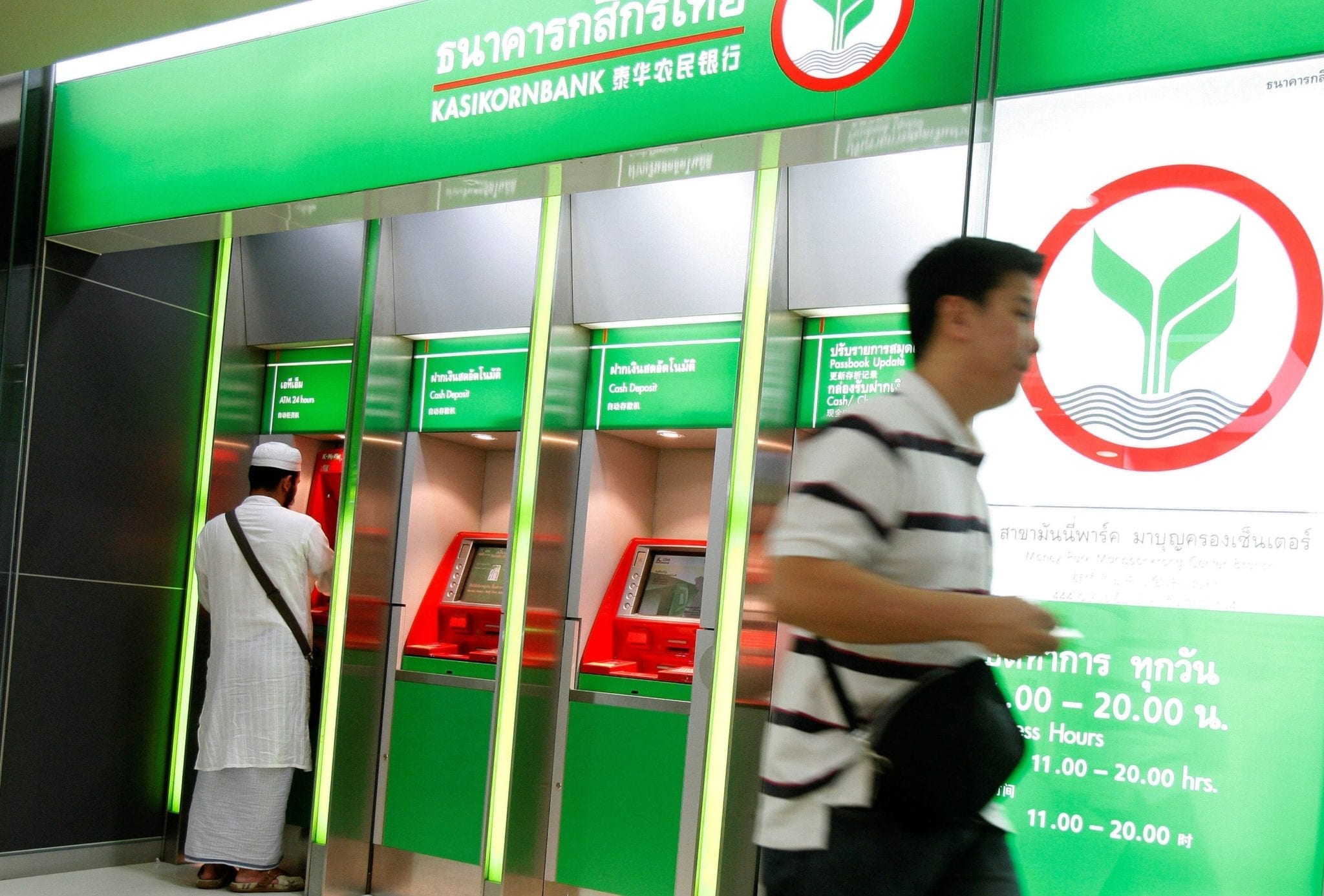
    Visa’s blockchain-based B2B Connect project is gaining steam, with Thailand’s fourth-largest bank, Kasikornbank, joining the fold.  The bank will be the first Thailand bank to use the technology, joining other well-respected financial institutions such as the U.S. Commerce Bank, Shinhan Bank in South Korea, the Union Bank of Philippines, and the United Overseas Bank in Singapore.

    Kasikornbank may not be the largest financial institution in Thailand, but it still has substantial $96 billion in assets.  The bank was established in 1945 with a registered capital of only five million baht.

    The move shouldn’t come as too surprising, considering the fact that Thailand as a nation is much more pro-cryptocurrency, especially in the context of Asia.  For example, China, the largest economy in the region, has banned ICOs completely, even while its state-owned banks have implemented blockchain technology to optimize its operations.

    In contrast, the Bank of Thailand has revealed just last month that it actually plans on issuing its own state-issued cryptocurrency.  The Bank of Thailand has also even allowed local banks much more leeway in terms of cryptocurrency – such as allowing them to issue tokens, invest in cryptocurrency markets through subsidiaries, and even provide crypto brokerage services.

    While Japan and South Korea have expressed positive sentiments about cryptocurrency before – such as Japan declaring that bitcoin is a legal form of payment, and the mayor of Seoul expressing interest in developing his own cryptocurrency – the amount of regulation involved has allowed Thailand to become an international hub when it comes to cryptocurrency.

    While Thailand’s economy might not be as powerful as its neighbors, it still has been drawing in cryptocurrency enthusiasts and companies internationally.

    Suripong Tantiyanon, Visa’s Thailand country manager, praised the decision, pointing out that Visa B2B will help guide the country when it comes to “security, governance, and distributed ledger technology”. He believes that Visa will be an industry leader in this space.

    Visa’s B2B program was already launched last year but is obviously making great progress in Asia already.  The platform is built on Chain, which was actually acquired by Stellar recently.  The platform is meant to enter the corporate cross-border payment sector, which many analysts believe will grow tremendously over the years and is one of the main ways that many cryptocurrency enthusiasts believe the cryptocurrency sector will grow, with institutional money helping lead the charge to mass adoption.

    The idea is that blockchain technology will allow for faster and cheaper transactions, which will save banks massive amounts of money.  Visa also believes that blockchain technology allows for the cross-border payment sector to be more transparent than ever, as well. Kasikornbank is the first Thailand bank to join the platform.


  • Vietnam tightens control over cryptocurrencies

    Vietnam tightens control over cryptocurrencies

    The central bank has cited tax evasion, fraud and money laundering as the reason for the move. The State Bank of Vietnam has directed banks and payment organizations to remain vigilant and keep a watch over all cryptocurrency-related activities.

    The directive follows a cryptocurrency ponzi scheme operated by a Vietnamese IT firm that made headlines last week for allegedly scamming investors out of VND15 trillion ($650 million).

    Tax evasion, fraud and money laundering were cited as the reasons for the directive.

    Vietnam’s financial and payment organizations are not allowed to provide cryptocurrency transaction services such as credit cards or currency conversion or transfer, the directive stated.

    The same organizations have been instructed to report any cryptocurrency transactions and take measures to deal with such cases in accordance with Vietnamese law.

    The State Bank also told its branches to cooperate with government agencies to develop a legal framework to deal with the distribution and transaction of cryptocurrencies.

    The IT firm that came under fire and sparked the move was Modern Tech, based in HCMC. The company is alleged to have held several conferences to encourage participants to invest in its cryptocurrencies, iFan and Pincoin.

    According to the disgruntled investors, the virtual currencies had operated in a similar way to a multi-level business model, or pyramid platform.

    In the beginning, Modern Tech paid investors via bank transfers. However, it quickly switched to using its own virtual currencies, while at the same time increasing its minimum investment limit, forcing investors to pour more money in.

    At the end of 2017, when interest payments started to come in late, investors started to catch wind of what was happening and staged a protest in front of the firm’s headquarters in HCMC.

    Modern Tech representatives have not responded to the accusations, and its founders have remained off the radar.

  • AirAsia Planning Cryptocurrency-Based Rewards Program

    AirAsia Planning Cryptocurrency-Based Rewards Program

    Malaysian low-cost airline AirAsia is launching a cryptocurrency-based rewards program.

    AirAsia chief executive Tony Fernandes told that its frequent-flyer rewards program is being converted into a cryptocurrency platform called BigCoin. The move is part of a broader effort to improve the airline’s digital services and move the company toward a cashless system.

    In the Nikkei article published Thursday, Fernandes described a system in which customers could buy seats, in-flight meals, seat upgrades and other services using BigCoin, in addition to existing fiat currency options.

    Most notably, he told Nikkei Asian Review that he sees AirAsia launching an initial coin offering (ICO) at some point. While Fernandes did not provide a firm timeline, the article says the token could be offered within the next three to six months.

    No details have been released yet on whether AirAsia is developing its own blockchain or utilizing an existing platform.

    Other airlines have looking at blockchain as a possible rewards program model in recent months.

    Singapore Airlines announced last month that it was planning to launch a private blockchain for its own frequent-flyer program, thought it did not specifically state it would be developing its own cryptocurrency.

    However, Singapore Airlines did note it had successfully concluded a proof-of-concept trial with KPMG and Microsoft, and a fuller implementation of the system could see the airline working with merchants to enable customers to spend their miles at various stores or restaurants.

  • Crypto Trading in Korea Continues, Questions Remain

    Crypto Trading in Korea Continues, Questions Remain

    Cryptocurrency trading in Korea is getting more detached, flying by its own rules. Recently, the news of an upcoming ban rattled the market. CoinMarketCap decided to alter its calculation protocol to exclude prices in Korea, thus for a while scaring investors that a flash crash had happened.

    But it turns out, Korean trading is not really affecting the sentiment of other markets. Korean trading mostly serves a very local taste for risk. In the summer months, interest in Bitcoin for a while coincided with the threat of North Korea.

    Later, it turned out that Koreans simply found investing in crypto irresistible, and moved in en masse. In the past, Korean authorities have had other bouts of market mania related to risky assets, thus being extremely anxious on how cryptocurrencies could affect personal finance.

    The Korean markets have seen an influx of retail investors, ranging from office workers to students, in search of a fast-growing investment in Bitcoin or other cryptocurrencies. Korean exchanges are fast to adopt new coins and allow immediate trading in pairs against fiat.

    But some see the latest price spikes as highly speculative and at a risk of crashing.

    For now, there are no further updates on what the Korean government would do with exchanges. Trading continues at a premium to US-based exchanges, and the Korean Won remains the fourth most active fiat currency in trading pairs.

    The matter is becoming politicized, and there are protests that the government should not meddle too much and make honest investors into outlaws.

    And while Bitcoin commands higher prices, it is difficult to move assets between exchanges and make use of the difference in trading.

  • Why Has Bitcoin’s Price Gone Up So Fast ?

    Why Has Bitcoin’s Price Gone Up So Fast ?

    Bitcoin has been in a bull market like few the world has ever seen. At the beginning of the year, the price of a Bitcoin was below $1,000. It hit $5,000 in October, then doubled by late November. And on Thursday, less than two weeks later, the price of a single Bitcoin rose above $20,000 on some exchanges, according to Coinmarketcap.

    The latest price spike has been credited to signs that Wall Street companies plan on bringing their financial heft into the market.

    At the current cost, the value of all Bitcoin in circulation is about $300 billion. To get a sense of how big that is, all the shares of Goldman Sachs are worth about $90 billion.

    The gains have been driven by several other factors — perhaps the most important being the irrational mentality that can take over in speculative bubbles.

    But most people buying Bitcoin are doing so in the belief that others will want it even more in the future. The gains, though, have many people, even Bitcoin believers, anticipating a big crash.

    Currently, the average price of one Bitcoin is about $15.435, according to Blockchain.info, a news and data site.

    Bitcoin used to be all about libertarians and black-market trade. Are those still driving the price?

    The fringe communities that drove Bitcoin in its early years are playing a much less important role in the current rally.

    Many investors have said the most important factor driving the current enthusiasm is the entry of hedge funds and other institutional investors.

    The path for large investors has been smoothed by the Chicago Mercantile Exchange and Chicago Board Options Exchange, which have been racing to roll out Bitcoin futures contracts. Most banks are already signed up with these exchanges and consequently can immediately begin trading the contracts. The options exchange has said it plans to start trading on Sunday.

    It is still unclear how the arrival of Bitcoin futures will influence the demand for the digital tokens.

    With a futures contract, banks can bet on the price of Bitcoin without holding the underlying Bitcoins. This is expected to bring many new players into the market who don’t want to deal with the complications of holding Bitcoins.

    But the futures contract will also allow investors to short Bitcoin, or bet on the price’s going down, which has been hard to do until now. Some analysts think this could put downward pressure on the price. Other market participants have worried that Bitcoin futures could spread the risks of Bitcoin into the rest of the financial system.

    People still use Bitcoin and other virtual currencies to make ransom payments and buy illegal goods online, including synthetic opioids. But that activity has been on the wane since the authorities shut down some of the largest online black markets this year.

    What role are smaller investors playing in the virtual currency markets?

    Individual investors have been just as active as large investors. Nowhere has the phenomenon of ordinary people buying virtual currencies been more visible than in South Korea, where several exchanges have storefronts to help new customers. This is all the more remarkable because just a year ago, Koreans showed almost no interest in these markets.

    Small Japanese investors have also been investing in Bitcoin. They have been encouraged by laws passed this year that essentially legalized Bitcoin and allowed Bitcoin exchanges to get regulatory licenses.

    Most small-time investors have gone to the San Francisco company Coinbase, which provides a Bitcoin brokerage service, similar to Charles Schwab, as well as an exchange for larger investors. Coinbase now has more account holders than Schwab, and it has struggled to keep up with the growth.

    China used to be the most active country for Bitcoin trading and mining, but the authorities there have cracked down this year.

    What are the dangers of getting into this market?

    Many of the largest exchanges, including in South Korea, are essentially unregulated. The lack of oversight means that no one is checking that the exchanges are properly securing their customers’ money or that large players are not able to manipulate the price. One of the largest exchanges in the world, Bitfinex, has been hacked numerous times and provides little transparency about where it is keeping its money.

    Even regulated exchanges, like Coinbase in the United States, have not been battle tested like larger financial institutions, and their operations have gone down at key moments.

    Once people buy Bitcoin or other virtual currencies, they are often targeted by hackers who have become experts at penetrating Bitcoin accounts.Bitcoin “wallets” are vulnerable to new kinds of attacks that are not a problem for ordinary financial accounts.

    Most important, in contrast to money in a bank account, when a Bitcoin is gone there is essentially no way to get it back and no insurance covering its loss.

    Are more people using Bitcoin to pay for things?

    When Bitcoin was released in 2009, it was described as a new kind of electronic cash.

    Recently, though, many programmers working on Bitcoin have said the system in its current form is not a particularly good way to pay for things.They argue that it is best designed to serve as a sort of scarce commodity, like digital gold, allowing people to keep their money outside the control of governments and companies.

    Many people who want to use virtual currencies for online payments are looking to Bitcoin competitors, like Bitcoin Cash and Monero.

    What role are the other virtual currencies playing in this frenzy?

    Earlier this year, bullish sentiment was focused on Ethereum, a virtual currency network that is more adaptable than Bitcoin. The price of Ether, the virtual currency on the Ethereum network, has continued to rise in recent months, but not as fast as Bitcoin.

    Many investors were also putting their money into custom virtual currencies released by entrepreneurs in so-called initial coin offerings. These new virtual currencies have generally been designed to serve as the internal payment mechanisms on new software the entrepreneurs are building.

    This fall, though, regulators have signaled that they are planning to crack down on coin offerings.

    Where did virtual currencies come from, and how do they work?

    The Bitcoin software was released in early 2009 by a mysterious creator who went by the name of Satoshi Nakamoto. The search is still on for the true identity of Satoshi.

    The software released by Satoshi set out the basic rules for Bitcoin and the computer network on which it lives. Unlike other forms of money, which are controlled by governments and financial institutions, Bitcoin operates on a decentralized network of computers that no one institution controls.