Tag: cryptocurrency

  • Why cryptocurrency is gaining popularity and how to get involved

    Why cryptocurrency is gaining popularity and how to get involved

    Cryptocurrency is a digital or virtual asset designed to work as a medium of exchange. It uses cryptography to secure and verify transactions as well as control the creation of new units of a particular cryptocurrency. Essentially, cryptocurrencies are limited entries in a database that no one can change unless specific conditions are fulfilled. 

    Cryptocurrencies are decentralized – they are not subject to the control of government or financial institutions. Bitcoin, the first and most well-known cryptocurrency, was created in 2009 by an anonymous person or group known as Satoshi Nakamoto.

    Since then, numerous other cryptocurrencies have been created. These are frequently called altcoins, as a contraction of bitcoin alternatives. Altcoins include Litecoin, Bitcoin Cash, Ethereum and hundreds more. To get a crypto coin, you have to buy them from a broker. For example, if you want to buy cardano, you must first locate a good broker that is trusted then open an account with them. From there, you can easily get your coins using the payment method that fits you. 

    Cryptocurrency is stored in a digital wallet and can be used to purchase goods and services. Some people invest in cryptocurrency with the hope that it will appreciate in value (like investing in stocks, gold, real estate). But most people trade it like currency – buying low and selling high within a short timeframe, often within hours or even minutes.

    Cryptocurrency and its potential to take over traditional fiat currency

    Cryptocurrency has the potential to take over traditional fiat currency for a number of reasons. First, cryptocurrency is not subject to inflationary pressures like the fiat currency is. This means that cryptocurrency can maintain its purchasing power over time, whereas fiat currency will gradually lose value as more and more units are produced.

    Second, cryptocurrency is much more efficient to use than fiat currency. Transactions can be processed very quickly and at a very low cost using cryptocurrency. This is in contrast to fiat currency, which can take days or even weeks to process a transaction, and which often incurs high fees.

    Third, cryptocurrency is much more secure than fiat currency. Cryptocurrency transactions are verified and recorded on a public blockchain, which makes it very difficult for anyone to fraudulently alter or reverse a transaction. In contrast, fiat currency transactions are often processed through centralized intermediaries (such as banks) which are vulnerable to hacking and fraud.

    Fourth, cryptocurrency offers greater privacy than fiat currency. When you make a transaction with cryptocurrency, your personal information is not attached to the transaction like it would be with a credit card or bank transfer. This makes it much harder for someone to track your financial activity or steal your identity.

    For these reasons, cryptocurrency has the potential to eventually replace traditional fiat currency as the preferred medium of exchange worldwide.

    How cryptocurrency is becoming more mainstream

    Cryptocurrency is becoming more mainstream as a means of payment and investment. As a payment method, it offers a number of advantages over traditional methods such as credit cards or cash. For one, transactions made with cryptocurrency are generally faster and more efficient than those made with traditional methods. In addition, cryptocurrency is often less expensive to use than traditional methods, making it a more attractive option for businesses and individuals alike.

    As an investment, cryptocurrency offers a number of potential benefits. For one, the value of many cryptocurrencies has seen tremendous growth in recent years, meaning that investors who get in on the ground floor could see significant returns. 

    Additionally, cryptocurrency is often seen as a more volatile investment than traditional options such as stocks or bonds, meaning that there is the potential for greater short-term gains. Finally, because cryptocurrency is still relatively new and largely unregulated, there is a great deal of potential for future growth and development in the space.

    How to get started in investing in cryptocurrency

    There are a few things to keep in mind before investing in cryptocurrency. First, do your research and make sure you understand the risks involved. Cryptocurrency is a volatile, and prices can fluctuate wildly.

    Second, only invest what you can afford to lose. Cryptocurrency is a risky investment, and you should never invest more than you can afford to lose.

    Third, diversify your portfolio. Don’t put all your eggs in one basket, and don’t put all your money into one coin. Diversifying will help mitigate some of the risk involved in investing in cryptocurrency.

    Fourth, be patient. The cryptocurrency market can be very volatile, and it takes time to see real returns on your investment. Don’t expect to get rich quick with cryptocurrency; it’s a long-term investment.

    Finally, don’t forget to report any gains or losses on your taxes. Cryptocurrency is subject to capital gains tax, so make sure you keep track of your profits and losses so you can properly report them come tax time.

    What should I consider before investing in cryptocurrency?

    There are a few things you should consider before investing in cryptocurrency, such as:

    – How volatile the market is.

    – What is the potential for growth?

    – What are the risks?

    – How easy is it to buy and sell?

    – What fees are involved?
     

  • Cryptocurrency poses risk of money laundering

    Cryptocurrency poses risk of money laundering

    There is a big risk that cryptocurrencies will be used in Vietnam for laundering money since there is no legal framework to regulate them, a lawmaker has said.

    Vietnam is among the top countries globally in terms of cryptocurrency ownership but it does not even recognize the asset, Duong Van Phuoc from the central province of Quang Nam said at a meeting Wednesday.

    “Cryptocurrencies could be used by criminals to fund terrorism,” he said, adding that digital asset criminals are not getting caught due to the lack of regulations.

    He called for including cryptocurrencies and other digital assets in money laundering laws.

    State Bank of Vietnam governor Nguyen Thi Hong said there have been similar proposals before but the government has yet to decide which authority could be entrusted with overseeing them.

    According to digital currency payment company Triple A, around 5.96 million Vietnamese, or 6.1% of the population, own cryptocurrencies.

  • Stores’ claims of accepting Pi payment turn out to be misleading

    Stores’ claims of accepting Pi payment turn out to be misleading

    Some stores accept payment in cryptocurrency Pi but only partially and require buyers to pay mainly in cash.

    “I saw a post selling a used iPhone 11 and thought I could buy it with a dozen Pi tokens,” Thanh Son of HCMC said.

    But it turned out he could only pay 10 percent with Pi and the remaining VND12.5 million ($535) had to be paid in cash.

    “I can easily buy the same phone for VND12.5 million without spending a single Pi,” he said wistfully, adding it was a trick sellers used to entice Pi owners.

    He later contacted some other sellers and got pretty much the same answer.

    “Some places require a smaller proportion of cash but they undervalue Pi.”

    Some investors had begun to claim they bought food and equipment using Pi on social media since July 13 when the cryptocurrency’s developers allowed it to be traded.

    Cryptocurrencies are not legal tender in Vietnam, and issuing, trading or using one for payment attract fines of up to VND100 million.

    Sellers try to avoid legal risks by calling deals using Pi “exchanges” rather than “transactions.”

    A person who asked not to be identified said they had put down a VND10 million deposit for a car after the dealer made an offer “exclusively for the Pi owner community.”

    But the seller actually does not accept payment using Pi.

    He reportedly told the person: “Once Pi enters the open mainnet phase, you guys, Pi owners, can offer it for legal tender. Then you bring the legal tender to us and take your car.”

    The dealer claimed over 100 people had deposited. It is far from clear when, and if ever, the crypto will become legal tender.

    There is a chance the people would lose their deposits, an expert warned.

  • Vietnamese buy Bitcoin in hope it has bottomed

    Vietnamese buy Bitcoin in hope it has bottomed

    Many investors are buying Bitcoin after the cryptocurrency’s price fell to US$20,000, its lowest level since December 2020. Thanh Binh of HCMC says he turned off notifications on his crypto trading app after buying it at $38,000 and losing over VND40 million ($1,720).

    But he has returned and bought a 10th of a token after prices dropped below $20,000.

    “The market has bottomed out and will recover by the end of this year, and so this is the right time for buying in,” he says hopefully.

    Hai Ly of the southern province of Dong Nai has invested VND70 million in Bitcoin and Ethereum, the two largest tokens by market cap. She wanted to diversify her portfolio and thinks their current prices are reasonable.

    She says Bitcoin operates in four-year cycles, and prices fall sharply at the end of each cycle before scaling new peaks.

    “The current cycle started in January 2019 and ended between May and July this year. Considering other factors, the current crypto slump is not abnormal.”

    Prices will recover and hit a new peak by mid-2023, she says.

    Many investors see an opportunity in the current fall in cryptocurrency prices though the recent sell-offs wiped billions of dollars from the market.

    Search related to Bitcoin has surged to the highest levels in a year according to data from analytical website Google Trends.

    Hope is also fueled by rumors that Binance, the largest cryptocurrency exchange, has quietly bottom fished a large amount of Bitcoin.

    Over 100,000 tokens have been added to the exchange’s cold wallet (physical device that keeps cryptocurrency completely offline), crypto-focused site Coingape has discovered from on-chain data.

    They amount to 0.5 percent of all mined Bitcoin and are worth over $2 billion at current prices. But CEO Changpeng Zhao denies it, saying the increase “means more users deposited in Binance.”

    Money is also coming into crypto-centric investment funds. They have raised over $125 million in the week ended June 6 and $506 million in the year-to-date, asset management company CoinShares reported.

    Short-term Bitcoin funds, mainly used for speculating on the cryptocurrency’s slump, received $1.3 million. Bitcoin is being traded the fastest in a year, Yahoo Finance said.

    But there are risks associated with bottom fishing Bitcoin and other cryptocurrencies, experts warn.

    Le Sy Nguyen, ASEAN regional manager of crypto exchange Bybit, says current prices are not attractive.

    The collapse of cryptocurrency Luna and its paired stablecoin Tether, and recent interest hikes in the U.S. have greatly affected market sentiments, with many investors opting out trading on extreme fear.

    “Anything can happen in this [volatile] period, which poses great risks to investors who try to benefit from bottom fishing in the short term.”

    He says investors should invest for the long term or wait until the market stabilizes. “But no one can be sure whether it has hit bottom.”

    The slump could prolong until the end of this year, he says.

    The founder of a digital assets startup, who does not want to be named, says it is impossible to give advice on whether to buy or not at the “current sensitive time.”

    “It is inappropriate to evaluate digital assets using methods used for stocks, as they do not generate income like companies The number of wallets, users and transactions are key indicators of this market.”

  • Vietnamese regain hope in ‘next Bitcoin’

    Vietnamese regain hope in ‘next Bitcoin’

    People are rushing to mine cryptocurrency Pi prompted by news of new developments including an open mainnet launch.

    Open mainnet, which is said to allow users to trade the token for other cryptocurrencies, “will begin on 2022 Pi Day (14/3) or Pi2 Day (28/6)” depending on “the maturity of the Enclosed Network economy and the progress of KYC (know-your-customer),” its developer announced last year.

    “My two-year wait will finally pay off if everything happens as planned,” Thanh Lam, a Pi investor in HCMC said.

    Like many amateur investors in Vietnam, Lam started investing in the cryptocurrency in 2020 and now has over a thousand tokens. He quit logging into the app daily a while ago after he was disappointed with the delay by the developer.

    But he returned recently after many users were asked for KYC and the fact Pi2 Day was imminent.

    “If Pi can reach the target price of a few hundreds or thousands of dollars, my 1,000 tokens will be enough.”

    He is eagerly waiting for his KYC process, a minimum requirement for most cryptocurrencies to verify users’ legality and prevent money laundering.

    “If I am not verified, my tokens will be useless.”

    Other users take a harsher approach to the cryptocurrency. “If nothing happens by the end of June, I’ll delete the [Pi Network] app,” Ngoc Nhu, 28, from the central province of Binh Dinh said.

    “I don’t expect prices to hit thousands of dollars like others, but hope it will be of some value so that my two years of efforts are not wasted.”

    Pi Browser, the mobile app meant for the KYC, recently became the fourth most downloaded non-gaming app in Vietnam on Apple App Store, and sixth most downloaded on Google Play store.

    The search for ‘KYC Pi’ has also doubled from last December, according to analysis tool Google Trend.

    Phien Vo, an administrator of a Pi group with over 130,000 members, said: “KYC is the most important step. Next steps can only be carried out once the authentication process succeeds.”

    On Monday Pi Network’s developer said the KYC process has been completed for over half the users. There were an estimated 35 million users as of May, and up to 90,000 can be authenticated in a day.

    The developer’s promises have sparked great expectations. A poll on a Pi group found 75 percent of nearly 3,400 users believing in a ‘consensus price’ of US$6,700.

    But it is now worth nothing since it has not been listed on any exchange. Pi and other cryptocurrencies are not legal tender in Vietnam, Dao Minh Tu, the deputy governor of the State Bank of Vietnam, has said.

    “Currently, most forecasts of Pi’s value are baseless,” Vo said, adding that prices would only be determined once it enters the open mainnet phase.

  • Vietnam’s Luna investors face turbulence

    Vietnam’s Luna investors face turbulence

    The ‘revived’ Luna cryptocurrency has dashed many investors’ hopes by falling to an all-time low. Hoang Anh, a marketer in Hanoi, said he owns both the new and old versions of Terra’s cryptocurrency, Luna and Lunc, or Luna Classic.

    He had viewed Lunc, whose market cap has fallen to less than a billion dollars from US$40 billion a couple months ago, as a gamble, but was hopeful about the new version.

    Like many other amateur investors, he too bought Luna in early June at $8 a token after it had doubled to over $11 on May 31. But it has since plummeted to $2-3 despite a rebound in most large-cap cryptocurrencies.

    Anh said he had to sell to cut a portion losses, but kept the rest in the hope the price would recover following measures by the development team.

    Another Hanoian investor, Duc Duyet, bought $1,000 worth of Luna on May 31 as a long-term investment and also bought some Lunc to try bottom-fishing.

    But Luna has lost over 70 percent of its value since, while Lunc has fallen close to his cost price after making some gains.

    “Perhaps I should delete the trading app so that I don’t have to worry about it any more.”

    The Luna investor community in Vietnam is in pain. Some bought not only Luna and Lunc but also some other Terra-related cryptocurrencies like ANC and USTC. Overall, their values have fallen by at least 20 percent.

    “Are we being scammed for a second time, everyone?” Ngoc Bach, an investor, posted in a cryptocurrency group.

    In those groups, members are divided into two camps: some still have faith in the development team and are holding on to the tokens, waiting for prices to surge, but others have thrown in the towel and sold out.

    Nguyen Tien Bac, an administrator of a group, said many Vietnamese investors are still looking to profit from Luna and Lunc.

    They believe Lunc, once among the top 10 cryptocurrency by market cap, is “too big to fail” while the new Luna reached the billion-dollar mark immediately after listing.

    But Bac warned that prices are unlikely to climb any since supply of tokens in the trillions now.

    “Gains, if any, will possibly be because of manipulation.”

    A recent expose and the development team’s silence have dragged Luna’s price down, according to the blockchain-focused website CryptoSlate.

    On June 6, a Twitter-based Terra community whistleblower known as “FatMan” revealed that Terraform Labs, developer of Luna, and its founder Do Kwon had other secret and shadow wallets holding at least 42 million LUNA tokens, worth over $200 million.

    This went against their claim of only issuing to the community and not holding any Luna.

    Terraform Labs has yet to respond to FatMan’s allegation.

    Do Kwon’s Twitter account has also been silent about future plans recently, and even went private for some time, heightening investor fears over crypto rug pulling.

    CoinDesk reporter Krisztian Sandor said investing in either Luna or Lunc was “highly risky at this point”.

    “It’s like purchasing a house burned down to ashes or putting money upfront for plans that only exist on paper, respectively.”

    He called Lunc’s prospect “uncertain”, as developers now have little incentive to build any project on top of it.

    For the newer cryptocurrency, the challenge is how many of the numerous protocols and development teams that were building on old Terra would stick around to develop applications.

    Therefore, activity and user numbers pertaining to the new blockchain “would ultimately determine how much Luna is worth and if it will succeed,” he said.

  • Dubious move to earn crypto copycats emerge in Vietnam

    Dubious move to earn crypto copycats emerge in Vietnam

    Hai Hoang was invited to join a ‘make love to make money’ project, a copy of the increasingly popular ‘move to earn’ crypto trend.

    The Da Nang office worker said he is curious to know how the app works, but members rarely talk about it, mainly discussing the token price.

    It is one of the many apps trying to replicate the success of the ‘move to earn’ trend, in which users spend a few hundred to a few thousand dollars to buy shoes and jog to earn cryptocurrencies.

    The ways they reward users vary, and include driving, sleeping and even having sex.

    But they have two things in common: few details are given out about how they operate, and participants are urged to invest as soon as possible to make the most profit.

    Tran Dinh, executive member of the Vietnam Blockchain Association, said some crypto move to earn projects have succeeded, but many others have collapsed, while some are just scams, he warned.

    Quan Ngoc, a move to earn game developer in HCMC said the dubious apps contribute nothing to the community, and merely create a bad image for the industry.

    Online security tool ScamAdviser gave a sex to earn app, SexN, a low trust score, saying it could be a scam.

    “We lowered the sexn.finance review score as we found several websites on the same server with a low trust score. Online scammers have a tendency to set up multiple malicious websites on one server, sometimes in the hundreds.”

    Earlier a click to earn app called CryptoBike was accused of scamming users to the tune of $1.4 million.

    SleepN, a sleep to earn app that attracted the crypto community’s attention, turned out to be a joke.

    “Many apps are ponzi schemes in disguise, trying to scam new investors,” Dinh said.

    Users should research the market to avoid dubious apps, analysts said.

    In the past it was not uncommon for blockchain developers to stay anonymous, but many have decided to come out to demonstrate their projects’ legitimacy following many scams.

    It is imperative that users find out about the development team before deciding to invest, Dinh said.

    He pointed out that move to earn scams are not confined to Vietnam but also plague more developed markets like the U.S. and Europe.

  • Crypto Platform Sponsoring World Cup in Qatar

    Crypto Platform Sponsoring World Cup in Qatar

    FIFA announces the world’s fastest-growing cryptocurrency platform as a sponsorship partner of this year’s World Cup soccer tournament held in Qatar.

    Crypto.com will be the exclusive cryptocurrency trading platform sponsor of World Cup Qatar 2022, the Federation Internationale de Football Association (FIFA) announced Tuesday in Zurich, expanding its reach in global sports.

    The sponsorship includes opportunities for some of the more than 10 million users of the platform to attend matches and win exclusive merchandise, FIFA said.

    Sports sponsorship is nothing new to Crypto.com, whose beneficiaries include Formula 1, MMA, basketball, ice hockey and soccer. The company also has naming rights for a sports and entertainment venue in Los Angeles; the Crypto.com Arena.

    «Through our partnership with FIFA, we will continue to use our platform in innovative ways so that Crypto.com can power the future of world-class sports and fan experiences around the world,» said Kris Marszalek, co-founder and chief executive officer of Crypto.com.

    The World Cup will be held in Qatar from November 21 to December 18, 2022

  • Thai cafe serves up crypto advice with coffee and cake

    Thai cafe serves up crypto advice with coffee and cake

    A cafe in northeast Thailand has become home to cryptocurrency traders, adding banks of screens showing the latest market moves and dishing out investment advice alongside coffee and cake.

    Behind a calm exterior of cherry blossom trees, customers of HIP Coffee & Restaurant stare at their laptops, supping nervously on iced coffee – part of a surging interest in digital assets in Thailand that has regulators worried.

    “It’s exciting for me to be here because I get to meet people who share the same interests,” said Detnarong Satianphut, a 35-year-old crypto trader.

    “We traders get to exchange information because in the trading world we are coming up against millions of people.”

    Cryptocurrencies have been gaining momentum in Thailand, with as much as 251 billion baht (US$7.62 billion) in digital asset traded in November, according to the latest official data.

    Earlier this month, Thailand said it would start to regulate the use of digital assets as payments, warning of potential risks to financial stability and the overall economic system.

    HIP cafe, which has been around since 2013, got its crypto makeover in 2020.

    Since then, according to staff, its customers have doubled. Manager Oakkharawat Yongsakuljinda said the cafe provides alternative investment opportunities for people in the surrounding Nakhon Ratchasima province.

    It offers free investment consulting and is planning on starting its own cryptocurrency coin.

    Its customers say trading in the cafe offers them the best chance of success in a volatile market, in which the most well-known cryptocurrency, bitcoin, hit six-month lows this week.

    “Having so many screens helps a lot … We immediately know and get to analyze crashing factors and whether we should buy,” said 23-year-old trader Apakon Putnok.


  • Bitcoin Suisse Taps Ex-UBS Banker as CEO

    Bitcoin Suisse Taps Ex-UBS Banker as CEO

    The Swiss crypto broker’s CEO is stepping down after four years. His replacement is an ex-UBS banker well-known for his technology expertise.

    Arthur Vayloyan is stepping down as CEO of Bitcoin Suisse at the end of March, the Zug-based crypto firm said in a statement on Friday. He will be replaced by Dirk Klee, effective April 1. Vayloyan will remain one of five board members of the firm.

    Like Vayloyan, Klee comes from traditional financial services: he was the operating chief of UBS’ flagship wealth unit for five years before in 2018 taking the top job at Barclays for wealth management and investments in the U.K.

    Bitcoin Suisse didn’t provide a specific reason for the CEO change. The news comes one week after co-founder Niklas Nikolajsen relinquished the chair job to Luzius Meisser.

    The nine-year-old firm is coming off a turbulent 2021: it was forced to retreat on a Swiss banking license, after being told by regulator Finma that it hadn’t done enough to root out money laundering. This led Bitcoin Suisse to strengthen its ranks several months later.

    It remains wildly profitable: Niklajsen said Bitcoin Suisse is on its way to nearly doubling last year’s net profit of 24.1 million Swiss francs ($26.1 million), in a social media post last month.

    Klee, a German native, has made a career of innovating traditional financial services: he ran a large part of Blackrock’s exchange-traded funds business in Europe before moving to UBS in 2013.

    There, he was responsible for a $1 billion technology project to unify UBS’ disparate wealth platforms. Most recently, he oversaw the rollout of a digital tool for Barclays’ affluent U.K. clients.

  • Crypto Pi app disappears from Google Play Store

    Crypto Pi app disappears from Google Play Store

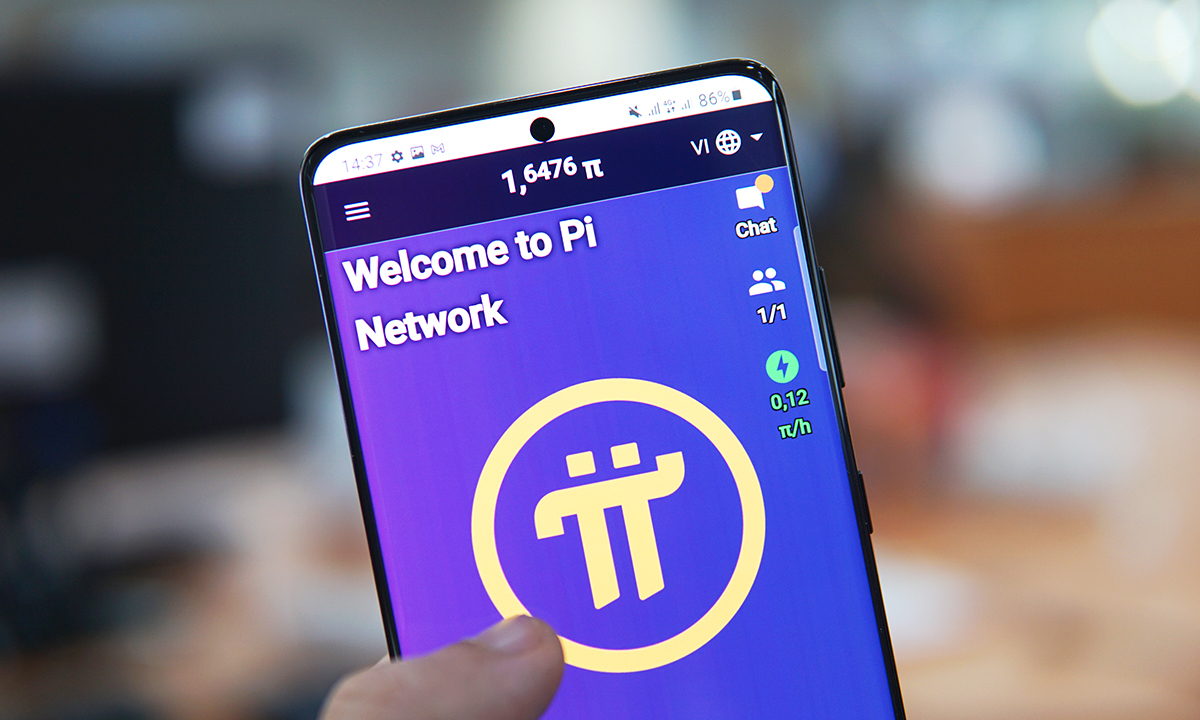
    Cryptocurrency mining app Pi Network has disappeared from Google Play Store for Android devices, making investors concerned about the future of the project.

    “I cannot download the app. I am worried all my mining efforts up until now would be thrown away,” said Le Tu in the southern province of Dong Nai.

    The Pi Network app, the main tool for users to “mine” the cryptocurrency by checking in every day, “is currently going through a regular review cycle and is unavailable to download through Google Play Store,” the developers of the coin said on their website.

    “We expect to be back up on the Play Store soon,” they noted, adding users could manually download the app via a link.

    There seems to be no issue with the app on App Store for Apple devices.

    Bang, admin of a group of Pi users, also known as Pioneers, speculated that the project is set to transition to the main phase and was therefore temporarily removed from Google Play.

    The app ranked seventh among downloads in Vietnam on Google Play Store last month.

    Pi has become a controversial cryptocurrency as the developers allow anyone to own it by tapping on their smartphone once every day without any investment or much details about the development phase.

    Some experts have said the project lack transparency and called on people to be careful to avoid being scammed.

  • TripleA Wins Singapore Crypto License

    TripleA Wins Singapore Crypto License

    The crypto payments firm is the fourth to receive a digital payments token (DPT) license in the city-state.

    The Monetary Authority of Singapore (MAS) has awarded a DPT license to TripleA, allowing the company to provide end-to-end cryptocurrency payment services, according to an announcement this week.

    Founded in 2017 by mobile and payments entrepreneur Eric Barbier, TripleA currently operates in Singapore, with a presence in Hong Kong and Europe.

    CEO Barbier said in the announcement that the license will enable the company to «expand cryptocurrency access to more residents and also strengthen TripleA’s positioning as a trusted and reliable crypto payments partner for businesses worldwide.

    MAS has awarded DPT licenses to DBS Vickers, Australian crypto exchange Independent Reserve and fintech firm Fomo Pay.

    It has received over 170 license applications from digital payment token service providers, including global crypto exchanges such as Coinbase and Kraken.

  • El Salvador Plans to Build World’s First Bitcoin City

    El Salvador Plans to Build World’s First Bitcoin City

    El Salvador continues to position itself as a crypto hub leader with its latest plans to build a Bitcoin City with bonds backed by the same digital currency.

    El Salvador President Nayib Bukele announced plans to build the world’s first Bitcoin City on Saturday as part of a week-long event to promote the South American nation as the hub of choice for cryptocurrency.

    Invest here and make all the money you want, Bukele said. If you want bitcoin to spread over the world, we should build some Alexandrias.

    El Salvador became the world’s first country to adopt bitcoin as legal tender in September.

    According to the tech-savvy 40-year old, the city would be built in the eastern region of La Union and be powered by geothermal energy from a volcano.

    Also, no taxes will be levied except for value-added tax of which half will be used to fund related bonds issued with the other half used to pay for services like garbage collection.

    El Salvador plans to issue the bitcoin-backed bonds in 2022, Bukele added.

  • China Intensfies Crypto Ban

    China Intensfies Crypto Ban

    China is ramping up its cryptocurrency prohibition efforts again with a directive issued by ten institutions last Friday covering a range of activities including offshore transactions and hiring.

    All crypto transactions in China are banned, according to authorities in a statement that highlighted examples such as Tether, Bitcoin and Ether.

    Banned crypto-related activities extend to services provided by offshore exchanges to domestic residents.

    The statement was issued by the People’s Bank of China alongside nine other institutions that included the supreme court, the police and the internet and securities watchdogs.

    The nation’s top economic planning agency asking local officials to investigate abnormal power usage, call in loans and eliminate preferential tax treatment to accelerate the shutdown of mining operations.

    In addition, crypto platforms will also be forbidden to hire locally for roles like marketing, tech and payment, limiting their ability to serve Chinese customers.

    The latest efforts are part of an ongoing crackdown that traces back to September 2017 when authorities first banned initial coin offerings in China.

  • Binance Halts Singapore Products

    Binance Halts Singapore Products

    Cryptocurrency exchange Binance has responded to a warning by Singapore’s regulator by removing some of its offerings in the city-state.

    Binance will cease Singapore dollar trading pairs and payment options, according to a blog post over the weekend, alongside the removal of its app from Singapore’s online stores.

    The halt will begin as of Friday and users have been advised to complete all related peer-to-peer trades and remove related trade ads by Thursday to avoid disputes.

    Consumer protection is important to all of us, Binance.com said in a statement. We are ready to assist regulators from around the world and together find the optimal way to set a fair playing field.

    The latest move only relates to Binance.com with no services changes on Binance.sg, Binance’s Singapore entity, according to a spokesperson.

    Binance Asia Services, which operates Binance.sg, recently submitted a license application to the Monetary Authority of Singapore. It is currently exempt from holding a license for the provision of digital payment token services until the review of its license application is completed.