Tag: cryptocurrency

  • MAS Orders Binance Halt

    MAS Orders Binance Halt

    The Monetary Authority of Singapore has ordered crypto giant Binance to halt its services in the city-state over a potential breach of local payment rules.

    Binance must stop offering services in Singapore, according to a report citing a MAS statement, over a potential breach of the Payment Services Act.

    According to the regulator, Binance provided payment services to and solicited business from Singapore residents without an appropriate license.

    In response, Binance said its Singapore operations are conducted via Binance Asia Services (BAS) which is a separate legal entity from Binance.com.

    BAS operates Binance.sg, does not offer any products or services via Binance.com, and has its own local executive and management team.

    BAS has submitted a license application and is currently exempt from holding one for digital payment token services, MAS said, adding that the application remains under review and is subject to the firm demonstrating that it is able to meet requirements.

    On the other hand, Binance didn’t apply for a license under local law and the regulator has added the crypto firm to its investor alert list.

    MAS has been engaging BAS and expects an immediate it to begin an orderly suspension of its facilitation of transfers of digital payment token assets between BAS and Binance, the regulator added.

  • Vietnam leads globally in cryptocurrency adoption

    Vietnam leads globally in cryptocurrency adoption

    Vietnam leads globally in cryptocurrency adoption with 41 percent of respondents claiming to have bought Bitcoin and the like, according to a recent survey.

    Twenty percent of Vietnamese said they had purchased Bitcoin, the highest among 27 countries polled with 42,000 respondents, according to the survey by U.S. based financial consultancy Finder.

    “Remittance payments may have played a significant role in these numbers, with cryptocurrency an option for migrants who want to send money home and avoid exchange fees,” the report stated.

    Despite having the 53rd largest economy based on gross domestic product, Vietnam placed 13th in realized Bitcoin gains for 2020, according to Cointelegraph.

    Adoption was especially high in Asia, with 30 percent of respondents in Indonesia and India claiming to have bought cryptocurrency, the Finder’s survey found.

    In Malaysia and the Philippines, this proportion was 29 percent and 28 percent, respectively.

    There were between 1,160 and 2,511 respondents for each country covered in the study.

    Data from Statista in February showed Vietnam had the second-highest rate in terms of cryptocurrency use among 74 surveyed economies, driven by remittance payments.

    Bitcoin and other cryptocurrencies are not recognized as legitimate means of payment in Vietnam. The State Bank of Vietnam has warned that owning, trading and using cryptocurrencies are risky and not protected by law.

  • Singapore Crypto Startups Join Mastercard Engagement Program

    Singapore Crypto Startups Join Mastercard Engagement Program

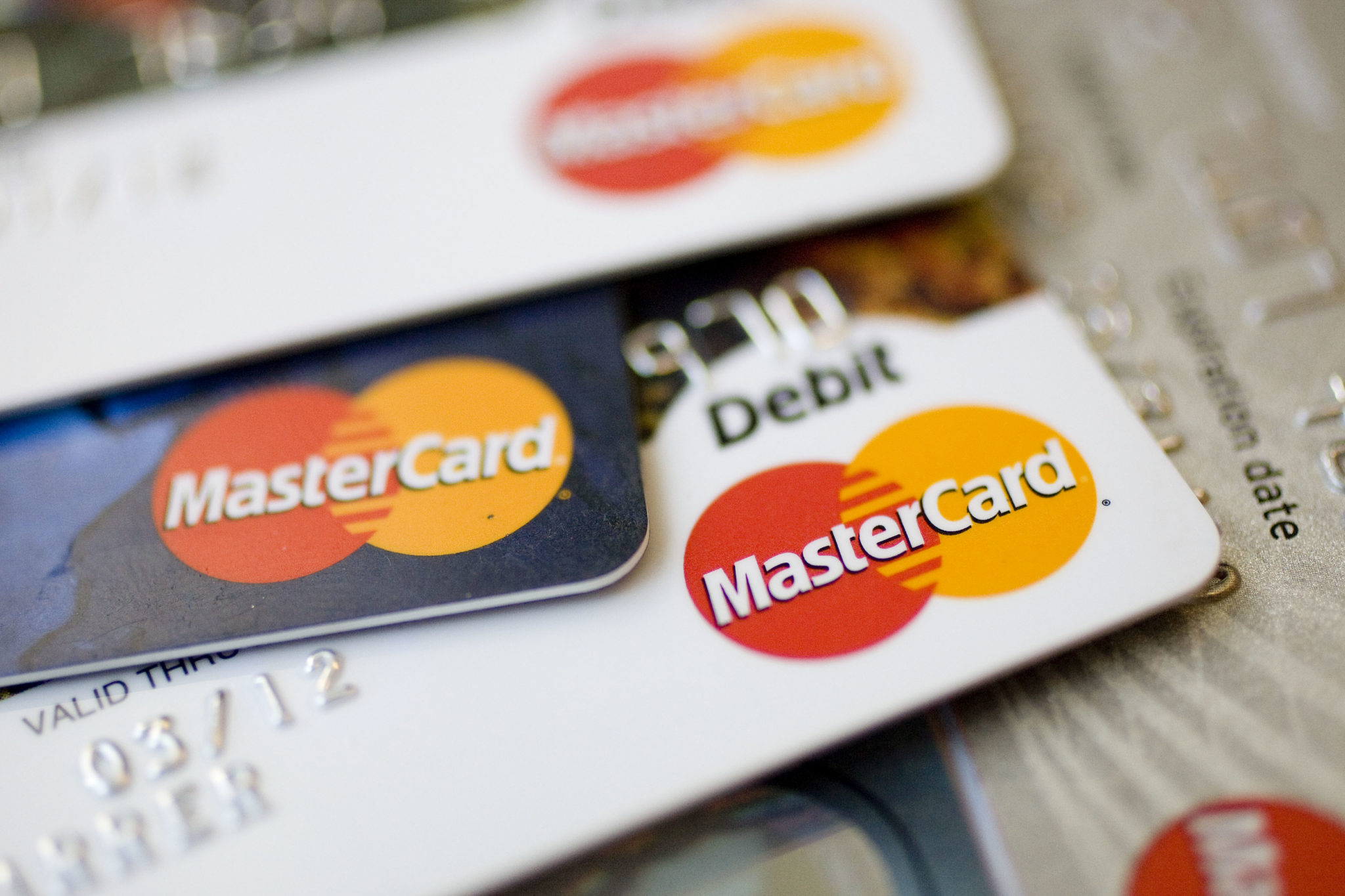
    Two Singapore startups will help the payment giant accelerate innovation around digital asset technology. Singapore-based Mintable, a non-fungible token (NFT) marketplace; and Stacs, which provides a blockchain infrastructure for the financial industry to unlock value and enable effective sustainable financing, are among of a new cohort of seven startups at Mastercard’s «Start Path» global startup engagement program.

    The program supports fast-growing digital assets, blockchain, and cryptocurrency companies by providing access to strategic partnership opportunities, insights, and tools to grow. Companies participating in the new program aim to address pain points including asset tokenization, data accuracy, digital security, and seamless access between the traditional and digital economy.

    The announcement comes amid increased enthusiasm for a broader range of payment technologies in the Asia Pacific region as a result of the pandemic, and growing awareness of cryptocurrencies among the general public. Mastercard also said consumers are increasingly showing interest in being able to spend crypto assets for everyday purchases.

    We believe we can play a key role in digital assets, helping to shape the industry and provide consumer protection and security. Part of our role is to forge the future of cryptocurrency, and we’re doing that by bridging mainstream financial principles with digital assets innovations, Jess Turner, Executive Vice President of New Digital Infrastructure and Fintech, Mastercard, commented.

    Mastercard announced last week that it was looking to simplify for its partners the conversion from cryptocurrency to traditional fiat currency, and would be leveraging partnerships to help crypto companies offer card programs.

    Earlier this month, rival Visa reported that consumers spent more than $1 billion worth of cryptocurrency on goods and services through Visa’s crypto-linked cards in the first half of 2021.

  • Nearly Half of Singaporeans Own Cryptocurrency

    Nearly Half of Singaporeans Own Cryptocurrency

    Despite market volatility and regulatory pressures, the outlook for crypto adoption remains positive especially in Singapore where nearly half of its residents own the digital asset class, according to a survey.

    43 percent of Singaporeans own cryptocurrency, according to a survey by Independent Reserve, a digital set exchange with operations in the city-state since 2020. And adoption is expected to continue to rise with 46 percent of respondents plan to buy crypto in the next 12 months.

    Naturally, awareness has been high in Singapore with 93 percent claiming they have knowledge of cryptocurrencies and 90 percent claiming they heard of bitcoin.

    Unsurprisingly, younger individuals have led adoption rates at 66 percent for those aged 26 to 45 compared to 31 percent cumulatively for all other age groups.

    The same age group was also twice as likely to buy crypto in the next 12 months at 61 percent.

    Crypto adoption is expected to increase in Singapore with 59 percent of Singaporeans believing it will reach mass-scale adoption and 70 percent for those under the age of 45.

    The price outlook is also positive with half of the respondents expecting bitcoin’s value to rise to S$50,000 by 2030. 13 percent of those under 45 forecast bitcoin’s price to reach S$250,000 by the same year. The data is based on a survey of 1,000 Singaporeans conducted by Independent Reserve.

    Independent Reserve also launched its inaugural Cryptocurrency Index for Singapore and scored it at 63 out of 100 using criteria based on awareness, adoption, trust and confidence.

    With digital currency gaining momentum worldwide, Singapore continues to emerge as a key hub in Asia due to its robust and well-regulated financial markets infrastructure and openness to new technologies,» said Independent Reserve CEO Adrian Przelozny.

    The strong awareness and adoption of crypto among Singaporeans in the survey findings are probably a natural reflection of the country’s progressiveness and commitment to preparing for the future.

  • J.P. Morgan Opens Crypto Fund Access to All Wealth Clients

    J.P. Morgan Opens Crypto Fund Access to All Wealth Clients

    J.P. Morgan has reportedly allowed all of its wealth management clients to access cryptocurrencies via funds.

    J.P. Morgan’s wealth management clients gained access to five crypto products, effective July 19.

    Four of the products are from Grayscale Investments and one is from Osprey funds.

    According to the memo, J.P Morgan advisors will only execute unsolicited crypto trades for clients, including those who use the bank’s Chase trading app.

    J.P. Morgan is the latest U.S. bank to ramp up its digital currency offering following global custodian BNY Mellon’s entry into a crypto consortium that includes State Street and six other banks.

  • Digital mutant orchids go on sale at cryptocurrency marketplace

    Digital mutant orchids go on sale at cryptocurrency marketplace

    Vietnam’s so-called mutant orchids are being turned into unique digital assets and being sold for up to thousands of dollars online.

    On the digital goods marketplace OpenSea.io, hundreds of items are displayed when a user types the keyword “Orchidaceae.”

    These items are non-fungible tokens (NFTs) which are units of data stored on a digital ledger called a blockchain that certifies a digital asset to be unique.

    In other words, NFTs transform digital works of art and other collectibles into one-of-a-kind, verifiable assets that are easy to trade on the blockchain, and a person can now buy a digital orchid plant using cryptocurrency like Ethereum.

    “The Hong My Nhan has glossy wings, harmonious pink color. Usually, the sepals are a bit darker than the wings,” says the description of a piece of the orchid that costs $428.

    These products are not real orchids. Instead, the buyer will own a digital version of the plant which is guaranteed to be sold in a limited number.

    “Although the buyer won’t own the physical plant, he or she can still show off the orchid without having to take care of it,” said digital currency expert Phan Duc Nhat.

    A Phu Tho orchid with an asking price of around $100 will have a maximum of 2,000 NFTs, while the more luxurious Co Do orchid with the asking price of $12,500 will only have 100 NFTs.

    But so far the highest bid for such an NFT is only 0.2 Etherum, or more than $400.

    The rush for the so-called mutant orchids has flooded social media in Vietnam in recent months, with investors spending hundreds of million dong (VND100 million = $4,340) to own a physical plant, hoping to sell it for a profit later.

  • China Bans Crypto-Linked Social Media Accounts

    China Bans Crypto-Linked Social Media Accounts

    China’s crypto crackdown continues to ramp up as it banned several influential social media accounts focused on crypto-related content over the weekend.

    At least a dozen popular Weibo accounts featuring content about cryptocurrencies have been suspended or shut down over claimed violation of the Chinese social media platform’s relevant laws and regulations.

    This follows the announcement by Chinese authorities last month to intensify their crackdown on Bitcoin mining and trading behavior.

    The latest social media crackdown is not a first for China which made previously similar moves to ban influential crypto-related accounts.

    In 2019, Weibo banned the social media accounts of Binance co-founder Yi He and Tron founder Justin Sun.

  • Apple’s job search hints at a possible involvement with cryptocurrency

    Apple’s job search hints at a possible involvement with cryptocurrency

    Will you eventually be able to pay for a new Apple iPhone with Bitcoin? That is one of the conclusions that you might come to following a peak at the “Jobs at Apple” website where Apple posted a listing for a Business Development Manager for Alternative Payments. The job posting says that the Apple Wallets, Payments, and Commerce (WPC) team is looking for someone to hold up Apple’s end in Alternative Payments Partnerships.

    The new employee will be working at Apple’s headquarters in Cupertino, California and will be given the task of negotiating with potential partners, signing and executing commercial contracts, and developing new programs. The person that Apple is looking for should have five or more years working for an alternative payment provider with expertise in digital wallets, BNPL (buy now, pay later), fast payments, and cryptocurrency.

    Apple CEO Tim Cook has talked about a future in which all payments are made digitally, and the iPhone, iPod touch and the Apple Watch have a digital Wallet app that comes with the devices. Apple says that with the app “you can keep your credit, debit, and prepaid cards, store cards, boarding passes, movie tickets, coupons, rewards cards, student ID cards, and more in one place.” And through the Messages app, Apple device owners can make peer-to-peer payments.

    Some analysts have suggested that Apple invest some of its cash in cryptocurrency following in the footsteps of Tesla. A couple of years ago, an Apple Pay executive said that the company saw “long-term potential” in cryptocurrency technology, but has no plans to use it at the moment. Back in February, RBC Capital Markets Analyst Mitch Steves suggested that Apple create a crypto-exchange and invest in alternative currencies.

    Steves’ analysis said that if Apple were to get heavily involved in cryptocurrency, it will help the U.S. become the technological leader in this market for as long as 10-20 years. The analyst also forecast that if Apple were to develop a wallet-based crypto exchange, it could generate as much as $40 billion in revenue for Apple.

  • China cryptocurrency craze drives hard drive shortage in Vietnam

    China cryptocurrency craze drives hard drive shortage in Vietnam

    Large capacity hard drives are virtually out of stock in Vietnam because of a cryptocurrency mining craze in China.

    Customers and market observers say local people have been buying large-capacity hard drives in bulk and reselling them to the Chinese amidst a new mining craze for the Chia cryptocurrency in China.

    People who need to buy large space hard drives have commented on online groups for computer component buyers that they could not find any 6TB or larger-spaced hard drives, so they were having to buy smaller ones to merge into a large one.

    Hoang Lam, Subject Matter Expert of data storage company Seagate Vietnam said that Seagate’s 4TB hard drives have been out of stock since last month because “many of our customers bought the hard drives in bulk, from hundreds to thousands in one order, instead of a few units in one order as usual.”

    A computer component distributor in HCMC said that their hard drive sales surged by 50 percent last month despite prices rising 10-20 percent, and now the store is out of stock.

    Thanh Phong, a cryptocurrency miner and cryptocurrency mining gear seller, said the chokehold on large capacity hard drives supply in Vietnam was caused by the cryptocurrency mining boom for Chia in China.

    Chia is built around a cryptographic technique called Proof of Space and Time, which allows the cryptocurrency to be mined with unused storage space on hard drives rather unlike others like Bitcoin or Ethereum that use graphics cards. The more unused storage on the hard drive, the more Chia can be mined.

    Phong said that the Chia craze is yet to spread to Vietnam. Therefore, Vietnamese were buying hard drives in bulk to sell them to China.

    The Chinese miners have been stockpiling hard drives, preparing for Chia’s launch in May. As a result, hard drives with large capacities, from 4TB to 18 TB, have already been sold out on many Chinese e-commerce platforms.

    According to manmanbuy.com, a Chinese website that tracks and compares historical prices of products on China’s popular e-commerce platforms, the price of hard drives has surged 300 percent since the end of last year.

    Chia is the brainchild of Bram Cohen, the creator of BitTorrent, a peer-to-peer protocol that allows users to distribute data and electronic files over the Internet in a decentralized manner. Cohen created Chia in 2017 with the aim of making a cryptocurrency that consumes less energy and generates less carbon when mining, compared to Bitcoin or Ethereum.

  • Singapore Minister Warns Public on Crypto Trading

    Singapore Minister Warns Public on Crypto Trading

    Investors should exercise extreme caution when trading cryptocurrencies, senior minister Tharman Shanmugaratnam said in parliament on Monday.

    Cryptocurrencies can be highly volatile, as their value is typically not related to any economic fundamentals. They are hence highly risky as investment products, and certainly not suitable for retail investors,» Shanmugaratnam, who is also the minister in charge of the Monetary Authority of Singapore (MAS).

    His comments come as cryptocurrency-related scams are on the rise in the republic, as investor interest in the space grows with soaring crypto prices.

    However, according to MAS, the size of Singapore’s cryptocurrency market remains small. The combined peak daily trading volumes of bitcoin, ethereum, and XRP was 2 percent of the average daily trading volume of securities on the Singapore Exchange (SGX) in 2020.

    Cryptocurrency derivatives traded through financial institutions likewise amounted to less than 1 percent of the derivatives trading activity on SGX. Cryptocurrencies comprise less than 0.01 percent of the assets in funds managed by MAS-regulated fund managers, Shanmugaratnam said.

    The parliamentary discussion comes as more than 100 people have filed police reports against crypto trading platform Torque, run by Singapore businessman Bernard Ong. The platform suspended more than 14,000 accounts across 120 countries in January, with investor claims are estimated at $325 million.

    Ong alleges of his employees had violated the company’s rules and that his unauthorized trading activities had led to significant losses. Some 2,000 Singaporeans are estimated to have invested in crypto on the platform, which is registered in the British Virgin Islands.

  • Vietnam cryptocurrency use second highest in the world

    Vietnam cryptocurrency use second highest in the world

    Vietnam has the second-highest rate of in terms of cryptocurrency use among 74 surveyed economies, driven by remittance payments, a new report says.

    The report on survey results released by Statista, a global provider of market and consumer data, says 21 percent of respondents in Vietnam said that they used or owned cryptocurrency in 2020, second after Nigeria (32 percent).

    The Philippines ranked third at 20 percent, followed by Turkey and Peru, both at 16 percent, said the survey which covered 1,000-4,000 respondents per country.

    The rest of the top 10 comprised Switzerland, China, the U.S., Germany and Japan.

    For Vietnam and the Philippines, remittance payments play a role in the widespread use of cryptocurrency,” the report said.

    The high cost of sending money across borders in conventional ways has caused many to turn to local cryptocurrency exchanges, catering to overseas workers and their families, it added.

    However, cryptocurrency has not been recognized as a legitimate means of payment in Vietnam. The State Bank of Vietnam has warned that owning, trading and using cryptocurrency was risky and not protected by laws.

    Earlier reports have noted that while the Vietnamese diaspora typically sent remittances to Vietnam to support their families, there has been a shift in recent years. Now, a significant portion of remittances is used as investments for doing business in the country.

    Around 580,000 Vietnamese citizens work overseas now, up from 500,000 in 2010, according to the Department of Overseas Labor under the Ministry of Labor, Invalids, and Social Affairs.

  • Crypto Rumbles Central Bank Sovereignty

    Crypto Rumbles Central Bank Sovereignty

    The private sector has long driven innovation on digital currencies but as fintech’s plans became more powerful, central banks sprang to attention. Their main concern? Keeping monetary policy in their purview.

    The most tantalizing tales in cryptocurrencies this year weren’t written by Libra or bitcoin, but by national or supranational projects like the digital euro. While investors raced to get in on bitcoin’s record-smashing highs, the government projects warrant a closer look.

    What central banks are trying to do is replace the storage carrier of money with a new one – cloud instead of long-play (LP), so to speak. The aim is to kill several birds with one stone.

    The first is to stave off a private sector-led attack on central bank sovereignty. The second is enabling efficiencies in the financial system, and the third is to lay a foundation for seamless oversight of monetary transactions.

    Taken in turn: a central bank ensures financial stability while overseeing systemically-relevant market infrastructure. To hand over a central instrument in its arsenal is to jeopardize its own mandate. Replacing a country’s own currency with another – which frequently happens in unstable countries, where dollars effectively become the leading currency – is a good example, or when a privately-controlled alternative takes over for reasons of efficiency.

    Admittedly, crypto is far from this scenario, but the thought experiment is a worthwhile one. We need to assume that multinational companies like Amazon or Alibaba will in future control and executive an enormous portion of private consumption: they own the value chain, from manufacturer to end consumer. They are intimately familiar with customer needs and aren’t shy about cultivating the data with the help of artificial intelligence.

    The next logical step in cementing this position is to introduce their own currency. This would dramatically simplify the purchasing process as well as create a vast common currency area spanning producer, commercial dealer, suppliers, to consumers.

    None of this is a problem as long as employees are paid in U.S. dollars, euros, or krona and use a major currency to buy a trading one. But if they are, for example, partly paid in Amazonas or Alibabas, central banks cede part of their authority to the private sector. The initial hostile official response to Libra is the logical consequence of this.

    The Swiss central bank’s «Project Helvetia» as part of the BIS’ innovation hub sidesteps the first question in favor of tackling the second, central digital revolution issue. Traditional banks are still grappling with the conversion to digital banking: continually under siege from newer upstarts without any historical baggage and far zippier organizations.

    The Swiss National Bank’s digital franc is meant to enable efficiency gains and simplify monetary transactions. This is a much more defensive strategy than other central banks have elected – notably the European Central Bank, Sweden’s Riksbank, or the People’s Bank of China – but the pragmatic approach fits the Swiss system of thinking well.

    In lockstep with infrastructure provider SIX, which belongs to the banks, genuine and measurable advances would represent a great step towards a digital future. The Swiss stock exchange operator plans to go live with its digital asset trading venue, SDX, next year. A digital Swiss franc would suit the SNB’s financial intermediaries perfectly.

    Switzerland is hardly ready for the third and conclusive step: a digital version of cash is being actively discussed elsewhere (namely in Sweden and China). Some aspects of digital money – efficiency versus cash and crucially, the traceability of transactions – are too tempting to resist.

    Of course, all types of criminals could be disrupted in their activities with such a step. But the accompanying supervision of citizens contradicts Switzerland’s understanding of government and privacy – and should be rejected. The complete replacement of cash in Europe and the U.S. isn’t on the horizon either for the same reasons, even if digital money eventually will find a niche besides paper.

    Despite the rapid advancement of the topic in recent months, we’re still at the dawn of developments. 2021 is sure to bring promising new developments, and the ECB is likely to devote considerable resources to rolling out a digital euro (or ultimately spike the project).

    In Switzerland, SDX and «Project Helvetia» are poised to take their next steps. The U.S. has been noticeably absent in the discussion, though January’s change in administration may mark a new tack in digital assets.
  • Libra Set to Launch in Early 2021

    Libra Set to Launch in Early 2021

    The Libra coin may finally launch early next year, but in a slimmed-down version. Which of the original promises will be kept with such a watered-down coin?

    When the Libra Association first went public with its project, the coin was based on a broad basket of currencies. When governments, regulators, and central banks made abundantly clear that they were opposed to such a coin, the Geneva-based association reduced the reach to include several major currencies. Now, the launch seems imminent, but the coin will be based on the dollar only.

    The association, which was founded by Facebook, plans to launch its coin at the beginning of 2021. The story was based on information provided by three people.

    However, even this slimmed-down version of a Libra coin depends on the approval of Finma, the Swiss financial market regulator. Finma refused to comment on Libra’s plans. One can safely say that Finma won’t take any risks given the global attention paid to the plans of Libra.

    The authorities have to ensure that coins such as Libra won’t make it easier for criminals to wash their ill-gotten gains. In other words, the project sponsors must make sure that they adhere to the same strict standards set by money-laundering laws as any other financial-service provider.

    And, what’s more, the idea of a multinational coin may impact the ability of central banks to enforce their monetary policy. The latest version of a slimmed-down Libra may indeed allay such worries.

    But of course, what is the purpose of a single-currency coin? The Libra was an attractive proposition because it promised an easy digital payment system for all: The Libra payment system is built on blockchain technology to enable the open, instant, and low-cost movement of money. People will be able to send, receive, and spend their money, enabling a more inclusive global financial system. Will a dollar-based Libra be of any use to a consumer in the euro-region for instance?

    The private initiatives for digital currencies need to be seen in the context of state-sponsored projects. Some central banks have forcefully advanced their own projects for digital central bank currencies. Including the Swedish and Chinese, while the European Central Bank (ECB) recently made clear that it also aimed to speed up the process.

    The Swiss National Bank (SNB) is also working on a digital currency in the context of the innovation hub with the Bank for International Settlements (BIS). This digital franc project will be presented on December 3, according to people familiar with the plan.

  • Bitcoin Mining Billionaire Ousts Co-Founder

    Bitcoin Mining Billionaire Ousts Co-Founder

    A power struggle at the world’s largest crypto mining start-up has resulted in the surprise ouster of one of its co-founders.

    Beijing-based Bitmain Technologies has fired co-founder and executive director Micree Zhan Ketuan, according to an internal memo sent to staff on Tuesday, which was seen by CoinDesk.

    His role will be taken over by Jihan Wu, who founded the firm with Zhan six years ago, and is now chairman of the board. Wu is Bitmain’s head of business, while Zhan led the company’s chip designing team. The pair were previously co-CEOs, but were replaced by Wang Haichao earlier this year.

    Bitmain’s co-founder, chairman, legal representative and executive director Jihan Wu has decided to dissolve all roles of Ketuan Zhan, effective immediately, the memo sent by Wu, headlined Important Notice said. Wu also warned staff not to take any instructions from Zhan or take part in meetings with him, threatening dismissal to those who violate the notice.

    Bitmain is a major manufacturer of bitcoin mining equipment, and the company grew along with the crypto-mining boom. The falling price of bitcoin resulted in a cash crunch and layoffs for the company.

    The firm was valued at $15 billion in a private funding round in 2018. In September 2018, the firm filed for an IPO in Hong Kong, in an attempt to raise $3 billion, but was unsuccessful.

    According to the IPO prospectus, Zhan was a major shareholder of Bitmain’s holding company, owning 36 percent, while Wu owned 20 percent.

  • South Korean convenience-store chain CU to accept cryptocurrency

    South Korean convenience-store chain CU to accept cryptocurrency

    Major South Korean convenience-store chain CU is preparing to accept payments in cryptocurrency.

    The chain, which operates more than 13,000 outlets in the country, will use the Chai payment system to trade in Terra, a won-backed stablecoin that has garnered investment from many large Korean firms.

    CU parent firm BGF Retail partnered with Chai earlier this week to allow buyers to pay by presenting a barcode from the Chai mobile app.

    Terra co-founder Do Kwon told CCN Korea that low-margin businesses struggle to accept volatile cryptocurrencies such as Bitcoin. In other regions, retailers often deal with exchanges to convert cryptocurrency payments to money on the spot.

    “Moving forward, Chai will continue to lessen the burden on franchisees and increase the merit of consumers through partnerships with various companies like CU convenience store with an on and offline infrastructure,” said Chai Corporation president Han Chang-joon in a statement translated by CCN.