Tag: cryptocurrency

  • Crypto Bank Sygnum Eyes License in Singapore

    Crypto Bank Sygnum Eyes License in Singapore

    Just days after clinching a banking license in Switzerland, cryptocurrency-focused financier Sygnum will look to do the same in Singapore.

    Sygnum is currently pushing for a capital markets services license in Singapore to offer asset management solutions but will look to apply to become a fully-fledged bank this year.

    In order for us to provide a full suite of services, we need to operate as a bank in Singapore, said Gerald Goh co-founder and chief strategy officer at Sygnum.

    After the company becomes a full bank in Switzerland, a transition expected this year, it will be able to apply for a traditional banking license in the city-state.

    Sygnum is pioneering the crypto-based banking industry and potentially gaining first-mover status in multiple major financial centers. It was one of the first two crypto players to recently be granted banking licenses by Swiss regulator Finma. Successful application in Singapore could make it the first crypto bank in Singapore as well.

    And Singapore’s financial sector is no unfamiliar territory to Sygnum’s leadership which boasts a prominent list of members in its board and advisory council such as Chua Kim Leng, former assistant managing director (banking & insurance) of MAS, Hsieh Fu Hua, director of Grab Holdings and former chairman of UOB, and Ang Kong Hua, chair of GIC investment board.

    Once it officially becomes a bank in Switzerland, Synum will be able to issue, store, trade and manage Bitcoin and Ethereum, converting them into various hard currencies. It will also offer custody, brokerage and tokenization services for digital assets to qualified clients.

  • MAS Warns Against Lee Hsien Loong Bitcoin Scam

    MAS Warns Against Lee Hsien Loong Bitcoin Scam

    The Monetary Authority of Singapore warned the public about a website using fabricated comments from Prime Minister Lee Hsien Loong to solicit investments in bitcoin.

    The website not only used fabricated comments but also attempted to impersonate a news page from a local media organization, the Monetary Authority of Singapore (MAS) added.

    The information on the website is highly deceptive and misleading. The statements attributed to PM Lee are completely false, said MAS in a media statement last Friday. The site tries to get readers to provide credit card or bank account information, plus payments into a trading platform, which would automatically initiate trades on the client’s behalf.

    Members of the public are advised to exercise extreme caution and avoid providing any financial or personal information on the forms linked from the website, MAS added. Members of the public who suspect that an investment could be fraudulent or misused for other unlawful activities should report such cases to the police, the regulator said.

    Since last year, MAS has issued at least four consumer advisories on such fraudulent websites that use the names and photographs of ministers and other prominent people in Singapore to solicit bitcoin investments. The ministers included Emeritus Senior Minister Goh Chok Tong and Deputy Prime Minister Heng Swee Keat.

  • Facebook reportedly launching new cryptocurrency in June

    Facebook reportedly launching new cryptocurrency in June

    Facebook is expected to announce its digital currency at some point this month, as the social network company has found outside backers that will help strengthen the trust in its upcoming cryptocurrency.

    The report mentions the digital token used by Facebook will work as a borderless currency without transaction fees. Apparently, Facebook employees who work on the project are given the option to be paid in the cryptocurrency token instead of real money.

    The new cryptocurrency will be available through Facebook’s app, including WhatsApp and Messenger, and is meant to help users in developing countries with volatile currency. Moreover, Facebook plans to make the cryptocurrency available through customized ATM physical terminals.

    The project also mentions sign-up bonuses for merchants that will allow customers to pay with Facebook’s digital tokens. Although the report contains pretty in-depth the details about the cryptocurrency, it misses one important aspect: release date. Well, at least the timeframe is narrowed down to June, so we won’t have to wait too long now.

  • Argomall partners with CoinGate to adopt Bitcoin and cryptocurrency payments

    Argomall partners with CoinGate to adopt Bitcoin and cryptocurrency payments

    Online shopping website Argomall.com now takes payment in cryptocurrencies and is the first Filipino online retailer in Southeast Asia to accept Bitcoin and around 50 other cryptocurrencies as payment.

    In line with Argomall’s value proposition of personalized convenience, it has added cryptocurrencies, also called Altcoins, to its already wide list of payment options, which include cash on delivery (COD), credit/debit cards, online installment via Home Credit, online banking, over-the-counter payments in banks and non-bank institutions, G-cash and PayPal.

    This option became available on April 1 and is only available for straight payments.

    Argomall partnered with CoinGate to make this project possible. CoinGate is an online trading platform for Bitcoin, Ethereum, Litecoin, XRP and other coins like: Bitcoin Cash (BCH), Sirin Labs (SRN), Telcoin (TEL), Nano (NANO), TRON (TRX), Dai (DAI), Bitcoin SV (BSV), Zcash (ZEC), Ethereum Classic (ETC), Augur (REP), Dogecoin (DOGE), Golem (GNT), DigixDAO (DGD), Wings DAO (WINGS), iEx.ec (RLC), Decred (DCR), Stellar (XLM), Basic Attention Token (BAT), Aragon (ANT), Bancor Network Token (BNT), Civic (CVC), EOS (EOS), TenXPay (PAY), OmiseGo (OMG), Monaco (MCO), 0x Protocol Token (ZRX), Qtum Ignition (QTUM), Storj (STORJ), FunFair (FUN), Salt (SALT), Bitcoin Gold (BTG), DigiByte (DGB), district0x (DNT), Power Ledger (POWR), Populous (PPT), Bread (BRD), Noah (NOAH), Binance token (BNB), Polymath (POLY), Kyber Network (KNC), TrueUSD (TUSD), Mithril (MITH).

    In a report by Entrepreneur magazine: “Compared to its Southeast Asian neighbors, the Philippines has been relatively more open to using Bitcoin and other cryptocurrencies, according to a report in FT.com, the Financial Times newspaper’s online site.” It will be recalled that the Bangko Sentral ng Pilipinas (BSP) released a circular in February with regulations for businesses that want to sign up as a virtual currency exchange. It is the only central bank in five countries cited in the FT.com report to do this.

    Some 2.9 percent of Filipinos are adopting Bitcoin, according to a survey conducted by FT.com, second only to the 3.3 percent of Indonesians doing the same. Overall, Southeast Asia’s cryptocurrency adoption rate is 2.5 percent.

    According to a report written by Financial Times’ Confidential Research analysts Prinz Magtulis and Andi Haswidi: “Among the five ASEAN countries we survey, the Philippines has made the most regulatory progress. Since February, its central bank has required all exchanges to obtain a permit for trading cryptocurrencies and to register with the country’s Anti-Money Laundering Council. They are also subject to annual fees. We expect the rest of Asean-5 to follow, in response to concerns that Bitcoin is being used to fund terrorism and other crimes.”

    Prominent global companies that accept Bitcoin include Microsoft, British Airways, McDonald’s and Shopify.

    Established in November of 2015, Argomall grew out of a creative dream by the Filipino-owned conglomerate Transnational Diversified Group to deliver trustworthy and efficient solutions to the discerning Filipino tech shopper.

    “These solutions,” Argomall Chief Argonaut Karel Holub said, “now include the opportunity to pay in Bitcoin and around 50 more Altcoins, because it is part of our mission and vision at Argomall to make the discovery, selection and purchase of smartphones—or any other related gadget—in the Philippines easy, while providing the best service on the internet to our consumers.”

    “Enabling online shoppers in the Philippines to pay with Bitcoin and around 50 more Altcoins is our way of providing good service, as well as opening up another means by which to earn,” Holub said. “This, to us, is a win-win situation where everyone gets good benefits. After all, our vision is that anyone in the Philippines will be able to easily upgrade their smartphone from anywhere, anytime—and that includes giving our customers all the ease and convenience they need to do just that. We aim to make their new device shopping journey as easy and comfortable as possible.”

    CoinGate Marketing Manager Veronika Mishura said this partnership with Argomall is a large step for cryptocurrency adoption, adding that this is CoinGate’s first such integration in Southeast Asia. Moreover, Mishura said, using cryptocurrencies as payment for online purchases present a cheaper and faster alternative to traditional payment methods.

    “Crypto-adoption among retailers is definitely what we need to strive for,” Mishura said. “When more stores accept digital currencies, more users are prompted to buy all types of goods with cryptocurrency. This is exactly what crypto-industry needs for recognition that would lead to it becoming a standard payment method along with credit cards.”

    “Technologies like Lightning Network have already made it more convenient and profitable for businesses to accept cryptocurrency rather than fiat,” she added. “We are thrilled to have Argomall on board. Hopefully, Philippine crypto enthusiasts won’t stay aside, and will start using this new payment method!’

    While Argomall does not endorse the purchase of Bitcoin or any of the other 50 or so Altcoins, the company provides opportunities for those who do have these cryptocurrencies to pay with them at argomall.com in a safe way.


  • Singapore’s Start-Up To Launch World’s First All-In-One Digital Currency App

    Singapore’s Start-Up To Launch World’s First All-In-One Digital Currency App

    A team of Singaporean startup will be launching the world’s first all-in-one digital finance mobile application to help general public come onboard to the world of digital currency or better known as cryptocurrency.

    Started off as a media portal AsiaTokenFund, the company has launched the app called ATF to integrate its media platform with a dynamic cryptocurrency “store & utilize” platform. The company realized that as more and more real-businesses are moving into blockchain and adopting cryptocurrency, there is a need to bring more people from the general public into the industry by adopting and utilizing cryptocurrency in everyday life. The main issue is that, at the present moment, it is very difficult or troublesome for a new-to-crypto user to come onboard as the processes are so segmented.

    “Right now if a new user wants to obtain a cryptocurrency, he/she have no idea what it is. He/she will have to read information about it somewhere. Next, he will need to download and set up a wallet and thereafter find a OTC or platform to buy his first cryptocurrency. Thereafter, he’ll have to find other platform to trade or download other app to make payments. It’s just too fragmented with too many processes. You can’t drive mass adoption this way” Said Ken N, Co-Founder & CEO of ATF.

    With ATF Platform / App , users will be able to read the latest news on what’s happening in the blockchain & cryptocurrency space , get the latest market analysis , find out what new currencies are out there to purchase and learn some basic information.

    Adding to that, users will also be assigned their own asset function which comes with a secured wallet to store and utilize their cryptocurrency. In the asset function, users can also purchase cryptocurrency using fiat via bank-transfer or credit / debit cards. Users can also sell their cryptocurrency with the same method.

    In Addition, users can transfer cryptocurrency to peers for free. With the added supported merchant function, users can now purchase items listed in the app by merchants and pay by cryptocurrency. What more, users can also use the ATF app to scan & pay directly at merchant physical shop using their digital currencies.

    “We’ve real companies embarking to accept digital currencies. Recently, we’ve seen news that Starbucks will soon start to accept bitcoin as payment in the US. We’ve also seen news on Facebook announcing its cryptocurrency. I foresee in the near future, more real businesses especially merchants will be able to accept cryptocurrency. There is a gap in the market to provide a one-stop-solution. I hope we are able to do just that” Said Ken N.

    The full function of the app can be summarized as follow:

    • News, Research Articles & Market Analysis.
    • Latest Project Fundraising, issuing new cryptocurrency for purchase.
    • Secured Wallet to store cryptocurrency.
    • OTC, fiat-to-crypto purchase or sell cryptocurrency.
    • Aggregated to Exchange for trading.
    • Transfer crypto peer-to-peer for free.
    • Purchase in-app merchant listed items.
    • Scan & Pay at merchant physical store using crypto.

    ATF currently have over 80,000 subscribers on their media channel www.atfnews.com and social media following of over 140,000 in facebook and other platforms. Headquartered in Singapore, ATF have international teams based in Shanghai, Vietnam, Thailand, Philippines and Germany.

    ATF Mobile App will be launched in both Google Play store and Apple store in first week of April 2019. The company is now set to raise its Series A equity funding to support its global expansion initiatives.

  • First Binance Blockchain Week Set for Singapore Next Month

    First Binance Blockchain Week Set for Singapore Next Month

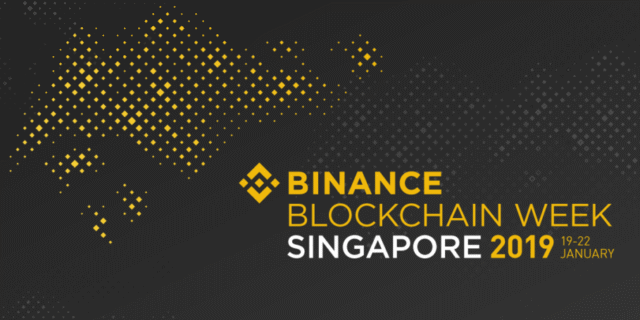
    About 2,000 people from around the world are expected to attend the inaugural Binance Blockchain Week in Singapore on Jan. 19-22. The conference, which will take place at the Sands Expo and Convention Centre in Marina Bay Sands, is presented by Binance, the world’s leading cryptocurrency exchange.

    The high-profile event will serve as a platform to bring together regulators, investors, academics, entrepreneurs and technologists to discuss the current blockchain ecosystem and encourage sustainable growth in the industry.

    Binance Blockchain Week will feature more than 70 speakers, including thought leaders, top executives, academics and heads of state in a productive, yet exciting program filled with keynote speeches, panel discussions, fireside chats and exclusive networking events.

    Confirmed speakers include Changpeng Zhao, the founder and chief executive of Binance; Genping Liu, partner at Vertex Ventures; Justin Chow, head of business development, Asia at Cumberland; and Sonia Bashir Kabir, managing director of Microsoft Bangladesh, Myanmar, Nepal, Bhutan and Laos.

    “We are thrilled to host the first ever Binance Blockchain Week in Singapore, the finance and technology hub of Asia. Gathering the most notable players and thought leaders in blockchain, this will be a defining event. We look forward to many thought-provoking discussions and debates on how we can further work together to move the industry forward,” Zhao said.

    There will also be an expo featuring more than 50 booths for sponsors to showcase the best blockchain and cryptocurrency technologies.

    Secure Asset Funds for Users Hackathon

    The inaugural Binance SAFU Hackathon, which aims to seek innovative blockchain solutions to secure crypto assets, will take place at the offices of PricewaterhouseCoopers Singapore in Marina One East Tower on Jan. 19-20.

    The panel of judges includes PwC, blockchain accelerator program Tribe Accelerator and Binance Labs. Participants will have the opportunity to receive mentorships from senior leaders at companies such as the Ethereum Foundation, Primitive Ventures, Earn.com, Binance Labs and IDEO CoLab.

    Individuals and teams interested in participating in the event can submit their applications between Dec. 10 and Jan. 6.

    Twenty developer teams will be selected via pre-hackathons and direct registration on the event website. Pre-hackathons will be held around the world between December and early January.

    Only winning teams will qualify for free passes to the final SAFU Hackathon in Singapore.

    The teams winning the final will share a prize pool of $100,000 in Binance Coin (BNB) courtesy of Binance.

    For more information, check out the Binance Blockchain Week Facebook page or the cryptocurrency exchange’s Twitter profile.

  • Touché and Eddits makes in-store cryptocurrency payments easier

    Touché and Eddits makes in-store cryptocurrency payments easier

    EDDITS and Touché have jointly developed a new solution that significantly simplifies in-store cryptocurrency transactions, allowing customers to make purchases and pay directly in Ether from their own Ethereum addresses in a fully decentralised way. Current in-store cryptocurrency purchases are cumbersome and costly due in part to the difficulties in accessing the buyers’ Private Key. Payment providers are required to manage their user wallets and users must send cryptocurrencies to their payment providers’ managed accounts to transact. The most common way to do so is to generate a QR Code on the merchant’s Point of Sale (POS) machine and scan it with a mobile phone that contains the user’s Private Key to generate payment.

    With the new solution, EDDITS and Touché have for the first time initiated cryptocurrency payment from a POS device that uses only the end-user wallet with a touch of two fingers. Touché’s industry leading biometric POS device authenticates the fingerprints.

    EDDITS, thanks to ERC725 and ERC735-based Smart Contract, enables a user to authorise the payment provider to initiate a payment from its identity to the merchant’s, provided that the proof of authorisation of the transaction is given.

    During the enrolment process, the user’s fingerprints are linked to its identity Smart Contract as claims issued by Touché. When a payment is requested, the user authenticates himself on the device using his fingerprints and authorise the transaction. The data are signed and sent to the payment provider’s Smart Contract. If the fingerprint proof matches the one linked to the user identity, a transaction is generated by the payment provider’s Smart Contract to move the ETH from the buyer identity to the merchant’s one.

    “This innovative payment solution will greatly simplify cryptocurrency transactions for payment providers, removing the need for them to manage user wallets,” said Sahba Saint-Claire, Chief Executive Officer and Co-Founder, Touché. “It will also enhance security for customers since each payment will require cryptographic proof generated on the Point of Sale device at the touch of two fingers.”

    “With EDDITS, we started by linking strong off chain identities to ERC725 Smart Contract in a trustless way in order to ease the KYC of blockchain address owners. Through this cooperation with Touché, we achieved a further step by providing an easy to use yet highly secure in-store payment solution based on the same foundation.” Said Fabrice CROISEAUX, CEO of InTech and creator of EDDITS. “ERC725/735 allows us to leverage the power of blockchain while staying compliant with current regulations.”

  • Kasikornbank Joins Visa’s B2B Connect Project in Thailand

    Kasikornbank Joins Visa’s B2B Connect Project in Thailand

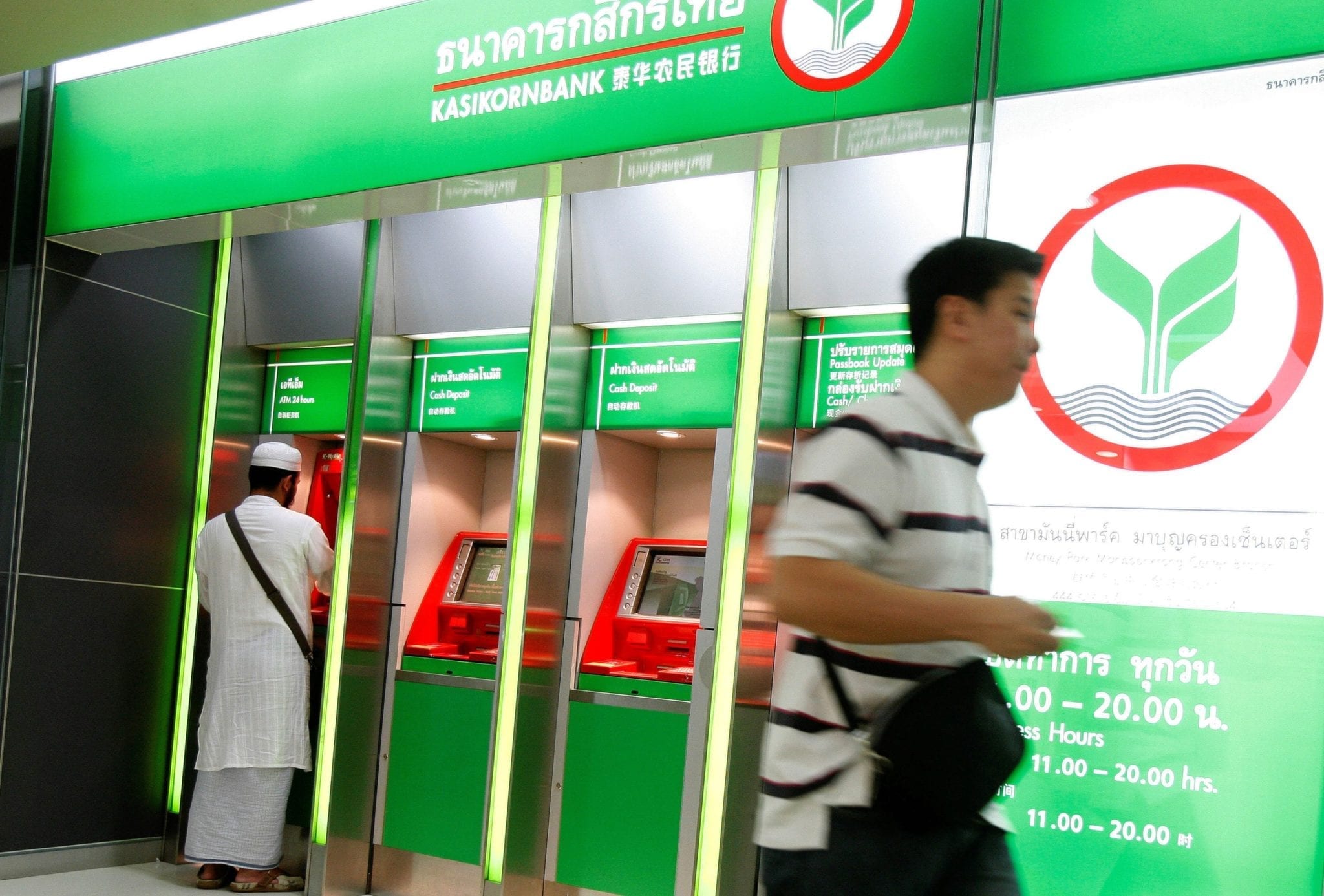
    Visa’s blockchain-based B2B Connect project is gaining steam, with Thailand’s fourth-largest bank, Kasikornbank, joining the fold.  The bank will be the first Thailand bank to use the technology, joining other well-respected financial institutions such as the U.S. Commerce Bank, Shinhan Bank in South Korea, the Union Bank of Philippines, and the United Overseas Bank in Singapore.

    Kasikornbank may not be the largest financial institution in Thailand, but it still has substantial $96 billion in assets.  The bank was established in 1945 with a registered capital of only five million baht.

    The move shouldn’t come as too surprising, considering the fact that Thailand as a nation is much more pro-cryptocurrency, especially in the context of Asia.  For example, China, the largest economy in the region, has banned ICOs completely, even while its state-owned banks have implemented blockchain technology to optimize its operations.

    In contrast, the Bank of Thailand has revealed just last month that it actually plans on issuing its own state-issued cryptocurrency.  The Bank of Thailand has also even allowed local banks much more leeway in terms of cryptocurrency – such as allowing them to issue tokens, invest in cryptocurrency markets through subsidiaries, and even provide crypto brokerage services.

    While Japan and South Korea have expressed positive sentiments about cryptocurrency before – such as Japan declaring that bitcoin is a legal form of payment, and the mayor of Seoul expressing interest in developing his own cryptocurrency – the amount of regulation involved has allowed Thailand to become an international hub when it comes to cryptocurrency.

    While Thailand’s economy might not be as powerful as its neighbors, it still has been drawing in cryptocurrency enthusiasts and companies internationally.

    Suripong Tantiyanon, Visa’s Thailand country manager, praised the decision, pointing out that Visa B2B will help guide the country when it comes to “security, governance, and distributed ledger technology”. He believes that Visa will be an industry leader in this space.

    Visa’s B2B program was already launched last year but is obviously making great progress in Asia already.  The platform is built on Chain, which was actually acquired by Stellar recently.  The platform is meant to enter the corporate cross-border payment sector, which many analysts believe will grow tremendously over the years and is one of the main ways that many cryptocurrency enthusiasts believe the cryptocurrency sector will grow, with institutional money helping lead the charge to mass adoption.

    The idea is that blockchain technology will allow for faster and cheaper transactions, which will save banks massive amounts of money.  Visa also believes that blockchain technology allows for the cross-border payment sector to be more transparent than ever, as well. Kasikornbank is the first Thailand bank to join the platform.

  • Country Heights plans to issue own crypto called “Horse Currency”

    Country Heights plans to issue own crypto called “Horse Currency”

    Country Heights Holdings Bhd (CHHB) is looking to issue its own asset-backed cryptocurrency (ABC) known as “Horse Currency” through an initial coin offering (ICO).

    The group told Bursa Malaysia that it will seek the support and endorsement from the shareholders at its EGM scheduled to be held on November 8.

    Citing blockchain technology as the way forward, CHHB highlighted that the main and defining difference of the “Horse Currency” and other cryptocurrencies available in the Malaysian market is that it is backed by the group’s existing assets worth of RM2 billion.

    “When launched, the ‘Horse Currency’ will mainly be used as a utility token, a reward token and royalty program with the businesses, products and services under the company’s new business strategies such as stays at the Palace of the Golden Horses, restaurants, golf memberships, private jet trips, Car City Centre, medical treatments and checks at the Golden Horses Health Sanctuary and many others.”

    CHHB said the group is also looking at allowing the “Horse Currency” to be used as legal tender in purchasing and leasing its unique properties scheme, especially the resort properties.

    Founder and chairman Tan Sri Lee Kim Yew proposes to issue 1 billion units, of which an intial 300 million units will be made available to the public.

    CHHB said its assets will be placed in a trust held by a reputable legal firm and a prominent technology partner and other external consultants (if necessary) will be appointed to give back-end support to this exercise.

    “We seek the shareholders to approve the appointment of these external consultants. In the fast moving digital age, the company intends to ride this wave of popularity of blockchain technology and assetbacked cryptocurrencies, in finding new and creative means to raise capital for the expansion of the company.”

    “We seek the shareholders’ support especially on this ABC, which the company will match minimum RM2 worth of assets eventually for 1 ‘Horse Currency’, across all ICO phases.”

    CHHB’s share price fell 1 sen or 0.8% to close at RM1.28 on 5,000 shares done.

  • Why Bitcoin Mining Is A Vital Aspect Of This Popular Cryptocurrency?

    Why Bitcoin Mining Is A Vital Aspect Of This Popular Cryptocurrency?

    Many people have heard about the term Bitcoin floating around, but fail to understand properly what it is. This article looks at what Bitcoin is, and dissects one of the most important processes associated with this cryptocurrency – Bitcoin mining.

    Bitcoin – A Brief Introduction

    Bitcoin is a form of digital currency, or a cryptocurrency. Bitcoin is unlike traditional currency as it has no physical tokens or coinage, and there is also no centralized control in the way that banks or the government dictate the exchange rates of dollars – although it is possible to exchange Bitcoin for physical currency and vice versa. Bitcoin uses blockchain technology where transaction data is stored on a public ledger visible to everyone. This helps improve security as Bitcoin transactions are encrypted as a further safety measure.

    Bitcoin was first developed and released in 2009, and since then the volume of Bitcoin circulating in the world has risen to huge levels. This is undoubtedly the most popular and widely known cryptocurrency available, and it is the digital currency that is most accepted as a form of payment in business.

    Bitcoin Mining – The Integral Cog Of This Cryptocurrency

    With traditional money, new currency such as banknotes and coins are simply produced by the government. This creation is regulated to avoid hyperinflation and the money is circulated into public use through various avenues.

    The creation of Bitcoin currency, however, is completely different and uses a process known as mining. Bitcoins are effectively created as a reward from the mining process. This mining process is based on what is known as the Bitcoin protocol. It states that a total of 21 million bitcoins will exist at some point in the future. Bitcoin mining effectively brings these potential bitcoins into existence and thus fills the quota.

    The actual mining process involves adding new transactional data to the Bitcoin blockchain ledger. In essence, the Bitcoin miners are enabling the bitcoin system to work by facilitating transactions. As a reward, they are granted Bitcoins. Whilst this may sound like an attractive and lucrative way to make some money and get involved in the Bitcoin phenomenon, there are several drawbacks to consider:

    – The mining process requires a powerful computer with large storage capacity

    – The mining process also uses a great deal of electricity

    – There are many other miners to compete against for the available Bitcoins

    – The mining rewards will slowly decrease as the number of Bitcoins in circulation increases

    As you can see, it is not just a simple case of setting a computer up and downloading the mining software! As Bitcoin starts to become more popular and talked about in the general public, the negative aspects of the mining process are also starting to rear their heads. More people are realizing about the huge power consumption required and the negative impact this is having on our environment.

    The consoling fact, however, is that eventually there will be no need for mining. Once all of the 21 million Bitcoins are mined, this operation will no longer have any value or requirement.

    Article and infographic created by the crypto specialists over at BTXchange.io.


  • Australian, New Zealand central banks say no plans to issue official digital currencies

    Australian, New Zealand central banks say no plans to issue official digital currencies

    The central banks of Australia and New Zealand ruled out today the notion that they would issue official cryptocurrencies anytime soon, warning the potential damage to their banking systems could outweigh the benefits.

    Tony Richards, head of the Reserve Bank of Australia’s (RBA) payments policy, said that bitcoin and other cryptocurrencies had not proven their worth as reliable stores of value or means of payment because of their volatility and vulnerability to hacking.

    “Nine years after its launch and about five years since it entered the public consciousness, bitcoin continues to have structural flaws that make it unsuitable for many uses, many of which stem from its inefficient verification process,” he said in the text of a speech given in Sydney.

    Given their low usage in Australia, cryptocurrencies were unlikely to have any significant impact on the RBA’s oversight of monetary policy and the banking system, he said.

    The RBA had no plan for the time being to adopt any new electronic form of money for households, he added.

    “Based on our interactions with our counterparts in other countries, it is also not front of mind for most other advanced economy central banks,” Richards said.

    The Reserve Bank of New Zealand (RBNZ) also said that while it was open to exploring new technology, it was unclear whether a central bank digital currency will bring conclusive benefits.

    While digital currencies could make distribution of money safer and cheaper, they could increase the likelihood of bank runs during periods of financial instability, said RBNZ deputy governor Geoff Bascand.

    That was because in times of financial stress, depositors could easily and remotely transfer large deposit holdings to a central bank digital currency, he said.

    “A breakdown in the financial system can cause enormous economic and social harm. We could not issue a digital currency if it might undermine financial stability,” Bascand said in the text of a speech at an Auckland conference.

    “The payments industry is dynamic, which is good. But the Reserve Bank must be a considered prospector in the exploration for digital currency benefits – we have New Zealand’s currency and financial system at stake.”

    Wild swings in the price of cryptocurrencies, and fears they may be used for illicit activities such as tax evasion, have drawn the attention of global policymakers.

    Finance leaders of the Group of 20 major economies agreed in March to open the door to regulating the booming industry, though they have only just started adopting individual rules due to the difficulty of agreeing on a multilateral approach.

    Most central banks are wary of embracing cryptocurrencies and say they have no plans to issue their own digital money with the exception of Sweden, where the shift away from the use of cash is significantly more advanced than in other countries.

    Bitcoin prices dropped their lowest in more than four months on Friday, continuing a downtrend driven by authorities’ measures to impose tighter regulation on cryptocurrencies.

  • Hackers steal $30 million in cryptocurrency from Bithumb

    Hackers steal $30 million in cryptocurrency from Bithumb

    Bithumb, one of the largest cryptocurrency exchanges in Korea, was hacked on Wednesday, causing the exchange to lose more than $30 million worth in cryptocurrencies.

    “We noticed that between last night and today early morning, about 35 billion won [$31.5 million] worth cryptocurrencies have been stolen,” Bithumb said through an announcement on its website on Wednesday. “Cryptocurrency deposit/withdrawal and Korean won withdrawal service will be halted for time being and until services are thoroughly reviewed.”

    “We are still checking on which currencies have been leaked, but so far, we discovered that the hacked coins include Ripple,” said a spokesperson from the exchange.

    According to the Bithumb spokesperson, 100 percent of the coins and tokens traded through the exchange are stored in offline cold wallets.

    “This loss will be compensated by Bithumb’s own reserves, and all the assets of our customers are securely saved in Bithumb’s cold wallets, hence all assets are completely safe and secure,” the company said in the announcement.

  • Vietnam importing bitcoin diggers in large numbers

    Vietnam importing bitcoin diggers in large numbers

    It is illegal to use cryptocurrency in Vietnam, but that has not stopped the import of large numbers of bitcoin diggers.

    From the beginning of this year until June 10, 3,664 mining systems were shipped to Ho Chi Minh City, according to the municipal Customs Department.

    Of these, over 3,000 systems were purchased by four companies, with one of them, just eight months old, getting almost 2,300, the department said.

    A total of 6,400 cryptocurrency mining systems have been imported in the first four months of the year.

    The Ministry of Finance recently proposed that the government bans the import of these machines, saying that the rigs were being used to try and create new currencies and forms of payment that were difficult to regulate.

    It referred to an alleged fraud in April, when dozens of people descended on the headquarters of Vietnamese IT firm Modern Tech in Ho Chi Minh City demanding refunds from the company for the cryptocurrencies it claimed to represent.

    Investors said this company, which has only 9 staff members, scammed VND15 trillion ($650 million) from them in a cryptocurrency ponzi scheme.

    As legislators debated the legal framework of Bitcoin in a National Assembly session on June 6, deputy Prime Minister Vuong Dinh Hue called for more research on this new form of currency.

    “The Government is directing the Ministry of Justice and the State Bank of Vietnam to research the experience of other countries in handling Bitcoin so we can come up with an appropriate policy,” the deputy PM said.

    Vietnam imported over 9,300 cryptocurrency diggers last year, which were mostly distributed in Hanoi, Ho Chi Minh City and Da Nang.

  • Vietnam considers blanket ban on import of cryptocurrency mining rigs

    Vietnam considers blanket ban on import of cryptocurrency mining rigs

    Vietnam’s Finance Ministry wants a complete ban on the import of cryptocurrency mining rigs, saying many of them are being used to launch new virtual currencies and forms of payment.

    Such operations are very difficult to regulate, the ministry says.

    The proposal for a blanket ban was made on Monday, with the ministry saying that the rigs were being used to try and create new currencies and forms of payment that were difficult to regulate.

    It referred to the fraud that happened in Saigon in April, when 32,000 people lost VND1.5 trillion after investing in a company mining iFan and Pincoin coins.

    Prime Minister Nguyen Xuan Phuc had earlier called for strict management of all activities involving cryptocurrencies after many companies began trying to attract people into investing in new cryptocurrency ventures – Initial Coin Offerings (ICOs).

    As of April 2018, Vietnam had imported more than 6,300 crypto currency mining rigs, with 4,300 machines going to Hanoi and 2,009 to Saigon.

    In 2017, more than 9,300 cryptocurrency mining rigs were imported. Of these, 2,300 went to Hanoi, around 7,000 to Saigon, and the rest to Da Nang, the ministry said.

    Cryptocurrency is illegal in Vietnam.

  • Huobi Launches Cryptocurrency ETF

    Huobi Launches Cryptocurrency ETF

    Crypto trading venue Huobi Pro has launched what it says is the world’s first cryptocurrency exchange-traded fund (ETF) targeted at retail investors.

    Announced on Friday, the Singapore-based exchange’s new product — called HB10 — allows investors to purchase shares in a basket of cryptocurrencies based on the firm’s recently launched benchmark index, the Huobi 10.

    Investors can subscribe to the cryptocurrency ETF using bitcoin, ether, USDT, or Huobi tokens. The fund has a minimum investment of roughly $100, depending on the current prices of each asset.

    There is some debate about whether HB10 should truly be called a cryptocurrency ETF since it does not trade on a regulated securities exchange as conventional ETFs do and cannot be held in conventional brokerage accounts.

    Nevertheless, Huobi is the latest in a growing list of investment firms that have launched funds that track an index of cryptocurrencies, a group that includes Grayscale Investments, Coinbase, and Bitwise Asset Management.

    What sets HB10 apart is that it can be purchased by retail investors with a very minimal initial investment, while the others are restricted to accredited investors willing to plunk down tens of thousands of dollars — or more. Coinbase, for instance, currently requires an initial contribution of $250,000 for its index product.

    Shares of the fund will initially trade against USDT on Huobi Pro, though the website suggests that the exchange will open up trading pairs against other coins in the future. Investors will also be able to swap shares of the fund for the underlying assets in real time, which should help ensure that the value of the fund remains linked to its net asset value (NAV).

    In the US, numerous fund providers have attempted to list cryptocurrency-based ETFs on regulated securities exchanges, but the Securities and Exchange Commission (SEC) has thus far refused to approve any of these proposals.

    A Huobi spokesperson confirmed to CCN that the product would have the same regional limits as the wider trading platform, meaning that investors in some countries — including the US — will not be able to invest until Huobi Pro launches in those jurisdictions.