Retail News CRM

Tag: data

  • Vietnamese buy Bitcoin in hope it has bottomed

    Vietnamese buy Bitcoin in hope it has bottomed

    Many investors are buying Bitcoin after the cryptocurrency’s price fell to US$20,000, its lowest level since December 2020. Thanh Binh of HCMC says he turned off notifications on his crypto trading app after buying it at $38,000 and losing over VND40 million ($1,720).

    But he has returned and bought a 10th of a token after prices dropped below $20,000.

    “The market has bottomed out and will recover by the end of this year, and so this is the right time for buying in,” he says hopefully.

    Hai Ly of the southern province of Dong Nai has invested VND70 million in Bitcoin and Ethereum, the two largest tokens by market cap. She wanted to diversify her portfolio and thinks their current prices are reasonable.

    She says Bitcoin operates in four-year cycles, and prices fall sharply at the end of each cycle before scaling new peaks.

    “The current cycle started in January 2019 and ended between May and July this year. Considering other factors, the current crypto slump is not abnormal.”

    Prices will recover and hit a new peak by mid-2023, she says.

    Many investors see an opportunity in the current fall in cryptocurrency prices though the recent sell-offs wiped billions of dollars from the market.

    Search related to Bitcoin has surged to the highest levels in a year according to data from analytical website Google Trends.

    Hope is also fueled by rumors that Binance, the largest cryptocurrency exchange, has quietly bottom fished a large amount of Bitcoin.

    Over 100,000 tokens have been added to the exchange’s cold wallet (physical device that keeps cryptocurrency completely offline), crypto-focused site Coingape has discovered from on-chain data.

    They amount to 0.5 percent of all mined Bitcoin and are worth over $2 billion at current prices. But CEO Changpeng Zhao denies it, saying the increase “means more users deposited in Binance.”

    Money is also coming into crypto-centric investment funds. They have raised over $125 million in the week ended June 6 and $506 million in the year-to-date, asset management company CoinShares reported.

    Short-term Bitcoin funds, mainly used for speculating on the cryptocurrency’s slump, received $1.3 million. Bitcoin is being traded the fastest in a year, Yahoo Finance said.

    But there are risks associated with bottom fishing Bitcoin and other cryptocurrencies, experts warn.

    Le Sy Nguyen, ASEAN regional manager of crypto exchange Bybit, says current prices are not attractive.

    The collapse of cryptocurrency Luna and its paired stablecoin Tether, and recent interest hikes in the U.S. have greatly affected market sentiments, with many investors opting out trading on extreme fear.

    “Anything can happen in this [volatile] period, which poses great risks to investors who try to benefit from bottom fishing in the short term.”

    He says investors should invest for the long term or wait until the market stabilizes. “But no one can be sure whether it has hit bottom.”

    The slump could prolong until the end of this year, he says.

    The founder of a digital assets startup, who does not want to be named, says it is impossible to give advice on whether to buy or not at the “current sensitive time.”

    “It is inappropriate to evaluate digital assets using methods used for stocks, as they do not generate income like companies The number of wallets, users and transactions are key indicators of this market.”
  • Leaked document warns that Facebook has no clue how it handles your data

    Leaked document warns that Facebook has no clue how it handles your data

    For years, the community’s main gripe with Facebook has been that it collects a lot of personal data, which it later sells to advertisers. And now, a leaked internal document obtained by Motherboard warns that the social media platform has no idea where all of its acquired user data is going or what it is being used for.

    The report was written last year by Facebook’s privacy engineers on the Ad and Business Product team, and its goal was to inform about the gaps in the way the platform processes personal information and to encourage a change in an attempt to protect the company from problems with privacy regulators in Europe, the US, India, and other countries.

    According to the engineers, the company will be unable to fully comply with regulator-imposed privacy laws that come from everywhere as a “tsunami” of new laws that impose restrictions. They stated, “We do not have an adequate level of control and explainability over how our systems use data, and thus we can’t confidently make controlled policy changes or external commitments such as ‘we will not use X data for Y purpose.’ And yet, this is exactly what regulators expect us to do, increasing our risk of mistakes and misrepresentation.”

    The reason for Facebook’s data privacy problem is that its systems mix first-party user data, third-party user data, and sensitive data together. To be even more understandable, the engineers used the metaphor of pouring a bottle of ink into a lake and then trying to return it to the bottle.

    The ink is a mix of all kinds of user data, and once “poured,” there are no ways to organize it to “only flow to the allowed places in the lake?”

    As the engineers pointed out, there is a “short-term” solution in the form of a new, unreleased service called “Basic Ads,” which, if implemented, will allow Facebook to comply with international regulations. The document reads, “When launched, Facebook users will be able to ‘opt-out’ from having almost all of their 3P and 1P data used by Ads systems – page likes, posts, friends list, etc.”

    The sad part is that the report also states that Basic Ads must be “launch-ready in Europe by January 2022.” January has come and gone, but this service hasn’t been released yet.

    Although Facebook declined to comment on this “short-term” solution, a representative of the company shared that Basic Ads is “an internal codename, and that the product will show that Facebook can build advertising that is relevant to users while preserving their privacy.

    In a statement to Motherboard, a Facebook spokesperson stated that the company is complying with privacy regulations. Also, it can’t be determined that the report shows non-compliance because it doesn’t describe the platform’s extensive processes and controls used to comply with privacy standards.

    The spokesperson also stated that regulations across the world introduce different requirements for the company to fulfill and that the document simply shows what measures the company is working on to be able to implement them.

  • Samsung allegedly fell victim to a data breach

    Samsung allegedly fell victim to a data breach

    There has been a new security breach in the tech industry. This time, the victim was reportedly Samsung Electronics. The hackers taking responsibility for the data breach are from the Lapsus$ hacking group. Lapsus$ has leaked around 190GB of what it claims to be confidential data from Samsung, which includes source code and biometric unlocking algorithms.

    As proof of the data breach, Lapsus$ has also provided a screenshot of C/C++ code directives, alleging that they came from Samsung. In a description of the 190GB of stolen data the hacking group teased before the big leak, they wrote that these 190GB contain “confidential Samsung source code” and listed exactly what the hacking group managed to steal from Samsung.

    With its hack, Lapsus$ got its hands on the source code for every Trusted Applet (TA) installed in Samsung’s TrustZone. Samsung TrustZone is a secure environment utilized for operations such as hardware cryptography, binary encryption, and access control.

    Lapsus$ also managed to steal algorithms for all biometric unlock operations, the source code used for booting all recent Samsung devices, and confidential source code allegedly originating from Qualcomm. With its attack, Lapsus$ also stole the source code for Samsung’s activation servers, аs well as that used for authorizing and authenticating Samsung accounts, including APIs and services.

    Although the information above is what Lapsus$ listed as the stolen data, it is unknown if Lapsus$ stole additional secret information from Samsung. What is known, however, is that the hacking group has split the leaked data into three compressed files and made it available for download via a torrent.

    As for a comment from Samsung about the data breach, Samsung officials told the media outlet that they ‘are now assessing the situation.’

  • SpaceDC to build largest hyperscale data center in the Philippines

    SpaceDC to build largest hyperscale data center in the Philippines

    SpaceDC, a Singapore-based visionary data center provider, is working with JLL, a global real estate services firm, to build a secure, resilient, network-rich, data center called <MNL1, which will be situated in Cainta, part of Greater Manila. The green data center will be fully powered with renewable energy – wind, geothermal – and is slated to open in 2022. 

    At 43,000 square meters, MNL1 will be the largest hyperscale data center campus in the Philippines, and will deliver 72 megawatt of critical power. With an outstanding PUE of 1.3, MNL1 will also lead in terms of energy efficiency and design, to minimize carbon footprint.

    SpaceDC CEO, Darren Hawkins said, “The Philippines ranks second in terms of data center growth in Southeast Asia. With only 47 megawatts of available capacity in the country it is a dramatically underserved market. We are excited to be a first mover in a new market where we see our customers are investing heavily in.”

    “SpaceDC is in the right place at the right time to take advantage of the strong customer interest we are seeing in the Philippines. MNL1’s design is setting new standards in terms of technology, quality and operational excellence in the Philippines.” commented Ralph Davidvon, executive director, data center services for JLL, the appointed project construction manager.

  • China Tells Firms To Boost Cyber, Data Security Oversight On Connected Vehicles

    China Tells Firms To Boost Cyber, Data Security Oversight On Connected Vehicles

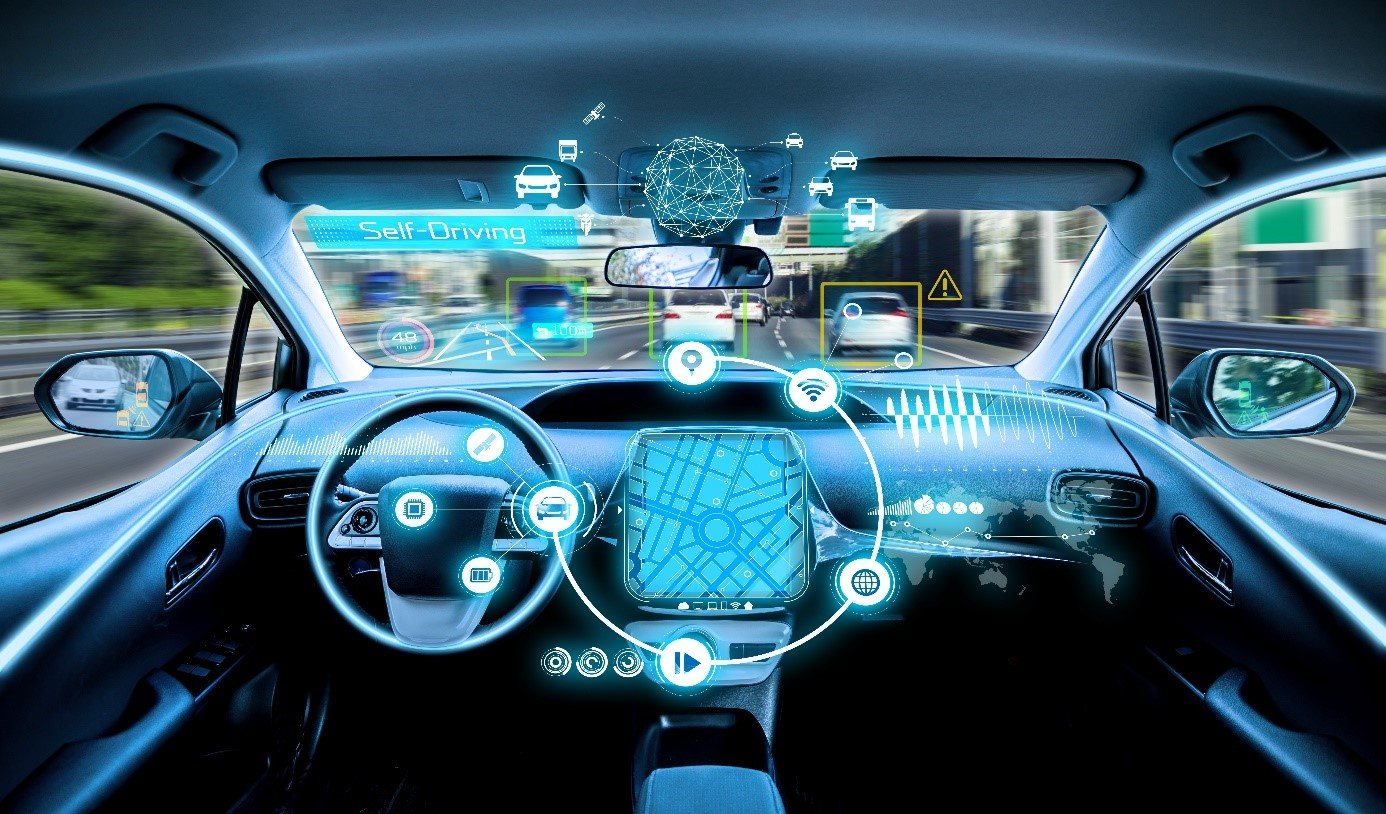
    China’s industry ministry published a notice on Thursday telling companies to step up cyber and data security oversight over connected vehicles, saying that security risks in the industry had become increasingly prominent.

    All relevant companies should establish data security management systems and regularly assess risks from network attacks, the Ministry of Industry and Information Technology said in a statement.

  • DBS Announces More Tech Job Openings

    DBS Announces More Tech Job Openings

    DBS continues to add tech talent with plans to hire around 150 related positions via a virtual hackathon.

    DBS will hire for around 150 technology positions through a virtual hackathon, Hack2Hire, an annual program in its fourth edition, according to a statement.

    The positions will be for 14 developer and engineering roles across artificial intelligence (AI), machine learning and blockchain technologies.

    Successful candidates from the hackathon will be invited for a final interview during the event.

    The latest expansion follows 140 job openings previously announced in May during the bank’s female-focused virtual career fair.

    With Covid-19 greatly accelerating the pace of digital adoption, it is now more important than ever to ensure that our digital offerings continue to stay ahead of our customers’ needs, said DBS’ group head of big data/AI and consumer banking technology Soh Siew Choo.

  • Facebook, Google, Twitter considering quiting Hong Kong

    Facebook, Google, Twitter considering quiting Hong Kong

    US tech giants Facebook, Google, and Twitter have privately warned the Hong Kong government that they could stop offering their services in the city if authorities proceed with planned changes to data protection laws, the Wall Street Journal reported on Monday, citing a letter.

    The laws could make the tech companies liable for the malicious sharing of individuals’ information online, the newspaper added.

    A letter sent by an industry group that includes the internet firms said companies are concerned that the planned rules to address “doxing” could put their staff at risk of criminal investigations or prosecutions related to what the firms’ users post online, Journal reported.

    Doxing is an act of revealing people’s personal information such as real name, home address or workplace online without the user’s permission.

    Facebook, Google, and Twitter did not immediately respond to Reuters’ requests for comment.

    Hong Kong’s Constitutional and Mainland Affairs Bureau in May proposed amendments to the city’s data-protection laws that it said were needed to combat doxing, a practice that was prevalent during 2019 protests in the city, the newspaper said.

    According to the newspaper, the letter dated June 25 was sent by the Singapore-based Asia Internet Coalition.

    “The only way to avoid these sanctions for technology companies would be to refrain from investing and offering the services in Hong Kong,” the Journal reported, quoting the letter.

  • Volvo Cars To Harness Real-Time Data From Customer Cars To Set New Safety Standards

    Volvo Cars To Harness Real-Time Data From Customer Cars To Set New Safety Standards

    The next generation of Volvo cars are set to be the company’s safest ever, thanks to cutting-edge software and hardware levels, coupled with continuous and more rapid improvements to safety features with the help of real-time data. Volvo Cars has always taken a data-driven approach to safety, using traffic data from real-life situations to develop new safety technologies and make its cars even safer. For its next generation of cars, Volvo Cars is now looking towards processing data from customer cars in real-time, if customers choose to share data and help Volvo Cars make its cars safer.

    Volvo Cars and Zenseact are investing in a data factory that will contain over 200 PebiBytes (225 million gigabytes) of data within the next few years.

    By allowing customers to choose and be a part of improving safety levels and traffic safety in this way, Volvo Cars can make continuous and much faster improvements to its cars, constantly improving safety levels. This data would include continuous inputs on the car’s environment from sensors like the high-resolution LiDAR delivered by technology company Luminar.

    Volvo Cars engineers would be able to validate and verify autonomous drive (AD) features quicker, to promote a safe roll-out of AD technology. Thanks to the data generated from millions of kilometers driven by tens of thousands of Volvo drivers around the globe, engineers would be able to validate AD features for specific geographic locations much quicker than with a limited number of cars on a test track.

    Verified updates to existing systems and new features can be rolled out rapidly through over-the-air updates, increasing the safety of Volvo cars step by step. The first car to benefit from this new approach to safety development is the company’s first SUV on a completely new electric-only technology base.

    To process the real-time traffic data they will collect, Volvo Cars and Zenseact are investing in a data factory that will contain over 200 PebiBytes (225 million gigabytes) of data within the next few years. By using artificial intelligence (AI) capabilities, data can be crunched at record times. Customers will be able to choose whether this data is collected about them, and all collected data will be aggregated with adequate safeguards for customer privacy.

    Volvo Cars engineers would be able to validate and verify autonomous drive (AD) features quicker, to promote a safe roll-out of AD technology.

    The use of real-time data is part of Volvo Cars’ longer-term vision for a future where collisions simply no longer happen, by equipping its cars with some of the best sensors available and advanced, continuously improving safety and autonomous drive systems.

    Volvo Cars’ forthcoming fully electric flagship SUV will have industry-leading safety technology as standard, helping the company to save even more lives as it sets a new standard for automotive safety. It will come with state-of-the-art sensors, including a LiDAR developed by Luminar and an autonomous driving computer powered by the NVIDIA DRIVE Orin system-on-a-chip, as standard.

    By combining this state-of-the-art hardware with software by Volvo Cars, Zenseact and Luminar for the next generation of its well-established collision avoidance technology, Volvo Cars expect its new safety package to reduce fatalities and accidents as a whole.

    Over time the car will improve and have the hardware and software capabilities to allow the car to take over on its own, in case the driver does not respond in life-threatening situations after repeated warnings. So while the driver always remains in ultimate control, the car and its safety technology can both support and watch over the driver like an extra pair of eyes and brains.

  • India’s mobile data service revenue to record 14.7% CAGR over next five years

    India’s mobile data service revenue to record 14.7% CAGR over next five years

    Mobile data service revenue in India is expected to rise from US$6.3bn in 2020 to US$12.5bn in 2025 at a compound annual growth rate (CAGR) of 14.7% driven by the continued rise in smartphone subscriptions and the subsequent surge in mobile data consumption, according to GlobalData, a leading data and analytics company.

    GlobalData’s India Mobile Broadband Forecast reveals that mobile Internet subscription penetration will increase from an estimated 47.3% in 2020 to 81.4% by the end of 2025 owing to heavy investment in telecom network development across remote areas in the country.

    The average monthly data usage is forecast to increase from 9.2 GB in 2020 to about 14.7 GB in 2025 accelerated by the increase in the consumption of bandwidth-heavy services like mobile video and social media on the mobile networks.

    Kantipudi Pradeepthi, Research Analyst of Telecoms Market Data & Intelligence at GlobalData, comments: “4G will remain the leading technology in terms of subscriptions in India through the forecast period while 2G will see its subscription share fall from 36.5% in 2020 to 3.5% by year-end 2025. Moreover, Airtel & Vodafone Idea plan to shut down 3G services and use the infrastructure to improve 4G connectivity.

    “Reliance Jio led the mobile services market in India in terms of mobile subscriptions in 2020, followed by Airtel and Vodafone Idea. Reliance Jio will retain its leading position through 2025, driven by its continuous expansion of 4G network and promotional discount offers.”

  • 1.3 million Clubhouse users have their personal data leaked

    1.3 million Clubhouse users have their personal data leaked

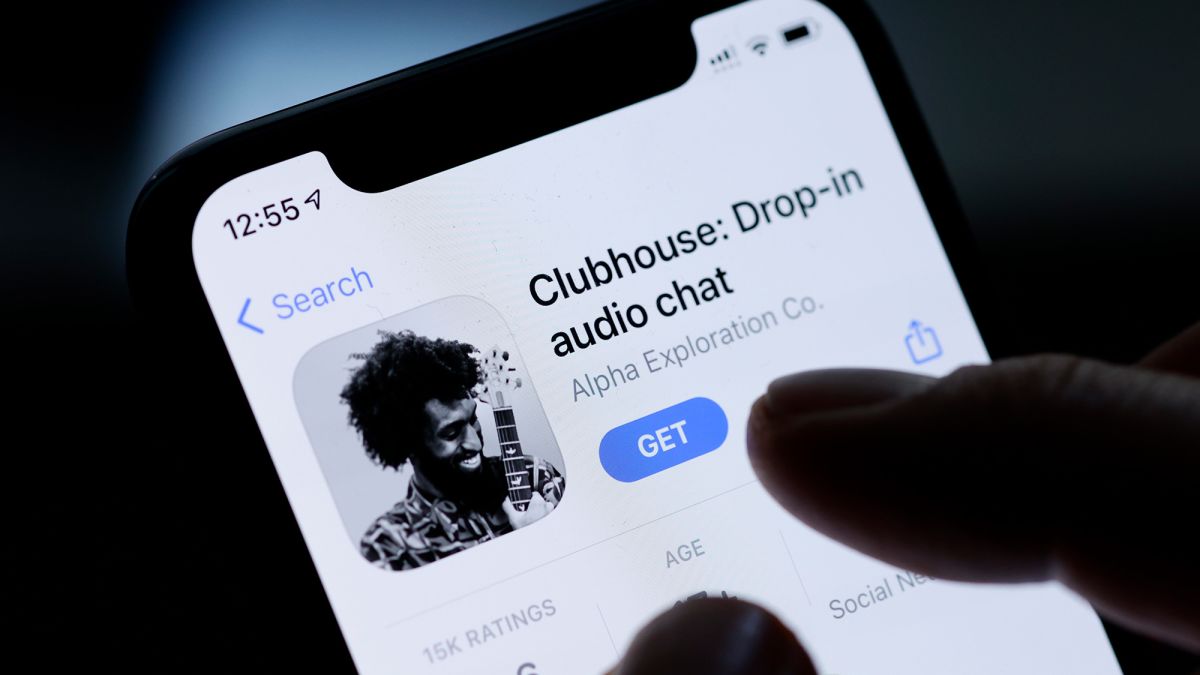
    For those who have been fast asleep for the last few months, one of the fastest-growing apps has been Clubhouse. It is an audio-only chatroom and at the moment it requires an invitation to join. It also is only available for iOS and a version for Android is reportedly months away.

    Cybercrooks have used Clubhouse for some of their nefarious schemes including one we told you about yesterday. Fake ads on Facebook attempted to get victims to join the non-existent Clubhouse for PC. Signing up for this fake software resulted in malware being sent to users’ devices although the ads have been discontinued.

    The latest issue to pop up around Clubhouse is a major leak that exposed 1.3 million scraped user records. The incident occurred a few days after more than one billion user records from Facebook and LinkedIn were offered for sale online. The difference is that the Clubhouse records were leaked for free on a widely read hacker site.

    The data that was leaked included a subscriber’s User ID, Name, Photo URL, Username, Twitter handle, Instagram handle, Number of followers, Number of people followed by the user, Account creation date and the user profile name used by the person who invited this subscriber. In other words, it is a treasure trove of information for hackers.

    Clubhouse has responded by saying that it has not experienced a data breach and that some of the information supposedly leaked has been available for free via the company’s API. That alone brings up some questions about the user privacy policy put into place by Clubhouse. Why should there be a need for all of this data to be available (financial information like credit card numbers were not included)?

  • Facebook and the very real problem of keeping student data private

    Facebook and the very real problem of keeping student data private

    After a serious data privacy scandal that happened on Facebook a few years ago, almost everybody knows about the security issues with this social network. Experts say that the company has a long track record of incidents that prove inadequate measures for users’ data protection. Repeated failures make many of us worried about the safety of our personal information. Keep reading the article if you want to learn more about the problem itself and the ways of dealing with it.

    The Facebook data privacy scandal

    It all started in 2009 when the New York Times reported an incident in which private users’ information was shared publicly. Two years later, after an FTC investigation, Facebook promised to address concerns about tracking and sharing personal information.

    In 2013, another data failure happened. It turned out that there was a bug, which exposed email addresses and phone numbers of 6 million accounts. It’s important to note that this data had not been given to Facebook by its users. Instead, it was vacuumed from the contact lists of other social network users who were acquainted with a particular person.

    In 2014, Cambridge Analytica joined the investigation of data security on Facebook. To begin with, Aleksandr Kogan asked users of a particular review platform to add the thisisyourdigitiallife app to their Facebook account. This allowed him to gather some demographic data and information about users’ likes, friends lists, and private messages, which he shared with Cambridge Analytica.

    Once Mark Zuckerberg revealed this, he claimed that Kogan’s app was immediately banned on Facebook. He also asked Cambridge Analytica to officially confirm that they had deleted all the data acquired from the app, so they provided formal certifications of that.

    But in 2018, Christopher Wylie, the creator of thisisyourdigitiallife app reported that Cambridge Analytica harvested up to 87 million profiles instead of 50, as was stated before. He said that the data was used to develop “psychographic” profiles of target users with the pro-Trump advertising campaign.

    After that, another investigation by FTC was opened to determine if Facebook violated the settlement terms from the 2011 investigation. It was revealed that Facebook was involved in data-sharing partnerships with a few big manufacturers, such as Apple, Microsoft, Amazon, Samsung, and BlackBerry. Later, in 2020, Facebook admitted to sharing its data with approximately 5,000 third-party developers

    Use essay writing services carefully

    As you can understand, privacy is one of the most acute issues in the era of social networks. It’s really hard to protect large sets of personal information so they are not used by third parties. Hence, everybody must be aware of different ways to keep their data secure. Especially, if you are a student that frequently shares study materials with peers or instructors, you should be very careful. Remember that when some experts or services similar to Edubirdie do essays for you , you should avoid providing personal details to them. If possible, don’t share your address, school name, and phone number to save your student image in case of data leakage.

    Danger for students

    Students should be aware that they are quite vulnerable to data exposure. Since Facebook harvests and shares different types of data, such as messages and voice call records, young people must know that they are at risk. If your data is incidentally or accidentally exposed, you might become a victim of cybercriminals.

    Also note, that deleting or deactivating Facebook apps can’t prevent you from all the dangers. Sounds a little bit frightening, doesn’t it? But the good news is that Facebook is actively developing a Clear History button that allows users to remove some database records.

    How to avoid privacy issues?

    To secure your data, you should review  Facebook’s Terms of Service, Data and Cookies Policy first. According to these documents, the company prevents apps from collecting information about individual users. Hence, if you want to disable third-party use of this social network, including features like Login With Facebook and apps that rely on FB profiles (like Tinder), go to the Settings menu and click a special button. Moreover, you can manually check if your data was shared with Cambridge Analytica a few years ago. To find out if your personal information was collected, go to Facebook Help page.

    Final thoughts

    Even though Facebook is one of the largest social networks in the world, it has some major issues. It’s really difficult to rely on its security system and trust its developers after all the scandals that have recently happened. But still, this company does its best to protect all loyal users, which deserves respect.


    Author’s BIO

    Julius Sim is the Head of the Support Team at Edubirdie, which is a leading assignment writing company in the world. He is responsible for high-quality customer service and does his best to meet clients’ needs. Julius believes that a good user experience and great customer support are the keys to Edubirdie’s success.


    https://www.pexels.com/photo/photo-of-laptop-near-plant-927629/

    https://www.pexels.com/photo/access-app-application-apps-267399/


  • Singapore offers best mobile experience in South East Asia

    Singapore offers best mobile experience in South East Asia

    At a country-level, Singapore won in all metrics tested, with the most important win being the highest Excellent Consistent Quality in South East Asia, with 84.5% of connections having a network experience suitable for use-cases like 1080p video streaming, real-time mobile gaming and HD video calling. Singapore also had the highest Core Consistent Quality in the region at 94.4%.

    Consistent Quality is a set of metrics that Tutela has developed to objectively evaluate when connections are (or are not) enabling users to do the things they want to on their mobile devices. There are two sets of thresholds, Excellent and Core. A connection that hits the Excellent threshold is sufficient for use-cases like 1080p video streaming, HD video calling, and multiplayer gaming, while a Core connection should be sufficient to stream standard-definition video or handle day-to-day activities like web browsing or uploading photos to social media. The percentages seen in this report represent the percentage of tests for subscribers on a given operator that was above the Excellent or Core thresholds.

    Singapore also had the fastest download speed at 26.2 Mbps, the fastest upload speed at 14.7 Mbps, and the most responsive network with a latency result of 9.0 ms. However, Vietnam was always very close behind, with second-place winnings for both Excellent Consistent Quality (72.3%) and Core Consistent Quality (86.1%).

    The report was released by Tutela Technologies, a global crowdsourced mobile data company, and evaluated over 55 million speed and latency tests, conducted on the smartphones of real-world users of national mobile operators within Common Coverage Areas, between August 1st and January 31st, 2021.

    Per country findings were as follows:

    Singapore:

    • By operator in Singapore, StarHub dominated in four of the seven metrics tested, including the highest Excellent Consistent Quality with 87.3% of users having a network experience suitable for 1080p video streaming or HD group video calling.
    • StarHub also had the highest Core Consistent Quality, Tutela’s measure of whether a connection is good enough for everyday uses, like email, social media, and SD video streaming, the fastest download speeds, and the most responsive network in the country.

    Indonesia:

    • Telkomsel won six out of the seven metrics tested, with Indosat Ooredoo being the only other operator to make it onto the leaderboard in Indonesia with the fastest median upload speed.
    • Telkomsel was in first place for Excellent Consistent Quality with 65.0%, and also in first for Core Consistent Quality with 83.5%. However, there was only a 3% difference between the operator and second-place Indosat Ooredoo.

    Malaysia:

    • In Malaysia, the leaderboard was shared by at least four operators, with U Mobile offering its users the best mobile experience in the country. The operator won the highest Excellent and Core Consistent Quality, and fastest upload speed.
    • Digi had the fastest median download speed in Common Coverage Areas across Malaysia with 10.6 Mbps but came third in the upload speed test with 6.2 Mbps. Maxis had the most responsive network in the country, while Celcom had both the best 5G/4G coverage and total coverage.

    Thailand:

    • By operator in Thailand, AIS won in four of the seven categories tested, including the highest Excellent Consistent Quality and most responsive network. However, TrueMove was also on the leaderboard in three of the seven categories including the highest Core Consistent Quality and both the fastest download and upload speeds.
    • With only two operators in the Philippines to compare, Smart outperformed Globe in six out of the seven categories tested, with Globe taking out one category with the best total coverage.

    Vietnam:

    • Viettel Mobile in Vietnam offered the best mobile experience to its users, winning in five categories and tying for first place with Vinaphone for fastest median download speeds.
    • MobiFone was on the leaderboard in one category with the highest Core Consistent Quality.
  • Tata Communications partners Google Cloud India for public cloud services

    Tata Communications partners Google Cloud India for public cloud services

    Tata Communications, a global digital ecosystem enabler, announced its partnership with Google Cloud to drive cloud adoption and transform Indian businesses. With this partnership, Tata Communications has further expanded its managed public cloud services portfolio to include capabilities for Google Cloud.

    The partnership between Tata Communications and Google Cloud India will enable organizations to deploy and access Google Cloud services through Tata Communications’ IZO™ Managed Cloud while providing them ease-of-use coupled with end-to-end services, including cloud architecture planning, workload migration and ongoing operational support.

    As a Google Cloud India Partner, Tata Communications will support organizations with services across infrastructure modernization, data center transformation, application modernization, smart analytics, multi-cloud deployments and more.

    Tata Communications IZO™ Managed Cloud provides the right expertise, infrastructure, and support services to drive business growth and improve performance. Tata Communications’ IZO™ Cloud Command portal offers a single-pane-of-glass orchestration tool that integrates different enterprise IT environments into a single dashboard and simplifies the management and orchestration of the IT estate, offering a unified cloud experience. It provides a comprehensive view of IT resource utilization (across on-premise, private, Google Cloud), thus enabling greater control for the customer, resulting in cost efficiencies and improved productivity.

    With the current global scenario, there is wider recognition for business resilience and agility that cloud enables; most businesses are now beginning to explore a cloud-first model. DevOps, a set of practices that combine software development and IT operations, has become an important requirement for enterprises. To make applications future-ready, businesses are modernizing them by leveraging Containers and Kubernetes (an open-source platform for container orchestration), as they offer businesses the scalability and portability they need to be agile and build a competitive edge, enabling self-service provisioning and capacity-on-demand with ease.

    Tata Communications’ services can manage Kubernetes on Google Cloud platform that can enable application modernization seamlessly, which is an essential need as enterprises graduate in the hybrid multi-cloud environments.

    According to an IDC survey, more than 60 percent of Indian organizations plan to leverage cloud platforms for digital innovation, as they re-strategize their IT spending plans. Tata Communications and Google Cloud India together have market-leading capabilities across a spectrum of services for customers looking to reframe their business blueprint.

    “The current demands on enterprises to manage and optimize their cloud solutions has never been more important, especially in the wake of COVID-19 and our increasing reliance on cloud infrastructure,” says Rajesh Awasthi, Global Head of Cloud and Managed Hosting Services at Tata Communications. “As organizations migrate to Google Cloud, they need a partner that will support them across their entire IT ecosystem and deliver a unified cloud management platform that offers greater transparency, control and security of their data and applications.”

    “The true test of 2021 will be how organizations adopt a cloud-first approach. Through our partnership with Tata Communications, we will be able to provide our customers with a unified, end-to-end experience that will remove the complexity in cloud management and help them transform at speed and scale”, said Amitabh Jacob, Head of Partners and Alliances at Google Cloud India.

  • Singapore and Philippines to Boost Data Connectivity

    Singapore and Philippines to Boost Data Connectivity

    Bangko Sentral ng Pilipinas and the Monetary Authority of Singapore have agreed to promote the adoption and implementation of policies to aggregate, store, process, and transmit data across borders for banks and non-bank financial institutions.

    While the increasing use of data in financial services and the increasing use of technology to supply financial services offer a range of benefits, they also pose new and complex risks for markets and challenges for policymakers and regulators, the two sides said in a joint announcement on Monday.

    Data mobility in financial services supports economic growth and the development of innovative financial services, and benefits risk management and compliance programs, by enabling stronger supervision of cross-border money laundering, terrorist financing patterns, and proliferation financing while strengthening defense against cyberattacks and allowing the regulators to manage and assess risk on a global basis, the statement noted.

    The two regulators said that covered institutions should be allowed to transfer data, including personal information, across borders by electronic means to facilitate business activities, and the location where covered institutions can store and process their data should not be restricted as long as BSP and MAS have full and timely access to the data necessary to fulfill their regulatory and supervisory mandate.

  • Hermes Logistics Technologies teams up with the IT University of Copenhagen and dnata for machine learning trials

    Hermes Logistics Technologies teams up with the IT University of Copenhagen and dnata for machine learning trials

    Hermes Logistics Technologies (HLT) is working with researchers at the IT University of Copenhagen (ITU), Denmark, and dnata Australia to explore new machine learning models aimed at delivering predictive business analytics.

    The Artificial Intelligence (AI) algorithms will run data from dnata Australia’s new Hermes Digital Ecosystem, which has a full Datalake infrastructure that captures and stores all of dnata’s Hermes New Generation (NG) Business Intelligence events.

    The machine learning models will enable dnata to make predictive business process decisions providing key insights on efficiencies, costs, and new services.

    “Machine learning is part of HLT’s digital agenda and our datalakes are a fantastic source of events and data, which are always up to date and ready to inform and train AI models in the Hermes Cloud,” said Alex Labonne, Chief Technology Officer at HLT.

    “Successfully trained models will form new predictive functionalities for dnata and help them refine an already competitive cargo handling offering.”

    The ITU team, headed by Professor Philippe Bonnet and working with HLT, will create, test, and develop the predictive models over the coming months to explore the design of cloud-native enterprise machine learning solutions.

    “This is the future of enterprise machine learning envisaged by cloud providers, where any enterprise can incorporate data-driven predictions into their business processes,” said Prof. Bonnet.

    “Collaborating with HLT and dnata is a unique opportunity for us to explore the capabilities and limitations of cloud-based enterprise machine learning.”

    dnata recently went live with HLT’s H5 Cargo Management System (CMS) at six airports across Australia in Melbourne, Sydney, Adelaide, Darwin, Perth, and Brisbane.

    “dnata is looking forward to using predictive modelling to enhance our cargo planning and operational processes. This data science not only benefits our interaction with customer airlines, it enables us to anticipate the demand patterns in advance for more efficient operations,” said Terence Yong, Cargo Development Director, Asia Pacific, dnata.

    The dnata machine learning prototype is part of HLT’s digital agenda to deliver value added services using Big Data analytics.