Tag: datacenter

  • Singapore named most robust data center market

    Singapore named most robust data center market

    Despite a large amount of supply coming through 2015–2016, the data center market in Singapore continues to lead some of its large neighbors in the Asia-Pacific (APAC) region in a race to the top of data center location rankings.

    According to Cushman & Wakefield’s Data Center Risk Index, Singapore is the most robust market out of 10 Asian countries in terms of business operations for data centers. Out of 10 Asian countries included in the index, Singapore scored 84.50 out of 100, ahead of Korea (83.23), Hong Kong (78.73) and Japan (76.48).

    The Data Center Risk Index identifies the top risks likely to affect data center business operations. It considers such criteria as energy, internet bandwidth, ease of doing business, political stability, natural disaster and energy stability.

    Singapore ranks strongly for network infrastructure, diverse connectivity to major APAC markets, its pro-business environment and political stability.

    Singapore has seen an influx of new data center capacity in the last two years, with an additional 130 MW on top of the existing capacity of 240 MW at the beginning of 2015.

    There has been some price and vacancy pressure, particularly among smaller data center players.

    However, over the medium to long term, Singapore should be able to expand its capacity by another 100 MW on the back of the Smart Nation initiative, as the government pushes for a national digital transformation program.

    Local data center providers such as Singtel, Keppel Data Centres and ST Telemedia stand to be the primary beneficiaries of this, while the international data center providers will continue to focus on winning international deals from medium to large enterprises coming into Singapore.

  • Facebook building $1b data center

    Facebook building $1b data center

    Reports out of Richmond say that Facebook is moving in next door. The tech giant is said to be building a $1 billion data centerin eastern Henrico County, a few miles east of town.

    The first phase of Facebook’s new facility will span 970,000 square feet and add more than 100 full-time jobs to the area. As currently envisioned, follow-up phases would bring that total up to 2.5 million square feet and 240 full-time jobs.

    The data center(s) will be on a 328-acre site at Technology Boulevard and Portugee Road within the White Oak Technology Park.  That’s the complex which also happens to also house the 1.3 million square foot former Qimonda semiconductor plant that is now a giant QTS data center.

    Virginia as a whole has been a hot infrastructure market lately. The construction of the new MAREA cable system is bringing the state its own submarine cable access point at Virginia Beach, and new fiber has been put in the ground and on poles throughout the region in anticipation.

  • ECI launches hybrid virtualization platform

    ECI launches hybrid virtualization platform

    ECI has launched its Hybrid Virtualization Platform that designed to support multiple network functions virtualization (NFV)-based use cases to help communication service providers can simplify operations, increase agility, reduce opex and provide better SLAs.

    Featuring ECI’s vE-CPE family, the Hybrid Virtualization Platform combines hardware with management and orchestration (MANO), providing a platform as a service (PaaS) to organize different virtual network functions (VNFs).

    The platform leverages multi-access edge computing (MEC) capabilities to alleviate the workload of core networks. It encompasses ECI’s Mercury NFVi platform, ETSI-compliant MANO and a library of VNFs.

    By bringing service agility closer to the network edge, ECI said the platform can accommodate future demands of IoT networks and 5G.

    “Carriers need to get everything they can out of their current network assets. Virtualization at the edge can help unlock all the potential hidden in their current infrastructure, and create additional value on top of current assets,” said Erez Zelikovitz, VP SDN/NFV Solutions Global Portfolio at ECI.

    “Virtualization at the edge can help unlock all the potential hidden in their current infrastructure, and create additional value on top of current assets. We are giving our customers a cost-effective, future proof and easy-to-implement solution, which they can use now to improve service agility, and for the demands of future IoT and 5G networks on the same open and flexible platform.”

    The platform is based on open industry standard architecture, which allows CSPs to easily integrate it into current operations, enjoy end-to-end orchestration and incorporate third-party software.

    It is available on a “pay-as-you-grow” subscription model, and intended to reduce opex and shorten time to market, ECI added.

  • AWS to open Hong Kong infrastructure region next year

    AWS to open Hong Kong infrastructure region next year

    Amazon Web Services (AWS) is planning to open an infrastructure region in Hong Kong in 2018, making the city the eighth AWS Region in Asia Pacific.

    AWS’ launch of the Hong Kong infrastructure region will allow Hong Kong customers to store their data locally, and to build flexible, scalable, secure, and highly available applications.

    It will also enable Hong Kong customers to enjoy fast, low-latency access to websites, mobile applications, games, SaaS applications, big data analysis, Internet of Things (IoT) applications, and more.

    At launch, the new AWS Region will comprise three Availability Zones, said Alex Yung (pictured), corporate vice president and managing director of AWS Greater China, at the first AWS Summit hosted in Hong Kong today.

    According to an AWS spokesperson, Availability Zones (aka AZs) are isolated locations and are what each Region is made up of. AWS has three locations in Hong Kong for its AZs.

    “AZs allow customers to build highly available applications. They are distinct locations that are engineered to be insulated from failures in other AZs and provide inexpensive, low latency network connectivity to other AZs in the same region,” said the AWS spokesperson.

    “AZs are made up of one, and sometimes more, datacenters. AZs are also designed in such a way that if one AZ were to fall off the face of the earth for some reason, the other AZs would continue to function normally. This means customers can build their applications across multiple AZs so they are designed to handle failure and continue to operate uninterrupted.”

    Including Hong Kong, there will be eight AWS Regions in the Asia Pacific: Singapore, Tokyo, Sydney, Beijing, Seoul, and Mumbai, and an additional Region in China (Ningxia) which is expected to launch in the coming months. Together, these Regions will provide AWS customers with a total of 19 Availability Zones, and allow them to architect highly fault tolerant applications. (Click here to view AWS’ global infrastructure.)

    In 2008, two years after AWS made its global launch, the cloud company opened a CloudFront Point of Presence (PoP) in Hong Kong to enable customers to serve content to end users with low latency. Since then, AWS has added two more PoPs in Hong Kong, the latest going live in 2016.

    In 2013, AWS opened an office in Hong Kong which is staffed by a wide range of functions including sales, support, technology evangelists, and marketing.

    Hong Kong has a dynamic and vibrant business environment and is making progress toward becoming a digital city. An AWS Region here will enable our customers — from start-ups to large enterprises, and from financial institutions to government organizations — to enjoy cost and agility advantages across their entire IT operations, in compliance with local data regulations,” Yung said.

    Nicholas Yang, secretary for Innovation and Technology, Hong Kong government, welcomed AWS’s plan to open an infrastructure region in Hong Kong in 2018,” AWS’s global infrastructure coming to Hong Kong reaffirms Hong Kong’s status as the prime location for setting up data center facilities in the region and also a recognition of Hong Kong’s edge and strengths as an Asia hub for doing business and a regional data hub.”

    “The new AWS Region in Hong Kong will further accelerate cloud computing adoption and cloud-based system development in Hong Kong, facilitating the digital transformation of businesses in this city. Hong Kong is well-positioned to become a premier global data hub in the region. We will continue to promote our competitive advantages and encourage prospective operators to establish a presence in Hong Kong,” Yang added.

  • Alibaba to open data center in Indonesia amid tighter controls on local storage

    Alibaba to open data center in Indonesia amid tighter controls on local storage

    Alibaba Cloud, the cloud computing arm of Alibaba Group, announced today that it plans to establish a new data center in Jakarta, Indonesia. It’s scheduled to open before the end of Q1 next year.

    “Alibaba Cloud will significantly increase its computing resources in Asia, allowing greater support for small and medium enterprises,” the company said in a statement.

    It’s also opening a new center in India and recently announced similar plans for Malaysia.

    Alibaba Cloud operates globally. Other Asian countries like China, Japan, and Singapore already have similar facilities.

    Demand for local storage
    In Indonesia, international giants like Alibaba Cloud are answering the growing demand for reliable, scalable data storage.

    The entire industry is experiencing a boom. NTT Indonesia, a subsidiary of Japanese NTT Data Corporation, told trade publication Data Center Dynamics that it’s seeing “significant growth” since 2014 on the back of developments such as e-commerce and more frequent internet use.

    Amazon Web Services is popular with Indonesian companies, even though the firm does not operate data centers in the archipelago.

    But a 2012 government regulation (PDF) has recently been tightened – especially in the fintech sector. Indonesia’s Financial Services Authority at the end of last year introduced its own sub-regulation that says Indonesian’s financial data must not be stored outside the country without prior approval. This could encourage companies and startups to consider working with Indonesia-based servers.

    We’ve reached out to Alibaba Cloud to learn more about the location of the Indonesia-based center and when it will start operating.

  • Oracle, Fujitsu launch public cloud services in Japan

    Oracle, Fujitsu launch public cloud services in Japan

    Fujitsu and Oracle Japan have launched Oracle Cloud Platform services, including Oracle Database Cloud Service, via a Fujitsu data center, a first for Japan.

    Oracle and Fujitsu have a long history of collaboration when it comes to processors, servers, and software. This synergy now extends to the data center, where Oracle’s cloud services will be available locally to Japanese customers backed by Fujitsu.

    Fujitsu has the largest number of Oracle-certified Oracle Cloud engineers in Japan, and offers a coordinated portfolio of services to assist in the deployment and operations of Oracle Public Cloud, to help organizations build new modern cloud-based solutions and transition their enterprise systems, including mission-critical operations, to the cloud.

    Fujitsu and Oracle formed a strategic alliance in July last year, based on a strategic collaboration to deliver enterprise-grade, world-class cloud services to customers in Japan and their subsidiaries around the world.

    Together with making Oracle Public Cloud services available from Fujitsu’s robust and reliable data center in Japan, can now be used as part of Fujitsu Cloud Service K5, Fujitsu’s public cloud service.

    “The Oracle Cloud Platform running in Fujitsu’s Japan datacenter alongside Fujitsu Cloud Service K5 DB powered by Oracle Cloud is a natural continuation of the three decade history Oracle and Fujitsu have working together to help customers achieve competitive advantage,” said Edward Screven, Chief Corporate Architect, Oracle.

    “By combining Fujitsu’s system integration expertise with Oracle’s cloud services, Fujitsu and Oracle will accelerate the transition of our joint customers’ enterprise systems to cloud.”

    Oracle Cloud offers a complete range of public cloud services across SaaS, PaaS, and IaaS. Oracle Cloud Platform, which includes Oracle’s analytics, application development, data management, and integration services, has experienced steady growth, adding thousands of customers in fiscal 2017.

  • IPC, 1-Net plan interconnected data center network

    IPC, 1-Net plan interconnected data center network

    Philippines cloud services and data center provider IPC (IP Converge Data Services) has teamed up with 1-Net in Singapore to provide its customers with an interconnected data center network.

    This collaboration enables both organization to extend their data center capacity for faster access and deployment of customers in the countries.

    IPC and 1-Net are both data center providers who operate carrier-neutral and telco-grade internet data centers in Philippines and Singapore respectively.

    This strategic partnership will strengthen the data center services of both providers, ensuring that customers’ data is securely stored. This will also enable enterprises to run mission-critical systems in our facilities while they grow their businesses in the two countries.

    The partnership will enable both IPC and 1-Net to deploy customers in both Philippines and Singapore with a single contract, allowing quicker deployment without the need to renegotiate service level agreements and contracts.

    “Our partnership with 1-Net virtually expands the data center footprint of both companies. Gaining access to data center facilities in Singapore enables our enterprise customers to extend their network into the more mature market in Singapore, and likewise offers the same benefit to regional players present in Singapore who are looking to expand into our bustling Philippines economy for business expansion,” said IPC Chief Executive Officer Reynaldo R. Huergas.

  • Equinix expands Hong Kong footprint to meet demand

    Equinix expands Hong Kong footprint to meet demand

    Equinix is expanding its Hong Kong footprint to accommodate local interconnection needs and increasing numbers of inbound cloud service providers.

    This latest expansion of Equinix’s Hong Kong footprint adds over 1,400 new cabinets and brings the company’s total investment in the city to over $250 million.

    The expansion in Hong Kong includes 515 new cabinets in HK1 and represents an incremental investment of $16 million and adds 900 new cabinets in HK2 and represents an incremental investment of $39 million. It is the latest in a series of expansions across Asia-Pacific to meet the rising demand for interconnection services, with other recent expansions including Melbourne, Tokyo and Sydney.

    The new development will enable Equinix to support the growing needs of an increasing variety of enterprises – such as FSI and FinTech, e-payments and logistics – to interconnect with cloud and technology providers.

    Equinix’s cloud and IT ecosystem has continued to gain momentum in Hong Kong. Its cloud customer-base has grown significantly since 2014, as local and international internet security and CSPs are increasingly choosing to deploy with Equinix Hong Kong as their initial entry point or hub location for the Asia-Pacific region.

    Major cloud service providers in Equinix Hong Kong now include Alibaba Cloud, the cloud computing arm of Alibaba Group, Microsoft Azure & Office 365 and Google Cloud. According to Cisco, global cloud IP traffic will almost quadruple in over the next 5 years, this expansion will enable Equinix to meet the needs of Hong Kong customers looking to take advantage of this growth.

    One Hong Kong customer taking advantage of Equinix’s increased capability is ClusterTech Limited, which specializes in using cloud, high performance computing and big data technologies to solve challenging technical problems and improve operational efficiency for their customers. The company is in the process of adding more resources within Equinix’s IBX data centers to launch a new solution that will enable environmental engineering companies to run complex simulation applications.

    In addition to supporting the core cloud needs of customers, Equinix is now also in an excellent position to accommodate the growing trend towards multi-cloud convergence and “interconnected commerce” that Equinix experts predict will be a key feature of the IT landscape over the coming year.

    The additional capacity comes online at a time when Equinix is predicting IoT will become a concrete reality – evolving from independent, single-vendor solutions to those that talk to each other and rely on the same data.

    With the Hong Kong expansion, Equinix will relieve the growing pressure on corporate-centric networks by distributing the traffic more broadly, as well as better control the performance of the streaming IoT information for more real-time business and operational insight.

  • Cloudbric opens IDCs in Hong Kong and Vietnam

    Cloudbric opens IDCs in Hong Kong and Vietnam

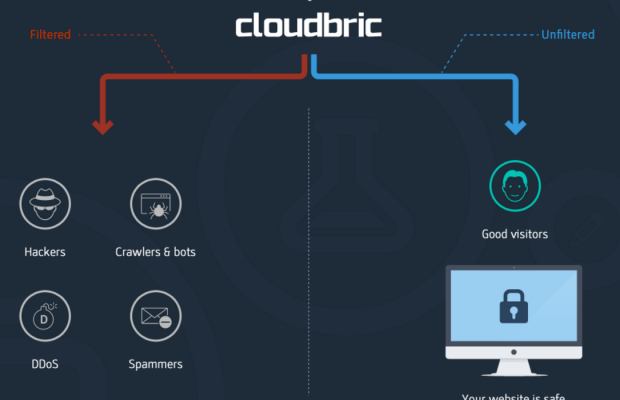
    Web application firewall (WAF) service provider Cloudbric announced the opening of five internet data centers, including facilities in Hong Kong and Vietnam, in response to the growing, global demand for cloud services.

    The new data centers are located in New Jersey (US), Hong Kong, Binh Duong and Ho Chi Minh City (Vietnam) as well as Amsterdam (the Netherlands)

    Additionally, with Cloudbric’s growing partnership base, the expansion of IDCs means Cloudbric’s customers can benefit from greater WAF infrastructure and experience elite security better than ever.

    Enterprises of all sizes rely on and often expect websites to be up and running without any lapses. Maintaining this uptime depends on strategically placed data centers to handle high-volume requests. As a result, Cloudbric is not only increasing its network capacity through its IDC expansion but also introducing an all-inclusive, fully-managed WAF service to a wide range of IT service and solution providers.

    Regarding Cloudbric’s current partnership model, VP of Product & Technology TJ Jung says “From individuals to small or mid-size businesses and enterprises, we are growing our service to reach all parts of the globe by engaging in partnerships with different solutions providers in the IT industry, and Cloudbric is excited to continue in this endeavor. Partnering with data centers, for example, means Cloudbric can be deployed on their own infrastructures instead of relying on external networks – making the delivery of Cloudbric’s advanced WAF to their clients a seamless process.”

    Utilizing the precise, trusted technology created by Penta Security Systems, Cloudbric’s WAF can intelligently recognize and block both unknown and known web attacks with its logic analysis engine. Through Cloudbric, various service providers can also benefit from quality customer service and a user-friendly, intuitive dashboard and extend it to their own end users. With new IDCs and thus even greater bandwidth, Cloudbric’s ability to withstand cyber attacks such as DDoS attacks is augmented.

    Cloudbric currently has plans to open ten additional IDCs in Q2, specifically in cities across North America, the Middle East, and South America. Cloudbric will continue to appeal to various service providers in its expansion of WAF infrastructure.

  • Equinix to raise $2.8b ahead of Verizon asset purchase

    Equinix to raise $2.8b ahead of Verizon asset purchase

    Equinix revealed plans yesterday to raise at least $2.875 billion in public offerings over the next few weeks. The data center giant is lining up the necessary funds to make their previously announced purchase of a selection of US operator Verizon’s data center footprint.

    The assets include the former Terremark business and consist of 29 data centers spanning 2.4 million square feet across 24 sites and 12 metro areas.

    The footprint is mostly North American plus Sao Paolo down in Brazil. Nine of those metro areas already have Equinix facilities, while Houston, Culpeper, and Bogota will be some new turf for them.

    Equinix will be selling $1.75 billion of common stock, with underwriters having the usual 30-day option on another 15%, or $262.5 million.

    At the same time they will be selling $1.125B in senior notes due 2027. And they’ll be using $1.053 billion from their existing term loan B borrowings to make up the remaining piece, covering the $3.6B purchase price plus other fees and such.

  • HKT to build fiber super highway for Hong Kong DCs

    HKT to build fiber super highway for Hong Kong DCs

    PCCW’s HKT has revealed plans to build what it is calling a “fiber super highway” connecting the Tseung Kwan O Industrial Estate (TKOIE) with the Chai Wan area.

    The Ultra Express Link will be a 3km high-capacity, low-latency subsea cable system spanning the Junk Bay. The cable system has a target ready for service date in 2017

    HKT group managing director Alex Arena said the system will provide additional diversity in connectivity for the multiple data centers in TKOIE, and serve to position the estate as Asia’s data center hub.

    “The building of Ultra Express Link demonstrates once again not only our leading position in solid fiber infrastructure in Hong Kong, but also our dedication to build Hong Kong into a regional data center hub,” he said.

    “The new cable, together with the existing extensive fiber infrastructure provided by HKT, will allow us to meet the rising demand for high speed and high capacity connectivity from data center operators.”

    Arena said HKT is the only operator to provide full fiber coverage in all data centers in Hong Kong with diversity paths in all data centers in TKOIE.

    HKT is a quadruple-play operator in Hong Kong serving both consumer and enterprise customers.

  • Alibaba Cloud to open new data centers

    Alibaba Cloud to open new data centers

    Alibaba Cloud has announced plans to open four new data centers by the end of 2016 in the Middle East, Europe, Australia and Japan.

    The new centers are expected to boost its data center network to 14 locations, covering key economic centers around the world. The data center in the Middle East, located in Dubai in the United Arab Emirates, commenced initial operations today.

    Alibaba Cloud’s expansion aims to provide customers in Asia and worldwide with improved latency and greater access to diverse offerings, including data storage and analytics services, enterprise-level middleware, and cloud security services. The new data centers are expected to support Alibaba Cloud’s growing client base beyond the current 2.3 million.

    Extending its global footprint in the Asia-Pacific, Alibaba Cloud will open a new data center in Sydney, Australia by the end of 2016.

    Alibaba Cloud will bring its most popular cloud services in data storage and processing services, enterprise-level middleware, and cloud security services to the Australian market. A dedicated team will be based in Australia, and build up a cloud ecosystem with local technology partners to drive cloud and big-data business in the region.

    The planned new Japan Data Center, hosted by SB Cloud Corporation, a joint venture between Softbank and Alibaba Group, will meanwhile provide Japanese enterprises with public cloud computing services from Alibaba Cloud.

    With the joint venture, Alibaba Cloud will further expand its cloud computing service platform by leveraging SoftBank’s extensive enterprise customer base in Japan.

    “Alibaba Cloud has contributed significantly to China’s technology advancement, establishing critical commerce infrastructure to enable cross-border businesses, online marketplaces, payments, logistics, cloud computing and big data to work together seamlessly,” Alibaba Cloud president Simon Hu said.

    “We want to establish cloud computing as the digital foundation for the new global economy using the opportunities of cloud computing to empower businesses of all sizes across all markets.”

  • CenturyLink to sell data centers for $2.15b

    CenturyLink to sell data centers for $2.15b

    US-based global operator CenturyLink has arranged to sell its data centers and colocation business to a consortium led by BC Partners and Medina for $2.15 billion.

    CenturyLink plans to use the net proceeds from this sale to partly fund its acquisition of Level 3 Communications announced last week

    Under terms of the agreement, the consortium will assume ownership of CenturyLink’s portfolio of 57 data centers at closing. The data center portfolio includes approximately 195 megawatts of power across 2.6 million square feet of raised floor capacity.

    Post-sale, the company will continue to focus on offering customers a wide range of IT services and solutions, including network, managed hosting and cloud.

    Though it will no longer own the data centers, CenturyLink will continue to offer colocation services as part of its product portfolio through its commercial relationships to be entered into at closing with the BC Partners/Medina-led consortium.

    “After conducting a thorough review process, we are pleased to have reached an agreement with BC Partners,”  CenturyLink CEO Glen F. Post III said.

    “We believe this transaction will benefit customers, employees and investors. Both CenturyLink and BC Partners have a strong customer focus and are committed to ensuring a seamless transition of the customers and their colocation environments.”

  • Equinix completes second phase of TY5 data center in Tokyo

    Equinix completes second phase of TY5 data center in Tokyo

    Equinix has completed the second phase expansion of its 10th International Business Exchange (IBX) data center in Tokyo, the TY5.

    Phase two adds an additional 375 cabinets to the facility, bringing the total capacity of the data center to 725 cabinets. The second phase expansion follows the opening of TY5 in March of this year and brings the total investment in the facility to $43 million.

    This announcement highlights Equinix’s continued investment in Asia-Pacific, as well as demand from local and global companies wanting to benefit from leading interconnection services in Japan, particularly across the cloud and financial sectors.

    Equinix plays a critical role in supporting the interconnected era, underpinning digital economies and enabling businesses to accelerate their performance for continued success and growth. In 2016, it has opened four new IBX data centers in Dallas, São Paulo, Sydney and Tokyo, creating more capacity for global companies to connect with their partners, customers and employees.

    The expansion of TY5 follows Equinix’s acquisition of Bit-isle, a leading Japanese data center and managed service provider, which more than doubled the company’s footprint in Japan. The move means both domestic and international enterprise customers can now benefit from Equinix’s increased presence in the country, spanning 10 data centers in Tokyo and two in Osaka.

    The completion of the phase two expansion will support growing customer demand for carrier neutral data centers with direct connectivity to Equinix’s financial ecosystem in TY3. TY5 is in close proximity to the Japan Exchange and Tokyo Commodity Exchange, providing financial services companies with reliable, low-latency connectivity to key financial institutions and business partners.

    TY5 enables domestic and multinational companies to expand into the growing Japan market, providing them with access to over 1,400 domestic and international network providers within Platform Equinix.

    Platform Equinix now includes over 146 data centers in 40 markets around the world.

    TY5 was recently awarded the LEED Green Building Rating System Gold Certification for its high building standards.

    The award recognizes best-in-class building strategies and practices across seven categories: sustainable sites, water efficiency, energy and atmosphere, materials and resources, indoor environmental quality, innovation in design and regional priority.

  • PLDT opens Philippines’ biggest data center

    PLDT opens Philippines’ biggest data center

    Philippine service provider PLDT has opened the country’s biggest data center at major business district Makati City.

    The new facility has been built to serve a wide range of organizations, particularly those handling vital data such as banks, business process outsourcing (BPO) firms, IT and content providers and government institutions.

    Set up by PLDT subsidiary ePLDT, the newest VITRO Data Center sits on a nearly two-hectare property with 3,600-rack capacity. It is equipped with systems and facilities to guarantee continuous operations, ensuring that businesses can utilize robust and scalable digital infrastructure, as well as world-class 24/7 technical support capabilities.

    “PLDT is investing heavily in our VITRO data centers as we believe that these facilities are one of the basic building blocks of the country’s digital economy. This data center will be a vital resource for companies as they ramp up their own digital services,” said PLDT Chairman and CEO Manuel V. Pangilinan.

    The new earthquake-resistant, purpose-built data center in Makati is built on solid ground without seismic faults within its proximity. In addition, special architectural techniques and materials planning were implemented to provide the data center with fire-rated concrete walls and flood-protected design.

    As a result, VITRO Makati is rated to withstand earthquakes up to intensity eight in the Richter scale. The data center is also compliant with global design standards.

    “’PLDT recognizes how vital it is for enterprises to ensure stable operations despite changes in the external environment. The need for scalable and secure hosting facilities to house and manage critical platforms is also growing in importance as the enterprise becomes more data-driven as a result of continuous digital transformation initiatives,” said PLDT executive vice president and ePLDT president and CEO Eric R. Alberto.

    To address the growing concern over digital security, VITRO Makati offers one of the most secure and impenetrable structures in the Philippines with an eight-layer security design, guaranteeing that data and applications will always be protected.

    Each major component of the facility is configured with redundant counterparts in place that seamlessly operate to anticipate adverse events, including power generators and  Uninterrupted Power Supply (UPS) units, among others.

    As part of the VITRO network of data centers, VITRO Makati also serves as a carrier-neutral Internet Exchange facility that provides numerous IP peering services, enabling access to local and international content.

    VITRO Makati is also a Nexcenter-certified facility, allowing its clients to use globally standardized Nexcenter services of world leader NTT Com at some 140 locations in 84 cities of 19 countries, in addition to NTT Com’s Arcstar Universal One private-network service, which is already available in the Philippines and which is largely used by the country’s BPO industry.

    “As the world becomes even more digitally connected, Filipino enterprises must leverage on new technologies to ensure the security and resilience of their operations. PLDT’s digital platforms can enable enterprises to take advantage of disruptive technologies, secure their operations, and promote growth in their businesses,” said Alberto.

    The PLDT Group now operates seven data centers all over the country with a total rack capacity of nearly 7,000 to serve the needs of small, medium, and large enterprises across various industries, including banking, financial services, outsourcing, telecoms, and gaming.