Retail News CRM

Tag: DBS

  • India, Indonesia key areas of focus for DBS in 2017

    India, Indonesia key areas of focus for DBS in 2017

    India and Indonesia will be the Development Bank of Singapore’s “big” areas of focus for this year, its chief executive officer Piyush Gupta has said. “We also remain focused on building leading regional cash management, foreign exchange, debt markets and wealth management franchises,” Gupta said here.

    “So India and Indonesia will be our big areas of focus in 2017,” Gupta was quoted. DBS leads foreign banks with expansion plans in India.

    DBS’ wealth management business has quadrupled over the past six years, and now accounts for to 13 to 14 per cent of group revenue.

    “Over the next five years, we think it could get up to 20 per cent,” he said in a report on Singapore banks’ prospects during this year.

    “The world will have to grapple with massive consequences behind technological disruption on jobs displacement, both blue-collar and white-collar workers. My own bet is that you will find a lot more entrepreneurship, or what people call the gig economy,” he said.

    “It is likely that there will be a new wave of redistributive economics. Governments may prove inadequate to do this entirely under their own steam, and the private sector will have to play a meaningful role,” said Gupta.

    DBS’s top priorities for this year is to be prepared for volatility as markets will continue to be choppy.

    An increase in US dollar rates could also create negative impact, he added.”Step up the pace on transformation of the bank that is re-imagine banking, and be a 22,000-person start-up,” stressed Gupta. “The third priority is to continue our steady business expansion,” he said.

    But he also cautioned that uncertainties over US President-elect Donald Trump’s policies will be a headache for Asian strategies and could result in heightened market volatility in the short-term. At the same time, global growth is expected to remain subdued, said Gupta.

    “To navigate these uncertain times, we need to remain watchful and vigilant, as well as disciplined about costs and the risks we take,” he advises.

  • Goldman’s Instructed by ANZ

    Goldman’s Instructed by ANZ

    It has been an interesting week for Australian bank ANZ. On Monday it agreed a deal with Singaporean bank DBS to dispose of its Asian wealth units. Now it appears the bank has hired Goldman Sachs for another deal.

    According to a report the bank has appointed Goldman Sachs to lead the sale. Also involved in any transaction will be the Melbourne-based boutique Flagstaff Partners.

    Insurance Units Next to go?

    Flagstaff has worked with ANZ on several occasions including as a financial adviser to the ANZ Banking Group on the sale of ANZ Trustees to Equity Trustees. It also acted as a financial adviser on the acquisition of the remaining 51 percent shareholding in the ANZ-ING wealth management and life insurance joint venture.

  • AI, Gamification and Blockchain at DBS Hong Kong Accelerator

    AI, Gamification and Blockchain at DBS Hong Kong Accelerator

    Showcasing innovative fintech solutions that leverage artificial intelligence, blockchain technology, gamification and more, the founders of seven startups from Hong Kong and around the world met with hundreds of potential investors at DBS Accelerator Demo Day, the finale of the second DBS Accelerator programme in Hong Kong.

    Accelerators play a vital role in the Asian startup ecosystem and in supporting innovation. Providing vast resources, mentor support and dedicated work and office space, DBS Accelerator aims to create opportunities for innovators from across Asia and globally.

    Financial Innovation Evolving Rapidly

    The seven startups in this year’s programme are Flowcast, FOMO Pay, Hampen Technology, Mindlayer.io, NetGuardians, Playbasis and XinGuo Technology. They were selected from more than 150 applicants from around the world, including Hong Kong, Singapore, China, Thailand and the U.S.

    «We believe FinTech has the ability to go beyond mere disruption and make a tangible difference to the experiences customers have in using financial products and services,» said Lawrence Morgan, CEO of Nest.

  • ANZ suffers $265m hit over Asia exit

    ANZ suffers $265m hit over Asia exit

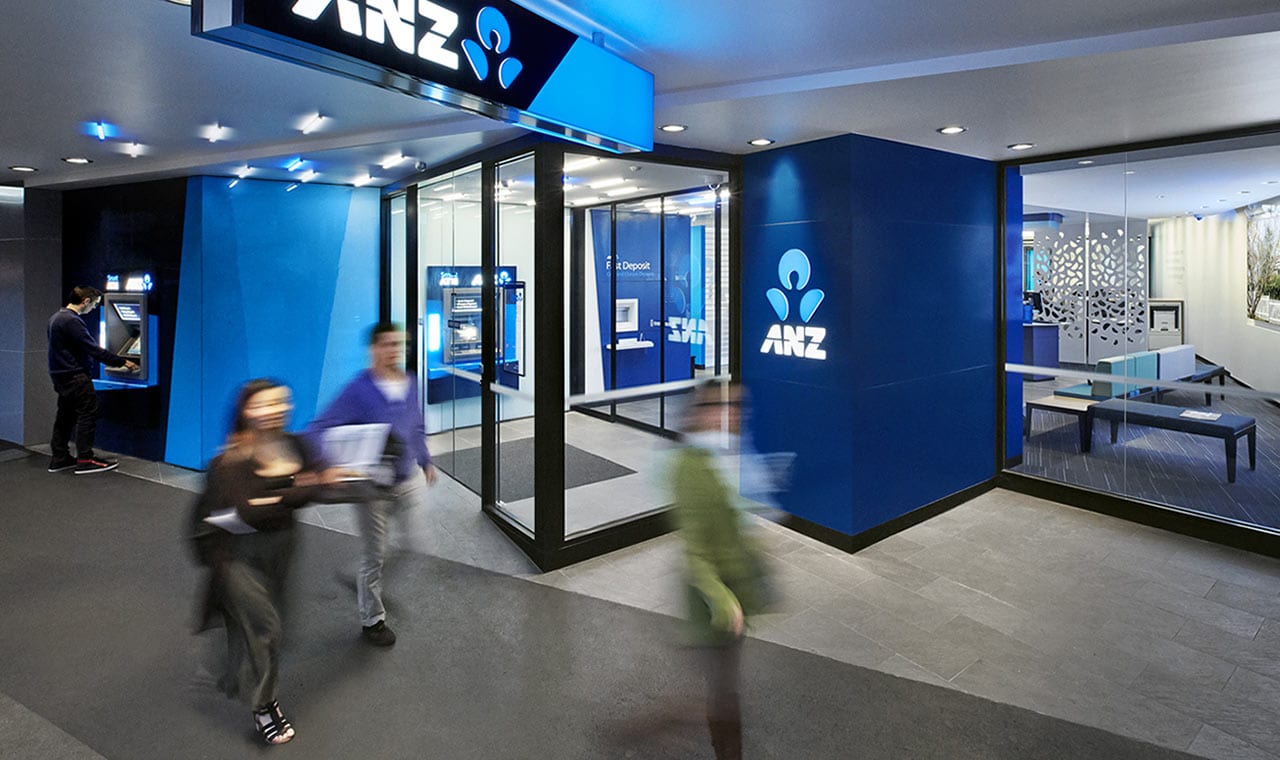
    ANZ has taken a major step toward exiting Asian retail banking and wealth management with an agreement to sell businesses in five countries to Singapore’s DBS bank.

    Australia’s fourth-largest lender on Monday said DBS will pay book value plus $110 million for assets in Singapore, Hong Kong, China, Taiwan and Indonesia.

    Chief executive Shayne Elliott, who is undoing much of ANZ’s expansion into Asia under predecessor Mike Smith, said the sale represented the bulk of the bank’s regional retail and wealth management businesses – with remaining assets in Vietnam, Laos, Cambodia and the Philippines under review.

    Mr Elliott said ANZ had not committed to further sales and would not be drawn on a timeline for a possible broader exit.

  • DBS to acquire ANZ’s Asian wealth assets

    DBS to acquire ANZ’s Asian wealth assets

    DBS Group said it plans to buy Australia and New Zealand Banking Group’s (ANZ) wealth and retail businesses in five Asian markets – part of a big private banking push for the Singapore lender and the first significant retreat from Asia for ANZ.

    The businesses in Singapore, Hong Kong, China, Taiwan and Indonesia, will be sold for around S$110 million, in a deal that underscores how smaller players are being squeezed out of private banking due to lack of scale.

    “Further investments do not make sense for us given our competitive position and the returns available to ANZ,” Chief Executive Shayne Elliott said in a statement.

    Mr Elliott also told an analysts call the bank would look to exit its retail and wealth assets in the Philippines, Vietnam, Cambodia and Laos separately.

    He added that for the bank to have remained competitive it would have had to invest further in developing its branch network and digital capacity.

    The deal will help DBS build up its leading position in the region, said Ms Tan Su Shan, DBS’ head of consumer banking and wealth management, noting that the Singapore lender had recently entered the top five bank rankings for the Asia-Pacific region.

    DBS and local rival Oversea-Chinese Banking Corp have been aggressively bidding for the Western private banking assets for sale in Asia.

    DBS, Singapore’s biggest lender, is also weighing a bid for ABN AMRO’s Asian private bank, sources have told Reuters.

    ANZ TO FOCUS ON INSTITUTIONAL BANKING IN ASIA

    The ANZ transaction is expected to be completed progressively from the second quarter of 2017, with full completion in all markets expected by early 2018.

    Most of its staff currently employed in the affected units will join DBS, ANZ said, adding that it will focus on its institutional banking business in Asia instead.

    ANZ, Australia’s third-largest bank by market value, also said it would take a loss of A$265 million on the sale, including write-downs, and added the sale was expected to increase its Tier 1 capital ratio by 15 to 20 basis points. The losses are set to be booked in the first half of the current financial year.

    They will come of top of A$360 million in one-off charges that will be booked in the year just ended. Those earnings are due to be released in full on Thursday.

    In 2009, ANZ acquired the Royal Bank of Scotland’s retail, wealth and commercial businesses in Taiwan, Singapore, Indonesia and Hong Kong as well as institutional businesses in Taiwan, the Philippines and Vietnam for US$550 million.

    The move was part of a “super-regional strategy” led by former ANZ Chief Executive Mike Smith, who left the bank last year.

    DBS Q3 PROFIT STABLE, BAD DEBT CHARGES UP

    The news comes as DBS posted a slight increase in third-quarter net profit, in line with expectations, although bad debt provisions rose sharply due to its exposure to the troubled oil and gas sector.

    Singapore banks are grappling with growing risks to earnings as credit woes deepen for the offshore services sector, which has been hit hard by an almost two-year rout in oil prices that lasted until early this year.

    DBS said net profit came in at S$1.071 billion in the third quarter that ended in September, versus a profit of S$1.066 billion a year earlier. That compares with an average forecast of S$1 billion from five analysts polled by Reuters.

    Bad debt charges rose to S$436 million in the third quarter from S$178 million a year ago.

  • DBS debuts digital tokens in corporate m-payments

    DBS debuts digital tokens in corporate m-payments

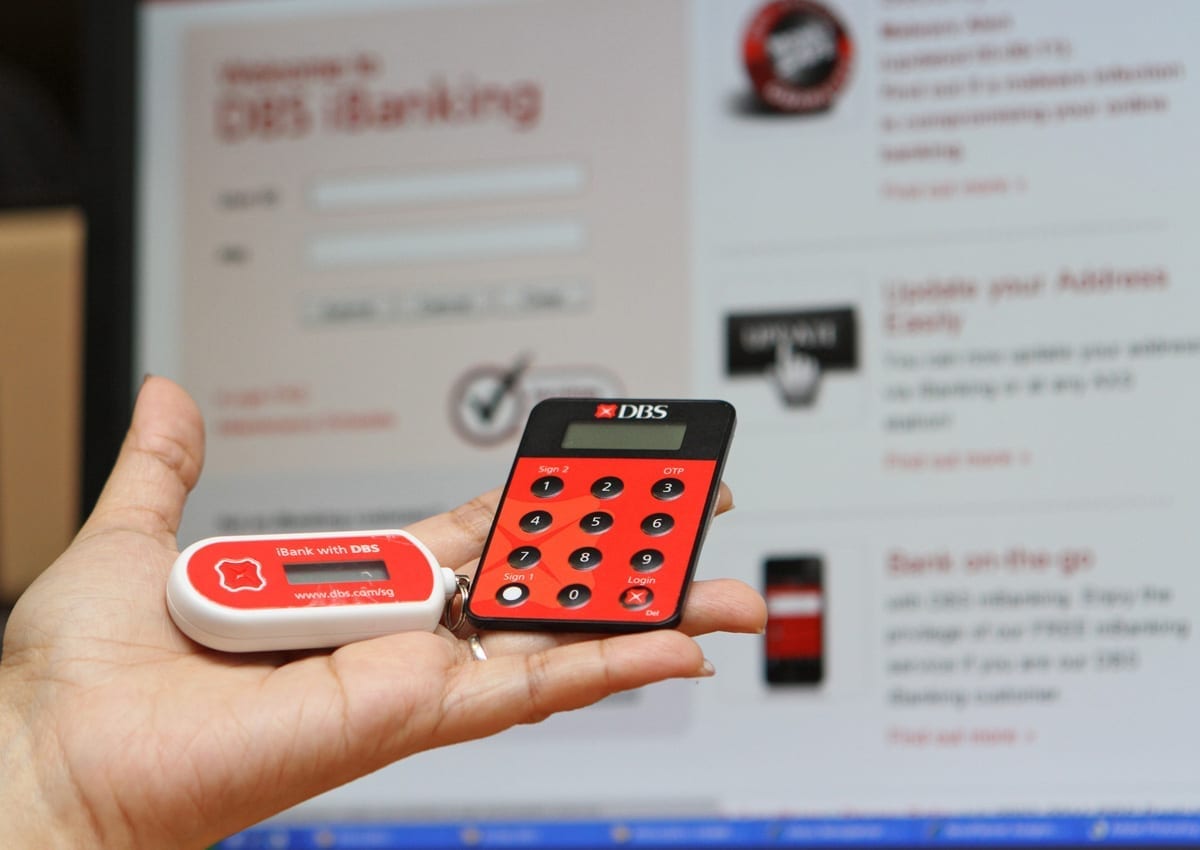
    DBS Bank has launched a new mobile banking feature that eliminates physical tokens for corporate transactions.

    The feature added to DBS IDEAL Mobile uses digital tokens to make banking on the go simpler and more convenient for corporate treasurers and small business owners.

    Available to both Apple and Android users, the bank claims to be the first Asian bank to offer this integrated service on one mobile platform.

    Currently, corporate treasurers often have to carry several security tokens to conduct their business banking, with some having up to six physical tokens with them at any one time.

    Specifically for iPhone users, the digital token utilises the user’s fingerprint to ensure identity confirmation and conduct secure online transactions. Android users will continue to key in their PIN to carry out transactions.

    This new service is available to over 140,000 DBS IDEAL and DBS IDEAL Mobile customers across 10 markets. Over 3 million transactions a month are conducted on DBS IDEAL.

    “As a bank that is shaping the future of banking, we want to provide an easy, more convenient and secure solution to our corporate customers. The new digital token feature on DBS IDEAL Mobile is a great example of how we are leveraging technology to help create a more intuitive and seamless banking experience for them,” DBS Bank head of global transaction services John Laurens said.

  • DBS to offer digibank service in Indonesia

    DBS to offer digibank service in Indonesia

    DBS Bank plans to launch a mobile-only banking service in Indonesia by the end of the year.

    DBS Group chief executive Piyush Gupta told the Sweden-Southeast Asia Business Summit on Wednesday that the bank is targeting Indonesia to capitalise on the young, tech-savvy consumers among its 260 million population.

    “Indonesia is an important market with its size and scale, and the economic reforms taking place in the country,” he said. “There is great potential for business as we see a pickup in the country’s economy under the leadership of President Joko Widodo.”

    DBS’s digibank offering, which includes an e-wallet and a savings account, will be available to customers in addition to its consumer and corporate banking services at its 34 branches in 13 Indonesian cities. DBS opened its first branch in Indonesia – an outlet in Jakarta – in 1989.

    DBS hopes to replicate the success it is seeing in India since it started its digibank service there in April – the first mobile-only banking facility in the sub-continent, said a DBS spokesman.

    The service has attracted more than 250,000 new clients in the first four months of its operation.

    A digibank account can be opened in India with just a 12-digit Aadhaar number, which provides a unique biometric identification for all resident Indian citizens.

    More than a billion Indians have been issued with Aadhaar cards by the government. With over 200 million smartphone users in the country, the market for digibank is huge.

    The service’s e-wallet can be used for making payments, including telephone and electricity bills. Customers can also use a Visa virtual debit card to shop at over 100,000 online merchants.

    “While we continue to invest in growing our existing network in India, we also believe that with the digital revolution, the future of banking will be very different,” said the spokesman.

    “Increasingly, many customers want to be able to do their banking digitally and on the go. A successful digital banking strategy will meet changing customer needs, while enabling us to accelerate our reach in large geographies without the need for a large brick-and-mortar footprint.”

    Indonesian clients will be able to use their biometric national identity card to open digibank accounts.

    DBS said it intends to launch digibank in other markets after its introduction in Indonesia.

  • DBS Indonesia to boost wealth management services

    DBS Indonesia to boost wealth management services

    Private lender Bank DBS Indonesia, a subsidiary of Singapore-based DBS Group Holdings, is seeking up to 38 percent growth in its consumer business revenue this year, primarily driven by the bank’s move to expand its wealth management services.

    DBS Indonesia’s consumer banking group director Wawan Salum said on Monday that wealth management had contributed 48 percent to the bank’s consumer banking revenue.

    “Indonesia, China and India are top priority markets for DBS,” he said in Jakarta.

    Wawan said the bank’s wealth management revenue was also boosted by the growing number of priority customers who had individual savings of more than Rp 500 million ( US$37,979 ).

    He further explained that DBS Indonesia was eyeing a 30 percent growth in its priority customers this year. To reach the target, he said, the bank would expand its digital product lines to respond to customer needs.

    Wawan said DBS Indonesia would also increase the relationship management skills of its officers so they could be more effective in their interactions with customers. “We will also use big data to understand the behaviors and needs of our customers,” he said.

  • Five major banks lined up to support Apple Pay launch in Singapore

    Five major banks lined up to support Apple Pay launch in Singapore

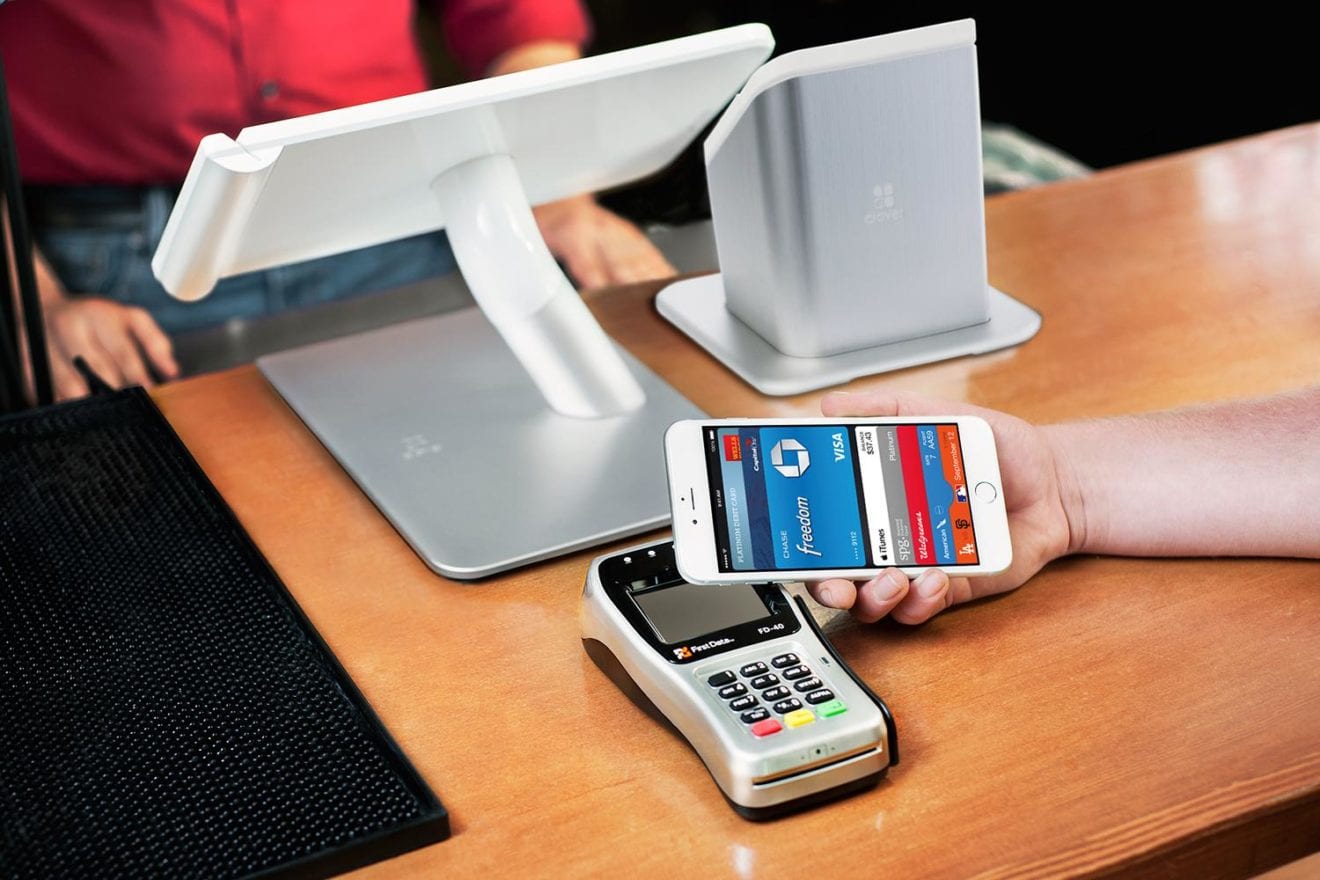
    Five major banks, representing 80% of Visa and MasterCard credit and debit cards issued in Singapore, have signed up to Apple Pay, extending the use of the mobile wallet beyond a limited earlier release for AmEx cardholders.

    MasterCard says it is working with DBS, OCBC, POSB, Standard Chartered and UOB, to enable iPhone and Apple watch users to make purchases in stores equipped with contactless readers.Recent figures from MasterCard indicate that consumers in Singapore are supportive of the idea of adopting contactless payments. Singaporeans are among Asia’s top three adopters of digital wallets and interest has been climbing steadily with one in four likely to use a digital wallet compared to just one in 20 three years ago.

    Apple Pay’s launch comes just a month after Samsung announced plans to roll out its rival mobile wallet with the support of DBS/POSB, OCBC Bank and Standard Chartered. Previously, Apple Pay had only been available for American Express cardholders in Singapore.

  • Singapore’s DBS offers 7% rate on digital bank accounts

    Singapore’s DBS offers 7% rate on digital bank accounts

    Singapore’s DBS Bank aims to be a disruptor in India even as it awaits the RBI’s nod to upgrade its branch to a subsidiary which will have unrestricted access to the country. The bank is offering digital bank accounts with zero balance requirements, 7% interest rate on savings and unlimited access to ATMs. These accounts can be opened by anyone with a smartphone, an Aadhaar card and a PAN card.

    Speaking to TOI, Piyush Gupta, CEO, DBS, said, “We are trying to be a disruptor. There is no question for us that this channel allows us to expand into retail consumer business and provide a different kind of banking, which is a much bigger scale than the typical niche banking done in the past.” The bank has set a deposit target of Rs 50,000 crore in five years and Rs 10,000 crore of retail loans.

    The reason why DBS is going full steam in India even as other multinationals are being cautious on retail is that DBS is primarily an Asian bank. Also, the bank sees India as ideally positioned for this kind of disruption.

    “We are creating the Digibank in India as a global first because the digital infrastructure in India is better than anywhere else. The whole India infrastructure – the JAM (Jan-Dhan, Aadhaar and mobile) trinity – and the India stack is under-appreciated.” The India stack refers to four government initiatives – the biometric authentication, digital records, cashless transactions and digital consents where acceptance can be acknowledged without a ‘wet’ signature.

    A DBS Digibank account can be opened by downloading an app and providing a fingerprint authentication at any one of the 500 designated Cafe Coffee Day outlets across the country. The bank is in talks to have more centres for biometric authentication.

  • DBS taps digital platform to grow retail banking operations

    DBS taps digital platform to grow retail banking operations

    DBS launched a “mobile-only bank” and said it aims to garner 5 million customers and a deposit base of Rs50,000 crore over the next five years

    On Tuesday, DBS launched a “mobile-only bank” and said it aims to garner 5 million customers and a deposit base of Rs.50,000 crore over the next five years. Named digibank, the DBS mobile application will allow individuals to access a wallet at first and then open a savings deposit account with the bank. The balance in the account will earn 7% interest per annum.

    “We are going to focus outside our affluent banking base and we hope to be a mass consumer banker through this product. We hope to get 5 million customers over the next 3-4 years through digibanking,” said Piyush Gupta, chief executive officer at the bank. Currently, DBS Bank has 35,000-45,000 customers in India, according to Surojit Shome, head of India operations for the bank.

    DBS Bank isn’t the only one to board the digital bandwagon. Large Indian banks such as State Bank of India, ICICI Bank Ltd, HDFC Bank Ltd and Bank of Baroda are building digital channels with an aim to garner new customers and serve existing ones better.

    The rush for digital dominance comes even as 11 payments banks are preparing to launch their operations. These banks will have the infrastructure and technology to provide digital banking from day one.

    Among the most popular digital channels is the use of the smartphone for transactions. Transactions on mobile phones in India have surged in recent months owing to large value transactions being concluded on smartphones by corporate clients besides an increase in retail transactions, Mint reported on 28 March. Data from the Reserve Bank of India (RBI) show that on a year-on-year basis, the amount transacted in December 2015 rose more than fourfold to Rs.49,029 crore from the Rs.11,323 crore transacted a year ago.

    India is estimated to have about 220 million smartphone users in 2015 and a February report by networking solutions firm Cisco forecast this would jump to 651 million by 2019.

    Gupta of DBS said the bank’s digital offering stands out because of an inbuilt dynamic security system that takes away the need for one-time authentications and a natural language interface that allows customers to use voice commands to transact.

    Mobile banking products of most banks require the customer to enter a one-time password to conclude any transaction.

    For the initial authentication of a new customer, DBS has tied up with Coffee Day Enterprises Ltd that runs the Cafe Coffee Day outlets. A customer will be required to carry an Aadhaar or a PAN card to a Cafe Coffee Day outlet and, using a biometric system, will be allowed to open an account.

    Meanwhile, DBS Bank will continue to expand its branch network to service corporate clients and small and medium enterprises, Gupta said. The bank has 12 branches in India and has applied to RBI to move to a wholly-owned subsidiary structure. “The application is pending and we have been told it may take 12-18 months to process. We have not received any negative feedback though,” Gupta said. The bank’s Indian assets form only 5% of its total book. Gupta said the bank is hoping for double digit growth in its India balance sheet.

    The bank will leverage its digital platform to build a retail loan book of Rs.10,000 crore over the next five years. “Right now, we are launching digibank mostly on the liabilities side. We will introduce investments and, later, loans, over the next few months,” said Gupta.

    “If you look at some of the global stories, the broad perspective is that a bank starts excelling in certain things when it begins to focus in some areas. Digital-first banks such as some in the US like Atom Bank, they channelize all their energies into one thing as opposed to existing Indian players who will continue to focus on traditional branch banking and in addition give digital services,” said Vivek Belgavi, partner and leader of financial services technology at PwC.

    Belgavi added that new companies would largely focus on untapped segment such as individuals who do not visit a branch as a target for their digital banking.

    “It is a classic disruptor strategy. It will go after segments which are under-served. There is a segment that does not visit branches and because they don’t visit branches they expect a superior experience; if this is not catered to, this is what the disruptors will focus on,” he said.


  • DBS introduces a mobile-only bank in India

    DBS introduces a mobile-only bank in India

    Singapore’s DBS Bank has launched what it says is India’s first mobile-only bank. Dubbed digibank, the mobile app functions as an entirely paperless, signatureless and branchless bank for India’s residents.

    The initiative aims to break away from conventional banking norms such as form filling and other cumbersome processes.

    Account-opening can be done easily and effortlessly at an extensive network of outlets run by DBS’ partners, including over 500 cafes across India. No paperwork will be involved and instead, customer authentication is done purely using the Aadhaar card, a biometrics-enabled ID which has been issued to over 1 billion Indians.

    Other digibank features include 24/7 customer service provided by a real-time, AI-driven virtual assistant, which understands natural language and is incorporated with the ability to anticipate and answer some 10,000 customer questions.

    This AI feature was made possible due to DBS’s partnership with US-based fintech Kasisto. The latter is a spin-off from SRI International which created the technology behind Apple’s Siri.

    In-built into digibank is a budget optimizer that helps customers do their budgeting, track expenses and analyze purchasing trends. The function is equipped to understand customer behavior and preferences, synthesize data, and provide recommendations.

    The budget optimizer also studies customers’ spending patterns and prompts them if they are overspending. Conversely, if a customer’s savings regularly exceed his or her expenditure, digibank will provide suggestions on how to make one’s money work harder.

    Dynamic inbuilt security, which is safer than OTP, is employed in digibank. Most bank customers are used to receiving One-Time Passwords (OTPs) via SMS, and then typing codes into pages to authorize their mobile banking transactions. digibank has an embedded soft token security, avoiding the need to wait for SMSs to arrive and providing even stronger security for transaction authorization.

    The new offering also gives account-holders earn 7% interest from the first rupee, one of the highest in the market with no minimum balance requirements. Customers receive a physical debit card which can be used across all Visa-enabled online and POS transactions, as well as overseas. Free cash withdrawals will be available at more than 200,000 ATMs nationwide.

    Said DBS CEO Piyush Gupta, “India’s banking system is at the cusp of massive change, and as a bank committed to shaping the future of banking, we are excited to roll out a revolutionary, mobile-only bank. With digital, we are able to create a completely different customer experience. What’s more, digibank’s efficiencies and lower costs enable us to pass on significant benefits to customers in the form of greater customer value.”

  • How DBS Is Fronting And Doubling Down On The Push For Entrepreneurship In Singapore

    How DBS Is Fronting And Doubling Down On The Push For Entrepreneurship In Singapore

    We’ve all heard of DBS — after all, it’s the largest bank in Singapore and Southeast Asia. And, it has 280 branches all over the rest of Asia, including China, Hong Kong, Taiwan, India and Indonesia. Other than its extensive coverage, the bank recently launched a set of new initiatives to support entrepreneurs and the startup community here in Singapore.

    DBS Bay Area Series

    ernestine fu

    Venture Capitalist and DBS Advisor Ernestine Fu. Photo Credit: DBS.

    DBS kicked off their initiatives in late 2014 with a visit from Ernestine Fu, a venture capitalist and partner at Alsop Louie Partners in Silicon Valley. She has advised DBS on venture debt and their entrepreneurship programs. With her presence, DBS launched its inaugural entrepreneurship event and kicked off its prestigious “Bay Area Series” event.

    For those unfamiliar with Ernestine, she has been heralded as Silicon Valley’s youngest venture capitalist. She joined VC firm Alsop Louie Partners as a 20-year-old associate in March 2011 and has been making waves as a young VC in the bay area since.
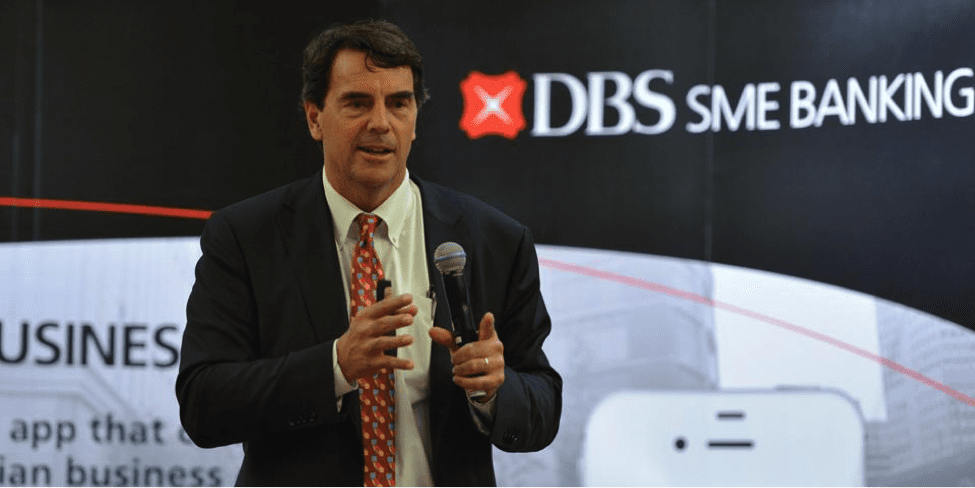
    tim draper

    Third-Generation Venture Capitalist Tim Draper. Photo Credit: DBS.

    Tim Draper, founder and managing director at Draper Fisher Jurvetson (DFJ), joined the Bay Area Series in January of 2015. Tim Draper is a third-generation venture capitalist, and is well known for being one of the early investors in Skype, Baidu, Tesla, Theranos, Hotmail, Twitch.tv hundred of others. His grandfather co-founded one of the first venture capital firms in Silicon Valley. He shared with local entrepreneurs his visions and insights on venture investing when he was in Singapore too.

    The Bay Area Series provide an excellent opportunity for local investors and entrepreneurs to hear and learn from successful individuals from Silicon Valley.

    Disrupt @ The Bay Series
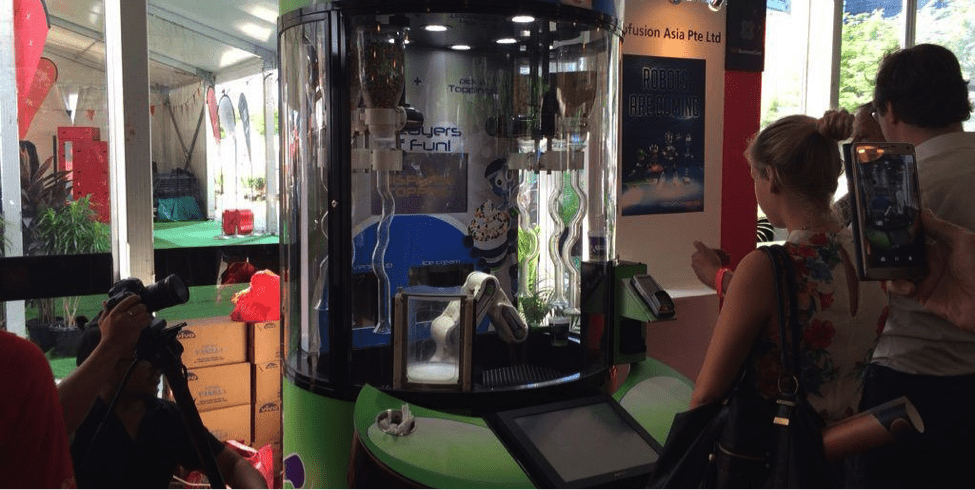
    disrupt bay

    Food & Beverage Event for Disrupt @ The Bay. Photo Credit: DBS.

    DBS also launched a series of events called “Disrupt @ The Bay” in 2015. The goal of these events is to foster relationships and synergies among local entrepreneurs and investors. We need to re-think how we “disrupt” current industry norms, and create exponential growth through new technologies and business ideas. Some of the events organized last year include the F&B Disrupt @ The Bay, Future of Retail Disrupt @ The Bay, as well as Future of Automotive Disrupt @ The Bay.

    future of retail

    Future of Retail Event for Disrupt @ The Bay. Photo Credit: DBS.

    disrupt automotive

    Future of Automotive Event for Disrupt @ The Bay. Photo Credit: DBS.

    The Disrupt @ The Bay events have attracted multiple large corporations, small businesses and startups, and venture capital firms. These organizations include: StarHub, StoreHub, Golden Gate Ventures, iChef, The French Cellar, Reimagine Food, The Oddle Company, Mobikon Technologies Pte Ltd, and Robofusion Asia Pte Ltd.

    The Disrupt @ The Bay Series is a good platform for like-minded business owners, investors, and entrepreneurs to connect. They can share information, exchange ideas, and form new partnerships.

    DBS Venture Debt
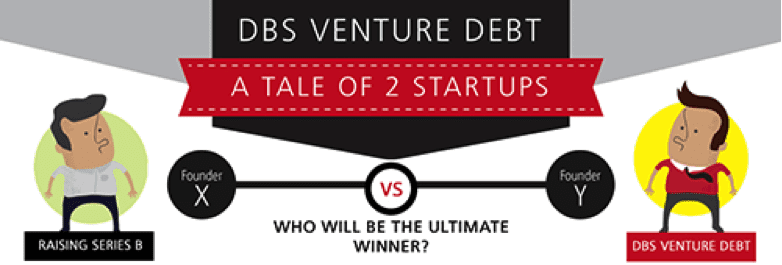
    venture debt

    DBS and Venture Debt. Image Credit: DBS.

    As part of these initiatives, DBS also introduced venture debt financing and is the first bank is Southeast Asia to do so. Venture debt is a way for the bank to financial support tech startups in the growth stage.

    Currently, venture debt applicants need to be Singapore-based, with primary operations in Singapore. The startup should have also raised at minimum of $1 million SGD in Series A funding.
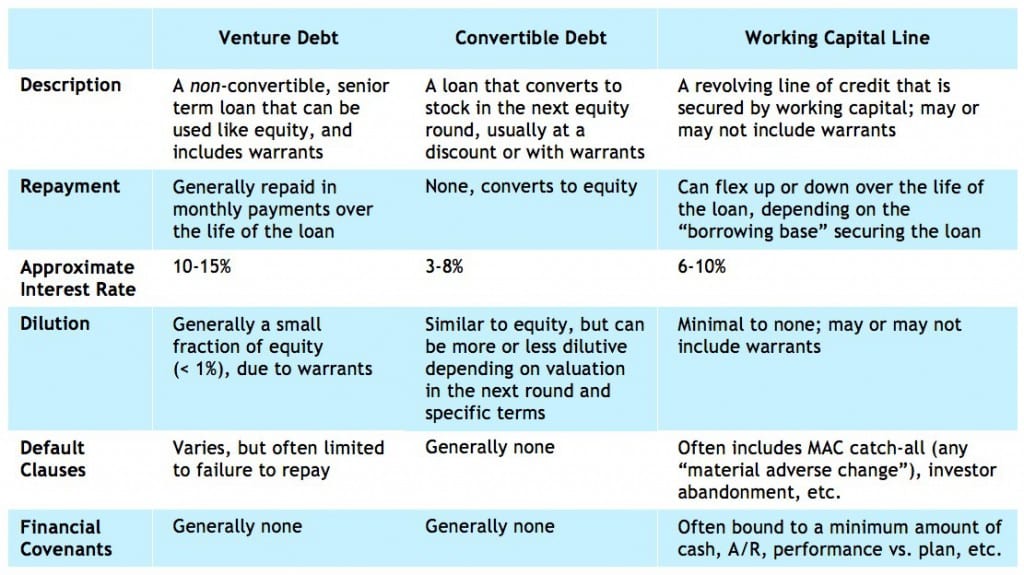
    Image credit: Kauffman FellowsImage credit: Kauffman Fellows

    This initiative provides a unique later stage funding option to encourage the growth of technology startups in Singapore.

    DBS Mobile App

    dbs business class

    Image Credit: DBS.

    DBS also launched a mobile app called “DBS BusinessClass” to provide a networking platform for local entrepreneurs, investors, and advisors in Asia. Available on both iOS and Android, members can post questions, gain advice on their businesses, and join online discussions on startups topics.

    Since launching a year ago, the app grew to over 15,000 members and over 300 discussion topics.

    Overall, these new initiatives by DBS show great promise. The bank received the Asian Banker’s Best Social Media Engagement Project Award, along with multiple other awards. DBS has taken a comprehensive approach to positively impacting the local entrepreneurship ecosystem in Singapore.

    We are optimistic that DBS has a strong platform to expand and connect entrepreneurs and investors across the rest of Asia.

     

  • HSBC to locally incorporate its Singapore retail operations in May

    HSBC to locally incorporate its Singapore retail operations in May

    In order to follow new MAS regulations.

    HSBC will transfer its local retail banking and wealth management business, which is currently under the HSBC Singapore Branch, to a locally incorporated subsidiary, HSBC Bank (Singapore) Limited.

    The transfer of HSBC’s retail banking and wealth management business is expected to take effect on 9 May 2016, subject to the receipt of regulatory and court approvals.

    The move comes after Monetary Authority of Singapore tagged HSBC as one of seven domestic systemically important banks (D-SIBS). Under a new regulatory framework announced in April 2015, all D-SIBS should locally incorporate their retail operations to allow the MAS to set targeted and appropriate policy measures specifically for the systemically important banks.

    The other D-SIBS are DBS, OCBC, UOB, Citibank, Malayan Banking and Standard Chartered.

  • S-Reits are safe havens amid uncertainty

    S-Reits are safe havens amid uncertainty

    Amid the economic uncertainty caused by falling oil prices and slowing growth in China, Singapore-listed real estate investment trusts (S-Reits) are safe havens, DBS Group Research said yesterday.

    S-Reits have outperformed the local benchmark Straits Times Index and real estate developers so far this year, DBS analysts Derek Tan and Mervin Song wrote in a report.

    Like many sectors, S-Reits have fallen in value, but not as sharply as most others. S-Reit unit prices are down by about 3 per cent overall since the start of the year, while the STI has plunged by a much more dramatic 11 per cent.

    These trusts are likely to continue putting in a “firm” performance in the near term, the analysts wrote, especially as increasing expectations of a delay in further interest rate hikes by the United States Federal Reserve will have a positive impact on share prices in general.

    The Fed lifted interest rates in December for the first time since 2006, and the DBS forecasters expect the central bank to raise rates four times throughout this year.

    But the Fed has indicated that it has grown cautious after its December move, as the slump in oil prices has made it harder for it to meet its inflation targets, implying that the next rate hike could be delayed.

    The longer the Fed takes to raise rates, the better for Reits as it will keep their borrowing costs low.

    “While higher interest rates are a potential risk in the medium term, we remain comforted by S-Reits’ conservative capital strategies… which will mitigate the impact of higher refinancing costs when it occurs,” the DBS analysts said.

    On average, locally listed Reits have a gearing of 34 per cent, which is “manageable”, they noted.

    S-Reits are trading at attractive valuations, which make it a good time for investors to jump in and lock in some yields, they added, saying that S-Reits are trading at 0.9 time price to book and offer investors a yield of 7.1 per cent.

    “We believe current valuations are attractive re-entry levels and believe that large caps are likely to benefit as investors turn yield-hungry in a tepid growth environment,” they said.

    Their favourite S-Reits are “those with the opportunity to surprise on the upside through acquisitions or portfolio-specific catalysts”, the DBS analysts added.

    Their top picks are Ascendas Reit, Mapletree Greater China Commercial Trust, Mapletree Commercial Trust, Frasers Centrepoint Trust and CapitaLand Retail China Trust.