
Retail News CRM

Tag: DBS

  • DBS Indonesia upbeat, eyes higher loan growth in 2016

    DBS Indonesia upbeat, eyes higher loan growth in 2016

    Private lender Bank DBS Indonesia, part of Singapore’s DBS Group Holdings, expects higher loan growth this year compared to 2015 as it predicts an improvement in the country’s economy.

    DBS Indonesia president director Paulus Sutisna said the bank projected that its loans would grow by 12 percent in 2016, higher than the 10 percent booked as of last year.

    According to its financial report, the bank booked loans of Rp 43.4 trillion (US$3.11 billion) as of September, an increase of 9.87 percent year-on-year (yoy) from Rp 39.5 trillion in the same period of 2015.

    “We are more optimistic about this year because the government is holding early auctions and procurements for its spending on infrastructure projects. Such acceleration will help the country’s economic growth,” Paulus said after an event on Wednesday.

    Paulus said acceleration in government spending would boost the real sector, which in turn would increase demand for bank loans, adding that “our growth will depend on the performance of our clients”.

    Given Indonesia’s large population the bank will focus on sectors related to the mass segment such as retail and consumer goods and some types of manufacturing and infrastructure-supporting industries.

    “We’ll still focus on some commodities, such as palm oil, as well as automotive, chemical and pharmaceutical industries,” he said.

    Paulus said the bank was also planning to enlarge its consumer and retail banking as well as small and medium enterprise (SME) portfolios as it still depended mainly on the corporate segment.

    “Corporate banking is dominant now as our retail business is still under 20 percent of our total lending. We hope to divide evenly our consumer and retail banking, SME and corporate portfolios by one-third each, perhaps in the next five to seven years,” he said.

    The government has forecast that Indonesia’s economic growth will reach 5.3 percent in 2016. The country’s GDP growth stood at 4.73 percent for July to September, a slight increase from the 4.67 percent growth posted in the second quarter and 4.72 percent in the first three months of the year.

    Despite the optimism, Paulus said the bank would remain cautious about various challenges in the global economy that still lingered, such as falls in commodity prices and currency volatility, as they would have an impact on Indonesia.

    Challenges in the global and domestic economy also affected DBS Indonesia’s income as it saw losses of Rp 178.9 billion as of September 2015, compared to net profits of Rp 366 billion in the same period last year. However, the bank’s unaudited financial report in November shows that it already started to post net profits of Rp 23.79 billion.

    Paulus said the bank would also invest in internet banking, which was essential to support a bigger consumer portfolio in the future, especially in fee-based income.

    As part of its efforts to grow fee-based income, the bank has enhanced its existing partnership with life insurer Asuransi Jiwa Manulife Indonesia, part of Canada’s Manulife Financial, through the launch of a new single-premium, unit-linked product MiWealth Protection.

    The new product is designed for DBS customers who wish to grow their wealth in order to be financially secure and enjoy their life in retirement. DBS Indonesia consumer banking group director Wawan Salum said the bank expected 20 percent growth in the number of wealth-management customers this year.
  • Identifying Asia’s regional bank champions

    Identifying Asia’s regional bank champions

    Bank of China is seen as the strongest challenger for Asian leadership

    A swelling population, exponential economic growth and broad financial development are transforming Asia ex-Japan into a global finance hub.

    It is the opportunity to service retail and wealthy clients in Asia that has fired banks’ ambitions to extend their regional networks and boost their distribution power.

    But the odds are stacked against them. They have nowhere near the scale of the international players Citi, HSBC and Standard Chartered. This trio has resources, customer networks and relationships acquired from a century of operations in Asia.

    Asian banks, on the other hand, face constraints in their ability to expand cross-border, including fierce domestic competition and national protectionism.

    Nevertheless, they have become increasingly vocal about their regional ambitions, centred around expanding their wealth management businesses.

    Our leading contenders come from China, Malaysia and Singapore. Hong Kong banks appear content to focus on Greater China, where they will seek to be facilitators of trade flows rather than competitors in regional distribution.

    “From a geographical standpoint, the footprint of the Singaporean banks is wider,” said Michael Wu, senior equity analyst at Morningstar. “They might be in a better position to access Asia.”

    Bank of China is seen as the strongest challenger for Asian leadership. It has the balance sheet and is willing to suffer in the short term to expand, notes CLSA.

    BOC has a network of 11,514 offices, although 10,693 are onshore. Overseas, it has 628 offices in Hong Kong, Macau, Taiwan and in 37 other countries.

    It was first to offer private banking onshore in 2007 and now manages Rmb720 billion ($116 billion) for 74,000 private banking customers, with more than 7,000 wealth management centres and 34 private banking hubs. It has private banking operations in Singapore and Hong Kong and has ambitions to grow in Asia, including Australia, where it opened a branch in 2010.

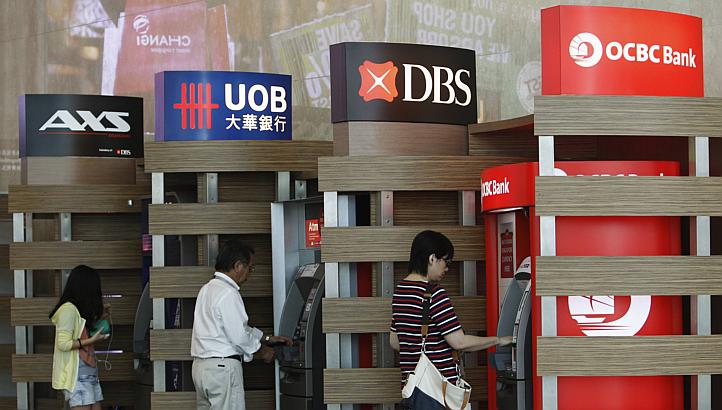
    Singapore’s largest lender, DBS, has 280 branches across 15 markets in Asia. But Singapore and Hong Kong remain its major markets, despite its attempts for regional leadership. As CLSA points out, its operations in the growth markets of China, India and Indonesia have remained sub-scale.

    DBS is building wealth management/private banking operations. Its private banking business was bolstered by its $220 billion acquisition of Société Générale’s private banking business in Asia last October, boosting its AUM 22% to S$133 billion ($97.4 billion) as of December 2014. DBS’s total wealth management AUM stood at S$141 billion and its private bank AUM at S$95 billion.

    Maybank was a late-comer to private banking, but has been building a solid Asean network. Its regional operation only started 18 months ago, with Singapore as its hub. But it has been hiring aggressively and expanding its proposition, including launching a discretionary portfolio management service.

    Steven Seow, Asia head of wealth management at Mercer, pointed out that Maybank has succeeded in converting long-time Asian corporate banking entrepreneurs to its wealth management business. In terms of private banking assets, Maybank has S$6 billion in overall AUM, having added S$2 billion in new assets over the past year.

    Historically OCBC has focused on Southeast Asia. It has a strong position in Singapore and is one of the largest foreign banks in Malaysia, providing conventional and Islamic finance. Last year it acquired Wing Hang Bank in Hong Kong for $5 billion.

    That increased OCBC’s branches in Greater China from 25 to 120 and deepened its operations in the Pearl River Delta, although it paid a high premium given Wing Hang’s operations in Hong Kong and China were marginal.

    In private banking and wealth management, OCBC’s 2009 acquisition of ING Private Banking (renamed Bank of Singapore) for $1.46 billion has given it the scale to compete with DBS and global banks. The acquisition trebled its private banking AUM to $23 billion.

    As of March this year that AUM had since doubled to $51 billion. It enjoyed 15% year-on-year growth in wealth management income in 2014.

    Among Singaporean banks, UOB’s focus is on Southeast Asia, with universal banking operations in Malaysia, Thailand and Indonesia. But outside of Singapore its strength in Malaysia – it has the largest foreign bank network in the country with 45 branches – is not replicated in Thailand and Indonesia.

    Without the help of an international acquisition, UOB has invested in building its wealth management and private banking capabilities out of Singapore.

    It saw the combined AUM of wealth management and private banking grow 67% to S$80 billion in the four years to 2014, during which time the profit contribution of wealth management doubled to 47%.

    But while it has plans to offer private banking outside of Singapore, its current proposition is acknowledged as behind city-state peers DBS and OCBC.

    The full article appears in the July 2015 edition of AsianInvestor magazine