Retail News CRM

Tag: DBS

  • DBS Partners Sinosure for BRI Projects

    DBS Partners Sinosure for BRI Projects

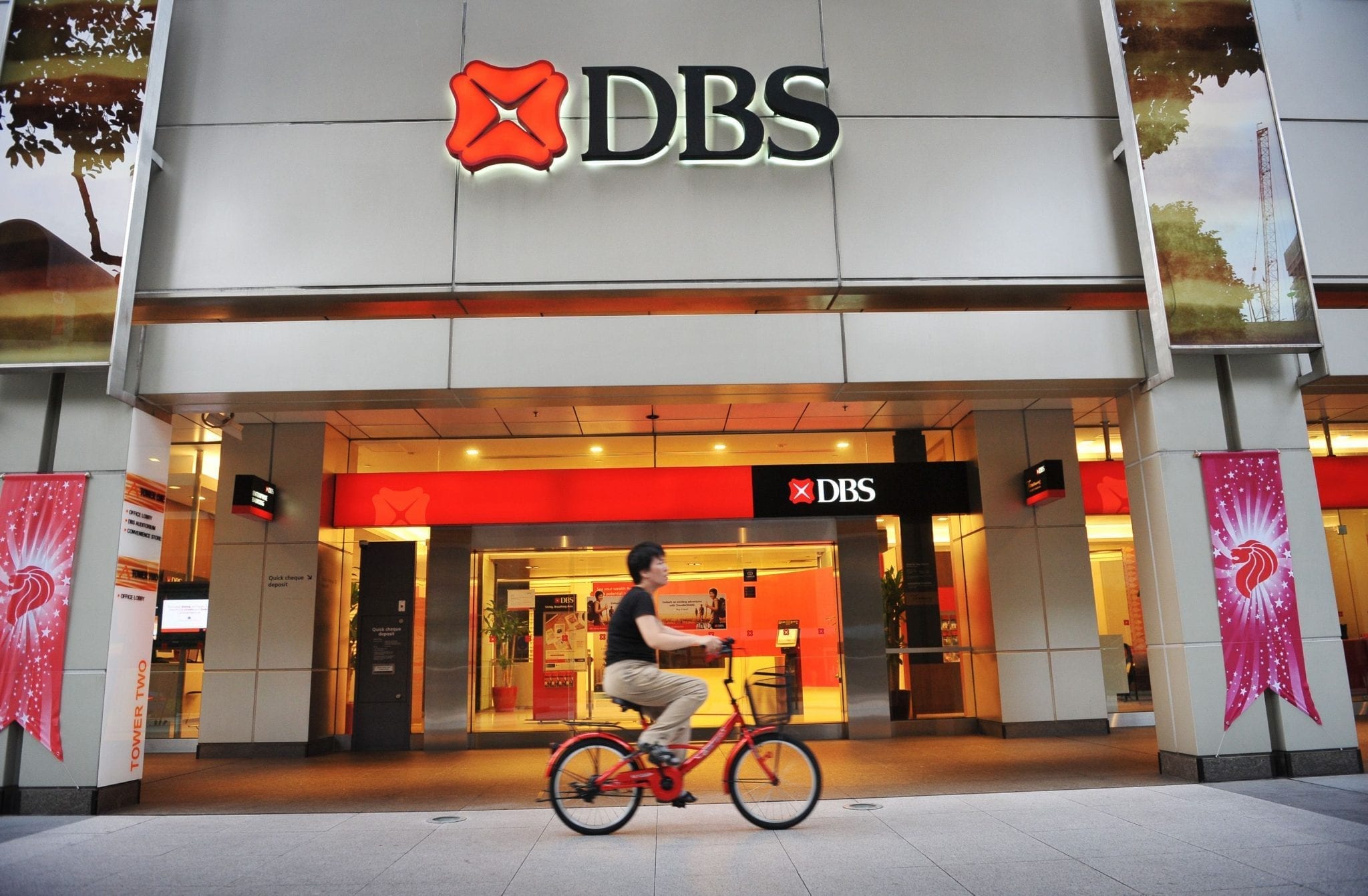
    DBS Group has signed a cooperation agreement with China Export & Credit Insurance Corporation, adding to the list of banks that are partnering Sinosure for projects under the Belt Road Initiative.

    DBS Group Holdings on Monday announced that it has partnered with Sinosure, the only state-funded Export Credit Agency conducting export credit insurance business in the People’s Republic of China. It joins OCBC Bank, who last week announced a similar partnership agreement.

    «Through signing the cooperation agreement with Sinosure, we will strengthen our partnership and increase the depth of our business with mainland China by facilitating project finance, and investment and trade opportunities especially with partners in ASEAN. We look forward to helping companies capitalize on the numerous business opportunities offered under BRI,» said DBS Singapore Country Head Shee Tse Koon.

    Under the cooperation agreement, DBS and Sinosure will collaborate on projects under the Belt and Road Initiative, especially those from ASEAN, by leveraging each other’s strengths in trade and investments and in-market experience.

    Sinosure will provide credit insurance for DBS’ mid and long-term financing activities for projects in the fields of marine engineering, infrastructure construction, energy, chemicals and textiles, aerospace, as well as services and technology.

  • DBS and Singapore Airlines form digital partnership

    DBS and Singapore Airlines form digital partnership

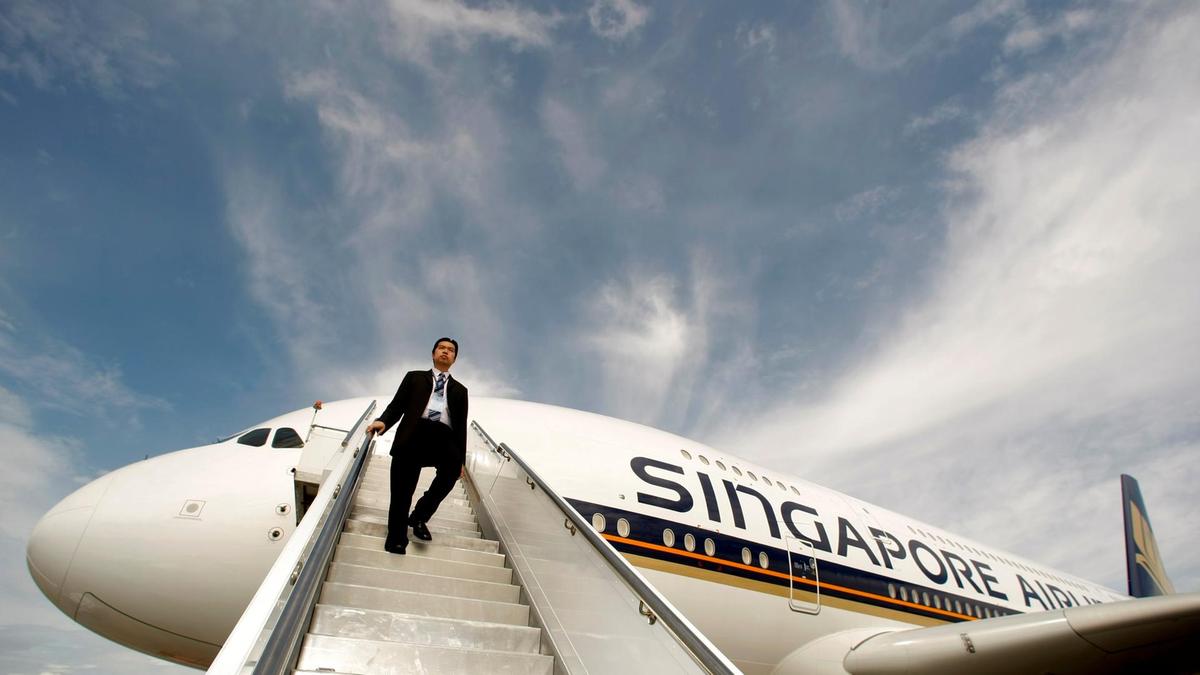
    DBS Bank and Singapore Airlines (SIA) have today come together to sign a memorandum of understanding (MOU) to enhance digital capabilities across various digital platforms, to enable a seamless banking and travel customer experience for travellers.

    Under the MOU, the two companies will introduce flight booking and merchandising capabilities on DBS’ platforms, a DBS-SIA Rewards Programme on KrisPay1, and the expansion of payment options for SIA customers using PayNow, via Application Programming Interface (API) technology. The MOU is in line with SIA’s move to enhance digital capabilities company-wide, and DBS’ vision to make payments simple and hassle-free for customers through building integrated digital ecosystems.

    “We are excited to be teaming up with DBS, which has been twice globally recognised as the World’s Best Digital Bank. The partnership will provide great benefits to both our companies, given our shared aim to be a digital leader in our respective industries, with enhanced customer benefits through new flight booking, merchandising and reward programme ties,” said Singapore Airlines Executive Vice President Commercial, Mr Mak Swee Wah.

    As the first bank partner that SIA will connect via API for flight ticket sales and KrisShop, DBS customers can now look forward to booking their holidays on the soon-to-be-launched DBS Travel Marketplace which will allow one to purchase flights, book hotels and buy travel insurance on a single integrated platform.

    “We are thrilled to partner Singapore Airlines, winner of multiple best airline awards, to create an inclusive digital travel ecosystem for our customers,” said Mr Shee Tse Koon, DBS Singapore Country Manager. “Singaporeans are among the most well-travelled in the world with over 10.3 million overseas trips made in 2018 alone. Through this partnership, we would be able to elevate the consumer travel experience by offering extensive travel and retail options for travellers to choose from and customise their journeys right at the start.”

    Facilitated by API technology, the collaboration is also expected to cover the following areas:

    DBS-SIA Rewards Programme, where KrisFlyer members can instantly convert DBS points into KrisPay miles via the KrisPay app. Miles can subsequently be used for retail purchases at KrisPay partners island-wide. Alternatively, the KrisPay miles can be converted into KrisFlyer miles instantly within seven days of accrual. DBS is SIA’s first conversion partner on KrisPay.

    By including PayNow as a payment mode, SIA can offer its passengers the flexibility and convenience to pay for their flights from their bank accounts using PayNow, and issue tickets instantly once the payment is done. This is made possible by DBS IDEAL RAPID, an enhanced solution that offers Instant Credit Confirmation, as well as consolidated daily credit and reporting. The comprehensive solution also includes other value-added options like automated refunds; for instance, if a trip is cancelled or changed, SIA can refund the outstanding amount back to the passenger’s bank account.

    The initiatives will be gradually rolled out this year, beginning with the DBS Travel Marketplace, with the full suite of updates to be made available by end of 2019.

  • Legacy Banks Must Become Agile, Says Citi

    Legacy Banks Must Become Agile, Says Citi

    New entrants and increased competition brought about by challenger banks could result in revenue losses of up to 30 percent among legacy banks over the next 10 years. While digitalization can lower costs for incumbent banks by 30 to 50 percent, new competition and greater transparency in the banking market, prompted by the emergence of challenger banks driven by fintech startups, are likely to lower revenues by 10 to 30 percent in the next decade, according to the report “Bank X: The New New Banks” published by Citi on Thursday.

    As legacy banks recognize the threat that new entrants into banking are posing to revenue and customers, they need to reinvent themselves and reimagine banking. This involves legacy banks partnering with technology companies to create effective joint ventures as well as moving into more disruptive technology and business models to transform themselves into digital competitors, the report said.

    If banks successfully transform digitally, their ROEs will rise from 8 percent in Europe and 16 percent in the U.S. to 15 percent and 24 percent respectively in a bullish scenario, and 5 percent and 10 percent respectively in a bearish scenario, the report noted.

    Bank X

    Built by new entrants, challenger banks designed around new digital technologies, leveraging data insights via agile technology stacks to offer customers better personalization and fully digital banking experiences. As they offer their services remotely via online or mobile banking, challenger banks tend to be quicker at incorporating new products or processes into their platforms and help easily connect with third-party products, ultimately offering more choices to the end-user.

    By creating their own Bank X, we believe legacy banks can transform themselves from slow-moving caterpillars to agile butterflies, Ronit Ghose, Citi Global Head of Bank Research, said.

    The report noted that while creating a new digital-only bank can help incumbent banks meet an evolving set of customer expectations quickly and effectively, setting up an independent challenger bank needs to be differentiated from digital transformations and core banking overhauls that they undertake. This is because creating their own Bank X requires independent application programming interfaces (APIs) and technology stacks, which is a significant departure from the operating model of incumbent banks.

    Need for Regulation in Asia

    Apart from the lower number of challenger banks in Asia compared to the U.K. and U.S., Citi noted that challenger banks in Asia are largely offshoots of big tech, telcoms, and banks. For example, WeBank, MYbank, and Kakao Bank are all backed by tech firms, KBank and Jibun Bank are backed by telcoms, while DBS has made progress in Indonesia and India with digibank, its own challenger bank.

    While Asia has several challenger banks originating from startups aiming to disrupt the financial system, Neat in Hong Kong or Paytm in India, they are exceptions. This is a result of the limited regulatory framework for challengers in Asia, with the emerging exception of Hong Kong, and the presence of large tech companies, particularly in China.

    Conversely, challenger bank activity is vibrant in the U.K. and Europe as a result of progressive regulations enacted to promote competition and break up the banking monopoly, the report said.

  • DBS Poaches Wealth Planning Head from Bank of Singapore

    DBS Poaches Wealth Planning Head from Bank of Singapore

    His key responsibilities include driving the expansion of the bank’s wealth planning, family office and insurance offerings, and providing holistic solutions and advisory for high net worth families.

    DBS Bank on Friday has appointed Lee Woon Shiu as Head of Wealth Planning, Family Office and Insurance Solutions at its private bank, it said in a press release on Friday.

    Lee is an industry veteran with more than 20 years’ of experience in advising numerous ultra-high net worth families in Asia-Pacific on wealth planning as well as the establishment and implementation of family governance and philanthropy strategies. He joins DBS from Bank of Singapore, the private banking arm of OCBC Bank, where he has worked since 2004. Most recently, he held the position of Head of Wealth Planning, Trust and Insurance.

    «With Asia at the cusp of a significant intergenerational wealth transfer, we are committed to being our clients’ partner of choice as we help to grow, manage and protect their family’s assets and legacy over time,» Sim S. Lim, Group Head of Consumer Banking & Wealth Management, DBS Bank, said.

    Outside the office, Lee is an adjunct professor at Nanyang Technological University’s Wealth Management Institute (WMI), and has been appointed Expert Panel Member of WMI to provide guidance to the institute and its faculty in developing new IBF standards and curriculum for wealth planning. He is also an Advocate & Solicitor of Singapore, a Solicitor of England & Wales and an accredited Trust & Estate Practitioner under the International Society of Trust and Estate Practitioners.

  • DBS Extends Support for Social Enterprises

    DBS Extends Support for Social Enterprises

    DBS said it is extending support for social enterprises via its Social Enterprise(SE) Support Programme on Tuesday specifically addressing their top three priorities. These include: improving their business model to achieve financial sustainability; sourcing for funding and; customer acquisition.

    «Social enterprises have big ambitions to make a positive impact in their community, and very often they struggle with limited resources. We want to support these social enterprises in their journey to create greater social impact,» said Joyce Tee, DBS’ group head of SME banking.

    Started A Decade Ago

    DBS pioneered the social enterprise banking package 10 years ago, but more than half of the social enterprises surveyed by the Singapore Centre for Social Enterprise said they lacked access to financial support.

    As such, DBS will continue to provide SEs access to virtually free banking services through its DBS Social Enterprise Package. With this package, SEs can open an account with a zero-minimum balance and enjoy unsecured loans at preferential rates.

    Three pillars

    The DBS Social Enterprise Support Programme has three pillars – mentoring, training and financing. Under the program, SEs will also receive a relationship managed account traditionally reserved for larger corporate customers. The programme will jointly be administered by the DBS SME Banking team and the DBS Foundation.

    To start, DBS will mentor the 12 social enterprises DBS Foundation awarded in its 2018 Social Enterprise Grant Programme. Over 28 senior SME relationship managers have committed at least of 8 hours a month to mentor social enterprises in their specialised industries. These industries include retail, F&B and healthcare.

  • DBS shares shoot past S$30 on 21% surge in Q1 earnings

    DBS shares shoot past S$30 on 21% surge in Q1 earnings

    DBS shares crossed S$30 for the first time after it sparked a surge in bank stocks on Monday with sparkling Q1 results. South-east Asia’s biggest bank group announced before market hours that earnings for the first quarter rose 21 per cent to S$1.5 billion as it benefited from higher interest rates and loans growth as well as a property sale gain in Hong Kong.

    The first of the three local banks to report Q1 results, DBS exceeded expectations. Analysts polled by Bloomberg had forecast S$1.4 billion in net profit for the three months ended March 31. The stock surged 2.8 per cent to close at S$30.84.

    Chief executive Piyush Gupta, speaking at the bank’s results briefing, said he expects “a fairly strong year for DBS” as the global growth momentum is still robust and “the opportunities that we see are continuing to stay for us.”

    Loans expanded 13 per cent, or S$39 billion in constant-currency terms to S$328 billion from growth across trade, corporate and consumer loans, including S$9 billion from the consolidation of the retail and wealth management business of ANZ.

    Income and loans growth from small and medium enterprises (SME) has been strong but it was slow for the bank’s large corporate customers, he said.

    Corporate income in Q1 was flat while SME income rose 9 per cent.

    Full-year loan growth guidance maintained at 8 per cent, said Mr Gupta.

    Net interest margin (NIM) – defined as difference between interest income generated and the amount of interest paid to its lenders including depositors – rose nine basis points from a year ago to 1.83 per cent from higher Singapore dollar as well as US and Hong Kong dollar interest rates.

    DBS is on track for full year NIM of at least 1.85 per cent and may even exceed that by one to 2 basis points if there are three more US Federal Reserve rate hikes and there is pass through to local Sibor/SOR rates, said Mr Gupta. The 3-month Sibor or Singapore interbank offered rate which is the benchmark for housing loans has risen to 1.5 per cent from 1 per cent last June. Three-month SOR or swap offer rate – used to price commercial loans is even higher, at 1.6 per cent from last June’s low of 0.6 per cent.

    Mr Gupta said he wouldn’t be surprised if there are even four rate hikes by the US Fed this year.

    Net fee and commission income rose 12 per cent to S$744 million, led by higher bancassurance and unit trust sales. Card fees rose from higher credit card and debit card transactions as well as the consolidation of the retail and wealth management business acquired from ANZ.

    Consumer and wealth management income rose 17 per cent to S$1.4 billion. Wealth management income went up a strong 28 per cent while retail was up 8 per cent. Assets under management gained 22 per cent to S$208 billion, with S$22 billion from ANZ.

    Home loan market share remains at 31 per cent and SGD savings market share is 52 per cent. New home loan sales was S$2.5 billion in Q1.

    Other non-interest income swelled 25 per cent to S$488 million. There was a S$86 million gain from the sale of a Hong Kong property. Net trading income was also higher, partially offset by a fall in net income from investment securities.

    Expenses increased 12 per cent to S$1.4 billion. Excluding the consolidation of ANZ and a non-recurring item, underlying expenses were 6 per cent higher. Non performing assets (NPA) fell 4 per cent from the previous quarter while the non performing loan (NPL) rate eased to 1.6 per cent from 1.7 per cent. NPL ratio was 1.4 per cent in Q1 2017.

    Mr Gupta said asset quality is “looking very good” with new NPA formation of S$195 million at 4-year low. Return on equity (ROE) was 13.1 per cent, the highest in a decade. ROE was 11.1 per cent a year ago. Mr Gupta said he expects full year ROE to be at 12.5 per cent.

    Along with DBS, UOB, which is announcing its results on Thursday, rose S$0.70, or 2.38 per cent, to S$30.14, while OCBC went up S$0.15, or 1.1 per cent to S$13.80.
  • DBS launches Electricity Marketplace

    DBS launches Electricity Marketplace

    DBS announced the launch of the DBS Electricity Marketplace which will allow all households in Jurong (residents with postal code of 60, 61, 62, 63 and 64) to seamlessly switch to other retailers with the liberalisation of the retail electricity market in Singapore.

    Around 108,000 households in Jurong will stand to benefit in this pilot phase.

    As a start, DBS is working with two electricity retailers – iSwitch and Keppel Electric. During the pilot phase, all households in Jurong can search for various price plans that best suit their electricity needs on the DBS Electricity Marketplace. For DBS/POSB customers, they can apply directly with just a few simple clicks via DBS/POSB digibank and choose their preferred payment options. Once the switch is done, customers can look forward to their selected electricity plans provided by their new electricity retailer, without any service disruption.

    Said Jeremy Soo, DBS Head of Consumer Banking Group (Singapore), “DBS Electricity Marketplace exemplifies how we are reimagining banking, using digital technology and innovation to make life simpler for our customers. Through our partnerships with alternative electricity retailers, we want to enable our customers to enjoy savings on their bills easily. Our insights also indicate that consumers want a fuss-free process to sign up for other electricity retailers, and we have made it easier and convenient for them to make the switch with just a few simple clicks on DBS/POSB digibank.”

    Since 2001, the Energy Market Authority has been liberalising the electricity market in Singapore in phases and the pilot phase for residents in Jurong will start from April 2018. DBS is also working with other electricity retailers which will be made available to consumers at a later date.

  • DBS completes acquisition of ANZ’s wealth, retail units in five Asian markets

    DBS completes acquisition of ANZ’s wealth, retail units in five Asian markets

    Singapore-headquartered and listed lender DBS Bank Ltd (DBS) announced on Monday that it has completed the acquisition of Australia & New Zealand Banking Group Ltd (ANZ)’s wealth management and retail banking businesses in Singapore, Hong Kong, Mainland China, Taiwan, and Indonesia.

    In a statement, DBS said the last tranche of the migration was successfully conducted in Indonesia over the weekend, with ANZ transferring its portfolio of businesses to DBS. The migration of businesses from ANZ to DBS started in July 2017, with the target of working towards a full completion of the acquisition in all markets by early 2018.

    In October 2016, DBS said it will pay $79 million above the book value for the ANZ businesses. ANZ has been financially structuring its businesses through cutting both inefficient assets and investments into other institutions. “With the successful acquisition of ANZ’s wealth management and retail banking business, about 90 percent of deposits, assets under management, and loans from ANZ were transferred to DBS,” the Singapore lender said.

    DBS added that the acquisition has added a large customer franchise to DBS in Indonesia and Taiwan, which are key markets for the bank. In Indonesia, DBS gained about 370,000 customers. The cards portfolio being transferred over to DBS Indonesia is also significant, with around 600,000 cards in circulation. In Taiwan, DBS added close to 520,000 customers.

    “This acquisition takes our business to the next level and gives us access to a sizable number of new customers, especially in our key markets like Indonesia and Taiwan,” said Tan Shu Shan, Group Head of Consumer Banking & Wealth Management at DBS. It also gives ANZ’s wealth customers access to more tailored solutions and a full suite of universal banking products supported by Asian insights, research and investment advice, Tan added.

    DBS is competing with larger international wealth managers including UBS Group AG and Credit Suisse Group AG, which are also expanding in Asia.

  • DBS and Chubb sign 15-year bancassurance partnership

    DBS and Chubb sign 15-year bancassurance partnership

    Singapore’s DBS Bank and insurer Chubb have signed a bancassurance agreement to distribute home, contents and selected personal accident and supplemental health (A&H) insurance products as well as general insurance products for SMEs.

    Effective 1 January 2018, the insurance distribution partnership will be valid for a period of 15 years and will cover Singapore, Hong Kong, China and Taiwan.

    The bancassurance partnership in Indonesia will be launched at a later date, subject to regulatory approval.

    Under the terms of the agreement, the lender will distribute Chubb insurance products to its six million retail, wealth and SME customers through a network of more than 200 branches as well as via its digital banking platforms.

    DBS Bank deputy group head of consumer banking and wealth management Pearlyn Phau said: “This partnership represents the coming together of two leading organisations, combining DBS’ superior Asian banking franchise with Chubb, the world’s largest publicly traded property and casualty (P&C) insurance company and a global leader in general insurance and reinsurance.

    “Chubb’s track record in delivering digital innovation, collaborating with partners and offering a suite of market leading products across multiple customer segments makes them an ideal partner for DBS.”

    Chubb country president in Singapore Adam Clifford said: “This strategic partnership provides significant growth opportunity in bancassurance for Chubb and DBS. With our extensive product and digital capabilities, as well as best-in-class service standards, we hope to deliver the Chubb brand promise of excellence to all of DBS’ customers in Singapore.”

  • Digital Private Bank Hits Singapore

    Digital Private Bank Hits Singapore

    Another digital wealth manager is poised to enter the Singapore market. How does the newest entrant seek to grab market share off rivals?

    Kristal will launch in Singapore on Thursday, as reported. The city-state would be the wealth manager’s third market, after Hong Kong and India.

    The platform allows investors to pick and choose investment strategies – so-called Kristals – among independent advisers and portfolio managers.

    With the glut of digital efforts hitting the market, how is Kristal carving itself a niche?

    «Sandbox» Shield

    It is meant to service mass affluent clients who are not getting the service that they want today from their wealth managers and private bankers,» co-founder Asheesh Chanda said.

    Kristal will operate under a shielded «sandbox» permit offered as a regulatory light-touch testing ground for start-ups which allows them to take a limited amount of client money.

    DBS and Cyberport Ties

    Kristal already manages an undisclosed amount of funds from retail and affluent clients, and says it will keep working on a machine-learning algorithm to feed its own strategies for its portfolios.

    «We expect to exit the sandbox in nine months and then we have to decide what kind of licence we take,» Chanda said.

    Kristal completed a «pre-accelerator» program backed by DBS last year, and is part of Cyberport’s incubation in Hong Kong this year.

    Interactive Brokers, Saxo Bank

    Clients can invest as little as S$1,000 in exchange-traded funds for equities, bonds, foreign exchange, options and futures.

    Kristal’s fees hinge on investment strategies: bond portfolios are cheap, while an alternative investment-heavy one will cost more, Chanda said.

    Kristal uses Interactive and Saxo Bank in Singapore and Hong Kong for execution and as asset custodians. 

  • DBS launches digibank in Indonesia

    DBS launches digibank in Indonesia

    DBS Bank has launched a mobile-led bank, or “digibank”, in Indonesia. The service is paperless , requires no signatures and brings together an entire suite of innovative technology – from biometrics to artificial intelligence (AI), DBS said yesterday.

    Customers using digibank Indonesia will be able to tap features such as biometric technology, customer service that is provided by a 24/7 AI-driven virtual assistant, an intelligent financial planning and monitoring service, and an in-built security system.

    DBS Indonesia president director Paulus Sutisna said: “Over the past few years, Indonesia has seen a rapid growth in the number of Internet and smartphone users. Along with this, we’ve witnessed a change in customer behaviour, and people increasingly want a simple, fast and effortless way to bank.

    “As a bank that is committed to shaping the future of banking, we’re excited to introduce digibank in Indonesia, giving customers the ability to bank any time, anywhere,” he said.

    The Indonesian government has said it expects the country’s digital economy to reach US$130 billion (S$175.7 billion), or about 12 per cent of its gross domestic product, in 2020, as the economy shifts from a commodity-led to service-based one. A recent survey found that Internet users in Indonesia make up 51.8 per cent, or 132.7 million people, of the population, while another poll noted around 91 per cent of Indonesian citizens have a mobile phone and 47 per cent own smartphones.

    Along with the growing Internet penetration, Indonesia’s Financial Authority Services said the number of customers using e-banking has grown from 13.6 million in 2012 to 54 million last year. The frequency of Internet banking transactions has also increased, from 150.8 million in 2012 to 406.6 million last year.

    “A few years ago, we would not have imagined that it would be possible to launch an entire bank in a mobile phone,” said DBS chief executive Piyush Gupta.

    “With digibank, we’ve built a bank that pulls together the power of biometrics, natural language, artificial intelligence and in-built security in one offering. We believe this mobile-led offering represents the future of banking.”

    The launch follows a similar roll-out in India last April, which enabled DBS to penetrate India’s retail banking market, with about 1.5 million new customers acquired to date.

  • DBS Indonesia’s net profit surges 75% in Q1

    DBS Indonesia’s net profit surges 75% in Q1

    PT Bank DBS Indonesia, a subsidiary of Singapore-based DBS Bank, has reported a 75 percent year-on-year (yoy) increase in its net profit during the first quarter of 2017 to Rp 263 billion.

    The net profit increase was supported by a 16 percent yoy increase in revenue, which reached Rp 1 trillion in the first quarter this year. Its net interest income rose 23 percent to Rp 740 billion.

    “The positive performance reflects our strong commitment in the corporate and consumer banking segment,” Bank DBS Indonesia director of strategy and planning Rudy Tandjung said in a press statement on Saturday.

    Focusing on corporate banking and small and medium enterprises (SME) banking segments, the lender booked increases in the return on assets (ROA) ratio and the return on equity (ROE) ratio to 2.16 percent and 13.45 percent, respectively.

    Rudy said the bank was on its way to transforming itself into a digital bank this year. “We are focusing in our […] agenda on becoming a digital bank. We started the transformation from the inside, by changing the mindset and behavior of our employees and also redefining their respective roles,” he said.

    In the first quarter of this year, DBS Indonesia issued a negotiable certificate of deposit (NCD) with a 7.1 percent annual interest rate. DBS Indonesia had also released a new bancassurance product in its Wealth Management portfolio during the same period, Rudy said.

  • DBS to reduce carbon footprint in 3-year partnership with DHL

    DBS to reduce carbon footprint in 3-year partnership with DHL

    DBS Bank will partner logistics company DHL Express Singapore to reduce its carbon footprint, according to a joint press release by the two firms on Tuesday.

    The three-year partnership will enable the bank’s global express shipments to become carbon neutral through DHL’s proprietary GoGreen Climate Neutral Service.

    Singapore’s largest bank will utilise the eco-friendly patented solution provided by DHL to calculate and estimate the carbon dioxide emissions of every DBS shipment based on weight and distance travelled.

    The emissions are then offset through reinvestments by the DHL carbon management programme into global climate protection projects. The entire process will be verified by an independent third party for accountability.

    “We believe that we have a role to play in promoting sustainable development,” said Ms Donna Trowbridge, group head of procurement services at DBS Bank.

    “Participating in this innovative initiative is another step we are taking to actively manage our carbon footprint, complementing ongoing efforts to cut our carbon emissions such as incorporating sustainable designs and practices into our offices and branches.”

    At the end of each year, DBS will receive an annual certificate that details the estimated carbon emissions from its GoGreen shipments that were neutralised in environmental protection projects.

    Examples of the global climate protection projects that are part of the carbon management scheme include a biomass power plant in India and wind farms in the eastern and north-central regions of China.

    “As large global companies, we have the power to make huge waves not only in the economy but also in the well-being of societies and the environment. Hence, we are obligated to utilise business practices that ensure both quality of service and future of our green environment,” said Mr Frank-Uwe Ungerer, senior vice-president and managing director of DHL Express Singapore.

    In 2016, DBS’ carbon emissions across its offices and branches in six key markets — Singapore, Hong Kong, China, India, Indonesia and Taiwan — fell by 4 per cent, said the bank.

    Other efforts to cut down on the bank’s carbon footprint include reducing air travel by encouraging video-conferencing and online collaboration tools.

    DBS was the first bank in Singapore to achieve the Green Mark certification endorsed by the National Environment Agency for its branch network in Singapore.

    The DHL GoGreen policy is part of the international group’s commitment to contribute to the communities and regions in which the company operates, and covers environmental management, waste consumption and sustainable sourcing.

    In Singapore, DHL Express tracks its annual carbon emissions and is the official logistics partner of the e-waste recycling Renew programme.

  • DBS to launch mobile-only banking service in Indonesia

    DBS to launch mobile-only banking service in Indonesia

    The Development Bank of Singapore (DBS) plans to introduce a smartphone-based mobile banking option for the Indonesian market as a way to further digitalize the banks’ operations and utilize digital innovation to its advantage.

    Digital transformation is part of a larger agenda for DBS, seeing that the need for digitalization is no longer seen by the banking industry as a threat to its business but as a tool of cooperation to innovate services, said Bank DBS Indonesia’s head of digital banking, Leonardo Koesmanto.

    DBS will open a new mobile-only bank in Indonesia in the early part of the second quarter of 2017 to promote a more digital, branchless and signature-less experience for its customers in this market. The system will function through biometrics and will require the presence of an electronic ID (e-KTP) to register or use its operations.

    “We are taking the more scalable digital route because these days, bigger banks are shrinking their number of branches. With this investment we can serve more people more effectively,” Leonardo said on Wednesday.

    It is likely that DBS’s mobile-only banking option in Indonesia will be rolled out through a soft launch around next month, in order to assess the feasibility of the technology and root out teething faults. The idea has already been tried by DBS in India.

    DBS currently has around 30 physical branches in Indonesia. Leonardo commented that in order for banks to truly achieve growth in a market, they would need 300 to 400 branches.

  • DBS offers cardholders dynamic currency conversion on overseas shopping

    DBS offers cardholders dynamic currency conversion on overseas shopping

    In a game-changing move, DBS Bank today unveiled its plans to help customers save on their overseas spending by avoiding high foreign exchange (FX) and conversion fees.

    Starting today, customers with a DBS Visa Debit Card linked to a DBS Multi-Currency Account (MCA)* can use their card to spend overseas in the country’s given local currency** without any additional charges. This scheme is the first of its kind in Southeast Asia.The savings will be greatest for Singapore customers who shop in overseas-based online stores or who perform credit/debit card payments overseas and choose to pay in SGD. When they pay in SGD overseas, their payment undergoes a process called “Dynamic Currency Conversion” (DCC), and customers can incur additional merchant charges of between 7% to 15%. In 2016, around 10% of payments by DBS Visa Debit cardholders were overseas transactions made in SGD.

    Customers who choose to pay in the country’s local currency also get to avoid any additional charges such as FX fees and any other conversion charges. For example, a Singapore traveller who intends to visit the U.S. can change currencies via their DBS MCA account (e.g. from SGD to USD), which offers competitive FX rates. This can be done on-the-go or when rates are favourable via DBS mBanking or iBanking. When spending in the U.S., the traveller can simply use their DBS Visa Debit Card to pay for purchases in USD. The amount is then directly deducted from their DBS MCA’s USD balance with no other charges incurred.

    “With travel and ecommerce expenditure rising rapidly in Singapore, we decided to be on the front foot and introduce a game-changing scheme for customers and the industry. With the DBS MCA and DBS Visa Debit Card, customers can convert their currencies at a competitive rate using DBS iBanking or mBanking without needing to make a trip to the money changer. They will also get to skip FX fees and conversion charges for their overseas spends. Our hope is that this will incentivise Singaporeans move towards the security and convenience of cashless payments,” said Jeremy Soo, Head of Consumer Banking Group (Singapore) at DBS.

    DBS’ introduction of the scheme is particularly timely given that it has witnessed close to a 30% increase in foreign currency payment volumes – which includes foreign currency eCommerce and point-of-sales payments – from debit cardholders since 2014. For DBS Visa Debit cardholders in particular, foreign currency payments make up more than 20% of total payments. DBS also sees some SGD560 million in overseas cash withdrawals every year by customers.

    “Travel is becoming increasingly popular amongst Singaporeans and based on the Consumer Travel Poll jointly conducted by Visa and DBS, more than half of them take two to four leisure trips a year. Visa cardholders are increasingly using their payment cards when they travel and cross border transactions by Singapore debit cardholders is growing close to 15% year-on-year. Today, 95% of Singaporean travellers change money into foreign currencies before they travel and the main reason is because they want to avoid the uncertainty of foreign exchange costs. The introduction of this first in market product in Southeast Asia by DBS and Visa supports Singapore’s move to be truly cashless,” said Ooi Huey Tyng, Visa Country Manager for Singapore and Brunei.

    To enjoy the benefits of the scheme, customers will need to sign up for both the DBS MCA and DBS Visa Debit Card. In addition, the customer’s DBS MCA must be linked to their DBS Visa Debit Card as a primary account. Further details on how to be eligible for the scheme’s benefits are available at go.dbs.com/sg-mca. Launched in 2013, the DBS MCA has rapidly built up a large base and has some 200,000 account holders today. In 2015, DBS made the DBS MCA a standard account for new customers to ensure customers will always have ready access to currency exchange. The DBS MCA is also the only multi-currency account in Singapore that allows exchanges in twelve key currencies (including SGD)*** – by far the most here. In addition, there are some 800,000 DBS Visa Debit cardholders here.

    The scheme, focused on helping customers who are frequent travellers avoid the hassle of carrying large amounts of cash overseas, is part of DBS’ larger plan to drive cashless payment behaviour and to bring innovation into financial services. This is something the bank is uniquely positioned to do given that it banks most of Singapore and is the nation’s largest credit and debit card provider, with some five million cards in circulation here.

    Over the last few years, the bank has launched several large-scale and game-changing offerings to help Singaporeans reduce their reliance on cash. This include innovations such as DBS PayLah! (for small merchants and micropayments), DBS FasTrack (for F&B SMEs), POSB Fare Free Friday (for public transport-related transactions); POSB Smart Buddy (for school kids) and more. The bank was also one of the first in Singapore to adopt all three mobile payment platforms – Apple Pay, Samsung Pay and Android Pay.