Tag: department store

  • Japan’s J.Front starting with fashion subscription service

    Japan’s J.Front starting with fashion subscription service

    Japanese department-store operator J.Front is to introduce a fashion subscription rental service.

    According to Nikkei Asia, J.Font’s new service will offer a monthly rental option with fee starting from US$103, featuring high-end women’s apparel from local and international brands. The subscription service is expected to attract 30,000 customers and generate more than US$56 million within five years.

    Managed by Daimaru Matsuzakaya Department Stores, the service will initially feature about 50 labels, ranging from Japan’s Epoca, Adopre to Marni of Italy and France’s See By Chloe. The monthly subscription service will allow customers to rent up to three high-end fashion items and have them delivered to their doors.

    By launching the rental service, J.Front Retailing aims to recover its customer base since the Covid-19 pandemic has caused significant lost sales for the retailer.

    Subscription services have become a growing sector in Japan’s retail industry as customers are now more conscious about product waste. According to Yano Research Institute, the domestic market for subscription services is expected to exceed more than US$11 billion by the year ending March 2025.

  • Thai department stores must revise business models to stay relevant

    Thai department stores must revise business models to stay relevant

    While department stores have been a familiar destination for Thai people for many decades, CBRE, an international property consultant, is witnessing a decline in popularity and stunted growth, particularly in 2020 when Covid-19 adversely impacted the sector. CBRE believes that to adapt to e-commerce disruption and the changing consumer behaviour, department stores in 2021 (and beyond) will have to fine-tune their business model in terms of customer shopping experience, inventive activities and value-added programmes to continue their status as the second home for Thai shoppers.

    Jariya Thumtrongkitkul, Head of Advisory and Transaction Services – Retail, CBRE Thailand explained… “While department stores offer shoppers convenience, saving them time with many varieties of goods grouped in different departments and allowing the shoppers to find and compare products and choose what they want, the traditional department store model does not fit the needs, lifestyle and behaviour of its shoppers anymore, especially the new generations.”

    According to CBRE Research, the total retail supply in Bangkok as of Q4 2020 increased to 7.8 million square metres, a 1.16% increase year-on-year. Out of this, only approximately 3% was reported within the department store format. The department store market in Thailand is mainly dominated by two domestic retail giants, with Central Group and The Mall Group holding the largest market shares. They do not only concentrate in Bangkok, but have also opened department stores in many major cities throughout the country which allowed them to build bigger networks and grow their customer base.

    In the past few decades, Japanese investors had also shown interest in entering the Thai market and offered local features that are well-known in Japanese department stores: simplicity, premium quality and services. However, with strong competition many Japanese department store operators have ceased their expansion plans. Some have exited the country due to the fierce competition against the local players, their performance in Thailand and the shrinking Japanese department store business, especially in overseas countries.

    “The department store concept as a one stop shopping place is still in demand for certain groups of customers. However, with the e-commerce disruption and changing consumer behaviour, department store operators need to adapt their models, offerings and value-added services to their customers to cope with the challenging economic and market conditions.”

    Adaptability of department stores can be highlighted into 3 main parts: customer shopping experience, inventive sales and marketing activities, and value-added programmes. While more and more younger generations prefer to shop online to save time and money, the brick-and-mortar store is still believed to be the second home for Thai shoppers. Department stores should be more agile in the era of e-commerce and adopt some technological innovations such as in-store automation and mobile payment solutions to reach the younger crowds.

    Design is another aspect that plays an important part in customer shopping experience. Department stores can be more creative in remodelling traditional department store space into some ingenious and interactive space with a great design and right product portfolio mix for their customers.

    The Mall Group, for example, has launched its first “Lifestore” concept at The Mall Ngamwongwan at the end of 2020 by redesigning and renovating its traditional department store space to enhance customer shopping experience and enjoyment.

    The second part to be considered for the adaptability comprises inventive activities related to sales and marketing. The prices of products being sold in a department store are normally set high to cover the higher establishment and operating costs by operators, narrowing their target to only upper- to high-income customers.

    Brand offerings may also no longer meet fast-changing customer needs since today’s shoppers have more choices in buying products online, not to mention the declining footfall due to the growth of e-commerce. CBRE Research has seen domestic players pushing hard to drive sales growth via numerous promotions, marketing campaigns and activities and collaboration with credit card companies during seasonal sales.

    The third part consists of value-added programmes such as personal shopper, customer loyalty programme, on-demand solution and service personalisation, which have become a new trend as customers, including the aging population, are now more sophisticated and demanding.

    The retail landscape has changed drastically in the past few years from various factors like technological advancement, consumer behaviour and preference as well as Covid-19. Cookie-cutter strategy will be a thing of the past, especially for department stores where the format and offerings have remained the same for decades.
  • Korean department stores are being converted into culture spaces

    Korean department stores are being converted into culture spaces

    South Korean department stores are on track to transform their outlets from simple shopping centres into culture spaces.

    The primary factor behind the department stores’ increasing efforts to install cultural spaces is the sluggish performance of their offline stores amid the expansion of contactless consumption through online channels resulting from the spread of the Covid-19 pandemic.

    Lotte Department Store, for example, started setting up experience-focused cultural facilities within its outlets across the country last year.

    The company’s flagship store in Jamsil, southern Seoul, is running a cultural space called 291 Photographs, which hosts a variety of photo exhibitions and offers profile photograph services for professional writers, in addition to camera and book sales.

    Hyundai Department Store also built a cultural space at its Pangyo branch, south of Seoul.

    Under the concept of an ‘Art Museum’ that focuses on installing a variety of artworks including sculptures and paintings on each floor of the store, Hyundai Department Store is turning its Pangyo store into a kind of art gallery.

    Shinsegae Department Store is running professional galleries at its flagship location in Seoul and as well as stores in Busan, Gwangju and Daegu.

    As the shopping experience itself is becoming not enough to lure consumers, department store operators are looking for ways to differentiate themselves by transforming their stores into cultural attractions where visitors can enjoy not only shopping but also a variety of culture and art.

  • Japanese department-store sales continue to drop

    Japanese department-store sales continue to drop

    Japanese department store sales plunged 60 percent last month as the Covid-19 crisis saw retailers close or operate under reduced hours across the country.

    Sales in the Matsuzakaya and Daimaru department stores were down 73.2 percent year on year, although that was an improvement on the 79.1-per-cent decline a month earlier.

    Rival operator Takashimaya says its sales were down by 62.9 percent, while Seibu and Sogo reported a decline of 61.5 percent.

    As in neighboring South Korea, duty-free sales have been severely affected by the absence of inbound mainland Chinese tourists. In Takashimaya’s duty-free division, sales fell by 98.7 percent.

    As Inside Retail Asia reported yesterday, South Korean duty-free retailers temporarily shuttered metropolitan stores in response to a significant decline in tourist numbers caused by the coronavirus epidemic.

    However, department-store sales there have shown signs of recovery as social-distancing restrictions were eased by the country’s government.

  • Failing Hong Kong department-store group Sincere receives $500m takeover bid

    Failing Hong Kong department-store group Sincere receives $500m takeover bid

    Shenzhen electronics company Realord Asia Pacific has lodged a HK$500 million (US$64.5 million) takeover bid for failing Hong Kong department store group Sincere.

    Realord has conditionally agreed to acquire the majority 50.4 percent stake in the retailer owned by Win Dynamic and a further 19.8 percent interest held by companies linked to Sincere. Now it has made a condition bid to acquire the balance for up to $140 million, representing a 9 percent premium on the price the company’s shares traded at last on May 5.

    Sincere, founded in 1919, has five department stores in Hong Kong, the largest of which, on Nathan Road in Kowloon, is just 31,000sqft. It recorded a loss of $130 million last year and has already flagged an even higher loss for the current year, some 10 to 15 percent worse. That will mark the eighth consecutive annual loss for the company which was already in dire straits before the coronavirus hit.

    Sales last year from five stores reached just $310 million and it has closed two outlets since 2013.

    Realord is owned by Shenzhen entrepreneur Bryan Lin Xiaohui and produces smartphones and electronics, including flatscreen monitors. The company had already loaned $80 million to the department-store group in April to allow it to continue trading.

    Analysts suggest that Realord sees acquiring Sincere as an opportunity to gain a Hong Kong listing and expertise to help it roll out department stores on the mainland – although it is difficult to understand the positive role model of a company that has traded at a loss for so long.

  • Lotte forecasts to double e-commerce sales by 2023

    Lotte forecasts to double e-commerce sales by 2023

    South Korean retail conglomerate Lotte is expanding its e-commerce offering with one-hour delivery grocery services, as part of a plan to double online sales by 2023.

    The rush grocery delivery service is paired with upgrades to the firm’s product recommendations system in a move to attract higher volumes of online purchases in a market increasingly shifting to internet buying.

    Lotte is currently targeting a doubling of last year’s e-commerce sales levels to KRW20 trillion (US$16.3 billion) by 2023.

    As part of the upgrade, the firm will merge its seven online operations onto a single platform – combining convenience stores, pharmacies and department store trading with its supermarket and electronics businesses. Lotte will collect sales figures for more than 20 million SKUs under the system going forward, which will serve to improve its product recommendation algorithms.

    Rush deliveries are commencing in Seoul for rollout to other areas within the territory later on.

  • Mitsukoshi eyes first quarterly loss in eight years

    Mitsukoshi eyes first quarterly loss in eight years

    Japanese department-store chain Isetan Mitsukoshi is likely to report its first loss over a single financial quarter in eight years, according to Asia Nikkei.

    Losses of ¥5–10 billion (US$46.6–93.2 million) are expected to reflect the impact of the coronavirus pandemic that has seen most Japanese consumers remaining at home during mall operating hours.

    The loss is a steep decline from the firm’s profits of ¥3.7 billion ($34.5 million) recorded during the same period last year.

    Isetan’s department stores were hit with a 7-per-cent drop in sales during January that ballooned to 16 percent in February, and 40 percent in March as Japan’s Covid-19 lockdown intensified.

    Prospects for the retailer remain unclear, as it is yet to be seen if and how rapidly customer behavior will return to normal following the pandemic. In preparation for an uncertain period, the firm has been stocking up on cash and is currently negotiating with banks for further financing.

    Isetan rival Seiyu has reported strong retail activity following the Japanese administration’s stay-at-home request as consumers sought to stock up on food and other daily necessities. The firm has offered a special bonus of up to ¥15,000 ($140) to store workers as it now faces a staffing shortage, and is seeking 3000 new hires.

  • Metro Department Store is opening at Ayala Malls Feliz

    Metro Department Store is opening at Ayala Malls Feliz

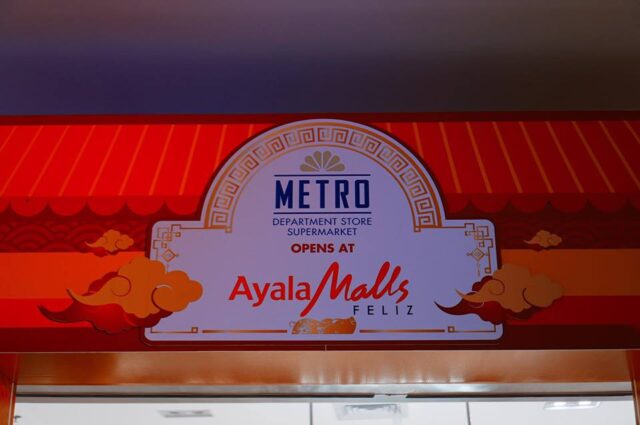
    The 53rd Metro Department Store has opened its doors at the Ayala Malls Feliz in Pasig City. Covering a floor area of 21,200sqm, the store includes a 6600sqm supermarket. “Customers can look forward to an enjoyable and convenient shopping experience as we consistently strive to deliver world-class customer service as well as a wide assortment of premium quality merchandise at affordable prices,” said Frank S Gaisano, Metro Stores Retail Group chairman and CEO.

    The firm aims to open five more stores this year. An investment of P10 billion (US$191.9 million) has been allocated to store expansion over five years.

    Metro Stores Retail Group has shops in Metro Manila, Central Luzon and South Luzon, as well as in Central, Western, and Eastern Visayas through department store, supermarket, and hypermarket formats.

    For the first nine months of 2018, the group’s net income fell by 17 per cent to P454.93 million (US$8.7 million).

  • Japanese megastore Don Quijote to open its first Hong Kong store

    Japanese megastore Don Quijote to open its first Hong Kong store

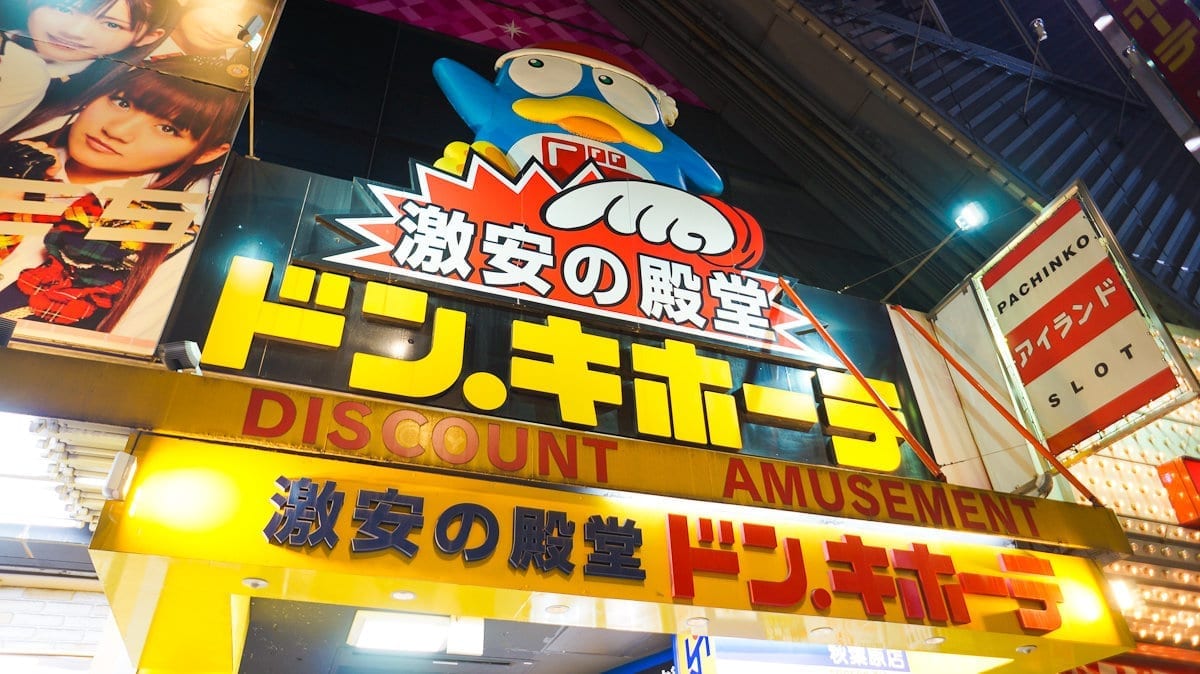
    Don Quijote Hong Kong is set to make its debut in the middle of this year. The Japanese discount merchandise retailer – which has three stores in Singapore and also plans to make its Thai debut in Bangkok this year – has leased a 15,000sqft space in the basement of Mira Place Two on Nathan Road in Tsim Sha Tsui.

    In Japan, most of the company’s 160 discount stores trade 24 hours, but this is unlikely in Hong Kong.

    Helen Mak, senior director and head of retail services at Knight Frank said the basement location would appeal to local consumers and tourists.

    “Don Quijote’s Tsim Sha Tsui location can attract mainland tourists who travel via the high-speed rail and mega bridge. Instead of shopping for luxury items, these same-day visitors usually spend money on cosmetics, health care items and food, products that are most celebrated at [Don Quijote].”

    According to the SCMP, Don Quijote will pay HK$1 million (US$127,000) a month for the space, with the fitout expected to be complete by July.

    Besides its general merchandise and fresh food offer, the Don Quijote Hong Kong store will feature a cafe.

  • Tesco to build simpler, more sustainable business; axe 9,000 jobs

    Tesco to build simpler, more sustainable business; axe 9,000 jobs

    Tesco has recently announced that the brand is making some strategic changes to further simplify the business and this might affect jobs of 9,000 employees. “Since we launched our turnaround four years ago, we have built a stronger business focused on serving our customers. Whilst this turnaround continues, it does so in a competitive and challenging market. We’ve briefed our colleagues on some changes we’re making to our stores and offices to further simplify our business, so that we can continue to invest in serving our customers,” Tesco said in a statement.

    Jason Tarry, CEO, UK & ROI said: “In our four years of turnaround we’ve made good progress, but the market is challenging and we need to continually adapt to remain competitive and respond to how customers want to shop. We’re making changes to our UK stores and head office to simplify what we do and how we do it, so we’re better able to meet the needs of our customers. This will impact some of our colleagues and our commitment is to minimise this as much as possible and support our colleagues throughout.”

    Changes include the following:

    Counters simplification

    Over recent years, convenience and online businesses have continued to grow, as the brand has core grocery and fresh departments in large stores. Not only are customers shopping in different ways, but they have less time available to shop too – which means they are using counters less frequently. The brand will be making changes to the counters in large stores to ensure that they have the right offer for customers. It is expected that around 90 stores will close their counters, with the remaining 700 trading with either a full or flexible counter offer for customers.

    Stock control simplification

    As business changes, the brand is also changing the way they manage their stock. After a number of trials, they have found a simpler way to conduct store routines and will be rolling this out to all of the stores. These changes mean a significantly reduced workload, with fewer hours needed to complete the routines.

    Merchandising simplification

    The brand wants to make shopping with them even easier, and they are aware that when they move products around this can prove frustrating for customers. The in-store employees have expressed to the brand that they want to spend more time with  customers, rather than moving products around the store. They have been working to reduce the amount of layout changes they make, so it’s easier for customers, and less work for in-store employees meaning fewer merchandising hours are needed.

    Colleague rooms

    Currently only one third of stores provide a hot food service and, over recent years, there has been reduced demand for this. Over the last three years the brand has been rolling out new self-service colleague kitchen areas in a number of stores, and they are now extending this to all remaining stores with a hot food service. This change will impact the people working in colleague rooms, who are employed by third party caterers, and the brand is working with them to provide as much support as they can.

    Head office

    The brand has completed a detailed review and this week they are talking to employees about changes in some of their head office teams, moving to a simpler and leaner structure, which will allow them to focus on supporting customers.

    In-store bakeries

    Contrary to media reports over the weekend, the brand has no plans to make any significant changes to bakeries this year.

    “Overall, we estimate that up to 9,000 Tesco colleague roles could be impacted, however, our expectation is that up to half of these colleagues could be redeployed to other customer-facing roles. We are working with our third party providers to understand the impact on their staff in our colleague hot food service,” Tesco said in a statement.

  • Lotte to pursue reforms and investment in 2019

    Lotte to pursue reforms and investment in 2019

    Lotte Group Chairman Shin Dong-bin told affiliate CEOs that he wants reform and aggressive investment in 2019 during a biannual meeting on Wednesday. Shin missed the last meeting in July as he was serving time in prison for bribery related to former President Park Geun-hye. The first meeting of the year typically deals with each affiliate’s annual goals and direction.

    In the first meeting with CEOs after his return, the chairman emphasized that the company was in need of innovation strong enough to rattle its existing business structure.

    “We are about to face immense change in the future that is difficult to imagine,” he stressed to affiliate heads at the meeting. “Therefore we have to be thorough in predicting the future and devising preparations according to different scenarios. If we can’t come up with a clear vision or concrete plans, there will be an immense crisis.”

    Shin pointed out that the group had been “passive” recently when it comes to making investment decisions, missing opportunities and waiting for too long.

    He added that investment decisions have to be made continuously, even when revenue is low and in businesses that the company is doing well in so as to maintain an upper hand in the market.

    He also mentioned the possibility of downsizing unprofitable businesses, citing Microsoft becoming global No. 1 by market cap last year after conducting reforms on its business portfolio.

    “We should focus on areas with future growth potential and push for rationalization,” said Shin.

    Digital transformation, an initiative he has been pushing for in the last few years, also reappeared in Wednesday’s speech.

    “Compared to global companies, Lotte has a low investment rate in the IT sector and the fields invested in so far are [relatively] narrow,” he said, urging that the company needs to find ways to get one step closer to customers using existing assets like big data, brick-and-mortar stores and logistics infrastructure.

    Recently recruited IT professionals were also called into the meeting to share their opinions on Lotte’s current situation regarding digitalization and areas that can be improved.

  • Supermarket, apparel sales not looking good in Japan

    Supermarket, apparel sales not looking good in Japan

    Japanese supermarket sales edged down 0.2 per cent in a third consecutive year of declines, according to figures released by an industrial body this week showing last year’s financial performance. The data for last year shows sluggish consumption regardless of the country’s current period of economic growth. Observers have attributed the slump to a low demand for apparel in supermarkets relative to stronger sales in food.

    Apparel sales fell 5.3 per cent, the 27th straight year of declines, influenced by the warm winter and increased competition with retailers online. Food, by comparison, saw 0.4 per cent higher sales with an uptick in prices for vegetables and sweltering summer temperatures.

    While total sales rose 0.5 per cent to ¥12.99 trillion ($118.71 billion) last year, they still fell short of the hoped-for ¥13 trillion mark for the second year in a row.

    “Spending is weak as a deflationary mindset is still deeply rooted among consumers”, said Atsushi Inoue, a senior official of the Japan Chain Store Association.

  • Sears saved by chairman’s last minute $5.2 billion bid

    Sears saved by chairman’s last minute $5.2 billion bid

    Bankrupt US retailer Sears has been saved from liquidation following a successful, last-minute US$5.2 billion bid by chairman Eddie Lampert, subject to court approval. The acquisition includes substantially all of the company’s assets as an on-going concern and preserves the positions of 45,000 employees.

    “We are pleased to have reached a deal that would provide a path for Sears to emerge from the chapter 11 process,” Sears’ restructuring committee of the board of directors wrote in a release to investors.

    “Importantly, the consummation of the transaction would preserve the employment for tens of thousands of associates, as well as the relationships with many vendors and suppliers who provide Sears with goods and services.”

    Provided the sale is approved by the Bankruptcy Court, the transaction is expected to close on February 8, 2019.

    The retailer had previously announced plans to close up to 120 stores, though it is not clear whether these closures will go forward with the successful bid.

    Lampert made the last-minute bid after several prior offers were turned down for being “administratively insolvent” – unable to cover fees and vendor payments owed by the retailer.

    After initially offering US$4.4 billion to purchase the business, as well as a secondary offer to purchase just 250 of its locations, Lampert was forced to raise his bid to US$5 billion in an effort to get the sale completed.

    But even this bid was deemed insufficient, and Lampert, through bidding vehicle ESL Investments, upped the offer to US$5.2 billion.

    The new bid, while successful, will mean roughly 5000 fewer staff able to keep their jobs as a result of the bankruptcy.

    Sears applied for bankruptcy in October 2018, citing a failing turnaround effort to transform the business and unlock the value of its assets.

    GlobalData Retail managing director Neil Saunders pointed to Sears’ efforts to “shrink its way to profitability”, and that continuing to do so under the guise of bankruptcy was unlikely to result in a successful outcome for the business.

    “Ultimately, Sears needs not just to fix its financial problems,” Saunders said.

    “It also needs to repair the deficiencies in terms of retail strategy… only a complete change of management will bring this about.”

  • 7-Eleven parent sales surges: Report

    7-Eleven parent sales surges: Report

    Japanese retail giant Seven & I has reported a 15.8 per cent increase in net sales for the nine months to November. Profit rose by a less impressive 2.9 per cent. The 7-Eleven parent said its overseas convenience store business achieved an impressive 15.7 per cent increase in operating profit year on year.

    At home, its Ito-Yokado superstore managed to reduce its operating loss to ¥200 million (US$1.85 million), however its York-Benimaru supermarket division and Sogo & Seibu department stores both struggled, the latter losing ¥937 million ($8.6 million).

    Seven & I’s net sales totalled ¥4.11 trillion ($38 billion).

  • Sunshine department store Penang goes online via Shopee

    Sunshine department store Penang goes online via Shopee

    Penang department store Sunshine has launched on online shopping platform Shopee with expectations of doubling its income. According to Sunshine’s CEO Cynthia Hwang, the move to list initially 1500 products, as well as the brand’s in-house fashion label Iloveasap, on the platform would target 16 million users throughout the country while leveraging Shopee’s free shipping and Super Brand Day.

    “Further expansion into the online realm with the opening of an official store on Shopee will see a bigger contribution to the brand’s revenue growth,” she said.

    “As a whole, it is part of our aspiration to help to grow Malaysia in terms of providing more choices, better and easier accessibility for quality products and enable consumers to purchase from trusted sellers such as Sunshine Online,” added Shopee Malaysia category manager Tan Ming Kit.