Tag: department store

  • What US department stores can learn from China

    What US department stores can learn from China

    Lucy Kruse loved the smell of perfume enveloping her as she entered the department stores of her youth. She remembers trying on soft leather gloves, and following a splash of color to the store’s elaborate hats with their feathers and veils. At Sakowitz in Houston, she peered into the Sky Terrace restaurant to see fashion models  sashay past the tables.

    From the Christmas windows of Marshall Field’s in Chicago to the extravagance of Neiman Marcus in Dallas, department stores once defined the modern retail experience. Created to be emporiums of pleasure, however, today they are falling off the map.

    This month, Macy’s announced the closing 100 of stores nationwide and layoffs for about 10,000 workers. The closings include three stores in Houston: Greenspoint Mall, Pasadena Town Square and West Oaks Mall.

    During the same month, Sears announced that it will close 150 stores by April — 10 percent of its locations. The company shuttered 78 stores last year and more than 200 in 2015. JCPenney, meanwhile, has announced it will be closing branches too.

    The cause, most experts say, is online shopping. “The short answer is Amazon.com,” said Harold Livesay, a professor of business history at Texas A&M University and author of Andrew Carnegie and the Rise of Big Business. “The long answer is FedEx, UPS and the Internet. The infrastructure is reliable and so is the ease of delivery. You can shop from home, and don’t have to schlep to the store.”

    In Chongqing, 20 couples compete in a kissing contest at the New Century Department Store in Yongchuan Shopping Center. The winning couple beat others with 56 minute of kissing in seven rounds with different postures. Photo: Getty Images, Visual China Group / 2015 Visual China Group

    There’s no doubt that e-commerce plays a substantial role in the demise of department stores. But customers may not be abandoning department stores just because they want to shop in their pajamas from the couch. Yet there may be more to the story.  Paradoxically, while department stores are failing in the U.S., in China many are thriving.

    According to recent research, about a third of China’s urban dwellers shop at department stores more than once a week.

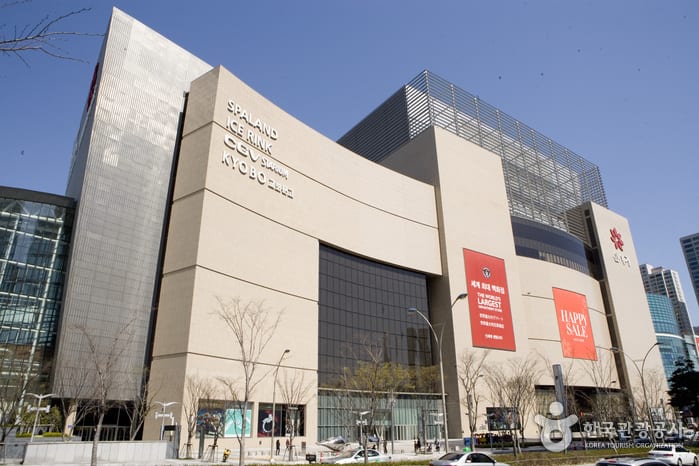
    “Department stores in China are suffering from online competition too, but they are doing better than in America because they have a different kind of concept of what a department store is,” said Haiyang Li, professor of strategic management at Rice Business in Houston. “They have added different entertainment elements, like ice skating rinks and cinemas and children’s playgrounds and restaurants. Shopping is more experiential in China. It is not just grab something and go.”
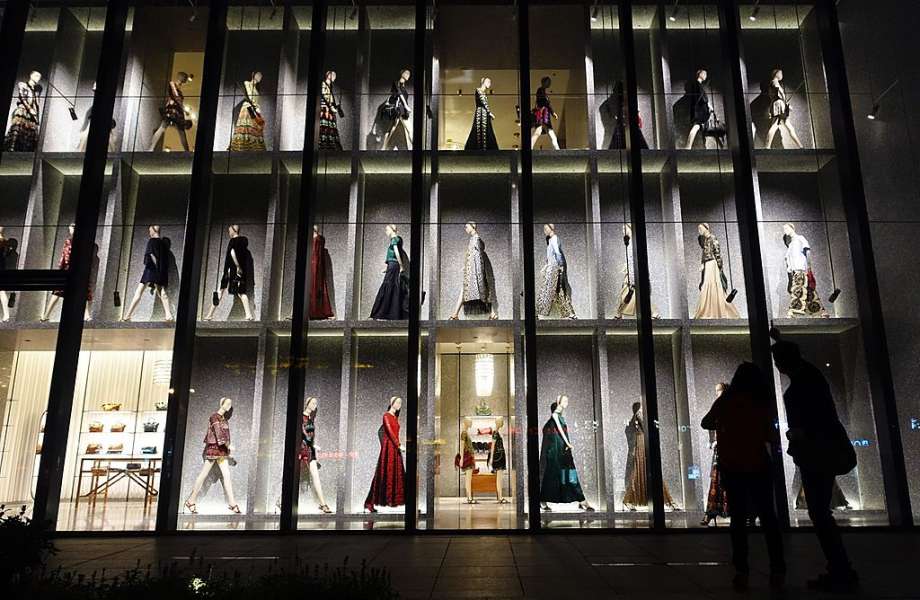
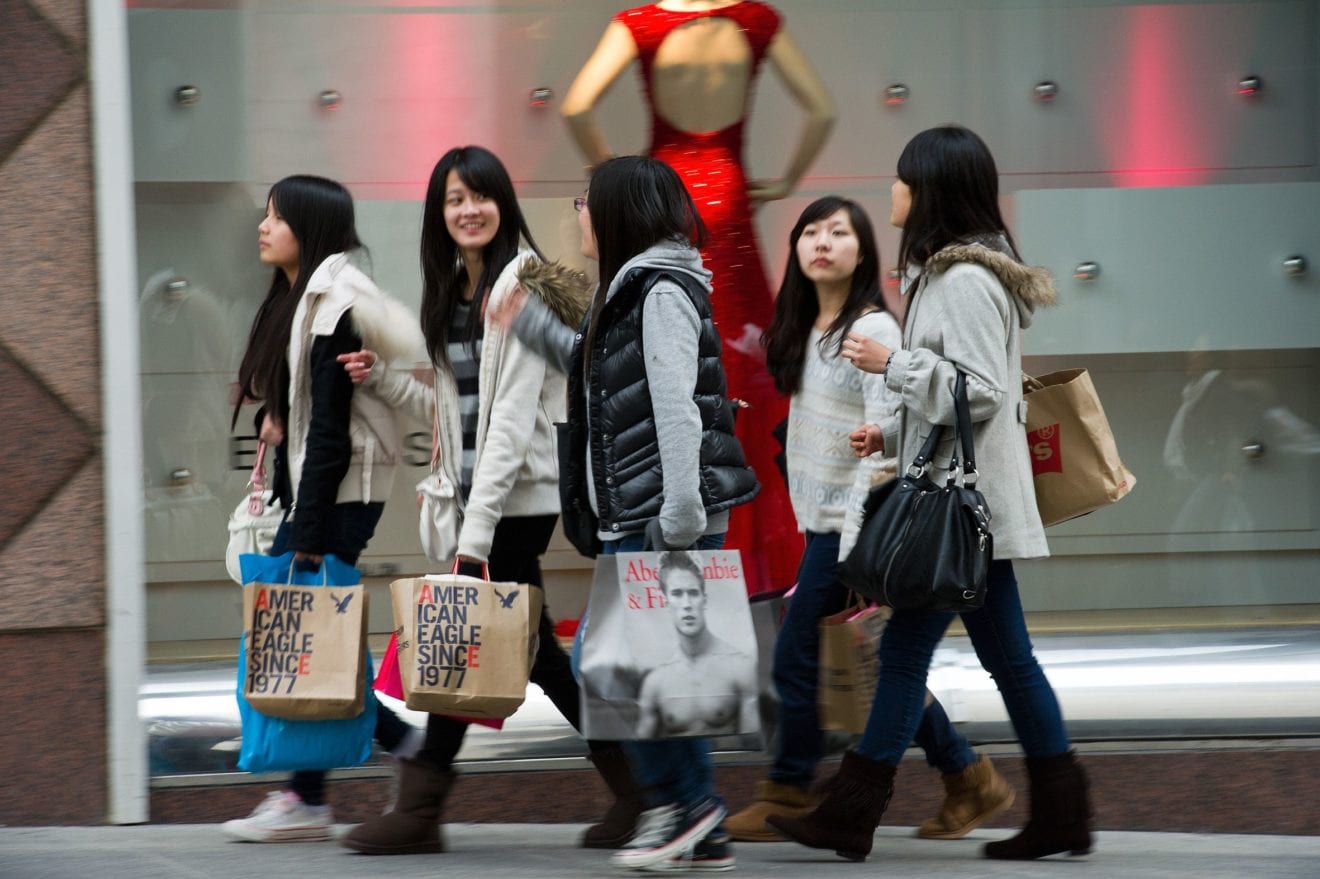
    A shop window in Shanghai. Photo: Getty Images, Johannes Eisele / AFP

    Department stores in the U.S. once offered this sense of excitement. Even small towns boasted department stores that were destinations. When Kruse, now 94, was growing up in Kingsville, she found it thrilling to take the area’s only escalator up to the tea room for lunch at Ragland’s.

    But Kruse doesn’t shop much at department stores anymore, even though she is healthy and fit. Instead, she shops online or orders out of catalogues.

    “Department stores used to be more elegant, and the staff was well-versed about the products,” she said. “The clerks really aren’t very helpful anymore. Shopping has become a chore and there is almost too much to choose from.”
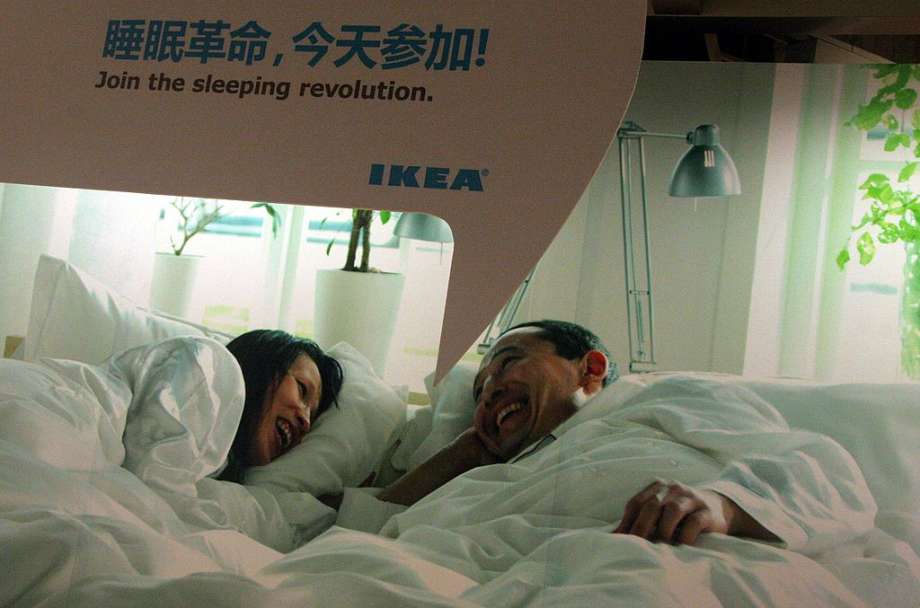
    Shoppers test a bed at Ikealand in Shanghai. In China, IKEA is not only a place for shopping but also place to play. go on dates, and even sleep. Photo: Getty Images, Olivier Chouchana/Gamma-Rapho / 2011 Gamma-Rapho

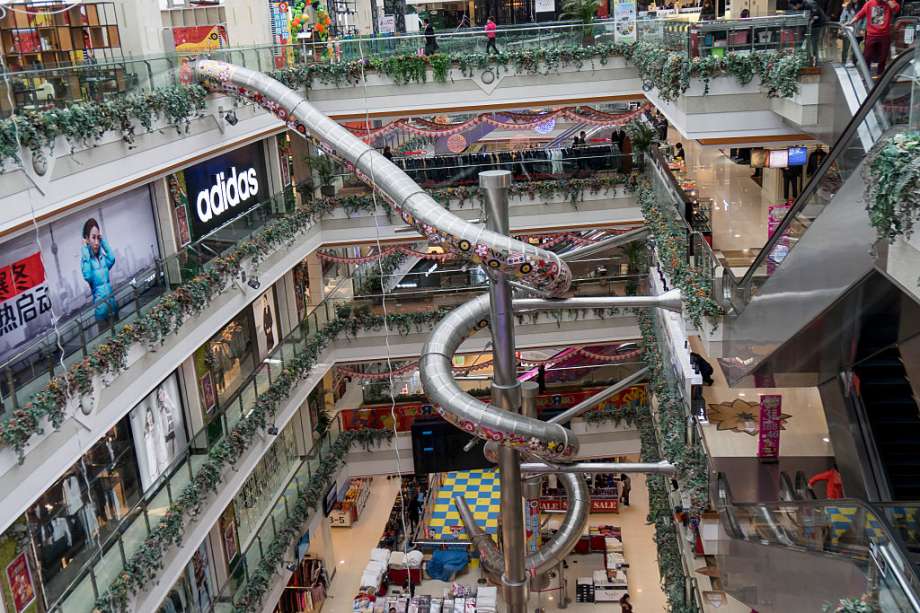
    In contrast, the Beijing-based Shimao department store recently reduced its retail floor space from 80 to 20 percent and added restaurants and entertainment areas. In Hong Kong’s Crawford Lane, concierges assist customers on every floor and 60 personal stylists stand ready to help shoppers craft their own individual chic looks.  And in Shanghai, when the upscale French department store Printemps opened a branch it included a five-story high-speed slide in the shape of a dragon so shoppers could swish from the top floor to the bottom.

    The Chinese stores hark back to a time when service, extravagance and play characterized European and American department stores. The department store became the epitome of elegance and luxury in the late 19th century, as entrepreneurs invented a new style of consumption in which shopping equaled pleasure.  French author Emile Zola set his novel Au Bonheur des Dames (The Ladies’ Delight) in the Paris department store Le Bon Marche. As the owner enticed his female customers into purchasing an exotic array of appealingly arranged goods, the dramatic customs of this new institution unfolded among the staff.
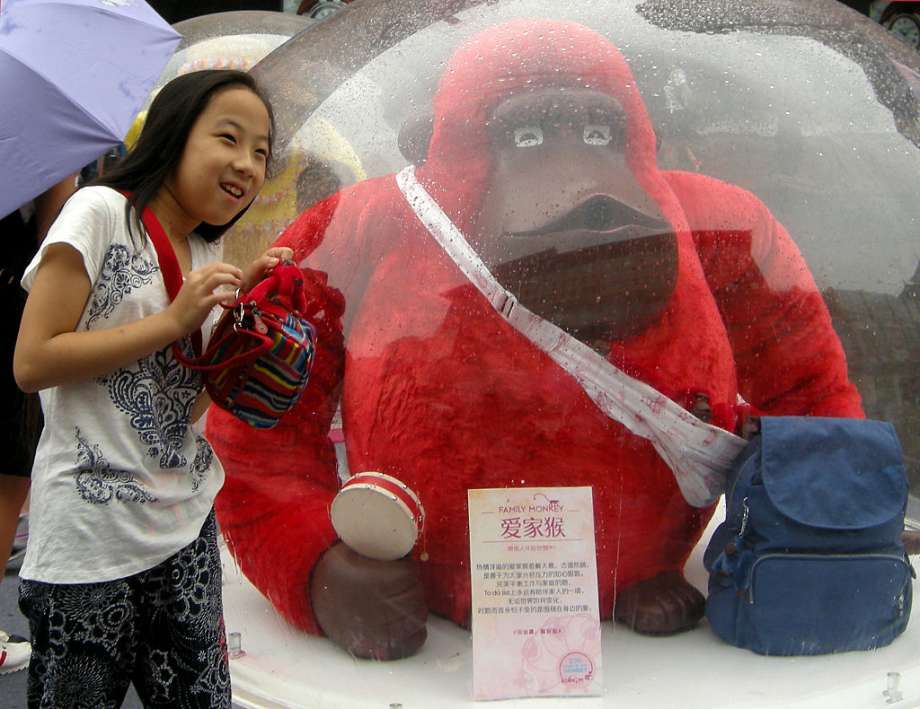
    In Beijing, a girl poses with a cartoon monkey in front of Wangfujing department store. The leisure bag brand Kipling's monkey exhibit was a hit with tourists. Photo: Getty Images, Visual China Group / 2016 VCG

    In the United States, from the 1890s into the 1960s, American department stores hired the best architects to design their flagships on prime downtown real estate. Each store’s restaurant boasted a signature dish, from deviled crab to chicken velvet soup. Filene’s offered a health menu, from which weary shoppers could refresh themselves with potassium broth, acidophilus milk or a cold glass of kraut juice.

    These stores played a central role in a city’s identity, too. Their tall clocks were meeting places where memories began. Any child born in Georgia received a birthday card from Rich’s.”  In Dallas, the Neiman-Marcus offered its famous his and hers gift at Christmas, with offerings ranging from airplanes to mummies to live camels. In Chicago, Marshall Field’s was such an institution that after the bombing of Pearl Harbor, one woman reportedly exclaimed, “Nothing is left anymore, except, thank God, Marshall Field’s.”
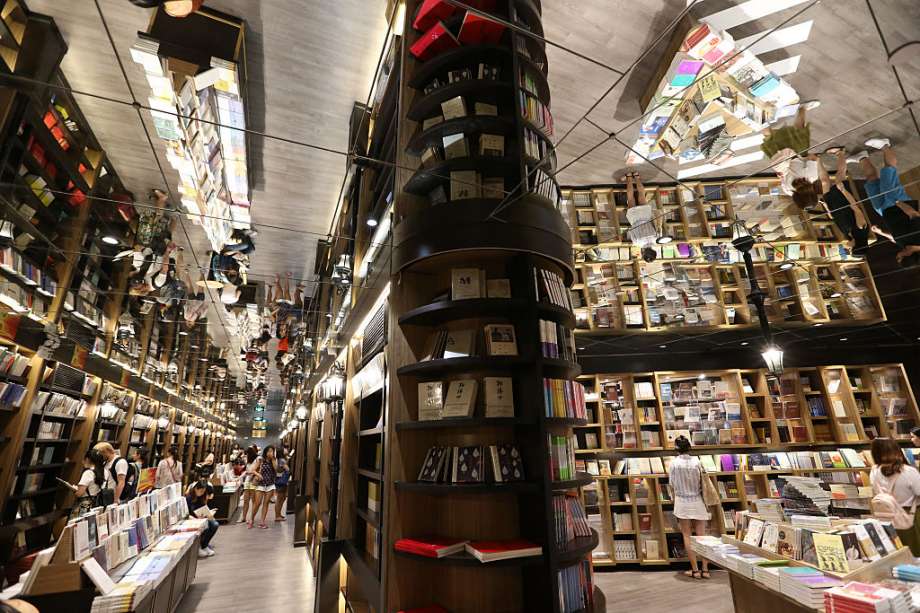
    The new Zhongshuge bookstore at Reel Department store in Shanghai, China. The bookstore chain goes to great lengths to make itself attractive: Interior wooden shelves are painted in a spectrum of bright colors, and ceiling lights are arranged to suggest a starry sky. Photo: Getty Images, Visual China Group / 2016 VCG

    Chinese department stores, where shopping tends to be a group activity, today play a similar communal role, Li said. The stores offer a stage for the new middle and upper class to parade their status and a familiar hub where family and friends to reconnect. They’re even associated with romance.  Chinese branches of IKEA have become such popular places for Chinese in their 70s and 80s to go on dates that IKEA has made new rules limiting the length of their stays.

    “My thought is there is differentiation in China,” Li said. “People go online for some kinds of things, but they also want to go shopping so they can enjoy the unique environment the stores create. In the United States, there is no need to go to Macy’s. You don’t add any value by going there.”
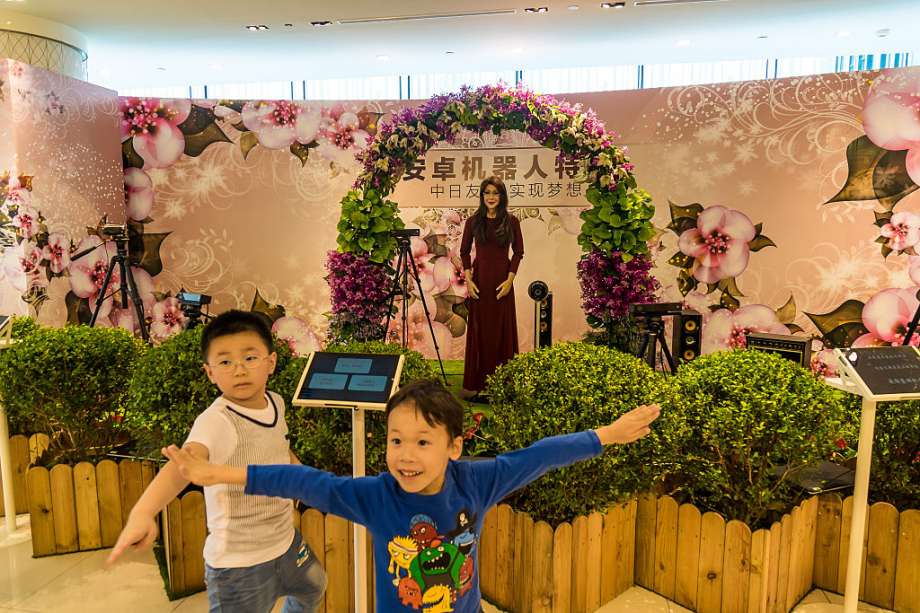
    At the Takashimaya Department Store in Shanghai, children react in front to an android that could speak, sing, shake hands and hug with people. Photo: Getty Images, Visual China Group / 2015 Visual China Group

    At least for now, Chinese retailers seem to think both shopping styles can coexist. The same week Macy’s and Sears announced their closures,  Chinese online retail giant Alibaba revealed that it would become the controlling shareholder of the Chinese department store and mall company, Intime, and would begin integrating its enormous e-commerce assets with  Intime’s brick and mortar stores.   Rather than foreseeing competition with physical stores, Alibaba plans to tap the latest technology to draw customers to stores, including artificial intelligence, virtual reality and Internet-of-Things.

    If department stores in the West are to survive, they may have to somehow recapture a time when they were destinations in themselves — a time when women like Lucy Kruse were excited to ride the escalator and savor lunch in luxurious surroundings. They may have to revive the art of customer service. And they will have to figure out how to blend the convenience of technology with the real-life scent of perfume and the warmth of crowds.
     

  • South Korean department stores set to smash sales record

    South Korean department stores set to smash sales record

    South Korean department stores are tipped to chalk up sales of more than 30 trillion won (US$25.6 billion) for the first time this year.

    That would make if 86 years since the country’s first department store opened in 1930.

    Industry commentators say the figure reflects the retail category’s emergence from “years of stagnation” to return to growth as they pursue new alliances, an expanded food offer and eCommerce.

    Lotte, Hyundai and Shinsegae account for 80 per cent of the Korean department stores market with Galleria, AK Plaza and smaller brands hold the remainder.

    Just seven years ago, department store sales surpassed the 20 trillion won barrier – this year’s projection is 31 trillion, a remarkable growth rate by any measure, especially considering sales stagnated at 29 trillion won for the last four years.

    “Despite the prolonged economic slowdown and changing consumption trend, the domestic department store market is expected to post growth this year thanks to new concept stores and the expansion of online channels,” a Shinsegae Department Store official said.

  • House of Fraser China debut nears

    House of Fraser China debut nears

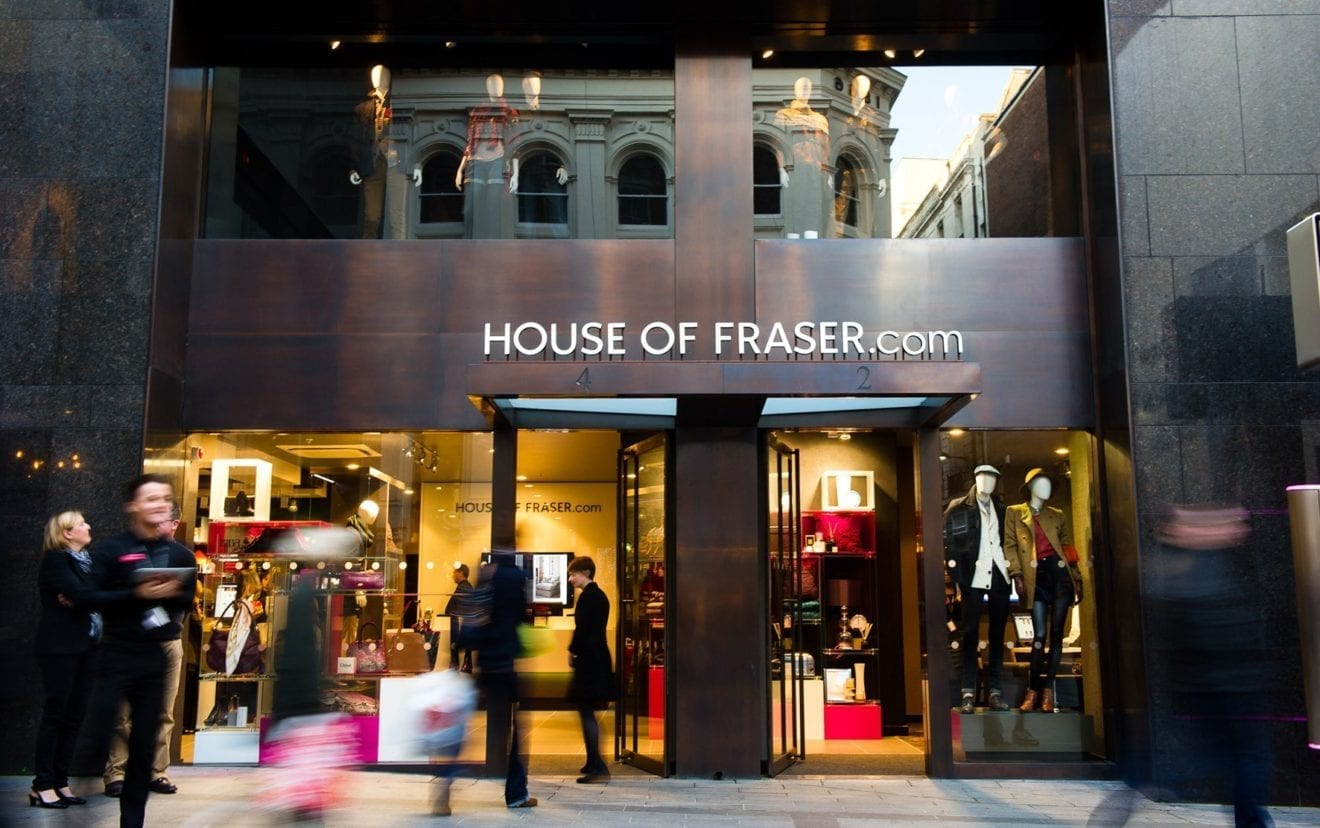
    UK department store group House of Fraser is preparing for its debut in China after pushing back its original April launch date because of the Chinese New Year.

    House of Fraser China says it has made “good progress” with its store planning with the launch now set for late this year.

    The first store will open in Nanjing, inspired by the historic Frasers store in Glasgow, and featuring international and local brands. The opening will follow flat sales for the group during the first half of its latest fiscal year. However, the Chinese-owned department store group believes there is “significant opportunity” to set up as a global brand, says executive chairman Frank Slevin.

    When Sanpower Group acquired House of Fraser two years ago, founder Yuan Yafei spoke of a global vision for the department store, including outlets throughout the Middle East and Russia, and as many as 50 stores in China.

    House of Fraser last year confirmed it would open three stores in China.

  • Puregold chairman named top Philippine retailer

    Puregold chairman named top Philippine retailer

    Puregold Price Club chairman Lucio Co has been named top Philippine retailer for 2015.

    He received the ‘Patron of Micro-retail Entrepreneurship’ award from the Philippine Retailers Association.

    Co’s contribution to the growth of micro-retail entrepreneurs, particularly through Puregold’s Tindahan ni Aling Puring program, fulfilled the PRA’s criteria for the country’s model of a successful retailer in terms of growth and good ethical practices.

    The recognition marks the PRA’s 19th ‘Outstanding Filipino Retailers & Shopping Centers of the Year’ awards.

    PRA president and COO of Duty Free Philippines, Lorenzo C. Formoso, presented the trophy to Co, together with tourism secretary Ramon Jimenez, trade secretary Adrian Cristobal, and Blims Lifestyle Group chairman Samie Lim.

    Formoso said during his opening speech that the association has awarded a couple of hundred retailers over the years, to encourage industry excellence that adopts world-class quality while maintaining local identity.

    “We can expect a brighter future ahead,” said Formoso, adding that the Philippine retail sector has become dynamic since it opened to foreign investors in 2000, citing Philippine Statistics Authority data on the increase in retail trade as percentage of national output.

    The PRA also recognised the most promising retailers, the best shopping centers and supermarkets, and the best retailers in specialty, home improvement, food and fashion categories. Ceremonies were held at the Marriott Grand Ballroom.

    Surplus and Bambu were named the best retailers under the fashion category (apparel and shoes & bags, respectively); Uniqlo Philippines, best foreign brand fashion retailer; Tropical Hut Hamburger best food; SM Hypermarket best hypermart, Robinsons Department Store best full-line department store, LCC Expressmart best regional retailer; and SM Megamall best large shopping center.

    Other finalists and winners include Robinsons Place Malolos, SM Sta Rosa, Ace Hardware, Krispy Kreme Stores, Dairy Queen, Philippine Pizza, Pacific Mall Legaspi, Newport Manila, Eastwood Mall, Lucky Chinatown, Urban Athletics, Grassroots Philippines, Runnr, Pet Express, The Travel Club, National Book Store, Abenson, Our Home, Mothercare, Esprit, Birkenstock, Clarks, Fitflop, Lacoste footwear, Karimadon, Freeway, Onesimus and La-Z Boy Gallery.

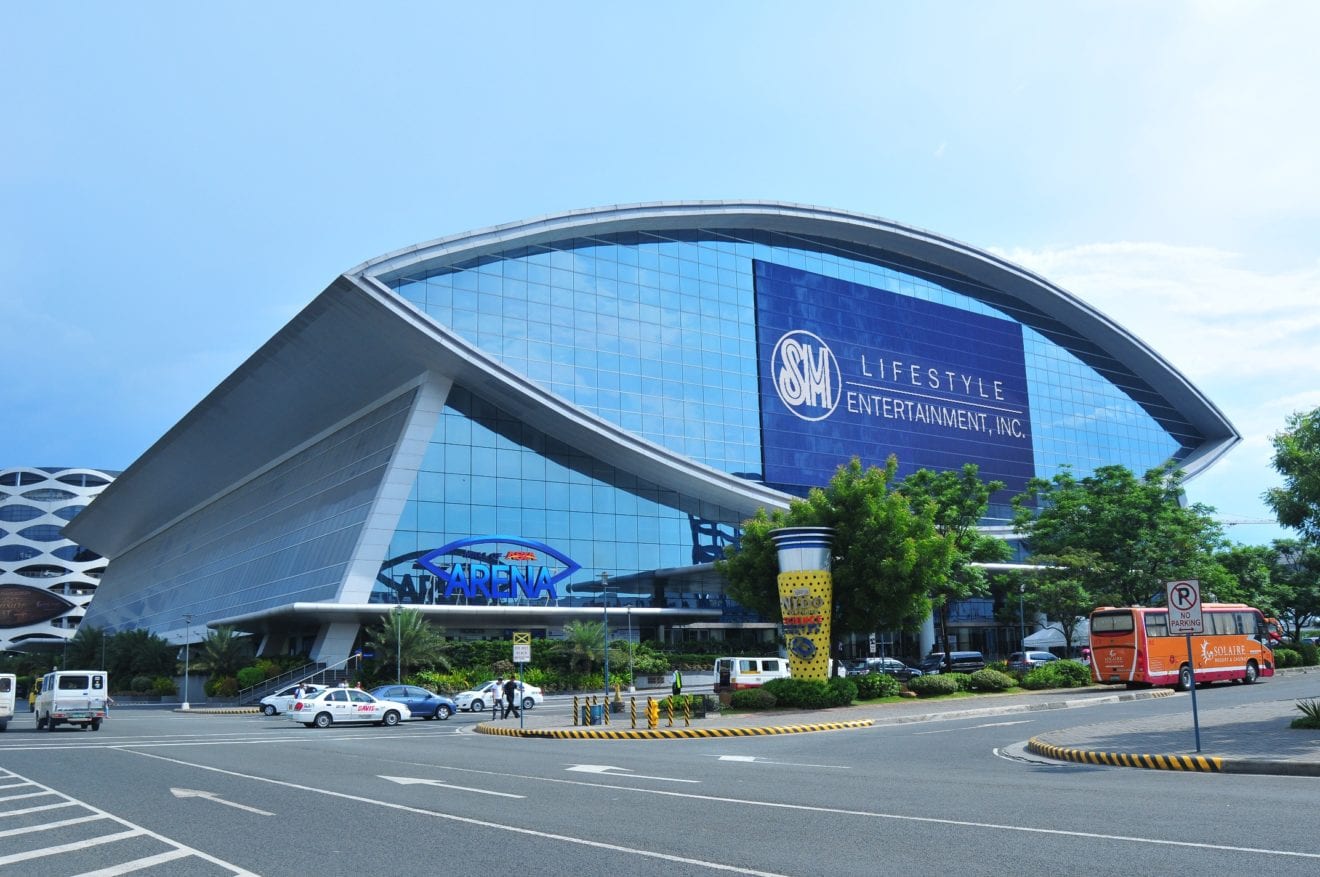
  • SM Retail consolidation set

    SM Retail consolidation set

    Soon all SM’s retail-related businesses will come under a single umbrella company.

    The planned SM Retail consolidation is expected to boost sales by 16.6 per cent to Php251 billion.

    SM Investments Corp, Henry Sy’s holding company, said in an investor presentation that the merger of all retail-related businesses under SM Retail would ratchet up footprint and diversity in the group’s portfolio.

    Aside from higher revenues, the combined merger will result in 1927 outlets and 2.4 million sqm of GFA across a diverse portfolio of food, household appliances, DIY, furniture, apparel, footwear, pharmaceuticals, cosmetics and specialty retailing stores.

    Currently SM Retail has only 553 stores and 1.8 million sqm of GFA.

    SM Investments is also expanding its minimart concept store Alfamart. While Alfamart is in the testing phase, it now has 126 branches mostly in provincial areas south of Metro Manila and in residential areas.

    The conglomerate said the minimart concept was different to convenience store, as it offers supermarket pricing and ready-to-cook items versus ready-to-eat products.

    Prior to the merger, SM Retail operates 53 SM department stores, 44 hypermarkets and 213 supermarkets and majority stakes in the local operations of Alfamart, Forever21, Crate & Barrel and other specialty and apparel retailers in addition to a minority stake in Uniqlo.

    SM Retail brands include Ace Hardware, SM Appliance Center, Homeworld, Our Home, Toy Kingdom, Watsons, Kultura, Baby Company, Sports Station and several other specialty stores.

    SM Retail is one of the leading retail companies in the Philippines, along with Robinsons Retail Holdings of the Gokongwei group and Puregold Price Club.

  • South Korea April dept store sales seen surging, discount store sales bounce

    South Korea April dept store sales seen surging, discount store sales bounce

    South Korea’s top department stores scored a second month of sales growth in April, preliminary government data showed on Tuesday, backing recent surveys showing consumers are feeling better about the economy.

    Combined sales at department stores run by Hyundai Department Store, Lotte Shopping and Shinsegae Co were seen up 8.0 percent on-year in April, according to data from the finance ministry.

    That would be much stronger growth than a 0.3 percent rise in March and mark the fastest gain since January this year.

    The data also showed sales at discount stores last month likely rebounded to be up 0.2 percent in annual terms from a 4.6 percent drop in March.

    Domestic consumption is showing broad improvement supported by consumer spending although exports continue to fall, the finance ministry said in the statement. It also added the pace of recovery in the private sector was still weak, noting that offshore risks persist as global growth remains sluggish.

    The trade ministry will release finalised figures later this month.

  • City’super was born in Hong Kong after Japanese department store Seibu exited the market

    City’super was born in Hong Kong after Japanese department store Seibu exited the market

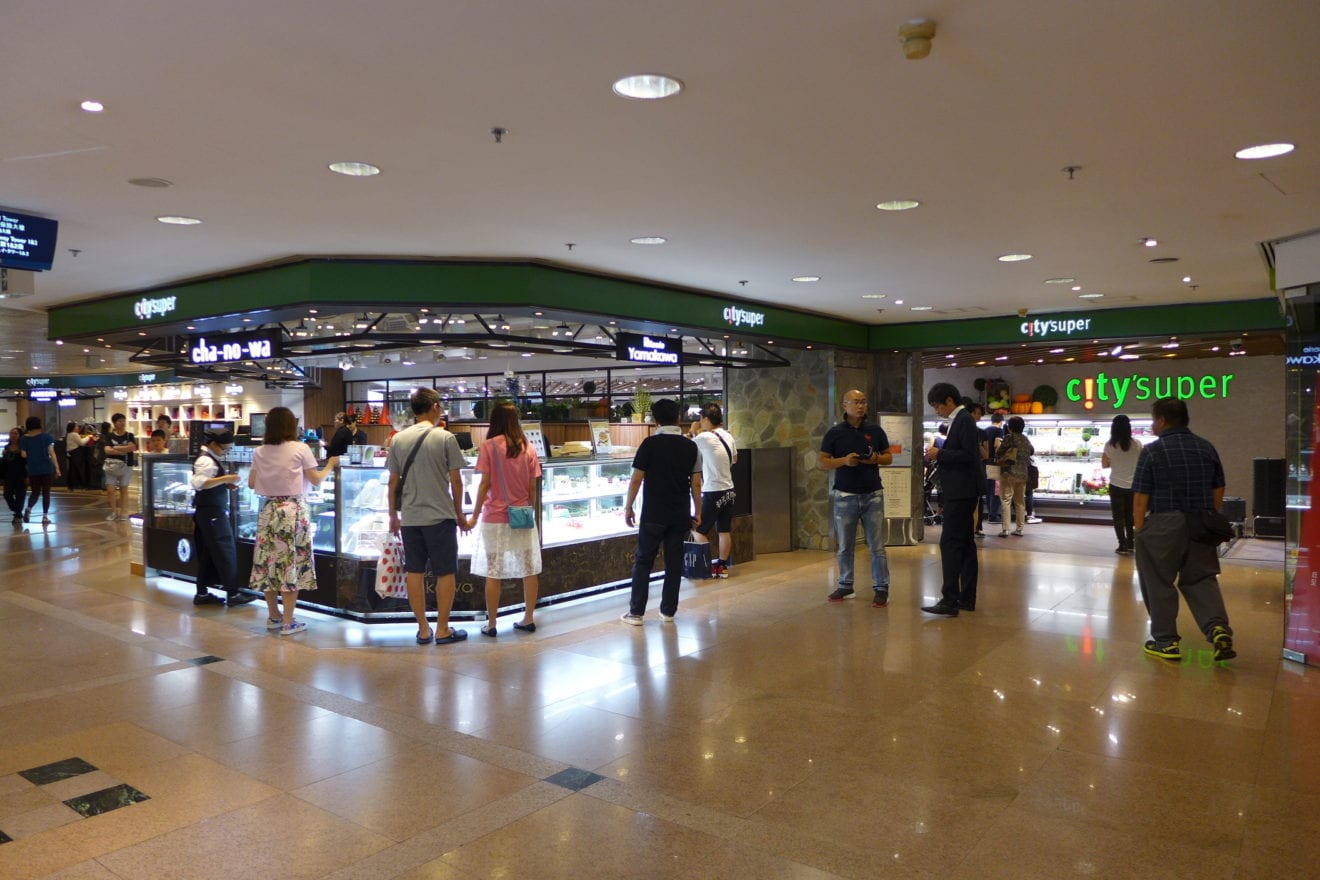
    Many customers buy imported food and wine at Hong Kong’s City’super but few would know the group of founders were closely involved with a chain of Japanese department stores.

    In the 1980s high-end retail fashion and food markets were dominated by those Japanese operators. In 1990 Seibu department stores under a group management led by Masashi Ishikawa established its flagship store in the Admiralty district.

    city super

    Japan’s economic downturn during that decade, however, led Seibu to leave Hong Kong and its other overseas markets. Ishikawa, though, had fallen in love with Hong Kong and did not want to leave.

    He and other Japanese management, along with 14 local senior staff decided to create start-ups of their own in the city.

    They considered too many other stores were selling luxury-brand clothes and too few were selling good food and wine. So the City’super concept was born.

    But the 20-member founding group still needed a financial backer before their high-end mega stores could be launched.

    It did not take long to find a supporter.

    They convinced Masaaki Ogino, a Hong Kong-based Japanese businessman with textile manufacturer Fenix Group, about the future of their project. Ogino and his partners took just three days to back it.

    The rest is history.

    Twenty years on and City’super has become a household name for lifestyle stores selling top-quality meats, fruits and vegetables along with wine, beverages and other lifestyle products. It has brought in new concepts to shopping; it was the first adopt a bank queueing system, in which all customers form a line to be served by the next available cashier, and allows them to pay faster.

    But such innovation and always trying something new may not always prove successful.

    In 1998 Hong Kong Telecom introduced interactive TV for shopping on demand and City’super joined the project as a service provider to sell its products on demand through TV. That proved to be too much ahead of its time because internet speeds were slower 20 years ago and the it was not popular. The company exited the venture some years later and suffered a significant loss.

    “The Lesson learned was that we might think twice jumping into new technology. But we don’t regret doing it. It was just a bit costly lesson,” City’super president Thomas Woo said.

    The company’s current hot product, Cha Cha soft cream, had a bumpy start.

    It formed a joint venture with Japanese partners to launch a traditional Japanese confectionery counter selling authentic Japanese sweets and ice-cream but it drew few customers. It lost money for a few years and the company once wanted to close it.

    But a staff member suggested it should be given a six-month period for a final chance. The team eventually developed the popular Japanese green tea soft cream and launched it as a brand — Cha Cha — which now always draws a long queue of customers.

    The company’s first batch of shops opened in Times Square in 1996. It now has four shops in Hong Kong, three in Shanghai and six in Taiwan.

    Besides City’super, it has Log-On brand which sell stationery, travel accessories and beauty products. There are now 12 such outlets in Hong Kong, three in Shanghai and six in Taiwan.

    It also operates the CookedDeli dining stores which offer international cuisine in Hong Kong and Shanghai.

  • Singapore debut for Korean jeweller Stonehenge

    Singapore debut for Korean jeweller Stonehenge

    South Korean jeweller Stonehenge has opened its first overseas store – on Level 1 of Singapore’s Takashimaya Shopping Centre.

    Stonehenge is showcasing its full range of earrings, necklaces, bracelets, rings and timepieces, which come in silver, rose gold, white gold and yellow gold.

    To mark the opening, customers visiting the new store will receive nail stickers, while those spending S$350 (US$254) or more will receive a portable battery charger as a gift.

    Processed with VSCO

    Also, Stonehenge will be choosing 20 customers to meet its brand ambassador, Korean actress Shin Min Ah, at a special event in June. To be eligible for selection, customers who have made a purchase at Stonehenge need to post a photo on Instagram.

    Launched in 2008, Stonehenge has 62 retail stores and 16 duty-free counters in South Korea. It is part of the Woorim FMG (Fashion Marketing Group), founded 20 years ago and with interests in the entertainment and F&B sectors.

  • South Korea April department store sales barely rise

    South Korea April department store sales barely rise

    May 27 Sales at top South Korean department stores rose 1.3 percent in April from a year earlier, revised government data showed on Wednesday, turning from a fall in March but slightly weaker than a recent estimate. It was compared to a preliminary 1.5 percent gain estimate by the finance ministry early this month and a 5.7 percent fall in March.

    The sales data from department stores run by Hyundai Department Store, Lotte Shopping and Shinsegae Co is a useful guide on retail sales trends in Asia’s fourth-largest economy.

    The same industry ministry data showed annual sales at discount stores held steady in April from a year earlier, slightly better than a 0.2 percent fall previously estimated.

  • Korean d-store sales slide

    Korean d-store sales slide

    South Korea’s department store industry is still struggling to arrest falling sales as consumers tighten spending and turn to online.

    New figures released by the trade ministry Tuesday show sales at top department and discount stores in December fell at a sharper rate than initially expected – by 0.9 per cent compared with the earlier projected 0.3 per cent.

    That makes the fourth successive month that combined sales from stores managed by Hyundai Department Store, Lotte Shopping and Shinsegae Co have declined.

    However, the new data still reflects a significant improvement from the 6.5 per cent drop in November.

    The ministry blamed the slump on falling in-store clothing purchases due to consumers preferring to shop online. Rising sales of food and beverages cushioned the effect of apparel’s fall.

    Discount store sales fell 3.8 per cent in December year-on-year, compared to 4.7 per cent in November.