Retail News CRM

Tag: development

  • Lotte to pursue reforms and investment in 2019

    Lotte to pursue reforms and investment in 2019

    Lotte Group Chairman Shin Dong-bin told affiliate CEOs that he wants reform and aggressive investment in 2019 during a biannual meeting on Wednesday. Shin missed the last meeting in July as he was serving time in prison for bribery related to former President Park Geun-hye. The first meeting of the year typically deals with each affiliate’s annual goals and direction.

    In the first meeting with CEOs after his return, the chairman emphasized that the company was in need of innovation strong enough to rattle its existing business structure.

    “We are about to face immense change in the future that is difficult to imagine,” he stressed to affiliate heads at the meeting. “Therefore we have to be thorough in predicting the future and devising preparations according to different scenarios. If we can’t come up with a clear vision or concrete plans, there will be an immense crisis.”

    Shin pointed out that the group had been “passive” recently when it comes to making investment decisions, missing opportunities and waiting for too long.

    He added that investment decisions have to be made continuously, even when revenue is low and in businesses that the company is doing well in so as to maintain an upper hand in the market.

    He also mentioned the possibility of downsizing unprofitable businesses, citing Microsoft becoming global No. 1 by market cap last year after conducting reforms on its business portfolio.

    “We should focus on areas with future growth potential and push for rationalization,” said Shin.

    Digital transformation, an initiative he has been pushing for in the last few years, also reappeared in Wednesday’s speech.

    “Compared to global companies, Lotte has a low investment rate in the IT sector and the fields invested in so far are [relatively] narrow,” he said, urging that the company needs to find ways to get one step closer to customers using existing assets like big data, brick-and-mortar stores and logistics infrastructure.

    Recently recruited IT professionals were also called into the meeting to share their opinions on Lotte’s current situation regarding digitalization and areas that can be improved.
  • Hyundai Motor offering a bigger, better Universe

    Hyundai Motor offering a bigger, better Universe

    Hyundai’s Universe is about to get bigger. Hyundai Motor unveiled an updated version of its luxury coach, the Universe, on Tuesday, increasing its size and adding safety features. The updated coach, scheduled for release next March, has an extended wheelbase of 12.5 meters (41 feet), 0.5 meters longer than the existing model. Distance between seats has been increased.

    The vehicle comes with a variety of new safety features applied for the first time in a coach in the local market, such as an engine fire extinguishing system, driver attention warning and a rear-view monitor.

    Hyundai Motor explained that the Universe’s driver attention warning system and smart cruise control are now offered to prevent drowsy driving and other avoidable accidents. The new Universe also has a refreshed exterior design with headlight changes and will be available in three trims.

  • Telenor Group CEO meets Prime Minister to discusses digitalisation and socioeconomic development

    Telenor Group CEO meets Prime Minister to discusses digitalisation and socioeconomic development

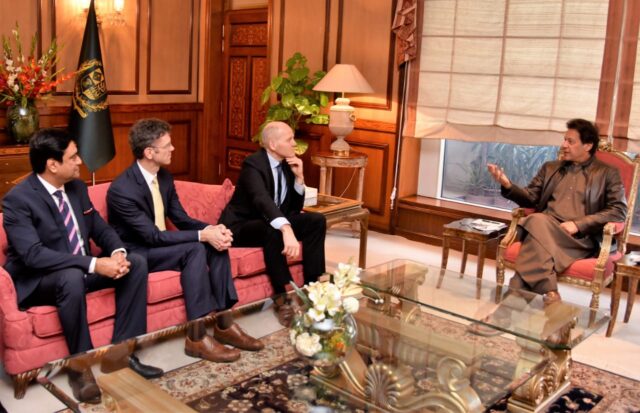
    SigveBrekke, President and CEO of Telenor Group, along with IrfanWahab Khan, CEO of Telenor Pakistan and Petter-Børre Furberg, Executive Vice President Telenor Group met the Honorable Prime Minister of Islamic Republic of Pakistan Imran Khan to discuss the growing and evolving digital ecosystem in the country and Telenor Group’s longstanding commitment to the country.

    During the meeting, Brekke shared Telenor Groups journey to becoming one of the largest telecom and digital services provider in Pakistan. SigveBrekke thanked the Government of Pakistan for its continued support for the telecom sector and for encouraging foreign direct investments into the country.In addition,theydiscussed possible collaborations to bringcontinued socioeconomic development and digitalisation for all. Brekke also highlighted Telenor’s commitment towards financial inclusion and informed the Prime Minister of incoming investment of USD 140mnas a result of the recently announcedpartnership with Ant Financial.

    The Prime Minister appreciated Telenor’s contribution in the telecom sector and said that the Government aims to develop a knowledge based economy in Pakistan and value Telenor as an important partner in developing the ecosystem that supports the Government’s development agenda.

    The Prime Minister reiterated that the Government is committed to transparency and facilitate investors and enable them take full advantage of huge potential existing in the growing economy of the country.

    “Pakistan is a key market for Telenor Group and we remain committed to empowering this nation by connecting our customers to what matters most,” said SigveBrekke, President & CEO Telenor Group, while sharing his thoughts. “We hope that the government will not only encouragebusiness-friendly policies, but will also introduce new reforms to enhance access to life-changing digital services and solutions for all.”

    “Through Telenor Pakistan’s industry-first initiatives in areas of digital products & services, financial inclusion, agriculture, health, and digital entrepreneurship, we are empowering Pakistan through robust ICT solutions,” said IrfanWahab Khan, CEO Telenor Pakistan. “We have 13 successful years to proudly look back to and aim to serve the people of Pakistan even better with all the learning we have gathered during this time. I thank Prime Minister Imran Khan for his time and am confident that his government will extend the needed support to help us materialise our shared vision of a digital Pakistan.”

    During his visit, SigveBrekke also called upon Mr. Asad Umar, Minister of Finance, Revenue and Economic Affairsand Mr. Shah Mahmood Qureshi, Foreign Minister and extended his appreciation to the Government for ensuring positive outlook and improving economic indicators that are instrumental towards attracting investment in the country. Brekke also discussed the role of telecom sector in socioeconomic uplift of the country by bringing widespread connectivity to the people of Pakistan.

    Telenor Group has been operating in Pakistan since 2005 and has made a significant impact on the socioeconomic uplift of the country. The Group has invested over USD 3.5bn, contributed over USD 2.5bn to the national exchequer since 2005 and created over 5,000 direct jobs, in addition tohundreds of thousands of indirect jobs.

  • Lazada Malaysia to sell houses soon

    Lazada Malaysia to sell houses soon

    Southeast Asian e-commerce platform Lazada will begin selling houses in time for its planned 12.12 shopping festival. The move, in partnership with Malaysian property developer Mah Sing Group, constitutes part of Lazada’s plans to grow the variety of items on its platform.

    Lazada Malaysia CEO Christophe Lejeune said it plans to increase the number of Malaysian sellers from the platform’s current 50,000 to hundreds more, as well as provide support for 8 million Southeast Asian SMEs by 2030.

    Lazada operates in Thailand, Indonesia, Vietnam, Singapore and the Philippines, beyond the Malaysian market.

  • Angular 6 & its Features

    Angular 6 & its Features

    Google released a brand new version of Angular in the month of April which was the first major release by Google in 2018 which majorly focuses on the toolchain and has also made the application much easier for the users to create their different applications. This new launch comes packed with a lot of new features and some of the major upgrades. This new version of angular is much faster, easier, and lighter than its former versions and has come out to be a boon for the developers. You can undergo an Angular JS course to have an in-depth knowledge of the newly introduced features.

    Let us discuss a few of the major changes made in Angular 6:

    • Angular Elements: Angular acts as one of the most ideal frameworks for creating Single Page Applications. However, in the former versions of Angular, adding up a new component to any of the existing web pages was not at all an easy task. But in the latest version of Angular, it can be done easily with the input to Angular Elements. Moreover, Angular 6 is the first version release that completely supports Angular Elements.
    • Ivy-The Brand New Rendering Engine: Angular 6 comes packed with the third rendering engine from the Angular team. Ivy can be termed to as the next-gen rendering engine which is capable of increasing the speed and reducing the size of the application.
    • i18n: One of the major changes brought about in Angular in its latest launch is the launch of i18n on the global platform. Angular 6 has introduced i18n with runtime rendering; moreover, Angular would no more round up the currency values with 2 digits. Moreover, Angular 6 also has revealed some new formatting functions publically, such as formatDate, formatCurrency, formatPercent and formatNumber.
    • Bazel Compiler: it is basically a build mechanism which is used to building almost all of the software at Google. Moreover, it rebuilds only what is necessary to be built, neglecting any kind of inapplicable data. Moreover, it does not make any sense to rebuild the whole of the application with every little change as the source code changes very often. Keeping this in mind, Bazel Compiler only rebuilds the changes which have been incorporated and required rebuilding. Ultimately, we shall be capable of achieving faster and incremental builds.

    The above-mentioned are just a few advancements that have been bought about in the latest version of Angular, for a complete knowledge of the working of Angular 6.0 you can easily receive Angular 6 training through offline as well as online portals which will provide you with a wholesome information about the mechanism of this wonderful application.

  • Cashmaster Launches QR-Connect in APAC – New Integration Software Solution for Cash Management

    Cashmaster Launches QR-Connect in APAC – New Integration Software Solution for Cash Management

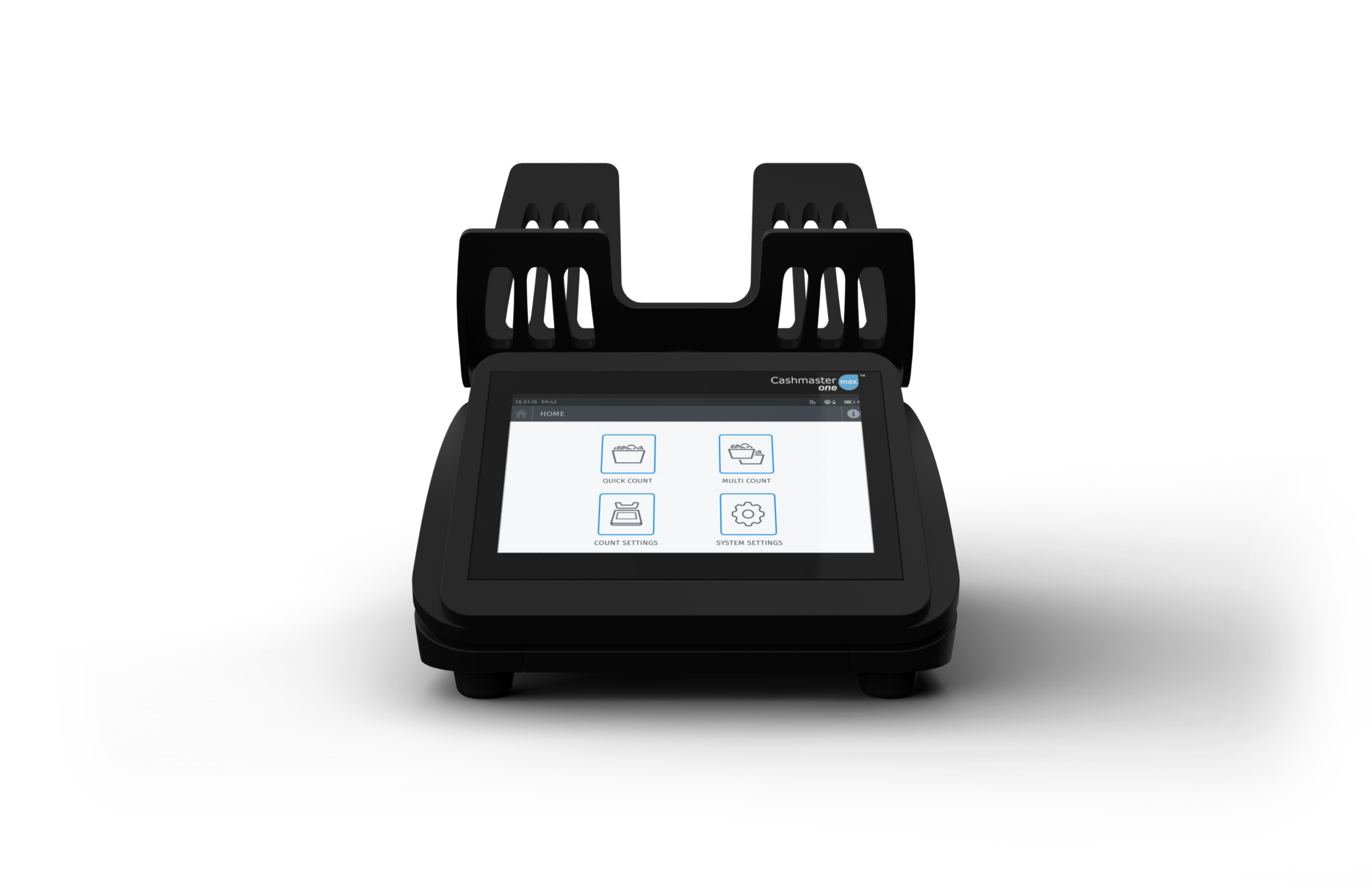
    Cashmaster Asia today announced the Introduction of Cashmaster QR-Connect, a QR code application providing enhanced software functionality for its Cashmaster One range of count-by-weight cash counting devices that offers an innovative, simple solution to integrating with back office or POS systems. When installed, count data is presented as a QR code on the display of the Cashmaster One device that can be scanned by a standard POS scanner or the camera of a mobile/tablet device.

    The count data is instantly transferred to the POS or other system. The QR code avoids the need for USB or ethernet cable connectivity between the POS and the Cashmaster Cash counter – effectively providing wireless transfer of the cash count (including vouchers/coupons in addition to notes and coins) as well as other information for process traceability, such as cashier ID and till ID.

    In a connected world, a deeper level of integration and seamless transfer of data to the POS is a growing requirement for Cashmaster’s clients. Its customers are looking to remove multiple levels of manual processing of data across their businesses in order to: reduce opportunities for errors; speed up the processing of data; give more real-time information that businesses can use to make better, faster decisions; and provide greater accuracy and accountability to their enterprises. Integration can be seen also as a key component in a loss prevention strategy.

    No matter the level of operation, these solutions provide data in a format that can be easily digested by cash management and analytics programs for big, medium or small companies. As competition increases, the rewards of deploying Cashmaster One and Cashmaster QRConnect can show directly in bottom line improvements. Gordon McKie, Group CEO of Cashmaster, commented, “Companies are under intense pressure to maximise income and improve efficiencies, while at the same time motivating staff. It’s a complex dynamic that Cashmaster understands; it has also been a powerful imperative for us in designing the intuitive technology for cash management that helps clients achieve those goals.

    “Solutions can be tailored to customers’ specific needs, from simple off-the-shelf tools requiring minimal customer resources to implement, to working with customers’ IT teams in providing more complex solutions. With a proven quick return on the initial investment to boot.”

    Cashmaster is a global company that specialises in the design and manufacture of count-by-weight cash counting devices using the most advanced touch-screen technology. The company has more than 30 years’ experience in creating innovative and reliable cash handling solutions for a wide range of international clients including supermarkets, convenience stores, retail, banking, fast-food restaurants and coffee shops.

    Website: www.cashmaster.com

    All trade enquiries for Cashmaster One:

    Tel (Hong Kong): +852 9334 8578; E-mail: [email protected]

    Tel (UK): +44 (0) 1383 416 098; [email protected]


  • Game development experts converge on Pakistan’s first Game Summit by Gamebird

    Game development experts converge on Pakistan’s first Game Summit by Gamebird

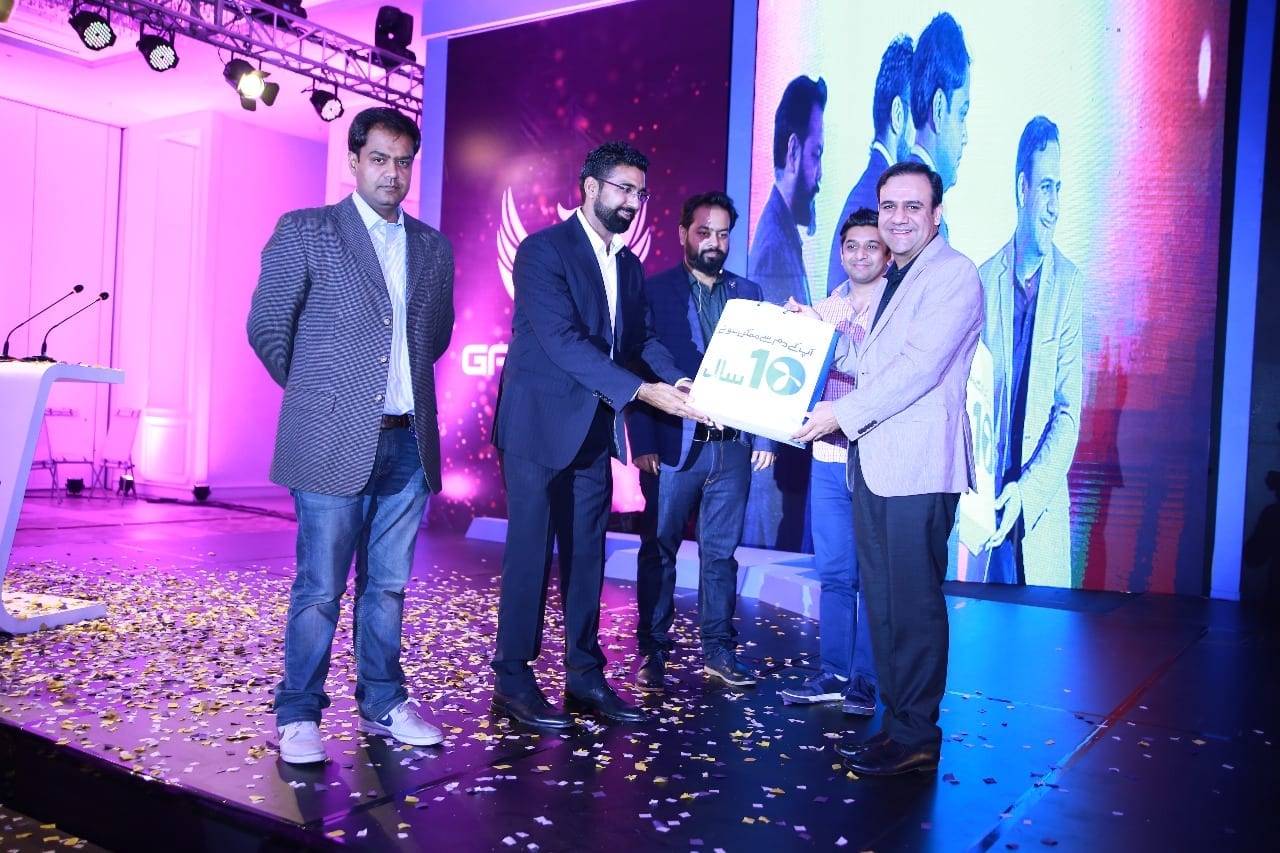
    Pakistan’s second most populous city and the country’s cultural center, Lahore, was the go-to place for game developing experts and enthusiasts from Google, Telenor, and the best of Pakistani talent in the industry. The event was Pakistan’s first Game Summit hosted by ‘Gamebird’, Telenor’s new platform that connects game developers to boost the gaming ecosystem in Pakistan.

    Pakistan has a vibrant gaming app developing ecosystem and this Game Summit was aimed at helping developers learn the latest tips and best practices about how to take their app business to the next level. The one-day, invitation-only event gave developers a chance to come together with Google, Telenor industry experts, and fellow app developers to ask questions, give feedback, share learnings, discuss projects, and be inspired.

    The top speakers of the Game Summit included Dr. Umar Saif – Chairman, Punjab Information Technology Board and Vice Chancellor of Information Technology University, Fawad Asghar – CTO, WeRPlay, Sadia Bashir – Founder & CEO, Pixel Art Games Academy, and Faizan Iftikhar – CEO, GeniTeam, among others.

    Telenor Pakistan has been developing initiatives to strengthen the local developer community, while Google has tools and insights with a focus on game creation and monetization. Together, the speakers from Telenor Pakistan & Google elaborated on their expertise and how the gaming ecosystem can benefit from it. Prominent local developers also shared experiences, challenges, and ideas on how to better contribute to the local game development ecosystem. Gamebox, Pakistan’s indigenous game store, was a sponsor of the Game Summit and showcased its offerings at the event.

    “We are proud and delighted to be hosting the country’s first Game Summit in a city that’s fast emerging as one of Pakistan’s key app development centers,” said Durdana Achakzai, Chief Digital Officer at Telenor Pakistan. “We are grateful to the experts from Google and the local gaming community for coming together and exploring ways to boost the Pakistani game development industry. We hope that the learnings the event’s participants take home today will prove valuable in putting Pakistan on the global map for gaming innovation. With Gamebird in place, we are expecting more of such knowledge-sharing networking events for the gaming community in the future.”

    Sharing his thoughts on the occasion, Umar Saif, the keynote speaker who is Chairman Punjab Information Technology Board and Vice Chancellor Information Technology University, said:

    “We congratulate Gamebird for hosting this insightful event and giving game developers the opportunity to demonstrate their skills. The launch of Google DCB has been a game changer for the gaming industry as it has provided earning avenues to game developers. I appreciate Telenor’s role in spearheading the launch of Google DCB in Pakistan and hope that Pakistani Gamers make good use of it to come up with a superb game in the near future.”

    Gamebird is an e-Sports platform for gamers and gaming app developers in Pakistan. The platform hosts events, tournaments, broadcasts, and provides reviews and plays of different games. Gamebird is geared for more initiatives in mobile & PC gaming (tournaments, community meet-ups, etc.) in the near future.


  • Apple to open first R&D center in Indonesia this year

    Apple to open first R&D center in Indonesia this year

    Good news to Apple fans in Indonesia — Apple will finally bring its flagship phones to the country this year. The company will open the doors to its first R&D center in the country in the second quarter of this year in the city of Tangerang, reports The Jakarta Post. This means Apple will officially be able to retail its iPhone 7 and 7 Plus in Indonesia now, which the company reportedly plans to launch today.

    The move is part of Apple’s efforts to become compliant with local regulations which stipulate that a foreign phone maker needs to have at least 30 percent domestic content in order to sell phones in the country. The company committed to invest $44 million to set up an R&D centre in the country last year.

    Apple did not immediately respond to Retail News’s request for comments.

    Apple is not alone in moving to boost local content in Indonesia so as to meet regulations and be able to retail its phones in the country. It was reported in November 2015 that Lenovo began producing its 4G phones in the country as part of the company’s commitment to meet the regulation.

  • Hanoi seeks ideas to develop Red River banks

    Hanoi seeks ideas to develop Red River banks

    Hà Nội authorities have asked three construction giants to devise planning schemes to develop the areas along the iconic Hồng (Red) River that flows past the capital city.

    According to the decision of the municipal authority, three investors — Sun Group, Vingroup and Geleximco — will each devise plans and submit them to the municipal authority for selection.

    They can invite designing consultancy units to collaborate in the project. The final design ideas will be selected by March 30.

    Nguyễn Đức Chung, chairman of the municipal People’s Committee, at a meeting with investors interested in the project, asked them to develop a scheme which ensures the city’s flood-resistant capability, effectively makes use of land funds and creates a modern urban area along the river.

    Additionally, the scheme should give priority to on-site resettlement for residents and to the development of waterway transportation and tourism.

    The city has suggested two options for the scheme.

    Option one is to build a new system comprising roads and dykes to replace the current dyke system. This will serve to protect the city from flood alarm level 3+, or emergency flood condition, which sees general and widespread uncontrollable flooding and severe damage to infrastructure.

    Option two is to build a new system of roads and dykes which can protect the city from flood alarm level 2 or dangerous flood condition. In addition, water reservoirs and canals will also be built to support the current dyke system, which is located further inland, to protect the city from flood alarm level 3+.

    The planning scheme will be divided into two phases, with the first one covering areas on the banks of the river from Thăng Long Bridge to Thanh Trì Bridge and the second one covering the remaining areas.

    The Red River, originating in China, flows past Hà Nội and several provinces in the north of Việt Nam before emptying into the Gulf of Tonkin. Besides being one of the main river systems that play a crucial role in irrigation and waterway traffic, the river is also seen as a symbol of the capital city.

  • Vietnamese franchise market in early stage of development

    Vietnamese franchise market in early stage of development

    The 2015 report of the International Franchise Association showed that the total value of franchise contracts in 2014 was $3.8 trillion. Of this, the contracts in the US made up $2.4 trillion and only $600 billion was from Asia. However, the future will belong to the continent.

    Asian countries have made heavy investments to franchise their brands in other countries. The Malaysian government runs a $2 billion program to support its businesses to franchise their brands.

    Meanwhile, in Vietnam, the franchise industry is still underdeveloped.

    At an international trade fair on retail and franchising held in Vietnam in June 2016, Sean Ngo, director of VF Franchise Consulting, which specializes in giving advice to foreign companies to franchise their brands to Vietnamese partners, said only 144 foreign brands have been franchised in Vietnam so far.

    A survey conducted by Euromonitor showed that in 2015, every household in Vietnam spent less than $4,000, the spending level which is just above Myanmar among 10 ASEAN countries. Meanwhile, the average spending of one family in Singapore was $73,704.According to Nguyen Phi Van, the founder of World Franchise Associates in South East Asia, international brands in Vietnam are still ‘sowing’, and cannot ‘harvest’ because the market is too small.

    Vietnamese brands are just beginning trial franchising in the domestic market. Van commented that if they don’t have good consultants, they will have to learn for three to five years to become experienced in franchising.

    In fact, there are many food and retail chains run by Vietnamese, but they just run their own chains, while there are few franchised chains.

    Meanwhile, of the top 10 leading food chains globally, only two brands – Starbucks and Darden – own more than 50 percent of their branches.

    In 2008, Burger King owned 12 percent of branches bearing Burger King brand, but the figure fell to 0.4 percent in 2013. Subway doesn’t own any Subway shop.

    According to Van, most of the brands franchised will be in food, education and healthcare sectors. Vietnamese will mostly franchise food brands.

    However, Vietnamese traditional food brands franchised such as pho (noodles served with beef or chicken), banh mi (sandwich) and banh cuon (steamed rolled rice pancake) are not from Vietnam. Pho Hoa, for example, with 80 branches in seven countries, is from the US.

    Van thinks that after five years, when the spending level increases sharply and businesses have better knowledge about franchising, the Vietnamese franchise market will boom.

  • Apple targets Indonesia with $44 million in R&D investment

    Apple targets Indonesia with $44 million in R&D investment

    Apple is working hard to break into the Indonesian smartphone market, announcing plans to invest roughly $44 million in a research and development (R&D) center over the next three years.

    The investment will let the company sell its iPhone 7 there after the Indonesian government recently announced that as of January 2017, all 4G-enabled phones sold in the country must include at least 30% local content, which can be reached via hardware, software, or an investment.

    Indonesia presents a massive growth opportunity for Apple, which posted its first annual decline in revenue in 15 years during Q3 2016. The year-over-year decline is primarily due to the decelerating global smartphone market since the iPhone comprises almost two-thirds of the company’s total revenue.

    Nevertheless, Apple is unlikely to find immediate success in Indonesia, much as it has in other emerging markets such as India. The smartphone market is largely controlled by Samsung, which accounted for 26% of smartphone shipments in Q2 2016, according to IDC. Meanwhile, low- to mid-tier devices from local and Asian vendors such as OPPO, ASUS, Advan, and Lenovo make up the rest of the top five vendors, by share.

    The low- to mid-tier smartphone market is a key area in which Apple does not yet have a significant presence. This is a missed opportunity Piper Jaffray analyst Gene Munster noted during Business Insider’s IGNITION conference in December. And while the iPhone SE at $400 could be seen as an attempt by the company to partly capture the mid-tier market, it’s still marginally more costly than those being offered by local and Asian vendors. The OPPO F1, for instance, retails for around 3.8 million Indonesian Rupiah (roughly $283 USD).

    The global smartphone market is expected to slow considerably over the next few years. Despite a record-setting holiday quarter, 2015 was likely the last year of double-digit growth for smartphone shipments.

    Mature markets were at the heart of this year’s deceleration. Adoption has reached new highs in key markets in the United States, Europe, and China. The pool of first-time buyers in these countries is shrinking rapidly, and sales are now primarily coming from phone upgrades.

    Meanwhile, emerging markets will continue to see robust shipment growth. India and Indonesia, in particular, will help fuel a large share of the shipments growth within the global smartphone market over the next few years.

  • KDDI, Toyota develop app to reduce road accidents

    KDDI, Toyota develop app to reduce road accidents

    Toyota Motor, Komeda and KDDI in September have jointly developed a smartphone application called Driving Barista, aimed at reducing the number of traffic accidents in Aichi Prefecture caused by drivers using their smartphones while driving.

    This is the first traffic safety initiative in Japan involving a smartphone application, which is to be carried out and jointly promoted by an automobile company, a communication company, and a food and beverage company.

    For thirteen consecutive years, Aichi Prefecture has had the highest rate of traffic fatalities in Japan. Furthermore, there were also 50,101 arrests involving the use of smartphones while driving, and the increase in violations of this nature has also intensified the problem.

    Toyota, Komeda, and KDDI will promote traffic safety in Aichi Prefecture through an educational initiative where participation is accessible for all, and can lead to a reduction in traffic accidents.

    The Driving Barista application can only be used within Aichi Prefecture. By using the gyro sensor to sense the tilt of the smartphone body, and the GPS to determine the distance driven, this application measures the distance the driver has driven while leaving the smartphone face down. When the cumulative distance reaches 100 km, the driver can receive a coupon for a cup of blended or iced coffee at a Komeda Coffee Shop.

    According to one survey, approximately 60% of respondents said they use their smartphones while driving, with approximately half of these respondents keeping only one hand on the steering wheel. Therefore, the companies hope that the new application will raise drivers’ awareness about not using smartphones while driving.

    “We have already been carrying out educational activities to prevent the use of smartphones while driving, and we hope that this initiative between the three companies will help solve the problem facing Aichi prefecture,” said Akira Dobashi, director in charge of CSR and environment at KDDI.

    “We developed the Driving Barista smartphone application as a fun way to help prevent traffic accidents,” said Dobashi. “We hope to contribute to accident prevention by providing a new experience for drivers.”

  • Indonesia-US economic ties to strongly develop in next five years

    Indonesia-US economic ties to strongly develop in next five years

    The US-Indonesia trade may increase by 46 percent in the next five years, according to the latest report from the US Chamber of Commerce in Indonesia, source from Vietnam News in Jakarta.

    The report appreciates efforts by President Jokowi’s government in carrying out economic reforms and improving the business environment, saying that the reform needs to be stepped up.

    It also urges the Indonesian government to boost the law enforcement and create a more solid and fair legal foundation, especially in respecting commercial contracts, which is very important in creating confidence for businesses who intend to do business in Indonesia.

    The report recommended the Indonesian government continue reforming administrative procedures and investment policy and cut investment licensing time.

    In 2014, two-way trade between the US and Indonesia surpassed 90 billion USD.-

  • Renault, Nissan buy French tech firm to develop mobility apps

    Renault, Nissan buy French tech firm to develop mobility apps

    Renault SA and Nissan Motor Co announced on Tuesday they would buy French software development company Sylpheo as they compete with global automakers and tech firms to develop new services including ride hailing and car sharing.

    The French and Japanese automakers said that the acquisition, under which they would absorb Sylpheo’s 40 engineers and consultants, would boost their software development and cloud engineering expertise.

    “The Sylpheo team of software developers and cloud engineers joining the Alliance will have a unique opportunity to work on our next generation of connected cars and other advanced technologies,” said Ogi Redzic, Renault-Nissan’s senior vice president of Connected Vehicles and Mobility Services.

    “They will be playing a critical role in this new era of tremendous change for the global auto industry.”

    Automakers from Toyota Motor Corp (7203.T) to General Motors (GM.N) have been investing in software firms and mobility start-ups to position themselves for the rise of autonomous driving, ride-sharing and other connected services which threaten the traditional vehicle ownership model that has dominated the past century.

    Sylpheo will develop the applications for the alliance’s connected car service platform, a Renault spokeswoman said. She said the acquisition was part of the alliance’s recruitment push to hire 300 technology experts to better compete in the fast-growing mobility services sector.

    These services will be integrated with autonomous driving technologies. In July, Nissan launched a suite of semi-autonomous driving functions in one of its Japanese minivan models which enables the vehicle to drive on single lane motorways and navigate congestion.

    The two companies plan to launch more than 10 vehicles with autonomous drive technology by 2020. Nissan is aiming to develop autonomous multiple-lane driving functions, including lane changes, by 2018, and functions for full urban driving, including intersection turns, by 2020.

  • Indonesia outlines strategy for sports development

    Indonesia outlines strategy for sports development

    Indonesia President Joko Widodo on Wednesday stressed on the development of sports which have the potential to garner medals at international championships, including badminton, archery and weightlifting.

    “Prioritise development of games which have already shown achievements,” President Widodo said at the State Palace after congratulating the country’s medallists at the Rio Olympics, including the gold medallists in the badminton mixed doubles.

    In addition to that one gold medal, Indonesia also collected one silver medal and one bronze medal in weightlifting competitions at the Olympics, improving from the achievement at the Olympics in 2012, during which only one silver medal and one bronze medal were secured, reports Xinhua.

    Widodo added that the development “includes the improvements of facilities, infrastructure and training camps”.

    “If it is better undertaken with a long strategy, more gold medals will be able to be garnered,” he said.

    Widodo said that he had coordinated with the sports minister on how to materialise the new strategy.