Retail News CRM

Tag: drone

  • Ericsson and China Mobile trial 5G drone prototype

    Ericsson and China Mobile trial 5G drone prototype

    Ericsson and Nokia are both trialing using drones to dynamically improve coverage of next-generation mobile networks.

    Ericsson and China Mobile recently announced they have completed a 5G drone prototype field trial on the operator’s network.

    During the trial in Wuxi, a drone was flown using the operator’s mobile network with 5G-enabled technologies and handovers across multiple sites.

    In a statement, the companies said the trial marks “an important step toward 5G networks in which part of a network can be distributed and dynamically deployed at the cellular edge in order to reduce end-to-end latency, and to serve a range of 5G use cases at the same time.”

    Nokia has meanwhile been collaborating with EE to trial using drones to carry tine base stations to remote areas. Nokia said the testing showed that drones can help to very quickly establish mobile coverage over ranges of several kilometers.

    Mobile operators would be able to provide temporary 4G coverage in remote areas or rapidly extend capacity at large events such as sports matches or festivals.

    During the trial high-quality LTE calls, video streaming and a peak data throughput of 150Mbps were all achieved without the need to connect to an external core network.

    The development follows shortly after Nokia and SK Telecom announced that they had completed trials of an all-in-one portable public safety LTE system, which contains all the equipment needed to establish a temporary LTE network in hardware compact enough to fit in a backpack.

  • Drone deliveries now possible in Korea

    Drone deliveries now possible in Korea

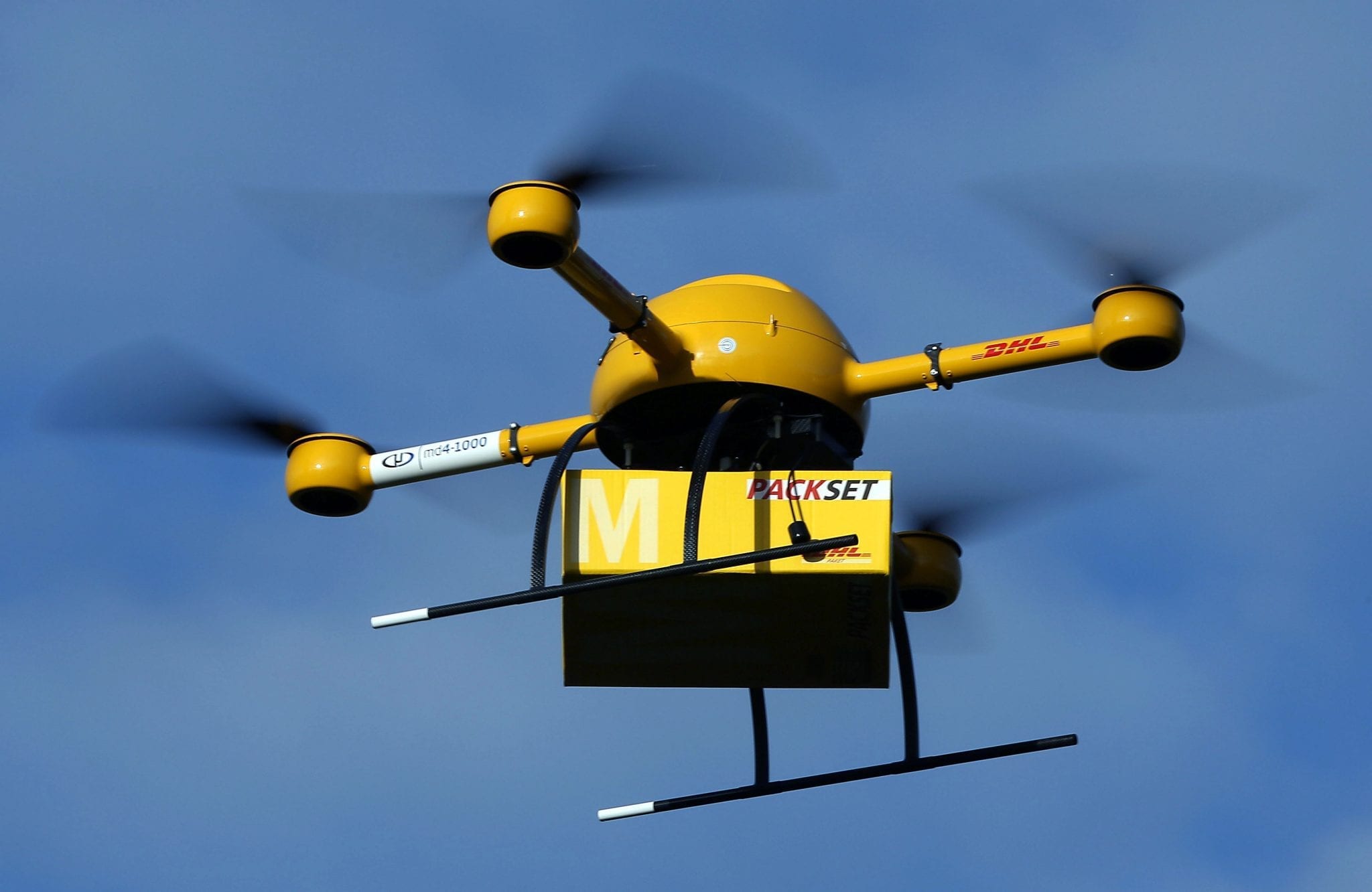
    Flying drones for business will become legal in South Korea from next month, allowing the possibility of drone deliveries.

    Laws about drone flights have been revised by the Ministry of Land, Infrastructure and Transport. Previously, aeronautical laws permitted only a limited number of businesses to use drones for work related to agriculture, photography and surveys.

    Now businesses will be able to use drones so long as their use does not pose harm to public safety, lives, property or national interests such as security and defence.

    Also modified is the stipulation for drones not needing approval and inspection from “below dead weight of 12kg” to “below maximum take-off weight of 25kg”.

    Drones that are flown at the same location will need only one approval for a maximum of six months. Within certain limits, flying drones out of sight and night flights will also be allowed.

    These amendments will allow business owners to grow their businesses through drone deliveries.

    Original reporting by Korea Bizwire.

  • China’s DJI Opens New Flagship Store in South Korea on March 12

    China’s DJI Opens New Flagship Store in South Korea on March 12

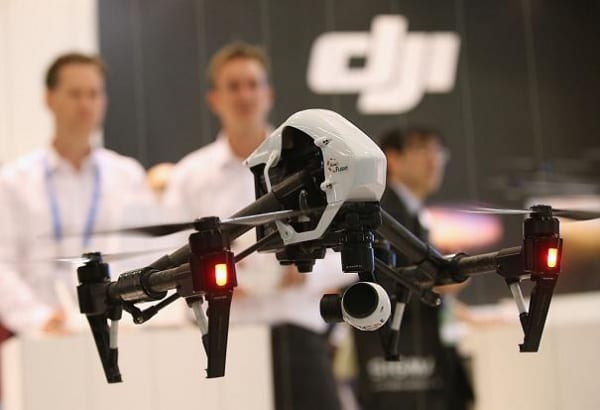
    DJI’s Inspire 1 drone can be fitted with the new Zenmuse XT thermal camera, making it see in the dark.(Photo : Sean Gallup/Getty Images)

    Chinese aerial vehicle manufacturer DJI is preparing to open a new flagship retail store in western Seoul, South Korea on March 12 at 10 a.m. local time.

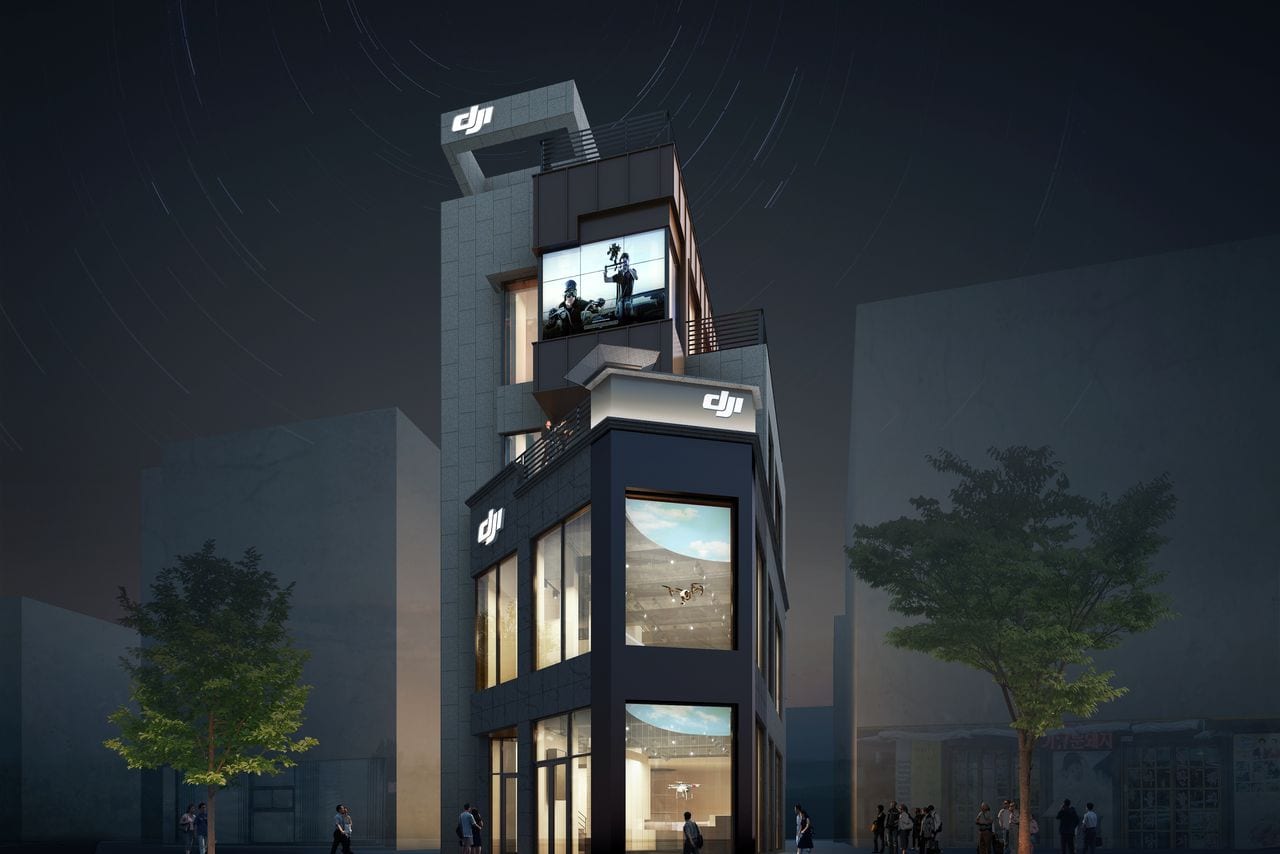
    The new five-story store is DJI’s first overseas flagship retail store covering 870 square meter of space. It has various showroom areas for showcasing the company’s consumer products including the Phantom series of quadcopters, the Inspire series, and the Spreading Wings series, among others.

    IFA 2015 Consumer Electronics And Appliances Trade Fair

    The store has an area where visitors can view videos and visual contents taken by the drones, as well as a customer experience zone where professional DJI pilots can perform demonstrations of the company’s products.

    Additionally, the store in Seoul will also provide teaching programs and hands-on sessions with drone experts where people can learn how to safely operate drone technologies, according to a report by Yonhap News.

    Manager of DJI Korea Moon Tae-hyun said, “With more and more people consuming video content on their mobile devices and the growing community of photographers and content creators, DJI sees Korea as a market with strong potential,”

    “We want to provide a truly unique experience for anyone who walks into our new store. Whether you are a professional looking for the latest aerial-imaging equipment, or curious and looking for your first drone, you will get to experience our technology up close and in person.” Tae-hyun added.

    The latest product by DJI is the Phantom 4 drone which costs $1,675 in the South Korean market. In the U.S., the new drone comes with a price tag of $1,399, available via DJI’s official website and exclusively on Apple’s online store.

    DJI, the world’s leader in drone technology, opened its first flagship store back in its homeland in the city of Shenzhen. DJI was founded by Frank Wang in 2006. The company currently has divisions in China, Japan, North America and Europe.

  • Chinese retailing giant JD.com tests drone in rural areas

    Chinese retailing giant JD.com tests drone in rural areas

    China’s online retailing giant JD.com has started conducting trial deliveries using drones, and plan to roll it out for delivery in rural China, the state media reported today.

    The company said the unmanned aerial vehicles or drones will not deliver packages directly to shoppers but will instead help transport bundles of items from its distribution stations to 150,000 representatives mobilised across rural China who will then get them to shoppers.

    The distance between distribution stations to rural representatives, usually less than 10 km according to JD, are more fixed for engineers to design drone itineraries and landing points. Representatives will be notified in advance to wait for drones to land with packages, Xinhua news agency reported.

    JD.com’s CEO Richard Liu Qiangdong had said last year that the company is developing drone delivery to meet the rising retail demand in China’s rural areas, where complex terrain and underdeveloped infrastructure have compromised timely human courier delivery.

    Both JD.com and its arch rival Alibaba have been working to unleash consumption demand from China’s 618 million rural residents, whose income growth has been outpacing their urban peers in recent years despite a slowing economy, the report said.

  • Drone Giant DJI Opens Flagship Store In South Korea

    Drone Giant DJI Opens Flagship Store In South Korea

    The Seoul store will open in March. It features five stories and 9,364 square feet showcasing the entirety of DJI’s consumer products. That includes its line of Phantom drones, as well as its Inspire, Matrice, and Spreading Wing drones. Also on display will be DJI’s aerial cameras and its Osmo handheld camera. The store has a theater offering visitors films and other visual content shot using DJI gear, as well as an “experience zone” where DJI pilots will perform demos of the company’s drones.

    A DJI spokesperson said the company has no list of future retail locations. “For us, getting the retail experience right is far more important than the rapid opening of retail stores,” the spokesperson said. “For now, we’ve selected two locations—Shenzhen and Seoul—where we see both opportunity to grow and to offer a hands-on, immersive experience for customers.”

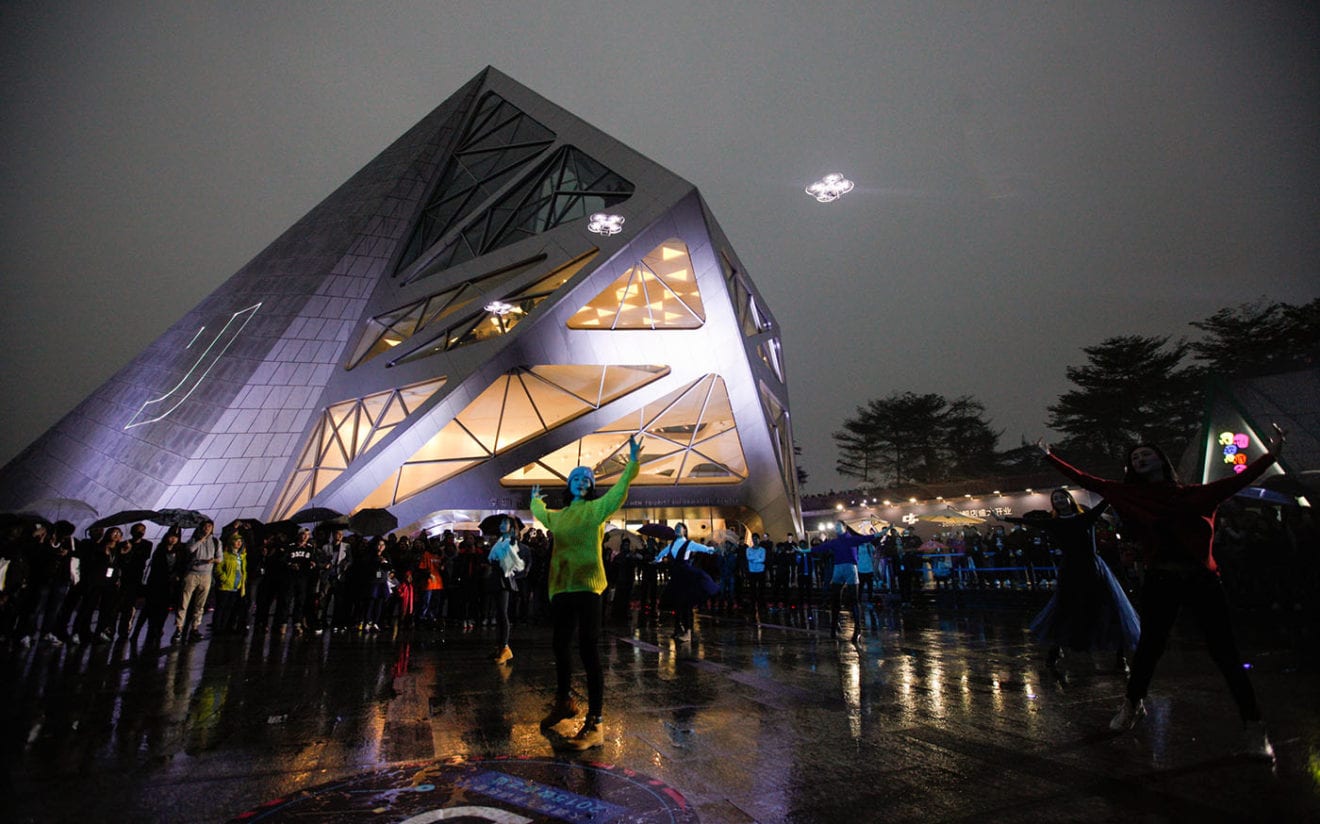
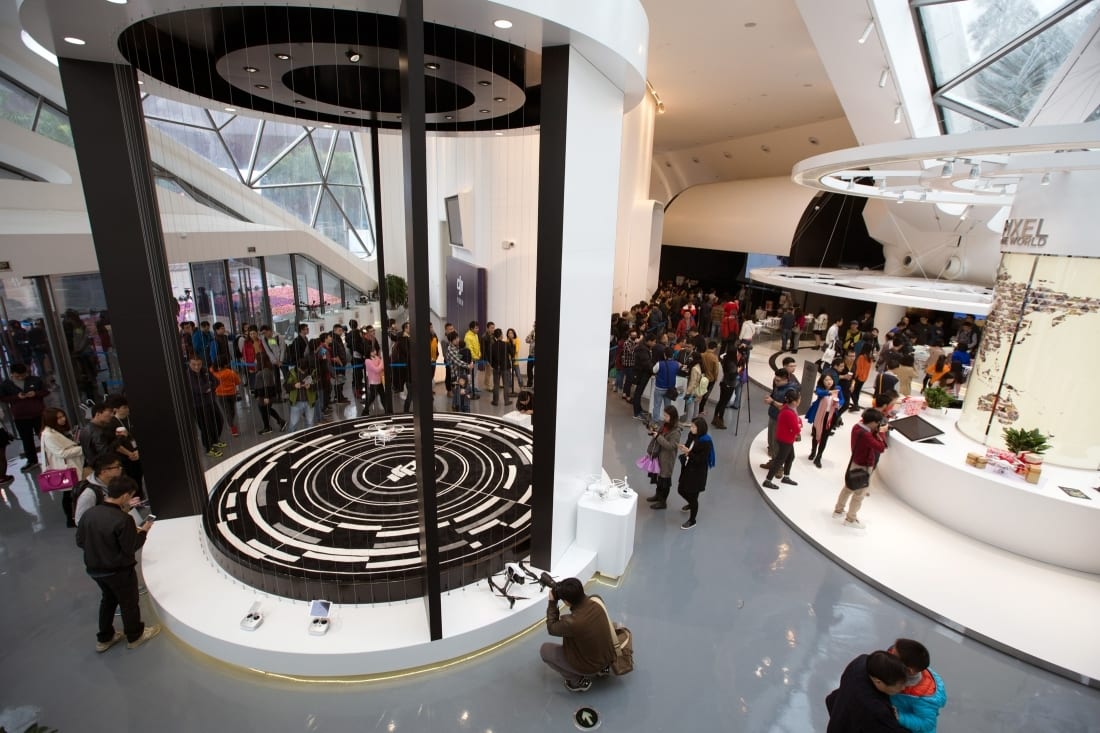
    DJI store in Shenzhen, China

    DJI currently has a 70% share of the global consumer drone market, the company said, with the United States its largest market, followed by Europe.

    In the United States, the federal government now requires owners of most consumer drones to register them or face potentially substantial fines or even imprisonment. As of earlier this month, more than 180,000 people had signed up.

  • First passenger drone makes its debut at CES

    First passenger drone makes its debut at CES

    Chinese entrepreneurs bring their one-person craft, which is controlled by tablet and capable of flying 60mph, to the annual technology convention CES.

    A Chinese company claimed a world first on Wednesday by unveiling a drone capable of carrying a human passenger.

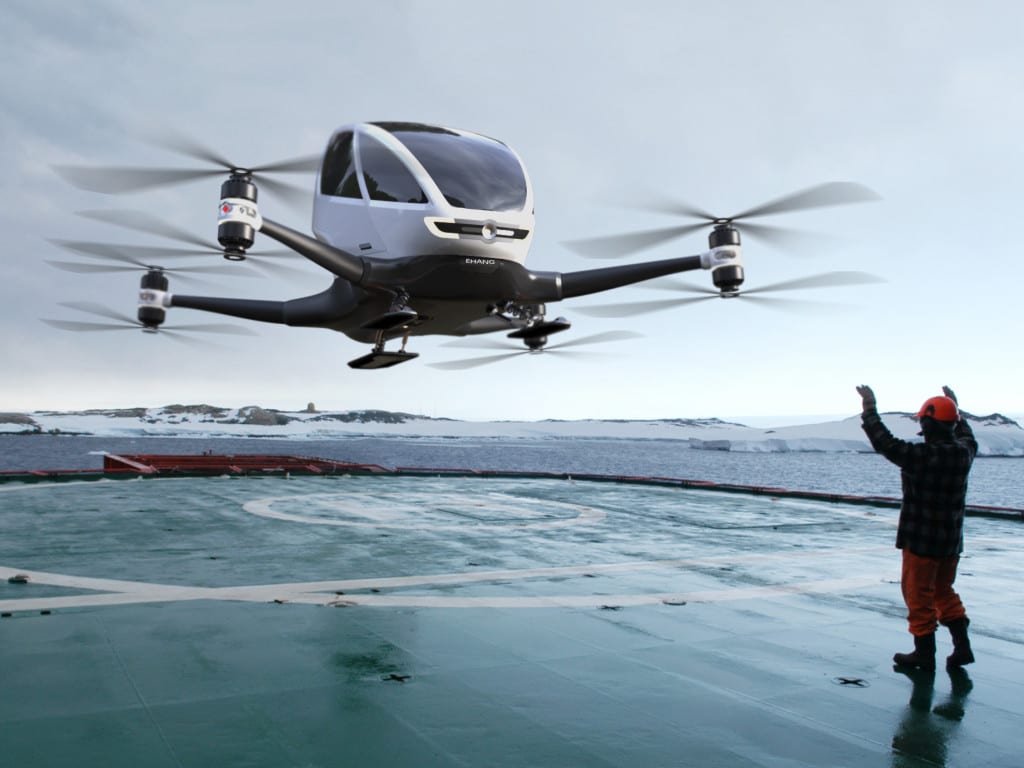
    Guangzhou-based Ehang Inc pulled the cloth off the Ehang 184 at the Las Vegas convention center during the CES gadget show.

    In a company video showing the 184 flying, it looks like a small helicopter but with four propellers spinning parallel to the ground in a similar configuration to other drones.

    The electric-powered drone can be fully charged in two hours, carry up to 100kg (220lb) and fly for 23 minutes at sea level, according to Ehang. The cabin fits one person and a small backpack and is fitted with air conditioning and a reading light. It is designed to fit, with propellers folded, in a single parking spot.

    After setting a flight plan, passengers needed only to give two commands – “take off” and “land” – done with a single click on a tablet, the company said.

    The drone is designed to fly 300 metres to 500 metres (1,000 to 1,650 feet) off the ground with a maximum altitude of 3.5km (11,500 feet) and top speed of 63 mph (100km/h).

    US authorities are starting to lay out guidelines for drone use, and a human-passenger drone seems certain to face strict scrutiny.

    Michael Huerta, head of the Federal Aviation Administration, was at CES but could not immediately be reached for comment.

    Shang Hsiao, Ehang’s co-founder and chief financial officer, said his company hoped to sell the device for $200,000-$300,000 this year but acknowledged it occupied a legal grey area. “The whole world never had something like this before,” he said.

    A passenger would have no controls as a backup, he said. The company was planning a remote control centre that would take over the vehicle in the event of a problem and ensure it landed safely.

    Derrick Xiong, the chief marketing officer, said the vehicle had been flown more than 100 times at low altitudes in a forested area in Guangzhou, including several times with a person aboard.

    One feature that made the quadcopter safer than a helicopter was its numerous propellers, Xiong said. Even if three of the four arms had their six propellers disabled, the final arm’s working propellers could ensure a rough landing by spiralling toward the ground.

    The company, which also makes smaller drones, said in August that it had raised $42m in capital from various investors including GP Capital, GGV Capital, ZhenFund and others, after raising $10 m the previous year.

  • DJI Opens Flagship Retail Store in Shenzhen

    DJI Opens Flagship Retail Store in Shenzhen

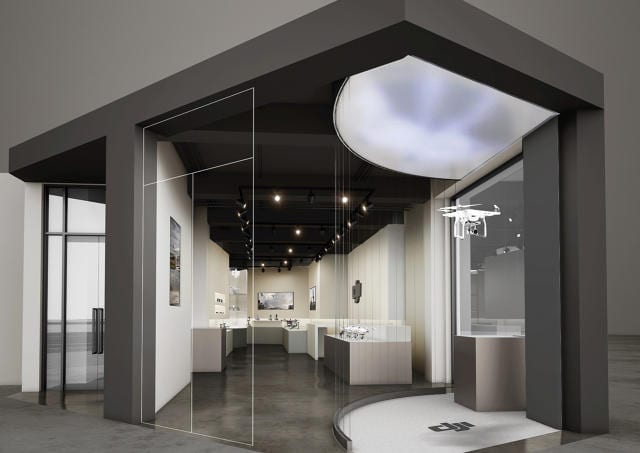
    DJI, the world leader in unmanned aerial vehicle technology opened its first flagship store today at OCT Harbour in Shenzhen. The 800-square-meter store will feature a full range of DJI’s consumer products and aims to let consumers see, touch and learn firsthand about the company’s innovative and creative platforms.

    “The DJI flagship experience is an important touchpoint to connect people with our cutting-edge technology and get a sneak peek into the future,” said Frank Wang, DJI Founder and CEO. “Whether you are curious to learn how to fly or a professional looking for the latest aerial imaging technology to create your next big idea, the flagship store will provide you with the opportunity to really experience the DJI brand up close and in person. More importantly, it will allow us to engage our customers in a deeper and more meaningful way.”

    On display and for sale will be DJI’s Phantom 3 series, the Inspire 1 and Spreading Wings series, Matrice 100, Guidance, the Ronin handheld three-axis camera gimbal line, as well as the company’s latest integrated stabilized 4K handheld camera, the Osmo.

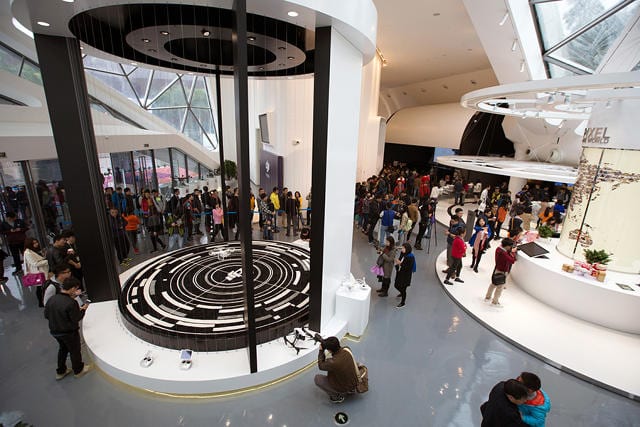
    The flagship’s interior architecture is based on the concept of yuan, the Chinese word for “circular.” It is symbolic of DJI’s drone propellers, which form a circular shape when in motion. This concept can be seen in various places around the store, including the “SkyPixel Around the World” interactive installation, which is featured on a cylinder-shaped map in the shop’s center. The flagship store also features a theater, flight area, lounge area and repair counter.

    The OCT Harbour store features a stunning waterfront view and is surrounded by a vibrant culture of tourism, ecology and commerce.

    Highlights of the flagship store include:

    The DJI flagship store is located at the Shenzhen Tourist Information Center, OCT Harbour, East No.8, Baishi Road, Nanshan District, Shenzhen, China. Openings hours are Sun-Thu 10:00 – 22:00 and Fri-Sat 10:00 – 22:30.

  • Drone maker DJI plans retail outlet in Shenzhen

    Drone maker DJI plans retail outlet in Shenzhen

    Chinese drone maker DJI Technology Co is opening its largest retail store in Shenzhen, Guangdong province, later next month.

    The 800-square-meter store will give DJI, which claims to control about 70 percent of the global drone market, a boost in the retail sector and help ward off competition from overseas players.

    DJI said in a statement that the store has floor space larger than the passenger cabin of an A380 aircraft. It will be located in a busy shopping district named OCT Harbor, and will open for business later next month.

    She Shuanglin, a researcher who tracks the drone market at research firm Analysys International, expects the new store to spark demand for drones.

    “DJI plans to open similar stores in other cities like Beijing and Shanghai so that customers can see and experience their entire range of products,” She said. “But it will need big stores to display the entire range of products.”
    Drone maker DJI plans retail outlet in Shenzhen

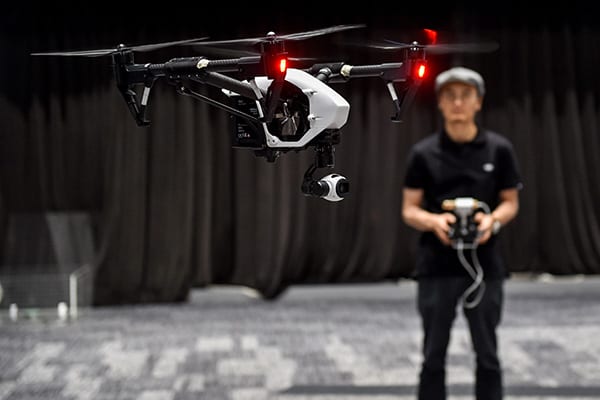
    Wang Tao, founder and CEO of DJI Innovation Technology Co, operates a drone in Shenzhen, Guangdong province. The turnover of China’s civil-use drone market is on track to soar to 2.3 billion yuan this year, according to an Analysys International estimate.

    Retail prices for the company’s drones start at around 4,000 yuan ($630), with high-end products priced above 20,000 yuan.

    The company has indicated it will not go in for a sizable expansion and will stick to just one or two outlets in each city, She said.

    DJI already has several authorized and small-sized stores in major cities.

    Turnover of the civil-use drone market in the country is set to reach 2.3 billion yuan this year, a 55 percent jump from a year earlier, according to an Analysys International estimate. Demand for drones in the country is likely to exceed 11 billion yuan by 2018, it said.

    Overseas drone makers are also eyeing the rapidly growing market in China.

    Nicolas Halftermeyer, chief marketing officer of France-based Parrot SA, told China Daily in an earlier interview that the company sees China as a key market for its inexpensive drones designed as kids’ toys.

    Parrot’s drone business generated 44.4 million euros ($47 million) in revenue in the third quarter of this year, a 60 percent surge over a year earlier.

    DJI, however, is planning a slew of measures, like ramping up hiring, to counter competition.

    It is also building a development center in Silicon Valley in the United States and has hired top engineers from companies like Apple Inc and Tesla Motors Inc.

    Darren Liccardo, former head of Tesla’s autopilot project, joined DJI in August to head its engineering, systems and application development.

    Rob Schlub, a former antenna expert from Apple, joined DJI’s research facility in Palo Alto, California, to oversee the entire development team.

    She from Analysys International said the cash-rich DJI is making aggressive investments in overseas recruitment to maintain a technology edge over its challengers.

    “DJI will remain focused on unmanned aviation and high-performance camera development in the coming years,” said She.

    DJI said it has a 1,500-member R&D team in Shenzhen. Its US facility will be responsible for advanced technology development.