Tag: duty free

  • Featured: DFS Group interview

    Featured: DFS Group interview

    In an exclusive interview, DFS Group’s Brooke Supernaw, Senior Vice President Spirits, Wines and Tobacco, told Charlotte Turner that the new accreditation is a reflection of the retailer’s dedication to its customers and staff. She also revealed that this training course is something which they are rolling out in Singapore, then Hong Kong before doing so globally.

    Charlotte Turner: Tell us what it means to be in charge of travel retail’s first Whisky Ambassador venue, and why does travel retail need these venues?

    Brooke Supernaw: We’re very honoured to be the world’s first travel retail venue to receive this accreditation. It’s really a reflection of our dedication to both our customers and our staff, to invest in their education, to bring a better experience to our customers.

    And that then relates to delivering a better experience to the customer. I see more and more and I hear more and more from our staff that our customers are becoming very savvy, especially when it comes to the world of whisky, and then even more so in the world of single malts.From our customers’ point of view when they shop for a whisky – which is inclusive of all different types of whisky – they want to know the history; they want to know the heritage; they want more information than just the age and the price. By putting our staff through this strong training programme, it’s not only going to build their confidence, but their passion around how whisky is made and really appreciate the heritage behind it.

    There are a lot more connoisseurs coming through over the last few years as this category starts to grow and we need to not only keep up with that, but we need to be ahead of it. We want our sales associates to not only feel confident, but deliver the best experience for the consumer, and to really inspire them through their knowledge and through their education. So for us we’re going to be rolling this out in Singapore and then in Hong Kong and then ultimately globally as part of our DFS University; our training programme.

    CT: How did this initiative come about exactly?

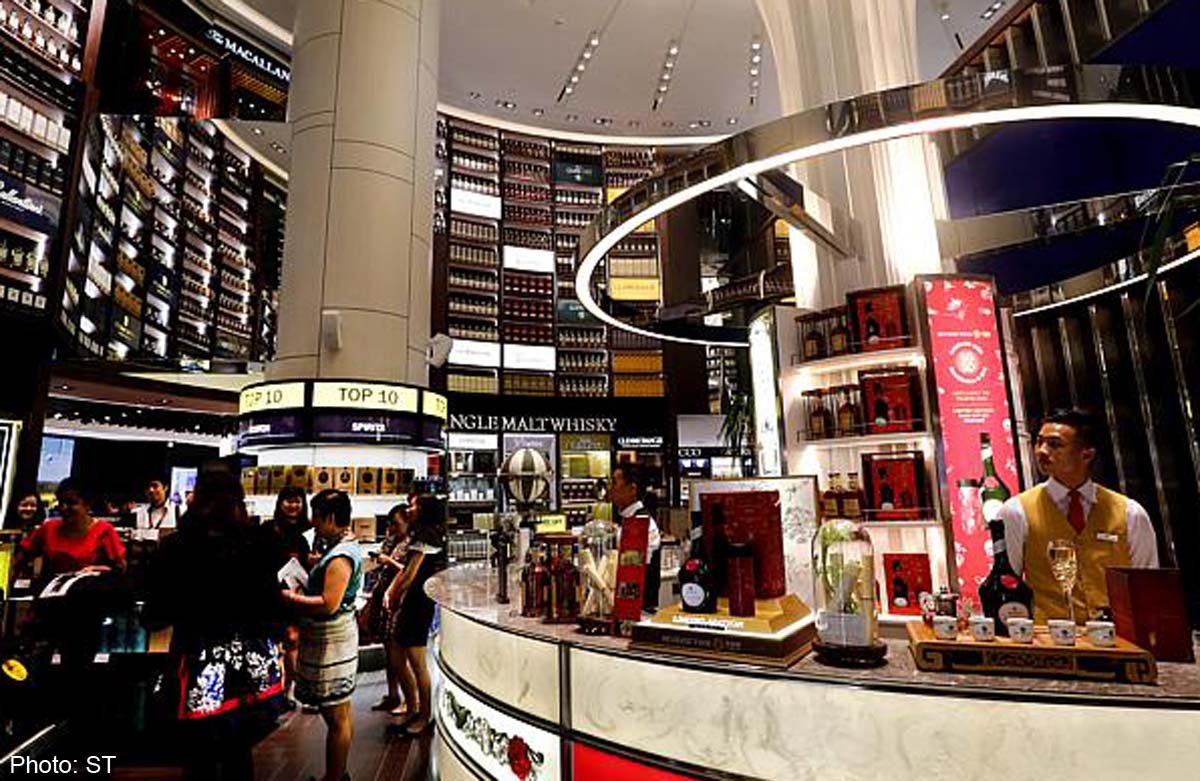
    BS: It first started with the launch of our duplex store here in Changi, and part of our ambition with the duplex store was to create a different environment and a different experience here. So each of the different shop-in-shops we have here – whether it’s The Macallan or Glenfiddich or Johnnie Walker – has a unique product and they have brand ambassadors that deliver a slightly more enriched experience.

    So they’re sent to a Chateaux, they’re trained with the distillers; they have a slightly higher knowledge, if you will, because of the investment that’s been made. But when we sat back and thought about it we said, ‘that’s great, but we want that for a broader range of our sales associates’. We want our customers to walk in and take away that enriching and educational experience, so why limit it to just the duplex?
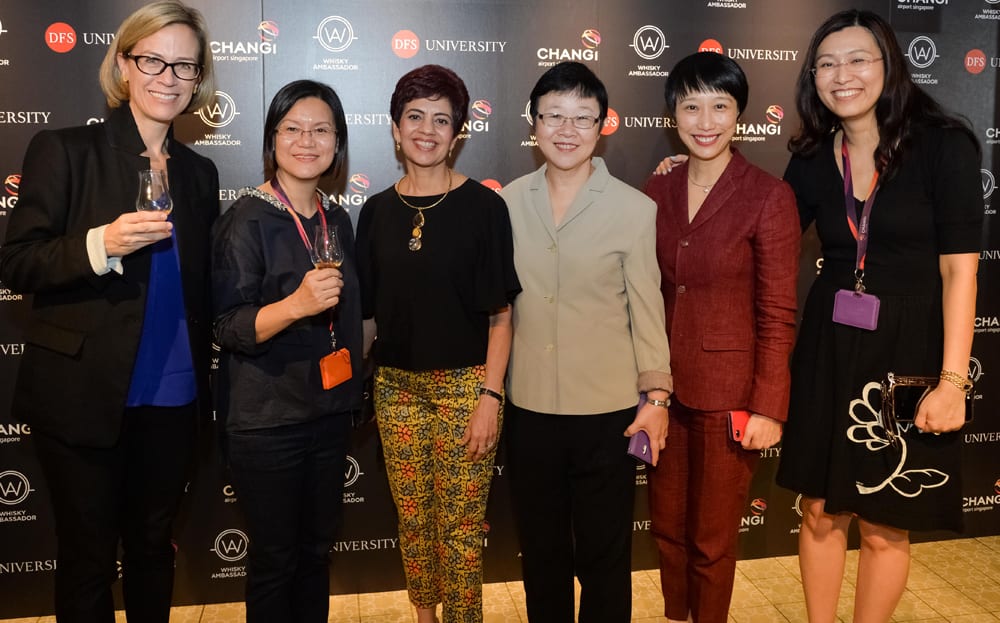
    Brooke-Supernaw,-Teo-Chew-Hoon,-Monet-Aluquin,-Patricia-Sim,-Wilcy-Wong,-Lim-Peck-Hoon

    L-to-R: Brooke Supernaw; Teo Chew Hoon; Monet Aluquin; Patricia Sim; Wilcy Wong; Lim Peck Hoon.

    That’s how we got inspired to say let’s incorporate it into our DFS University. We already had a wine school that you may be aware of? We have a DFS wine school that we branched into a DFS spirits school and within that a specific whisky programme because of the growth that we see and the potential that we see. It’s so amazing to see this.

    I’m guessing this is a DFS Group initiative so we won’t be seeing this from other retailers…

    It is. Whisky Ambassadors, this is actually a company that is based in the UK. They do have programmes that are accessible to hotels and restaurants and retailers and we actually went and interviewed multiple companies and we found that the Whisky Ambassador programme was the best fit for our needs, so we brought it into our school. I do believe we are the only travel retail operator that has an in-house university and an in-house training programme, and this is going to be one section of that.

    Moving back to the duplex itself, how have consumers reacted to it since it opened and does DFS think that the investment is worth it, because it was substantial…

    It was substantial and it was absolutely worth it and we had great responses from our customers on the second floor, and we really wanted to deliver a truly differentiated experience on the second level.

    When you come up the escalator the views of the double height wall bays and the bottles that surround it are quite breath-taking. Then you’re welcomed by the Raffles Bar before going through this series of boutiques that each speak to the brands’ personalities; to the DNA; to the history and to the heritage. You have welcoming brand ambassadors; you’re tasting product that isn’t traditionally tasted in travel retail; you have engraving services and scent labs. It’s truly not only a journey, it’s a unique experience almost like going through an art gallery.
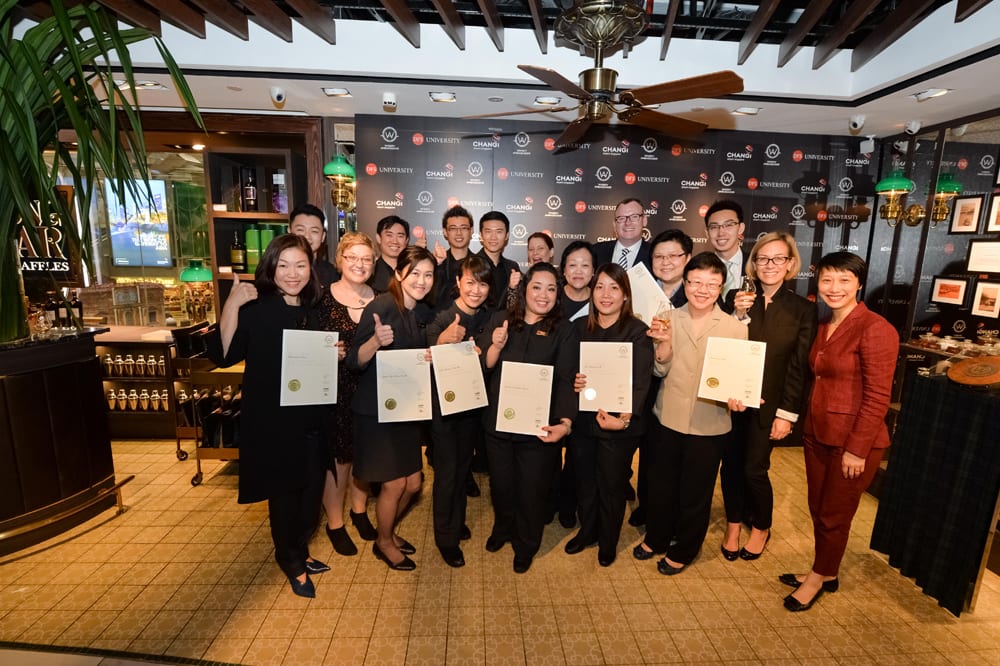
    DFS-Changi-Whisky-Ambassadors-with-Brooke-Supernaw-&-Wilcy-Wong

    DFS Changi Whisky Ambassadors with Brooke Supernaw and Wilcy Wong.

    So we’ve had great responses as, again, customers become more savvy and they travel through travel retail. One of the values we can offer them is differentiated, unique and exclusive product and that’s really what this second level is delivering, as well as service.

    So it goes back to proper training, in-depth training, really engaging the consumer and inspiring them, and that’s a lot of what this is all about.
     

  • Changi Airport hits record high in retail sales

    Changi Airport hits record high in retail sales

    Sales at Changi Airport hit a record high of $2.2 billion last year, on the back of growing passenger numbers.

    Spending at the airport’s retail and food stores grew by 8 per cent year on year, it was revealed yesterday.

    Travellers from China accounted for a third of the airport’s retail market and Singapore consumers, a fifth. The other top spenders were from Indonesia, India and Australia.

    Passenger traffic figures are expected to be released next week.

    In 2014, Changi Airport was among the top three airports in the world in terms of retail business performance. Last year’s ranking is not available yet.

    Ms Lim Peck Hoon, executive vice-president (commercial) at Changi Airport Group (CAG), said yesterday: “We are delighted to achieve yet another record high for concession sales at Changi Airport in 2015. This is positive for the Singapore air hub as profits from our retail business help to offset the cost of our aeronautical operations.”

    Despite the depressed market conditions, Ms Teo Chew Hoon, senior vice-president of airside concessions, said CAG is gunning for an even better sales target this year.

    Shoppers’ favourite buys are liquor, tobacco, cosmetics and perfumes. These are followed by luxury goods, electronics and equipment and chocolates and sweets.

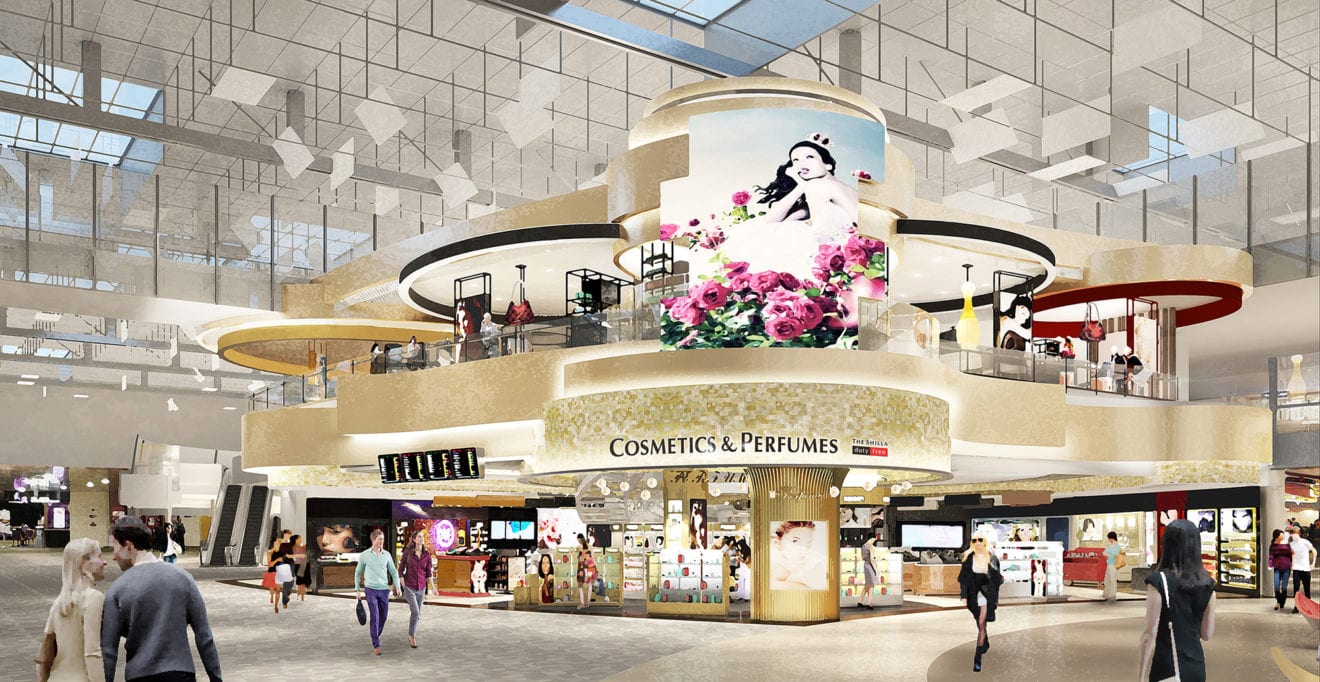
    Ms Lim said last year’s retail performance was down to a successful commercial strategy, which saw the introduction of three liquor, beauty and fashion duplex stores, the first of their kind in the world. They even have their own bar lounges and wine-tasting corners.

    Well-known brands such as Zara and Samsung also launched their first stores at Changi Airport.

    Other promotions, such as one for Star Wars soft toys during the year-end holidays and the “Be a Changi Millionaire” draw, contributed to the retail buzz.

    British administrator Linda Tobin walked away a million dollars richer yesterday, after she won the Changi Millionaire draw.

    The 52-year-old took the top prize after her niece suggested that she pick boarding ticket No. 3, which fitted into a jigsaw puzzle of a picture of a boarding pass.

    Ms Tobin, one of the seven finalists picked for the grand draw, was on her third flight through the airport. She qualified after buying a $412 bottle of whisky.

    “I am on top of the world,” said Ms Tobin, who plans to use the money to spruce up her home and garden and buy a car. She also promised her niece a trip back to Singapore.

  • Jalux opens duty-free outlets in Hanoi

    Jalux opens duty-free outlets in Hanoi

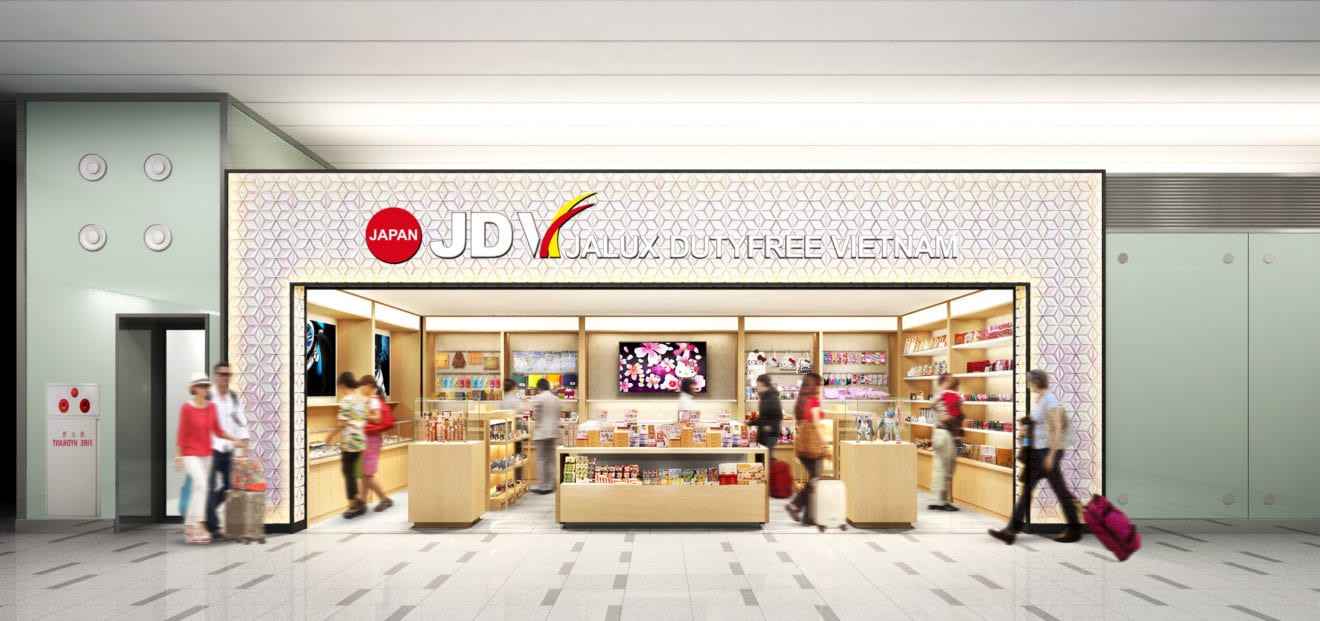
    Japanese travel retailer Jalux has launched its first airport outlets outside Japan, with three stores at Hanoi Noi Bai International Airport in Vietnam.

    Located in Terminal 2, the stores are trading as Jalux Duty Free Vietnam, with two in the Departures area and one in Arrivals. The stores focus on introducing Japanese brands to travellers, picking up on growing demand across Asia for genuine Japanese goods.

    Jalux Duty Free is a joint venture between Jalux (51 per cent) and Vietnamese company Thang Long Air Services (Taseco).

    Jalux has airport stores across Japan, including JAL Duty Free and Blue Sky stores.

    Taseco is engaged in retailing both on and off airport, as well as having interests in wholesale, beverages, hotels and restaurants.

  • DFP upgrades Manila T2 duty free shop offering

    DFP upgrades Manila T2 duty free shop offering

    Duty Free Philippines has recently completed work on upgrading its duty free offer in Manila Airport Terminal 2, which is used exclusively by national carrier, Philippines Airlines.

    The T2 duty free shops currently record the second largest share of duty free sales at Manila Airport, generating a 30% slice of DFP’s total Manila Airport revenue. Arrivals sales in T2 are larger than departures, with the two stores selling liquor, tobacco and chocolates mainly to Filipino workers and travellers.

    “We did an upgrade of our T2 departure store in 2014. We used a Hong Kong designer,” said Duty Free Philippines Merchandising Division Manager Jennifer Start, talking exclusively to TRBusiness. “We have a cute store with boutiques for Chanel, Salvatore Ferragamo, Pandora, Lancôme and Longchamp.

    DFP at Manila Airport T3 departure 3

    This image actually shows the newly refurbished Duty Free Philippines shop in Terminal 3 at Manila Airport – a standard the retailer has set for all of its new shops – including those in Terminal 2.

    “T2 departure hall has one long open shop with liquor, tobacco and confectionery on one side, while the other side is perfume, cosmetics and fashion.”

    DFP’s Internet shopping is also another new service that is planned to boost sales in future, allowing customers to collect pre-purchased goods on departure from the Philippines, or buy goods for collection in airport arrivals or at the downtown Fiesta Mall.

    “We have a website showing our products on offer,” Start said. “Our online shopping platform site is being developed. We are still talking to vendors and hopefully we can get this up soon. We are working on details with the Bureau of Customs.”


  • Korean Customs to issue more duty free licenses?

    Korean Customs to issue more duty free licenses?

    Park Geun-Hye’s South Korean government has commissioned a formal review of the domestic duty free industry, its impact on tourism and what it perceives as the dominance of Lotte Duty Free and Shilla Duty Free in the sector.

    A private consulting firm has been commissioned to undertake the review, which is expected to forward its findings to government before releasing the results into the public domain.

    We understand that Korea Customs Service officials have informally told duty free industry executives that new Seoul downtown duty free shop licenses could be issued in 2016 – and possibly other key locations – as part of government efforts to reduce Lotte’s and Shilla’s present duty free industry dominance.

    “The government is researching the duty free environment and will announce the results including whether new downtown licenses will be issued and where, and the number of new licenses,” commented a reliable duty free industry source in Seoul.

    “The government has asked a private consulting company to research the duty free market here to boost tourism and reduce the present duty free market duopoly. The government is looking at a different solution to taking away existing licenses; instead they are planning to have more licenses. We hope there will be a positive result from the government’s announcement.”

    Although no decision has been made so far, Korea Customs Service officials are understood to have told duty free industry executives that new downtown licenses may be issued this year. Seoul, the South Korean capital, and Busan are the most likely locations for new downtown shop licenses, along with Jeju Island.

    ‘RUMOURS’ OF MORE LICENSES…

    “KCS is leaking rumours that there will be new duty free licenses around March 2016. There is still a debate in our National Assembly about diluting existing duty free retail monopolies by giving new licenses,” said the source.

    “KCS is thinking to issue more duty free licenses for Seoul and Busan. Tourism in Busan is growing, but not like Seoul. Lotte’s grip already is weaker as they have lost their Lotte World Tower license; also, Shinsegae Duty Free is coming into central Seoul with their new Namdaemun super store, which will take a significant part of Lotte’s Sogong shop’s sales.”

    News of the government’s duty free industry review comes as speculation continues to grow over the future use of Seoul’s Lotte World Tower duty free store and the Walkerhill downtown duty free shop, after both retailers recently lost licenses to successful rival bids from Shinsegae Duty Free and Doosan Duty Free.

    Under KCS regulations, losing duty free license holders may continue to operate their shops for a grace period of six months after license expirations to allow them to sell off stock, find new employment for staff and wind up their businesses.

    Both the Lotte World Tower and Walkerhill downtown stores are continuing to trade while their owners decide future arrangements for their outlets.

    PRESIDENT PARK GEUN-HYE SAID TO BE ‘CONCERNED’

    South Korean President Park Geun-Hye (top right) has only recently voiced concern about the large financial losses that both Lotte and Walkerhill face under KCS’s new non-renewable license arrangements, after investing in multi-million dollar new duty free facilities, only to lose their licenses soon afterwards.

    “There is a rumour that Lotte will try to pass its Lotte COEX duty free shop license in Seoul to Lotte World Tower duty free shop,” the source said. In the Lotte World Tower shopping complex there are already duty paid Louis Vuitton, Chanel and other luxury brand boutiques.

    “Without its Lotte World Tower duty free license there is no reason for Lotte to keep its former duty free boutiques there as well and have double stores in one location. Lotte will have to destroy all its investment in these duty free boutiques. The government does not want to see this happen, so it is thinking of different options.”

    Other possibilities apart from Lotte being permitted to transfer its COEX downtown duty free store license are that it could win a new license if KCS issues a new series in Seoul this year. Alternatively, another company winning a new duty free license might be permitted to operate the Lotte World Tower outlet, though it is unlikely that Lotte would agree to this.

    WALKERHILL RECONFIRMS IT IS LEAVING THE BUSINESS

    While Lotte continues to search for a solution, the SK Group parent of Walkerhill Duty Free has reconfirmed that it is to leave the duty free industry altogether and it will not seek a new duty free license in future.

    The Walkerhill duty free store actually represents only a very small share of the SK Group’s total revenue compared with its major business activities, that include telecommunications, transportation, oil refining and other energy-related interests.

    SK recently invested more than US$30m in upgrading and expanding its Walkerhill duty free store which forms part of the Walkerhill hotel and entertainment complex in eastern Seoul. The retailer’s options now include converting the duty free store back to hotel use, or leasing the shop to another retailer.

    Paradise Casino, which operates the Walkerhill complex casino, is understood to be disappointed at the loss of the duty free license as many high spending Chinese visitors to the duty free store visited the casino after shopping.

    In fact, the Walkerhill duty free shop and casino rely upon each other to attract customers, as many visitors to Paradise Casino also visit the ajoining duty free shop, which has built a strong reputation for its wide range of high-priced watches, along with other luxury goods.

  • Hanwha Galleria to open in Seoul on Dec

    Hanwha Galleria to open in Seoul on Dec

    Hanwha Galleria, the retail unit of South Korean conglomerate Hanwha, says it will partially open its first duty-free store in downtown Seoul next week.

    About 60 per cent of the trading floor of the new store, located at the base of the gold-tinted 63 City Building in Yeouido will open for business on December 28.

    The target customers: cashed up Chinese tourists now flocking to Korea in increasing numbers.

    The rest of the store will open in June.

    The pre-opening will showcase 369 brands, including cosmetics, watches and jewellery, on four floors, with nearly half of them being Korean brands.

    Although Hanwha said it has been working on attracting global luxury brands to the store, it has made little progress.

    “Although we want to have (luxury brands) in the stores, they are not yet considering opening new shops, thinking they have enough shops (in South Korea),” Hwang Yong-deuk, CEO of Hanwha Galleria, said during a briefing.

    The company said it will continue negotiations to house global brands when Lotte World Tower, a duty-free store by retail giant Lotte, closes its outlet this month after losing its operating license in a recent bid.

    Hanwha vowed to step up its bid to expand its duty-free business down the road, adding it is targeting 504 billion won (US$429.6 million) in sales at the new store next year.

  • $316m ShillaI’Park Duty Free targets $578m

    $316m ShillaI’Park Duty Free targets $578m

    Just over half the floor area (16,500sq m) of the new $316m 30,400sq m ShillaI’Park Duty Free store complex opened in downtown Seoul this month, initially covering floors three to six at the I’Park Mall in the Yongsan District.

    The December 24 ‘soft launch’ by the HDC Shilla Duty Free joint venture, delivered 60% of the planned retail space, with the remainder due to open at the 16 March ’grand’ unveiling – including the seventh floor and an additional 13,900sq m balance of floor space.

    The HDC Shilla Duty Free Shop is a joint venture between Hotel Shilla and Hyundai Development, which was formed to win the downtown duty free license, and it now features more than 400 brands – including luxury offerings – along with ‘K-Discovery Duty Free’ and ‘the largest K-wave store’.

    The two partners are sharing the $316m cost of developing the project. [Significantly, this is also the first new downtown duty license to be issued by the Korea Customs Service in Seoul since the year 2000].

    By the grand opening next March it expects to be offering in excess of 600 brands as South Korea’s ‘largest urban duty free location’ [and also as the long-time major challenger to Lotte Duty Free’s sales dominance in South Korea’s downtown duty free sector].

    It is also expected to generate revenue of KRW670.8bn/$578m in 2016, and produce an operating profit of KRW57.7bn/$49.7m, according to bullish predictions by KDB Daewoo Securities Research.

    THE WORLD’S SECOND-LARGEST DOWNTOWN DFS

    According to detailed information already provided to TRBusiness by Hotel Shilla, the total duty free floor space is only slightly smaller than the world’s largest downtown duty free complex at Hainan Duty Free in Haitang Bay.

    However, this new complex is designed to be multi-recreational in purpose. Plans for the HDC Shilla complex also include a 1,700-room hotel, several restaurants and concert halls.

    The joint venture has already opened luxury branded shops for Salvatore Ferragamo, Valextra, Vivienne Westwood and Bally, along with luxury stores offering multiple luxury brands in their respective product categories of fashion and accessories, watches, cosmetics and other products.

    There is also a special emphasis on cosmetics brands, which are popular as a major draw with Mainland Chinese tourists.

    One of the huge benefits offered by the new complex – and a key component in its selection for the downtown duty free license in the first place – is its plentiful parking spaces for tour buses – an extremely rare luxury commodity in Seoul today. The store location is also a hub for provincial tours by KTX trains.

    In a statement, the company said: “In the first phase, there are around 100 bus parking lots in the building and outside of the building. From the bus parking lot, tourists can directly reach the entrance of the duty free store by exclusive escalators, ‘Crystal Gate’. Next year (2016), the bus parking lot will accommodate up to 400 buses based on the demand of tourists.”

    HDC Shilla’s Co-President, Changhoon Yang and Gilhan Lee said: “We will do our best to make Shilla I’Park duty free the world’s best duty free store and to make Seoul a global shopping destination. We will take the lead to promote the nation’s tourism industry.”

    The company adds that its ambition is that Shilla-I’Park will become the centre of the Korean-Wave tourism that promotes Korean-made cosmetics and fashion goods, provincial tourism and co-prosperity along with regional economies in Korea.

    This promise to boost sales and the profile of domestic goods and services should come as a politically popular message for the present Korean Government – especially President Park Geun-hye – who is reported (by the Yonhap News Agency) to have been openly critical of recent duty free customs law revisions. Particularly so, with regard to the downward revision of downtown duty free license terms from 10 to five years.

    Meanwhile, the Shilla-I’Park partnership claims that the new store is also equipped ‘with the largest cosmetics section’ covering a floor area of 6,300sq m featuring all of the Korean-made cosmetics brands and global brands popular amongst Chinese tourists.

    HDC Shilla Duty Freec

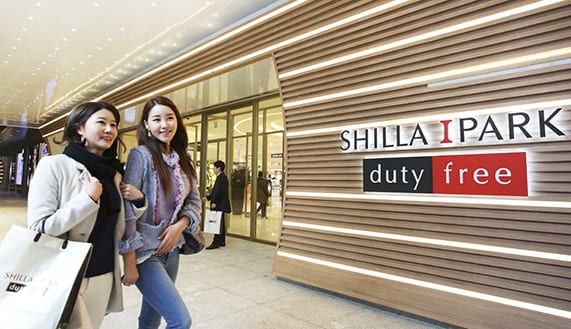
    The new store entrance. (Photo credit: Shilla Duty Free).

    AIMING FOR 90% OF SALES GOAL – BEFORE FULL MARCH OPENING

    It also points out that it houses the biggest ‘K-cosmetics’ and ‘K-Bag’ store areas specialising in Korean-made cosmetics, fashion goods and accessories, comprising more than 270 cosmetics, fashion and accessory brands.

    In addition, the third and fourth floors feature luxury fashion and global cosmetics branded stores, with a special ‘Luxury cosmetics zone’ on floor three dedicated to imported cosmetics and high-end timepieces.

    HDC-Shilla said: “We have most of [the] cosmetics and luxury watch brands loved by Chinese visitors and have raised the portion of K-cosmetics that recently showed a large increase in sales, so we are expecting to achieve about 90% of our sales goal – even before the grand opening.”

    Meanwhile, the ‘K-Discovery Travel Package’ will be introduced in collaboration with each local government, Korail, travel agencies and the duty free store to boost provincial tours of Korea.

    The retailer adds: “In addition, I’Park mall will be upgraded to provide diverse tour contents and new shopping facilities to support [the] Shilla I’Park duty free store. In collaboration with character contents, the mall will be the tourist destination, by providing various attractions consistently.”

  • $1.3bn Midfield terminal inaugurated at HKIA

    $1.3bn Midfield terminal inaugurated at HKIA

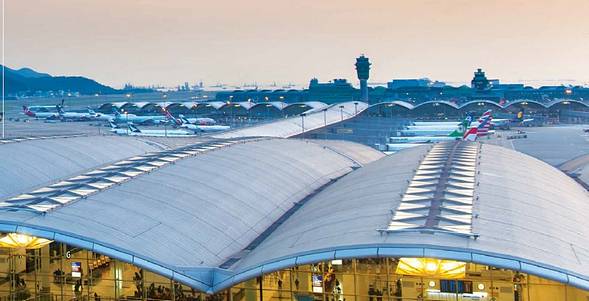
    Hong Kong International Airport (HKG) officially opened its HK$10bn/$1.3bn Midfield Concourse (MFC) and auxiliary facilities on Monday as scheduled – with the retail offer to be “gradually introduced” next year.

    The 105,000sq m, five-storey MFC is located between the airport’s two existing runways to the west of terminal one and is connected to it with an automated people mover. It has 20 parking stands and a capacity of 10m pax.

    On Monday, Jack So, Chairman of HKG’s operator, Airport Authority Hong Kong (AA), and Zhang Kui, President of Hong Kong Airlines, accompanied by CK Ng, Executive Director, Airport Operations of the AA and Ben Wong, Chief Operating Officer of Hong Kong Airlines officiated at the opening ceremony, and also welcomed the first batch of passengers.

    On the retail offer, AA says: “The concourse will gradually introduce restaurants, coffee shops and retail outlets to provide passengers with a one-stop shopping and dining experience.”

    On the significance of the concourse, So says: “The MFC is an important development as it will help the airport meet increasing passenger traffic demand. In the past 12 months, Hong Kong International Airport handled 68.2m passengers, marking a year-on-year increase of +8.3%.

    “With its capacity to serve an additional 10m passengers every year, the MFC will be able to increase the number of flights using airbridges to board and disembark, enhancing the overall passenger experience.”

    AA plans to gradually increase the usage of the MFC in the next few months. It is expected to serve about 20% of daily passenger flights from HKG when operating at full capacity by next March.

  • Duty Free Philippines targets $235m in 2015

    Duty Free Philippines targets $235m in 2015

    State-owned Duty Free Philippines is targeting total sales of $235m in 2015 (+2.5%) after hitting $229m in 2014, with Manila Airport accounting for nearly 45% and the downtown Fiesta Mall just under 50% as DFP’s largest single outlet.

    While the expected sales increase is modest, it is regarded as a good performance considering Manila Airport Authority reduced the number of concessions in T1 from around 30 to less than 20 due to congestion and major airlines have also transferred operations to T3.

    “T1 work is not finished. It’s work in progress,” said Duty Free Philippines Merchandising Division Manager Jennifer Start, talking exclusively to TRBusiness recently.

    “There has been a remarkable change. We have renovated our departure stores, but we heard there is more work to be done by the airport authority in T1. It’s upgrading work. They have shown us plans to expand the facility.”

    NAIA T3 departure confectionery ©

    Duty Free Philippines’ biggest-selling product category remains confectionery, accounting for 37% of total sales. It is also the biggest selling category at Manila Airport, accounting for 44%. Above: Manila NAIA Terminal 3. ©.

    Further work is also in the pipeline for T3 (which accounts for 20% of Manila Airport sales) as DFP gets to work on renovating and increasing its shops and boutiques in the departure hall.

    Meanwhile, arrival shops sales account for more than half of DFP’s total sales revenue at Manila Airport, with Filipino passengers representing the majority of customers and the number one purchase being confectionery/chocolate.

    NAIA T3 departure perfumery ©

    DFP’s perfume and cosmetics sales accounted for 11% of it total merchandise sales last year. Above: Manila NAIA Terminal 3. ©.

    By contrast, foreign passengers purchase a larger share of goods in DFP’s departure shops, with South Koreans and Mainland Chinese the highest spenders.

    Confectionery is the biggest selling category at Manila Airport, accounting for 44%, followed by liquor (26%), perfume and cosmetics (12%) and tobacco (7%). Fashion, watches and souvenirs take the remaining 11%.

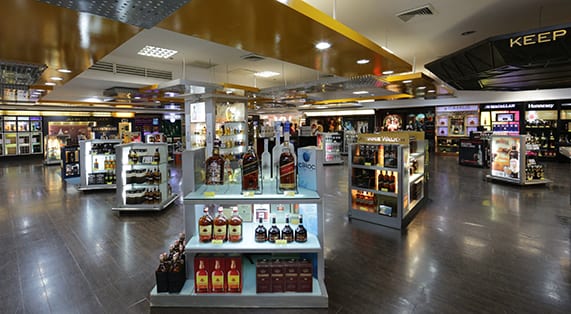
    DFP Fiesta Mall-liquor ©

    The liquor section within the Duty Free Philippines Fiesta Mall. ©.

    The retailer’s downtown duty free Fiesta Mall has also undergone a total renovation and upgrade over the last two years, according to Start, and has received favourable comments from customers: “We have had a major transformation in Fiesta Mall, especially for perfume and cosmetics last year. The fashion area also has been renovated, along with liquor, tobacco and confectionery,” she said.

    “We have new Coach and Chloe boutiques, and a complete range of lingerie, bags and perfume and cosmetics in Victoria’s Secret. Another new outlet is our Bath & Bodyworks health and beauty products shop that opened here earlier in 2015.”

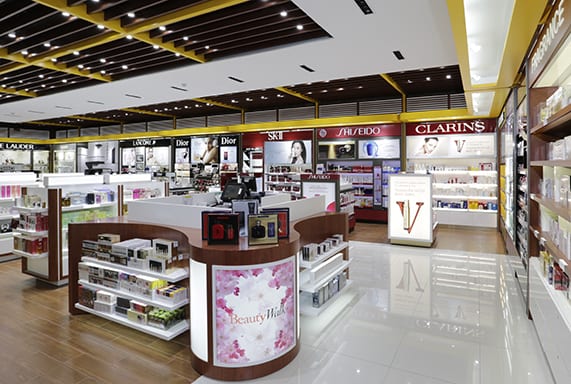
    Fiesta Mall Beauty Walk ©

    Wines and spirits is the second-largest product category in terms of sales across DFP’s outlets, accounting for 18% in total. ©.

    Including sales from all ten of its provincial airports, Manila Airport and the Fiesta Mall, DFP’s biggest selling product category remains confectionery, accounting for 37% of total sales, followed by liquor (18%); Perfume and cosmetics (11%); fashion (9%); and tobacco (5%).

  • The Peninsula to expand its luxury retail network with Hong Kong airport opening

    The Peninsula to expand its luxury retail network with Hong Kong airport opening

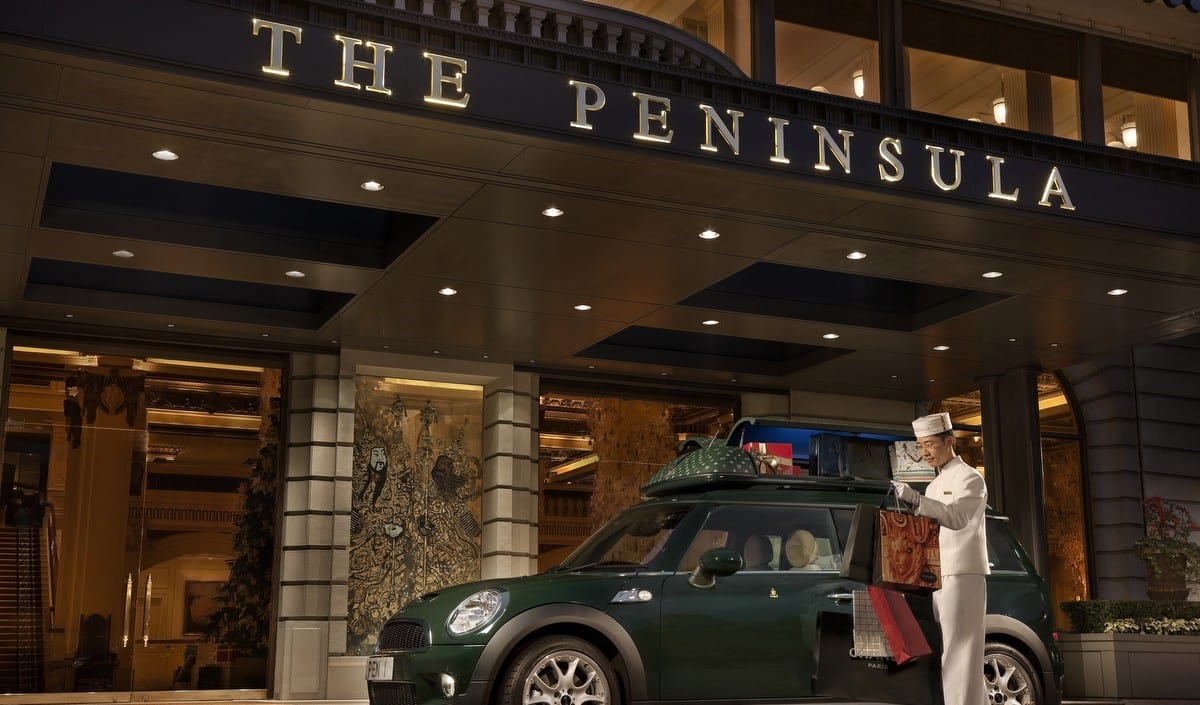
    While Hong Kong’s hotel sector faces a drop in mainland travellers this year, The Peninsula is pushing ahead with plans to open a retail shop at the city’s airport on Sunday. Paul Tchen Pao-shan, the group general manager of operations of Hongkong and Shanghai Hotels, which operates The Peninsula, says he is upbeat about the venture, even as the luxury retail sector been under pressure in recent times, forcing a number international brands to close in Hong Kong.

    “When customers do not come to us, we will go out to them,” Tchen said, adding that the 644 square foot shop will expand its product range to include customers who would not normally stay at the hotel.

    “The airport is a good location for retail business. It is a place guaranteed to have a lot of traffic. There are many tourists who want to get rid of their local currency and they will shop at the airport for souvenirs,” he said. “Food items such as chocolate are popular among tourists.” Tchen said the inspiration to diversify into luxury chocolates, teas and other gift items began during the height of the Japanese tourism boom in the late 1980s.

    At the time, Japanese visitors accounted for the majority of room bookings. A culture of gift giving, however, meant that many guests needed to stock up before their return journeys, creating a demand for products that over time would become an integral part of the hotel’s business. When the Japanese stock market imploded in the early 1990s, signalling an end to a long period of economic growth, visits by Japanese to Hong Kong began to decline, forcing The Peninsula to branch out with what had been an in-house business.

    In 2001, the hotel signed a licensing agreement with Nuance-Watson under which Peninsula-branded food products were sold at a dedicated counter under the retailer’s duty free network at Hong Kong International Airport. Business was so good that the Peninsula’s products were also sold under licence at a stand alone shop in 2003. The shop operated for 10 years until it was closed owing to rezoning of the airport retail area.

    The retail outlet set to open on Sunday will be directly owned and operated by The Peninsula, according to Tchen.

    “When we first started to sell products at the duty free shop in 2001, we did not have any retail experience. But now we have an experienced team of retail staff and we can operate our own shop at the Hong Kong airport,” he said. During the past 14 years, the company has opened 27 retail outlets worldwide, including Taiwan and Singapore, where the company has no hotel presence.

    “We consider running a retail shop in cities without a [Peninsula] hotel is like having an ambassador in that city,” Tchen said.

    “When they travel to Hong Kong, some of these retail customers may consider staying with us. Also, when we open hotels in these cities in the future, the retail shops will have played an important role in building up the brand.”

    The Peninsula also established retail shops in Japan in 2004, three years before it opened a hotel there. The retail business contributed 2.8 per cent of Hongkong & Shanghai Hotels’ turnover last year. Plans to take the retail concept online are underway with a launch tentatively set for March or April.

    “The new generation of customers is growing up with shopping through their mobile phones or desktop computers. We have to offer what customers want,” Tchen said.

  • Paul & Shark makes Korea debut launch inside Incheon

    Paul & Shark makes Korea debut launch inside Incheon

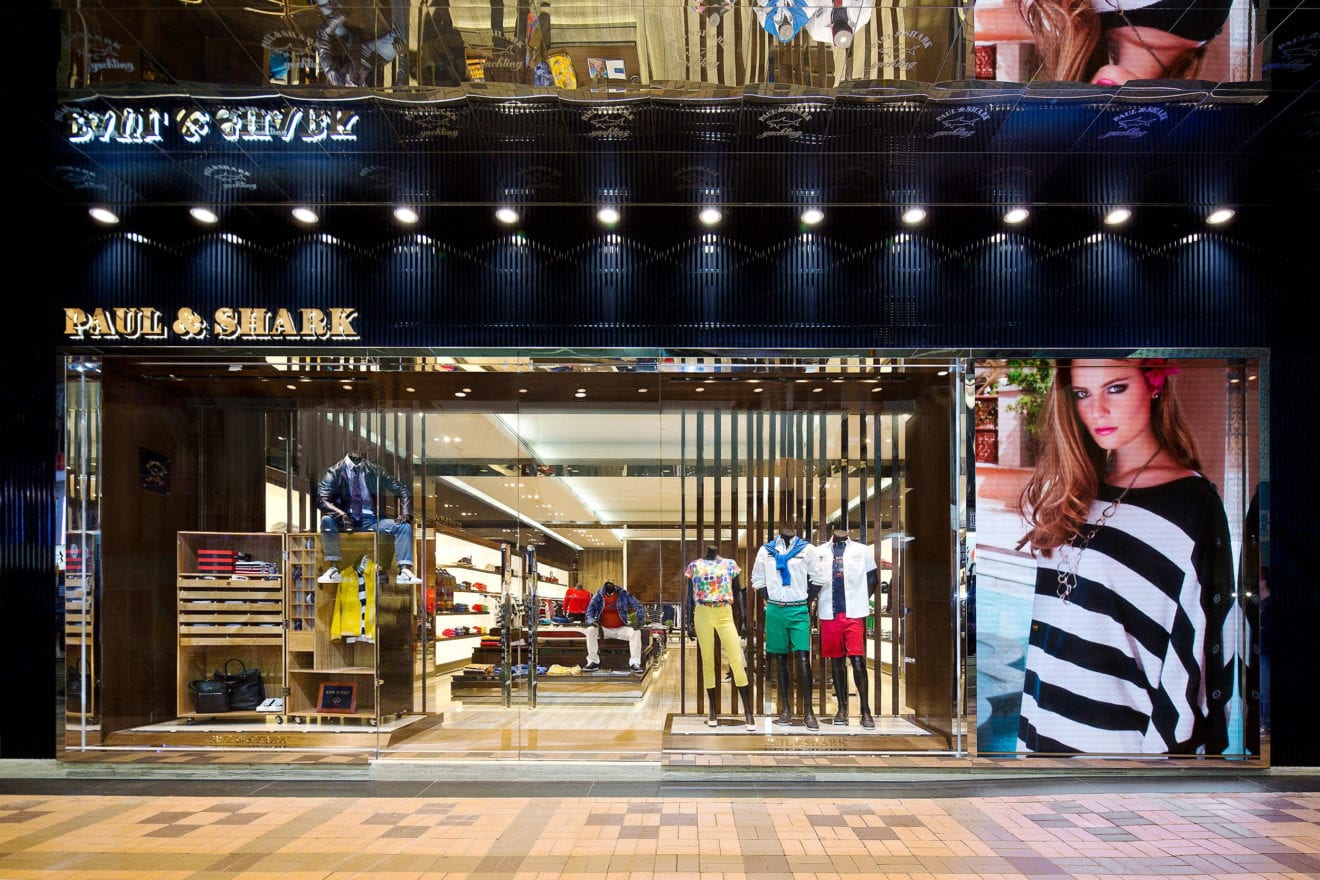
    Paul & Shark will launch its first store in South Korea with a new point of sale opening at Incheon International airport with Lotte Duty Free, and will also open its first personalised boutique onboard cruiseship Costa Fortuna.

    “Our new opening in Incheon will enable us to enjoy truly spectacular visibility for the brand. Along with the Lotte store we have another two openings planned in Seoul by the first quarter of 2016, giving Paul & Shark a very strong foot-print in the South Korean travel-retail market. These openings are both downtown duty-free – one with Donghwa and another with SM Duty Free.”Both stores will make its inaugurate launch next month. “We are so excited about these two projects,” said Paul & Shark Worldwide Travel Retail director Catherine Bonelli. “The Costa Fortuna is a beautiful ship and to have our own standalone boutique onboard is a real coup. Opening in December in the run up to Christmas could not be better timing and we’re expecting really good sell-through during the month.

    This continues a trend that has seen a 55% increase in openings for Paul & Shark over the past 18 months, of which Bonelli said around half were located in airports and the rest with cruiselines and downtown duty-free stores.

    After coming back from a busy TFWA World Exhibition last month, Bonelli sees a rosy future next year. She added that openings in 2016 were earmarked at Pudong terminal one in partnership with King Power Orient; Hong Kong International airport with Lagardère Travel Retail, and Houston with ATU-Heinemann.

    Speaking of last month’s TFWA, she added: “Cannes, with our new stand, was an incredibly busy and successful week for us with head to head appointments all week,” said Bonelli. “Our personalised embroidery service was again a particular talking point and has become a real stand-out highlight for us.

    “It’s been an incredibly busy and hardworking year for the Travel Retail team but the effort is certainly paying off and we are being rewarded with superb locations for the brand. We are confident that 2016 will be another exceptional year for us, as retailers continue to understand and realise the business potential of partnering with Paul & Shark.

  • Duty-free industry in crisis of stagnation

    Duty-free industry in crisis of stagnation

    Thousands of jobs are under threat in the wake of the Korea Customs Service’s shock decisions last Saturday in awarding duty-free licenses in Seoul.

    Two major players had their licenses revoked. Lotte Group plans to close its World Tower branch in Jamsil, southern Seoul, that posted 500 billion won ($430 million) revenue last year, and SK Networks’ Walkerhill duty-free shop is being forced to cease operations after 23 years.

    The selection process for duty-free outlets has been criticized as it mandates renewal every five years. Some observers feel this goes against the Park Geun-hye administration’s creative economy drive, which has a key premise of creating jobs by letting companies freely enter promising industries.A total of 2,200 workers are on the verge of losing their jobs at the two operators.

    Regardless of the commitments, a sense of insecurity lingers among new and old duty-free store operators because of the uncertainty over duty-free license renewals in five years.Other affiliates under the Lotte Group umbrella have guaranteed that they will hire workers from the duty-free stores, and new operators – Doosan, Shinsegae and Hanwha (selected in the summer) – have promised to absorb those from SK.

    Han Gyeong-ran, 49, has worked at Lotte’s World Tower branch for 17 years. She is a sales manager at a small-size jewelry brand inside the outlet, but now that the entire store is shutting down in six months, she will lose her job because the jewelry brand is housed at the Jamsil outlet and not the Sogong branch, which will remain intact.

    “I am just at a loss, not knowing what to do to provide for my old age,” she said.

    “I don’t know how you could say getting rid of a company that has invested 300 billion won for a single duty-free outlet and depriving those employees of jobs is what the government describes as job creation.”

    Last year, when Lotte lost its duty-free license at Gimhae International Airport in Busan to Shinsegae and shut down the store, only half of the 390 Lotte employees were transferred to Shinsegae.

    “There are many lawmakers who have remained silent over the verdict this time on the duty-free shop licenses for fear of being mistaken as defending those companies that failed,” said Lee Hahn-koo, a lawmaker with the ruling Saenuri Party. “After proclaiming it would produce more jobs, the government is actually doing the opposite, which is preposterous.”

    Before the Park government introduced a new system in 2013 that put each license up for open competition every five years prior to expiry, renewal for downtown duty-free shops was a semi-automatic, rubber-stamping process for 10 years at a time.

    Martin Moodie, chairman of the Moodie Report, a U.K.-based online publication devoted to the global travel retail and duty-free sector, told some Korean media outlets in 2013 that weakening duty-free shops in their home market “seems a misguided and short-sighted step.”

    “The five-year deal is a disaster and will kill what little quality there is. The margin pressure on brands will get far worse, too,” a senior executive for one of the world’s leading luxury brands was quoted as saying by the Moodie Report on Sunday.

    He added that some leading brands may opt in the future to position themselves in Korean domestic stores with permanent high-quality environments rather than facing a potential change in duty-free retail partners every five years, given there is “no difference between Korean duty-free and tax-refund pricing [depending on foreign exchange rates].”

    Companies that had their license renewed or newly issued may not have time to celebrate as stumbling blocks lie ahead.

    A group of lawmakers led by Rep. Hong Jong-haak from the main opposition New Politics Alliance for Democracy has proposed a revision of a bill that will force duty-free store operators to pay 100 times the licensing commission they are paying now – from 0.05 percent of annual revenue to 5 percent.

    That means the Sogong branch of Lotte Duty Free will have to pay 10 billion won in commission to the Korea Customs Service each year after the revision, when it currently pays 1 billion, or 0.05 percent of the 2 trillion won annual revenue.

    If approved, the move will inevitably force duty-free shops to hike the prices of goods, which will lead to Korea becoming less attractive to tourists, particularly big-spending Chinese, and shrinking tourism to Korea.

    The Korean government’s process goes against systems in Europe and neighboring countries such as China, Japan and Taiwan, which have been ramping up their duty-free industry as its golden goose that draws huge foreign currencies.

    The Korean duty-free business has grown exceptionally in the last five years. Earnings from duty-free have exceeded that of China and the United States and held the No.1 spot since 2012. According to a survey by the Korea Tourism Organization, the biggest reason foreigners visit Korea was to shop. In fact, 72 percent of the poll picked shopping. As a result, the Korean duty-free business raised $7.78 billion last year.

    But a change in duty-free licensing regulations will force companies to become very cautious in their investment strategies and wary of business expansion.

    Lotte was not alone in heavily investing in expanding its duty-free business. Walkerhill recently invested 100 billion won in doubling the size of its duty-free stores. It was scheduled to open up next month.

    The licensing regulation is also likely to affect future plans, even for newcomers such as Doosan.

    “It takes a huge amount of investment when starting a duty-free business, and it takes a minimum of 10 years before it settles,” said Choi Young-soo, former chairman of the Korea Duty Free Association and former vice president of Lotte Hotel in charge of the duty-free business. “If you have to get government approval every five years, who would invest a large amount and even hire regular employees?

    “When doing business whose main customers are foreigners, whether a company monopolizes is meaningless. If we continue with such a policy, we will loose the Chinese tourists to the Japanese.”

    Han Enny, CEO of Enny Trading Corporation, which supplies cosmetics to duty-free stores including Lotte and Walkerhill, was frustrated at the recent licensing decision.

    “We have products shipping in that we plan on supplying to the duty-free stores next spring, but it seems we would have to cancel those orders,” Han said. “We have built our credibility for years just to get a contract with foreign companies, but it seems it’s all going to crumble.

    “Luxury companies’ products that have high demand from Chinese consumers make trade relations based on long-term trust, but if this continues, they wouldn’t be interested in opening up stores in Korean duty-free stores.”

    Other countries have been taking the opposite direction in their strategies as they have realized how lucrative duty-free businesses can be.

    Swiss duty-free retailer Dufry was ranked No. 2 in the world in 2013. But it recently became the biggest in the industry, bumping off previous No. 1 DFS, after buying another Swiss duty-free retailer that was ranked the world’s No. 7, Nuance Group, last year and adding Italy’s World Duty Free in August. LS Travel Retail, the French duty-free retailer and world’s No. 4, expanded further when it bought North American duty-free business Paradises in August.

    As of last year, the world’s top four duty-free companies accounted for 25 percent of the duty-free market, a sharp increase from the 16 percent in 2010.

    “The duty-free business in a core pillar in a country’s tourism industry development,” said Kim Seung-wook, a economics professor at Chung-Ang University. “The customs service agency needs to focus on lowering the entry level of duty-free stores and think more on ways to help foreign tourists open up their wallets, rather than focusing on regulations.”

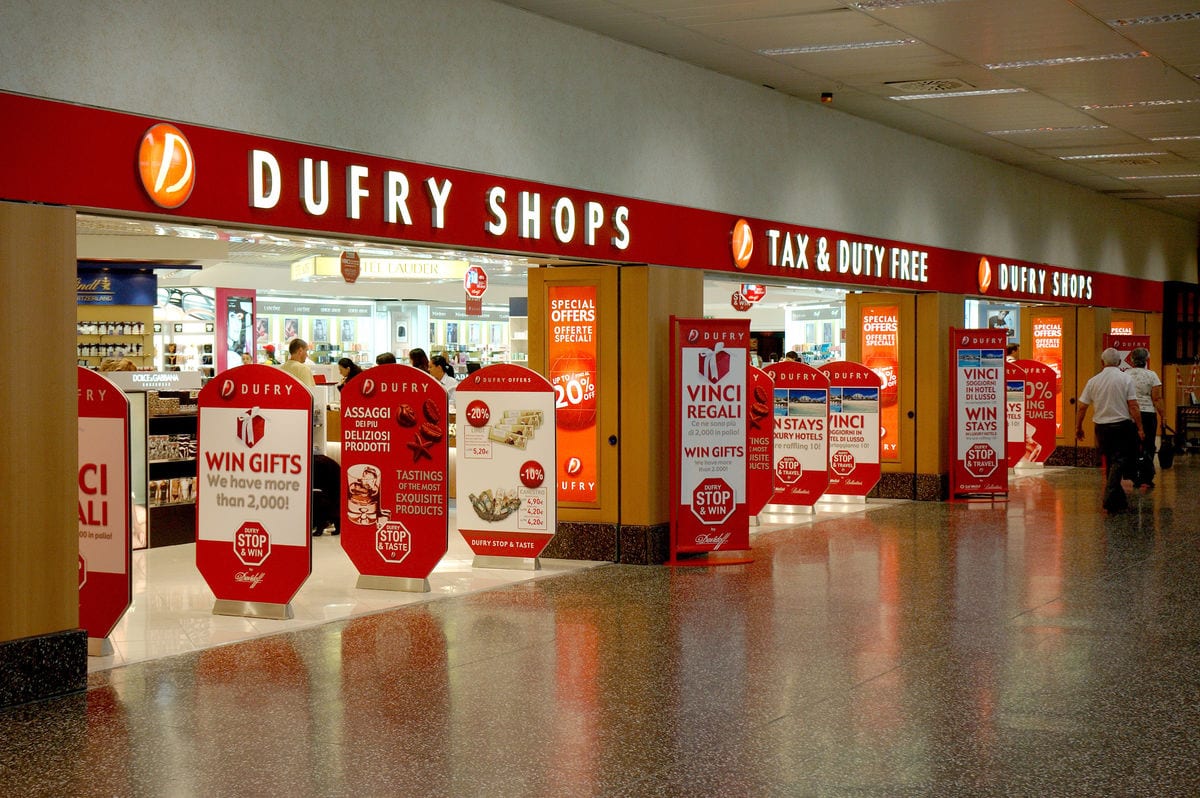
  • Dufry Asia aims to double business

    Dufry Asia aims to double business

    Dufry Asia sees huge growth opportunities in the Asia region despite the current softness in the Hong Kong, Macau and Singapore markets.

    In an interview with TRBusiness the CEO of Dufry Group, Julian Diaz, said the company plans to double its sales in Asia Pacific within five years. Currently, the region accounts for just nine per cent of its total business.

    “The situation right now in Asia and in other parts of the world is not going to stop Dufry from going ahead with development,” he told TRBusiness.

    “The reality of the passenger growth over the next 10 years in Asia is that it is going to grow more than any other region in the world.”

    Díaz said Asia presented challenges given it comprises different markets, but Dufry has overcome that in other regions, and is confident it can break through in Asia.

    “I think this is a challenge, but this was also a challenge when we started in the Americas, when we started in Europe, when we started in North America.

    “All these businesses presented their own challenges. I know one thing, we are going to pool resources and the team in order to really develop the company in Asia,” he said.

  • Lotte dreams big with World Tower Duty Free store

    Lotte dreams big with World Tower Duty Free store

    Lotte Duty Free has announced a plan to make its World Tower Duty Free store into a landmark of North East Asia.

    Lotte will invest over 1 trillion won to make the location an international tourist spot that will exceed the popularity of its headquarters in Sogong-dong.

    Lotte Duty Free revealed at a press conference that it will be investing an additional 1.2 trillion won (US$874.97 million) over the next five years to expand the size of its duty free store, creating a one and only ‘Tourism and Shopping Complex Duty Free Store’ in the world.

    With the changes, Lotte has estimated that by 2020, it will have an accumulated 5 trillion won revenue in foreign currency, an added value of 4.8 trillion won, and direct and indirect employment of 27,000 people. The accumulated number of foreign visitors during this period is expected to be 28 million.

    Based on these numbers, Lotte plans to make its World Tower duty free shop the No.1 store in the world, as well as an international landmark.

    Lotte has suggested the creation of a ‘Gangnam Tourism Belt’ to reach its goals. By building a large-scale musical fountain, the company is hoping to make the site into a tourist hot spot like the Marina Bay Sands hotel in Singapore, or the Burj Khalifa in Dubai.

    Lotte Dury Free

    By promoting its duty-free store along with the highest observatory, a vineyard classic hall, an aquarium, a multiplex and Lotte World Adventure, Lotte is hoping to make World Tower the largest tourism hub south of the Han river.

    In order to attract more foreign visitors, Lotte plans to operate a city tour bus that connects Gangnam and other parts of the city, creating a Gangnam culture belt.

    Lotte Duty Free also announced that it has signed an agreement with municipal authorities in Songpa-gu, Gangnam-gu and Seocho-gu to cooperate in revitalising tourism in Gangnam.

  • DFS Group looks for new wine business leader

    DFS Group looks for new wine business leader

    Christian Pillsbury has left DFS Group where he headed up DFS Group’s international wine business in Hong Kong to join Coravin Inc., the maker of Coravin Wine Systems as Director of Sales, Asia Pacific with immediate effect.

    According to a statement by Coravin, Pillsbury oversaw operations across more than ten countries and 120 retail outlets at DFS Group and prior to that was the founder of Applied Wine, a first of its kind company devoted to helping restaurants make wine a core part of their business.

    Commenting on his new appointment, Pillsbury said: “Asia is becoming an exciting destination for wine and is seeing tremendous growth.

    “Coravin has transformed the way wine is sold, served, and enjoyed in both North America and Europe and I am honoured to introduce the brand to wine lovers all over Asia.

    When contacted to see if a replacement has been found, a DFS spokesperson told: “We’ll announce Christian’s replacement soon.”DFS has recently been been looking to fill a position for a new senior member to join its global wine team based in Hong Kong, to work across 11 countries and manage a team of experienced travel retail professionals.