Tag: E-Commerce

  • Online retail Visa offers new payment method to deal with abandoned carts

    Online retail Visa offers new payment method to deal with abandoned carts

    Visa has launched a new payment service that simplifies the payment process for online shoppers in a bid to address the high percentage of abandoned online shopping carts caused by inconvenient payment methods.

    The service, Visa Checkout, captures and saves customers’ payment details. Registered users can pay for their online shopping at several merchants that have partnered with Visa through just one payment point. Users simply enter a username and password to pay for items, instead of filling up credit card information and shipping address for every transaction. The service can be used via a smartphone, tablet, laptop or PC.

    Visa Checkout is available in 16 markets worldwide, including China, Malaysia and Singapore. The company plans to extend this service to other parts of Southeast Asia in the near future.

    Ooi Huey Tyng, Visa country manager for Singapore and Brunei said that as more consumers spend more time and money on ecommerce, they are also “demanding a fast, secure and frictionless way to shop online.”

    “Two in three Singaporean shoppers have abandoned a purchase because it took them too much time to complete the payment process or it was too cumbersome to enter their personal details,” the company said in a press release on Wednesday.

    According to a recent Visa study, Singapore is among the top online shopping countries in Southeast Asia. At 88%, the city-state has the highest smartphone penetration of any country in the world, and 71% of Singaporeans shop online at least once a month, an increase from 59% last year.

  • CEO stresses value of physical stores, not just e-commerce

    CEO stresses value of physical stores, not just e-commerce

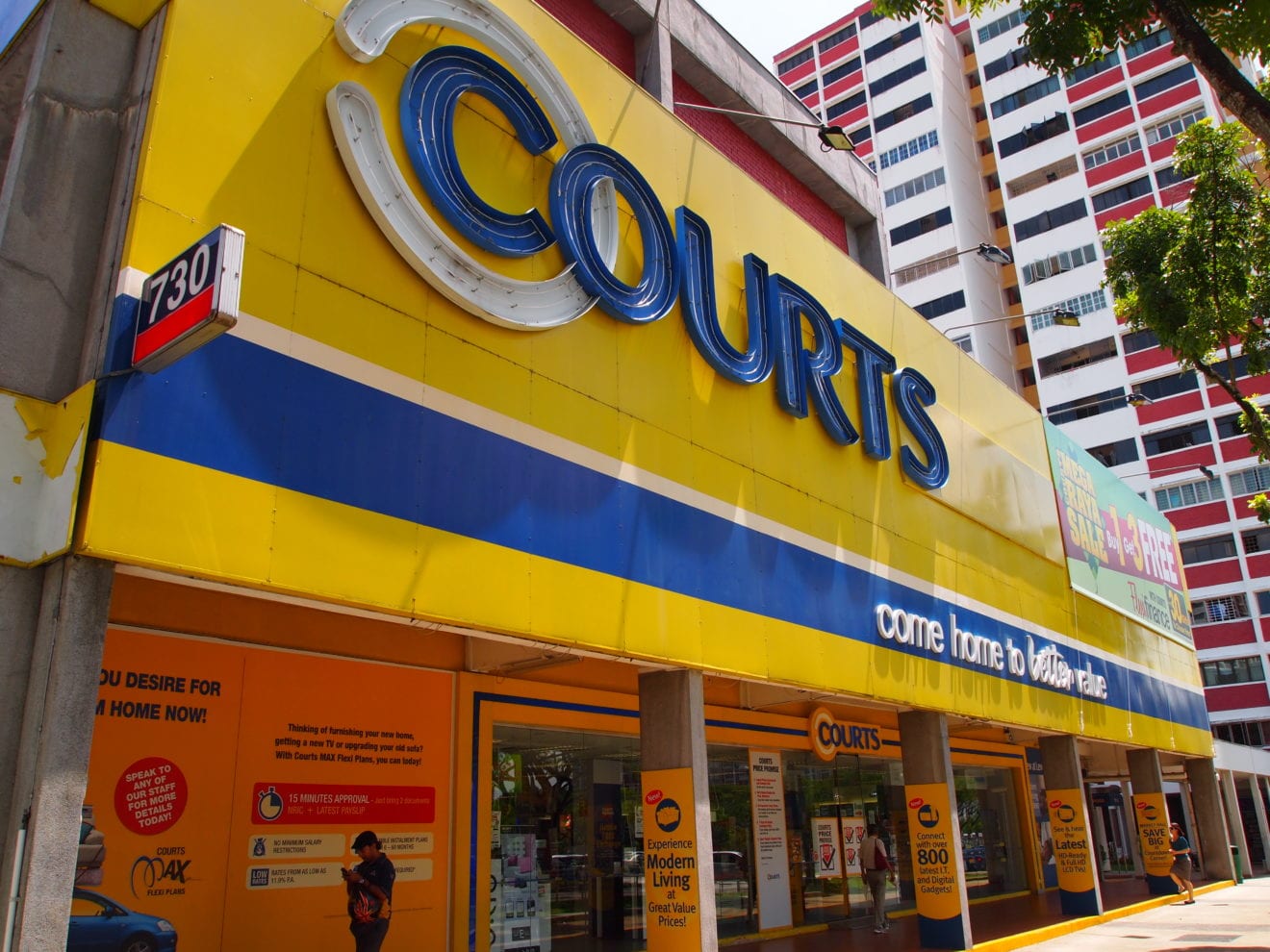
    Electrical goods, information technology and furniture retailer Courts Asia believes that while e-commerce has been gaining popularity, retailers should not neglect their brick-and-mortar operations. The Singapore-based company also sees technology and renting in suburban areas as important revenue sources.

    Terry O’Connor, Group CEO of Courts Asia (Photo by Courts Asia)

    Terry O’Connor, group CEO of the Singapore-based retailer, said that physical stores still play an important role for retailers. “Especially in the case of high-demand products like the latest smartphone, customers want to make sure they get one, rather than waiting for it to be delivered another day,” he said. O’Connor noted that online shoppers do not necessarily prefer delivery, as they may not be home to receive the goods when they arrive. “About half of our customers buy online and then collect (the goods) from the store,” he said.

    Investing in technology is also crucial for retailers to grow their business. Courts Asia recently implemented a queuing system recommended by Google for their online peak periods. “The system stops the website from crashing by having a slightly moderated waiting time of one to two minutes, so everyone effectively ends up transacting faster,” he said. “It has really helped in terms of the conversion rate and reduced some of the abandoned online shopping carts,” he observed. Courts Asia saw higher sales on 2015’s Black Friday and Cyber Monday peak shopping days compared with a year earlier.

    For retailers entering a new market, renting space in suburban areas can reduce costs and gain access to more customers. O’Connor warned that new retailers “will have to pay high rent from day one” if they instead start their business by renting space in the central business district or prime areas. He added that this in turn increases costs significantly and result in the retailer losing out on customers who live outside the city.

    He also suggested that investing in areas that complement the core business is an important step in a company’s expansion. “A lot of retailers that have gone into a completely different field have failed, as it is not their core skill set,” he said. Retailers should go to “the most adjacent category which has a synergy to what they already sell.”

    Courts Asia has grown into one of the largest retailers in Southeast Asia, with 80 stores totaling over 148,600 sq. meters of retail space. Originally named Courts, the company began as a furniture retailer in the U.K. It was established in Singapore and Malaysia in 1974 and 1987, respectively. In 2012, it was renamed Courts Asia and listed on the main board of the Singapore Exchange. In 2014, Courts Asia entered the Indonesian market.

  • SingPost fuses e-commerce businesses to form global commerce enabler

    SingPost fuses e-commerce businesses to form global commerce enabler

    It plans to further widen its US logistics footprint.

    The Postman is putting its eCommerce business on laser focus as it integrates its logistics limbs TradeGlobal and Jagged Peak to further expand its eCommerce logistics footprint in the US, the largest retail market in the world.

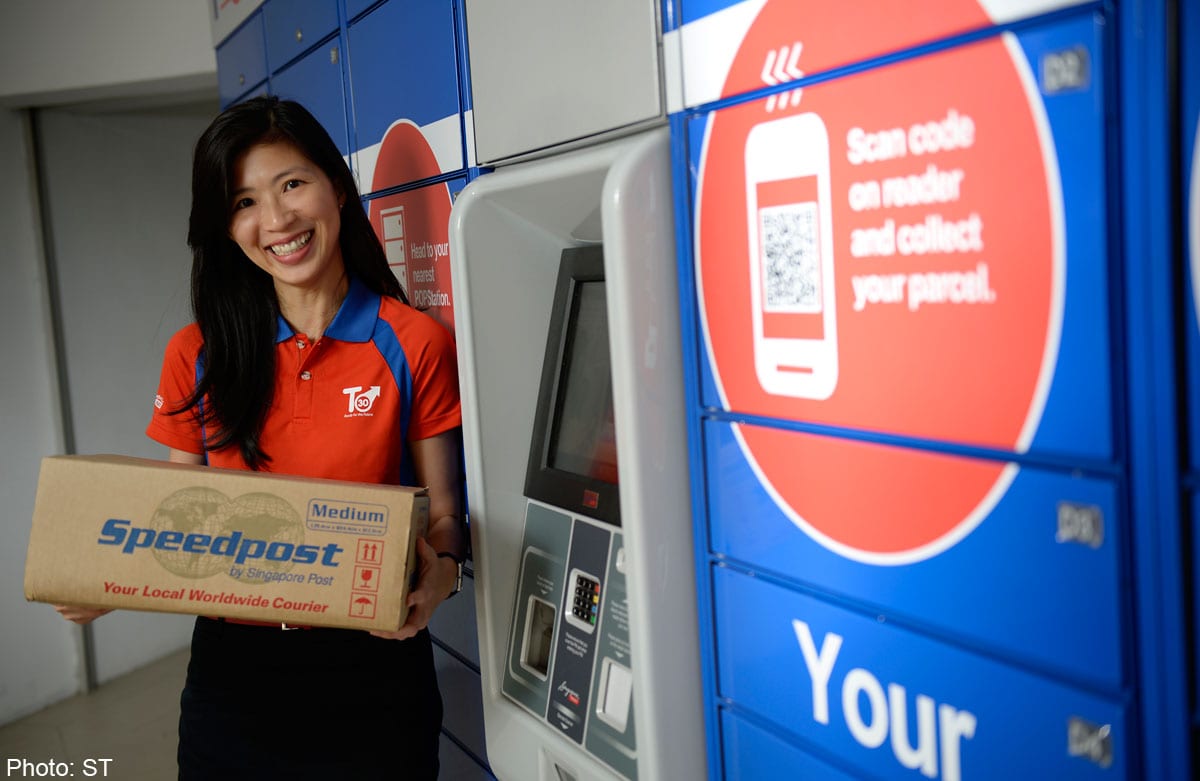
    According to a press release by Singapore Post, the resulting product from the integration would be SP Commerce, a global commerce enabler for brands and retailers.

    SingPost says SP Commerce is a pioneering project in omni-channel enablement for global brands and retailers, and will provide customers easy access to eCommerce markets around the world.

    “The solutions that SP Commerce offer include end-to-end services spanning webstore development and operations, global fulfilment, omni-channel order management, cross-border commerce, performance marketing, and customer care services,” SingPost said.

    Additionally, SingPost said it now provides end-to-end eCommerce logistics solutions to more than 100 mono-brands including Adidas and Calvin Klein.


  • There’s no stopping the e-commerce boom in Singapore

    There’s no stopping the e-commerce boom in Singapore

    Sales will top $1.4 billion this year.

    Singapore’s e-commerce sector will continue to expand at a breakneck pace in coming years, according to a report by CBRE.

    Sales have grown at a record rate over the past five years, rising from just $800 million in 2012 to over $1.34 billion in 2015.

    Citing data from a report by Euromonitor International, CBRE noted that 2014’s internet retail sales grew 12.5% year-on-year to $1.08b, while mobile internet retail sales surged by 53.9% to $280.9 million.

    CBRE believes that the strong growth in online retail will drive demand for industrial space in Singapore.

    “All these indicate that Singapore’s e-commerce sector is poised to expand further, which could potentially emerge as the next underlying demand driver for the industrial market,” said CBRE.

  • Matahari Department Store ups stake in MatahariMall.com operator

    Matahari Department Store ups stake in MatahariMall.com operator

    GEI is the controlling shareholder of PT Sinar Rekata Earth and PT Lenteng Transcontinental. The two subsidiaries are the principal shareholders of PT Solutions E-commerce Global, which operates MatahariMall.com.

    In a prospectus submitted to the Indonesian Stock Exchange, Matahari Department Store said, it has bought 4.4 million shares of GEI valued at Rp 53.14 billion ($3.88 million).

    LPPF exercised its option to buy the GEI shares at a price of Rp 12,065 per share in accordance with the agreement signed granting option rights on August 15, 2015.

    Prior to the transaction, LPPF’s holding was 2.63 million shares in PT GEI or 1.99%, PT Matahari Putra Prima Tbk (MPPA) 2.63 million shares or 1.99%, PT Duta Wibisana Anjaya 5 million shares, or 3.79%, PT Sinar Mustika Dutamas 10 million shares, or 7.58%, PT Investama Digital Venture 111.65 million shares or 84.64%.

    After the transaction (options were exercised), the ownership of LPPF in PT GEI increased to 5.16%, MPPA at 1.93%, PT Duta Wibisana Anjaya 3.67%, Dutamas Sinar Mustika 7.34% and PT Investama Digital Venture 81.9%.

    In the prospectus, Matahari Department Store said that it carried out the transactions because it considers e-commerce as having high growth potential in the country.

    MatahariMall.com, officially launched its operations in September 2015 to tap Indonesia’s growing online retail space.

    Also Read: Indonesia e-commerce Dealbook : Government mulls five-year roadmap, Mataharimall launches online platform

    Indonesia’s MatahariMall ties up with state postal service for O2O push

  • Is E-commerce Threatening Singapore Malls?

    Is E-commerce Threatening Singapore Malls?

    With the advent of e-commerce and online shops selling anything you could ever think about buying, some fear for the safety of the shopping malls that have made Singapore the shopping haven that it is famous for.

    There have been a number of cities where e-commerce has overtaken the physical means of shopping. However, in-depth research into the shopping behaviors and statistics of Singaporean shoppers prove that the physical shopping stores’ performance has improved and that they are here to stay with e-commerce actually augmenting sales.

    There are 4 main reasons why experts think that shopping malls will still be standing strong in Singapore.

    Online and Offline Retail Worlds are not Really Competitors

    Singapore is no different from all other countries in the world. With the advent of the digital age, its e-commerce sector is booming. Boasting staggering growth of nearly 50% in the past two years, the online retail market in 2015 is estimated to be SG$4.4 billion.

    The much smaller e-commerce retail scene might be showcasing incredible growth rates, but the physical in-store sales comes out to be the champion in this matchup.

    An enormous market valued at SG$52.4 billion in 2015, in-store retail sales have shown strong CAGR growth of 8.3% over the past two years and shows no signs of stopping.

    To put things into perspective, at this moment, only 4% of household spending is done online in Singapore

    Singapore’s E-commerce is Still at a Premature Stage

    Singapore is home to a very late e-commerce scene. Relative to other countries such as US and UK, much fewer things are done online. The research looked at three key metrics to measure how advanced a country’s e-commerce is.

    First, only 49% of Singaporeans book their flights online, falling way behind the UK’s 80%.

    Secondly, the proportion of hotel bookings was examined. In comparison to the US’ 73%, only 40% of Singaporeans are using the internet to book their hotel rooms.

    Lastly, apparel purchases online are at an alarmingly low 4% of all purchases. This is a significant indicator because the majority of online shops on the market are selling apparel.

    Shopping is a Huge Part of Singaporean Culture

    According to Letty Lee, CBRE’s Retail Director and an expert on real estate in Singapore, “Singapore is a shopping nation. Shopping isn’t just about buying something, it is about socializing and experiencing.”

    Singapore as a nation has developed its shopping culture to an extent that many of its citizens prefer spending the time in malls rather than just quickly browsing on the internet. It is not only about the purchases consumers are making but the experience of “shopping” they’re after.

    85% of all Singapore denizens shop in stores at least once a month compared to 49% of those who shop online.

    In fact, to put things into perspective, Singapore has twice the retail space per person than Australia even though it is 10,000 times smaller.

    Physical Stores Have Irreplaceable Features

    There are some things that the internet and all the technology in the world will never replace. And those are the advantageous features that malls offer.

    In addition to physically being there, malls offer the shoppers the opportunity to socialize with their fellow shoppers, dine with their friends, and enjoy the atmosphere of a mall which cannot be replicated for a person just browsing through the net.

    The Omnichannel Shopping Experience

    The management of the malls themselves are aware of the fact that they will still be here to stay for some time and are looking for ways to augment the strength of the malls with the technology of the online shops to create an “omnichannel” integrating both online and offline shops.

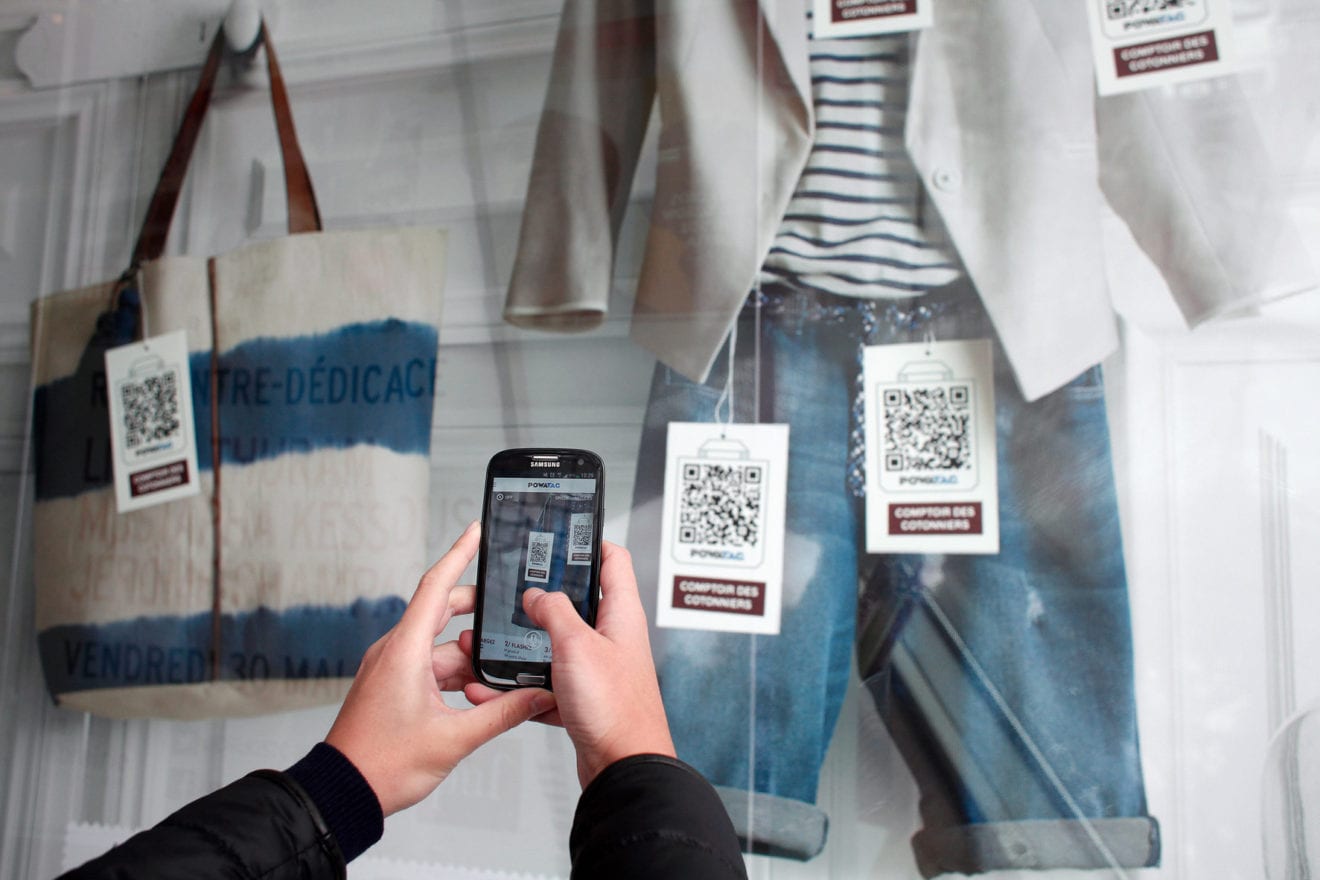
    Some of the things that they have started include but are not limited to, Magic Mirrors where a shopper can virtually try on items, and “click-and-mortar” stores in which store items are tagged with a QR code that shoppers can scan and add to their online shopping carts for later buy.

    E-commerce may be disruptive to physical stores in other places, but in Singapore it’s here to improve the shopping experience in both online and offline stores.

  • Indonesia’s E-commerce Industry to Double Its Earnings Next Year

    Indonesia’s E-commerce Industry to Double Its Earnings Next Year

    Indonesia’s e-commerce industry is projected to rake in Rp 20 trillion ($1.46 million) next year, double this year’s estimate of Rp 8 trillion to Rp 10 trillion as Internet and smartphone penetration in Southeast Asia’s largest economy continue to rise, according to an industry group.

    Daniel Tumiwa, chief of the Indonesian E-commerce Association (idEA), noted that the country’s ever-expanding pool of middle-class consumers has provided a significant boost to its e-commerce sector, estimating that the number of online shoppers could reach 10 million next year. The continued rise of smartphone usages across the country will also bolster growth, he added.

    “The e-commerce industry is already becoming one of the pillars of Indonesia’s economy,” said Daniel, who’s also chief executive of marketplace platform OLX.com.

    Indonesia is forecast to see some 34 million smartphones shipped into the country by the end of this year, up 21 percent from an initial 2015 forecast of 28 million units, according to information technology research firm International Data Corporation (IDC).

    MatahariMall.com CEO Hadi Wenas separately added that online retail has great potential in Indonesia, forecasting the industry to contribute up to 5 percent of the economy by 2020 from the current 0.7 percent.

    “Since it was first introduced in Indonesia, the industry has continued to grow and it will grow bigger going ahead,” he added.

  • Malaysia is Poised for E-commerce Growth through Better Mobility

    Malaysia is Poised for E-commerce Growth through Better Mobility

    Today, there are a total of 252.4 million Internet users around Southeast Asia, with Malaysia emerging as the third country that recorded the highest percentage of Internet users (67%) after Singapore and Brunei.

    The promising Internet penetration result indicates Malaysia’s enormous potential for e-commerce market growth. Leveraging on the rise of Internet usage, indeed 2015 have been a fruitful year for all online businesses and e-commerce as Malaysia recorded one of the highest online transactions per capita in Southeast Asia.

    Nevertheless, this only represents the tip of an iceberg – Malaysia’s e-commerce market owns approximately 2% of the total retail market and countless opportunities still remain untouched if we look at what has been accomplished by other advanced e-commerce markets such as Korea, which accounts for approximately 15% of the total retail market.

    Over the past five years (2010-2014), Malaysia’s e-commerce market size has seen 31% increase in CAGR. Viewing from a logical standpoint, we anticipate it will follow a similar growth rate and achieve USD 3.1 billion by 2018. As for 2016, we foresee mobility, better Internet and logistics, and security will be the three key drivers to push for the local e-commerce development.

    1) The ‘mobility’ trend will continue to grow

    The mobile penetration in Malaysia has reached 136% this year, and the growth of connected devices have paved the way for a positive increase in the e-commerce sector with 47% of Malaysians using their smartphones to shop online.

    Furthermore, Malaysia ranks third in the rate of growth of mobile shopping in Asia (over 20%; from 25.4% in 2012 to 45.6% in 2014) according to a Mobile Shopping Survey and with these results, it is not surprising to know that more than 50% of traffic to 11street is generated on mobile devices.

    What shoppers can expect next year

    This promising result has encouraged us to make a bigger commitment for mobile users. We believe the ‘mobility’ trend will continue to grow and next year, 11street will put a stronger focus to serve mobile shoppers through a two-pronged approach.

    Mobile shoppers can expect more curated content from 11street’s app, with an improved user interface and user experience designs (UI/UX). Additionally, we will lift it with additional personalized features, and introduce more mobile exclusive deals for an exciting mobile shopping experience.

    2) Internet penetration and improved logistics will further enhance local e-commerce activities

    While the government has allocated RM1.2 billion for Malaysian Communications and Multimedia Commission (MCMC) to offer High-Speed Broadband to rural areas starting next year, we are also pleased with the government’s initiative to improve the logistics – a crucial element to boost the e-commerce development in Malaysia.

    Driven by the progressive e-commerce landscape, the logistic industry, especially the courier segment has seen exponential growth over the past one year. For instance, courier service contributed 60% of POS Malaysia’s total earnings in FY15, as compared to 41% in FY14.

    In preparation to serve shoppers better in 2016, we believe these supportive initiatives suggested by the government will aid sellers to meet future demands, by providing shoppers a seamless online buying experience with more timely delivery service.

    What shoppers can expect next year

    Online marketplaces like 11street place high importance on offering pleasant shopping experiences from the moment a consumer start shopping online, all the way through to the delivery of purchased items. Several measures that the company has been implementing since its establishment include (i) Thoroughly brief and train sellers on product delivery management (ii) Provide shoppers with a tracking system to keep them informed on location, time of arrival, and delivery status of their purchased products.

    With a solid Internet and logistics infrastructure, 11street trusts that Malaysians will enjoy online shopping even more in the coming years.

    3) User confidence, especially safe and secure online shopping is a priority for shoppers

    Security issues discourage shoppers from heading online. Malaysia Computer Emergency Response Team (MyCERT), a department within CyberSecurity Malaysia, reported that the number of online scams in the country is on the rise. A total of 743 fraud cases were received in Q1 2015, of which is the second most reported incidents (25.54%) in total reports.

    Shoppers are always urged to make transactions with only trusted platform that offers product return policies, customer reviews on products, seller’s rate or scoreboard, as well as a trustworthy payment system. Online sellers and marketplaces have to bear this in mind and update their security measures from time to time in order to establish shoppers’ confidence.

    What shoppers can expect next year

    11street implemented the ESCROW system, which is a financial instrument of placing a buyer’s money on hold and releasing it to the seller only when the delivery of the purchased item is fulfilled, thus protecting buyers from frauds. The ESCROW system has helped to prevent many fraud cases and it will continue to be invested by 11street in the future.

    Our website is also strengthened with abilities to monitor all products, transactions from buyers and sellers to detect suspicious activities such as counterfeit product listing. Moreover, a number of other efforts include a stringent application process and regular product quality inspections will be enhanced to provide shoppers a safe & secure shopping experience.

    A budget-conscious year ahead

    2016 will be another budget-conscious year for Malaysians in view of the rising cost of living caused by GST implementation and the ringgit devaluation. To assist consumers to ‘shop smart’, we are gearing up to double our variety of product listings for ‘Shocking Deals’ with the lowest price guarantee by early 2016.

    It is also worth noting that cross-border trading (CBT) trends can be observed from the increasing searches for popular international products on the Internet in Malaysia. However, with the higher exchange rates and international shipping fees, today local shoppers might find it challenging to get their favorite overseas brands or items. In view of this, 11street is committed to bring in more popular overseas product, including cosmetic, fashion, and food items, especially from Korea in 2016. These products will be imported and affordably priced at the online marketplace in order to satisfy Malaysian shoppers’ needs.

    Undeniably, the overall e-commerce market in Malaysia is poised to flourish positively. The next step would be to sustain the market potential and all industry players need to work together to ensure this. As a market expert, 11street is delighted to work with close partners such as Multimedia Development Corporation (MDeC) and Google. We look forward to collaborating with even more industry leaders in the coming year. In closing, we would like to urge sellers to stay alert on the evolving mobile & purchasing trends in the market to give shoppers a satisfactory experience, as this will build upon Malaysia’s vibrancy as a profitable market for e-commerce.

  • Lessons of e-commerce explosion in China

    Lessons of e-commerce explosion in China

    The second World Internet Conference (WIC), also known as the Wuzhen Summit, will take place Dec 16 -18, in Wuzhen, Zhejiang. Chinese President Xi Jinping will attend the conference and address the opening ceremony. It takes place amid dramatic expansion of Chinese e-commerce, thanks to great market potential and the government’s supportive policies.

    In early spring, the State Council, China’s cabinet, announced it will boost e-commerce by cutting red tape and liberalizing investment regulation in the sector. Meanwhile, Premier Li Keqiang said that with the “Internet Plus” strategy China would back e-commerce development and guide the Chinese internet companies’ international expansion.

    In the mainland, e-commerce and other internet-based industries are supporting and accelerating the rebalancing of the Chinese economy toward consumption and innovation.

    In early November, transactions on the Singles Day — the Chinese version of the Valentine’s Day — morphed into a huge shopping extravaganza as the mainland consumers’ buying spree caused sales to soar almost 60 percent from last year. Although Alibaba, the e-commerce giant, started the online festival only seven years ago, its total sales alone climbed to 92 billion yuan (US$14.3 billion).

    To put the figure into an international perspective, it is more than quadruple the US earnings last year from its Black Friday and Cyber Monday sales events combined. Not surprisingly, Alibaba’s founder Jack Ma believes that Singles Day will go global.

    “In the next five years, I believe it may be in Tokyo, Paris or New York,” the e-commerce entrepreneur said.

    Chinese e-commerce is driven by heavy online buyers, younger demographics, and consumers in the relatively wealthier first-tier cities – although relative growth is even faster in many lower-tier cities and rural areas.

    These internet-based industries fuel the government’s 13th five-year plan that was officially outlined a month ago. Until recently, Chinese growth relied on investment and net exports, but that era ended with the global financial crisis. The new objective is to rebalance the Chinese economy toward consumption.

    Threat to traditional retailers

    Not everybody has benefited from Chinese e-commerce explosion, however. As the record sales on Single’s Day showed, online retailing poses an increasing threat to those brick-and-mortar retailers that continue to stay mainly offline.

    For the leading department store operators in China, online retailing remains limited and sales growth is weak. While Intime Retail may be best positioned to benefit from online retailing – not least because of its strategic cooperation with Alibaba – several other companies, including Golden Eagle Retail, Parkson Retail and Maoye International Holdings are only getting into the game.

    Golden Eagle and Maoye have collaborated with Tencent through the WeChat social platform, whereas Parkson has introduced an online shopping site.

    The explosion of Chinese e-commerce has caught off guard not just domestic retail leaders but international industry giants. Initially, these Western giants attributed their losses to China’s growth slowdown and the pullback by shoppers, which presumably accounted for their shrinking profit margins.

    However, the rapid explosion of e-commerce and the rising share of consumption in the Chinese economy cast doubt over such interpretations. Most importantly, a closer look at retailing trends in China suggests that it is not Chinese consumers or Chinese economy that accounts for the losses of these international industry giants – but competition.

    The famed Unilever, for instance, saw its sales fall off the cliff because it failed to go online fast enough. In June, Swiss food giant Nestle acknowledged that it failed to understand how retail was changing in China. The failure to move quickly and broadly into online retailing proved costly: the company had to burn instant coffee it could not sell in stores.

    The same goes for Colgate-Palmolive and Germany’s Beiersdorf, which have been suffering from offline overstocking, even as new online retailers have reaped enormous earnings.

    Intriguingly, some of these international giants have missed much of the Chinese e-commerce explosion, even though many have experienced two decades of e-commerce growth in the US, Europe and Japan. In these advanced economies, the e-commerce explosion took place differently, however.

    In the prosperous West, the Internet revolution initially relied on fixed-line personal computers and notebooks. In the emerging and developing East, such technologies remain relatively expensive. In these nations, the initial penetration has been fueled by mobile devices, particularly smartphones. In China, mobile drives retail sales growth and currently accounts for half of all e-commerce sales.

    The lessons are clear. First, business models that succeed in advanced economies may not work in emerging and developing economies. Second, advanced-economy lessons are vital but they must be adjusted to the Chinese business environment. Third, simple imitation of Western strategies does not ensure success in China. Only innovation can produce the desired results.

  • APAC tops retail e-commerce

    APAC tops retail e-commerce

    Retail e-commerce sales in Asia-Pacific will reach $877.61bn in 2015, up 35.7% from 2014, as mobile adoption and the rising middle classes in China, India and Indonesia fuel rapid growth, according to a new forecast.

    Research firm eMarketer said that, for the first time, the region will not only have the largest digital market in the world, but its share of global retail spend will reach a majority of 52.5%.

    China alone will account for more than 40% of global retail e-commerce sales this year, up nearly five percentage points from 2014, and the country is expected to continue growing its share of the worldwide market to more than 50% in 2018.

    By then, the value of retail e-commerce sales in China is forecast to be a massive $1.568 trillion compared to a worldwide total of $3.015 trillion. Meanwhile, Asia-Pacific (including China) will account for $1.892 trillion in three years’ time.

    Online retail sales in China are expected to account for 15.9% of the country’s total retail sales in 2015, compared to a global average of 7.4% and 10.2% in Asia-Pacific.

    Although China dwarfs other Asian nations in terms of online sales volumes – for example, $672bn in 2015 compared with just $14bn in India – the report also highlighted India and Indonesia as other key drivers of growth in the region.

    The latter two markets saw growth of 129.5% and 65.6% respectively in 2015, the report said.

    Monica Peart, eMarketer’s director of forecasting, said rapid online growth in Asia-Pacific, coupled with faster internet service and greater mobile uptake is heating up the competitive landscape.

    “Large local players are increasingly vying for market share by improving their logistics and mobile platforms, and in some cases moving entirely to an app-only service,” she said.

    Finally, eMarketer forecast that overall retail sales in Asia-Pacific would reach $8.57 trillion this year, rising to $11.46 trillion by 2019, or representing 20.4% of worldwide retail sales. Data sourced from eMarketer; additional content by Warc staff

  • Shopping tech firm Powa in major Chinese joint venture

    Shopping tech firm Powa in major Chinese joint venture

    Powa Technologies, a British e-commerce tech firm, has formed a “strategic alliance” with China’s biggest payments processor, China UnionPay. The joint venture could generate $5bn (£3.3bn) in revenues over three years, Dan Wagner, Powa’s chairman and chief executive, told the BBC.

    China UnionPay has about 4.5 billion credit and debit card users worldwide.

    Powa’s technology enables shoppers to pay for goods quickly in-store and online using their smartphones.

    “This is undoubtedly a huge deal for Powa,” said electronic payments expert, Dave Birch of Hyperion Consulting.

    The joint venture, PowaTag UnionPay, will launch first in Guangdong Province, targeting 400,000 retailers, the company says, before rolling out to one million by the end of 2016.

    “We have a target to reach at least 50 million consumers regularly using the platform within one year from launch,” said PowaTag UnionPay’s chairman, Mr Hu Jinxiong.

    China’s merchants – there are six million in total – will pay about 13p per transaction to the joint venture for access to the technology, said Mr Wagner.

    ‘We’ve trumped Apple Pay’

    The PowaTag system relies on digital tags – quick response (QR) codes – that can be attached to physical goods or inserted into self-service checkout screens, emails, websites, posters, images – even the audio from TV ads.

    Wherever Chinese shoppers see the PowaTag UnionPay symbol they will be able to buy products by scanning them with their phones and tapping the “buy now” button, the company says.

    US retail giant Walmart recently launched a similar quick pay system for mobiles in its stores.

    China’s Commerce Department says the “online to offline” market, whereby shoppers search for products online then complete the purchase in-store, grew 80% in the first half of 2015 and is worth about £31bn ($47bn).

    “Why did China UnionPay decide to partner with a little British technology company?” said Mr Wagner. “We’ve trumped ApplePay and the rest of the world here.”

    ‘Tap-and-go’

    State-owned China UnionPay, has been responding to the rapid take-up of smartphones across the country – about 68% of the population now has one.

    On 12 December, it launched QuickPass – a “tap-and-go” payment system for mobile phones similar to Apple Pay and other digital wallets – in co-operation with more than 20 commercial banks.

    QuickPass is already available at more than 10,000 locations in mainland China, says UnionPay, including at retailers such as Carrefour, McDonald’s, and Costa.

    “The Chinese market is going mobile very quickly,” says Mr Birch. “And the integration of payment systems and messaging platforms such as WeChat is a very interesting development.”

    This latest deal with Powa will give Chinese shoppers yet another way to shop using their mobiles.

  • Zalora Wins Big with 12.12 Online Fever 2015

    Zalora Wins Big with 12.12 Online Fever 2015

    Zalora, Asia’s online fashion destination enjoyed strong support from fashion consumers across their eight markets – Singapore, Malaysia, Indonesia, Philippines, Thailand, Vietnam, Hong Kong and Taiwan – with over six times the volume of any previous day. A Zalora-led initiative, 12.12 Online Fever aims to drive the e-commerce industry across the region, bringing to consumers some of the best deals that will encourage online purchase, hoping to convert traditional consumers into e-consumers. This year 32% of 12.12 Online Fever shoppers are first-time Zalora customers.

    As Zalora is committed to giving customers the best online shopping experience, the team prepared for the surge of volume of orders to make sure that deliveries are fulfilled within the fastest time possible. To ensure timely packing and delivery of orders, so that excited customers can get their hands on their latest fashion purchase, Zalora increased manpower in operations working 24/7 in order to ship 100% of the packages received in its warehouses within 24 hours. This resulted to having 30% of packages delivered to customers within the next day and more than 50% of packages by end of day Monday, 14 December, across the region.

    The number of fashion thumb shoppers also increased, comprising 78.5% of shoppers who shopped through their mobile devices on Saturday 12 December compared to 21.5% who shopped on their desktops. This is in line with the changing consumer behaviour and the growing trend of consumers in the region shopping heavily through their mobile devices. The number of customers who shopped on Zalora through mobile had a 250% increase from last year.

    Female consumers had a strong showing as they cover 74% of shoppers during 12.12 Online Fever

    but the men did a lot of shopping too as they contribute 26% of the shoppers. The most popular categories for both male and female are apparel, footwear and accessories. Favourite brands among women include Rubi, Mango, Dorothy Perkins and Something Borrowed while Sperry, Herschel, Onitsuka Tiger and TOPMAN were popular brands for men. Zalora’s eponymous label was popular across markets and to both male and female shoppers.

    Netizens were also talking about 12.12 Online Fever in their social media posts, a few of them commending ZALORA’s quick delivery service and alerting their friends to join in. 12.12 Online Fever received more than 1.6 million of impressions on popular social media sites Facebook, Instagram and Twitter.

    Zalora Group CEO, Michele Ferrario shared, “12.12 Online Fever 2015 was a great success not only for ZALORA but for all the partners we worked with to make this initiative possible and for consumers who got their favourite fashion brands on great price point. We thank everyone who supported us. As Southeast Asia, Hong Kong and Taiwan are enjoying immense economic growth, we wanted to engage consumers and help boost the growth of e-commerce in the region. This online sales day will give them a push, sparking consumer spending by offering their favourite items at the best prices. Last year’s record sales attested that such a cyber event resonates well with consumers in the region, and we are happy that we managed to engage more consumers this year!”

    This year’s 12.12 Online Fever also saw an increase in number of partners with a total of 376 partners across the region covering different industries from food, home, entertainment, travel to beauty. Through large-scale online sales days such as 12.12 Online Fever, ZALORA aims to boost online retail consumption expenditure, while providing reassurances about the e-commerce sector and building trust with customers.

    12.12 Online Fever is an initiative to rally e-commerce players in the region to come together on one day and create Southeast Asia’s version of Cyber Monday. Southeast Asia is experiencing rapid

    economic growth, urbanisation and technology adoption, with 12.12 Online Fever, Zalora is bringing down barriers by making it more accessible for people in this region to buy fashion online where e- commerce is still in its infancy stage in many parts of Southeast Asia.

  • MatahariMall.com, Pos Indonesia in Tandem to Boost E-Commerce

    MatahariMall.com, Pos Indonesia in Tandem to Boost E-Commerce

    Pos Indonesia will also install MatahariMall.com “eLockers,” allowing customers to physically pick up their items purchased online from lockers located in ten post offices in the Greater Jakarta area and Bandung.

    Using these services, online shoppers can also arrange delivery of their reserved items to these pickup points, instead of their home or office address, to avoid missing goods upon arrival.

    Pos Indonesia also agreed to provide logistic and delivery services to Mataharimall.com for domestic shipments.

    Like MatahariMall.com, the Jakarta Globe is affiliated with the Lippo Group.

  • India is now Alibaba Group’s second largest market

    India is now Alibaba Group’s second largest market

    For Alibaba.com, the business-to-business arm of the world’s largest e-retailer Alibaba Group India is the second largest market globally.

    “India is the second most important market for Alibaba globally, next only to China for us,” said Timothy Leung, head of global business development, Alibaba. The business-to-business subsidiary of Alibaba Group launched an online platform to provide Indian small and medium enterprises (SMEs) access to global counterparts.

    “India is at a critical point at present and from here we will see sharp upswing in ecommerce. We are very excited in building this consortium for SMEs,”he added.

    The company has 4.5 million registered users from India, with the country accounting for the second-highest paid users on the platform after China. SMEs in India can also avail assistance in terms of financing, logistics (domestic and cross-border), inspections and certifications, technology and SME trade-linked education on this platform. The Chinese company has partnered with enterprises such as ICICI Bank, Kotak Mahindra Bank, Crisil Rating, Tally, Capital Float, Jeena, SGS and Mypacco to help Indian SMEs expand their business.

    “There are at similarities in our experience in Chinese and India markets in terms of population size, kind of SMEs and also the core path in the ecommerce. We are also looking at our experience in the past in China and match it with what is happening in India,” added Leung.

    Citing similarities with the Chinese market Leung said that in China, B2B side of the business spearheaded the growth for Alibaba. The company through its B2B platform brought buyers and suppliers together and then ventured into supporting different aspects of the ecosystem.

    “That’s what we trying to build here. Other than matching buyers and supplier we are trying to develop the ecosystem,” Leung said.

    On the consumer side of the business also the Chinese major and its financial arm Ant Financial have picked up stakes Indian ecommerce companies Paytm and Snapdeal. Founder Jack Ma was in India three times in one year and also met the prime minister.

    The recently launched initiative, known as SMILE, hopes to connect Indian manufacturers with quality Chinese suppliers on Alibaba.com, provide Indian sellers the trading support and facilitate the global sales of Indian products through the platform.

    Talking about the fast growing ecommerce industry in the country, Leung said that 16 years ago when Alibaba started China went from becoming a no-internet country to one of the most advanced ecommerce ecosystems in the world. India is at much advanced stage and growing at a very fast rate when compared to China of those times.

  • Thai e-commerce poised to touch $58b in 2015; rise in online shopping, 4G services to push growth

    Thai e-commerce poised to touch $58b in 2015; rise in online shopping, 4G services to push growth

    The ETDA’s survey cites that top three verticals that account for the highest income from e-commerce in 2015 are accommodation and food services worth 658.9 billion baht ($18.39 billion), followed by manufacturing 350.29 billion baht ($9.78 billion) and retail and wholesale 325.08 billion baht ($9.07 billion).

    The B2C e-commerce in 2015 will rise 15.29 per cent from 410 billion baht ($11.44 billion) in 2014, and the B2G will surge 3.96 per cent from 390 billion baht ($10.88 billion) last year. However, the B2B e-commerce is expected to slightly shrink by 0.34 per cent from 1.23 trillion baht ($34.33 billion) in 2014.

    “Thai e-commerce market remains highly attractive as more people open up to online shopping. Also, 4G will drive the growth of the e-commerce market in Thailand,” ETDA’s chief executive officer Surangkana Wayuparb said.

    In early November, Ascend Group announced to invest 5.3 billion baht ($147.92 million) to expand its e-commerce businesses, iTrueMart and ‘Weloveshopping’, into ASEAN countries.

    It plans to invest in warehouses, logistics and marketing activities in the Philippines this year, followed by six other countries – Indonesia, Malaysia, Vietnam, Singapore, Myanmar and Cambodia – in 2016.

    “We aim to be the e-commerce market leader in ASEAN by 2018,” Punnamas Vichikulwongsa, president of Ascend Group, told local media.

    A report by Euromonitor International states that the B2C e-commerce market for retail in the AEC will surge by 20 per cent per year from nearly $5 billion this year to $7 billion in the next two years.

    Considering Thailand as a centre of the ASEAN, foreign investors have eyed on the opportunities to use Thai e-commerce market as a springboard to other countries.

    Japan’s e-commerce solution provider Transcomos, for example, recently made a joint venture with Ookbee, a Thailand-based leading e-bookstore platform, to tap into the e-commerce business under Ookbee Mall.

    Even the world’s top e-commerce site Alibaba is in talks with Thailand’s Crown Tech Advance to co-invest in both logistics and e-commerce in Thailand. However, both companies have not finalised the deal yet.