Tag: E-Commerce

  • C2C marketplace Shopee officially launches in

    C2C marketplace Shopee officially launches in

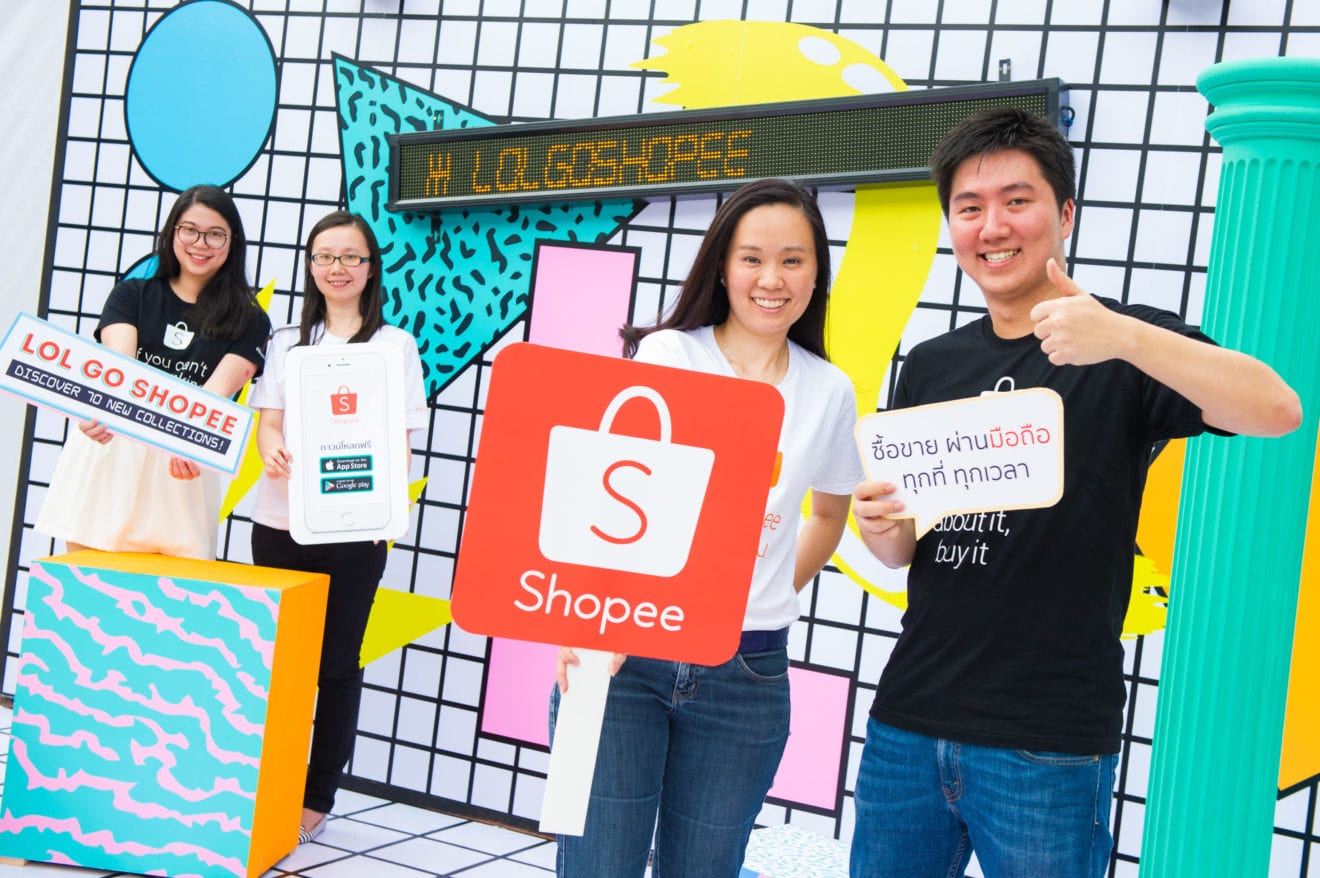
    Southeast Asia’s latest mobile consumer-to-consumer (C2C) marketplace, Shopee, has officially launched in Indonesia, offering users an easy-to-use mobile application to browse, shop and sell.

    The platform was soft-launched in June 2015 in countries including Indonesia, Singapore, Malaysia, Thailand, Vietnam, Philippines and Taiwan.

    According to Shopee CEO Chris Feng, the platform is equipped with a secure payment method, an integrated logistics fee calculation and social-led features to create a more secure, fun and fuss-free online shopping and selling experience.

    According to a 2015 fourth-quarter report from Southeast Asia Digital Landscape, Indonesia has already reached 79 million active social media users. Furthermore, almost 65 percent of Indonesians use social media to buy and sell things.

    “Shopee is eager to take part in supporting Indonesia’s growth in global retail e-commerce by bringing a shopping experience that is able to integrate social media and online shopping functions to maximize social interaction between sellers and buyers,” Chris explained.

    Various application features have been introduced including the “Shopee Guarantee”, which ensures users that there will be a full refund if purchased products are not received in the agreed condition.

    “The feature that I like the most from Shopee is the live chat, because it allows me to chat directly with buyers,” said Inez, the owner of Theodora Mardjuki online shop. “I like the Instagram importer feature that makes it easier for me to upload pictures of products that I want to sell on Shopee,” said another online seller, Stephanie Winarto.

    Since it was first launched, the application has been downloaded more than one million times and ranks first in Google Play’s Shopping category in Indonesia. Shopee is now available for download for free on the Apple App Store and Google Play in Singapore, Malaysia, Indonesia, Thailand, Vietnam, the Philippines and Taiwan.

  • How Agencies Are Adapting to China’s E-Commerce Boom

    How Agencies Are Adapting to China’s E-Commerce Boom

    This week, Saatchi & Saatchi China announced it was bringing on 48 hires from a local e-commerce services provider called Bysoft. It’s the latest example of how international agencies are adjusting their offer to cater to China’s e-commerce boom.

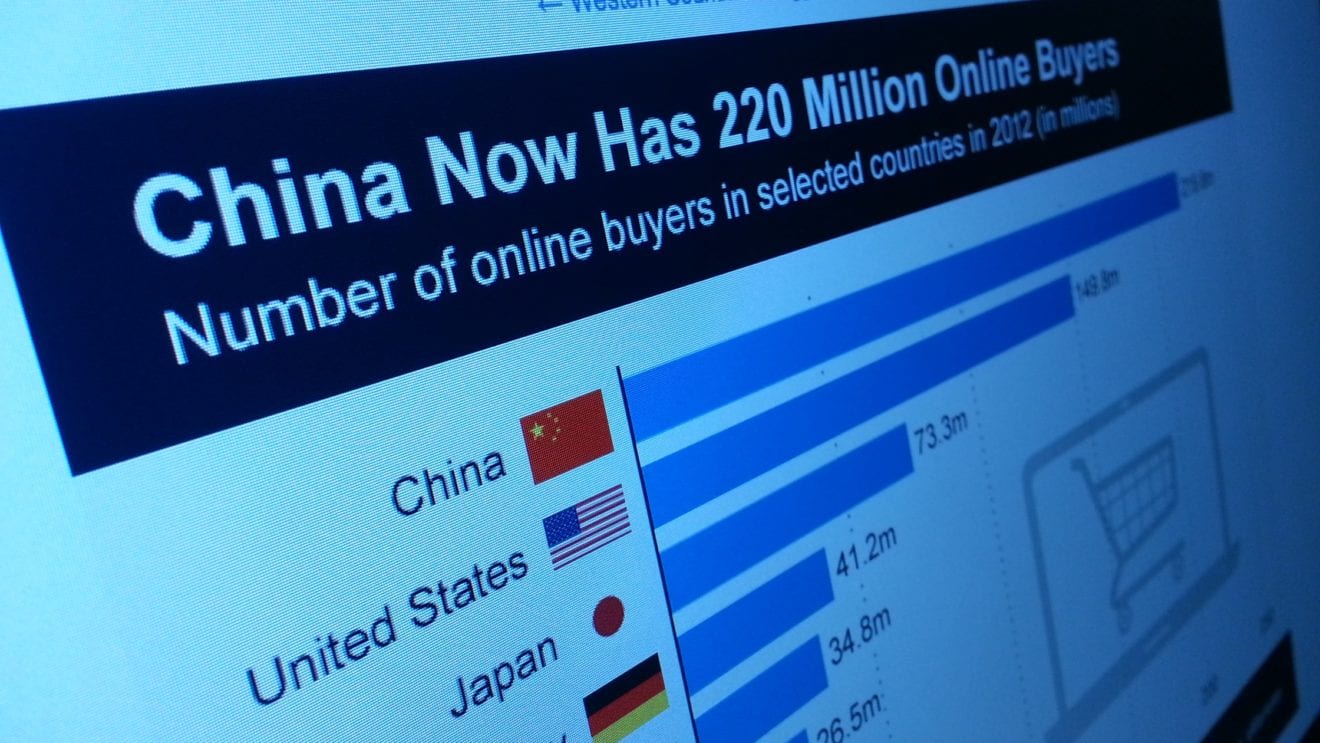
    In China, now the world’s largest e-commerce market, almost anything can be bought online – from exotic imported produce to cheap locally made clothing, from iPhones to Cadillacs. Online purchases are a greater percentage of retail in China than anywhere else. This year 15.9% of retail will be via digital, according to eMarketer. In the U.S. that figure is just 7.1%.

    Given China’s rapid embrace of e-commerce, “marketers and agencies are having to adapt at warp speed to build capabilities and potential capabilities in this area,” said Greg Paull, Hong Kong-based principal of agency-management consultancy R3 Worldwide.

    Agencies are trying different tactics. WPP China CEO Bessie Lee told an investors’ conference last week that two WPP companies, Kuvera and Salmon, were doing “a very hard-core e-commerce service. What does that mean? It means managing the e-commerce storefront for our clients, finding warehousing, managing warehousing, finding logistics partners for our clients, doing CRM (and) customer service for our clients for their online stores.” The agencies do marketing but are also distributors and store managers for clients, Ms. Lee said, adding: “So this is new money that we probably never had before.”

    Like many agencies, Dentsu’s Carat is expanding its e-commerce team. When Chinese internet giant Alibaba hosted its massive one-day online shopfest on Nov. 11, logging $14.3 billion in merchandise sales, Carat had a 28-hour war room for clients including Mondelez, handling everything from media optimization to brand-shop management to product replenishment to competitor tracking. China’s e-commerce boom also factored into a new partnership between Dentsu’s Carat, Mondelez and internet giant Tencent to work together on data, research and content.

    The company that Publicis Groupe-owned’ Saatchi hired staff from, Bysoft, has cast itself as a one-stop solution that includes digital marketing and operations, with a warehouse and fulfillment system for brands, and a client list including Adidas and Durex. Two of the hires were Cyril Drouin, Bysoft’s CEO, who takes charge of Saatchi’s China e-commerce strategy, and Christine Wang, Bysoft’s managing director. (Saatchi says it wasn’t an acquisition of Bysoft, but a recruitment of talent from the company.)

    Did you know 40%+ shoppers impulse buy and 71% in-store phone usage is checking prices? Gain deep understanding of consumer behavior and why this enables digitally-centric brands to gain advantage.

    Learn more

    Bysoft, founded in 2003, is one of dozens of standalone e-commerce agencies to pop up in China; many promise brands a range of services from marketing to operations, which is attractive to some brands. Alibaba-backed Baozun handles digital marketing, store operations, customer services and warehousing and has clients including Nike and Burberry. It had a $110 million initial public offering on the Nasdaq this year.

    The Chinese e-commerce market is fast-changing and complex, with different platforms than elsewhere – not only Alibaba’s marketplaces, but also online superstore JD.com and many verticals. Many brands are still figuring out their strategy, and the big question is how agencies will eventually fit into the landscape.

    “Are marketers going to push their business into a standalone e-commerce agency or into the existing creative digital agencies?” Mr. Paull asked. The argument in creative agencies’ favor is that “in the end an e-commerce customer is still a customer, and the work needs to be treated with same brand integrity you would treat any other work.”

  • Ecommerce offers a cheaper and faster way to market in China

    Ecommerce offers a cheaper and faster way to market in China

    Todd Fryhover, president of the Washington Apple Commission, joined China’s Singles Day celebration for the first time, hoping to sell 1.2m apples from Washington State in 24 hours.

    To help him out was the marketing juggernaut of Alibaba, the Chinese ecommerce company, where Washington apples are sold through branded website Tmall, one of a number of foreign food brands that are finding a ready market in China amid health scares over domestic produce.

    Singles Day, which began as a student celebration of singledom in the early 1990s, was reinvented by Alibaba in 2009 as a mass festival of conspicuous consumption, and more and more foreign companies are joining, hoping to use the holiday as a marketing exercise to get their brands out to the Chinese public.

    Mr Fryhover wants everyone in China to have “a repeatable, wonderful experience on Washington apples”. China is number six on the list of 60 countries that import apples from Washington’s 450 growers, but he thinks it will be number one by next year.

    He may be right. By midnight, as a video billboard in Alibaba’s Beijing auditorium showed, $14.3bn of merchandise had been bought via Alibaba’s platforms in 24 hours.

    Western companies are increasingly turning to online commerce, a cheaper and faster way to get to market than setting up store chains or penetrating the opaque retail market in China.

    To do this they are learning to love China’s internet conglomerates, informally known as BAT — Baidu, the search company, Alibaba and Tencent, the social media and gaming company. The three have begun to dominate economic life in China with amazing speed, doing everything from retail to finance to transportation, and moving into healthcare and even agriculture.

    In just a few years, the BAT conglomerates has been able to monopolise every aspect of daily life that could conceivably be put on the web and sold to the public. “They all want to own the customer, they want to be with them every second of the day, when they watch a video, chat to their friends, buy groceries, or go to a restaurant” says Chris DeAngelis from the Beijing-based Alliance Development Group.

    China’s internet giants are becoming what analyst Anne Stevenson-Yang of J Capital Research calls “tech Keiretsu”, referring to the national champions that dominated the Japanese economy in the 20th century with interests in multiple industries. “When companies are this big in China, the difference between public and private is not that important,” she says. “For all intents and purposes these companies have become the ministry of the internet.”

    But fierce competition means foreign sellers have many options for courting Chinese middle class buyers who are looking to buy imported goods abroad due to concerns about home-made counterfeit goods.

    Alibaba offers a number of options for sellers, including the free eBay-like platform Taobao, which is basically an online flea market. Most big brands set up on Tmall, which resembles an Amazon market place, a platform where big brands can set up stores and have more control over their sales and supply chains. Tmall’s first store from a fortune 500 company was Procter & Gamble, launched in 2008, which has grown 100 times since then, according to P&G vice-president Jasmine Xu.

    This year on Singles Day Ms Xu says that P&G made its first Rmb100m ($16m) in six minutes, compared with eight hours last year. “[Tmall] is a key platform to drive brand building in addition to sales,” she says.

    Some merchants have been loath to list on Alibaba, however. It gets vast online traffic, but the pressure to discount and the prevalence of fakes means it is “hard to protect a brand on Tmall,” says one consultant.

    But there are plenty of alternatives. JD.com, Alibaba’s rival, which is increasing its market share, has attracted a number of brands to its online store.

    China in many ways is more switched on to the internet than other countries which have had it for longer– Jim James

    Meanwhile, waiting in the wings is Tencent’s social media app WeChat, which has more than 500m users and is growing rapidly. Fearful of flooding the app with advertising and products, Tencent has been holding back on “monetising” WeChat.

    But advertising on WeChat is just one way of getting attention, and many companies have found they can win huge marketing success simply by using WeChat for word-of-mouth marketing.

    Fans of English country living, for example, can join a WeChat group devoted to Aga cookers, the iconic English oven brand, watch videos about cooking on an Aga, swap messages about it, and, thanks to the software which embeds the store in the chatroom, even buy one on impulse.

    “WeChat is unusually versatile; its better than Facebook, better than WhatsApp for marketing,” says Jim James, head of EastWest Public Relations in Beijing, which designed the Aga WeChat group.

    “China in many ways is more switched on to the internet than other countries which have had it for longer.”

  • Filipinos Purchased Over 120,000 Items from Lazada on November 11

    Filipinos Purchased Over 120,000 Items from Lazada on November 11

    November 11 has become the largest online shopping day in the world. For Lazada Philippines (www.lazada.com.ph), the country’s leading one-stop shopping and selling destination, 11/11 marked the start of its highly anticipated Online Revolution Sale and the beginning of the Christmas shopping season.

    Lazada sent online shoppers into a frenzy starting midnight of November 11 with customers purchasing 120,000 items across different product categories. Over 5,000 units of smartphones were sold on that day alone. Discounted and exclusive cellphone models from top brands such as Alcatel, Lenovo, ASUS and Cherry Mobile were the day’s bestsellers. Lazada also sold over 4,500 packs of disposable diapers, a clear indication that Filipino parents are embracing the convenience of online shopping. Hundreds of early Christmas shoppers were able to snap up this season’s hottest toy, the hoverboard or 2-wheeled scooter for as low as P7,999.

    As projected, Lazada exceeded its online sales records with a 6x increase in sales over its October average – the best uptake among all the countries in Southeast Asia where Lazada operates. The site registered 2.4 million visits and orders came from all over the country. 70% of total orders came from areas outside of the National Capital Region.  

    This year’s Online Revolution Sale broke new ground for Lazada as 60% of its orders came from shoppers using mobile devices. The Lazada mobile app was downloaded over 3x more on November 11 compared its average downloads during October. The app was ranked as the overall #1 app on the Apple App Store, ahead of Facebook, Instagram and YouTube.  It continues to be the number one shopping app on both App Store and Google Play Store.

    The big sale on Lazada continues and will culminate in a Grand Christmas Sale on Dec. 10 – 12. On top of deals and discounts, Lazada is also raffling off Cebu Pacific airline tickets to international destinations weekly and a brand new Hyundai Eon in the grand draw. 


  • Sequoia-backed marketplace wants to bring Thai retailers online

    Sequoia-backed marketplace wants to bring Thai retailers online

    When I first visited Thailand not too long ago, one of the first things that hit me were the numerous open-air markets – like the huge Chatuchak market in Bangkok. Shops and market stalls of all shapes and sizes peddled a huge variety of goods, from clothes to trinkets to household items.

    Thailand’s retail sector is expected to hit US$179.2 billion in 2016. Despite growing smartphone and credit card usage in the country, however, a lot of retailers haven’t jumped on the ecommerce bandwagon yet, leaving a lot of opportunity on the table.

    The founding duo of Thailand-based Zilingo, Ankiti Bose and Dhruv Kapoor, saw that opportunity for themselves when they visited the country on vacation. Ankiti is an ex-McKinsey consultant from Mumbai, India, who later worked for global venture capital firm Sequoia. Together with IIT (Indian Institute of Technology) graduate Dhruv, they decided to create a way for these retailers to find new customers online.

    Ankiti, the startup’s CEO, was always fascinated by the startup side of the VC business, she tells Tech in Asia. After that Thailand trip, she was convinced it was time to cross over to being an entrepreneur.

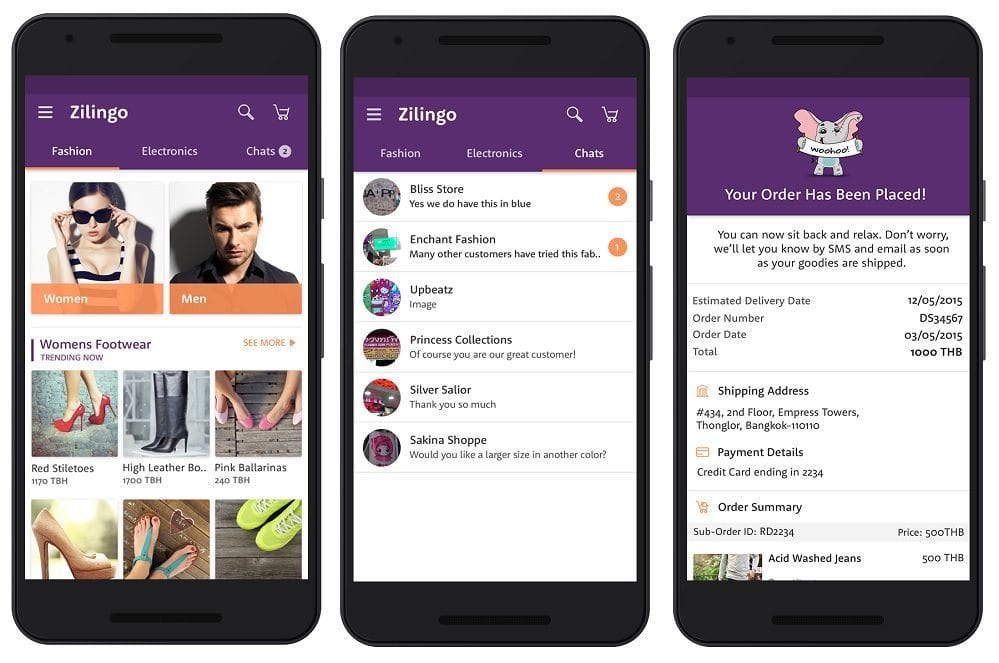
    Zilingo is a mobile-first online marketplace that allows merchants to list their inventory, set their prices, and fulfill online orders. Users can browse through available stores and products, then order and pay with their credit card.

    Zilingo screenshots

    Zilingo’s services include shipping, packaging, payment options, an analytics dashboard for mobile, order tracking, refund and cancellation options, and consultation on pricing strategy. The app also provides chat, through which a customer can get directly in touch with a merchant.

    The startup doesn’t charge merchants for listing, or any other fees, providing most of its services for free. It only takes a cut out of successful sales, wanting to encourage adoption and to “only charge for things that actually add value to the [merchants’] business.”

    Zilingo has only recently gone live, and is available to buyers and merchants across Thailand. Within November 2015, buyers from Singapore, Indonesia, and Hong Kong will also have access to the platform’s Thai sellers. Other Southeast Asian countries will follow, according to the startup. There are currently over 300 sellers on the site, Ankiti says.

    The company has already raised external funding, to the tune of US$1.88 million. The funding comes from Sequoia India, Teru Sato of Beenext, and Freecharge’s Kunal Shah and Sandeep Tandon.

    “We are delighted to back Ankiti and Dhruv, a highly talented and committed founding team, in their efforts to build a mobile-first marketplace for Thailand,” says Shailendra Singh, managing director at Sequoia India. “We liked the team and their mobile-first product so much, that we agreed to invest at the concept stage. It’s early days for the company, but we’re excited about the prospects for Zilingo.”

    Are you eager to shop from Thai retailers online? Do you think Zilingo has found a good way to digitize Thailand’s merchants?

  • Ascend expands its Asean reach

    Ascend expands its Asean reach

    “The move is to drive Ascend, both iTrueMart and Weloveshopping, to be the e-commerce market leader in the AEC by 2018,” Punnamas Vichikulwongsa, president of Ascend Group, said yesterday.

    According to Euromonitor 2015, the report of Euromonitor International, a business-intelligence research house, the business-to-consumer e-commerce market in the AEC will grow by 20 per cent per year to US$7 billion (Bt249 billion) in 2017 from nearly $5 billion this year.

    Thailand’s e-commerce market is worth about Bt42 billion with annual growth of 20 per cent.

    The company will engage in operating, fulfilment including warehousing and logistics, and marketing actives in seven countries in the AEC – the Philippines, Indonesia, Malaysia, Vietnam, Singapore, Myanmar and Cambodia.

    It will start with the Philippines by the end of this year and follow with the other six countries in 2016.

    The AEC market should help double its sales to Bt6 billion next year from Bt3 billion this year, which all comes from the Thai market.

    E-commerce in Thailand and the AEC has high potential since it now accounts for only 1 per cent of total retail shopping. In five years, it will be about 7-8 per cent of the retail industry in Thailand.

    E-commerce makes up 9 per cent in the United States and 13 per cent in the United Kingdom.

    “E-commerce is a market for the big boys, since it needs huge capital. In each market, there are only one or two e-commerce players dominating the market. We want to be ‘top of mind’ in the e-commerce business in the region,” he said.

    The business model of iTrueMart is different from Weloveshopping. iTrueMart acts as an online shopping department while Weloveshopping serves as a e-commerce marketplace.

    Ascend claims itself as the e-commerce leader in Thailand with 14,000 orders per day, split evenly between the two websites.

    Seubsakol Sakolsatayadorm, general manager of the iTrueMart division at Ascend Commerce, said iTrueMart’s conversion rate of 4.2 per cent of visits was higher than the market average of only 2 per cent.

    At iTrueMart, information-technology gadgets and accessories are still the largest contributor at 70 per cent. Orders have gone up fivefold this year since product categories were diversified from hard lines to soft lines, such as personal care and beauty products, and home lines such as household appliances.

    “The latest is a mum-and-kids category, since it is one of the largest in e-commerce in many countries,” he said. ITrueMart has invested heavily in fulfilment, warehouses and logistics. It has more than a million products, or more than 20,000 stock-keeping units, stored in its warehouse. The company delivers products through its own distribution system in Greater Bangkok with a 20-vehicle fleet and outsourcing to logistics partners.

  • E-commerce startups: a wild card for the industrial market?

    E-commerce startups: a wild card for the industrial market?

    THE bulls and bears of Singapore’s industrial property market often reflect the pace of economic growth and the composition of the manufacturing sector. Since its post-independence days, the manufacturing sector in Singapore has evolved to be a key contributor to gross domestic product (GDP) at approximately 20 per cent with strong support stemming from the chemicals, electronics and precision engineering clusters in 2014.

    In recent times, however, the Republic’s manufacturing activities have slowed down due to the external and internal headwinds which this export-reliant nation is highly susceptible to.

    The government has long recognised the need to boost the island’s overall productivity and export competitiveness in the region to maintain economic growth. To this end, Singapore’s manufacturing sector has been undergoing economic restructuring to shift the value-chain upwards to focus on higher value-added industries. More emphasis is placed on higher automation and less labour-intensive manufacturing activities as firms grapple with rising labour costs and lean manpower.

    Post-Global Financial Crisis, the rapid recovery in GDP in 2010 was accompanied by a spike in manufacturing output. As one of the underlying demand drivers for industrial space, the increase in manufacturing activities propelled the demand for industrial space, as indicated by the positive net absorption islandwide. On the back of limited net supply, this translated to occupancy rates hovering above the range of 93 per cent until 2011.

    Subsequently, demand for space began to soften from 2012. The softening is primarily attributed to three key factors – the hike in labour costs, rising competition from neighbouring countries that offer an alternative cheaper manufacturing base and weakening external demand from Asian economies, especially China. Cost containment became a top priority, which led to existing demand being mainly driven by renewals and consolidations.

    On the back of rental and capital value escalations in 2011, the government introduced a slew of industrial property measures such as tighter occupation requirements for industrial space, seller’s stamp duty, shortened land tenures, and ramped up supply through the Industrial Government Land Sales (IGLS) Programme to cool the market. This eventually resulted in a surge of supply which far surpassed demand from 2013 onwards.

    Furthermore, a strong supply of industrial space is expected to be completed in 2015 and 2016. In the face of decelerating economic growth and contracting industrial output, it is likely that demand for industrial space will remain subdued in the near term, as the surge in supply corresponds to twice the amount of the 10-year average demand of 10.42 million square feet (see chart).

    Given this supply overhang situation and less favourable economic conditions, it is imperative to explore other complementary uses for industrial space while adhering to existing JTC Corporation and Urban Redevelopment Authority (URA) guidelines.

    ANCILLARY USE

    Under URA guidelines, industrial properties are segregated for use by a 60 per cent-40 per cent quantum, where 60 per cent is predominantly used for core industrial activities and 40 per cent for ancillary uses. To obtain Written Permission for the 40 per cent ancillary use such as industrial canteens, showrooms and selected commercial uses, occupiers have to comply with the following requirements:

    • Capping industrial canteens at 5 per cent of total proposed gross floor area (GFA) or 700 square metres, whichever is lower.
    • Showrooms are only allowed to display products which are typically not transacted over the counter and are predominately delivered and installed off-site.
    • Selected commercial uses include clinics, banking hall/ATMs, minimarts and fitness centres and are capped at 10 per cent of total proposed GFA per development or 200 sq metres, whichever is lower, on the first storey of the building only.

    As long as the proposed ancillary uses conform to the above guidelines, it provides landlords with the flexibility to revamp the use of existing industrial space and widen the pool of potential occupiers.

    In the past, industrial spaces were primarily used for core industrial activities namely, manufacturing and warehousing. However in 2004, the Economic Development Board (EDB) introduced the Warehouse Retail Scheme – an initiative which ended in 2007 – which led to megastores such as Ikea, Giant, Courts and Big Box operating in industrial locations.

    Notwithstanding the short-lived three-year tenure of this initiative, in 2015, Gain City and NTUC FairPrice incorporated retail components into their industrial developments under the 40 per cent ancillary use.

    While adhering to the 60 per cent allocation for warehousing, Gain City’s Sungei Kadut development, for instance, sets aside 20 per cent for retail, and incorporates other uses such as offices, café, sky terraces, a children’s play area and a diesel pump area. Consolidation of uses into one location enables industrialists to enjoy cost-saving benefits, which have been passed on to consumers. Gain City, in fact, reported 20 per cent in cost savings with its consolidation exercise.

    Through a similar re-adaptation of industrial spaces, it is plausible to extend the same cost-saving benefits to entrepreneurs. For one, e-retailers could potentially benefit from a re-think on warehouse space usage. By designating 60 per cent to store e-retailers’ inventories in self-storage, the remaining 40 per cent can be further proportioned to develop an all-encompassing pro-business environment with courier services, serviced offices, Wi-Fi-equipped cafés and showrooms.

    A development that has adopted a similar concept is the Entrepreneur Business Centre, a self-storage and serviced office facility with ancillary uses, namely baby-care retail and delicatessen.

    The purpose of incorporating Wi-Fi-equipped cafes and showrooms in industrial developments is to transform industrial estates into a one- stop e-commerce hub for startups.

    Firstly, business operations and logistics are supported through having 24/7 wireless access, storing inventories in self-storage and having shared in-built courier services. Secondly, it attracts clientele as displaying products in showrooms creates an experiential retailing concept for consumers to touch and feel e-retailers’ products prior to purchasing them online.

    One retailer that offers this omni- channel retailing experience through the online-to-offline (O-2-O) concept is Decathlon, a sporting goods firm which only had an online presence in Singapore. The introduction of the Decathlon eXperience showroom has encouraged customers to have more hands-on interaction with the products before proceeding to purchase them online. Undeniably, this creates a cost-friendly working environment as it promotes the growth of e-commerce by compressing e-retailers’ risks through reduction of overhead costs and lock-in periods.

    GATEWAY FOR E-COMMERCE

    There is strong support for Singapore to grow as an entrepreneurial hub. Firstly, more industrial spaces are being slated for entrepreneurial activities such as at JTC Launchpad @ one-north, and secondly, there is rising investment interest in Singapore’s startups, especially in the e-commerce sector.

    According to Techlist, 80 per cent of venture funds raised by Internet companies are being invested in Singapore where the beneficiaries are predominantly e-commerce players such as Lazada, Zalora and Reebonz.

    This is not surprising as Singapore is ranked 14th on the 2015 Global Retail E-commerce Index, indicating the strong fundamentals which have established Singapore as the gateway for e-commerce.

    According to Euromonitor International’s June 2015 study on retailing in Singapore, Internet retail sales grew 12.5 per cent year-on-year to S$1.08 billion, while mobile Internet retail sales expanded even more significantly by 53.9 per cent to S$280.9 million.

    All these indicate that Singapore’s e-commerce sector is poised to expand further, which could potentially be the next underlying demand driver for the industrial market.

    Leveraging on the aforementioned opportunities, the pool of end-users for industrial space may be extended further to include e-commerce startups. Previously, this group of users was hindered by barriers of entry such as high occupancy costs and inability to occupy the minimum GFA requirement in industrial developments. However, by consolidating uses and re-adapting the 40 per cent ancillary use, this creates a win-win situation for landlords, consumers and entrepreneurs.

    In addition to injecting fresh demand for a muted industrial market, it creates a viable operating business environment for startups, thus promoting the development of the e-commerce scene.

    Instead of depending on external trade and manufacturing to propel demand for the industrial market, widening the list of potential occupiers to startups may potentially inject life into industrial estates. That may be the solution to cost containment which businesses are seeking.

  • Philippines eyed as next largest market for e-commerce firm Lazada

    Philippines eyed as next largest market for e-commerce firm Lazada

    Lazada Group, an online commerce company founded by the world’s largest Internet incubator, is eyeing to keep a double-digit growth trend for its sales and customer-based in the Philippines, which is well-positioned to become the company’s largest market.

    Part of Rocket Internet, Lazada’s e-commerce websites are present in six countries including the Philippines, Indonesia, Malaysia, Thailand, Vietnam, and Singapore.

    Lazada Philippines Chief Executive Officer Inanc Balci said in an interview with Business Bulletin that the group is eyeing to make the Philippines its largest market out of the six countries it is present in.

    “I want to make it [the Philippines] the first,” Balci said.As of now, Balci said Lazada Group’s largest market is Indonesia, while the Philippines only stand at second.

    “The e-commerce is growing in the Philippines. We have the 80 percent market share in the general retail e-commerce in the Philippines. [Here] we intend to be the market leader. I would like to grow faster. Sales is growing,” he added.

    In September alone, Balci said the company had recorded 37.7 million visits, significant number of which had actually booked their orders. “This significantly increased over the years,” he further said.

    Next month, Lazada Philippines will launch its three-year-old annual online shopping event that highlights big discounts on 200 major brands, which includes Canon, Nikon, Nescafe, Epson, Microsoft, Asus, Acer, Lenova, Milo, Pampers, Chuckie, Nestle, Unilever, among others.

    As of now, 1 million brands are being sold through Lazada and this should increase before the end of the year.

    “From 100,000 in 2012, we now have 1 million brands. That’s going to increase by several times moving forward. We proactively approach the brands,” he further said.

    From November 11 until December 12, online shoppers can avail of as much as 95-percent discount from their favorite brands in Lazada through Online Revolution.

    With its increased share in mobile app users, it is expected that this year will definitely break last year’s record in terms of online traffic for Lazada in the Philippines.

  • Shopping mall with e-commerce logistics services to rise in Singapore

    Shopping mall with e-commerce logistics services to rise in Singapore

    Construction is now underway for Singapore’s first shopping mall that offers e-commerce logistics solutions as well.

    Scheduled to be completed in mid-2017, the new retail mall will be located at the prent open concourse in front of the SPC, located next to Paya Lebar MRT station.

    The project’s developer, Singapore Post Limited (SingPost), said it will have 25,000 square meters of retail space and will be built at a cost of S$150 million ($107 million), which includes upgrading amenities and façade for the adjoining office building.

    “The redevelopment of the retail mall at SPC is part of our efforts to extract maximum value from our property portfolio and support our accelerated transformation from Singapore mail to global eCommerce logistics,” said Lim Ho Kee, Chairman of SingPost, in a news release.

    As a mall that combines both online and offline shopping, SingPost said shoppers could browse in-store, purchase the product and arrange for delivery of the product directly to the home. They could then continue shopping, watch a movie or have a meal at the mall without having to carry bulky shopping bags. The retailer, on the other hand, could save on storage space in the store as fulfilment would be done at the backend of the warehouse.

    Dr. Wolfgang Baier, Group Chief Executive Officer of SingPost, said the unique and disruptive concept – converging online and offline – was thought of to allow customers to experience both worlds.

    “This is an important shift in mindsets as well as the retail and e-commerce landscapes. The convergence of online and offline will bring exponential benefits to consumers and businesses – therefore we view this as ‘O²’ (O-squared) instead of O2O (Online-to-Offline). The SPC’s O² retail concept puts consumers at the heart of this evolution, allowing them to have greater retail options and more convenience,” he said.

    The new retail mall at SPC will consist of four above-ground levels and one basement, an eight-hall cineplex, SingPost’s flagship post office, retail shops, as well as food and beverage outlets. The mall will also come equipped with three levels of underground car park.

    Under the Urban Redevelopment Authority masterplan 2008, the area around the Paya Lebar MRT station will be developed into a suburban commercial node, while retaining its cultural identity. The new retail mall at SPC will reinforce the plan and add more buzz into the area by introducing the new O² retail experience. It will also  be a smart mall in a Smart Nation, using technology and innovation to support smart living environments while helping businesses to grow.

  • 5 unique challenges all ecommerce firms face in Indonesia

    5 unique challenges all ecommerce firms face in Indonesia

    People talk a lot about Indonesia’s burgeoning ecommerce market, and how Jakarta may very well be on the cusp of an online retail revolution. Over the past 12 months, we’ve seen more activity in the sector than ever before, with new firms emerging and big-league investment coming in simultaneously.

    Naturally, these are all positive signs that point toward a maturing market in the region; hopefully one that can push Indonesian ecommerce into the mainstream conversation in Asia. It would be great to see online shopping reach five percent or more of the nation’s overall retail sector, but for now we can only speculate on the future.

    indonesia-streets-1

    Like any market, Indonesia has its own set of challenges, caveats, and peccadillos that all ecommerce founders are forced to cope with. In the past, we’ve cited the archipelago’s hellish logistics landscape, weak payments infrastructure, and a fragmented market as some of those limitations. However, there is a second layer of challenges that all estores will face in the gauntlet that is Indonesia.

    This is a set of generally accepted idiosyncrasies that newbie e-tailers — and especially foreigner founders — will run into on a daily basis in Jakarta, so take notes. In no particular order, here are five cultural challenges all ecommerce firms, new or seasoned, will face in Indonesia.

    Price-sensitive shoppers

    Indonesia-ecommerce

    It’s true, Indonesia has one of the most attractive emerging middle-classes in the world. By 2030, an estimated 90 million people will have joined the consuming class. That said, Indonesians are, to put it mildly, true suckers for sales and discounts. Locals have a strong proclivity toward finding the best prices at all costs.

    This is no secret to anyone who lives in Jakarta, as it’s extremely common to see hundreds (sometimes thousands) of locals waiting in line at the mall just for a 50 percent off sale to happen at Bershka or the Samsung store. Nevermind the time, energy, and fuel spent to get to the store across town or the fact that folks may not have felt compelled to buy anything in the first place, had there not been a sale.

    Boston Consulting Group says Indonesian shoppers actively seek out promotions and hunt for deals. At the lower half of the income pyramid, this is a function of family dynamics. Men typically give their wives a monthly budget for the family. The more money these women can save on groceries, the more they have to splurge on small indulgences for themselves. However, the bargain-hunting drive spans the wealth spectrum — more than 60 percent of the overall population says they enjoy searching for discounts and promotions, and more than 70 percent of the country’s affluent population says they enjoy doing so.

    This might seem like more of a blessing than a curse at first glance, as demand can be easily created so long as merchants temporarily lower their prices. But in the end, competition often becomes a race to the bottom and profit margins suffer if you don’t plan your discounts as if you were going into brain surgery. Anyone thinking about opening an estore in Indonesia needs to firmly understand the lowest price they can offer while still being able to turn a profit. If it’s not in the same ballpark as the nation’s big competitors, both online and offline, new web firms will need to rethink their strategies.

    Risk aversion

    New ecommerce names in Indonesia, even ones as big as JD for example, are going to have to work twice as hard as their more established counterparts when it comes to acquiring and retaining users. According to a recent McKinsey study, Indonesian consumers have some specific shopping behaviors. They are risk-averse and brand-loyal. 63 percent of Indonesian consumers only buy products from brands they already know. This positions them as late adopters because they need to be encouraged by friends and family before they choose to adopt new products.

    Bank Mandiri cites this challenge as a short-term hurdle in the grand scheme of things, however, as purchasing behavior will likely change when Indonesia’s internet infrastructure improves, and more people come online for the first time. However, for smaller ecommerce sites without a bankroll and several years of runway, they’ll need to find new and creative ways to get local shoppers to trust their brand, and do so fast.

    Deep-pocketed competitors

    Lazada-indonesia-home

    Rocket Internet’s Lazada Indonesia, Lippo Group’s MatahariMall, SoftBank and Sequoia-backed marketplace Tokopedia, and now JD.id — the Indonesian arm of the Chinese ecommerce giant — are all firms with copious spending power. All are up and running in Indonesia, and those who are intimate with Indonesia’s ecommerce landscape understand how unwise it is to challenge these guys head-on.

    Lazada Indonesia is perhaps the biggest force to be reckoned with, as overall spending on Lazada Group’s Southeast Asia portals jumped from US$89 million in 2013 to US$350 million in 2014. Indonesia’s shoppers made up over 30 percent of that, says CEO Max Bittner. To date, the firm has pulled in US$686 million in funding on public record. Tokopedia grabbed US$100 million last year, and MatahariMall also claims to be earning hundreds of millions. JD is a publicly traded company that’s raised around US$2.6 billion to date.

    If you want your fledgling ecommerce venture to work out, you’re going to need to find multiple ways to differentiate yourself from these firms or face certain death. Homework and competitive analysis is a must.

    An increasingly frothy market

    There are many figures that paint a positive picture of Indonesia’s ecommerce scene. The most referenced one is a 250 million population with a recent annual GDP increase between 5 and 6 percent, primarily driven by people buying things. In reality, Indonesia’s ecommerce market is still in its infancy, yet an increased level of attention and hype is drawing entrepreneurs who think the market and investment scene are already primed.

    Zalora Indonesia was able to succeed in its early days because of Rocket Internet’s vast resources and a long period of trial and error. Today, seemingly strong competitors like Paraplou Group are closing their doors in Jakarta, citing reasons of market immaturity, uncertain financial conditions, and a hard time getting funded as the primary reasons for closure.

    With firms like MatahariMall making bombastic funding claims and many early-stage VCs adopting the spray-and-pray investment method (without disclosing round sizes), all the news coming from Indonesia makes the archipelago seem like a perfect lilly pad for incoming ecommerce companies.

    Lyall Taylor, associate director at global financial services firm Macquarie Group in Jakarta believes there is a lot of hype about future ecommerce growth in Indonesia. He recently broke down typical causes of market hype for Tech in Asia.

    “Usually what happens is that rapid growth in an industry […] results in profits to early investors,” said Taylor. “These profits get increased media attention and eventually attract more and more people to enter the fray, driving prices higher still […] investors are extrapolating growth well into the future and assuming a high likelihood of success for many tech ventures, even when high levels of future growth and profitability may not be assured.”

    A preference toward brick-and-mortar

    Plaza_indonesia

    Shopping is undisputedly a religion in the archipelago. When friends get together on a Friday night, the question is not “Should we go to the mall?” Instead, it’s “Which mall should we go to?” Local business portal Indonesia-Investments says it’s astonishing how many new malls have opened during the last decade or are currently being developed in Jakarta. Most new malls are part of large real estate projects that also include apartment complexes, office towers, hotels, and sometimes even hospitals.

    The mall is usually the epicenter of everything on a Jakarta superblock, connecting all other buildings. For Indonesians, from the middle-class up to the elite, these malls are places to hang out, relax, and eat because the environment is enjoyable: pleasant temperatures, no pollution, and clean spaces. Most Jakarta malls contain one or more floors with several restaurants, which are inevitably popular among young adults. Malls are also common places to have business meetings. Live music is a regular occurrence.

    Jakarta alone has nearly 200 shopping malls and counting, despite the government trying to curb mall growth in recent years.

    The reason this is important for incoming foreign ecommerce founders, or anyone considering starting an estore in Indonesia for that matter, is that ecommerce is not going to replace brick-and-mortar shopping in the archipelago anytime soon. In fact, startups will need to work much harder to provide incentives for shoppers to transact online rather than simply taking the elevator downstairs and buying offline.
  • Alibaba confounds China slowdown with 32% revenue rise

    Alibaba confounds China slowdown with 32% revenue rise

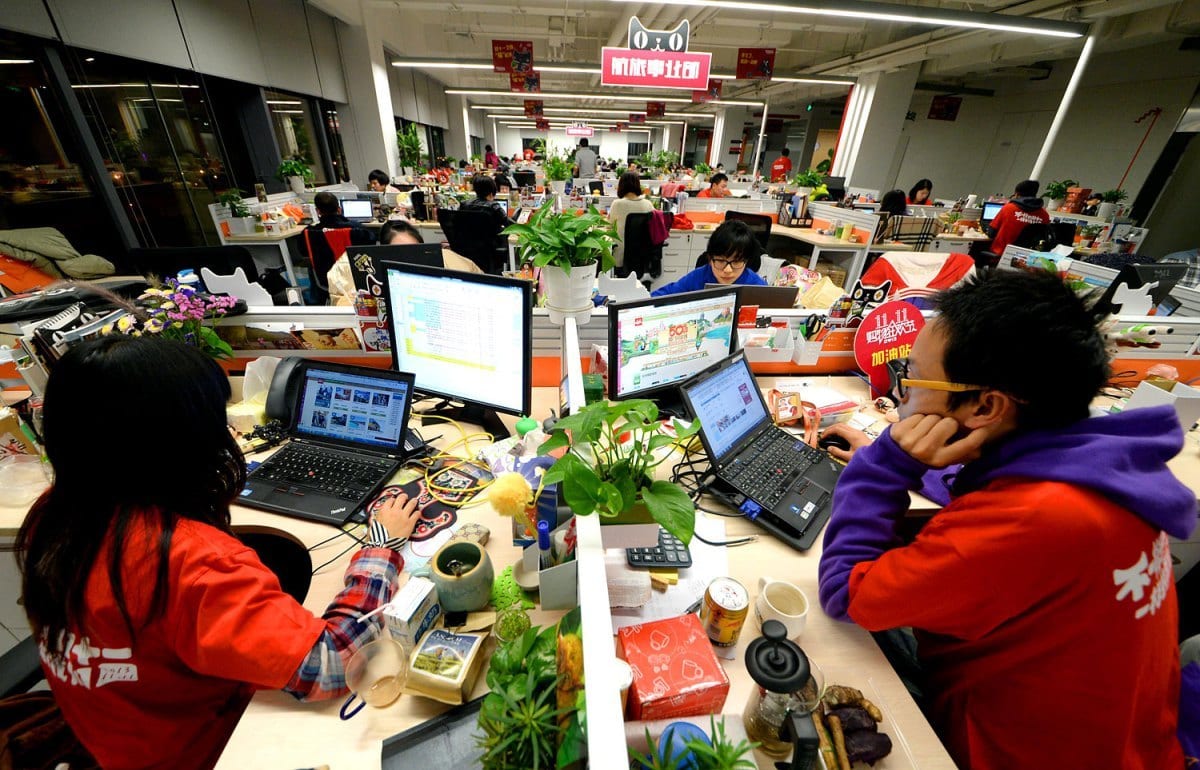
    The Chinese e-commerce giant Alibaba has reported a stronger than expected 32% rise in second-quarter revenue, even as the value of transactions on its platforms grew at a slower pace.

    Revenue from mobile platforms, an increasingly important area for the company, nearly tripled to $1.66bn (£1.1bn), with mobile gross merchandise volume (GMV) accounting for 62% of total transactions on Alibaba’s China retail marketplaces.

    “Mobile is the trend and Alibaba is capturing that trend,” said Tian Hou, an analyst at TH Capital Research.

    Alibaba’s New York-listed shares were up 10% in premarket trading. Shares of Yahoo, which owns 15% of Alibaba, were up 7%. The total value of transactions on Alibaba’s retail marketplaces in China rose 28% to $112bn, but this was the slowest growth in more than three years.

    The lower GMV growth was not unexpected. In early September, Jane Penner, Alibaba’s head of investor relations, said the total value of transactions during the quarter would be smaller than originally expected due to lower order values. Revenue rose to $3.49bn in the three months to the end of September.

    The jump in revenue added weight to recent comments from Jack Ma, Alibaba’s founder and chairman, that concerns about slowing consumption in China were overdone.

    The earnings report comes about two weeks before Alibaba’s singles day shopping festival on 11 November, which last year netted sales of more than $9bn .

    The company reported net income attributable to shareholders of $3.58bn, or $1.40 per share. Alibaba earned 57 cents per share, beating the average estimate of 54 cents.

    Alibaba, facing increasing competition from its rival JD.com, has been branching out from its core online shopping platforms in an attempt to stem a slowdown in revenue growth. During the quarter, the company invested $4.6bn in Suning Commerce Group in a move to bolster its ability to compete in logistics and electronics – two areas of strength for JD.com.

    The company has also poured more money into ventures outside China, for example by investing in One97 Communications, the parent of the Indian online retailer Paytm, and taking part in a funding round for the Indian e-commerce company Snapdeal.com.

    Alibaba shares closed at $76.35 on Monday, down about 36% from their record high of $120 in November 2014. Yahoo closed at $33.40.

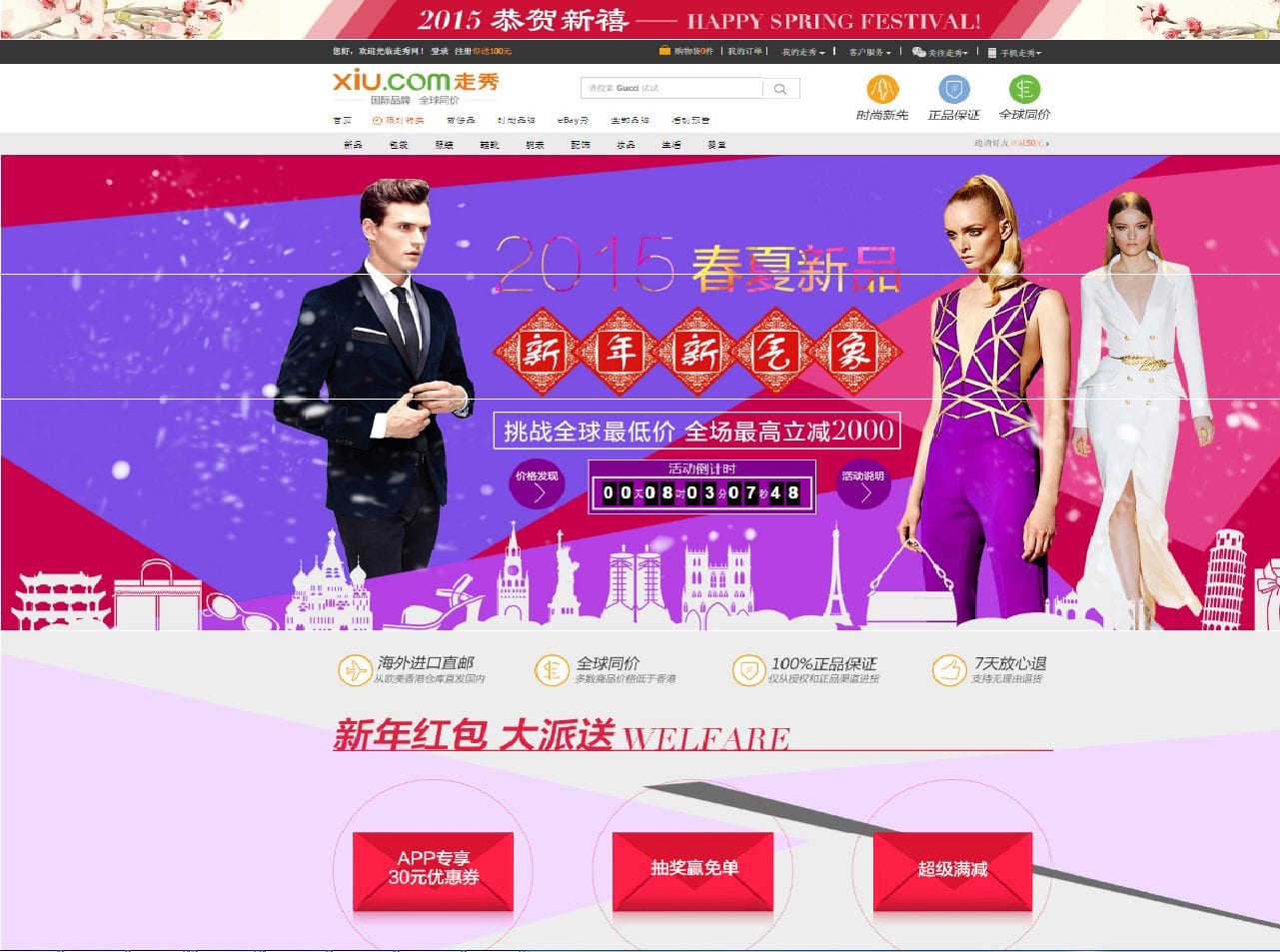
  • Xiu.com Signs Online Retail MOU With UK Trade & Investment

    Xiu.com Signs Online Retail MOU With UK Trade & Investment

    As a leading Chinese e-commerce company’s representatives and invited by UK Trade & Investment and British Embassy Beijing, Xiu.com’s CEO Ji Wenhong and Director of Overseas Division Summer Lu attended business meeting of the state visit on Oct. 21 and gave a speech at the Sino-UK Retail Summit on Oct. 22.

    Xiu.com has signed a MOU with UK Trade & Investment and provides an e-commerce platform for brands of U.K reaching Chinese consumers.

    Under the agreement, Xiu.com and UKTI work together to help U.K. companies seize the rising opportunity of online shopping in China and globally. Xiu.com also promises to provide U.K. brands a precise online selling solution, which based on numerous operational data collected in the past seven years.

    Several U.K. brands have begun to sell on Xiu.com. Henri Lloyd, an apparel brand specializing in sailing and a sponsor of Formula 1 sailing tour, is among them and it sells products on Xiu.com at the same price in Europe.

    Another example is historic Scottish cashmere brand Johnstons of Elgin, which produces cashmere products for Hermes and Burberry. In China, high end cashmere products cost as much as 10,000 RMB in Chinese stores, on Xiu.com consumers only need to pay about 1,000 RMB for the products of same quality.

    Also, Xiu.com and U.K. government have jointly introduced Cheany, a U.K. shoe brand never sold into China before, to Chinese online shoppers.

    Xiu.com, a partner of UKTI in e-commerce, opened its U.K. office in London in 2014 to connect more U.K. brands.

    Xiu.com also joins “Shopping is Great”, which is part of GREAT Britain Campaign, an initiative that promotes creative ideas from Britain in business innovations. Xiu.com will mark all U.K. products on xiu.com with its LOGO.

    This March, Prince William’s visit to China is one of many activities of GREAT Britain Campaign and Xiu.com delivered a speech at an event organized by U.K. government during Prince William’s visit as well.

    Singles’ Day, the world largest online shopping festival is approaching and Xiu.com is working hard to get the most of it. Maureen Mou, Xiu.com’s Senior Vice president says, more than 600 overseas brands plan to join the promotion on Xiu.com at this year Singles’ Day and promises to sell their products at 20% to 40% discount.

  • Vietnam e-commerce market growth to be led by online retail market

    Vietnam e-commerce market growth to be led by online retail market

    According to the Research’s recently issued report “Vietnam E-Commerce Market Outlook to 2019 – Driven by Internet Penetration and Smartphone Usage”, e-commerce managed to gain some attention in Vietnam only after 2011. The retail market in Vietnam is considered one of the most dynamic markets in the South East Asia with such a high growth rate. Hanoi and Ho Chi Minh City are ranked in the top 10 cities in the entire Asia for retail expansion. Hanoi ranked third after Beijing and Shanghai as the city with liveliest retail market.

    Vietnam is one of the top three countries with the highest rate of growth of internet and mobile phone subscribers in Vietnam, with more than four million people using the internet a day, offering great potential for online shopping development.

    In 2014, Vietnam had a total population of 90.7 million out of which 35.4 million people have access to internet, making the internet penetration rate of 39%, amongst the highest in the region. Though the E-commerce market is not very old, the country has many big players such as Lazada, Hotdeals, Vatgia and others which are driving E-commerce in Vietnam.

    Vietnam E-Commerce is one of the fastest-growing E-commerce markets in South East Asia. Cash on Delivery in Vietnam is the most preferred mode of making payments online.

    Vietnam has great potential to grow its E-commerce, especially after investors shifted attention from China towards Vietnam for the next manufacturing hub in the east. Vietnamese are digitally attuned, especially in urban parts of the country which is the main target audience for  E-commerce players, at least in their initial and growing phase.

    The online retail market of Vietnam is driven by major players such as Lazada and Amazon along with local players such as tiki, Vatiga, Zalora and others due to their focus on localized content.

    In 2014, the online retailing market contributed more than 65% in the overall B2C market of Vietnam. Constant innovation, launch of newer brands online, proliferation of affordable smartphones coupled with rise in broadband access have largely propelled market growth.

    The online retail market has been segmented into clothes, shoes & cosmetics, technology Kitchen and home appliances, books and stationery, CD’s & DVD’s, mother & baby products and others.

    The Vietnam gaming industry is the biggest in the entire South East Asia which gives its online gaming market an edge. Vietnam Online Entertainment & Services booking market has attained small but significant growth in overall e-commerce market.

    The concept of online entertainment has become prevalent since the rise in internet penetration in Vietnam, owing to the emergence of websites offering online booking of movie and event tickets as well as professional services.

    The rising share of online entertainment and services booking is supported by the fact that more players are entering the market with different business models to tap the customer base.

    Ken Research is a research and information service company operating with a network of partner firms across the US, Asia and Europe.

  • Low credit card penetration, lack of trust constrain Philippines e-commerce

    Low credit card penetration, lack of trust constrain Philippines e-commerce

    ONLINE retail sales in the Philippines account for only one percent of total retail sales in the country, a key e-commerce executive said.

    Inanc Balci, Lazada Philippines co-founder and chief executive officer said this is much lower than in Western countries, which record online retail sales from five to 10 percent of the total retail sales.

    One major constraint to the growth of e-commerce in the Philippines is the low credit card penetration. According to Balci, only three to seven million Filipinos are credit card holders and 30 million have bank accounts.

    The lack of trust, customer knowledge, and market size are also challenges confronting e-commerce in the Philippines.

    Because of this, Lazada led the “no risk” cash-on-delivery (COD) payment scheme, where buyers would only have to pay for the item they bought from Lazada when the item is delivered.

    “Credit card penetration is low, but even those with credit cards prefer cash-on-delivery on their first few purchases,” Balci said.

    Most of the transactions in Lazada are through COD.

    In Lazada, top selling categories include electronics, fashion, and home products. These are delivered to the customers within one to 10 days upon purchase.

    The geography of the Philippines is also affecting e-commerce.

    “(There are) hard to reach, low-density areas with low retail presence and an expensive delivery infrastructure,” Balci said.

    To address this, Lazada has been putting up warehouses in some parts of the Philippines.

    Last Thursday, it opened a warehouse in Mandaue City to serve some areas in the Visayas. It will also open one in Davao in the next 12 months.

    While online shopping is a relatively new concept in the Philippines, Balci is optimistic that the country will exceed Western countries’ five to 10 percent share.

    “I believe the Philippines is going to be bigger than the Western markets,” the official said, saying the increasing smartphone use among Filipinos will drive e-commerce growth.

    Balci said there were 10 million additional mobile Internet users in 2015.

    “The mobile ecosystem is the big driver of Internet penetration. (There is a) $21 smart phone on Lazada,” he added.

    Presently, Lazada holds 80 percent market share in the online retail segment. The company sees the Philippines as one of its fastest growing markets. The online shopping mall is also present in Indonesia, Malaysia, Thailand, Singapore, and Vietnam.

    “I’m very optimistic with the Philippines, since we have experienced growth at a crazy rate,” Balci said.

    Lazada was launched in the Philippines in March 2012.

    More than half of Lazada buyers, or 54 percent of them, are males. People aged 18 to 34 years old account for 71 percent of the company’s customers.

  • The Online Shopping Evolution of ‘Mobile-First’

    The Online Shopping Evolution of ‘Mobile-First’

    You may be surprised to learn that Malaysia leads the world in smartphone usage per capital, and that it is one of only five countries worldwide where 67% use their smartphones as a crucial access point to get online. Additionally, a recent Mobile Shopping Survey conducted by MasterCard, Malaysia ranks third in the rate of growth of mobile shopping in Asia (over 20% from 25.4% in 2012 to 45.6% in 2014) – further indicating that we, as a nation are become increasingly tech-savvy and shopping-savvy too.

    Today Malaysia, spearheaded by a formidable and fast-growing Gen-Y population, is at the forefront of ‘mobile-first’, the emergent driver of e-commerce in its latest ‘e-volution’. Fresh supporting data by online marketplace 11street (www.11street.my) further confirms that today’s shopping trend is progressively moving toward mobile-first. 11street, one of the largest online marketplaces in Malaysia, recently revealed that close to 50% of their shoppers use smartphones to shop and purchase items online on their site.

    The reasons for the growing popularity of mobile shopping are related to a combination of factors: increased reliance on smartphones as an indispensable go-to tool; more products on offer; new players, and new apps that promise even more speed, ease, convenience, options, and incentives.

    Hoseok Kim, the CEO of 11street, shared some of the other insights gleaned from the company’s Online Shopping Index. He summarizes the main reasons behind the mobile shopping surge in Malaysia:

    Easier access for anytime, anywhere convenience

    Hundreds of thousands of products covering everything from consumer electronics to fashion, from groceries to cosmetics, from kid and baby products to services such as vouchers and much more, are now just a mobile screen click away. Consumers needn’t spend hours out of their busy schedule to shop. They save money on petrol or transportation without the hassle of traffic jams, queues and frustration that comes with it. Items purchased are delivered right to their door – at the home or office – and at a convenient time.

    Exclusive offers

    Companies are constantly providing incentives and inducements in the form of promotions, discounts, and shopping credits exclusively for mobile users. In fact, there is an active market for digital coupons with over 16 billion coupons redeemed worldwide in 2014. The expected rate is set to increase by up to 31 billion in 2019. A key promotion at 11street for mobile shoppers is the ‘Weekend Special Deals’ – it allows those that mostly shop over the weekend to save even more.

    Engaging functions

    Visually engaging displays of products are giving way to more dynamic, interactive content, where shoppers can browse, comment, and share interesting finds with their social circles. At 11street, shoppers are offered a full camera function-enabled product review mode, which allows them to view and post comments with photos for a fun shopping experience. App functions such as ‘first-hand news’ push notifications also provide shoppers with advance notice of upcoming sales.

    User-friendly interface

    Mobile apps that come with user-friendly interface enable consumers to access a desired range of items quicker, with set filters for an intuitive and interactive experience. In fact, it is due to these conveniences that mobile shopping have become a part of the Malaysian lifestyle of which consumers mostly go online when they would like to make a purchase, or conduct pre-purchase research.

    11street for example, has an ‘Event Page’ which summarizes all the promotions making it much easier for shoppers to access hot selling products and services and to see the most price- competitive deals from the moment they log in. This is especially true for the ‘Shocking Deals’ section with Lowest Price Guarantee of which shoppers are promised with the best price possible for a range of products in that section.

    Simplified yet secure payment processing

    Majority of mobile apps today are designed to accept credit cards and bank transfers for online transactions. Shoppers can also view their membership benefits, check their order status, and utilize their discount coupons while shopping on-the-go. As there has been increasing concern on mobile data security, 11street employs various security features that include an ESCROW system to put shoppers at ease. The ESCROW system releases payment to sellers only when the customers receive their products in good condition protecting them from frauds

    The growing popularity of mobile shopping here has not only made 11street’s mobile app a key component of the e-tailer’s business, but positively contributes to the overall growth of Malaysia’s e-commerce landscape by engaging with a wider net of buyers.

    As Malaysia currently has a 140% mobile penetration rate and continues growing, it’s easy to predict that the mobile-first trend will definitely continue to flourish in the country.