Retail News CRM

Tag: e-tail

  • Umall Acquires Asian Grocer Online: A Strategic Leap In Multicultural Grocery Sector

    Umall Acquires Asian Grocer Online: A Strategic Leap In Multicultural Grocery Sector

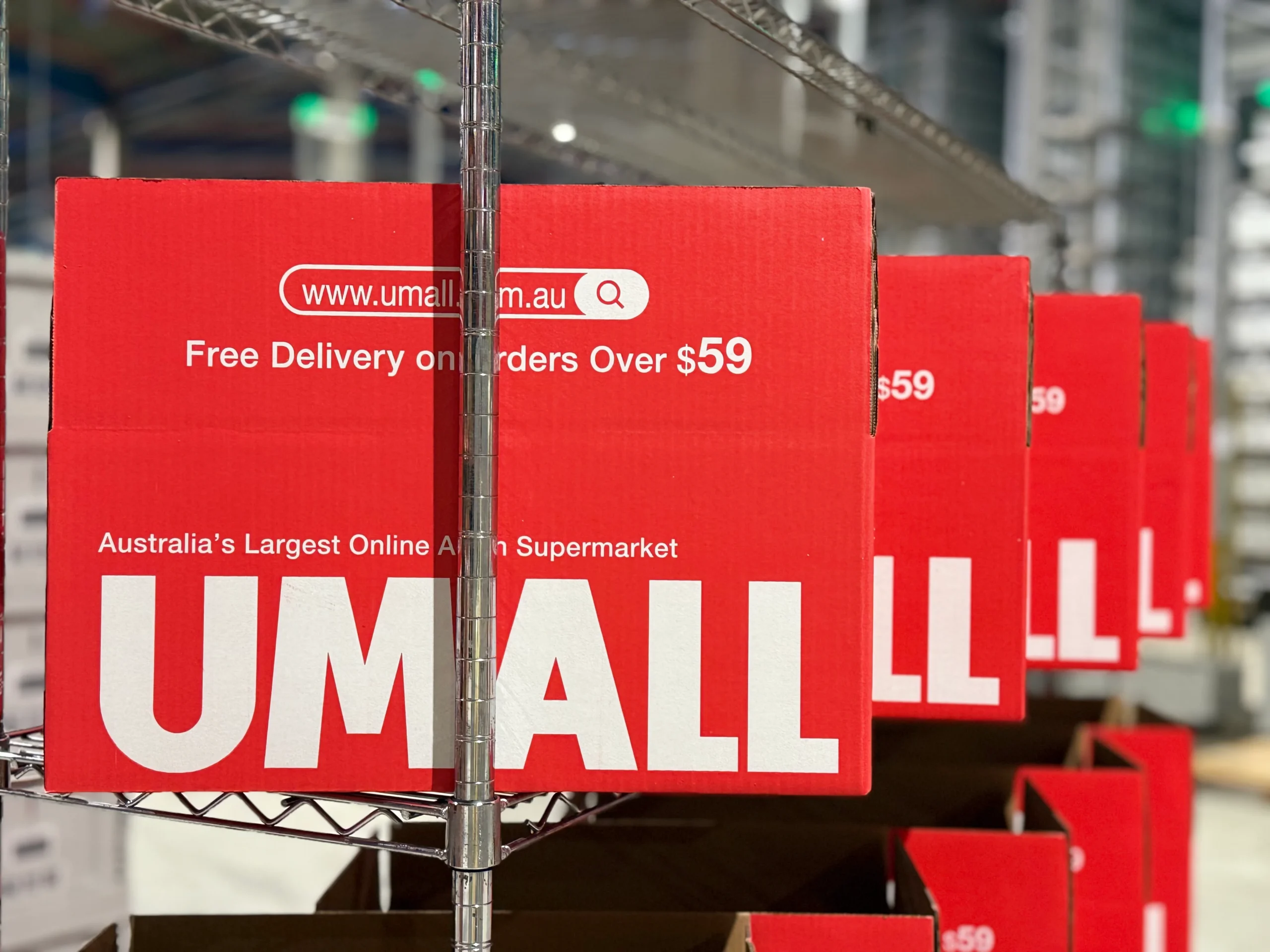
    Umall, an Australian e-commerce platform, recently announced its acquisition of Asian Grocer Online (AGO) in a bid to expand its presence in the multicultural grocery sector.

    Strategic Acquisition

    This acquisition represents a significant development in Umall’s ongoing expansion efforts. The company refers to this move as a “key milestone” in its growth trajectory. As part of this acquisition, AGO’s website is currently unavailable due to system enhancements. However, the company is working towards launching a fully refurbished, unified platform that combines the strengths of both brands.

    Expanding Reach

    With the integration of AGO’s category expertise and dedicated customer base, Umall aims to solidify its leadership position in the multicultural grocery space. The company intends to broaden its reach across Australia, providing a more diverse range of products to its customers.

    New Online Asian Supermarket

    The acquisition of AGO comes on the heels of Umall’s recent launch of a new online Asian supermarket. This venture seeks to provide a broader array of culturally diverse products, all delivered straight to customers’ homes.

    Investments in Technology

    Umall attributes much of its rapid growth to its significant investments in advanced technologies such as AI, automation, and robotics. The company maintains that these technologies have enabled it to provide faster, fresher, and more efficient service in comparison to traditional retailers.

    Questions & Answers

    What does Umall’s acquisition of AGO indicate?
    This acquisition suggests Umall’s strategic plan to extend its influence in the multicultural grocery sector and solidify its leadership position.

    What is the plan following the acquisition?
    The current plan is to launch a fully revamped, unified platform that leverages the strengths of both Umall and AGO. This integrated platform aims to provide a wider array of culturally diverse products.

    What has contributed to Umall’s rapid growth?
    Umall attributes a significant part of its rapid expansion to its substantial investments in AI, automation, and robotics. These technologies, according to the company, allow it to provide faster and more efficient service than traditional retailers.


  • Half of Vietnamese population shops online

    Half of Vietnamese population shops online

    More than half of Vietnam’s population shopped online last year as both supply and demand in the e-commerce sector continue to boom.

    Dang Anh Dung, deputy CEO of Lazada Vietnam, told the forum on e-commerce on Tuesday that a report by Google and Temaske & Bain said around 57 million Vietnamese made online purchases last year, most of them in Hanoi, Ho Chi Minh City and Da Nang City.

    The report also asserted that Vietnam’s young population is playing an important role in the digital economy.

    Around 43% of Lazada shoppers are Gen-Zers born in 1997 or later, said the deputy CEO of the digital shopping channel that has been called “The Amazon of Southeast Asia.”

    According to Dung, this demographic in Vietnam accesses the app every day.

    On average, each individual in this young Vietnamese population bracket buys products from seven different categories, Dung told the conference. “Young people are becoming more particular with their products. They seek values and will change brands if they receive low-quality items.”

    Tran Van Trong, general secretary of the Vietnam E-commerce Association (VECOM), said Vietnam is seeing a boom in e-commerce as the number of online shopper surges with improving shopping skills and increasing purchase value.

    The rise in demand has also prompted supply surges, he said. “Millions of people are now online sellers, and the majority of them do not even own a brick-and-mortar store.”

    Businesses are evolving fast to adapt to new ways of selling products, Tand said, adding that many retail firms are responding to the changing times by issuing new policies on online shopping.

    The government has also tightened e-commerce tax collection and is punishing those who sell counterfeit products, he pointed out.

    The Ministry of Industry and Trade recently reported that Vietnam’s e-commerce gross merchandise value is growing by 16-30% a year and could reach $20.5 billion this year.

    The Google report said that Vietnam’s digital economy could reach a total value of $30 billion this year, and $45 billion by 2025.

  • Indonesia bans e-commerce transactions on social media

    Indonesia bans e-commerce transactions on social media

    Indonesia has banned e-commerce transactions on social media platforms, the trade minister said on Wednesday, in a blow to short video app TikTok, which is doubling down on Southeast Asia’s biggest economy to boost its e-commerce business.

    The government said the move, which takes effect immediately, is aimed at protecting offline merchants and marketplaces, adding that predatory pricing on social media platforms is threatening small and medium-sized enterprises.

    The move comes just three months after TikTok pledged to invest billion of dollars in Southeast Asia, mainly in Indonesia, over the next few years in a major push to build its e-commerce platform TikTok Shop.

    TikTok, owned by China’s ByteDance, has US$125 million active monthly users in Indonesia and has been looking to translate the large user base into a major e-commerce revenue source.

    A TikTok Indonesia spokesperson said it would pursue a constructive path forward and was “deeply concerned” with the announcement, “particularly how it would impact the livelihoods of the 6 million” local sellers active on TikTok Shop.

    Indonesia Trade Minister Zulkifli Hasan on Wednesday told reporters that the regulation is intended to ensure “fair and just” business competition, adding that it was also intended to ensure data protection of users.

    He warned of letting social media become an e-commerce platform, shop, and bank all at the same time.

    The new regulation also requires e-commerce platforms in Indonesia to set a minimum price of $100 for certain items that are directly purchased from abroad, according to the regulation document reviewed by Reuters, and that all products offered should meet local standards.

    Zulkifli said TikTok had one week to comply with the regulation or face the threat of closure. Indonesia Deputy Trade Minister Jerry Sambuaga earlier this month named TikTok’s live streaming features as an example of people selling goods on social media.

    Research firm BMI said TikTok would be the only business affected by the transaction ban and the move was unlikely to harm the digital marketplace industry’s growth.

    Indonesia’s e-commerce market is dominated by the likes of homegrown tech firm GoTo’s Tokopedia, Sea’s Shopee and Chinese e-commerce giant Alibaba’s Lazada.

    E-commerce transactions in Indonesia amounted to nearly $52 billion last year and of that, 5 per cent took place on TikTok, according to data from consultancy Momentum Works.

    Indonesia is among the few markets where TikTok has launched TikTok Shop, as it seeks to leverage its large user base in the country.

    Its 125 million active monthly users in Indonesia is almost on par with its user figures for Europe and behind US users of more than 150 million. TikTok launched an online shopping service in the United States earlier this month.

    Reactions from retailers were mixed.

    Fahmi Ridho, a vendor selling clothes on TikTok, said the platform was a way for stores to recover from the blow dealt by the Covid-19 pandemic.

    “Sales don’t have to be necessarily through (brick and mortar) shops, you can do it online or wherever. … Everything will still have a portion,” he said.

    But Edri, who goes by one name only and sells clothes at a major wholesale market in Jakarta, agreed with the regulation and stressed that there should be limits on items sold online.

  • Amazon launches program to identify and track counterfeiters

    Amazon launches program to identify and track counterfeiters

    The company announced that Amazon launched its Anti-Counterfeiting Exchange (ACX), an initiative to help retail stores label and track marketplace counterfeits as part of the e-commerce giant’s efforts to crack down on organized crime on its platform on Thursday.

    Online marketplaces in the United States, including Amazon face hurdles in keeping counterfeiters off their platforms and fake merchandise from entering their warehouses. The new program mimics data exchange programs by the credit card industry to find scammers and identify their tactics.

    Stores and Amazon marketplace sellers can anonymously contribute information and records flagging counterfeiters to a third-party database or use the database to avoid doing business with the bad actors.

    “We think it is critical to share information about confirmed counterfeiters to help the entire industry stop these criminals earlier,” Dharmesh Mehta, Amazon’s vice president of selling partner services, said in a statement.

    The Seattle-based retail giant piloted the anti-counterfeiting initiative in 2021 with an undisclosed number of apparel, home goods and cosmetics stores, where counterfeiting is most common.

    As part of other anti-counterfeiting efforts, Amazon is also working with the U.S. Customs and Border Protection on a data pilot that helps the company identify and target low-value e-commerce shipments that may be counterfeit goods or break other regulations.

  • Alibaba fined US$2.75bn for anti-monopoly violations by Chinese regulators

    Alibaba fined US$2.75bn for anti-monopoly violations by Chinese regulators

    Chinese regulators have fined Alibaba 18 billion yuan ($2.75 billion) – around 4 percent of its revenues in 2019 – for violating anti-monopoly rules and abusing its dominant market position.

    The State Administration for Market Regulation (SAMR) said that after an investigation launched in December, it had determined that Alibaba Group had been “abusing market dominance” since 2015 by preventing its merchants from using other online e-commerce platforms.

    It said the practice violates China’s anti-monopoly law by hindering the free circulation of goods and infringing on the business interests of merchants.

    The SAMR ordered Alibaba to make “thorough rectifications” to strengthen internal compliance and protect consumer rights.

    The company said in a statement posted on its official Weibo account that it “accepted” the decision and would resolutely implement SAMR’s rulings. It said it would also work to improve corporate compliance.

    The practice of preventing merchants from listing on rival platforms is a long-standing one. The market regulator spelled out in rules issued on February that it was illegal.

    Alibaba has also been under heavy scrutiny since its founder Jack Ma criticized China’s regulatory system in October.

    Ant Group, Alibaba’s fintech arm, also saw its $37 billion listing plans dramatically suspended by authorities in November.

  • FJ Benjamin and Lazada Singapore Sign MOU for Strategic Partnership to Boost Online-Offline Sales

    FJ Benjamin and Lazada Singapore Sign MOU for Strategic Partnership to Boost Online-Offline Sales

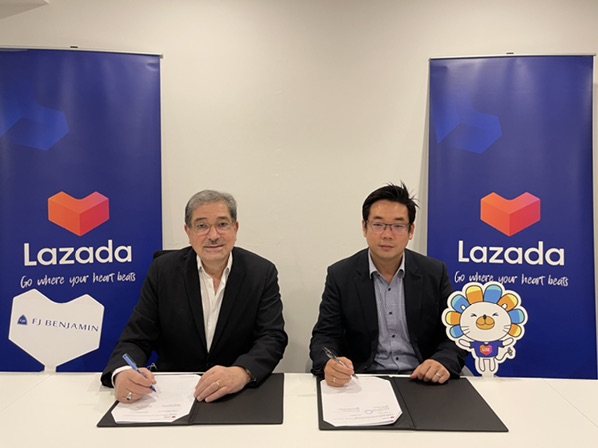
    FJ Benjamin Holdings (FJB) and leading eCommerce platform, Lazada Singapore, today signed a Memorandum of Understanding (MOU) to forge a strategic partnership that aims to deliver the ultimate retail experience to customers across all channels and devices.

    The proposed partnership will tap Lazada’s technical and online capabilities, and eCommerce platform management expertise, and leverage FJB’s experience in fashion brand management and physical store operation, to boost the eCommerce performance of FJB’s stable of brands in Singapore, Malaysia and Indonesia, as well as to expand and incubate new FJB brands to eventually integrate brick-and-mortar and virtual stores.

    FJB will also discuss with brand principals opportunities for eCommerce in markets Lazada has a presence but where FJB does not, such as Vietnam, Thailand and the Philippines. Powered by Alibaba’s advanced eCommerce tools and systems, Lazada will develop new tailor-made solutions to deliver a truly omnichannel customer experience in managing the full online ecosystem of FJB brands across the markets.

    Group CEO Nash Benjamin said: “FJ Benjamin has been strategising and planning our omnichannel business model for some time now and this partnership with Lazada is intended to get us to where we want to be much faster and in a more cost-efficient manner. This will combine our respective capabilities to strengthen customer experience across brick and mortar and virtual channels.”

    Besides operating principal branded sites, it is also intended to host certain brands on LazMall as well as other regional sites, subject to principal approvals.

    “We are thrilled to be part of this new chapter with FJ Benjamin and value their trust in us,” said James Chang, CEO of Lazada Singapore. “Lifestyle, fashion and beauty are important pillars in our eCommerce plans and shoppers can now look forward to seeing more well-known brands and labels on our platform, for an integrated shopping experience. In the last year, Lazada has supported many businesses that adopted a multichannel approach to set up stores online and we know that our expertise in the eCommerce space will benefit and contribute to the success of a renowned brand like FJ Benjamin, and look forward to seeing positive results with them.”

    While some of the brands managed by FJB, including La Senza, Pretty Ballerinas and Petunia Pickle Bottom, are currently available on Lazada’s premiere shopping platform, LazMall, this is the first time both parties –  one, a traditional brick-and-mortar operator, and the other, the region’s leading eCommerce player – have come together to envision and execute a truly omnichannel model under which customers can control the buying process and enjoy a seamless shopping experience across multiple channels – brick-and-mortar, desktop, and mobile.

    Since the pandemic lockdowns last year forced FJB stores in Southeast Asia to shutter, the Group had secured principals’ approvals to pivot to eCommerce. It has ramped up its online presence from one brand, the cult British fashion label Superdry, to almost all its brands including Guess, La Senza, Casio, Rebecca Minkoff, Pretty Ballerinas, Airfree and Dr Barbara Sturm.

    The MOU states that  “the parties agree both physical stores and online stores are part of the retail ecosystem. With Lazada’s technical and online abilities and FJB’s experience in fashion and lifestyle brand management and physical store operations, this brings together a strong strategic partnership which leverages each other’s expertise to deliver an ultimate consumer experience.”

    Under the terms of the MOU, both FJB and Lazada will, within 90 days, work on a detailed action plan and a definitive agreement to move the partnership forward.

    Mr Benjamin said FJB will continue to take charge of all aspects of product assortment, brand management, pricing, promotions as well as key parts of logistics such as inventory and supply chain. The parties will jointly undertake online marketing and campaign strategies while Lazada will operate the online stores.

  • Fighting Amazon over retail deal, India’s Future says staring at insolvency, hit to bank loans

    Fighting Amazon over retail deal, India’s Future says staring at insolvency, hit to bank loans

    If India’s Future Group cannot sell assets, $4 billion in bank loans and debentures will be at risk, pushing its retail unit into insolvency, the company said in a court filing on Wednesday against Amazon.com Inc, which wants to block the sale.

    A court in New Delhi blocked Future Group’s sale of retail assets to Reliance Industries on Tuesday after Amazon raised objections to the deal.

    The corporate battle has embroiled sprawling businesses led by two of the world’s richest men: Amazon’s Jeff Bezos and Reliance’s Mukesh Ambani.

    Amazon had argued that Future breached contracts by selling retail assets to Reliance. The court sided with the U.S. firm, saying an earlier order from an arbitrator that put the Future-Reliance deal on hold was valid.

    Future – which had argued the arbitrator’s order was not binding – on Wednesday filed a challenge against the court’s ruling, saying the company’s creditors would be at “significant risk” if the Reliance deal fails.

    Other than an estimated 300 billion rupees ($4.1 billion) hit to bank loans and debentures, the deal’s failure would also impact livelihoods of 50,000 employees and 6,000 small- and medium-sized vendors, it said.

    “It is inevitable that FRL (Future Retail) will go into liquidation … The magnitude of damage that may be caused to the public at large is unimaginable,” Future said the court filing, seen by Reuters.

    The appeal is set to be heard on Thursday before a bigger two-judge bench in New Delhi.

    Future, India’s second-largest retailer with more than 1,700 stores, and Amazon did not respond to a request for comment.

    Shares of Future Retail dropped 5% in early trading on Wednesday. Reliance Industries fell as much as 1.2%, but recovered later.

    The Delhi court on Tuesday asked Indian authorities to maintain status quo on the transaction, effectively putting the Future-Reliance deal on hold.

    Indian stock exchanges and the country’s antitrust watchdog had already cleared the deal, though it was awaiting approval from a law tribunal.

    Future in its appeal said Tuesday’s Delhi court order “rendered stillborn” the approvals.

    “The sole and sheer intent” of Amazon was to prevent Reliance – which is also venturing into e-commerce – from acquiring Future’s assets, the Indian firm argued in the filing.

    Amazon, which had its sights set on ultimately owning part of Future’s retail assets itself, has argued a 2019 deal it had with a unit of Future contained clauses prohibiting the Indian group from selling them to anyone on a “restricted persons” list, including Reliance.

  • Vietnam’s e-commerce market tipped to grow second half of the year

    Vietnam’s e-commerce market tipped to grow second half of the year

    In case the Covid-19 pandemic continues to pose major risks to the economy in the final quarter of 2020, Vietnam’s e-commerce market could be severely impacted, seeing a revenue loss of US$2.6 billion from the previous estimate to US$11 billion this year, according to a report from the Ministry of Industry and Trade (MoIT).

    Such a figure would indicate a revenue growth rate of 13% year-on-year, stated the MoIT.

    In a more positive scenario, the MoIT expected revenue from e-commerce activities to expand by 20% year-on-year in the fourth quarter, resulting in a combined revenue of US$12 billion for 2020.

    In 2019, revenue from online sales of business-to-consumer e-commerce, known as B2C e-commerce, stood at US$10.08 billion, accounting for 4.9% of total goods retail sales and services revenue, while the rate of the population shopping online reached 42%.

    This led to the e-commerce revenue projection of US$13.6 billion in 2020. However, the Covid-19 pandemic has dealt a major blow to the forecast. During the first four months of 2020, 57% of firms operating in the e-commerce market saw their revenue grow less than 30% year-on-year while 24% reported an increase of at least 51% in revenue.

    Revenue growth in e-commerce in the January – June period was estimated to decrease by 6 percentage points year-on-year, despite a 25% surge in the number of transactions.

    In May, the government released a national plan for the development of e-commerce by 2025, which targets revenue from B2C e-commerce to reach US$35 billion, or a growth rate of 25% per annum and to account for 10% of total goods retail sales and service revenue.

    Meanwhile, the government expects the rate of the population using related services, including non-cash payment services, at 50%, and through intermediary payment services at 80%, along with 55% of the population to shop online with average spending of US$600 annually by that time.

    Notably, Hanoi and Ho Chi Minh City would make up half of e-commerce revenues in the next five years.

  • Alibaba setting up joint venture with Swiss duty-free giant Dufry

    Alibaba setting up joint venture with Swiss duty-free giant Dufry

    Chinese tech giant Alibaba has agreed to form a joint venture (JV) with Swiss duty-free group Dufry, as Chinese shoppers’ appetite for overseas luxury goods seemed unfettered by the pandemic.

    It also announced that it would acquire an up to 9.99 percent stake in the duty-free operator in a statement released last Monday.

    Alibaba Group will have 51 percent controlling shares to Dufry’s 49 percent. The joint venture combines Alibaba’s established network and digital capabilities with Dufry’s China travel retail business and operational skills, the statement said.

    “We expect this collaboration to drive growth in Asia and with Chinese customers worldwide with the support of new digital technologies,” said Dufry Chief Executive Julian Diaz on Monday.

    As the coronavirus pandemic halts global travel, Dufry’s revenue fell by 62 percent to 1.59 billion Swiss francs ($1.74 billion) in the first half of 2020. It is an increasing presence in China’s travel retail markets as effective containment of the outbreak allowed the country to travel again.

    With 14,941 flights booked during the country’s eight-day National Day holiday that started on October 1, total air travel booking is comparable with the same period last year. Bookings for domestic flights have increased by 10.5 percent, data from China’s aviation authority showed.

    Dufry is proposing a capital increase that will raise up to 700 million Swiss francs, which Alibaba is to subscribe to up to 250 million Swiss francs of shares.

    China currently taxes imported consumer goods, such as garments and beauty products, an average of 6.9 percent and high-end cosmetics by 15 percent. But tariffs for many luxury products, such as perfumes and watches, exceed 30 percent.

    South China’s island province of Hainan has offered greater visa-free access and duty-free shopping for tourists since July 1. Meanwhile, the annual quota for individuals making duty-free purchases on the island tripled to 100,000 yuan, and the duty-free product catalog increased from 38 to 45 items with some electronic products and wines newly added to the duty-free list.

    China’s duty-free retail giant China Duty-Free Group owns all four offshore duty-free shops in Hainan. Its parent company China Tourism Group Duty-Free generated 19.3 million yuan in revenue in the first half of 2020, beating Dufry as the world’s largest duty-free retailer.

    Its sales in Hainan were the primary driver for China Tourism Group Duty-Free’s revenue boost, contributing 47 percent in the first half of the year. Hainan recorded 8.61 billion yuan in visitor duty-free spending from July 1 to September 30, a surge of 227.5 percent year on year, the local customs data showed.

  • Amazon duplicates Transparency program to Japan and Australia

    Amazon duplicates Transparency program to Japan and Australia

    Amazon announced the expansion of Transparency to two new countries – Japan and Australia – making it available in 10 countries where Amazon has a store. Amazon Transparency is also celebrating a milestone of enrolling over 10,000 brands into the program. Transparency, launched in 2018, is a product serialization service that builds on Amazon’s long-standing work and innovative solutions focused on ensuring that customers always receive authentic goods when shopping in Amazon’s stores.

    “Transparency has allowed us to grow consumer confidence in our products and prevent inauthentic products from ending up in the hands of our customers.”

    “Transparency is a powerful technology-driven solution that gives brands the ability to uniquely identify every product unit they manufacture and allows Amazon to use this to prevent counterfeits from reaching customers,” said Dharmesh Mehta, Vice President of Worldwide Customer Trust and Partner Support.

    Transparency allows brands to uniquely identify each unit they produce through the application of unique codes on the product or its packaging. These codes allow Amazon to inspect and authenticate every unit enrolled in Transparency proactively, detecting and stopping counterfeits before they ever reach customers. Additionally, customers can use a mobile app to scan the code and verify authenticity regardless of where they purchased the brand’s products. Over 10,000 brands – from Fortune 500 companies and global brands, to startups and small businesses in countries around the world including LG Electronics USA, Spectrum Brands, Cards Against Humanity LLC, Neato, Petrichor, Skullcandy, Salom, Nomader, and Naples Naturals – have already enrolled in Transparency. Across these brands, Transparency has prevented the shipment of over 500K suspected counterfeits in Amazon’s stores.

    LG Electronics USA, a leading innovator in home appliances, said “LG sees Transparency as a great way to ensure that consumers use genuine LG filters while protecting them from counterfeit products.”

    Spectrum Brands, a Fortune 500 company that owns several pet care companies, said: “By having the Transparency seal on our products, we give consumers confidence that the products they are purchasing for their pets are authentic, effective and formulated as labeled.”

    Cards Against Humanity LLC, said: “With Transparency, we’re now more confident than ever that our customers are receiving legitimate products — which is a win for us and for customers.”

    Neato, a maker of robotic vacuum cleaners, said: “Transparency has allowed us to grow consumer confidence in our products and prevent inauthentic products from ending up in the hands of our customers.”

    Sumeet Raj Aggarwal, owner of the small business in India, Petrichor, said: “With Transparency, consumers can buy with confidence knowing that the products are authentic and high quality. This program grows confidence in our brand and prevents counterfeits from being delivered to consumers. It’s a win-win for brands and consumers.”

    In addition to Japan and Australia, Transparency is available in Canada, France, Germany, India, Italy, Spain, the United Kingdom, and the United States. To learn more about Transparency and how to enroll, visit: https://www.transparency.com/

    Transparency is one of many innovations that Amazon has introduced to partner with brands to ensure customers receive authentic products and to protect brands’ intellectual property.

    • Most recently, Amazon launched the Amazon Counterfeit Crime Unit (ACCU), a global team that will investigate and bring legal action against bad actors, protecting customers, brands, and Amazon’s selling partners. To learn more: https://press.aboutamazon.com/news-releases/news-release-details/amazon-establishes-counterfeit-crimes-unit-bring-counterfeiters
    • Amazon’s Project Zero, which empowers brands to drive counterfeits to zero. Project Zero uses automated protections to proactively and continuously scan more than 5 billion attempted product listing updates daily to look for suspicious listings, provides a self-service tool for brands with an unprecedented ability to directly remove listings from Amazon’s stores, and leverages product serialization as an optional service. To join the more than 10,000 enrolled brands, learn more at: https://www.projectzero.com.
    • Amazon IP Accelerator helps businesses more quickly obtain intellectual property (IP) rights and brand protection in Amazon’s stores. The program was designed specifically with small and medium businesses in mind and is available to entrepreneurs worldwide that are looking to secure intellectual property in the U.S. IP Accelerator connects entrepreneurs with US law firms with expertise in trademark applications. Entrepreneurs also benefit from pre-negotiated rates. To learn more: https://brandservices.amazon.com/ipaccelerator
    • Amazon Brand Registry, a free service that gives brand owners access to a powerful set of tools that help them deliver an accurate and trusted customer experience on Amazon while protecting a brand’s IP. More than 350,000 brands are enrolled. To enroll and learn more: https://brandservices.amazon.com/
  • Alibaba Cloud Doubles Growth for Cloud-native Database Products

    Alibaba Cloud Doubles Growth for Cloud-native Database Products

    Alibaba Cloud, the digital technology and intellectual backbone of Alibaba Group, has seen the demand for its database family of products doubles year-over-year. The increment was fueled by industries’ growing needs to move their operation online given the lasting impacts of COVID-19. Alibaba Cloud is the third largest cloud computing company in the world, and its database technologies currently serve more than 100,000 companies globally.

    Mr Erwin Foo, Group Chief Technology Officer of PrestoMall said: “As one of the leading e-commerce players in Malaysia, we are constantly looking to adopt future proof and affordable solutions to enhance our platform and provide a more unique and remarkable experience for our customer. Due to the complexity of the e-commerce platforms, we need a reliable, robust, and scalable database that can enable the growth of our dynamic business without worrying too much about the infrastructure and support needed.”

    To support customers’ digital transformation journey, at the Apsara Conference 2020, Alibaba Cloud database team launched a series of new product and feature upgrades, which include a family of cloud-native database products covering OLTP, OLAP, NoSQL, tools and utility, and self-driving database platform. These products will provide a rich solution portfolio within the database eco-system for the complete cycle of data processing, storage, management, and analytics.

    Lindorm, the cloud-native multi-model database that used to support the Alibaba Group ecosystem, is first introduced to the market in order to benefit the wider Alibaba Cloud ecosystem and public customers. Lindorm is a cloud-native database, with affordable storage and flexible processing characteristics. It is suitable to be used by applications with massive processing requirements for a mixture of unstructured, semi-structured, and structured data. The application of Lindorm for enterprises is able to reduce the storage cost by 80% as compared with using conventional databases, with an availability guarantee of at least 99.99%.

    Alibaba Cloud’s self-proprietary cloud-native distributed database product PolarDB-X is upgraded with hybrid transaction/analytical processing and global secondary index for distributed data features. With the new upgrades, it is able to carry out high concurrent, massive online transaction requests, and at the same time, help online business to accelerate the complex analysis with efficient processing by 5 to 10 times. Companies that require extremely fast data and transaction processing functionalities such as the logistics platform is able to deploy PolarDB-X to meet its instant needs.

    Based on the storage and computing decoupled architecture, AnalyticDB (ADB) creates an automatic, flexible cloud-native data warehouse that is able to integrate online interactive analytics and offline computation operations. In addition, AnalyticDB MySQL (ADB MySQL) can meet the resource requirement of users’ workloads with its elasticity on time consumption, data storage, and group isolation to reduce cost and increase operational stability. With its multi-master and high concurrency “Laser” engine, ADB MySQL is able to power real-time computation needs with enterprise cost reduced by 50-80%.

    Cloud-native Data Lake Analytics (DLA) released upgraded features with its Serverless Spark to pull up 300 knots within 1 minute.  With serverless Presto and Spark computation engine, it provides enterprises with a one-stop (serverless) data lake platform that is efficient and easy to use with features such as one-click lake formation, metadata discovery, and management, and delta lake management. Both ADB and DLA have been successfully deployed in various industries including finance, manufacturing, retail, aviation, and logistics to help their digital transformation processes.

    “In the latest Gartner magic quadrant report, Gartner merged DMSA (Data Management Solution for Analytics) and OPDBMS (Operational DBMS) magic quadrants into a single Cloud DBMS magic quadrant, and this indicates where the future lies for database technology,” said Dr Feifei Li, President of Alibaba Cloud Database Products Business. “We want our customers to ride on the future trend, and we will continue to innovate and provide our customers with the best database technology so that together, we can build a solid foundation in their digital transformation process.”

    According to Gartner, cloud database would prevail in the near future and by 2023, 75% of all databases will be on a cloud platform. In its recent report entitled 2019 Gartner Magic Quadrant for Operational Database Management Systems, Alibaba Cloud Database was recognized as a player in the “Challengers” quadrant.

  • Ruten Japan launches international website

    Ruten Japan launches international website

    Japanese e-commerce platform Ruten has launched a global website, offering more than 60 million Japanese including snacks, supplements, kitchen appliances, beauty products, and fashion to 13 markets.

    The site is now shoppable from markets including Singapore, Hong Kong, Canada, Indonesia, South Korea, and New Zealand and Ruten Japan says it will expand its product range and add more countries in the future.

    The idea started after Yun Su, CEO of Ruten, saw the increasing demand for Japanese products after traveling became almost impossible with the advent of Covid-19.

    The company has also dedicated a separate category for Covid-19 related products, including facial masks, automatic liquid soap dispensers, infrared thermometers and anti-splatter protective face shields.

    In celebration of its global launch, customers will enjoy free international shipping for orders more than US$50. According to the company, the average delivery time within Asian countries is seven working days.

  • JD sales beat estimates as customers move online

    JD sales beat estimates as customers move online

    China’s JD beat analysts’ estimates for quarterly sales, as the firm benefited from a shift in shopping habits of domestic consumers who have largely moved to online ever since the outset of the Covid-19 pandemic.

    The results coincide with growing tensions between Beijing and Washington. Several Chinese companies are putting off plans for US listings amid tensions between the world’s top two economies, while those listed in New York are seeking to return to exchanges closer to home. In June, JD raised about $3.87 billion in its Hong Kong secondary listing.

    JD executives did not offer any comments on US-China tensions on a conference call with analysts on Monday.

    China, which has under a thousand active Covid-19 cases currently, has largely emerged out of lockdowns but demand is still picking up in many sectors.

    Retail sales in the world’s second-largest economy slipped in July, dashing expectations for a modest rise, as consumers failed to shake off wariness about the coronavirus, while the factory sector’s recovery struggled to pick up the pace.

    The company’s net product revenue, which includes online retail sales, rose 33.5 percent to $25.74 billion in the second quarter.

    Net income attributable to shareholders rose to $2.38 billion from $89.4 million a year earlier.

    The company’s total net revenue rose 33.8 percent to $28.98 billion in the quarter ended June 30.

  • ShopBack officially launches in Vietnam following months of strong growth during Beta phase

    ShopBack officially launches in Vietnam following months of strong growth during Beta phase

    ShopBack, Asia Pacific’s leading rewards and discovery platform, will officially launch its website and mobile app in Vietnam on 8 August, in line with an 8.8 launch campaign. Online shoppers in Vietnam can now earn up to 25% cashback from ShopBack Vietnam’s roster of over 150 merchants. These include international and regional brands like Lazada, Shopee, Watsons, and Booking.com, as well as local brands like Tiki, Sendo, Juno, G Kitchen, Vascara, and Fahasa.

    Founded in Singapore in 2014, ShopBack now serves over 20 million users in nine markets across Asia Pacific, including Malaysia, the Philippines, Indonesia, Taiwan, Thailand, Australia, South Korea, and Vietnam. ShopBack rewards its users with cashback across a wide range of categories including general merchandise, travel bookings, fashion, health and beauty, groceries, and food delivery.

    “At ShopBack, one of our six core values is ‘Never-Ending Customer Obsession’, and we hope to bring the high-quality ShopBack experience that our users know and love to consumers in Vietnam. The increasing number of internet users, rising internet penetration, and steady increase of the e-commerce share of total retail sales in Vietnam makes it a core and high-potential market for us,” said Josephine Chow, Head of Expansion, ShopBack.

    ShopBack Vietnam was launched in Beta at the end of 2019, and since then has acquired over 150 merchants and around 800,000 users. ShopBack Vietnam has seen consistent month-on-month growth of over 1.5x increase in sales and over 1.5x increase in orders this year. To date, 4 billion VND in cashback has been given out to ShopBack users in Vietnam.

    “According to a survey conducted by McKinsey, Vietnamese are feeling the impact of COVID-19 on their livelihoods, with some 70% expecting to be more careful with their spending going forward. With a strong and clear value proposition – to simplify the shopping experience and bring users savings on time and money – we are confident that ShopBack is well-positioned to attract consumers in Vietnam, especially those who are looking to cut costs and maximize savings during this challenging period. In fact, ShopBack Vietnam has been very well received since its beta launch late last year. We are thrilled to be officially launching ShopBack Vietnam and excited for what’s in store next,” said Jacky Ha, Commercial Director, ShopBack Vietnam.

  • Victoria Beckham Beauty range launched on Tmall Global

    Victoria Beckham Beauty range launched on Tmall Global

    Victoria Beckham Beauty has launched a flagship store on Alibaba’s Tmall Global platform, marking the brand’s debut in China.

    The Victoria Beckham Beauty online store features a wide range of skincare and makeup products, including the brand’s exclusive skincare line Power Glow Set, on Tmall Global platform.

    To celebrate the launch, the brand has signed up one of China’s biggest influencers, Viya, to Livestream on Tmall Global.

    “You can’t be a successful global brand without a solid China business – it’s just not possible these days,” said Sarah Creal, co-founder and CEO of Victoria Beckham Beauty. “So when we began to think about expanding to China, we knew that we wanted to partner with Tmall Global because it represents the best.

    “We’re focused on building a strategic luxury beauty brand that is very modern, forward-thinking and fresh, and this is the next key step to our growth strategy,” she said

    Sarah met Victoria Beckham during a makeup collaboration with Estee Lauder in 2016 and teamed up to create the cosmetics brand last year.