Retail News CRM

Tag: e-tail

  • Sulwhasoo launched on Lazada

    Sulwhasoo launched on Lazada

    Amorepacific’s luxury skincare brand Sulwhasoo has launched on Lazada.

    The partnership marks the brand’s expansion into the Southeast Asia e-commerce market.

    With this Lazmall store, shoppers in Indonesia, Malaysia, Singapore, Thailand and Vietnam can access Sulwhasoo’s range of beauty products.

    “The influence of South Korean beauty trends and culture in this region is undeniable, and we are pleased to bring one of Korea’s top skincare brands Sulwhasoo online with Lazada – reinforcing our leadership in the beauty category and in serving our female customers,” said Lazada Group president Jing Yin.

    The South Korean beauty-and-cosmetics conglomerate is already leveraging Lazada’s platform for distribution of four key brands including Laneige, Mamonde, Innisfree and Etude House. These brand stores are housed on LazMall, a place for shoppers to get directaccess to international and local brands, top-rated online brands and authorised brand distributors.

    “Lazada is the region’s e-commerce leader, particularly in the beauty space, and the best possible partner to take our business online in Southeast Asia,” said Mina Kim, senior VP of Sulwhasoo at Amorepacific.

    “We hope to bring Sulwhasoo’s value of Asian beauty to more customers and help them experience our unique beauty solutions in a new way.”

  • Retail e-commerce small but growing in Vietnam

    Retail e-commerce small but growing in Vietnam

    However, growth is expected over the next few years as increasing numbers of young consumers go online for the first time, largely through smartphones, said speakers at the conference.

    Deputy Minister Ho Thi Kim Thoa of the Ministry of Industry and Trade (MOIT) told the conference participants he has set a target to grow e-commerce to reach 5% of the nation’s total retail sales by 2020.

    Which, he said, in absolute dollars equates to US$10 billion for 2020.

    Tran Thi Phuong Lan, deputy director of the Municipal Department of Industry and Trade, in turn said he estimated that retail e-commerce revenue in the capital city of Hanoi registered US$1.16 billion last year.

    Mr Lan also predicted that the e-commerce retail sector would see strong growth over the next few years.

    However, despite all the optimism and the strong growth forecasted, retail ecommerce would still account for just 5% of total retail sales by 2020, if the target were to be reached, which puts Vietnam well behind Western countries.

    Most notably Vietnam lags far behind China, where retail ecommerce has been estimated to reach 18.4% of total sales in 2016 and is anticipated to grow in the double digits through the end of 2020.

    Lai Viet Anh, deputy head of the MOITs E-commerce and Information Technology Department, said she believes the country’s population with its relatively young median age would help expand the e-commerce consumer class.

    Vietnamese youth are learning to access the internet via smartphones at a very young age, said Ms Anh, and consequently have shown much more of a willingness to make purchases on their mobile devices than the older generations.

    Ms Anh opined that the number of digital shoppers—those who browse or research products online but who haven’t necessarily completed a purchase transaction would also see their ranks grow over the coming years.

    Though Ms Anh is sanguine for the prospects of e-commerce in Vietnam she openly acknowledged that the country lags far behind others in the region in e-commerce (including m-commerce) development.

    If one just looks at the absolute dollar value of e-commerce revenue the disparity is obvious, she said, noting that while online sales reached just US$4 billion in Vietnam for 2015— in China it was US$617 billion, the Republic of Korea (US$39 billion) and India (US$14 billion).

    The growth of m-commerce over the next few years should make the US$10 billion of revenue by 2020 target readily attainable, noted Ms Anh.

    Nguyen Thanh Hung, president of the Vietnam E-Commerce Association, said most urban residents are familiar with e-commerce with the number of rural residents using it is climbing steadily.

    This, he noted would also help strengthen e-commerce usage over the next few years.

    The implementation of robust 4G networks by mobile carriers (which is already underway) would also help drive increasing digital purchases made via smartphone, particularly from the rural areas.

    In addition, the declining costs of 4G devices and service plans would make it much easier for consumers to research, browse and buy via smartphones noted Mr Hung, making the targeted US$10 billion by 2020 a realistic and achievable target.

  • Thai univeristy opens Alibaba e-commerce training center

    Thai univeristy opens Alibaba e-commerce training center

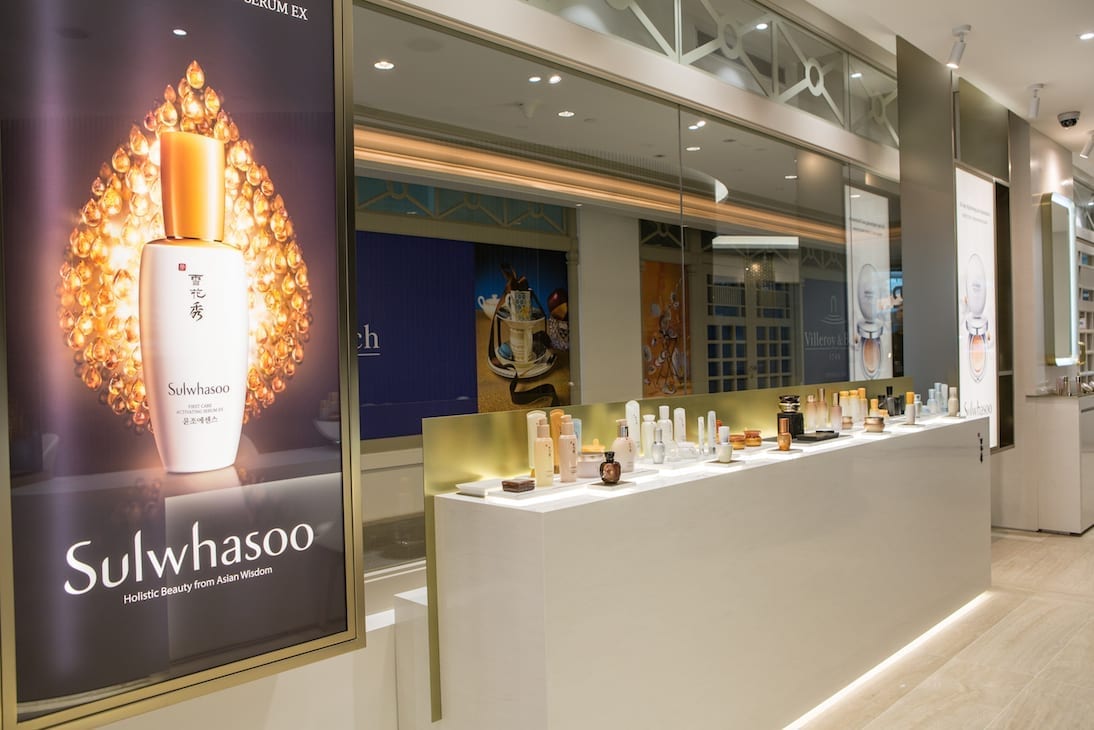
    The University of the Thai Chamber of Commerce (UTCC) has become an authorized Alibaba e-commerce training center in Thailand.

    Both organizations said they will work to accelerate e-commerce growth in Thailand and help Thai SMEs position themselves in the global market.

    Several collaborative programs, including training the trainers, have already been implemented. A team of Alibaba personnel has coached UTCC faculty members in the School of Business and the School of Science and Technology, among others, to become certified Alibaba trainers.

    These trainers, in turn, are now ready to train Thai SMEs, entrepreneurs and UTCC students to run businesses on Alibaba.com.

    UTCC said it can train more than 5,000 individuals per year, which would help create more e-commerce-minded entrepreneurs and allow more SMEs to expand their businesses internationally.

    “Thai SMEs can potentially drive Thailand’s economy. They just need opportunities to do so. UTCC is now taking the lead to open the door of opportunities for those who aim to take their B2B businesses to another level,” said UTCC President and Associate Professor Dr. Sauwanee Thairungroj.

    Jerry Wu, Alibaba’s country manager in Thailand, said the company sees great potential in products from Thailand and hopes to train Thai SMEs to compete effectively on the global stage through e-commerce.

  • BI Revises Regulation on E-Money

    BI Revises Regulation on E-Money

    Bank Indonesia (BI) will make another revision to regulation on electronic money and introduce electronic wallet in the Bank Indonesia Regulation. The new regulation on the payment transaction processing is expected to be finalized in November 2016.

    Bank Indonesia deputy governor Ronald Waas said that one of the revision points is related to the expansion of electronic money basis. Currently, Ronald revealed, there are two types of electronic money, namely server-based and card-based electronic money. BI is considering adding gadget-based money as a new category.

    “Currently we have Samsung Pay and Apple Pay. They don’t use cards,” Ronald said in Jakarta on Wednesday, November 9, 2016.

    Ronald explained that there are two categories of e money, namely Know Your Customer (KYC) and non-Know Your Customer (nKYC).

    In the new regulation, BI has planned to require electronic money issuer with total active members of no less than 300,000 to register the electronic money.

    “[Electronic money issuer] with below 300,000 users doesn’t need to obtain a permit, but they need to report. In addition, they have to establish a legal entity,” Ronald said.

    In terms of minimum balance, Ronald clarified that there would be no revision regarding the matter. The minimum balance for non-registered electronic money is Rp 1 million (US$77), while that for registered one is Rp 10 million (US$770).

  • 2C2P’s Online-To-Offline E-commerce Service Now Available At Over 320,000 Locations

    2C2P’s Online-To-Offline E-commerce Service Now Available At Over 320,000 Locations

    2C2P, the leading Southeast Asian payments company which processes billions of dollars in transactions each year, has announced 320,000 offline payment locations for its ‘123’ payment solution. ‘123’ is an alternative payment service. Through it, consumers of 2C2P’s merchants across Southeast Asia (SEA) can pay for their online purchases with cash or alternate means at these 320,000 offline payment locations. 2C2P’s merchant partners include some of the largest online retailers across Southeast Asia, spanning the travel and tourism, retail, food and beverage and hospitality industries, among others.  123 enables these online retailers to bring online commerce to the region’s unbanked population which, according to KPMG, spanned 73 per cent of the region’s population, or 438 million people.  

    At online check-out, their consumers will have the option to pay for purchases using 123. They will be provided a bar code which can be printed out or scanned from their mobile devices, enabling them to then pay with cash or alternate means 2C2P’s extensive network of offline payment locations – available through 2C2P’s channel partners. Payment channels include cash over-the-counter at retail chains and agents, ATMs and electronic kiosks (such as AXS, SAM, SingPost), as well as internet banking and mobile banking. These locations are available across Southeast Asia, including Indonesia, Malaysia, Myanmar, the Philippines, Singapore and Thailand.

    Bringing e-commerce capabilities to rural Myanmar

    123 has increased its payment locations across the SEA region, with 12,000 new locations added in Myanmar in 2016, near ten times the network of the country’s largest bank. It has achieved this by establishing partnerships with Myanma Post Offices, Myanmar Awba Group and ABC convenience store chain. Retailers and merchants including Myanmar National Airlines (MNA) and Oway are among the first in Myanmar to actively offer 123 to their customer base.

    MNA is the largest airline carrier, and one of only two international carriers in Myanmar. It has the most extensive route network within the country. With 123, its customers can book their tickets online and then pay at over 12,000 physical locations across Myanmar, or pay through AYA Mobile Banking and branches. Customers of Oway, Myanmar’s largest online travel agent, can use 123 to make travel bookings more convenient and accessible – all without a debit or a credit card.

    Aung Kyaw Moe, CEO and Founder of 2C2P said, “2C2P has made extensive efforts to open up Myanmar’s unbanked population to e-commerce. As the country continues to see increased mobile penetration, rising urbanization and improved consumer spending, there is an urgent need to modernise its e-commerce and payments infrastructure. 2C2P’s vision is to bring e-commerce to every single person in Myanmar, and more broadly, in Southeast Asia. In so doing, we look to build the region’s e-commerce future.

    “2C2P, through 123, looks to bring convenience to Myanmar’s citizens, particularly those that remain underserved by banking and financial institutions – lacking banks accounts, credit and debit cards or access to a bank branch. They can now, for the first time, tap into the fast-growth of national, regional and global e-commerce by paying for their online purchase at a convenient offline location via 2C2P’s extensive network of physical channel partner locations,” added Aung.

    Myanmar’s Ministry of Hotels and Tourism estimates 6 million annual inbound tourists for 2016, a 25 per cent increase from 2015 (4.68 million). This number is predicted to cross 7.5 million by 2019. The Asian Development Bank (ADB) is optimistic that tourism will drive the country’s overall economic growth. It forecasts tourism revenues to have increased by 19 per cent from 2014 to 2015 to US$2.1 billion – representing over 4 per cent of Myanmar’s GDP.  Asia-Pacific will overtake North America to become the largest digital travel market globally in 2019, according to eMarketer.

  • Expansion Alibaba to Indonesia to Cause Rising Trade Deficit with China?

    Expansion Alibaba to Indonesia to Cause Rising Trade Deficit with China?

    Through the acquisition Alibaba is to have a firmer grip on the online retail business in Southeast Asia, including Indonesia, the region’s largest economy where Internet and smartphone penetration have been developing rapidly in recent years (although coming from a low base). The Southeast Asian nations where Lazada has been operating so far have a combined population of 560 million (of which an estimated 35 percent are online and thus potential online shoppers). However, Southeast Asia is also a challenging environment for online retail firms as the area is characterized by tough logistical issues (partly due to the relatively weak state of infrastructure) and there remains a lack of warehousing outside more advanced markets such as Singapor

    Through the China-ASEAN Free Trade Agreement (CAFTA), effective per 1 January 2010, about 90 percent of imported goods between Indonesia and China are subject to a zero percent tariff. Due to China’s higher developed manufacturing industry and lower logistics costs the implementation of CAFTA has caused a continuously rising flow of Chinese products into Indonesia. This has caused a rising trade deficit and also curtails development of Indonesia’s manufacturing sector (after all it is cheaper and quicker to import products from China than to invest in costly and long-term import-substitution industrialization).

    In 2015 Indonesia imported USD $29.22 billion worth of (non-oil & gas) products from China, while Indonesian exports to China only totaled USD $13.26 billion, implying a trade deficit of nearly USD $16 billion for Indonesia that year. This is in stark contrast to the years before 2008 when Indonesia had the upper hand in trade with China. The table below shows that Indonesia’s trade deficit with China rose significantly after the implementation of CAFTA in early 2010.

    Indonesia-China Trade Balance (non-oil & gas):

     2007  2008  2009  2010  2011  2012  2013  2014  2015
    Export to China
    (in USD billion)
      9.7  11.6  11.5   14.1   21.6   20.9   21.3   16.5   13.3
    Import from China
    (in USD billion)
      8.6  15.3  14.0   19.7   25.5   29.0   29.6   30.5   29.2
    Trade Balance
    (in USD billion)
      1.1  -3.7  -2.5   -5.6   -3.9   -8.1   -8.3  -14.0  -15.9

    Source: Indonesian Trade Ministry

    With Alibaba now owning a controlling stake in e-commerce platform Lazada, which has a rising costumer base in Indonesia, it could cause two developments: (1) due to the stronger ties between Lazada and China it gives rise to an increasing flow of Chinese products into Indonesia putting pressure on Indonesia’s trade balance, and (2) it threatens the position of local Indonesian start-up e-commerce businesses such as Bukalapak or Tokopedia because Lazada is expected to get a capital injection from Alibaba for expansion purposes and has easier access to cheap Chinese products (more competitive).

  • Thai fashion e-commerce goes from rags to riches

    Thai fashion e-commerce goes from rags to riches

    WearYouWant’s site has 500 fashion merchants offering some 14,000 products. The company plans to release a native mobile app next month as 50% of its website traffic comes from mobile phones.

    The online fashion sector in Thailand is drawing massive interest from global players eager to cash in on one of the fastest-growing markets.

    Competition in the interactive fashion stores is expected to be more intense this year, says Thai fashion marketplace WearYouWant.

    But it will be increasingly difficult for newcomers to find a place in the Thai market because existing players have established a strong foothold here, said Julien Chalte, co-founder and co-chief executive of WearYouWant, a four-year-old website.

    E-commerce accounts for about 1% of retail sales in Thailand but the market is expected to see steeper growth this year.

    Mr Chalte said e-commerce was an immensely motivating sector because of its versatility.

    Thai consumers are very conscious of shopping behaviour both offline and online, so it is essential to provide the best and widest selection of products, good prices and efficient delivery, he said.

    WearYouWant’s site has 500 fashion merchants including boutiques, distributors and brands that offer 14,000 products.

    Online merchants can sell directly to consumers but delivery is handled by the site, which earns revenue through commission on purchased products.

    WearYouWant secured Series B investment funding of US$3.5 billion last September, led by the leading fashion e-commerce player in Japan, Start Today, which operates Japan’s largest fashion e-commerce portal Zozotown.

    Mr Chalte said Bangkokians were no longer driving the growth of online fashion shopping.

    “The fastest-growing provinces are Nonthaburi and Chon Buri, and the trend seems to be continuing into 2016,” he said.

    WearYouWant plans to release a native mobile app by March because 50% of its website traffic comes from mobile phones.

    The company will also introduce new feature apps including an image recognition engine that allows user to take a photograph of an item in a store and instantly be presented with a good offer on the same or similar product.

    The trend this year will move towards more mobile payment options, but cash on delivery will remain the preference.

    Mr Chalte said the average age of the company’s customers was 32. They mainly live in Bangkok, with 65% of customers female.

    Customers spend an average of 3,000 baht on the website. Beauty products remain the best-selling product, with clothing, shoes and accessories experiencing significant growth.

    In 2015, WearYouWant’s annual revenue rose 200% from 2014, with a 150% hike in turnover generated by mobile devices.