Tag: E-tailing

  • China dominates global online grocery markets

    China dominates global online grocery markets

    The Chinese online grocery market is set to be worth almost $180 billion by 2020 – nearly five times its current value of $40 billion, according to IGD’s Top 10 Online Grocery Markets report. In other leading markets, online growth is expected to continue at double-digit rates. This makes investment in the channel essential for companies wishing to meet the needs of the rapidly evolving multichannel shopper.

    China’s rapid pace

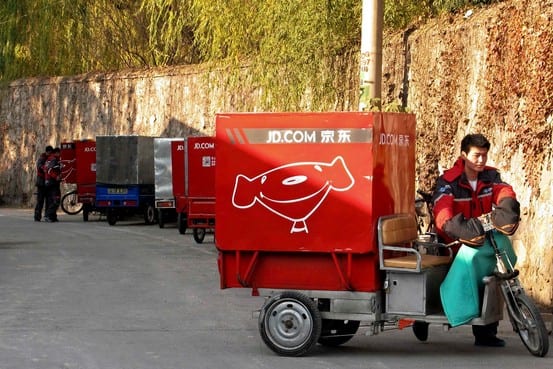
    Online grocery sales in China are soaring as shopper habits gravitate towards the channel, which is maturing at a much faster rate than we have seen in other markets. Mobile is a key driver of this growth. Most online sales are via digital marketplaces such as Tmall (owned by Alibaba) and JD.com. The scale of these pure-play sites means they can offer an increasingly broad product selection.

    Busy shoppers are increasingly using China’s online marketplaces to seek out imported goods including food, which is seen as an affordable luxury. As more shoppers come online and China’s population increases, we expect this growth to continue.

    New opportunities in leading markets

    Meanwhile, in more mature markets such as the UK (the world’s second-largest online market for grocery), we continue to see strong growth and innovation. The click & collect sub-channel is giving retailers new ways to drive loyalty and reach potential customers on-the-go at remote locations. Last week, Asda opened its first fully automated 24-hour online grocery collection point at Haydock, a concept that is likely to be seen shortly in Walmart’s other markets too.

    Remote collection is also being trialled in Belgium, where Carrefour has introduced an after-work pick-up point for shoppers at an office car park, and Australia, where lockers and drive-thru’ solutions have been introduced by the two major retailers.

    In the UK, 27% of shoppers now shop online on a monthly basis, with 11% citing it as their main way to shop. Loyalty schemes such as delivery passes are helping to drive frequency and overall multichannel spend.

    Maximising opportunities in larger markets

    There are also some exciting developments in larger markets, particularly the US, where Walmart is adding scale to boost online grocery, estimating that online and digital in-store purchases could reach up to 6% of revenue by 2017. Innovation and rapid delivery is a big theme in this market, driving shopper expectations. Here Amazon is particularly active, combining key global growth trends of convenience, mobile and loyalty with new services such as Amazon Prime Now’s one-hour delivery. This is available exclusively on mobile devices to Amazon Prime members in 14 US cities and launched internationally for the first time in London this week. Disruptors such as Instacart and Uber – companies and services innovating across the supply chain or tapping into opportunities created by the increase in the use of technology – are also driving the channel and bridging the gap where retailers are not yet present.

    Meanwhile in Germany, recent research indicates that shoppers are becoming more willing to shop for groceries online and established online retailers such as Rewe are boosting investment in the channel. Discounters Aldi and Lidl are beginning to invest online in specialist areas such as wine and pet food. Together with Amazon, these retailers have the potential to change the German market significantly with their increased investment.

    Where should retailers and suppliers focus their efforts?

    For FMCG retailers and suppliers, the online channel presents many opportunities. In leading markets, retailers are likely to see the majority of growth occurring online over the next five years, so a focus on this fast-moving channel is essential. We can expect new online entries by retailers across the majority of markets, so flexibility will be essential. Understanding sub-channel growth, such as remote click & collect, as well as mobile and wearable technology, will also be key to unlocking new potential.

    Key considerations for retailers and suppliers:

    • What is changing and how will it impact my market/category/shoppers?
    • Do I have the right resource in place?
    • How can I partner with customers on new initiatives / market entries / sub-channel expansion / convenience and personalisation?
    • Which customers / markets present the biggest opportunities for my brand?
    • Is my company adopting a multichannel approach? Does this include mobile?

  • Marina Bay Sands launches exclusive digital offer

    Marina Bay Sands launches exclusive digital offer

    The Shoppes at Marina Bay Sands has launched a digital platform allowing shoppers to browse and reserve online exclusive lines not available in stores outside its mall.

    The new O2O initiative not only helps the mall promote its exclusivity and premium luxury positioning, it drives foot traffic offline into the mall.

    Shoppers can reserve the Shoppes-exclusive items – like the Kwanpen Men’s Boutique Crocodile leather briefcase pictured above – for 48 hours before heading to the physical boutiques to purchase the goods.

    The Shoppes team says the online service is another initiative to showcase the mall’s unmatched collection of luxury offerings. Shoppers who use the free service are also in for treats and seasonal privileges upon purchasing in-store, including attractive shopping rewards, complimentary day parking, as well as be the first ones to receive firsthand updates on the newest limited edition products debuting at The Shoppes.

    John Postle, VP of retail with Marina Bay Sands, said: “We are always looking for ways to engage our shoppers while leveraging existing digital platforms to showcase product offerings that set us apart. Through this service, we want to bring convenience to our customers and make them feel special when they arrive at their destination, knowing that their item is waiting for them.”

    For its launch, the website will feature a selection of luxury bags from international brands including Bally, Brioni, Kwanpen Men’s Boutique, Roberto Cavalli, Salon by Surrender, Salvatore Ferragamo and Zilli.

    To celebrate the launch of the service, shoppers will receive a S$100 shopping voucher on top of complimentary parking, upon purchase of their reserved item from now until August 31.

  • Flipkart to use Singapore image search tech

    Flipkart to use Singapore image search tech

    Flipkart, India’s largest online marketplace, has started rolling out image searching on its mobile shopping app which it clams will revolutionise the shopping experience.

    Flipkart is using ViSenze technology developed in Singapore for visual search and image recognition.

    The image search system allows users to upload photos of fashion items and find similar products in terms of color, pattern or style inside the Flipkart merchandise database. This eliminates keywords guessing when searching for a product, thereby simplifying the search process.

    Additionally, users browsing Flipkart’s catalogue can find visually similar products with a single tap. This brings offline-like shopping experience to mobile, acting as a virtual “shop assistant” who would show products of same color or design when users see something they like.

    This simplified search experience comes handy on the online marketplace that lists over 30 million products and is accessed by 45 million registered users, 75 per cent of them via smartphones. These new features are currently in beta and are due to be released to all users in the upcoming days.

    “We are proud we have managed to offer a solution that is also capable to handle unique needs for the Indian market such as ethnic wear,” said Oliver Tan, CEO and co-founder of ViSenze.

    The tech company originates from an R&D spin-off from the National University of Singapore, and develops highly advanced visual search algorithms, combining state-of-the-art deep learning with the latest computer vision technology to solve search and recognition problems faced by businesses in the visual web space.

    The company provides its visual technology APIs through a Software-as-a-Service offering to online retailers, content owners, brands and advertisers, app developers and digital publishers, enabling their platforms to recognise products for retrieval purposes or instant purchases.

    “The partnership with Flipkart not only attests to the strength of our products, but also reinforces our mission to enable retailers to capitalise on smart innovations in visual technology to uplift conversions, while empowering shoppers with real-time ability to search without the hassle of keyword guessing. And we will continue to innovate in this area,” said Tan.

    Key clients using the company’s image search service include internet retailers and marketplaces like Caratlane, Zalora (a Rocket Internet company), Reebonz, and Rakuten Taiwan, as well as patent search engines like PatSnap.

  • Alibaba’s chairman tells US businesses: ‘You can sell almost anything’ online in China

    Alibaba’s chairman tells US businesses: ‘You can sell almost anything’ online in China

    Jack Ma, chairman of China’s dominant e-commerce company, says Alibaba can help U.S. businesses sell to the more than 500 million consumers expected to make up China’s middle class by 2025.

    Alibaba Group doesn’t want to compete with Amazon.com Inc. for sales inside the United States—rather, the Chinese e-commerce giant wants to help small and medium-sized U.S. businesses sell online in China, Alibaba executive chairman Jack Ma said today in Chicago.

    “We are the e-commerce enabler,” Ma says. “We do not buy and sell like Amazon because we think that SMB’s already know how to sell easily and effectively. We help others do e-commerce, find customers, help with payment and help with logistics.”

    Ma is making a tour of the U.S., following a similar one to Europe last week, seeking to introduce a company that is mainly known in the West for its record-breaking $25 billion stock offering on the New York Stock Exchange in September.

    Ma spoke today with Kenneth Chenault, CEO of American Express, at the Chicago Millennium Knickerbocker Hotel today. No partnership between American Express and Alibaba was announced, although Ma did say “[Alibaba] should leverage and work with global companies like American Express.”

    Ma explained that Alibaba is already helping small U.S. businesses sell to China, and he emphasized the opportunity represented by China’s growing middle class, which he said will number more than 500 million by 2025, Ma said. In 2014, the value of purchases consumers and businesses made on Alibaba’s sites totaled $390 billion. And the 10 million mostly Chinese small and midsized business that sell on Alibaba’s marketplaces, particularly the Taobao and Tmall retail shopping portals, accounted for 95% of those transactions, Ma said. In the next five years, Ma predicts Alibaba’s transaction volume will reach $1 trillion. In 10 years, he hopes 40% of sales will come from businesses outside of China.

    “When you have 120 million people shopping on our site every day, you can sell almost anything,” he said.

    Because China does not have the extensive bricks-and-mortar retail infrastructure of the United States, Chinese consumers rapidly moved to shopping online, Ma said. E-commerce is expected to make up 24.2% of Chinese total consumption by 2020, Alibaba says. As an example of the opportunities open to foreign companies, Ma pointed out that Chinese consumers bought 300,000 “German lake crabs” in one day last year on Alibaba’s site. Farmers from the Pacific Northwest sold 600 tons of cherries through Alibaba last year, after selling 180 tons in 2013, Ma wrote in a column published this week in the Wall Street Journal.

    Ma said that Chinese consumers love American products, and that imports represent a big part of the continued growth of not just Alibaba but also China. His trip to the U.S. follows a recent visit to Europe, in the hopes of enticing foreign companies to sell on Alibaba sites. Ma said his goal is to and turn Alibaba into the largest import platform in the world.

    “In the next 20 years, China will grow to be the largest importer country in the world,” Ma says. “But, Chinese resources like the water, soil and air could never support such a huge demand. I think if China keeps exporting we will never see the blue sky in China. We have to leverage global resources to serve the 1.3 billion people.”

    While Ma downplayed suggestions Alibaba intends to compete with U.S. e-retailers, it has been investing in the United States. That includes taking stakes in Snapchat, a mobile image sharing app; TangoMe Inc., a video call app maker; Quixey Inc., a mobile search provider; and ride-hailing service Lyft Inc.

    Last year, the company also launched 11Main.com, a shopping portal for boutique U.S. retailers.

  • Alibaba chairman: No, seriously, we’re not competing in the US

    Alibaba chairman: No, seriously, we’re not competing in the US

    Ever since Wall Street’s interest in Chinese e-commerce giant Alibaba reached a fever pitch last year, investors and analysts have focused on one major question: When will the company expand into the US and take on Amazon and eBay?

    Jack Ma, Alibaba’s charismatic founder and executive chairman, visited New York this week to try to dispel that notion.

    “When are you going to come to invade America?” Ma joked, during a Tuesday speech before the historic Economic Club of New York at the Waldorf Astoria’s Grand Ballroom. Instead, he countered, “The strategy for us is helping small business in America go to China, sell their products to China.”

    While that pitch to help small businesses sounds positive and uncontroversial, US onlookers and competitors could be excused for not believing Ma. The US retail market remains the largest in the world — with China coming in second — so it’s not a stretch to think Alibaba’s long-term plans could eventually include coming to America. That means Amazon, eBay and others may someday be facing a major, new competitor on their shores and US consumers will get to know the name Alibaba.

    For now, the company has been positioning itself as a partner for US businesses, hoping it can act as a bridge for them to reach the Chinese market and become a more influential global retail player along the way. To do that, though, Alibaba needs to build trust with US retailers and not appear as a rival.

    “I think a lot of this is time frames,” said Scot Wingo, executive chairman of ChannelAdvisor, which provides research and other tools for online retailers. “I think right now [China is] definitely their priority. I think two years from now I’d be shocked if they didn’t have a more direct US presence.”

    Alibaba’s focus on small US businesses makes sense in the short-term, Wingo said, since many retailers using Alibaba’s websites have told his company they don’t have enough inventory of Western goods to meet the surging demand of their Chinese customers. ChannelAdvisor is a partner with Alibaba’s Tmall Global, which helps import products to China.

    Today, Alibaba makes nearly all its revenue in China and has little exposure to the US. The company opened online retail site 11 Main in the US last year and has a handful of investments in US businesses. While that’s not nearly enough to interest most US customers, Wall Street last year swooned for Alibaba — the largest e-commerce company in China — when the firm raised $25 billion on the New York Stock Exchange, pulling off the biggest initial public offering ever.

    Ma doesn’t plan to stop there, saying his goal is to make his company bigger than Walmart and eventually generate annual gross merchandise volume — the total value of goods sold on Alibaba’s websites — of $1 trillion. To get there, though, Ma and Alibaba will likely need more partners.

    “We did not come here to compete,” Ma said Tuesday. “We come here to bring the small business.”

  • Singaporean retailers thrive on online market

    Singaporean retailers thrive on online market

    A study by eBay shows that Singapore’s tech savvy retail exporters, who use the company’s online market place, sell to an average 41 international markets.

    eBay defines retail exporters as those sellers on its site who garner US$10,000 in sales to global customers (that is buyers outside of Singapore).

    According to an eBay spokesman, Singaporean retail exporters have been experiencing solid growth on the back of a revitalised US dollar. In South-east Asia, Singapore is ranked second in terms of reach behind Thailand. Interestingly, Singapore’s ranking is five destinations higher than US retail exporters.

    Jason Lee, director, eBay South-east Asia, noted that the US is the top trade corridor for Singaporean retail exporters.

    “An exciting trend for Singapore businesses seeking new revenue streams is the speed in which entrepreneurs are able to become a retail exporter, with 22 per cent of Singaporean retail exporters on eBay hitting the US$10,000 sales mark in the past year alone,” he added.

    The top three categories that Singaporean retail exporters sell on eBay are jewellery and watches, cell phones and accessories and clothes, shoes and accessories.


  • New leadership for Foodpanda Malaysia

    New leadership for Foodpanda Malaysia

    Foodpanda, the global mobile food delivery marketplace has appointed new executives to lead the company’s Malaysian subsidiary.

    Joon Chan and Uffe Jordan have been appointed MDs of Foodpanda Malaysia.

    Chan is described as “a seasoned entrepreneur and executor” who after working in the venture capital industry, founded two regional startups and consulted for many across Southeast Asia for Foodpanda’s parent Rocket Internet.

    With Foodpanda having a virtual monopoly on home delivery food services in Malaysia, Chan says he is focused on improving the overall delivery experience of customers.

    “Our main goal is to be the best food delivery service in Malaysia and we will only strive to be the best”, he said.

    Uffe Jordan holds a Master of Science in Finance and Accounting from Copenhagen Business School. He worked more than five years for a Danish private equity firm before joining Foodpanda Malaysia.

    Uffe believes that there is still room for Foodpanda Malaysia to grow and says he will be expanding “the melting pot of restaurants” on Foodpanda, especially Malaysian favorites, with an emphasis of quality over quantity.

    Including the last funding round of US$100 million, Foodpanda globally has now raised over US$310 million since its launch in 2012. After acquiring key competitors in India, Mexico, Russia, Brazil, Eastern Europe and Southeast Asia, the company will use the recent investment to further expand its own delivery activities and improve overall customer experience across its 40 markets.

    Last-mile delivery has been part of Foodpanda’s operations since the beginning, and it says it will now accelerate its efforts to drive customer satisfaction, aiming to offer the most convenient way of ordering food – from the mobile app and online.

  • Generation Z to make big retail impact

    Generation Z to make big retail impact

    New challenges lie ahead for retailers in Asia as Generation Zers embrace technology and earn more.

    In its newly released report How We Like to Shop Online, CBRE says Generation Z is expected to have significant influence over the retail market in the coming years as their income levels are set to increase rapidly upon joining the job market.

    Generation Z refers to people born after the Millennial Generation, loosely defined as from around 2000.

    “Having spent most of their lives using the internet and other related technology, Generation Z’s demographic of consumers has distinct shopping behaviors in comparison to other demographic segments,” says Jonathan Hsu, head of occupier markets research, CBRE Asia Pacific.

    “Key aspects of their online shopping habits include stronger trust in online information; more activity on social media; and needing a sense of differentiation. These factors demonstrate the increasingly important role of technology in shaping the decision-making process of consumers,” said Hsu.

    In order to remain competitive in the digital age, retailers and landlords need to be proactive in reaching out and engaging with their consumers. Mobile shopping is most prevalent in emerging markets, and in many places, smartphones are the first – and sometimes only – point of internet access for many consumers, therefore, are playing a key role in driving the growth of online retail.

    Smartphone apps and social media can provide valuable information and insights into consumer behavior, for example, push notifications for smartphone apps or social media platforms based on consumers’ shopping history, location and preferences can help personalise their shopping experience.

    “Landlords and retailers need to be more digital-savvy, keeping pace with the latest trends in smartphone applications and social media so they can build a stronger relationship with consumers especially those from Generation Z,” said Joel Stephen, senior director, head of retailer representation, CBRE Asia.

    “These digital platforms are two essential mediums of online retailing, which should be integrated into retailers’ omni-channel strategies in order to capture Online-to-Offline (O2O) business opportunities.”

    With around 70 per cent of consumers in Asia Pacific collecting their online orders in-store – and 90 per cent of them purchasing additional items when picking up their online order – click-and- collect services are also an effective way to drive in-store sales, creating a synergy between both online and offline platforms.

    CBRE says landlords should thus collaborate with tenants to help merge their online and offline offering by providing the necessary facilities and regular renovations.

  • Singapore on-line trend retailer groups up with Qlik to launch in-store digital buying answer

    Singapore on-line trend retailer groups up with Qlik to launch in-store digital buying answer

    Visible analytics answer supplier Qlik stated on Wednesday that it has teamed up with Singapore on-line trend retailer Inverted Edge and Deloitte Digital, a design and improvement company to launch an in-store digital buying answer which supplies clients with a customized interactive digital purchasing expertise in retailer.

    Aside from housing high quality modern luxurious attire, the in-store answer features a regularly altering showcase of photographs and tales from clients, shared on social media, concerning the garments they put on and their associated tales. As a wearer provides a brand new garment or story, it’ll seem on the visible show, inspiring others and including to the thrill of discovering and sharing new seems to be, bridging trend and on a regular basis life from posts shared throughout social media platforms.

    At Inverted Edge we are proponents of ‘fashion that matters,’ or sometimes we call it ‘Slow Fashion’,” said Inverted Edge chief executive officer Debra Langley. “We believe that when you buy something you love, you should wear it and wear it in multiple places and in different ways and across multiple seasons. It’s not disposable, it doesn’t get thrown out after two months; it becomes something that has meaning. “As a garment is worn as part of a lifestyle, it takes on a life and emotional quotient all of its own, developing a story between the wearer and the items purchased. “We want to develop something that captures these relationships, and from a business standpoint, understand what fuels our shoppers’ purchasing decisions,” she added.

    Inverted Edge needed to create a significant expertise throughout a number of channels, notably in retailer, which displays this perspective, to vary the best way individuals store. They needed to seize tales which might be naturally created when individuals purchase trend gadgets that aren’t throw away quick items.

    Constructed on Qlik Sense and HTML5 mashups, Inverted Edge’s in-store digital answer faucets visualization and storytelling options in addition to easy, net commonplace APIs to ship an interactive and personalised digital expertise for patrons. With the uniquely responsive design, it scales merely and naturally from giant in-store touchscreen shows, to non-public units corresponding to telephones and tablets.

    The framework permits Inverted Edge to simply handle and research buying knowledge to determine key elements that drive clients’ selections to buy top quality gadgets which are designed to be worn for greater than a few seasons. This permits the corporate to find what it’s their clients are searching for and tailor their providers to buyer wants.

    “By reworking dry materials comparable to buying knowledge and buyer analytics into partaking, informative digital tales and conversations, Qlik is offering Inverted Edge with the power to deal with actual and vital issues that style retailers face in model new methods. Particularly, we’re enabling them to design recent technique of partaking with the tales we inform about ourselves, and the garments we put on and aspire to personal. It is a captivating strategy, and an ideal partnership for Qlik,” stated Donald Farmer, Qlik’s US-based Vice President of Innovation and Design.

    The digital expertise will later be replicated at Manifesto, Inverted Edge e-commerce associate’s new idea retailer carrying worldwide modern manufacturers in Singapore’s Capitol Piazza improvement. Specializing in integrating each on-line and offline initiatives, the 2 retailers are aligned on their want to create a brand new and totally different retail shopper expertise over the subsequent six months.

  • JD.com launches Australian Mall

    JD.com launches Australian Mall

    Chinese language eCommerce gaint JD.com has launched an Australian Mall platform to convey “genuine, imported merchandise” to China.

    The Nasdaq-listed e-tailer says the brand new ‘mall’ might be a brand new channel on its JD Worldwide cross-border platform. The corporate additionally introduced cooperative agreements with Australia Submit and Treasury Wine Estates as a part of its Australia push.

    The corporate launched its Australian Mall at an occasion in Melbourne hosted by Richard Liu, founder and CEO of JD.com.

    Following the signing of China-Australia Free Commerce Settlement on June 17, the occasion additionally kicked off Genuine Australia Yr to advertise the eCommerce improvement between Chinese language and Australian enterprises.

    “Chinese language shoppers are more and more captivated with making an attempt, shopping for and utilizing merchandise from everywhere in the world, and Australian merchandise like milk and wine have lengthy been huge sellers on our platform,” stated Liu. “Now that our Australian Mall is out there, JD.com clients can additional fulfill their rising curiosity in recent Australian meals and high-quality merchandise, safe within the information they’re shopping for via China’s premier trusted supply of real merchandise.”

    The partnership with Australia Publish will make it simpler for corporations on JD Worldwide to leverage the postal service’s providers, together with package deal decide up, abroad warehousing, air and sea transportation, and small package deal junk mail from Australia to China, amongst different potential providers.

    Stated Andrew Walduck, EGM, info, digital & know-how (and CIO) of Australia Submit: “We’re additionally happy to play a number one position in connecting Chinese language shoppers with fabulous and premium Australian merchandise via JD.com.”

    The brand new Australian Mall builds on JD.com’s partnership with Austrade to advertise gross sales of Australian meals merchandise and in collaboration with Australian companions like Australia Publish and AustCham will supply a wider vary of meals together with recent milk, seafood, recent fruits and different gadgets in excessive demand amongst JD.com’s clients.

    JD.com’s Australian Mall may even function many well-known Australian manufacturers and merchandise masking numerous classes, together with healthcare, maternity, child, private care, cosmetics, sportswear and footwear.

    As a part of its Australian Mall launch, JD.com additionally introduced a brand new settlement with Treasury Wine Estates, certainly one of Australia’s premier wineries. Underneath the settlement, JD.com will start providing the corporate’s wines to its greater than 100 million lively clients.

    Because it does with its different worldwide channels on JD Worldwide, together with its lately launched on-line nation malls that provide genuine merchandise from France, South Korea and Japan, the corporate will join Australian suppliers and sellers with worldwide logistics companions, together with Australia Publish, to assist simplify cross-border transactions, thereby permitting clients in China to order and obtain the products they need in a seamless, speedy and worry-free method.

    “As a long-time associate of JD.com, we couldn’t be extra delighted to welcome Richard and his staff to Australia to additional increase their enterprise with corporations right here,” stated Phil Wohlsen GM Asia of The a2 Milk Firm.

    “As China and Australia launch a brand new period of elevated financial cooperation, I hope that extra Australians will use this chance to leverage the super assets of JD.com to faucet the large potential of Chinese language market as we now have.”

    Australian manufacturers serious about reaching JD.com’s 100 million-plus clients ought to contact JD Worldwide’s model administration group at: Worldwide@jd.com.

  • Chinese, South Koreans prefer online shopping to stores

    Chinese, South Koreans prefer online shopping to stores

    Online shopping has overtaken bricks and mortar retail as the most popular method of purchase in several Asian markets.

    That stunning revelation comes from a new report from real estate company CBRE How We Like to Shop Online which is based on responses from online consumer panels. CBRE warns the findings represent the emerging behavior of this important and fast-growing segment of all markets, but may not fully represent consumer behavior in markets with low online penetration.

    That said, the conclusions remain relevant to traditional retailers.

    “While 50 per cent of Asia Pacific consumers still physically visit a shop to make a purchase, findings show that in emerging markets such as China and India, the majority of respondents – 76 per cent and 68 per cent respectively – use online shopping as their most commonly used method of making purchases,” said CBRE in an overview of the report.

    “This is also the case in more developed markets of South Korea and Taiwan where 73 per cent and 55 per cent of consumers respectively, also said their primary method of making purchases is online.”

    “For emerging markets, given the lack of quality retail space – particularly in lower tier cities – advances in technology and logistics networks mean that online retail is often the most efficient way for retailers to reach their customers,” said Jonathan Hsu, head of occupier markets research, CBRE Asia Pacific.

    Along with convenience, pricing ranks as one of the top reasons why consumers shop online – 63 per cent of the total number of respondents surveyed identified this as their key deciding factor. These correspond to the same deciding factors when shopping at physical stores.

    “With 56 per cent of Asia Pacific consumers using their desktop or laptop to check prices of products online, price transparency is an important aspect for retailers to consider,” said Joel Stephen, senior director, head of retailer representation, CBRE Asia.

    “We recommend retailers review their regional pricing strategy, particularly in China and South Korea where more than two-thirds of consumers identified lower prices and better offers as the main reason behind their decision to shop online. In Asia Pacific, foreign brands – in particular luxury – are often more expensive than other regions due to import duties, exchange rates and the franchise model impacting the price. This may encourage consumers to consider alternative sales channels, such as overseas online markets, in search of better deals,” said Stephen.

    The ability to compare products without having to physically visit individual stores is another key factor for the region’s consumers when shopping online. This trend is more prominent in emerging markets such as Vietnam (64 per cent), China (61 per cent) and India (58 per cent) where quality shopping centers or shops are often located far from each other.

  • Amazon AWS launches in India

    Amazon AWS launches in India

    Amazon Net Providers is to open an infrastructure area in India for its cloud computing platform in 2016.

    “Tens of hundreds of consumers in India are utilizing AWS from considered one of AWS’s 11 international infrastructure areas outdoors of India. A number of of those clients, together with many potential new clients, have requested us to find infrastructure in India to allow them to take pleasure in even decrease latency to their finish customers in India and fulfill any knowledge sovereignty necessities they could have,” stated Andy Jassy, senior VP of AWS.

    “We’re excited to share that Indian clients will have the ability to use the world’s main cloud computing platform (AWS) in India in 2016 – and we consider India can be considered one of AWS’s largest areas over the long run.”

    Clients in India similar to Hike, PayTM, Zedo, Freshdesk, Inmobi, Capillary Applied sciences, HackerEarth, Getit, Ferns N Petals, redBus, Druva, Vserv, Hungama, Tata Motors, Jubilant Meals Works, STAR India, Future Group, Manipal International Schooling, Classle, NDTV, Dalmia Bharat Sugar, Usha Worldwide, Macmillan India, Apeejay Stya and Svran Group are already utilizing AWS to drive value financial savings, speed up innovation, velocity time-to-market, and broaden geographic attain in minutes.

    Amongst Amazon’s Indian AWS clients is Ferns N Petals is a number one flower and retailer with 194 retailers in 74 cities and supply throughout 156 nations worldwide. Previous to utilizing AWS, Ferns N Petals was operating its IT infrastructure in a standard datacenter. The corporate turned to AWS within the yr 2014 when their enterprise grew quickly and determined to maneuver their complete on-line enterprise to AWS. Since shifting to AWS, they’re able to handle speedy progress of their customers’ visitors that peaks at 80 per cent in the course of the festive seasons.

    “Our expertise with AWS over the previous yr has been wonderful. AWS is now the cornerstone in our progress technique,” stated Manish Saini, VP of on-line enterprise for Ferns N Petals.

    “We’ve got just lately launched two new companies that embrace new abroad enlargement which might be all operating on AWS. We at the moment are capable of spend extra time and assets in areas that matter to our clients reminiscent of new cellular app improvement that may improve their shopping for expertise.”

    Launched in 2006, Amazon Net Providers presents a totally featured know-how infrastructure platform within the cloud comprised of a broad set of compute, storage, database, analytics, software, and deployment providers from knowledge middle places within the US, Australia, Brazil, China, Germany, Eire, Japan, and Singapore.

  • Chinese language thirst for funding wine insatiable

    Chinese language thirst for funding wine insatiable

    Acker Merrall & Condit, the world’s largest wine auctioneer, says consumers from Hong Kong, China Macau and Taiwan accounted for greater than 48 per cent of worldwide gross sales by worth within the final yr.

    “Their urge for food for the best wines stays robust,” the corporate says.

    Acker Merrall has just lately developed a brand new format, ‘Connoisseur’s Membership’ reside public sale in Hong Kong, which is simulcast in Beijing, Shanghai and Taipei. It has additionally unveiled a brand new cellular App permitting clients to bid whereas on the transfer, and runs month-to-month internet-only auctions in Hong Kong.

    These improvements, squarely aimed toward Asian collectors, helped Acker Merrall shut the primary half of the 2015 wine public sale season with over US$40 million in income, setting 750 new world data, of which greater than two-thirds have been Burgundy.

    “What being primary once more in each the US and Hong Kong markets actually means is that the World’s Prime Collectors proceed to decide on Acker Merrall,” stated chairman John Kapon.

    “We work onerous, and we play onerous, too. We’re wine lovers initially, and we’re very grateful to share our love with probably the most passionate collectors all over the world, a world that continues to develop with every new day.”

    In tons, or quantity of wine moderately than worth, the US nonetheless accounts for 61 per cent of the corporate’s gross sales, and 41 per cent of the worth.

    “The web public sale enterprise skews the info a bit on the subject of the variety of tons, since that enterprise is rather more developed in America, and since we simply began them right here in Hong Kong,” stated Kapon.

    “However it does present that America is shopping for extra A to Z, accumulating extra wines and getting stronger usually. It additionally exhibits how a lot potential stays within the Far East. China continues to be actually in its improvement levels but continues to spend probably the most cash.

    “With 4 new stay auctions and month-to-month web auctions added this yr in Hong Kong, together with simulcasts in three new main (and thirsty) cities, Higher China stays an thrilling and critically necessary market.”

  • China Jo-Jo surges forward on on-line progress

    China Jo-Jo surges forward on on-line progress

    China Jo-Jo Drugstores, the China-based retail and wholesale distributor of pharmaceutical and well being care merchandise via its personal on-line and retail pharmacies, has reported a fourth quarter income increase of 30.1 per cent and a $three.34 million revenue – overturning a $1 million loss for a similar interval a yr earlier.

    For the complete yr, the corporate elevated income by 16.2 per cent: its on-line pharmacy gross sales soared 96.eight per cent and retail gross sales by 21.7 per cent. Gross revenue elevated $6.7 million, or by 117.2 per cent and gross margin doubled. China Jo-Jo says its on-line success was as a result of a collection of on-line advertising efforts, increasing its presence on eCommerce platforms, like Taobao, JD.com and Amazon.com. The corporate additionally signed a service settlement with Alipay (China) to include Alipay’s on-line cost service into its e-stores.

    Lei Liu, chairman and CEO, stated: “We’re thrilled to shut out fiscal yr 2015 with a stellar fourth quarter efficiency.  Our official on-line pharmacy, skilled greater than 3 times income progress yr over yr because of our strategic partnership with China’s main Pharmacy Profit Administration (PBM) supplier and insurance coverage corporations. After virtually two years of restructure of which our administration has shifted focuses and assets to larger progress and excessive margin market phase, we consider FY 2015 was a serious turning level for China Jo-Jo.

    “We not solely achieved chance after the final two years’ main losses, but in addition regained the belief of our loyal clients and shareholders.

    “As we speed up our progress into 2016 and past, we consider our eCommerce gross sales will at some point surpass the gross sales from our conventional offline pharmacy enterprise. By leveraging our on-line presence, China Jo-Jo goals to turn out to be a nationally recognised pharmacy chain and a number one participant within the on-line drugstore marketspace in China,” Lei Liu stated.

  • GigaMedia snaps up StrawberryNet.com

    GigaMedia snaps up StrawberryNet.com

    Taiwan’s GigaMedia, a web-based video games and computing providers supplier, is to purchase 70 per cent  of worldwide eCommerce cosmetics retailer Strawberry Cosmetics.

    Taipei-based, Singapore-listed GigaMedia can pay about US$93.1 million for the stake.

    Strawberry Cosmetics owns and operates the web site StrawberryNET.com and the associated cellular software. It has a complete gross sales and distribution community masking main nations worldwide, with growing enterprise in Asia, is translated into 38 languages and has a worldwide buyer base of greater than three million.

    Strawberry Cosmetics has additionally established a worldwide sourcing community of a complete vary of magnificence merchandise with greater than 700 manufacturers and 30,000 SKUs.

    During the last 4 years the web site has achieved annual gross sales exceeding $200 million, largely in Oceania, the US and Europe.

    GigaMedia believes Strawberrynet.com has vital progress potential in Asia.

    “As Strawberry Cosmetics is a longtime and confirmed eCommerce platform with an present buyer base, the corporate is of the view that the transaction would assist diversify the corporate’s general enterprise dangers and broaden the corporate’s enterprise portfolio within the web and know-how sector and permit the corporate to faucet into the quick rising magnificence and cosmetics eCommerce market,” GigaMedia stated in a press release.

    It sees potential vital synergies from leveraging its IT, on-line and offline advertising, in addition to its native connections in numerous Asian nations together with China, Japan and South Korea.

    GigaMedia’s on-line video games enterprise is an progressive chief in Asia with rising recreation improvement, distribution and operation capabilities, in addition to platform providers for video games; focus is on cellular video games and social on line casino video games. The Firm’s cloud computing enterprise is concentrated on offering enterprises in Higher China with essential communications providers and IT options that improve flexibility, effectivity and competitiveness.