Tag: ecommerce

  • Gome launching on JD.com

    Gome launching on JD.com

    A Gome flagship store has launched on JD, giving the Chinese home appliance retailer access to JD’s more than 360 million active annual customers.

    “JD.com is pleased to launch Gome’s third-party flagship store on our platform, making home appliances from Gome’s offline store available to more Chinese consumers online,” said a spokesperson from JD. “JD’s third-party platform welcomes all qualified merchants with high-quality products and services to launch stores on our platform. Gome will also use JD’s supply chain to introduce consumer goods to its online platform gome.com.”

    The cooperative agreement reflects an emerging dynamic in Chinese retail where businesses that would normally tend to compete are instead leveraging each other’s strengths to take advantage of the scale of China’s online reach.

    For the time being, Gome will use its own warehouse and logistics facilities for the third-party store. JD will provide data, technology and customer service-related support to Gome.

  • Alibaba Cloud to help retailers go live online within five days

    Alibaba Cloud to help retailers go live online within five days

    Alibaba’s cloud service is promising to boost e-commerce solutions to businesses suffering from the impact of the coronavirus outbreak.

    The new services will allow retailers to set up a functioning trading platform within five days. Remote hands-on training with a focus on time to market is provided.

    “The global retail industry has been hit hard by the widespread outbreak of the novel coronavirus, with businesses encountering a variety of challenges including limited access to supplies, decreasing consumer demand and foot traffic,” said Alibaba Cloud Intelligence president of international business Selina Yuan.

    “Retailers are in urgent need of a digital enterprise platform and ready-to-deploy e-commerce system to continue growing their businesses despite the uncertainty.

    “Alibaba Cloud is committed to supporting retailers amidst the coronavirus outbreak. Our suite of solutions is to facilitate this process quickly and securely, making e-commerce a sustainable option for offline retailers to carry on with business as usual.

    The services include a set of plug-and-play Alibaba Cloud products and solutions in computing, databases, multimedia and video live streaming, collaboration, and security and data analytics.

  • Ebay struggling to sell South Korea division

    Ebay struggling to sell South Korea division

    US online shopping giant eBay is struggling to offload its South Korean unit.

    Sources within the e-commerce industry believe there are a few large retail companies that could potentially buy the Ebay South Korea business due to its large size.

    They estimate the business could potentially be worth 5 trillion won (US$4.18 billion), based on about one-third of the company’s 16 trillion won in annual transactions.

    Ebay Korea is the country’s largest e-commerce company, with major online shopping malls such as Gmarket, Auction and G9 under its arm. Their share is estimated to account for around 12 percent of the local market.

    The acquisition of Ebay Korea, which is one of the few profitable e-commerce businesses in South Korea which is profitable, would quickly make the purchaser one of the nation’s top players.

    There are few large retail companies that could afford such a large-scale acquisition, thus Lotte and Shinsegae have emerged as potential buyers.

    Lotte, which has yet to start its e-commerce business in earnest, was mentioned as the most prominent suitor. However, the company has reportedly ruled out a bid.

    “When Lotte was considering acquiring TMON Inc for 2 trillion won, it was said that negotiations broke down over the price,” an industry source said. “The valuation of Ebay Korea at 5 trillion won is too much.

    “Ebay has a structure that makes profits by acting as a bridge between consumers and sellers through online market brokerage,” said Nam Sung-hyun, a researcher at Hanwha Investment & Securities Co.

    “However, Ebay needed to invest in related infrastructure in the process of transforming the purchasing product group into food, but the company failed to implement it properly, losing its competitive edge,” Nam added.

  • Lower-tier cities drive boom in online shopping in China

    Lower-tier cities drive boom in online shopping in China

    Online shopping in China is booming during the coronavirus outbreak.

    According to research house GFK, with twice the number of first-time users in lower-tier cities are moving online compared to the number living in top-tier cities.

    The findings were part of a Gfk China consumer sentiment study conducted last month, which showed that more than 40 percent of consumers have increased their frequency of buying online. Greater numbers of consumers are also shopping across multiple platforms, using third-party applications, brand websites and WeChat community shopping.

    The boom has caused significant operational and logistical challenges for retailers trying to keep up with the surge in demand, including delivery delays and out of stocks.

    “While China is already at the forefront of e-commerce and retail innovation, the current situation would further accelerate digital commerce adoption among consumers and will have a long-term impact on consumer purchase behavior,” said GfK China and India MD Vishal Bali.

    “Chinese consumers are likely to adopt more options to consume content and purchase products and services online, including e-learning, online healthcare consulting or buying products through social commerce and third-party apps. Therefore, brands need to also explore newer commerce platforms, payment methods, delivery options and loyalty programs to connect with consumers across all city tiers and create a seamless shopping experience for them,” he said.

    The research relating to online shopping in China showed many consumers intend to delay the purchase of big-ticket items such as consumer electronics until after the outbreak passes, preferring instead to buy products to protect their health and wellbeing.

    Most Chinese consumers are expecting the economy to recover before the third quarter of this year.

    After the epidemic, approximately 60 percent of consumers with high incomes plan to spend more to reward themselves, while 70 percent of consumers in the low- to middle-income groups intend to save money by reducing overall expenses and only spending on essential items.

  • Ikea online E-commerce store opens on Tmall

    Ikea online E-commerce store opens on Tmall

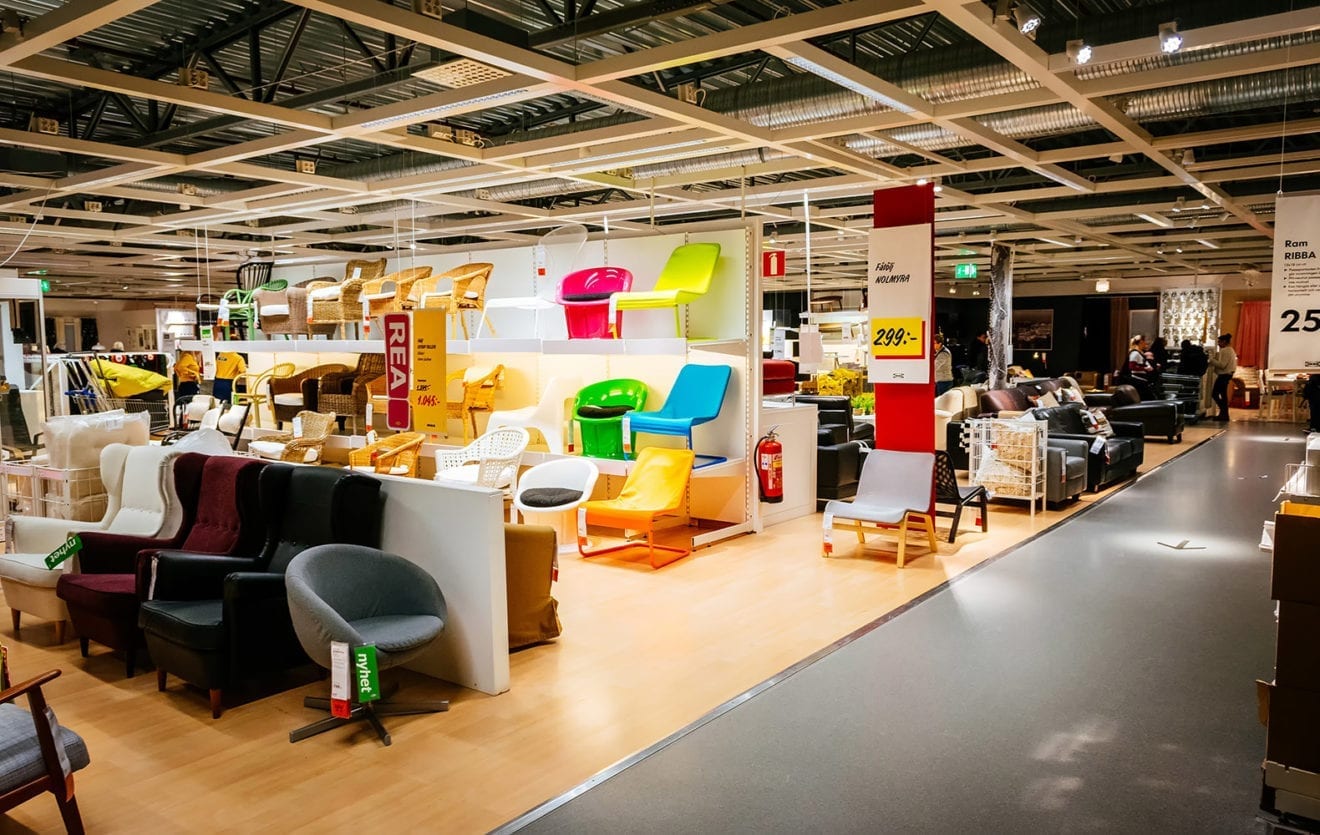
    Ikea has launched a flagship store on Alibaba’s marketplace Tmall, the first third-party platform the brand has partnered within Asia, and after leaving Amazon last year.

    Initially, with a six-month trial across the Chinese provinces of Jiangsu, Zhejiang and Anhui, and the city of Shanghai, the Ikea online flagship store features more than 3600 products.

    “At Ikea, we are very proud of our [physical] stores, but we are always eager to learn how to improve our service,” said Jon Abrahamsson Ring, MD of Inter Ikea Systems BV. “We are happy about this collaboration with Alibaba. I’m convinced that we will learn a lot and develop even better ways to meet our customers.”

    The launch of the Ikea online store on Tmall is part of the brand’s strategy to broaden the ways it reaches Chinese customers, making the brand more accessible.

    The coronavirus outbreak had no influence on the timing of the Tmall launch, an Ikea spokesperson confirmed.

    Ikea shut half of its 30 stores in China earlier this year due to the coronavirus outbreak. Recently, Ikea China is slowly returning to its normal business as the brand is reopening some of its stores across the country.

  • Most Hong Kong e-commerce businesses are eyeing offshore markets

    Most Hong Kong e-commerce businesses are eyeing offshore markets

    More than half of Hong Kong e-commerce businesses want to develop new offshore markets, according to a whitepaper released by e-commerce platform creator SHOPLINE.

    The report found that about three in five online merchants in the territory want to develop new products and 57.5 percent wanted to expand sales into other countries.

    The most popular destination is Taiwan (45.8 percent), followed by other Asian countries including Malaysia and Japan.

    One in five respondents said they want the O2O business model to be a focus of their future plans, including opening pop-up stores to build brand awareness and drive traffic online.

    “While opening online stores has become a trend, the competition is fierce and the market is increasingly saturated,” the report concluded. “Hence the integrated O2O model has become an emerging concept for businesses.”

    Just over half the merchants using SHOPLINE’s platform in Hong Kong said they operated physical stores as well as an e-commerce portal.

    SHOPLINE, which has offices in Hong Kong, Taiwan, Ho Chi Minh City, Shenzhen, and Kuala Lumpur, says fashion and apparel is the most popular category for Hong Kong e-commerce companies, accounting for 36.7 percent. This is likely to be due to a low barriers to entry, especially in terms of the cost of setting sites up.

    Food and beverage, household items, and beauty products make up about one-third of total sales. However, due to the low entry barrier, the ease of sourcing products, and fierce competition in the category, the conversion rate for fashion and apparel is less than for household products and other categories, ranking about the middle.

    The report also found that discounts and free shipping are the most effective sales promotion strategies to retain customers.

  • Reliance Brands plans to launch a fresh luxury e-commerce platform

    Reliance Brands plans to launch a fresh luxury e-commerce platform

    Indian conglomerate Reliance Brands is planning to launch a luxury fashion in the e-commerce portal through its online fashion site Ajio.

    The launching of the e-commerce portal is aimed at widening the company’s market share as online marketing in the country booms. The move pitches the company against established e-commerce players including Flipkart, Amazon and Myntra.

    While an Ajio spokesperson shared information about the business with Vogue, they added that no brand partnerships with labels have yet been signed and declined to comment on the timing.

    The luxury fashion move will be built upon Ajio Gold, Reliance Brands’ premium retail site that carries known brands including Superdry and Steve Madden.

    “Data-driven insights from the ‘bridge to luxury’ brands that retail on Ajio have indicated strongly the possibility for Ajio to craft a luxury vertical, and we are exploring that,” the Ajio spokesperson told Vogue.

    Reliance owner Mukesh Ambani has partnered with 46 international brands including Tiffany & Co, Burberry and Kate Spade and operates 882 physical stores.

  • Three reasons why Asian retailers are upgrading their e-commerce platforms

    Three reasons why Asian retailers are upgrading their e-commerce platforms

    There is currently an almost endless array of technologies and innovations that Asian retailers can invest in as they look to future-proof their business and meet the expectations of the next generation of customers.

    But when Tofugear surveyed retail executives across Asia as part of its 2019 Asia Digital Transformation Report, it was striking to see that the biggest technology investment priority for retailers was actually e-commerce platforms.

    One in two respondents (53 percent) indicated that they will invest in their e-commerce platform over the next 12 months, while a further 20 percent stated they would do so over the next two to four years. Contrast that to the 2018 edition of the survey, when just one in four respondents said that they intended to invest in their e-commerce platform over the ensuing year. Last year, business intelligence and data analytics were the most pressing investment areas.

    In today’s omnichannel age, it may seem odd for Asian retailers to still invest so heavily in their e-commerce platforms. After all, many retail businesses have already had their online stores in place for some time now. However, here are three reasons why e-commerce is being placed at the top of retailers’ ‘to do list’:

    Tofugear’s digital transformation survey included responses from retailers based in countries such as the Philippines and Malaysia, where marketplaces such as Lazada and Shopee are dominating the online retail scene. With these marketplaces offering sophisticated personalization and often a wide range of fulfillment services, local retailers have had to invest in their own e-commerce storefronts as they mount a fightback.

    When retailers were asked what they thought was the single biggest challenge they are currently facing, one in five mentioned the ability to achieve omnichannel retailing. Consumer expectations have increased dramatically over recent years and shoppers need e-commerce sites to offer functionality such as being able to check stock in specific stores or arranging click-and-collect in any location they prefer.

    At the same time, retailers are also looking to use their stores as local fulfillment hubs for online orders. To do so, retailers need to have a single view of inventory and use a distributed order management system. As part of this investment, retailers are making the necessary upgrades to their websites to accommodate such an omnichannel approach.

    There was a surge in investment in e-commerce platforms just over five years ago – when many retailers transitioned to mobile-optimized sites – but technology and consumer demands have continued to evolve since then. An increasing number of retailers are now turning to emerge technologies such as artificial intelligence to upgrade the customer experience on their e-commerce platforms.

    For instance, visual-search technology is a seamless way for customers to get the appropriate search results based on images of a product they are looking for. AI-driven chatbots and the ability to offer voice-assisted ordering through smart speakers such as Google Home are also being considered by retailers.

  • E-commerce battleground turns to ‘easy returns’

    E-commerce battleground turns to ‘easy returns’

    South Korea’s e-commerce industry, which has long emphasized “fast delivery,” is expanding its services, with competition now turning to offerZ “easy returns”.

    South Korea’s major shopping portal 11st said Monday that it has introduced a service to offset return costs caused by customers exchanging products, in which an insurance company pays for shipping when consumers return a product.

    When customers wish to return products with return insurance with 11st designated delivery service, they will not have to pay the delivery charge.

    However, if a customer returns a free-delivery item, the purchaser must pay for the initial shipping costs incurred by the seller.

    11st introduced services to flagship product lines such as fashion and accessory goods, which are often difficult to purchase online due to the cost of return shipping resulting from color and size exchanges.

    Shipping costs not only contribute to consumer hesitation about making a purchase but also make them hesitate as they might want to exchange a product for another size or color.

    However, with the delivery charges covered, one can shop worry-free.

    According to a report released last year by market-research firm Consumer Insight and Hanyang University’s Retail Research Center, “exchange/return/refund convenience” topped the list with 35.1 percent according to a survey of six aspects of delivery satisfaction.

    Rapid/accuracy, with 16.4 percent, was second.

    The result can be interpreted that consumers consider being able to return goods more important than the speed at which they are originally delivered.

    Coupang Corp, South Korea’s No 1 e-commerce company, is also offering free delivery and free return services to Rocket Wow members.

    In the case of size-sensitive fashion products, the company offers exchanges free of charge for 30 days for rocket delivery products that are purchased directly even if the purchaser is not a member.

    Prior to e-commerce channels, the home shopping industry focused on growth based on “free returns” as its sales strategy.

    “On the part of consumers, fewer hassles or costs caused by returning products are eliminated, and on the part of sellers, more sales can be expected if more frequent purchases occur,” said a source in the retail industry.

  • Tmall Global offers relief package to merchants worldwide

    Tmall Global offers relief package to merchants worldwide

    Alibaba’s B2C platform Tmall Global is offering support to its merchants during the coronavirus epidemic, including waiving services fees.

    The firm’s annual service fee for the first half of 2020 will be waived for all Tmall Global merchants on board before this coming July. It will also provide its shop setup tool Winpool Smart Edition to all its merchants free of charge.

    “It has always been Alibaba’s mission to make it easy to do business anywhere, and now it’s the time to commit,” said Tmall import and export GM Alvin Liu. “Tmall Global will stand firmly with merchants from all over the world, supporting them and uniting as one to overcome challenges and difficulties at this special moment.”

    Along with the fee waivers, Tmall Global will reduce or exempt warehouse rent and logistics costs. lower the threshold for merchants’ automatic settlement obligations, reduce agency service fees, provide low-interest loans to merchants, and optimize its rules and regulations to allow more flexibility.

    Tmall Global’s move follows the rollout of 20 measures by Alibaba Group and subsidiary Ant Financial to support Chinese SMEs during the outbreak.

  • Japanese shopping service Nippon Passport secures funding

    Japanese shopping service Nippon Passport secures funding

    Nippon Passport has raised ¥200 million (US$1.82 million) in pre-series A funding, led by private investors and business companies through a third-party allotment.

    In response to the Japanese government’s target to attract 60 million foreign tourists annually by 2030, the firm has launched its “NP Pass” service, driving foreign visitors through affiliate shops for a commission fee of 10 percent of total sales. Travelers who download the app can receive discounts and vouchers for participating retailers.

    With the financing, Nippon Passport intends to improve the “NP Pass” app as well as develop its network of affiliate shops and agents.

    “Japan’s population has been steadily decreasing,” said Nippon Platform CEO Shinsuke Hishiki.

    “We believe that Nippon Passport’s service makes significant headway in collaboration with Nippon Platform related to tablet solutions, and transfers from attracting customers for tourism consumption to making solutions for paving the way for regional revitalization.”

    Tharminder Singh, a director at Nippon Passport, says the ever-changing nature of technology such as AI and self-driving cars is starting to move consumers away from products and towards experiences and travel.

    “Using technology and smart mechanisms to harness the value of bringing people together through tourism inbound and outbound [we are] creating a value proposition that helps drive the industry and new ways of attracting people and traffic and increasing business.”

  • Vietnam scraps plans to limit foreign ownership in e-payment firms

    Vietnam scraps plans to limit foreign ownership in e-payment firms

    Vietnam’s central bank has decided not to cap foreign ownership of e-payment companies at 49 percent after consulting with experts.

    Foreign investment plays an important role in payment intermediaries’ functioning since they rely on technology, and limiting foreign ownership would hamper foreign investment in this segment and the fintech sector in general, the State Bank of Vietnam (SBV) said in a statement on Monday.

    In some digital payment firms, foreign ownership already exceeds 49 percent, and so a change in regulations could affect their activities, it said.

    The SBV had released a draft of its foreign ownership cap proposal in November for consultation, saying it wanted to balance the ease of attracting foreign capital with ensuring an active role for local firms in the fintech sector.

    According to the central bank, by the end of the first quarter this year, there were 27 e-wallets in the market though five parent companies owned 90 percent of them. The five, which the SBV did not name, have foreign ownership of 30-90 percent, it said.

    Economists have said that the potential for cashless payment in Vietnam is huge due to a growing middle class and rapidly improving telecom infrastructure. The government wants to make 90 percent of all transactions cashless by the end of this year.

    But the reliance on cash remains overwhelming, with 80 percent of Vietnamese preferring to use cash for daily transactions, according to the Ministry of Industry and Trade.

  • Alibaba rolls out help for merchants amid coronavirus outbreak

    Alibaba rolls out help for merchants amid coronavirus outbreak

    Chinese e-commerce giant Alibaba has announced 20 measures to assist merchants during the coronavirus outbreak, including substantial fee waivers.

    In an emotional letter to its merchant partners, the firm paints a grim picture of the challenge posed by the virus to Chinese nation while emphasizing the need of “millions and millions of consumers” for their services, describing the urgency to maintain economic development as a “second battle” alongside the struggle against the coronavirus itself.

    Among the measures listed are moves to reduce operational costs on the firm’s platforms, including a waiver on all platform service fees for the first half of 2020 for all Tmall merchants and a free subscription to “Wangpu”, an online tool kit to revamp merchants’ online storefronts, to all sellers on Taobao and Tmall.

    The firm is also offering financial support by waiving or lowering interest rates on loans issued by its online bank brand under Ant Financial, Mybank. The bank will provide 12-month loans totalling RMB10 billion (US$1.43 billion) to online merchants registered on

    Taobao and Tmall from Hubei – the province at the center of the outbreak. The loans will be interest-free for the first three months, and rates will be lowered by 20 percent from the current level for the remaining nine months. Mybank is also providing 12-month loans to Taobao and Tmall merchants from outside Hubei with interest rates also lowered by 20 percent. Payments to all qualified merchants on Tmall and Taobao will also receive payments from Mybank as soon as their orders have been fulfilled as a free service until March.

    Other measures include a support fund for select chain restaurant operators; subsidies to delivery personnel and an assurance of higher logistics efficiency; the launch of employee-sharing schemes to provide flexible job opportunities to ensure income for staff; and the release of tools for enterprises to accelerate their digitization as well as allow remote working management for enterprises.

  • How Reliance’s JioMart platform will reshape India’s online grocery market

    How Reliance’s JioMart platform will reshape India’s online grocery market

    Reliance Industries has entered India’s online grocery retailing market via a new e-commerce platform JioMart, which started pilot trials last month in Mumbai.

    Through JioMart, it is planning to offer more than 50,000 products and connect 30 million offline retailers with more than 200 million households across the nation.

    The value chain created by JioMart connects local offline retailers on a large scale with its merchant point-of-sale solution, where it provides user-friendly digital platforms for inventory management, customer care services and other services required by the retailers. JioMart plans to bring in electronics and clothing and footwear under its scope in the near future.

    The food-and-grocery (F&G)sector is tipped to be the next business battle for online retailers in India. Retailers, both domestic and international, have been proactive in their approach towards the rapidly growing online F&G sector in a bid to capture a large customer base.

    GlobalData estimates that the online F&G market in India grew at a compound annual growth rate (CAGR) of 71.2 percent between 2013 and 2018 and is set to grow at a CAGR of 45.5 percent during 2018-2023 as the urban working population is rising in Indian cities and retailers are venturing into non-metro cities. This growth is also supported by the rapidly growing mobile internet and smartphone penetration.

    RIL’s JioMart eyes the massive potential in online F&G retailing, which is estimated to reach US$9.12 billion in 2023. Reliance is known for its disruptive ideas and business approach, and the same can be said for its latest venture, JioMart.

    With its retail wing in cash and carry outlets through Reliance Fresh and Reliance Supermart, and a massive customer base with India’s largest telecom network in the form of Jio, capturing the market is not going to be tough for JioMart.

    As a domestic company, Reliance gets the advantage that Amazon and Walmart-owned Flipkart miss due to the new e-commerce regulations to safeguard the interests of domestic offline retailers in the country.”

  • Kadokawa targets foreigners with EJ Anime store online

    Kadokawa targets foreigners with EJ Anime store online

    Kadokawa Corporation has launched an EJ Anime store online where people living overseas can purchase official merchandise for Japanese anime, comics, light novels, and games.

    The EJ Anime store stands on a burgeoning anime market in Japan that has continued to increase for nine years, reaching sales of ¥2,180 billion (US$20.07 million). The rapid increase in the overseas market is contributing to this major growth, with more than ¥1 trillion ($9.2 billion) in sales and accounting for 46.3 percent of the market.

    The Kadokawa EJ Anime store aimed at the Japanese domestic market has also seen an increase in overseas traffic (increasing roughly 170 percent over four years since 2016), demonstrating a high level of interest in Kadokawa products among people living overseas, mainly in North America and Asia.

    Opening an EJ Anime Store online allows people living overseas to buy official merchandise and premium products that are difficult to obtain overseas.

    When the site opens, target areas for sales will include 17 countries and regions, including the US, France, Spain, the UK, Taiwan, Hong Kong, and Australia – with plans to expand to 80 areas, including China.