Tag: ecommerce

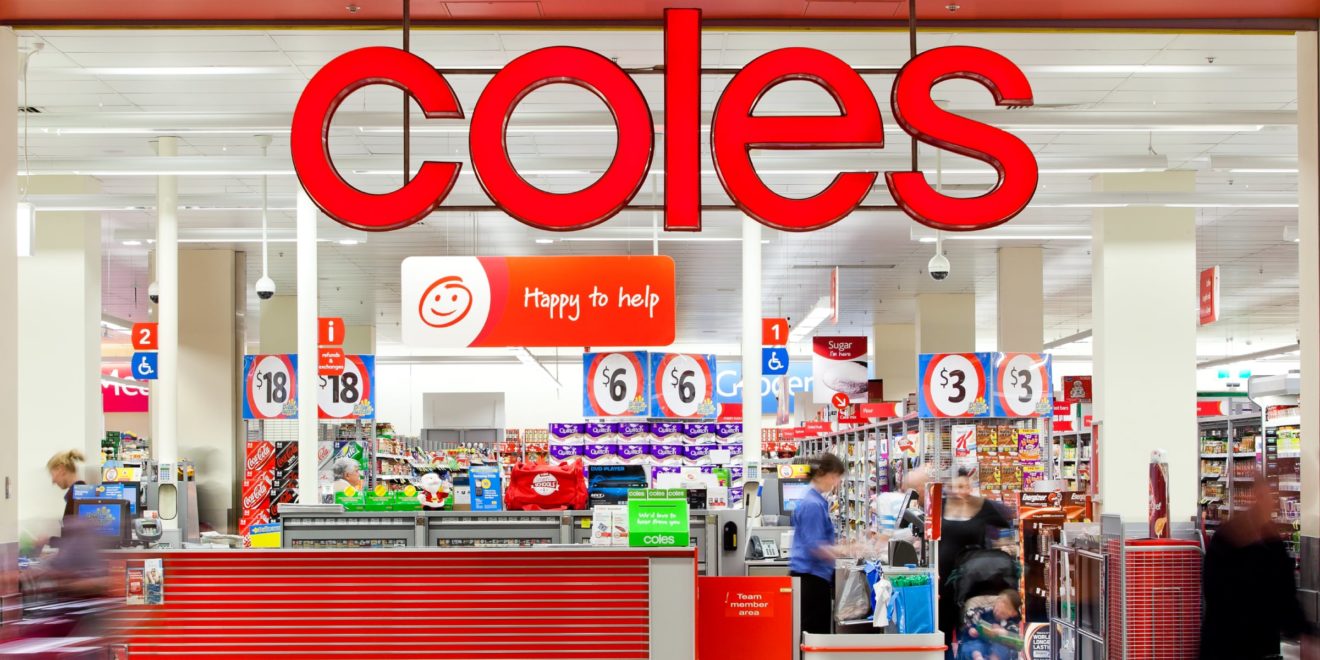
  • Coles launches grocery subscription service

    Coles launches grocery subscription service

    Coles is taking its online grocery offering a step further with the launch of a new subscription service that allows customers to make unlimited orders for a flat monthly fee.

    Customers must spend over $100 in each transaction to qualify for Coles Delivery Plus, which gives the option of delivery any day of the week for $19 a month, or mid-week delivery from Tuesday through to Thursday for the lower rate of $14 per month.

    Coles Online general manager Karen Donaldson said the new service is aimed at time-poor online regulars who are looking to save on delivery.

    “On average, the cost of a Coles Home Delivery window is $10, depending on location, time of day and length of delivery window chosen,” Donaldson said.

    “Delivery Plus will allow customers who regularly shop online to save hundreds of dollars a year and help them manage their family budget by knowing exactly how much they will pay on Coles Online delivery each month.”

    The big two have been ramping up investment in online this year, in a bid to retain and gain consumers as new players like Kaufland enter the market.

    In March, Coles scored an exclusive deal with the world’s leading online grocery platform, Ocado, which has previously signed lucrative deals with some of Britain’s biggest grocery retailers including Waitrose and M&S.

    But Woolworths hasn’t been resting on its laurels. A recent partnership with eGrocery startup Takeoff Technologies is expected to propel its online grocery operations with the addition of compact, automated micro fulfillment centers at a number of its supermarkets.

    Woolworths Group CEO said the new centers will allow the retailer to deliver “ultra-convenience at a local level” and be even closer to the customer for that last-mile delivery.

    Woolworths is also planning to bring circular shopping to its online service through a partnership with TerraCycle’s Loop platform. By mid-2021, shoppers will be able to have products such as washing detergent, shampoo, juice or ice cream delivered to their door in reusable and refillable containers, which can be collected for cleaning and refilling after use.

    In a bid to get customers onboard with Coles new subscription service, the retailer is offering the first month free, with automatic payments commencing the following month. But customers can cancel the auto-renewal of their subscription at any time.

    For a limited time, Delivery Plus will also cover the fees for unlimited Same-Day Deliveries.

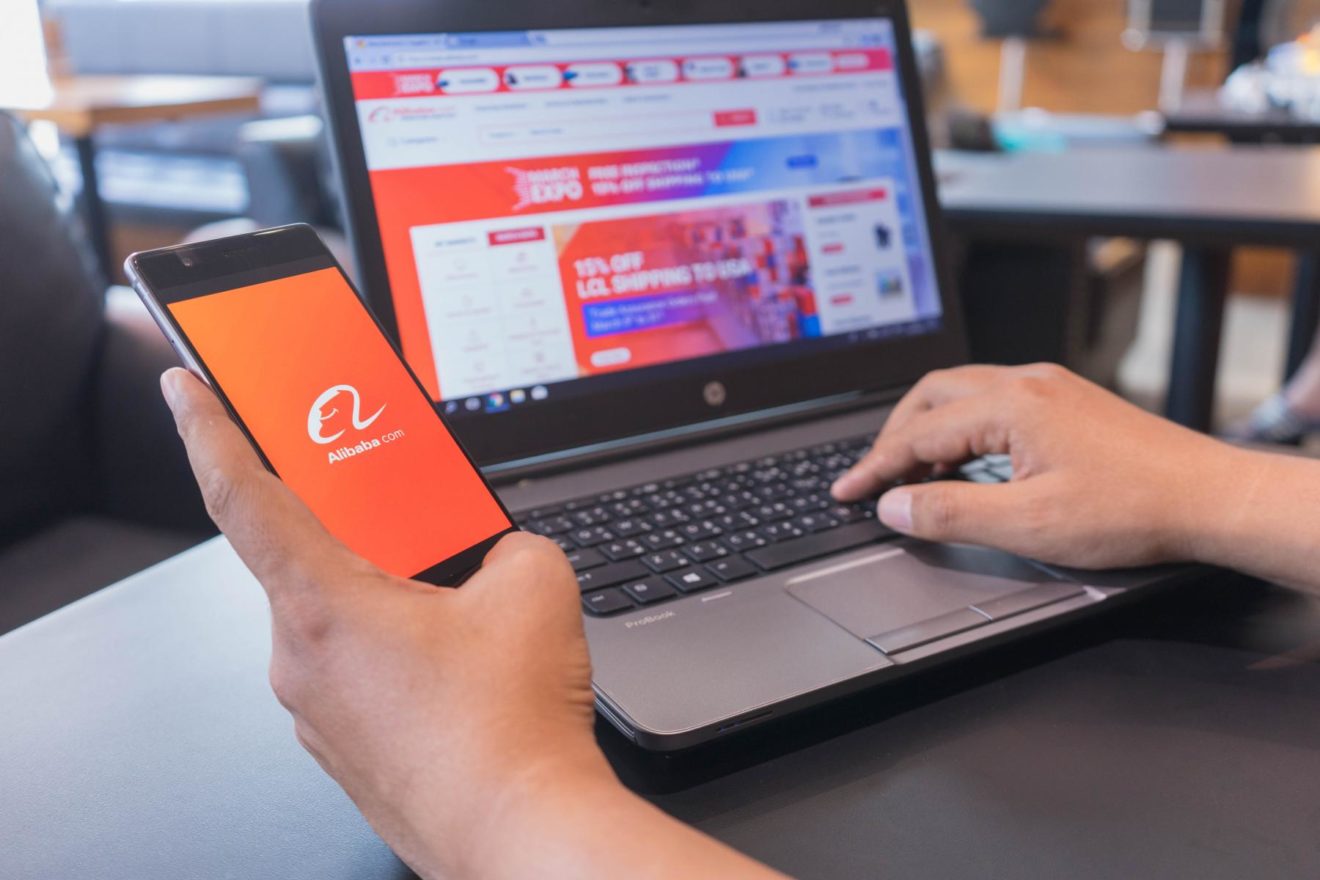
  • Alibaba revenue surges

    Alibaba revenue surges

    Chinese e-commerce giant Alibaba enjoyed a 40 percent rise in sales during its second financial quarter, performing beyond expectations.

    Alibaba revenue rose to RMB119.02 billion (US$16.91 billion) in the September quarter, 40 percent above the RMB85.15 billion ($12.1 billion) during the same period last year, and ahead of projected revenues of RMB116.8 billion ($16.6 billion).

    The results reflected leaps in both of the firm’s core businesses – a roughly 40-per-cent jump in e-commerce and a 64-per-cent leap in cloud computing.

    Alibaba’s net income attributable to ordinary shareholders hit RMB72.54 billion ($10.32 billion).

    Alibaba has been focusing on building its business in lower-tier Chinese cities to counter the effects of saturated markets and the US-Sino trade war.

    “Average revenue per user in lower-tier cities is not as low as people imagine,” said Alibaba CFO Maggie Wu. “I think we have addressed very well in our Taobao apps different demands and levels of consumers.”

  • E-commerce platform Suning.com boosts sales

    E-commerce platform Suning.com boosts sales

    Chinese O2O retailer Suning.com says sales from its online platforms and physical stores rose by 24.27 percent in the third quarter, reaching RMB 171.43 billion (US$24.4 billion).

    The company closed the quarter with 470 million registered members and the number of active monthly users rose by 48 percent. Suning.com now hosts 8407 self-operated and franchised stores.

    Net income attributed to shareholders was RMB 11.9 billion ($1.7 billion)

    The company expects to receive a significant boost from the acquisition of an 80-per-cent share in the Carrefour China operations in late September, adding to the previously acquired Wanda department store network. It describes the move as part of a mission to create a multi-platform retail business for China, spanning third-party marketplaces, its own physical stores and its own online offer.

    Following the Carrefour deal, Suning.com has now formed a network comprising Suning supermarkets, offline Carrefour supermarkets, SuFresh boutique supermarkets and Suning Xiaodian (neighborhood convenience stores). More than 200 Carrefour stores will launch a full upgrade by the end of the year.

    “The introduction of Carrefour’s supply-chain capabilities will effectively leverage the advantages of large-scale procurement, and help establish an efficient warehouse allocation system to promote the rapid development of Suning.com’s FMCG categories,” the company said in a statement.

    In the prior three quarters, Suning.com increased investment in logistics, technology and in building out other core capacities to lay a solid foundation for growth over the next decade.

  • Zalora launches childrenswear category

    Zalora launches childrenswear category

    Online fashion platform Zalora is entering the childrenswear market.

    The launch of the Kids category on Zalora’s website and app lists more than 5000 items for children aged up to 12 years old from global label-favourites Disney, Mango Kids, Mango Baby and Oshkosh B’gosh as well as sports brands Nike, Adidas and Puma, among others.

    Zalora describes the range as “a wide array of local and international brands … great for any occasion; from birthdays to baptisms, hijabs and modest wear, and even travel to festive”.

    The site also retails products for newborns from rompers and onesies to swaddling blankets and baby carriers.

  • Amazon opening new warehouse in Perth

    Amazon opening new warehouse in Perth

    Amazon will open a new fulfillment center in Perth by the end of the year to keep up with increasing demand and offer fast delivery to more customers, the e-commerce company has said.

    The facility, which is expected to be operational in late 2019, is Amazon’s third warehouse in Australia. It also has warehouses in Melbourne and Sydney.

    “This expansion represents the investment and development of our growth strategy in Australia, following a steady and progressive increase in customer demand,” said Craig Fuller, director of operations at Amazon Australia, said in a statement.

    “We strongly believe that this further investment will benefit both customers and the local economy and give Western Australian (WA) customers quicker delivery of high demand items.”

    Located in the Perth Airport Business Precinct, the new facility is expected to give customers in WA access to the same delivery options as customers on the East Coast of the country.

    Amazon currently offers same-day delivery only to customers in eligible postcodes in Sydney and Melbourne. It costs $9.99 for those with Prime and $12.99 for those without.

    Customers in Sydney, Melbourne, Brisbane, Adelaide, and Canberra can also get free expedited delivery (1-2 business days) if they have Prime, or pay $5.99 if they don’t.

    But the fastest delivery option (1 business day) for customers in other metropolitan areas, including Perth and the Gold Coast, costs $9.99 – even for those with Prime. Those without currently need to pay $11.99.

  • Shopee to focus on growing market share in SEA

    Shopee to focus on growing market share in SEA

    Singaporean online shopping business Shopee is aiming to boost its market share in Southeast Asia.

    The firm is targeting an expected exponential increase in the number of online shoppers in the region, according to a recent interview published in Yahoo Finance Singapore with Shopee’s CCO Zhou Junjie.

    “We believe that there should be a lot more growth potential in Southeast Asia so we should focus our effort and resources in this region,” said Zhou in the interview. “Whereas the e-commerce industry in China is more mature, Southeast Asia markets are still at the very beginning stage.”

    E-commerce in the region is projected to pass US$150 billion by 2025, nearly four times the current levels.

    “Our priority is to grow the market share,” said Zhou. “We will continue to invest to make sure that we strengthen our lead position, we want to make sure that we grow faster than others.”

    Beyond Singapore, Shopee operates in Thailand, Malaysia, Vietnam, the Philippines, Indonesia and Taiwan.

  • Alibaba launches 2019 11.11 Global Shopping Festival

    Alibaba launches 2019 11.11 Global Shopping Festival

    Alibaba Group has launched its 2019 11.11 Global Shopping Festival, taking the annual event into its second decade.

    The shopping holiday this year focused on “new consumption,” “new business” and actively contributing to a greener society.

    “Our goal is to stimulate consumption demand and support lifestyle upgrade in China through new brands and products,” said Taobao and Tmall president Fan Jiang. “We will enable merchants in China and around the world to grow their businesses through data-driven product innovation and consumer insights, as well as leverage our recommendation technology and content-driven user engagement to delight consumers in urban coastal cities and less-developed areas of China.

    “Given its scale, minimizing environmental impact is essential and our technology will ensure it is a green 2019 11.11 Global Shopping Festival.”

    The festival taps a global supply chain to meet the growing demand of Chinese consumers for new brands and new products. More than 200,000 brands are participating; one million new products are on offer and more than 500 million users are expected to participate in this year’s festival – about 100 million more than last year.

    Estimated consumer savings from brand and platform promotions and coupons are around RMB 50 billion (US$7 billion).

    For the first time, Alibaba held a concurrent kickoff event in the northeastern city of Harbin, underscoring its focus on serving consumers and small businesses in China’s less-developed markets. In the last quarter, more than 70 percent of Alibaba’s new annual active consumers came from lower-tier cities.

    “The success of our focus on less-developed markets in China is reflected in our new customer acquisition growth,” said Alibaba Group CMO Chris Tung. “We are equally driven to help local enterprises and factories digitize, which improve their operational efficiency and ability to engage with customers across the country.”

    More than 22,000 international brands from 78 countries and regions will participate in this year’s 11.11 on Tmall Global, Alibaba’s cross-border online marketplace, providing an expansive international product selection for consumers.

    For the second year, Lazada will take part and expects its “shoppertainment” – a blend of shopping and entertainment – to attract a record number of participating merchants and consumers in its six markets.

    While continuing to serve over 200 countries and regions, AliExpress will enable local merchants from Russia, Spain, Italy, and Turkey to participate in 11.11 for the first time.

    Daraz disrupted South Asia’s retail market with 11.11 last year and is gearing up again with celebrations in Pakistan, Bangladesh, Sri Lanka, Myanmar, and Nepal. India will celebrate with the UC Shopping Fest, in association with Paytm, VMate, and 9Apps.

    Fliggy will offer 30,000 different vacation packages to over 200 destinations to serve Chinese tourists. Thousands of travel experts will offer tips and suggestions via live streams during 11.11.

    Cainiao and its partners will make November 20th a day focused on the recycling of cardboard packaging. They will work to convert 75,000 locations into permanent recycling stations, and express courier companies to pick up used cardboard boxes and wrapping.

    Consumers will be incentivized to recycle through rewards of “green energy” points on Ant Forest.

    Alibaba Cloud expects to save 200,000 kilowatt-hours of energy on November 11th at its data centers, which will be powered by renewable energy and energy-conserving technology such as liquid-cooled servers.

  • Lazada, Tiki locked in delivery speed race

    Lazada, Tiki locked in delivery speed race

    Giants Lazada and Tiki are racing to reduce their delivery times as competition heats up in Vietnam’s e-commerce market.

    Singapore-based Lazada Friday launched a 4-hour delivery service for flowers in Vietnam, a move in response to Vietnamese startup Tiki’s 2-hour delivery for a large number of products.

    Nguyen Ngoc Thang, head of express solutions at Lazada, said that this was a new step in e-logistics for the company.

    Earlier this month, the company began to offer 2-hour and 4-hour delivery for products weighing under 15 kilograms in Hanoi and Ho Chi Minh City.

    Almost 200 Lazada sellers are eligible for the service, mostly in beverage, fashion and baby products.

    The move followed other e-commerce companies in Vietnam, like Shopee, Sendo and Lotte, also announcing delivery times of one to four hours after Tiki introduced its 2-hour delivery for over 100,000 products.

    Tiki is able to do this by investing in expanding its fulfillment center, which is now at 60,000 square meters and set to triple to 200,000 square meters by the end of next year.

    The company’s average delivery time is less than two days, against the market average of four-five days, said Tiki chairman Tran Ngoc Thai Son.

    Meanwhile, Lazada has introduced its new 24/7 receiving points in Hanoi and HCMC where customers can pick up their items at a time of their choice.

    In the third quarter of this year, Tiki ranked fourth in terms of of web traffic, followed by Lazada. Both of them fell two places from Q2, according to market research firm iPrice.

    Singapore-based Shopee remained the market leader, followed by Vietnamese players Sendo and Mobile World, it said.

    Vietnam’s e-commerce market is estimated at $5 billion this year and is set to reach $23 billion in 2025, according to a recent report by Google, Singapore-based investment firm Temasek, and U.S.-based consultancy Bain.

  • Amazon has no specific time frame for Vietnam website

    Amazon has no specific time frame for Vietnam website

    A senior Amazon official says the firm sees Vietnam’s potential but has not decided on a time to launch services for Vietnamese buyers.

    Bernard Tay, head of Amazon Global Selling Southeast Asia, Australia and New Zealand, said at an event Thursday that the global e-commerce giant sees Vietnam has a potential market.

    He noted that after launching Amazon in Singapore, they would look at opportunities to expand their services to more countries, including Vietnam.

    Amazon Thursday established a team of specialists in Vietnam to support Vietnamese sellers in taking their products to global customers. The company stated that it sees the majority of Vietnamese businesses are small and medium enterprises with large demand for global sales.

    Many Vietnamese leather, footwear, handmade and consumer goods items are selling well on Amazon’s website, Tay said.

    Vietnamese sellers can reach up to 300 million Amazon accounts in 185 countries and territories. Amazon also has 175 fulfillment centers worldwide, he added.

    Bui Kim Thuy, owner of a textile company whose products are being sold on Amazon, said that the e-commerce giant has strict criteria on product origin and quality which Vietnamese sellers will have to meet.

    An apparel product that suits Vietnamese customers might not suit Americans, therefore Vietnamese sellers need to make careful research for international sales, she added.

    Amazon launched a Singapore website last week, the first in Southeast Asia. Vietnamese shoppers can access Amazon.com, but many products are not available for shipping to Vietnam, and those that are available typically involve high shipping fees.

  • Jack Ma Explains the key to Alibaba’s success

    Jack Ma Explains the key to Alibaba’s success

    Forbes Media has presented the Malcolm S Forbes Lifetime Achievement Award to Alibaba Group founder and partner Jack Ma, hailing his commitment to small businesses in addition to the impact that Alibaba has achieved since its launch 20 years ago.

    The annual award celebrates an individual who embodies and exemplifies the ideals of entrepreneurship championed by Forbes, the company said in a release.

    “Jack Ma not only created one of the most outstanding companies of the world but also a company that nourished the vibrant small-business community in China – and small businesses around the globe,” Forbes Media chairman and editor-in-chief Steve Forbes said. “He is indeed one of the most influential figures of our time.”

    Ma received the award at the 19th annual Forbes Global CEO Conference, held this year in Singapore, where he and Forbes talked for about an hour about Alibaba’s history, Ma’s thoughts on entrepreneurship and his philanthropy work. Forbes started by calling Ma “one of the greatest liberators in history, enabling people who wanted to … do commerce. You gave them the means to do it.”

    Ma explained how that came about: “We believed in the future and I believe the internet can empower people,” he said, speaking of Alibaba’s 17 other founders in 1999. “So, we do Alibaba because there are so many small businesses that don’t know when and how, where they can sell the products.”

    That led to the launch of B2B e-commerce platform Alibaba.com at first and later other sites, including Taobao, which has grown from a C2C marketplace to become China’s largest mobile-commerce destination. To enable payments on these platforms, Alibaba developed Alipay. The company also wanted to get products from sellerss to consumers quickly and efficiently, so Ma and his team turned their attention to logistics, eventually launching what is now Cainiao Smart Logistics Network. Alibaba also wanted to support small businesses in need of computing power, so Alibaba Cloud was born. And the company continues to build new businesses to address new demands as the market evolves.

    “So, it’s all about solving problems. I think this is what we did in the past 20 years,” Ma said. “We always think about what we can do to solve social problems instead of complaining. That’s the journey and … millions of people change their lives because [of our] efforts.”

    Ma expanded on the company’s mission to help small businesses, young people and women – those largely outside the traditional financial system – via Alipay, the largest mobile payments and lifestyle app in China. Traditional financial companies focus on the top economic levels of society, he said, not the bottom. But Alipay was always a bottom-up operation. While the wealthy elite wasn’t willing to test the technology when it was first made available, in 2004, many of China’s less wealthy consumers were.

    “They tried it, they loved it, they benefitted from it,” Ma said. “So, this is very, very inclusive.”

    “We feel that the financial system for the 21st century should be inclusive, should empower people,” he continued. All “people have the right to reach the money they need.”

    Alibaba has achieved tremendous success during its two decades, as it now serves 730 million annual active consumers in China and another 130 million overseas. Alipay parent Ant Financial, in which Alibaba holds a 33-per-cent stake, serves 900 annual active consumers in China and 1.2 billion worldwide, including active users of Alipay’s local e-wallet partners. The $456.4 billion Alibaba currently employs about 100,000 people globally, and its e-commerce platforms reach merchants and consumers in more than 200 countries and regions. This year, Alibaba will host its 11th 11.11 Global Shopping Festival, which has grown into the largest one-day shopping festival in the world.

    Ma said he would build on that success – and the money he’s made from Alibaba – to continue helping others. He has already worked through his namesake philanthropic organization, the Jack Ma Foundation, to help improve education and conservation efforts in China. But he has turned his attention to points outside of China as well. Most recently, Ma has focused his attention on supporting entrepreneurs in Africa. He has said that entrepreneurs are “the most important element to develop a society,” and therefore they will be central to Africa’s economic development in the decades ahead.

    “I have the money, I have the resources and I won’t go there, empower the entrepreneurs,” Ma told Forbes. “If we can be able to discover and help more Jack Mas, more Bill Gates or Warren Buffetts – more Steves – Africa will be different.”

    Next month, Ma will travel to Ghana to host the first Africa Netpreneur Prize competition. The $10 million initiative will award $1 million a year for the next 10 years to African entrepreneurs as a way to support the growth of the continent’s digital economy. Nearly 10,000 people from 50 of Africa’s 54 countries applied.

    The remaining 10 contestants – hailing from Egypt, Nigeria, Liberia, Rwanda and Cote D’Ivoire – will make their final pitches to Ma and a panel of judges during the Nov. 16 taping of “Africa’s Business Heroes,” a televised event scheduled to air Nov. 29 in countries across Africa.
  • India’s Flipkart to enter food retailing, launch private label

    India’s Flipkart to enter food retailing, launch private label

    Walmart-owned Indian e-commerce platform Flipkart is launching a food retail business.

    The new initiative will see the firm release its own private label, Flipkart Farmermart, as well as a grocery supply chain and potentially physical stores.

    A spokesman for the firm told news outlet Moneycontrol that Flipkart plans to “deepen its penetration in the food retail space, take on Amazon, and run a farm-to-fork operation,” with the board consenting to invest ₹2,500 crore (US$350,000) to expand its operations in the grocery business.

    The firm plans to leverage parent company Walmart’s experience in the cash-and-carry sector in the territory, which has helped build connections in the farming industry for grocery and food produce.

    Research shows that just 0.15 percent of Indian nationals buy online, although this figure is expected to increase exponentially over the next few years.

  • Japan’s RMK aims for Chinese consumers with Tmall Global launch

    Japan’s RMK aims for Chinese consumers with Tmall Global launch

    Japanese cosmetics brand RMK has launched a flagship store on Chinese e-commerce platform Tmall Global.

    The move has been described as part of RMK’s broader focus to tap the lucrative Asia-Pacific beauty market and create a stable platform for beauty brands in China.

    Shagun Sachdeva, a consumer insights analyst at GlobalData, says RMK is already available in Japan, Taiwan, Hong Kong and South Korea.

    “The calculative move to tie up with Tmall Global has been made to indulge in omnichannel retailing with an aim to increase its presence in the high-value Chinese market and get access to a wider customer base,” he said.

    According to GlobalData, the Cosmetics and Toiletries market in China is growing at a steady pace and is almost double than that of in Japan last year.

    GlobalData’s 2018 fourth-quarter consumer survey revealed that 63 percent of Chinese consumers prefer online channels to buy beauty and grooming products.

    “The strategic decision to expand seems to be driven by rising popularity and growing demand of Japanese beauty products among Asia-Pacific consumers owing to perceived safety, better quality and multi-functionality,” said Sachdeva.

    “The brand has grabbed the opportunity of looking at the high intensity of J-beauty products being imported in China or bought by Chinese visitors in Japan. With the launch on Tmall Global, the company aims to target such customer base first and then include more products in its range soon.”

  • Most Singaporeans purchase online overseas every month

    Most Singaporeans purchase online overseas every month

    A recent survey has shown that around 75 percent of Singaporeans purchase overseas products at least once a month.

    According to Southeast Asian and Taiwanese e-commerce platform Shopee’s Global Deals Survey 2019, which polled more than 4000 Singaporeans about their overseas online purchasing habits, more than 90 percent of survey respondents indicated that they buy overseas products on Shopee more today, as compared to three years earlier. Reasons cited include convenience, cost-savings, increased product variety and being able to purchase products not available in Singapore. The survey also found that shoppers prefer to purchase overseas products from sellers who have a wide variety of products available (70 percent) and offer free shipping (30 percent).

    A recent YStats report found Singapore to be the top market for cross-border shopping in Southeast Asia, and according to a Forrester report, 60 percent of e-commerce sales consist of overseas orders.

    Japan is the fastest-growing market for overseas purchases, as demand for health supplements rises. Over the years, Japanese brands have increasingly made inroads in Singapore, gaining ground in the local retail scene with the entrance of a new wave of Japanese fashion labels and discount stores.

    According to Shopee’s survey, when it comes to purchasing Japanese products, quality (70 percent), variety (75 percent) and items that are not available in Singapore (73 percent) are what fuels the appetite of Singaporean shoppers.

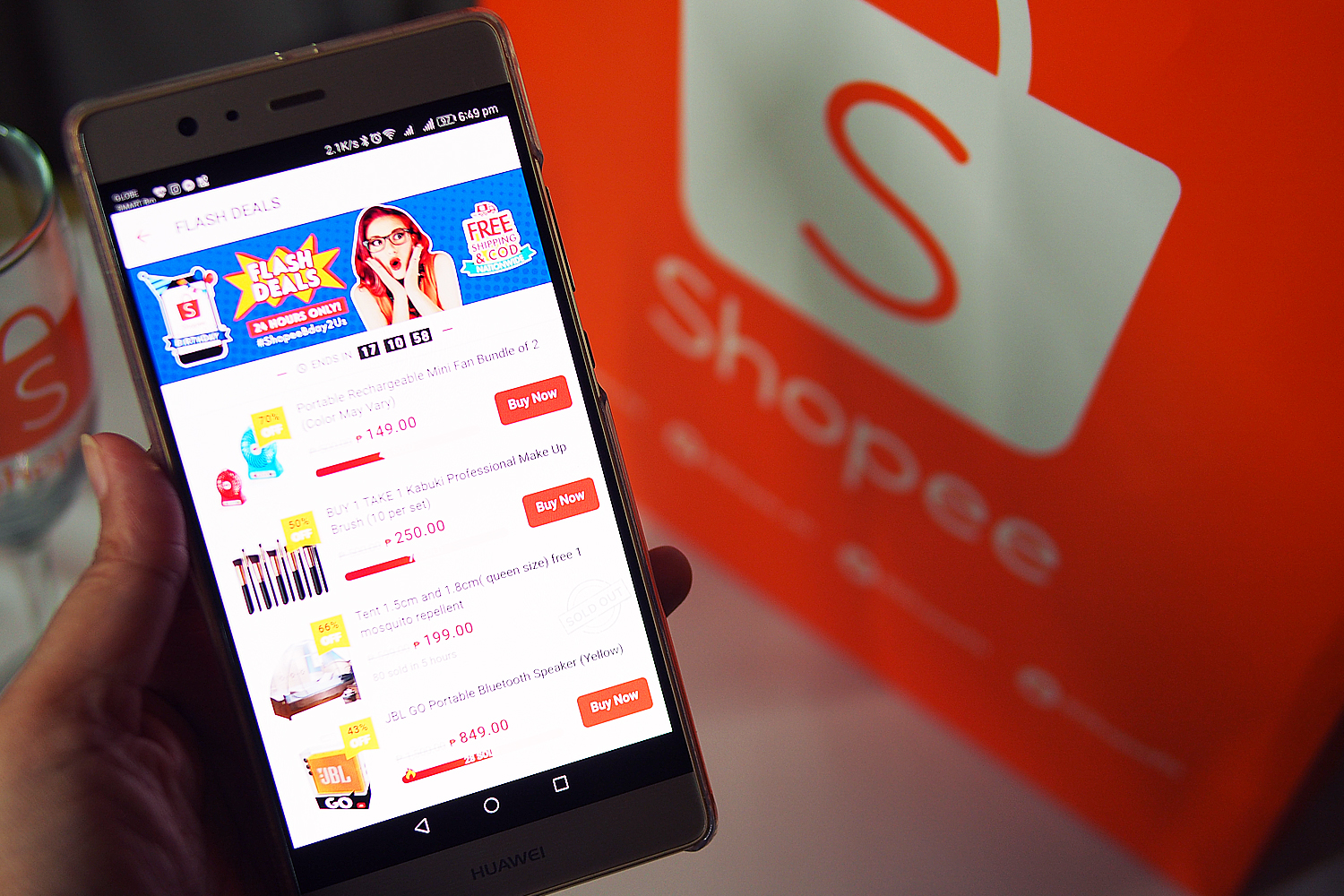
    Shopee has recently unveiled a dedicated in-app space where users can access more than 50 million deals from six popular shopping destinations. Named Global Deals, the feature introduced deals from China, Korea, Japan, Taiwan, Malaysia and Hong Kong, and is accessible via a dedicated button on the Shopee homepage.

    “Singaporean shoppers have become globalized consumers who now have the world at their fingertips, and they are constantly on the lookout for convenience, quality and variety,” said Shopee CCO Zhou Junjie.

  • South East Asia to See Online Spending Triple

    South East Asia to See Online Spending Triple

    A report into spending habits in South East Asia suggests that internet shopping numbers will see a huge surge in the next few years. Overall, it is expected that the amount of money spent online here will triple by the year 2025.

    The facts and figures

    This data comes from a report called Riding the Digital Wave: Southeast Asia’s Discovery Generation. It was produced by Facebook, together with the global management consultancy firm Bain & Company.

    They suggest that by 2025, there will be 310 million people in the region who buy online. The estimated average spend of these digital consumers has been calculated as being US$390. These numbers were compiled following a survey of almost 13,000 consumers from the following countries: Malaysia, the Philippines, Singapore, Thailand and Vietnam. They also interviewed over 30 of the region’s CEOs and venture capitalists.

    The rate of growth in this part of Asia is reflected in the number of digital consumers that have been active in recent years. From 90 million people buying online in 2015 to 250 million in 2018, the number has been rapidly increasing. In terms of the average spend on internet purchases, in 2018 it was noted as being $125. This means that the amount spent is expected to increase at an even faster rate than the number of consumers.

    What other online industries are growing?

    Other areas of online activity are also booming in this part of the world. For example, the growing number of cryptocurrency users makes this one of the regions where Bitcoin and other virtual currencies are most popular. This has led to national authorities issuing regulations in Singapore, Indonesia and Malaysia in recent months.

    The CoinDesk Invest event in Asia also revealed that an increasing number of fundraising campaigns for new cryptocurrencies now take place in this region. In the second quarter of 2019, 26% of these campaigns were carried out in Asia, compared to 41% in Europe.

    Online gambling is another subject that has captured the imagination of many residents of South East Asia. Casino sites like the popular Manekichi casino give players in Asia easy access to stylish slots games such as Jammin’ Jars, Book of Wild and Starburst. With this sector showing growth worldwide, it’ll be interesting to see how South East Asia will make it their own.

    What else can we learn from this?

    This interesting report also covered some other important areas. For example, it showed that 67% of the region’s online consumers don’t know what exactly they are looking for when they start searching on the internet. Around half of them look to discover new products and brands on social media.

    Sandhya Devanathan is the country managing director for Facebook in Singapore. She said that 75% of the survey respondents from the country were open to the idea of exploring new brands or buying online from a number of different brands. Devanathan pointed out that “nobody shops the same way twice”. This means that online businesses need to think about designing with consumer discovery more in mind.

    The report also mentioned the need to focus on loyalty programmes. Consumers who are signed up to a programme like this are reported to be 45% more likely to act as a champion in recommending the brand to friends and family, as well as being 20% more likely to spend more money.

    Another intriguing statistic was that 40% of respondents say that in the last year they had tried an internet shop that they never heard of before. The main reasons for doing this include seeing good reviews, discovering interesting deals and finding attractive products.

    These facts and figures suggest that there is a bright future ahead for online retailers who understand how to attract and retain new consumers.

  • Myntra hires tailors as delivery agents to reduce returns

    Myntra hires tailors as delivery agents to reduce returns

    Myntra, a Flipkart-owned Indian fashion platform has roped in local tailors to pick up packages from warehouses and deliver to customers to mend the sales gap caused by the return of ill-fitting clothes.

    The move is set to minimize business losses by cutting down on the return of clothes and refunds, says GlobalData, a data and analytics company.

    Tying up with local tailors in apparel delivery is not a new concept and companies such as Raymond and Birla-owned Abof.com took initiatives to partner with local tailors as the last-mile delivery agent.

    Shagun Sachdeva, a consumer insights analyst at GlobalData, says Myntra started offering alteration services in Bengaluru back in 2016.

    “The company is now looking to address the discomfort of consumers in searching for tailors for altering purposes. This is aimed at mending the sales gap and at the same time improving customer satisfaction by fixing fitting flaws on the doorstep.”

    According to GlobalData, online retail in India accounted for US$17.2 billion in 2017 and is projected to reach $69.9 billion by 2022.

    In line with this growth, the online retailing of clothing in India grew exponentially in the last few years, reaching $5 billion last year, owing to increasing penetration of the internet and discounts offered by online retailers.

    The market is currently fragmented, with market leader Amazon commanding just 5 percent market share across all categories. Therefore, in order to break the clutter, companies such as Myntra are finding innovative ways to please the customers.

    Sachdeva says Myntra has reduced its losses from $96 million in 2017 to $22 million last year and aims to turn itself profitable down the line.

    “Such loss-reducing measures might be helpful.”