Tag: ecommerce

  • Lazada Excels cross-border business across Southeast Asia

    Lazada Excels cross-border business across Southeast Asia

    Lazada is boosting its cross-border operations for international brands and merchants to after its cross-border sales quadrupled over the last three years The Alibaba-owned company says it plans to bring onboard more quality international brands and will identify and nurture the top 300 brands in each of the six. countries that Lazada operates in: Indonesia, Malaysia, the Philippines, Singapore, Thailand and Vietnam. This will allow those brands to grow their business and enjoy benefits such as higher visibility of their products when users search and browse the site.

    “We want to serve as that bridge between our quality cross-border merchants and some 560 million consumers in Southeast Asia,” said Lazada Group’s co-president Jing Yin, speaking in Shenzhen at the company’s first cross-border seller conference for this year.

    “Backed by the best expertise and infrastructure from Alibaba, as well as our in-depth understanding of Southeast Asia, we are able to equip our cross-border sellers and brands with the knowledge and tools to ride this massive growth in the region,” Yin told more than 1000 merchants at the event.

    What Lazada describes as “a meteoric rise in e-commerce spending in Southeast Asia” reflects the increasing demand for cross-border products as the GMV from Lazada’s cross-border category grew by 4.6 times between 2016 and 2018. According to industry estimates, Southeast Asia’s e-commerce market is on track to hit US$240 billion by 2025, surpassing earlier estimates by $40 billion.

    Among the key initiatives announced at this week’s conference was a revamped Global Collection: a dedicated channel showcasing an assortment of Lazada’s cross-border merchants from all around the world. Global Collection 2.0 taps on algorithm-based search functions to filter the wide cross-border assortment to spotlight sellers offering popular and good quality products so customers can find them easily.

    “With the new Global Collection, customers will get their parcels much faster,” said a Lazada spokesperson. “They can get their parcels within seven working days from the day they place their orders if they choose the standard shipping option.”

    First launched in 2013, Lazada’s cross-border business has grown to become one of the most diverse marketplaces featuring brands and merchants from all over the world. The top five markets which cross-border sellers come from are Mainland China, Hong Kong, Korea, the US and Europe, with women’s fashion, home and living and kids’ fashion ranking among the most popular cross-border items. Lazada is now looking at launching new categories, offering bulky products like furniture and home appliances.

    Last year, Lazada set a new record, with its last-mile delivery fleet across Southeast Asia delivering more than 1 million parcels in a day.

  • Shoppers prefer human interaction over bots, says study

    Shoppers prefer human interaction over bots, says study

    New research reveals 75 per cent of shoppers prefer live-agent support for customer service verses 25 per cent support for self service and chatbots. The research, from cloud contact-centre operator NewVoiceMedia, identified consumer concerns about sharing sensitive information, a lack of understanding of bots and their inability to resolve issues.

    “Chatbots can provide customers with quick answers to frequently asked questions or issues, and the survey notes the benefit of chatbots for certain interactions, such as 24-seven service,” the survey’s authors concluded.

    But when it comes to handling sensitive financial and personal information, most customers are more comfortable with a live agent, and just 13 per cent say they would be happy if all service interactions are replaced by bots in the future.

    Foremost among consumer concerns about using chatbots include:

    • A lack of understanding of the issue (65 per cent).
    • The inability to solve complex issues (63 per cent).
    • The inability of chatbots to provide answers to simple questions (49 per cent).
    • The lack of a personal service experience (45 per cent).

    While less than half of the people surveyed (48 per cent) said they would be willing to use chat bots for service – versus the 38 per cent who wouldn’t – 46 per cent also felt that bots kept them from reaching a live person.

    Banks (82 per cent) and medical services (75 per cent) were the businesses that people were least likely to want to deal with bots.

    Customers prefer live agents for technical support (91 per cent); getting a quick response in an emergency (89 per cent); making a complaint (86 per cent); buying an expensive item (82 per cent); purchase inquiries (79 per cent); returns and cancellations (73 per cent); booking appointments and reservations (59 per cent); and paying a bill (54 per cent). However, when asked about buying”a basic item”, 56 per cent would choose a chatbot over a live interaction.

    The top benefit cited for dealing with chat bots was 24-hour service.

    “When a situation becomes emotional or complex, people want to engage with people”, says Dennis Fois, president of NewVoiceMedia. “As businesses add more customer service channels, conversations are becoming more complex and higher value, and personal, emotive customer interactions play a critical role in bridging the gap for what digital innovation alone cannot solve,” he said.

    “For this reason, companies must find the right balance between automation and human support to deliver the service that customers demand. Frontline contact centre teams will continue to be the difference makers on the battlefield to win the hearts and minds of customers, and organisations deploying self-service solutions should ensure that there is always an option to reach a live agent”.

    There is a sense consumers may warm to chatbots in the future, however, given that younger respondents (aged 18-44) were more open to using chatbots overall and across the individual scenarios compared to older consumers (45-60+).

  • Mulberry Launches on Alibaba Group’s Tmall Luxury Pavilion

    Mulberry Launches on Alibaba Group’s Tmall Luxury Pavilion

    British luxury brand Mulberry is excited to announce the launch of its brand f lagship on Tmall’s Luxury Pavilion – Alibaba Group’s dedicated platform for premium brands. This launch is an important step in Mulberry’s strategy to develop the brand presence in China, providing access to a substantial local customer base through the world’s second largest online retailer.

    Following the creation of new owned subsidiaries in China, Hong Kong, Taiwan, Japan and Korea during the last two years, Mulberry is now focusing on developing its omni-channel and digital distribution in the region.

    Launched in 2017, the Tmall Luxury Pavilion creates a new type of e-commerce which looks to replicate the same feeling of brand exclusivity and personalised shopping experience that luxury consumers have become accustomed to having when shopping in physical stores.

    The Mulberry Tmall f lagship store features a wide selection of the brand’s iconic leather goods, luggage, soft accessories, footwear and jewellery.

    The official launch week coincided with Lunar New Year and saw Mulberry offer an exclusive Year of the Pig capsule collection through the Tmall Luxury Pavilion. The range featured some of the brand’s most popular bag silhouettes rendered in Scarlet Croc Print leather and accessorised with a bespoke bag scarf designed by Chinese artist Li Rui.

    “Launching the Mulberry flagship on Tmall’s Luxury Pavilion is an important step in growing our Chinese customer base and further developing the brand in key international markets.”- Thierry Andretta, Mulberry CEO.

    We are really excited to have an iconic British brand like Mulberry joining the Luxury Pavilion stable,” said Jessica Liu, president of Tmall Fashion and Luxury. “Since its launch in 2017, Luxury Pavilion has been committed to provide consumers in China with the finest and curated selection of premium products from the best luxury brands in the world, designing at the same time a unique

    and immersive shopping experience for them. Our partnership with Mulberry represents an important enrichment of our offering and we look forward to working with them while they expand in China”.

  • Indian mall supply industry booming

    Indian mall supply industry booming

    A three-fold jump in Indian mall supply from 3.2 million sqft last year to nearly 10 million sqft this year has been reported in India, following supply rollover from the previous year.

    The figures were outlined in the research report Customer Experience (CX) – The Epicentre of Retailing by property consultant firm Anarock, released at the Retail Leadership Summit 2019 in Mumbai this week. The report finds that customer experience and ‘built environment’ are completely metamorphosing the retail business in the country, and that these trends have already started influencing and impacting both the online and the offline retail segments.

    “With the new e-commerce policy in effect from early this month, online retail giants are realigning their business strategies and focussing to expand their offline presence,” said Anarock chairman Anuj Puri.

    “Brick-and-mortar retailers who were earlier under threat from e-commerce can now look forward to a more level playing field and tap into the rapidly growing Indian consumer market with renewed confidence and business prospects. The new e-commerce policy will bring parity between the online and offline retailers and address the concern of data colonisation as well. Even as online players may lose many of their competitive advantages – such as high price discounts on their private labels – brick-and-mortar stores will focus on offering superior customer experience to enhance customer loyalty.

    “The new e-commerce policy will cause online retail entities to invest seriously in offline stores,” he continued. “They will consider tie-ups with offline retailers or buy stakes in them. However, as competition stiffens, customer experience will be the key differentiator to the success and sustenance of any new retail venture.”

    Kumar Rajagopalan, Retailers Association of India CEO, added: “A combination of essential and value-added services, along with sound marketing strategy, is now the key to customer attraction and therefore successful mall performance. F&B and entertainment are critical ingredients for attracting footfalls into retail developments. Simultaneously, style, variety, and overall quality of malls also play crucial roles in ensuring customer satisfaction.”

    Historically dominated by unorganised mom-and-pop stores, the Indian retail sector’s dynamics are rapidly changing post liberalisation and subsequent e-commerce boom across the country. The rise in internet subscribers and active social media users, changing lifestyles and increasing disposable incomes have transformed the rural and urban consumer bases alike. This dynamic resulted in the increasing prominence of e-commerce across the country, leading to India’s emergence as a key global retail market.

    Nearly $1.42 billion FDI has already been infused in the Indian markets between April 2000 to June 2018 – and global investments into Indian retail are all set to increase further, states the report. The Indian retail sector is expected to reach $1.750 trillion by 2026, due to changing demographics and increasing consumer expenditure, which is expected to rise to $3.6 trillion by 2020.

  • How to get the right online pricing strategy in 2019

    How to get the right online pricing strategy in 2019

    More than 70 per cent of e-commerce retailers are leaving money on the table – and it all comes down to a single digit in their online pricing strategy.

    ‘Left-digit bias’, or the economic behavior where consumers use the leftmost-digit of a price tag in guiding their decision making, is an age-old observation in the brick-and-mortar world. (For example, $5 is perceived as significantly more expensive than $4.99, while $4.99 is perceived as just one cent more than $4.98.)

    While this concept isn’t new – research was conducted as early as 1936 – with consumer spending increasingly moving online, the more pressing question now is whether the same principle can be applied to online businesses.

    It turns out the answer is “yes.” In looking at more than six years of anonymised data from 100,000+ online businesses operating on Stripe, we discovered that the left-digit bias holds the same sway over consumers online, as it does offline. And this is especially acute across subscription businesses models, such as media streaming services and even software-as-a-service.

    Today, more than 70 per cent of online businesses worldwide are not taking advantage of this pricing model, potentially costing their businesses millions of dollars. Meanwhile, online merchants that have made the switch to an optimal pricing model stand to gain a potential revenue uptick of several percentage points or more.

    Here are some key takeaways for online businesses looking to tune up their pricing strategies in 2019 and take advantage of left-digit bias:

    0 is the most popular pricing strategy:

    Despite the popularity of prices ending in 9 offline, the most popular pricing strategy for online merchants is actually 0. The only exception here were items priced in euros.

    Pricing ending in 9 are only second-most popular, with 27 per cent of subscription prices ending in 9.

    Prices ending in 5 are also popular, perhaps because the number is an optically pleasing midpoint.

    While these are the patterns for pricing among merchants, it does not mean that they are optimal for consumers, as we’ll see below.

    It’s time to bring back 9:

    Cross referencing merchant pricing with merchants that received the most website traffic and those that are VC-funded revealed that more sophisticated businesses are more likely to set prices ending in 9 compared to other online businesses.

    While correlation doesn’t equal causation, it is reasonable to assume that these more ‘popular’ businesses are likely larger, more well-funded, or have made it a priority for them to analyse a different online pricing strategy.

    This could be an opportunity for smaller firms that do not have the same resources to analyse pricing strategies to take advantage of the left-digit bias identified by their larger or better funded counterparts.

    .

    Left-digit bias applies to luxury items too:

    There is a widely-held opinion that only sale items should end in 9. However, this misconception may actually be causing merchants to miss out on significant gains.

    According to the study, left-digit pricing was found to be influential with both luxury ($700, $800, $900 and greater in cost) and non-luxury items. In fact, new customers cluster at these higher-priced cutoff points, buying products whose prices end in 9.

    Implementing your pricing strategy:

    For online businesses looking to test the 9-digit pricing in the new year, there are a few considerations to keep in mind:

    • Larger online merchants with the benefit of higher volumes should consider testing 9-digit pricing on a portion of their offerings. The evidence shows that pricing items and subscriptions in such a way stimulates consumer buying behaviour for items as inexpensive as $0.99, all the way up to the hundreds of dollars.
    • Smaller, high-growth merchants should simply consider 9-digit pricing as a smart default. At lower volumes, running pricing experiments can take a much longer time and are prone to data ‘noise’. Instead, these businesses ought to consider 9-digit pricing as standard practice, helping to potentially level the playing field against larger competitors.

    Pricing is key in today’s competitive market, especially for lean online businesses. It can set a business apart from competitors and close a transaction with a fickle consumer. This is especially crucial in an industry where revenue gains of even a few percentage points can go a long way to ensuring long-term growth and success.

  • Amazon crafts new grocery offerings

    Amazon crafts new grocery offerings

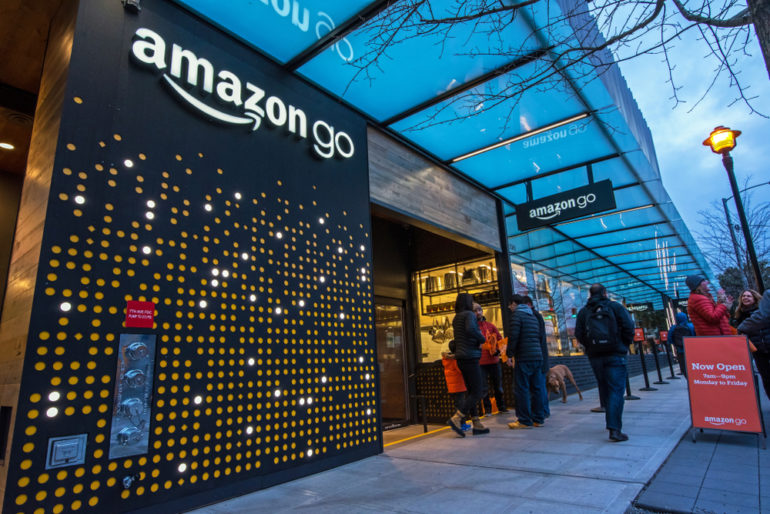
    E-commerce giant Amazon is plotting a new grocery business in the US. The online retail giant is planning to strengthen its supermarket brand by purchasing local grocery chains that operate at least a dozen stores, the report claims.

    The first store is expected to open in Los Angeles by the end of the year, with leases signed for two more locations, set to open by early 2020. The business is in talks to bring the grocery stores to shopping malls in San Francisco, Seattle, Chicago, Washington, D.C. and Philadelphia.

    Amazon, which bought the healthy supermarket chain Whole Foods for $13.7 billion in 2017, had “ambitions in this space” for a long time.

    Amazon’s big rival, Walmart has already been preparing for a battle with the retail giant, the source said. Walmart is introducing grocery pickup at 3,100 stores by next January and will also offer grocery delivery from about 800 more stores by the end of 2019.

  • JD to hire 15,000 new employees

    JD to hire 15,000 new employees

    Chinese e-commerce giant JD has announced it plans to recruit up to 15,000 staff this year – just a week after saying it would let go 10 per cent of its senior executives. The majority of positions expected to be filled this year will be in logistics, with up to 10,000 delivery and low-level management positions being recruited. Other staff will be hired to improve user experiences in the firm’s retail arm.

    JD pledged in its announcement to promote competent staff and offer more leadership training to young people as part of its contribution to society. The firm currently hires around 170,000 full-timers, according to last year’s estimates, and is moving to extend its supply network throughout every one of China’s county-level territories.

    Some 20,000 R&D staff were hired last year in an RMB8.64 billion (US$1.29 billion) investment in technology research.

  • Korean wave fuel 25% growth in Korean e-commerce exports

    Korean wave fuel 25% growth in Korean e-commerce exports

    South Korea’s online exports surged 25 percent in 2018 from a year ago on the back of growing demand for K-beauty and K-pop related items such as album records and stationery supplies, government data showed. According to Korea Customs Service, Korea’s electronic commerce (e-commerce) exports or reverse overseas direct purchase volume reached US$3.25 billion last year, up 25 percent from a year earlier. The total number of online export cases also jumped 36 percent to 9.61 million during the same period.

    E-commerce growth is staggering when compared to the modest 5 percent annual growth in total Korean exports last year.

    The customs agency said that the rapid growth of online exports comes amid growing demand for Korean items on the back of hallyu or Korean Wave, as well as simplified retail procedure, and aggressive overseas marketing integrated with offline stores.

    By item, apparels and cosmetics accounted for 69 percent of total online export. In particular, the number of export cases for clothing surged a whopping 162 percent last year from a year ago, becoming the top pick after beating out cosmetics. Online exports of cosmetics jumped 43 percent last year from a year ago, recovering to average level after falling in 2017 as a result of diplomatic tension between Korea and China over Seoul’s deployment of U.S. anti-missile system.

    The customs agency said that exports of K-pop related items such as albums and stationery items surged significantly last year amid hallyu or Korean Wave overseas. In particular, sales of items related to K-pop icon BTS rose sharply.

    Data from Korea Customs Service, meanwhile, showed that overseas direct purchases of foreign goods amounted to US$2.75 billion last year, up 31 percent from a year ago. There were a total 32.25 million purchases last year, up 37 percent from a year ago.

    By region, the United States accounted for the largest 50.5 percent of Koreans’ direct purchases, followed by China with 26.2 percent, European Union with 12.5 percent, and Japan with 8 percent. The U.S. share fell from the previous year’s 56.4 percent while that of China jumped almost 10 percentage points from the previous year’s 17.3 percent.

  • 8 trends set to shape Southeast Asian e-commerce

    8 trends set to shape Southeast Asian e-commerce

    Southeast Asia’s e-commerce market is set to exceed US$102 billion by 2025, according to a study by Google and Singapore’s Temasek. As more and more consumers are attracted to shopping online for convenience and they build trust in the channel, investors in the e-commerce industry are gaining confidence and seeking opportunities. That helped startups raise and estimated $9.1 billion in the first half of last year, almost as much as for the whole of 2017.

    If last year was dubbed ‘The Year of E-commerce’ for Southeast Asia, what can the industry expect this year? We speak to industry leaders to discover the anticipated trends for online retailers and brands in Southeast Asia.

    1. Brands shift their focus from data gathering to data use

    The biggest differentiator between online and offline retail is the ability to track, collect, monitor, and manage information, all in real time. Through online channels, brands are able to access customer data through chats, social media, and their own websites. This information can be used to devise online strategies. Globally, 73 per cent of brands plan to allocate their e-commerce budget on data and analytics services this year.

    However, despite general agreement of its importance, many brands have no concept of how to use data to their advantage.

    “Even today, not all retailers have embraced data fully to the point where they think of themselves as data companies, and this might be why many companies are suffering,” observes Harvard Business School Professor Srikant M Datar.

    Data collection is easy but having and optimising the analytics capability to use it is a completely different ball game.

    A survey by ecommerceIQ identified data analysis as one of the most difficult skills to find among the digital talents in Southeast Asia. Brands are constantly searching for data aggregators to consolidate information into one place for convenient retrieval and use to target, retarget, and personalise products and services.

    Reagan Chai, head of regional business intelligence and business development at Shopee said that data acquisition enables the company to map out and optimise buyer and seller user experience while pre-empting customer demand and anticipating future potential. The company has seen an increase of website traffic in the past year that even surpasses the other regional players.

    In China, Alibaba and JD have taken this a step further by using the data gathered online to improve inventories and experiences at their physical stores. Alibaba chief marketing officer Chris Tung said the company wants to help brands find the right consumers by tracking them throughout Alibaba’s system.

    “We’re finding all data that has to do with people, their behaviour, what they like, what they buy and binding this online data to real people,” concluded ChrisTung.

    Last year, the region’s leading brand ecommerce enabler, aCommerce, launched a data analytics platform BrandIQ to enhance their capabilities as a data partner to help brands centralise their customer data and offer customised products or services to each target group.

    This leaves brands with two options: find an economical way to use the data or continue looking for a needle in a haystack.

    1. Social-commerce channels are brands’ new sales outlets  

    Social commerce in this region boomed before the rise of e-commerce as we know now. Facebook groups have long established as an online space where people connect to buy and sell goods, even before the launch of Facebook’s Marketplace feature. The rapid growth in Southeast Asia is propelled by the mobile adoption and smartphone, where 90 per cent of the online population access the internet via smartphones. For some, Facebook even defines the internet itself.

    With multitudes of potential customers gathered via social media platforms, brands naturally saw alternative sales channels. Following Facebook’s footsteps, social platforms like Instagram and Pinterest have also developed their own shoppable features.

    “Brands will miss out if they don’t have a social media presence. The best way to get feedback from consumers is by having a direct conversation,” Deb Liu, VP at Facebook Marketplace in an interview with Forbes.

    Line recently acquired social-commerce management startup Sellsuki in Thailand, where it has the second-biggest user base, to build a strong foundation for its e-commerce business. The company has also formed a joint venture with three local banks to offer personalised loans to SMEs.

    A few big brands like L’Oreal have already equipped their social media page with ‘Shop’ feature that allows consumers to purchase the order directly on the page and it is only a matter of time before more brands activate the platforms as one their sales channels and remove another layer between them and the consumers.

    1.  E-marketplaces launch new services to differentiate

    Looking at the successful existing e-commerce players in more developed markets, one thing they have in common is full control over their supply chain.

    JD’s investment to the development of its own supply chain allows it to scale its technology and offer a Retail-as-a-Service proposition to help other retailers or brands sell online. Alibaba is unrivalled for its extensive ecosystem beyond commerce, including its logistics network Cainiao and payment firm Ant Financial, not to mention its recent foray into the entertainment industry.

    The same practice has infiltrated down to Southeast Asia where Alibaba subsidiary Lazada has strengthened its logistics arm FBL (Fulfilled by Lazada) post-acquisition, and although no concrete plans have been disclosed, Shopee has expressed an intention to build its own logistics network.

    More e-marketplaces are coming up with new services to get more sellers onboard. Singapore’s Qoo10 is set to launch its blockchain-based ecommerce site QuuBee this year, using blockchain technology to eliminate the transaction and listing fee which in turn increase the retailers’ profit margin and make a more sustainable commerce approach.

    In Indonesia, Tokopedia is set to offer “Infrastructure-As-a-Service” with a fresh funds injection of $1.1 billion. It also plans to use AI for customer-care services and to run credit checks on merchants seeking loans to expand their businesses.

    Facebook is also showing more intention to jump onto the region’s e-commerce bandwagon. The social network has launched Marketplace feature in Thailand and Singapore without much fanfare, but its recent partnership with Kasikorn Bank in Thailand to allow in-app payments might be the start of the company’s effort to bulk up its commerce capabilities and cater to those that use the platform for their business.

    The practice is not exclusively done by the general e-marketplaces. Fashion e-marketplace Zilingo scored $226 million in funding due to its focus on building a fashion supply chain network that any merchant – small or large – can tap into.

    “It is imperative for us to build products that introduce machine learning and data science effectively to SMEs while also being easy to use, get adopted and scale quickly,” said Zilingo CTO Dhruv Kapoor in an interview with TechCrunch.. “We’re rewiring the entire supply chain with that lens so that we can add most value.”

    In a bid to recruit more brands to sell on their platforms, we anticipate that e-marketplaces will continue to go head-to-head with each other through new services, acquisitions, and partnerships. But are the e-marketplaces ready to burn more cash to win in this battle?

    1. Brands to reinforce reviews and fund user-generated content to win e-commerce consumers

    E-marketplaces in Southeast Asia have been upscaling and building add-ons which provide consumers with the utmost convenience. The search for better technology and assistance for the consumers is constant and never-ending.

    Online consumers begin their online purchasing journeys by searching for product information or reading reviews, usually on e-marketplace platforms, before making their purchase decision. They are looking for real opinions and user-generated reviews to validate the products.

    The habit of leaving product reviews on an e-commerce platform is not as common in Southeast Asia as it is in the US where Amazon even has a dedicated page for its most prolific reviewers. When they do, the reviewers usually left little information about the product and more about the other aspect of the purchase (for example, comments about the delivery time or packaging).

    Platforms like ReviewIQ are used by brands to increase their ratings and reviews engagement on their e-marketplace listings to help consumers make their decision. While the use of chatbots is an increasingly popular solution to help smooth the online customer experience, it is more suitable for generic questions such as “where is my order?” or “is this product available?” instead of personalised questions such as “will this lipstick look good on a yellow-undertone skin?”.

    Community-crowd models like one popular with travel platforms such as Airbnb might also be suitable for e-commerce in the region, to help consumers overcome their apprehension about online shopping. This is something that Edouard Steinert, aCommerce Thailand’s director of channel management, is investigating to help the company’s clients as this model has proved to save time, increase results, and keep costs low.

    “Consumers today want to hear genuine feedback and reviews about a product and they are becoming more averse to hard-sell methods. User-generated reviews, especially from people who share the same passion with them, drive better conversion for the brand,” he adds.

    1. Brands use direct-to-consumer strategies to acquire direct consumer data

    Some 89 per cent of companies are now competing mostly on a customer-experience playing field. The direct-to-consumer (DTC) approach is becoming more important for these brands because it allows them to gain insights into their end users and anticipate their needs.

    One trend observed among brands to promote DTC is e-commerce subscriptions. From a consumer perspective, subscriptions offer a convenient, personalised, and often cheaper way to buy what they need. For brands, it is a subtle method to create customer loyalty in the digital landscape.

    One brand adopting subscription e-commerce in the region is Nescafe Dolce Gusto, which offers free coffee machines in exchange for a minimum 12-month subscription of coffee. Besides witnessing sales growth, Nescafe Dolce Gusto also noticed that consumers continued to purchase goods from its brand despite dropping out of the subscription plan.

    “They may have dropped out of the subscription, but not the brand,” says Bhuree Ackarapolpanich, brand director & digital expert at Nescafe Dolce Gusto. “They still buy capsules from different channels: e-commerce websites, online marketplaces and supermarkets. A subscription strategy is not just a long-term consumption enabler but also a consumer acquisition channel for the whole brand,” he says.

    Acommerce’s regional director of project management, Mandy Arbilo said e-sampling is a popular strategy used by brands to evaluate demand, especially for e-commerce.

    While normal sampling techniques used by offline retailers are expensive, e-sampling saves brands up to 40 per cent as well as providing essential customer data.

    As DTC becomes widely adopted, consumers will see brands coming up with attractive gimmicks using digital tools to gain insights and entice consumers to spend more on their brands.

    1. This year will finally see regulation of e-commerce across the region

    E-commerce has remained largely unregulated across the region until now, but as the industry grows, it is only a matter of time until governments step in to tax this fast-growing segment, levelling the playing field for foreign companies to offer digital services and goods locally.

    Discussion of the implementation of e-commerce tax regulations in Southeast Asian countries has been noticeable since the beginning of last year but nothing concrete has yet materialised.

    Late last year, economic ministers from ASEAN signed an agreement to facilitate cross-border e-commerce transactions within the region.

    While nothing has yet been written in stone, predictions abound concerning the impacts of an e-commerce tax on goods imported into the region. In Indonesia and Thailand, e-commerce tax is predicted to bolster the growth of social commerce because, unlike marketplaces, they are uncontrolled.

    “If tax regulations restrict e-commerce platforms, making selling in Bukalapak complicated, there will be an exodus of people who prefer selling on Instagram and Facebook,” said Bukalapak co-founder and CFO Muhamad Fajrin Rasyid. “These platforms are uncontrolled and not chased for tax because they sell through the back door.”

    Singapore might also see a decrease in cross-border shopping as prices increase with the introduction of GST)on goods and services bought online from overseas. Currently, 89 per cent of all cross-border transactions in Asia Pacific are conducted by Singaporeans.

    Another e-commerce market with strong potential, India is to introduce new e-marketplace laws that indicate the prohibition of marketplace “owners” to sell products on their own marketplace through vendor entities in which they have an equity interest. It also prevents marketplaces from making deals with sellers that grant the marketplace exclusive rights to the product. Could we see such laws be applied in Southeast Asia?

    Regardless, brands will have very little influence on how the new tax policies take root but they will be behoven to anticipate the ruling and adjust online strategy accordingly to mitigate the impact of a shift in customer behaviour. This ASEAN agreement will encourage more local entrepreneurs to create new products and venture online to access a larger and more diverse market. Brands will now need to be nimble and innovative to adapt to local nuances and preferences.

    1. Grab and Go-Jek challenge logistics providers to capture e-commerce and online food delivery

    Since Uber’s Southeast Asian exit last March, Grab has inherited a monopoly in countries like Thailand, the Philippines and Malaysia, leading to complaints about falling service standards and increasing prices.

    But with the recent regional expansion of Indonesia’s Go-Jek, the competition between the two will only get more fierce. Go-Jek has successfully carved niches in Vietnam, Singapore and Thailand last year alone. In addition, Grab’s competitor in Malaysia, Dacsee, has also hinted at  expanding into Thailand.

    Neither company is racing to be the best ride-hailing provider; they are aiming for something much bigger: superapps. Go-Jek has secured $1 billion in funds from Google, Tencent and JD, already halfway towards its goal of raising $2 billion for the venture. Meanwhile, Grab recently secured a $200 million investment from Thailand’s Central Group, boosting its valuation to $11 billion to date.

    This year, these two competitors will steer towards the same goal of food and e-commerce delivery, which Google and Temasek predicts will grow 73 per cent on a CAGR basis this year. By 2025, they predict online food delivery growth of 36 per cent CAGR with online transport only growing by only 23 per cent.

    “We will be expanding our GrabFood and delivery business and deepening our relationships with restaurant merchants and key partners in some markets,” said Grab’s head of regional operations Russell Cohen.

    Same-day delivery providers can expect more competition during the next year. The impact of Grab and Go-Jek on market vibes will definitely raise the bar for the logistics and delivery sector.

    1. Brands and retailers will double down on omnichannel as Southeast Asians prefer pure-play e-commerce

    The omnichannel shopping experience is not a new concept, but companies do have diverse interpretations of the concept. Headlines reveal that online retail behemoths such as Amazon and Alibaba are moving into physical retail.

    Alibaba’s decision to venture offline reflects its determination to solve core problems of the shopping experience, such as scattered operations and lack of payment transparency.

    JD, meanwhile, pipped Alibaba in Indonesia by opening the first unmanned convenience store in the region. Its goal was to use and refine its enormous database by offering beneficial insights to brands such as the best products to stock and advertise. Through their joint venture with Central Group in Thailand, JD Central is planning a similar concept there this year.

    Pure-play e-commerce retailers and brands recognise drawbacks in online marketing channels with fragmented infrastructure and a limited pool of shoppers. That is why they began to promote offline as an attractive option to push sales growth.

    Elsewhere in Southeast Asia, companies are slowly but surely adopting this strategy across all categories. E-commerce fashion players like Thailand’s Pomelo and Singapore’s Love, Bonito have opened physical stores in their respective countries.

    Last year, Pomelo opened five new outlets, initially away from Bangkok’s prime shopping areas before moving into CBD locations like Asoke and residential areas like Bangna, once it refined the model. Love, Bonito has 17 retail outlets spread across Singapore, Malaysia, Indonesia and Cambodia.

    Rachel Lim, co-founder of Love, Bonito said, “Data can tell you what’s selling but being on the ground tells you why something is not selling and what the customer is looking for.”

    Visiting shopping malls is a popular social activity in Southeast Asia and this trend is not set to disappear anytime soon.

    Brands should take advantage of dual physical and online presence.

  • Western Union Debuts New Payment Option for Amazon

    Western Union Debuts New Payment Option for Amazon

    Cross-border, cross-currency money-movement firm Western Union has unveiled a new payment option that allows Amazon customers in Hong Kong and other Asian markets to pay in local currency for their purchases. The service is being offered initially in 10 countries – Chile, Colombia, Hong Kong, Indonesia, Kenya, Malaysia, Peru, the Philippines, Taiwan and Thailand – enabling customers who prefer to pay in cash to shop Amazon.com’s vast product selection.

    The new platform is called Amazon PayCode, which processes the complex foreign exchange, settlement and money movement requirements for international e-commerce transactions. After selecting PayCode on the Amazon.com checkout page, customers will be sent a code along with instructions on how to pay in person at a participating Western Union agent location.

    The move by Western Union and Amazon will provide greater access to online goods for customers who have largely been excluded from e-commerce shopping due to lack of accepted payment methods.

    “We’re helping to unlock access to Amazon.com for customers who need and want items that can only be found online in many parts of the world,” said Khalid Fellahi, SVP and GM of Western Union Digital.

    “This is a great example of two global brands innovating and collaborating to bring customers more convenience and choice. In a world where cross-border buyers and sellers are often located on different continents and in completely different financial ecosystems, our platform is ideally suited to solving the complexity of collecting local currency and converting it into whatever currency merchants need on the other end.”

    “Amazon is committed to enabling customers anywhere in the world to shop on Amazon.com, and a big part of that is to allow customers to pay for their cross-border online purchases in a way that is most convenient for them,” said Ben Volk, director of payment acceptance and experience at Amazon. “Amazon PayCode leverages the reach of Western Union to make cross-border online shopping a reliable and convenient experience for customers who do not have access to international credit cards, or prefer to pay in cash.”

  • Tencent-backed AI startup checks students’ math homework

    Tencent-backed AI startup checks students’ math homework

    In China, there is a big culture of ‘practice makes perfect’. As such, school homework is a battlefield not only for Chinese children, but also for their parents, and teachers, who have the task of reviewing assignments. Technology is increasingly lending a helping hand, though, and now, a Beijing-based online education startup has developed an artificial intelligence-powered math app that can check children’s arithmetic problems through a simple snap of a photo. Based on the image and its internal database, the app automatically checks whether the answers are right or wrong.

    Known as Xiaoyuan Kousuan, the free app launched by the Tencent Holdings-backed online education firm, has gained increasing popularity in China since its launch a year ago. It claims to have checked an average of 70 million arithmetic problems per day, saving users around 40,000 hours of time in total.

    Yuanfudao is also trying to build the country’s biggest education-related database generated from the everyday experiences of real students. Using this, the six-year-old company, which has a long line of big-name investors, including Warburg Pincus, IDG Capital, and Matrix Partners China, aims to reinvent how children are taught in China.

    “By checking nearly 100 million problems every day, we have developed a deep understanding of the kind of mistakes students make when facing certain problems,” said Li Xin, co-founder of Yuanfudao (which means “ape tutor” in Chinese) in a recent interview. “The data gathered through the app can serve as a pillar for us to provide better online education courses.”

    Yuanfudao is China’s second largest online education unicorn by valuation, according to CB Insights. It is behind VipKid, which uses an online platform to connect Chinese students with North America-based teachers to learn English via livestreaming.

    Yuanfudao’s flagship app covers different subjects including math, English, and chemistry. Li said the firm has built a database with student answers to 6 billion questions. He said this know-how has enabled Yuanfudao to better analyze individual students, helping it towards the ultimate goal of providing tailor-made courses and homework.

    Li said the company’s aim is to “dramatically improve education efficiency in China.”

    “Giving different homework to different students even if they study in the same class is even more difficult than providing different news to different readers based on their individual interests and tastes,” said Li. “What we do requires a more accurate profiling of students.”

    Li said that the company’s flagship online tutoring app can produce a basic profile of a student’s strengths and weaknesses based on their answers to three to five questions.

    Founded in 2012, Yuanfudao, which has 200 million users (2 million of whom are paid users) bagged US$300 million in a round of funding in late December, valuing the company at more than US$3 billion. The Chinese online education market is hot, attracting increased interest from technology giants such as Tencent, Baidu, and NetEase in recent years.

    “We don’t really need money, but investors insist […] [on offering more funds]. We still had US$100 million in our bank account before landing this round,” said Li. He said the company was immune to the so-called tech winter, which has seen the venture capital pool almost dry up in China recently.

    Despite a recent slowing of China’s economy, the country’s online education market – covering children from kindergarten age to high school – is set to triple to 150 billion yuan (US$22.33 billion) by 2022, according to data from iResearch, fueled by ambitious “tiger” parents who are prepared to invest heavily in their children’s after-school education.

    Li said it was not his intention to make children work harder.

    “We don’t want children to drown in a sea of homework,” he said. “In the old days, you needed to put in lots of work and practice to stand out. But now technology can make a change.”

    Using AI technologies, the company has already made it possible to recommend different courses to students based on their individual progress on a certain subject. Li said the company can even help to close the educational gap between developed and underdeveloped regions in China through a deep analysis of students’ homework.

    The company has another popular homework assistant app, Xiaoyuan Souti, which uses similar image recognition technology to find answers to student questions across a range of subjects, guiding them through the steps needed to solve particular problems.

    “Through the app, we know exactly what kind of questions teachers in Shanghai assign as homework to students,” Li said. “By collecting the information and studying it, we can enable students in the rest of China to have access to Shanghai’s education resources, in the long run [providing] a fair education environment for all children.”

    “At the end of the day, the only thing that matters in education is one’s curiosity and cognitive ability,” he said.

  • Shinsegae to launch SSG.com as separate unit

    Shinsegae to launch SSG.com as separate unit

    Shinsegae Group will launch a brand new entity that specializes in e-commerce next month in an effort to become Korea’s answer to Amazon. Titled SSG.com, Choi Woo-jung, vice president of Shinsegae’s e-commerce division, will be the CEO. “[Through the new entity], we hope to maintain the existing SSG.com brand and maximize brand power by raising [people’s] awareness of our professionality in the online market,” the company said in a statement.

    The latest move reflects Shinsegae’s ambition to become the country’s top e-commerce company by gathering its scattered online businesses.

    Shinsegae Group in December spun off Emart Mall and Shinsegae Mall from Emart and Shinsegae. The board of directors in January voted to merge the two new entities.

    It has already been running SSG.com as an e-commerce website that offers access to its various online malls, but it is currently only a customer-facing interface, not a company in its own right.

    SSG.com’s sales goal for this year is 3.1 trillion won ($2.8 billion), which is 29.1 percent higher than the sales recorded by the online platform last year.

    The company hopes to reach its ambition through aggressive marketing, especially on raising the efficiency of delivery services.

    It will make a heavy investment on raising the delivery speed by establishing an additional distribution center in Gimpo, Gyeonggi. It will be the third distribution center, and is scheduled to open in the second half of this year.

    “With the official launch of SSG.com, we are getting ready to become the country’s top e-commerce enterprise,” said Choi in a statement.

    “Instead of just selling goods online, we are also planning to function as a ‘Linker’ by connecting consumers online and offline like [offering them the platform to] share their lifestyles on the internet.”

  • ViSenze AI technology helps people shop on Samsung phones

    ViSenze AI technology helps people shop on Samsung phones

    Visual commerce AI firm ViSenze has partnered with Samsung to help users easily discover and purchase products using the Shopping by Bixby Vision app on the electronics firm’s mobile devices. The partnership employs ViSenze’s automated visual-commerce technology and visual-search capabilities customised to consumers’ personalised shopping demands.

    “Consumers are exposed to countless products in their everyday lives that inspire and empower them to explore new trends,” said ViSenze CEO Oliver Tan. “Samsung is one of the first major companies to capitalise on this, recognising how essential it is to ensure the path from discovery to purchase is effortless.

    “At ViSenze, we work globally with some of the largest brands and retailers. Coupling this knowledge with our market-leading visual commerce technology, we are able to provide our partners with the insights and capabilities they need to find success with visual search and the commerce it’s driving each day.”

    According to material released by the brand, “Visual commerce solutions enable mobile shoppers to seize inspirational moments instantaneously by enabling them to find the same or visually similar products directly on their devices from top retailers such as Rakuten, Urban Outfitters and Zalora.”

    “Thanks to ViSenze, customers in this region can now take mobile shopping to new heights via Shopping by Bixby Vision, which makes shopping easier than ever, via your camera,” said head of mobile services & partnerships for Samsung Southeast Asia & Oceania Christopher Tarr.

    “From inspiration to instant gratification – it is that simple.”

  • Foreign e-tailers must have registered entity in India: Draft policy

    Foreign e-tailers must have registered entity in India: Draft policy

    E-commerce sites or apps available for download in India must have a registered business entity in the country, according to latest draft e-commerce policy, which also proposes regulation of cross-border flow of data collected by sector players in India.

    According to analysts, the move to make it mandatory for foreign online retailers to register entities in India follows the relatively recent spread and expansion in the country of Chinese e-commerce platforms which do not have an Indian presence.

    These include Chinese portals such as Shein, Romwe and AliExpress and the proposed registration norms come after complaints made to the government by traders’ bodies like the All India Online Vendor Association about Chinese online operators shipping cheaper products to Indian customers as gifts in order to avoid customs duty.

    As per the proposed norms, all foreign e-commerce sites must have a registered business entity in India as the importer on record or as the entity through which all sales in India are transacted.

    The draft policy has also proposed a ban on all parcels designated as gifts, with the exception of life-saving drugs.

    Moreover, as per the draft policy, all data collected by e-tailers in India and stored abroad should not be made available to other business entities outside the country, for any purpose, even with customer consent.

    However, the government will have the right to access the data of Indian consumers stored abroad.

    Restrictions on cross-border flows of data would not apply to data which is not collected in India, business-to-business (B2B) data sent to India as part of a commercial contract between a business entity located outside India and an Indian business entity.

    Software and cloud computing services involving technology-related data flows, which have no personal or community implications and multi-national companies, moving data across borders, which is largely internal to the company and its ecosystem, would not have to follow the regulations.

    New foreign direct investment (FDI) norms, which prohibit the e-tailers from selling products of companies in which they have stakes, came into effect on February 1 despite both Amazon and Walmart seeking a six-month delay in their implementation.

    The second e-commerce draft policy has been welcomed by sector players like Snapdeal and trader associations such as the Confederation of All India Traders (CAIT).

    Snapdeal said the draft policy’s rejection of inventory based e-commerce must be followed by effective implementation of FDI norms to ensure marketplaces do not own or control inventory, directly or indirectly.

    “The recognition of data as a strategic national asset is well-timed and will lead to the development of required regulation in this regard,” a Snapdeal spokesperson said.

    US giants Amazon and Walmart, which recently acquired a 77 percent majority stake in the Indian e-retail major Flipkart, said they are reviewing the draft e-commerce policy and will share their inputs on the proposals in course of time.

    Amazon has been forced to remove an array of products from its India website in order to comply with the new FDI regulations in e-commerce.

  • Amazon to train Vietnamese small firms in e-commerce

    Amazon to train Vietnamese small firms in e-commerce

    Amazon will train 100 Vietnamese businesses to develop their business on its platform. According to the Department of Trade Promotion, Amazon Global Selling will identify 100 small and medium-sized enterprises (SMEs) for its “Supporting Vietnamese enterprises to boost exports via Amazon” program. It will train the businesses in promoting exports and build brands through its website.

    According to Amazon Global Selling, the program will support businesses with comprehensive export solutions and logistics infrastructure, its 175 fulfillment centers and presence in 185 countries.

    “In the context of evolving global markets, Vietnam has more than 700,000 businesses, of which 98 percent are SMEs, so in addition to traditional trade promotion methods such as going to international trade fairs, promoting e-commerce is extremely necessary,” Vu Ba Phu, head of the department, said.

    Bernard Tay, director of Amazon Global Selling in Southeast Asia, said his company chose Vietnam to run this program because it sees great potential for development, especially with the entrepreneurial spirit of Vietnamese youth.

    “Vietnamese businesses are well known for their top production capabilities. When combined with our worldwide resources, it will create conditions for them to develop and build brands in the international market.”

    But he said they need to adapt to global product trends, improve their proficiency in foreign languages and brand building expertise to derive the most from the e-commerce platform.

    Vietnam’s e-commerce value climbed to about $4 billion in 2016, becoming one of the fastest-growing markets in the world.

    Revenue from online retail in the country is forecast to hit $10 billion by 2020, accounting for five percent of the country’s retail market.