Tag: ecommerce

  • ‘Astonishing growth’ for Chinese FMCG market

    ‘Astonishing growth’ for Chinese FMCG market

    The Chinese FMCG market online has shown “astonishing growth” according to a report by global consulting firm OC&C Strategy Consultants.

    In 2010, the market was worth just US$1.4 billion – today it has exceeded $25.3 billion according to data from Euromonitor. It has far surpassed any other country in the world and is about twice as big as the US.

    But while large, FMCG still has a relatively lower online penetration than other categories in China, providing ample opportunities going forward especially given favourable tailwinds, believes OC&C.

    The report Bits & Bytes: FMCG’s shift to eCommerce in China aims to help FMCG brands understand eCommerce trends in China and thus to derive the best strategy for their target segments in the market.

    “The post-80s and 90s generation in China, who grew up with the internet, are coming of age and entering the workforce, forming families and increasing their need for FMCG. It is unquestionable that they will become an important customer segment and driving overall growth of FMCG eCommerce,” comments the report.

    “Moreover, growth is not only coming from the younger generations. In fact, more people aged between 30 and 50 intend to devote more of their FMCG spending to online channels next six months (Figure 1), suggesting the universality of growth of FMCG eCommerce.

    Figure 1

    “Price and convenience related factors are consistently placed as the top reasons for buying FMCG online in China. Growing middle class want to save money on everyday consumables so they can use these savings towards a better lifestyle including for dining out or buying international fashion brands,” said Jack Chuang, Hong Kong-based partner, Greater China, OC&C Strategy Consultants.

    He says consumers’ need for convenience is fuelling the demand to buy FMCG online anywhere, anytime.

    “All these are favourably fulfilled in China given the rapid development in infrastructure and logistics across the country, with leaps and bounds in both intra-country movement of goods as well as last-mile delivery to consumers. These make online shopping of FMCG easy, inexpensive and fast,” said Chuang.

    When respondents were asked to rate various eCommerce platforms based on their experience, Alibaba’s platforms were neither the most highly rated, nor are they frequently ranked among the top five across selected FMCG categories.

    Figure 2

    However, interestingly, when the survey asked about brand awareness and actual purchases, Tmall and Taobao, under Alibaba, received highest brand awareness and shopper penetration across the major FMCG categories explaining Alibaba’s dominating market share.

    Figure 3

    A third of survey respondents ranked ‘familiarity’ as being the key reason on why they rely so much on a particular online platform. Beyond benefiting from being an early entrant, Alibaba is also able to provide competitive prices, a convenient one-stop shopping destination, as well as a ubiquitous payment system.

    Figure 4

    “Online platforms in China are always fighting for customer traffic and market share, yet consumers often perceive buying on Alibaba a bargain, thanks to its promotions,” added Chuang. “Selling online in China is rewarding yet not easy. Brands can benefit and achieve their online objective through partnering with strategically-aligned platforms and by customising their offerings to cater to various needs of different market segments. In addition, brands need to figure out the level of control and capability which an online store demands, so as to determine whether to establish in-house operations or to rely solely on platforms. Choosing the right model and strategy can definitely make it much more effective.”

    Though Alibaba’s dominance remains undeniable, the online FMCG market is relatively more fragmented than retail in general. Alibaba commands a 52 per cent share in FMCG as compared to 70 per cent of the overall online retail market.

    “Just as you would not depend entirely on one particular store format (e.g. hypermarkets or mom-and-pop stores) as you formulate your offline channel strategy, the same applies to online whereby brands should leverage each platform’s unique strengths, be it its large traffic flow, strong authenticity and quality, more personalised customer service, etc.,” commented, Chuang.

    “At the same time, companies should treat eCommerce not only as a sales channel but also as a platform to build their brand. For example, premium players can build brand awareness to a wide audience by opening a flagship store, while other companies who lacks physical presence in China, can use cross-border platforms to ‘test the water’ prior to their full market entrance. They should also integrate offline and online channels to create a win-win proposition, either through leveraging existing offline infrastructures, such as distributor networks, to facilitate online sales; they may also consider using e-commerce to facilitate offline strategies,” concluded Chuang.

    The study canvassed 4600 respondents from 16 cities across China, looking into 13 selected sub-categories across infant milk formula, packaged food and soft drinks, alcoholic beverages, and beauty and personal care, from August to September 2016.


  • Yaok offers online service for luxury boutiques

    Yaok offers online service for luxury boutiques

    Chinese company Yaok has built an online reservation service for offline brand boutiques to tackle the online/offline conflict.

    It is the result of 10 years of market research the preparation, including five years of in-depth communication with more than 100 luxury brands.

    Founder/CEO Steven Yao says that many luxury brands, including Chanel and Dior, have realised the importance of the internet, but while finding online partners still have concerns about brand image.

    “Everyone is looking for an online solution, especially one that’s appealing to Chinese consumers,” he says. “Unfortunately, current Chinese online players can’t fulfill luxury-brand needs because of false brand perception, unfit target audience, and lack of control on product authenticity.

    “Some chose to set up their own eCommerce platforms, but found it difficult to attract traffic with one single brand.”

    Through Yaok, a brand can have its own official reservation platform, giving it absolute control in managing its image, product inventory, order status and customer database. It also allows instant communication between brand and customer.

    According to the China’s Fortune Character Institute, 73 per cent of Chinese consumers have a shopping list before overseas travel, 45 per cent of which cannot be fulfilled because of such factors as lack of desired size or model, resulting in loss of sales and unsatisfying customer experiences.

    Agreements in place

    Yaok lets customers reserve products in advance and have VIP services in store. Already the company has global or regional collaboration agreements with most international luxury brands.

    Yao says that when the platform officially launches at the end of next month, products from 80 per cent of luxury brands will be available. Users will be able to make VIP reservations in nine countries and regions.

    He estimates that 500,000 shoppers, all with a net wealth exceeding $2 million, will use Yaok to buy luxury goods globally. Its prestige service is either by invitation only or for current brand VIPs. Applications can be submitted via Yaok app or WeChat, but acceptance is not guaranteed.

    Yaok has completed two rounds of fundraising, with Feng Ye as angel investor.

    Yao was the first CEO for the Hurun Report, the magazine known for its “China Rich List”. Other core Yaok members have also worked in brand houses like Giorgio Armani or Louis Vuitton for more than 10 years.

    Yaok is affiliated to the Fortune Character group, founded in 2008, which specialises in researching the luxury market.

  • Retailers get boost with halal e-market

    Retailers get boost with halal e-market

    With nearly 60 merchants on board, including 55 SMEs, the launch of Aladdin Street gels with the Government’s push for retail firms to use e-commerce to reach out to more customers.

    The platform, which will eventually have offices in 30 countries, aims to promote halal products as a healthy, premium option even for non-Muslims.

    Aladdin Group, the company behind the e-marketplace, is headquartered in Kuala Lumpur, Malaysia.

    The businesses were screened for quality and compliance with halal standards by an in-house team, and operate in industries that range from food and beverage to cosmetics to fashion.

    Aladdin Group co-founder Sheikh Muszaphar Shukor cited a “growing acceptance” of the health benefits of halal products even in non-Muslim countries.

    But a lack of reliable marketing platforms means only a fraction of the demand can be met, he said.

    Noting that Singapore is one of the largest importers of halal products, he said: “Given the country’s good track record in governance and high standards of halal compliance, Aladdinstreet.com.sg will help these SMEs access this market to its fullest potential.”

    Ms Jacinta Ong, 40, who founded tea retailer Tea Ideas, sells her products through a blogshop and at roadshows in malls.

    She has not set up a permanent stall because of the high rental and manpower costs.

    “I think the right way forward is going online and collaborating with other retailers to harness demand in the halal market,” she said.

    Vielkaline founder Gavyn Lim, 38, said the platform would help him target big halal markets such as the Middle East.

    The firm sells alkaline ionised mineral water.

    “The entry barrier to putting my products up for sale at supermarkets is too high,” he said. “It is a lot cheaper to put them online.”

    The Singapore Chinese Chamber of Commerce and Industry (SCCCI) said yesterday that it is stepping up efforts to help local SMEs innovate and digitise their businesses.

    Last year, it took SMEs to Beijing and Shenzhen to learn about e-commerce business models in these Chinese cities and how they could penetrate the China market.

    This month, SCCCI organised a trip to Silicon Valley in the United States so SMEs could engage with businesses there to explore potential collaborations.

    It said it would continue to work with government agencies to help SMEs identify suitable partners to support innovation efforts.

  • Industry risks startup bubble

    Industry risks startup bubble

    Kaskus co-founder Ken Dean Lawadinata has broken his silence after marching out of one of Indonesia’s most prominent technology platforms, citing higher “risk” in the industry and even “a little bit of a bubble”.

    “I think right now the IT market is in a bit of a bubble in Indonesia, with everyone asking ridiculous valuations without any signs of profit in the near future,” local media quoted the 30-year-old, who brought Kaskus to fame in 2008 with his cousin Andrew Darwis.

    This — just days after Go-Jek co-founder Michaelangelo Moran also announced he had quit his popular company — has generated concerns over the state of Indonesia’s young and thriving startups, companies that have seen many investments flow in with little details and no guarantees about their revenues and profitability.

    “There is a marginal bubble forming because of the involvement of foreign investors, hence the global nature of the industry’s fears,” says Naveen Menon, head of communications, media and technology practice at A.T. Kearney.

    Foreign investors are flocking into startups operating in the country, with the biggest funding ever for a local startup rounded up by Go-Jek in August worth US$550 million from American private equity firms KKR and Warburg Pincus.

    “Indonesia’s startup scene is starting to look crowded, but compared to other markets such as India or the USA, it’s relatively small and still generating huge interest among investors,” he added.

    There are over 2,000 startups in Indonesia, most of which are valued at less than $10 million, according to a Google-Temasek report. The middle-income segment of the country is flourishing and internet users are expected to double by 2020 from over 100 million users at present, the world’s fifth largest figure.

    Even if startup investors are running higher risks, Naveen explained that it was very common for them to invest in unprofitable companies due to a scale effect, or a network effect.

    “Basically, investors in the startup system are giving up short-term gains for massive long-term gains. They just need one of their invested startups to become successful in order for them to say that they have succeeded,” he said.

    Startups and venture capitalists (VCs) have told that they see no bubble bursting in the near future as they are banking on the growth potential of the young industry.

    “I would see it not as a bubble, but more of a challenge of market and price adjustment,” said Sebastian Togelang, founding partner of Kejora, a local VC firm that focuses on building companies.

    The technology industry is well prepared to prevent bubbles from bursting because of lessons learned from the 2000 dotcom bubble burst, when tech firms in developed countries crashed and burned after going public based on unrealistic valuations, he said.

    “Everyone is being cautious and that’s a good thing for both parties,” Sebastian added.

    These days, fewer tech companies are going for initial public offerings (IPOs) and when they do, it takes more time and more maturity to do so, according to data from McKinsey Indonesia.

    Over 50 companies in the US are targeting IPOs in 2014, versus 371 in 1999, while median years to IPO stood at 11 years in 2014 from four years in 1999. In terms of networks, there are now 14 billion connected devices worldwide from half a billion in 1999.

    Metra Digital Innovation (MDI) Ventures CEO Nicko Widjaja said Indonesia was far from a bubble because many startups were funded by corporate ventures with big scales that had yet to reach their optimum levels.

    Local corporate ventures into the digital startup sector include those operated by Bank Mandiri and Bank Sinarmas, along with Telkom Indonesia’s Indigo Accelerator program, which Nicko and MDI are aligned with.

    The concerns over a bubble burst in the tech scene may have emerged in the first place because of a perceived “winter” for venture capital in Indonesia. For almost a year, fundraising has been more difficult due to a more cautious approach taken by both investors and startups in seeking profitability, VCs said.

    Startups admit that their focus is indeed on growth and eventual profitability, but the main aspect of their operations revolves around the effects of their business in changing the way people shop, travel, transact and use a wide range of services online.

    “From the start, one of our main focuses has always been on growth,” Go-Jek’s chief marketing officer Piotr Jakubowski said, admitting that satisfying investor returns on investment remained a “process”.

    “Our best takeaway is the fact that we continue to inspire new businesses and we are also innovating and growing in a way that’s beneficial for consumers.”

    E-commerce firm Blibli.com is of the view that the startup scene will continue to grow so long as enterprises serve to benefit the public.

    “In the end, it’s about educating the market, especially in e-commerce, which is something relatively new. It’s teaching people to try online shopping,” Blibli.com senior marketing manager Deny Agsana said.

  • Walmart makes another big move in China

    Walmart makes another big move in China

    Walmart has made another big e-commerce investment in China.
    On the heels of launching three major e-commerce initiatives in China, Walmart will invest $50 million in New Dada — China’s largest local on-demand logistics and grocery online-to-offline (O2O) e-commerce platform.
    Walmart’s newest investment further extends its agreement with JD.com, which uses New Dada’s network to offer customers two-hour delivery on groceries ordered from Walmart stores through the JD Daojia Dada app.
    New Dada, an independent joint venture between Walmart’s Chinese partner JD.com and Dada, has more than 25 million registered customers. Providing local on-demand delivery capabilities with 2.5 million crowd-sourced deliverers across more than 300 cities in China, this new service complements the 426 stores that Walmart operates in nearly 170 cities.
    Overall, Walmart’s investment in New Dada will help the retailer target Chinese shoppers with faster delivery times in a popular, fiercely competitive online grocery market, according to a company statement.
    “All around the world, we’re creating seamless shopping experiences that bring together our stores, sites and apps to make shopping faster and easier,” said Walmart CEO Doug McMillon. “Our alliance with JD and cooperation with New Dada will enable seamless shopping to millions of customers across China.”
    Specifically, the business partners expect the combination of New Dada’s delivery network with Walmart stores to give “consumers convenient access to a wide range of high-quality goods delivered to their homes and offices in record time,” said Philip Kuai, CEO of New Dada. “We look forward to deepening our cooperation with Walmart as China’s O2O retail industry continues to evolve and grow.”
    Walmart’s next move is to double the number of its stores that offer two-hour delivery by the end of the year, the statement said.
  • Lenovo launches transit app in China

    Lenovo launches transit app in China

    Lenovo has commercially launched its transit application in China with the electronic payment and settlement service provider BMAC (Beijing Municipal Administration and Communications Card).

    The service is supported  on Lenovo X3 smartphones driven by the eSE PEARL by OT (Oberthur Technologies).

    Thanks to OT’s NFC embedded Secure Element, end-users can now use their Lenovo X3 smartphone to install the Beijing Municipal Administration Traffic Card in their Lenovo Transit application and commute simply by waving their phone in front of contactless transit terminals.

    PEARL by OT is described as  the most advanced embedded Secure Element on the market, offering a yet unattained level of security and the largest memory on the market. It allows easy deployment of secure mobile contactless payment, transit, governmental and automotive applications, as well as secure access to online services for enterprise and consumer markets.

    In addition to its eSE, OT provides its Key Management System to Lenovo to manage security domains on the eSE in which partners can securely load, install and run their applications.

    Via its China Secure Hub, a platform used to connect handset makers and their partners in different cities in China, OT also securely ensures the connectivity between Lenovo and BMAC’s TSM provider, Beijing eNFC science and technology.

    “China is often at the forefront of new technologies and we are happy to offer Lenovo users with a convenient, secure and easy-to-use way of commuting with the BMAC application” said Viken Gazarian, deputy managing director of the connected device makers business at OT.

    “PEARL by OT is the best eSE on the market to address the fragmented market of transport systems throughout the world and is the sole component to support international as well as Chinese transit technologies,” said Gazarian.

  • Local e-commerce not fazed by Alibaba expansion plan

    Local e-commerce not fazed by Alibaba expansion plan

    Local e-commerce company Bukalapak is not worried about Chinese giant Alibaba’s plan to expand into Indonesia as local players can still compete with foreign ones, the company’s co-founder said.

    Bukalapak co-founder and chief financial officer Muhammad Fajrin Rasyid said that unlike social media, which adopted a general model for their users worldwide, e-commerce business models needed a so-called “local touch”. This was because customers’ preferences for goods, methods of payment and logistic systems were different in each country, he went on.

    “Our customers mainly buy ‘local goods’ such as sambal [traditional hot relish] and they prefer to use cash on delivery as a method of payment. We must understand things like this,” Fajrin said at a Centre for Strategic and International Studies (CSIS) seminar on the digital economy in Jakarta on Monday.

    He further said that some foreign e-commerce companies had fallen victim to their own poor understanding of local customs. Japanese online market Rakuten Belanja Online closed in March while German-backed online delivery service Foodpanda Indonesia was shuttered on Oct. 3.

    “We are sure our customer to customer [C2C] model is still suitable for Indonesia. We have 1 million sellers and our mobile apps have the highest rate by users compared to other e-commerce companies,” Fajrin said.

    During the event, Investment Coordinating Board (BKPM) deputy of investment planning Tamba Parulian Hutapea confirmed that Chinese tech giant Alibaba would enter the Indonesian market soon. The company has bought German e-commerce company Lazada and plans to use the latter’s resources in Indonesia to make entry into its market.

  • Timberland Asia launches online

    Timberland Asia launches online

    Footwear and apparel brand Timberland Asia has partnered SP eCommerce, a Singapore Post company, to launch its official eCommerce store for the Southeast Asian region.

    The Singapore-based online store uses SP eCommerce’s security, management, digital marketing, store operations and customer-care technology. Order fulfillment is being handled across Singapore through SingPost’s last-mile distribution network.

    This gives Timberland the ability to deliver a seamless shopping experience, with exclusive online promotions as well as its full retail catalog.

    “This is a natural next step for Timberland,” says Malaysia/Singapore GM Daisy Tan of Timberland owner VF Corporation. “Working with one partner for the entire shop-to-ship process lets us focus our attention on serving our customers and growing our business.”

  • Lazada stays online

    Lazada stays online

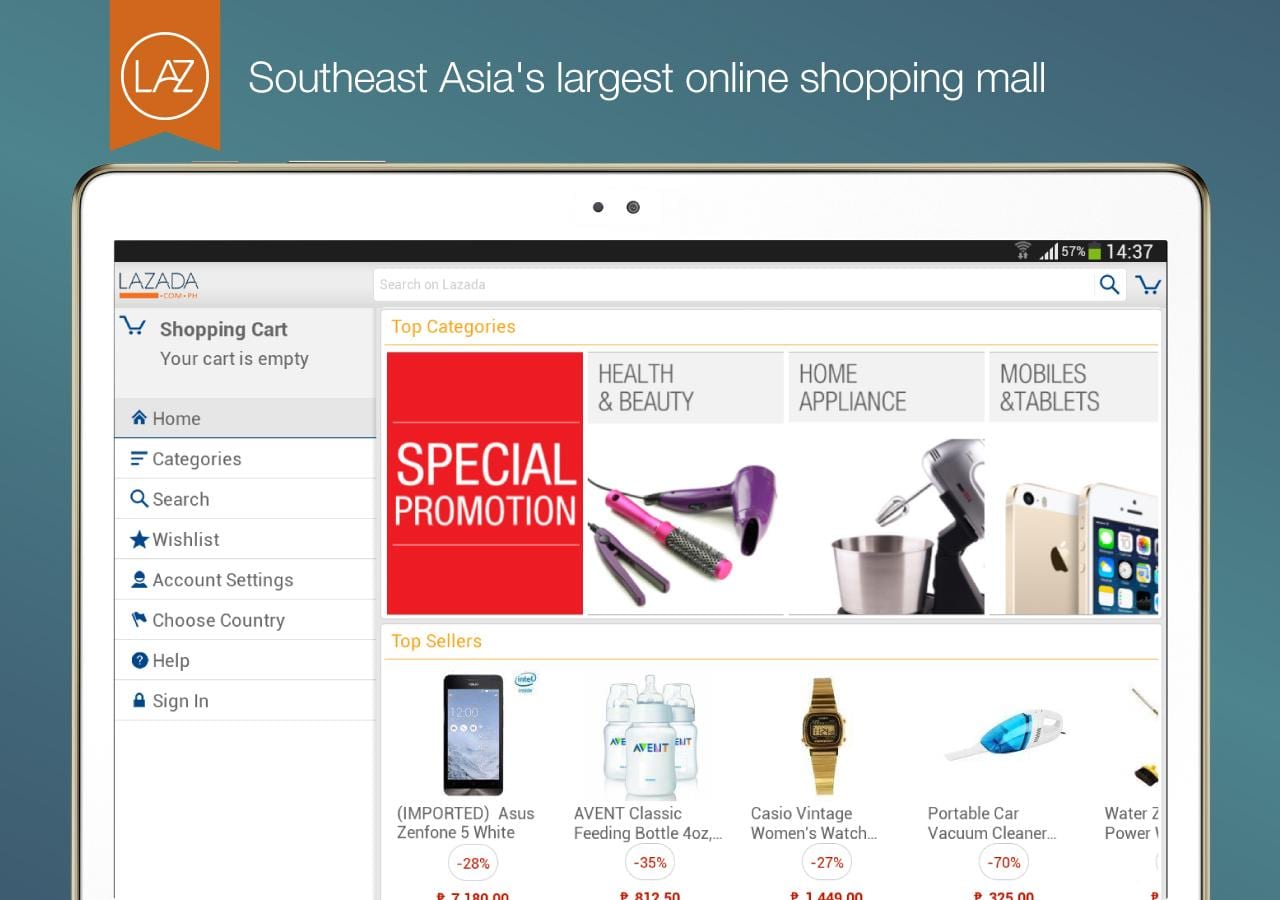
    While some global e-commerce giants, including Amazon Inc, are planning to build brick-and-mortar convenience stores, Lazada Malaysia will focus on things it does best — selling inventory to customers from its warehouses through its online platform.

    Its chief executive officer (CEO) Hans-Peter Ressel said Lazada Malaysia will concentrate on strengthening its online shopping business, rather than building physical stores to complement its online services.

    “We can’t comment on their (Amazon’s) strategy because we focus only on our products,” Ressel said in an interview last week. “We have decided to go this way, and if other players are doing other things, I’m happy to learn and observe how this works for them, but it doesn’t change our strategy.”

    Citing unnamed sources, The Wall Street Journal last week reported that Amazon stores will sell perishable goods, including milk and meats. The Seattle-based retail giant will also build drive-in locations for consumers in a rush where online grocery orders will be brought to the car, the newspaper said.

    Lazada Malaysia, which has achieved more than five million app downloads, is part of the Lazada Group which operates online shopping platforms in Indonesia, the Philippines, Singapore, Thailand and Vietnam. Its product offering covers diverse categories, including electronics, fashion, health & beauty, sports & travel, and groceries.

    Vienna-born Ressel, who is of Austrian and Filipino descent, had served as Lazada Malaysia chief commercial officer and chief operations officer since August 2012, before he became its CEO in March 2015.

    Lazada Malaysia, he said, would continue to collaborate with brand retailers, hypermarkets and offline flagship stores to sell their products.

    “If you want [to operate your own] store, how many stores do you need? What do you want to put on these stores? We don’t believe in doing everything by ourselves. We have partners; we have brands, and it is crucial to have their collaboration, that’s our focus,” he said.

    Notably, Lazada Malaysia this year brought in top brands such as L’oreal, Levi’s and Samsung. It also formed partnerships with giant retailers such as Tesco, Watsons and Senheng.

    Ressel believes e-commerce is the way forward, considering that two-thirds of Malaysians have Internet access, with most of them spending more than four hours a day online.

    “If we didn’t believe in the future growth of e-commerce, we won’t be here. Today, 20 million out of 30 million Malaysians are online. The [Malaysian] e-commerce market will definitely grow towards a size that is similar to Western countries, China and Korea. It’s just a matter of time,” he said.

    According to an estimate by statistics portal Statista, total revenue for the Malaysian e-commerce market this year will hit US$894 million (RM3.75 billion) and revenue is expected to see an annual growth rate of 23.7% in the next five years, to reach US$2.58 billion by 2021.

    Currently, the market’s largest segment is electronics and media, with a market volume of US$380 million. User penetration is at 61.7% this year and is expected to hit 76.8% in 2021.

  • Pandora goes online in China on Alibaba’s Tmall

    Pandora goes online in China on Alibaba’s Tmall

    PANDORA announced that the Company has launched on Alibaba Group’s business to consumer platform, Tmall.com, providing a further avenue for Chinese consumers to purchase PANDORA jewellery. The launch on Tmall.com is PANDORA’s first online presence in China, which will be followed by the launch of the Company’s own eSTORE in December, 2016.

    Internet retailing in China is becoming increasingly popular amongst consumers, driven by faster internet, greater payment security and increasing convenience. In 2015, internet retailing in China generated sales of CNY 1,795 billion (approximately DKK 1,785 billion), corresponding to an increase of 53% compared to 2014.

    In connection with the launch, Kenneth Madsen, President, PANDORA Asia Pacific, said: “The launch of PANDORA jewellery on Tmall.com is another important step in establishing the PANDORA brand amongst Chinese consumers. Tmall is a clear leader in China’s internet retail space, and is the right business partner for PANDORA to get the broadest approach to the Chinese consumer.”

    The jewellery market in China is the largest jewellery market in the world, which in 2015 had a value of CNY 607 billion (approximately DKK 600 billion), corresponding to an increase of 7% compared to 2014. In the period 2016-2021, the Chinese jewellery market is expected to grow with a compound annual growth rate (CAGR) of 6%.


  • Discovery Japan Mall opens online

    Discovery Japan Mall opens online

    Tokyo-based craft products retailer DigitalStudio has launched Discovery Japan Mall, a cross-border eCommerce venture.

    Specialising in Japanese brands, the mall’s initial catalogue includes mainly toys, fishing gear, cosmetics, food, watches and fashion. About 100 Japanese companies have opened stores on the mall, offering about 15,000 items.

    Shipping is available to more than 120 countries and regions, and as part of the opening campaign free international shipping is offered for orders worth JPY 20,000 (US$190) or more until the end of this month.

    As well as credit cards, the mall supports payment by AliPay, PayPal, UnionPay and WeChat. The website is available in English, simplified and traditional Chinese, Indonesian, Korean and Thai. Purchases can be made by smartphone, and all orders include tracking and shipping insurance, plus delivery from Japan.

    Discovery Japan Mall representative Norio Itabashi says many hidden Japanese products do not reach the overseas market, and the mall is working with craftsmen and manufacturers to sell unique products.

    DigitalStudio was established in 2003 with the aim of “continuing to bring Japan to the world”.

  • Trade ministry encourages small, medium industries to utilize e-commerce

    Trade ministry encourages small, medium industries to utilize e-commerce

    Indoensias Ministry of Trade has said it has been encouraging small and medium industries (SMIs) to take benefit of online trade (e-commerce) to market their products.

    “We are pushing the small and medium industries to take their products to various e-commerce platforms. Websites like Tokopedia, Bukalapak, Blibli and Lazada are all local e-commerce platforms and we encourage the SMIs to use them,” the Minister of Trade, Airlangga Hartarto, stated in Jakarta on Tuesday.

    He hoped that once the SMIs start fully utilizing the e-commerce platforms, the industry will start expanding.

    The fourth industrial revolution era hinges on embracing the internet and integrating it with products and services, he added.

    The minister further explained that internet usage is now part of people’s daily lifestyle and it has now become integral to the industrial world also.

    “Germany began doing it in 2013. If we start this year, we will make sure that we are not left behind,” he remarked.

    Additionally, the Ministry of Trade also encourages professional vocational training to enhance the quality of human resources.

    The minister mentioned the importance of undertaking research and forging collaborations with universities in the industrial sector.

    Minister Hartarto also pointed to the progress made in basic materials, and highlighted the fact that natural energy resources cannot last forever.

  • Macy’s plans to launch an e-commerce site in China in 2017

    Macy’s plans to launch an e-commerce site in China in 2017

    Macy’s Inc. says it will launch a Chinese e-retail site in 2017 in order to increase its digital presence in the world’s largest e-commerce market. The department store chain announced the plan last week in Shanghai.

    Macy’s began selling online in China last November when it opened a storefront on Tmall Global, a web shopping site for imported products operated by Alibaba Group Holding Ltd. While the retailer did not disclose its sales on Tmall Global, it said more than 300,000 consumers have taken advantage of the social media-like features of Tmall Global to follow Macy’s so they can learn about new products and other information.

    Alibaba says Macy’s has become one of the most popular sellers on Tmall Global where Macy’s sells 1,500 fashion products from such brands as Kipling, Anne Klein, Tommy Hilfiger and Fossil.

    Macy’s also has explored several ways to connect online with young Chinese consumers. For example, the retailer has broadcast live shows online to explain its history and introduce its U.S. stores to Chinese consumers. A Macy’s live online broadcast about last month’s New York Fashion Week attracted about 100,000 Chinese viewers and resulted in some 150 million posts to Chinese social network Weibo, according to Macy’s.

    Many Chinese consumers shop in Macy’s stores when they travel to the U.S. and China is important for the company, the retailer says. However, the Chinese and U.S. markets are very different, Dustin Jones, Macy’s managing director for China, said at the news conference. “Chinese consumers want to know many details, while U.S consumers only want to check out quickly,” Jones said. “We are still learning in China and we will speed up our expansion next year.”

    Macy’s only sells online in China, and does not operate physical stores. Macy’s did not comment on any plans to open stores in China, although Jones said it’s hard to reach Chinese consumers without physical locations.

  • Wal-Mart Boosts Stake in JD.com, Expands Further in China

    Wal-Mart Boosts Stake in JD.com, Expands Further in China

    Wal-Mart Stores Inc. has reportedly increased its stake in Chinese eCommerce website, JD.com Inc., to 10.8% from 5.9%, aiming to grab more market share in the world’s largest online market. Shares of JD.com jumped 7.5% in after-hours trading following the news.

    The move comes nearly four months after Wal-Mart inked a deal with JD.com. to sell its Chinese eCommerce business, Yihaodian to JD.com in exchange for a 5% equity stake in the company.

    JD.com is the second-largest online retailer in China after Alibaba Group Holding Ltd. in terms of market cap. The expanded deal with JD.com is expected to offer Wal-Mart a better chance of competing in the cut-throat retail industry in China and expand its reach in the country. Evidently, it expects to generate 25% of global retail growth from the region over the next five years. Further, this will benefit Wal-Mart with JD.com’s huge customer base and its same-day delivery network.

    WAL-MART STORES Price and Consensus

    We note that Wal-Mart has been struggling of late to expand its reach in China. The retailer opened its first store in the country in 1996, but only has about 430 stores there at present. The company has stated various reasons for the sluggish business operations in the region.

    In China, the company has long been dealing with food safety scandals despite trying to maintain high food safety standards. Wal-Mart China too has been facing significant pressure from government austerity measures and deflation. Further, the company faces problems in understanding discerning Chinese consumers as their buying decisions aren’t always price driven.

    Apart from expansion in China, this Bentonville, AR-based company is leaving no stone unturned to acquire a stake in the online business. In this regard, it continues to make huge investments in eCommerce initiatives, including acquisitions. Recently, Wal-Mart completed the acquisition of eCommerce company, Jet.com, Inc., which marked a huge step forward in its quest to dominate ecommerce king, Amazon.com, Inc. Wal-Mart is also in talks to acquire a stake in India’s largest eCommerce firm, Flipkart Online Services Pvt., in order to expand in the fast-growing online retail market.

  • Alibaba And JD Face Chinese Online Clothing Market Deceleration

    Alibaba And JD Face Chinese Online Clothing Market Deceleration

    China’s burgeoning online clothing market experienced a sharp slowdown in the second quarter. Yearly growth rates tumbled from over 70% just six months ago to a two-year low of less than 45%. If the sharp slowdown continues in the second half this year, it will have a substantial impact on the revenues and profits of China’s top online retailers Alibaba, JD.com and Vipshop.

    According to the latest quarterly report by Analysys, China’s B2C apparel trade fetched a record of 208.9 billion yuan in the second quarter this year, an increase of 44.7% over a year ago. It was also higher than the 186.77 billion yuan registered in the first quarter.

    Sales figures for each company’s second quarter are higher than that of first quarter because of two factors. First, most people buy winter clothes in the fourth quarter, in part preparing for the Chinese New Year. Secondly, the second quarter is the time to buy spring and summer clothing. To further stimulate this seasonal demands, different e-retailers have organized in recent years three promotions, namely on April 19, May 20 and June 18. These three days have become national “festivals” and are successful in driving the overall growth of online apparel market.

    Online Clothing Sales Growth Rates Drop Nearly 30 Percentage Points

    However, Chinese online clothing sales now experience a sharp deceleration. The yearly transaction growth rate tumbled from an all-time-high of 72.2% at the fourth quarter last year, to only 44.7 % in the second quarter this year. It was also the lowest growth rate registered in the last two years.