Tag: ecommerce

  • China Singles Day: a retail goldmine

    China Singles Day: a retail goldmine

    China Singles Day is an entertaining festival widespread among young Chinese people, to celebrate the fact that they are proud of being single.

    To celebrate these singletons like to shop, for some reason.

    Regardless of motive, the opportunities an event like this presents is vast, and global retailers should be taking advantage.

    Delivering an effective online shopping in China is a challenge for outside retailers, but the benefits are worth investing in overcoming this.

    In a market with 600 million internet users, sales last year hit $14.3 billion, in comparison to the $1.35 billion taken on Black Friday. This is predicted to rise to $20 billion this year, which is absurd. But profitable.

    With a rapidly expanding population, China is by far the largest e-commerce market in the world, forecast to reach $1.1 trillion by 2020. China Singles Day is the largest retail day of the year, by some margin.

    Digital performance specialist Dynatrace has tested the websites of retailers around the world to see how geared up they are to maximise their revenue potential on the biggest shopping day of the year, and found that global retailers need to be doing more to tap into this market.

    Chinese retailers are outperforming the global competition, with an average time of 3.4 seconds before their websites become usable for Chinese customers (compared to 7.7 seconds for global retailers).

    H&M stood out as a shining light amongst the global retailers; with an average time of just 2.4 seconds before customers could start interacting with its website from China.

    Lean website design is critical to success in the Chinese e-commerce market; the best performing sites have minimal third-party host integrations, lighter pages with a low object count, and are hosted locally, in China or Hong Kong.

    Dave Anderson, VP Marketing EMEA and APAC for Dynatrace explained that by “digging a little deeper, we can see that the better performing sites are typically designed for speed. They use minimal third party hosts and keep objects in check. Page weight is also an important consideration – the lighter the better. Another fundamental, strategic decision is to host content locally or in HK.”

    Anderson went on to suggest that “user experience is fundamental to e-commerce success today, so retailers must be ready to tackle new markets with a localised site strategy. You can’t just replicate a site from another country, attach a local URL and assume it will work. This is especially the case in China.”

    “You need to be careful about how you use Google APIs, YouTube, marketing automation software or cart abandonment tools. Big images, video and pop up ads also create complexity that result in a poor experience for Chinese consumers. Best starting point is to strip the site back and measure the performance of everything very closely.”

    Alibaba is providing stats from the ‘festival’ in real-time.

  • Privacy is paramount to online consumers

    Privacy is paramount to online consumers

    More than half (55%) of consumers globally have decided against buying something online due to privacy concerns, a recent KPMG International survey indicates.

    The survey also revealed that less than 10% of consumers feel they have control over the way organizations handle and use their personal data. Respondents in most countries say privacy controls are more important than the potential convenience gained from sharing personal data.

    “An executive would be at risk of being fired if half their customer base disappeared after they made a crucial business decision,” said Mark Thompson, Global Privacy Lead at KPMG.

    “Failure to embed privacy into the DNA of their business strategy could ultimately lead to the extinction of a business given how closely consumers and regulators alike are paying attention to how organizations collect, store and use personal data.”

    The survey further revealed that 82% are not comfortable with the sale of their data to third-parties in exchange for the speed, convenience, product range, home delivery and price comparison that online shopping offers.

    Over two-thirds of people are not comfortable with smartphone and tablet apps using their personal data. In all markets but one, at least 75% of respondents said they were uneasy with their online shopping data being sold to third-parties.

    About 55% said a free fitness tracking device that monitors the well-being of users and produces a monthly report for them and their employer is also crossing the line.

  • Indonesia wants to lead the region in e-commerce

    Indonesia wants to lead the region in e-commerce

    With other Southeast Asian countries already having prepared the ground for the digital economy to prosper, the Indonesian government has finally taken the initiative to spur the growth of e-commerce within its own boarders.

    Announced on Thursday evening, the 14th economic policy package will tackle eight issues that could determine the success of President Joko “Jokowi” Widodo’s goal of turning Indonesia into the biggest digital economy of the region by 2020 with a targeted value of US$130 billion. The eight issues are funding, taxation, consumer protection, human resources, logistics, communication infrastructure, cyber security and the establishment of a project management office.

    The government expects the new policy package, dubbed the e-commerce road map, to create 1,000 “techno-preneurs” with businesses that have a total value of $10 billion by 2020.

    Coordinating Economic Minister Darmin Nasution said the e-commerce road map, which will be translated into a presidential decree, was essential to boost connectivity and efficiency in the industry.

    The government also expects the road map to better protect national interests and give priority to small and medium-sized enterprises and start-ups.

    “We also want to boost creative innovation and invention of new economic activities, especially for youths who enjoy playing around with new things,” he said during a press conference to unveil the package on Thursday.

    Indonesia’s e-commerce market is estimated to be worth Rp 18 trillion ($1.4 billion) as of 2015, with 37 million consumers from a total population of 255 million, according to World Economic Outlook data compiled by the Internet Service Providers Association. The association expects the e-commerce market will be worth Rp 25 trillion by 2016, with 49 million consumers.

    Meanwhile, Communications and Information Minister Rudiantara presented some details of the road map, which includes grants or subsidies to help start-ups boost their chances of surviving in the tough e-commerce industry.

    The government also aims to reduce taxes for locals investing in start-ups and simplify taxation procedures for e-commerce start-ups with a turnover of less than Rp 4.8 billion a year, so that the final income tax will only come to 1 percent.

    “In terms of logistics, this is interesting, because we have already decided to reposition state-owned postal company Pos Indonesia as a logistical platform for Indonesian e-commerce,” Rudiantara said.

    Since taking office in 2014, Jokowi has issued 13 stimulus packages aimed at eliminating business hurdles.

    A recent report from management consulting firm McKinsey & Company suggested that by going digital, Indonesia would be able to unleash its next level of economic growth to the tune of $150 billion in terms of impact by the year 2025 if it were able to address the most pressing issues adequately.

    The report suggested that while Indonesia was admirable in terms of the number of internet and smartphone users, it still did not adequately embrace modern technology. Internet penetration in Indonesia has only reached 39 percent of the population, despite smartphone penetration standing at 43 percent.

    The report partly places the blame for the low penetration on Indonesia’s relatively weak information and communication technology infrastructure. Indonesia’s internet bandwidth, for instance, is still at a relatively low average rate of 6.2 kbps per user, far below Malaysia’s 27.2 kbps and the Philippines’ 27.7 kbps.

    Bank Central Asia (BCA) economist David Sumual was optimistic about the latest economic policy package, saying Indonesia’s market was large and investors had already begun to show interest in the business.

    David, however, warned the government’s digital economy dream could end if the country failed to improve infrastructure and logistics.

    “It will not reach its maximum potential if our logistics remain the same. It may be alright in the bigger cities, but how will it work in the remote areas? Weak infrastructure remains our biggest task.”

  • Alibaba Singles’ Day to extend beyond mainland China

    Alibaba Singles’ Day to extend beyond mainland China

    Alibaba’s Singles’ Day – now dubbed 11.11.Global Shopping Festival – is set to expand into international territories for the first time this year.

    The online retail giant founded by Jack Ma plans to use the celebrations around the event and its catalogue of data to target shoppers in Hong Kong and Taiwan.

    Next year, Alibaba plans to target Southeast Asia too.

    The sales-shopping frenzy, which is poised to lure millions of Chinese buyers and has been extended to 24 days, commences on Friday morning.

    American singer Katy Perry and boy band One Direction have been lined up to perform at the countdown gala in Shenzhen, near Hong Kong, on Thursday.

    The biggest Singles’ Day yet

    Chinese websites are preparing to smash Singles’ Day records

    Singles’ Day began seven years ago and involved only 27 merchants, but since then the event has ballooned.

    Last year Singles’ Day raked in $14.3bn in sales, more than the combined online sales over the five-day period covering Thanksgiving, Black Friday and Cyber Monday in the US – $11.1bn.

    Chinese websites are preparing to smash singles day records

    According to global delivery firm Fastline International, Singles’ Day sales will soar by 50% this year – rocketing to $21.45bn and eclipsing Black Friday.

    “Such is the growth in China’s home shopping market,” said Fastline head of consumer research David Jinks.

    “Long gone are the days when Singles’ Day was only celebrated by single male students at Nanjing University. Today it is the biggest sales day on the planet.”

    While the event was not originally invented by Alibaba, the retailer has made it a fixture of the retail calendar.

    Based on an anti-Valentine’s concept, Singles’ Day launches on November 11 (11.11) because of its four single digits. It was historically a shopping day for singles, but is popular now with bachelors and couples alike.

    Singles’ Day and other similar events such as 8.8 have driven the growth of Alibaba, which reported a 55% sales increase in its third-quarter results last month.

  • BI Revises Regulation on E-Money

    BI Revises Regulation on E-Money

    Bank Indonesia (BI) will make another revision to regulation on electronic money and introduce electronic wallet in the Bank Indonesia Regulation. The new regulation on the payment transaction processing is expected to be finalized in November 2016.

    Bank Indonesia deputy governor Ronald Waas said that one of the revision points is related to the expansion of electronic money basis. Currently, Ronald revealed, there are two types of electronic money, namely server-based and card-based electronic money. BI is considering adding gadget-based money as a new category.

    “Currently we have Samsung Pay and Apple Pay. They don’t use cards,” Ronald said in Jakarta on Wednesday, November 9, 2016.

    Ronald explained that there are two categories of e money, namely Know Your Customer (KYC) and non-Know Your Customer (nKYC).

    In the new regulation, BI has planned to require electronic money issuer with total active members of no less than 300,000 to register the electronic money.

    “[Electronic money issuer] with below 300,000 users doesn’t need to obtain a permit, but they need to report. In addition, they have to establish a legal entity,” Ronald said.

    In terms of minimum balance, Ronald clarified that there would be no revision regarding the matter. The minimum balance for non-registered electronic money is Rp 1 million (US$77), while that for registered one is Rp 10 million (US$770).

  • Singaporean middle-income earners spend the most online

    Singaporean middle-income earners spend the most online

    Check out what do Singaporeans buy based on monthly income.

    On average, shoppers spend S$155 a month, or S$1,860 a year, on retail purchases and travel bookings online. Those with monthly salaries between S$4,000 and S$5,000 spend the most at S$194 a month, which is 20% more than those earning S$5,000 – S$6,000.

    These are some key findings from a study by Personal finance comparison site SingSaver.com.sg and online shopping rewards portal ShopBack.

    Together, they polled 1,979 Singaporeans aged 21 to 60 about their online shopping habits and how they save money at digital stores.

    Fashion is a number one spend category for shoppers with a monthly income under S$6,000. Electronics is the next most popular category for those earning S$3,000 – S$5,000 a month, and Health & Beauty for those earning less than S$3,000 a month. Only shoppers earning S$4,000 – S$5,000 a month count travel as part of their top 3 online expenditures.

    Meanwhile, respondents who earn over S$6,000 a month spend more on online groceries than fashion purchases and electronics.


  • E-commerce roadmap will boost Indonesian young entrepreneurs` growth

    E-commerce roadmap will boost Indonesian young entrepreneurs` growth

    The Indonesian Young Entrepreneurs Association (Hipmi) of Yogyakarta supports the governments plan to formulate an e-commerce roadmap by early 2017.

    “The e-commerce roadmap to be launched by the government is a step in the right direction as it will encourage Indonesian young entrepreneurs and help them in expanding their business,” a Yogyakarta Hipmi member, Gunarta Adibrata, said here on Wednesday.

    Also, such a roadmap will help those starting their businesses in accessing the e-commerce system.

    “Young entrepreneurs will find the e-commerce business roadmap very beneficial,” Gunarta noted.

    According to him, young entrepreneurs need such assistance in order to grow their businesses.

    In addition, the governments timely interventions and support will increase the markets confidence in the ability of the young entrepreneurs.

    “Such an e-commerce roadmap must have clarity about taxation and consumer protection. These two things will add a positive value and enhance business certainty for those using the e-commerce system,” Gunarta noted.

    Earlier, the government had stated that the e-commerce roadmap, aimed at regulating and stimulating e-commerce transactions in Indonesia, will be released in early 2017.

  • Boom quarter for Alibaba Group

    Boom quarter for Alibaba Group

    While China’s economy goes through a sluggish patch, internet shopping mall giant Alibaba Group has announced a sparkling quarter in which profit beat expectations, its fledgling cloud computing business more than doubled sales, and its entertainment income quadrupled.

    “Our results reflect our increasing ability to monetise our 450 million mobile users through new and innovative social commerce experiences,” says CEO Daniel Zhang.

    “Beyond the strong performance of our core commerce business, we are pleased with the continued rapid growth of our cloud computing business. We also see huge potential in our newly integrated digital media and entertainment unit. By combining engaging online experiences with highly relevant content, we delivered impressive financial and operational results for the quarter. ”

    CFO Maggie Wu says the group had robust revenue growth of 55 per for the quarter ended September 30.

    “Our highly profitable and cashflow-generative core commerce business enables us to invest in our future growth areas of cloud computing, digital media, and entertainment and innovation initiatives. We expect each of these businesses to drive long-term value for both our customers and shareholders.”

    At RMB34.292 billion (US$5.142 billion), revenue increased 55 per cent year-over-year, the star sector being digital media and entertainment, which ballooned 302 per cent to RMB3.608 billion. There was also an impressive 130 per cent growth in revenue from cloud computing to RMB1.493 billion, while revenue from innovation and other sources grew 78 per cent to  RMB698 million, and revenue from core commerce rose 41 per cent to RMB28.493 billion.

    Up 23 million

    Mobile monthly active users (MAUs) on its China retail marketplaces reached 450 million in September, an increase of 23 million over June, while annual active buyers reached 439 million, an increase of 5 million from the 12-month period ended in June.

    Customers for its cloud computing business grew to 651,000 from 577,000 in the previous quarter. The operating loss from cloud computing was RMB398 million for the quarter, and adjusted EBITA loss narrowed from RMB158 million in the previous quarter to RMB57 million.

    Alibaba says its Taobao app continues to be the leading social-commerce platform, serving creative content, social-engagement opportunities and personalised shopping recommendations. Livestreamed demonstrations for fashion apparel, cosmetics, maternity/baby products, sports and activewear generated millions of daily views.

    The company says it also achieved high social engagement on the mobile Taobao platform, citing more than 6 million app users sharing their shopping experience with friends each day.

    “We continue to see strength in the consumer electronics category, with robust growth in smartphones and large appliances,” says Alibaba. “In September, Apple recognised our branding reach and distribution capability by appointing Tmall the third-party online platform for the simultaneous launch of the iPhone 7 with Apple in China.”

    In the large appliance category, Alibaba is continuing to work with Haier’s logistics subsidiary RRS, with orders from its marketplaces handled by RRS growing by more than 82 per cent for the quarter.

    Triple digits

    Alibaba has also continued to make strong progress in the FMCG category, with personal care, food, and mother and baby being among the top growth categories. Its Tmall Supermarket has seen its volumes grow by triple digits year-on-year.

    “Multinational FMCG brands are working with us as the partner of choice, not only to drive their transaction volume, but also in the areas of brand building, channel expansion and product launches to grow their presence in China.”

    During the year Alibaba launched innovations around livestreaming, AR and VR to drive consumer engagement. Examples include a livestreamed “See now, buy now” fashion show watched by 7 million viewers on Taobao, Tmall and the Tudou and Youku apps. Alibaba also integrated the omni-channel shopping experience at more than 60,000 offline storefronts, including Gap, Uniqlo and Intime department store.

    A pilot program has been introduced to help global merchants sell beyond China. Hong Kong and Taiwan are the first markets outside the mainland.

    Alibaba Cloud hosts and provides security products and services for more than 35 per cent of China’s websites, says the company.

  • 2C2P’s Online-To-Offline E-commerce Service Now Available At Over 320,000 Locations

    2C2P’s Online-To-Offline E-commerce Service Now Available At Over 320,000 Locations

    2C2P, the leading Southeast Asian payments company which processes billions of dollars in transactions each year, has announced 320,000 offline payment locations for its ‘123’ payment solution. ‘123’ is an alternative payment service. Through it, consumers of 2C2P’s merchants across Southeast Asia (SEA) can pay for their online purchases with cash or alternate means at these 320,000 offline payment locations. 2C2P’s merchant partners include some of the largest online retailers across Southeast Asia, spanning the travel and tourism, retail, food and beverage and hospitality industries, among others.  123 enables these online retailers to bring online commerce to the region’s unbanked population which, according to KPMG, spanned 73 per cent of the region’s population, or 438 million people.  

    At online check-out, their consumers will have the option to pay for purchases using 123. They will be provided a bar code which can be printed out or scanned from their mobile devices, enabling them to then pay with cash or alternate means 2C2P’s extensive network of offline payment locations – available through 2C2P’s channel partners. Payment channels include cash over-the-counter at retail chains and agents, ATMs and electronic kiosks (such as AXS, SAM, SingPost), as well as internet banking and mobile banking. These locations are available across Southeast Asia, including Indonesia, Malaysia, Myanmar, the Philippines, Singapore and Thailand.

    Bringing e-commerce capabilities to rural Myanmar

    123 has increased its payment locations across the SEA region, with 12,000 new locations added in Myanmar in 2016, near ten times the network of the country’s largest bank. It has achieved this by establishing partnerships with Myanma Post Offices, Myanmar Awba Group and ABC convenience store chain. Retailers and merchants including Myanmar National Airlines (MNA) and Oway are among the first in Myanmar to actively offer 123 to their customer base.

    MNA is the largest airline carrier, and one of only two international carriers in Myanmar. It has the most extensive route network within the country. With 123, its customers can book their tickets online and then pay at over 12,000 physical locations across Myanmar, or pay through AYA Mobile Banking and branches. Customers of Oway, Myanmar’s largest online travel agent, can use 123 to make travel bookings more convenient and accessible – all without a debit or a credit card.

    Aung Kyaw Moe, CEO and Founder of 2C2P said, “2C2P has made extensive efforts to open up Myanmar’s unbanked population to e-commerce. As the country continues to see increased mobile penetration, rising urbanization and improved consumer spending, there is an urgent need to modernise its e-commerce and payments infrastructure. 2C2P’s vision is to bring e-commerce to every single person in Myanmar, and more broadly, in Southeast Asia. In so doing, we look to build the region’s e-commerce future.

    “2C2P, through 123, looks to bring convenience to Myanmar’s citizens, particularly those that remain underserved by banking and financial institutions – lacking banks accounts, credit and debit cards or access to a bank branch. They can now, for the first time, tap into the fast-growth of national, regional and global e-commerce by paying for their online purchase at a convenient offline location via 2C2P’s extensive network of physical channel partner locations,” added Aung.

    Myanmar’s Ministry of Hotels and Tourism estimates 6 million annual inbound tourists for 2016, a 25 per cent increase from 2015 (4.68 million). This number is predicted to cross 7.5 million by 2019. The Asian Development Bank (ADB) is optimistic that tourism will drive the country’s overall economic growth. It forecasts tourism revenues to have increased by 19 per cent from 2014 to 2015 to US$2.1 billion – representing over 4 per cent of Myanmar’s GDP.  Asia-Pacific will overtake North America to become the largest digital travel market globally in 2019, according to eMarketer.

  • SingPost opens regional ecommerce logistics hub in Singapore

    SingPost opens regional ecommerce logistics hub in Singapore

    Singapore Post Limited (“SingPost”) announced the launch of its Regional eCommerce Logistics Hub (“eComm Log Hub”) located at the Tampines Logistics Park. The S$182 million facility is SingPost’s largest eCommerce logistics investment in Singapore to date.

    The eComm Log Hub is officially opened by Singapore’s Deputy Prime Minister and Coordinating Minister for Economic and Social Policies, Mr Tharman Shanmugaratnam.

    SingPost’s eComm Log Hub is a three-storey facility housing two warehousing floors, 150 simultaneous loading bays as well as an office block. The ground floor of the building houses a fully automated parcel sorting facility with a capacity of up to 100,000 parcels a day, and end-to-end sorting, shipping and returns management capabilities that enable quicker order fulfilment. The total built-up area is 553,000 square feet.

    Automation plays a big part in the eComm Log Hub – beyond the fully automated parcel sorting system on the first floor of the facility, the second floor warehouse is also automated, resulting in the entire eComm Log Hub being integrated end-to-end from the eCommerce front-end platform to delivery. The eComm Log Hub will process parcels for delivery within Singapore and those to be shipped to destinations worldwide.

    Said Mr Chua Taik Him, Deputy Chief Executive Officer of IE Singapore, “IE Singapore has been working closely with SingPost on strategies to scale its business in the region, facilitating its projects and partnerships with both brand owners and last mile fulfilment players. Given the strong growth of eCommerce in Southeast Asia, the launch of SingPost’s facility will further support its local and overseas growth. This will also enhance Singapore’s capabilities in fulfilment and facilitate more regional eCommerce trade flows.”

    The Management Team of Sephora Asia said, “This October, SingPost has begun providing us with warehousing services in Australia to handle our beauty and fragrance products. At Sephora, we believe in giving our customers a great end-to-end experience from the time they log in to the moment they receive their purchases. SingPost’s support is critical to delivering that flawless customer experience. With their new eCommerce Log Hub and great solutions like POPStations, we recognise that SingPost is propelling the eCommerce industry forward. We have found SingPost’s professionals to be very conscious of accuracy, cost and service quality.”

    Mr Simon Israel, SingPost’s Chairman, said, “The opening of our Regional eCommerce Logistics Hub is another milestone in the expansion of SingPost’s eCommerce logistics network, which now spans 19 markets across Asia Pacific, Europe and the US. Singapore’s regional connectivity makes it ideally positioned to be a centre for eCommerce. Our Regional eCommerce Logistics Hub leverages on this geographic and infrastructural advantage. Everything in this building is scalable, which means we can keep upgrading it to meet the needs of the future.”

    He added, “With the Regional eCommerce Logistics Hub, our POPStation network and our investments into technologies for new postal and logistics solutions, we are prepared for a sustainable future of car-lite cities and the sharing economy. SingPost is therefore able to shape and play a broader role in how urban logistics is done in Singapore.”

    SingPost’s Centre of Innovation

    At the opening ceremony, SingPost also launched its Centre of Innovation (“COI”).

    The COI was set up in August 2015, with support from the Economic Development Board, to carry out research into new logistics and postal services and products, in collaboration with research institutions and institutions of higher learning.

    Emphasis will be placed on new technologies such as robotics and automation to meet the needs of future customers and markets as well as becoming the tools for SingPost’s next generation of employees.

    Some initiatives now being carried out by the SingPost COI are:

     Deliver significant enhancements to the eCommerce logistics platform which will help support the smart logistics and smart nation initiative;

     Roll out a new version of the Self-service Automated Machine (SAM) platform to enhance customer experience and provide a seamless omni-channel experience encompassing the kiosk and the digital postal office;

     Bring the online and offline world of retail shopping to the SingPost mall, which will provide exciting merchant offerings and delivery options to the customer. Retail merchants will be able to experiment with unique ways of interacting with customers to boost revenue and increase loyalty;

     A digital transformation of the post office to provide customers options to transact with greater ease and pace; and

     Innovate last mile delivery options through building the next generation of POPStations and experimenting with drone delivery across the island.

  • Nestlé aims to boost e-commerce contribution to revenue

    Nestlé aims to boost e-commerce contribution to revenue

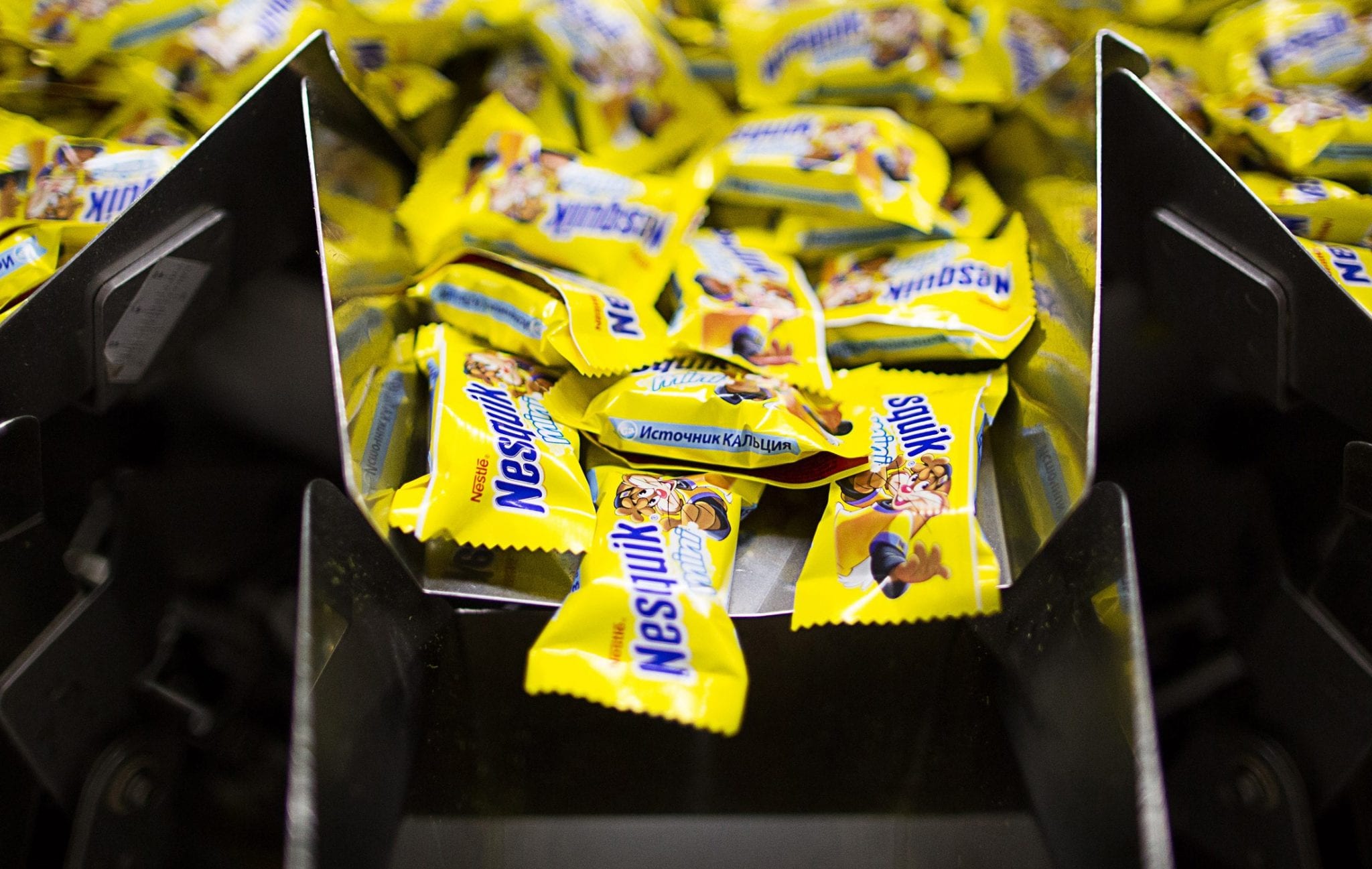
    Nestlé (Malaysia) Bhd expects to increase its e-commerce contribution to its revenue from the existing one per cent to 10 per cent within the next three to four years. This 10 per cent, according to its managing director, Alois Hofbauer would translate to some RM500 million.

    “We are already the market leader within the nutritional, health and wellness segments in this country. Right now, it is not just about expanding but continuously strengthening our position,” he told Business Times on the sidelines of Lazada’s biggest online shopping event launch, the ‘Online Revolution’, this morning. “We already have our e-commerce platform, as well as ongoing partnership with Lazada and 11street.

    Going forward, we will be increasing our partnership numbers within this space.” He explained that the Nestlé Malaysia catalogue alone amounted to the hundreds but it is difficult for physical retailers to carry all of them. “With an e-commerce platform, we will be able to offer all our products and to all corners of Malaysia. It doesn’t matter if you’re in the Klang Valley or Terengganu outskirts, we will be able to provide our products for you,” said Hofbauer.

    He also stressed that this continuous increased demand would also mean a positive impact to all its stakeholders, from farmers who supply the raw products, to shareholders and to also the government as Nestlé is here for the long term. “We have seen some minor impact given the Goods and Services Tax (GST) and otherwise subdued economic landscape, but the foods and beverages (F&B) industry is resilient and we will continue to grow.”

    The company registered a total turnover of RM4.8 billlion in its 2015 financial year and has been growing at a rate of five per cent, beating the F&B industry’s overall growth of two per cent, also in 2015. Hofbauer was earlier part of the five-person panel alongside Lazada Malaysia’s chief executive officer, Hans Peter Ressel; L’Oréal Malaysia’s business head of consumer product division, Manashi Guha; Samsung Malaysia’s head of consumer electronics, Jimmy Tan and Vinda Group’s commercial director, Tony Sperrin in discussing the impacts of e-commerce on Southeast Asia’s retail landscape.

    “The growth in Malaysia in particular has been tremendous as we have seen a triple digit growth year on year on Lazada,” said Ressel. “We expect this momentum to continue because right now we are reaching further into the outskirts of Malaysia as we see a higher demand there versus Klang Valley. That being said, Malaysia will continue to be one our key markets.” The ‘Online Revolution’ on Lazada will run for a month from November 11 to December 14 and will feature the participation of over 1,000 brands and 55,000 international and local merchants.

  • Esprit Holdings’ sales decline is no surprise

    Esprit Holdings’ sales decline is no surprise

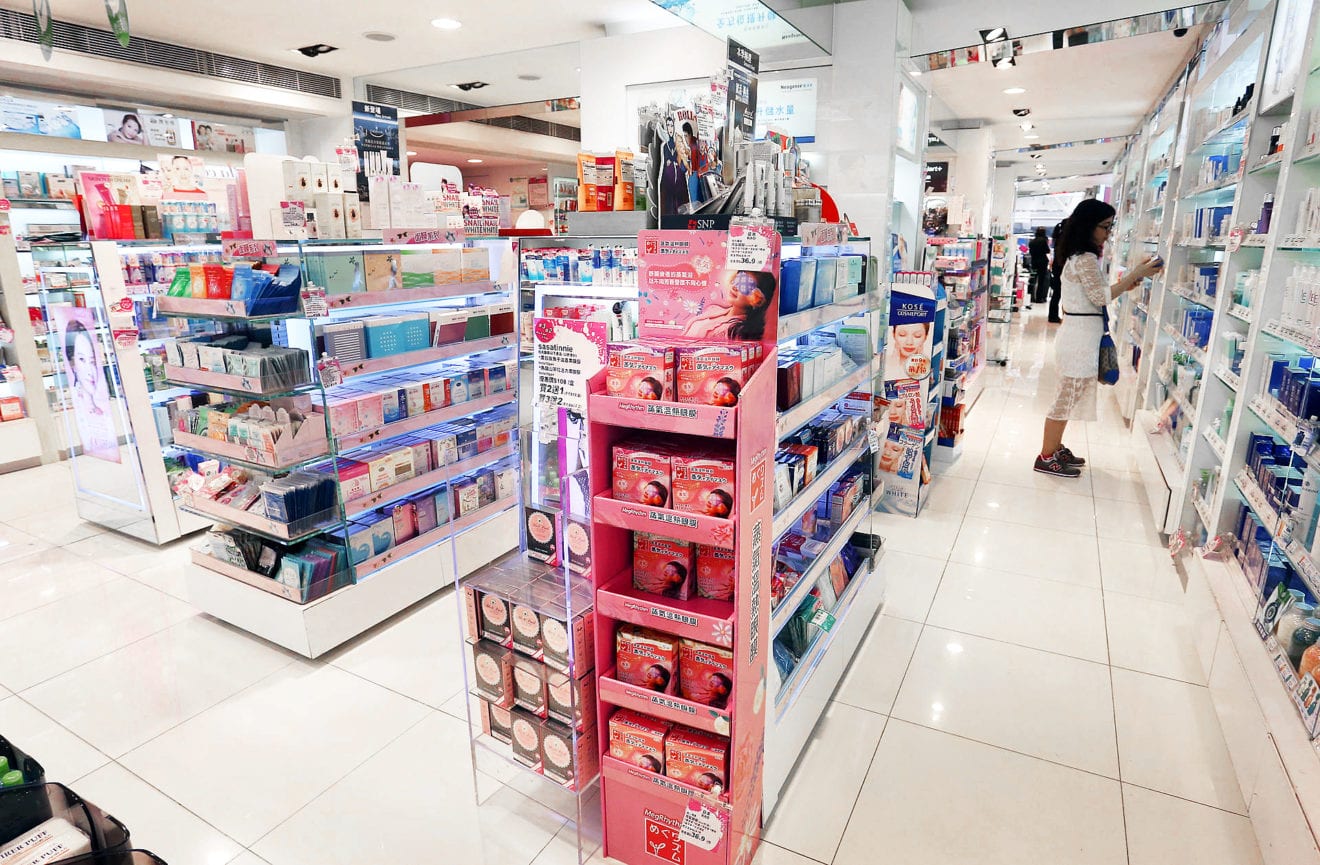
    In line with expectations, a first-quarter decline of 11.8 per cent in sales has been recorded by clothing, footwear, accessories, jewellery and housewares manufacturer Esprit Holdings.

    It says the results for the quarter ended September 30 were as expected following a reduction in operating costs and store footprint. The company reduced total controlled space (retail and wholesale) by 14.5 per cent, closing unprofitable stores. During the quarter it closed 9240 sqm of retail net sales area, (mainly concession counters in China), further reducing the group’s retail net sales area to 282,332 sqm.

    Because of structural pressure in its wholesale channel, its controlled space was also further reduced, by 13,304 sqm in the quarter to 343,448 sqm. Notwithstanding this, the decline in wholesale revenue was 11.4 per cent, reflecting an improvement in space sales productivity, Esprit said.

    While sales productivity continued to improve in July and at the beginning of August, this turned negative in line with general market developments. Since mid-August temperatures in Europe were far higher than during the same period last year, significantly impacting store traffic and initial sales of the autumn collections both offline and online.

    For the Asia Pacific, lower consumer traffic hit sales, as well as a strategic decision to restructure the company’s retail footprint and cut back on promotional activity. “As expected, these measures put short-term pressure on revenue, but they are crucial for Esprit to regain profitability in the mid-term,” said the group.

    “Despite the weak sales development in the first quarter, the group’s results remain on track and management stays focussed on the execution of the strategic plan: developing the vertical and omnichannel models; tackling the challenges in the wholesale channel and in Asia Pacific; and pushing the reduction of structural costs further in order to continue the recovery of the group’s overall profitability.”

  • Football Club Barcelona to Launch Exclusive Store on JD.com

    Football Club Barcelona to Launch Exclusive Store on JD.com

    JD.com (Nasdaq:JD), China’s largest e-commerce company by revenue, and FC Barcelona, one of the world’s most popular football clubs, today announced the launch of the FC Barcelona Flagship Store on JD.com’s cross-border e-commerce platform, JD Worldwide. The exclusive store, FC Barcelona’s first store on a Chinese e-commerce platform, will offer a wide selection of authentic merchandise to the millions of FC Barcelona fans around China.

    FC Barcelona Flagship Store on JD.com
    FC Barcelona Flagship Store on JD.com

    FC Barcelona’s store on JD.com will feature a selection of official and authentic FC Barcelona merchandise from the world-famous club, including football kits, training gear, accessories and others. It will also feature special branded shirts from some of the club’s players, including Lionel Messi, Luis Suarez, Neymar, Andrés Iniesta and Gerard Piqué.

    “Fans of FC Barcelona from across China are getting an early Singles Day present with the launch of this store,” said Ting Qi, General Manager of JD Worldwide. “FC Barcelona is one of the best-known brands in global sports and we look forward to working with them to grow that position in China.”

    The FC Barcelona store on JD.com builds on the success of the club’s retail partnership with the Hong Kong-headquartered EZshopnet International Limited, which specializes in football e-commerce.

  • Alibaba tipped to record solid quarterly revenue growth

    Alibaba tipped to record solid quarterly revenue growth

    Alibaba Group Holding, the world’s largest e-commerce company, is expected to report another strong quarter of sales in the three months to September 30, as its preparations intensify for the Singles’ Day online shopping festival next week.

    Analysts estimated New York-listed Alibaba’s total second-quarter revenue for its fiscal year that ends March would increase about 50 per cent year on year.

    “We model total revenue to grow 51.7 per cent to 33.64 billion yuan (HK$38.55 billion) versus [market analysts’] consensus estimate of 33.94 billion yuan,” Alicia Yap, the head of regional internet research at Citi Research, said in a report published ahead of Alibaba’s earnings announcement on Wednesday.

    Yap estimated Alibaba’s gross merchandise volume, the total amount of goods sold through the company’s vast online retail platforms, to have grown 22 per cent year on year to 872 billion yuan in the past quarter.

    Citi maintains a “buy” rating on Alibaba shares, and has raised its target price to US$133, up from the previous US$112.

    In an open letter to shareholders early this month, Alibaba chief executive Daniel Zhang Yong said: “During fiscal year 2016, our China retail marketplaces reached a historical milestone when annual gross merchandise volume transaction surpassed 3 trillion yuan, making Alibaba Group the largest retail ecosystem in the world.”

    In the three months to June, Alibaba reported a 59 per cent year on year jump in revenue to 32.15 billion yuan. The gross merchandise volume transacted on its China retail platforms rose 24 per cent to 837 billion yuan.

    Alibaba, which owns the South China Morning Post, runs four business segments – core commerce, cloud computing, digital media and entertainment, and innovation initiatives.

    Citi estimated Alibaba’s revenue from its core commerce business would reach 28.18 billion yuan in the quarter to September, up from 27.24 billion yuan in the quarter to June.

    That segment comprises the China and international online marketplaces operating in retail and wholesale commerce, including Taobao Marketplace, Tmall.com, Juhuasuan, 1688.com, AliExpress and Lazada.

    Citi predicted Alibaba’s cloud computing revenue would reach 1.56 billion yuan in the three months to September. Led by subsidiary Alibaba Cloud, it had revenue of 1.24 billion yuan in the quarter to June.

    Digital media and entertainment revenue was estimated by Citi to have reached 3.35 billion yuan in the past quarter. This segment, which includes UCWeb and Youku Tudou, had revenue of 3.13 billion yuan in the June quarter

    Alibaba’s innovation initiatives segment was forecast by Citi to have posted revenue of 550 million yuan in the three months to September, compared with 535 million yuan in the June quarter. This segment includes the YunOS mobile operating system and web mapping and navigation software AutoNavi.

    We want to offer a large variety of daily necessities to the city’s consumers

    Daniel Zhang Yong, Alibaba chief executive

    Last week, Alibaba said its introduction of the Singles’ Day shopping extravaganza and the Tmall.hk platform to Hong Kong would ramp up e-commerce services outside the mainland.

    “We want to offer a large variety of daily necessities to the city’s consumers,” Zhang said at the launch of Alibaba’s 11.11 Global Shopping Festival in Hong Kong.

    That kicked off a flurry of activities ahead of Singles’ Day, an annual event held on November 11 that will see billions of dollars of goods transacted on Alibaba’s online retail platforms within 24 hours, making it the world’s biggest online shopping event.

    At last year’s 11.11 festival, Alibaba posted a 60 per cent year on year increase in gross merchandise volume to 91.2 billion yuan.

    Daiwa Capital Markets analyst John Choi said in a report that sentiment on Alibaba was positive as “most investors now seem to have a better understanding of Alibaba’s ecosystem”. Daiwa has a “buy” rating on Alibaba.

  • Sa Sa profit drop looms

    Sa Sa profit drop looms

    Sa Sa profit is expected to fall 35 to 45 per cent for the six months ended September 30.

    The Hong Kong-based cosmetics retailer has issued a profit warning, citing a drop in both sales and gross profit margin of its Hong Kong and Macau business, weaknesses in some overseas stores and decline in online profits.

    Meanwhile, the group has recorded a 2.3 per cent decrease in retail and wholesale turnover to HK$1910.9 million (US$246.3 million) for its second quarter.

    In other markets, including China, Malaysia, Singapore, Taiwan and Sasa.com), the group’s turnover fell 2.9 per cent. For Hong Kong and Macau, turnover was down 2.2 per cent to HK$1552 million, total sales easing by 2 per cent while same-store sales were 2.5 per cent down on a year-on-year basis.

    However, there was a 3.9 per cent rise in the number of transactions because of increased traffic growth. The number of transactions of Hong Kong and mainland customers rose by increased by 1.8 and 5.9 per cent respectively, while the average sales per transaction fell by 5.5 and 6.9 per cent respectively.

    Improved sales performances, says the group, were a result of its efforts to adjust product offerings to meet market demand. The resulting change in product mix intensified downward pressure on gross profit margin for the quarter.

    For the National Day Golden Week holiday from October 1 to 7, the group’s retail sales in Hong Kong and Macau had positive growth of 13.8 per cent, with same-store sales growing by 12.4 per cent.

    As at September 30, the group had a total 283 stores/counters, down from 288 at June 30. Hong Kong and Macau has 113 outlets (up one), China 53 (down two), Malaysia 68 (down one), Taiwan 26 (down five). Singapore was steady at 23 outlets.