Retail News CRM

Tag: electric car

  • BMW revamps “i” electric car division to focus on self-driving tech

    BMW revamps “i” electric car division to focus on self-driving tech

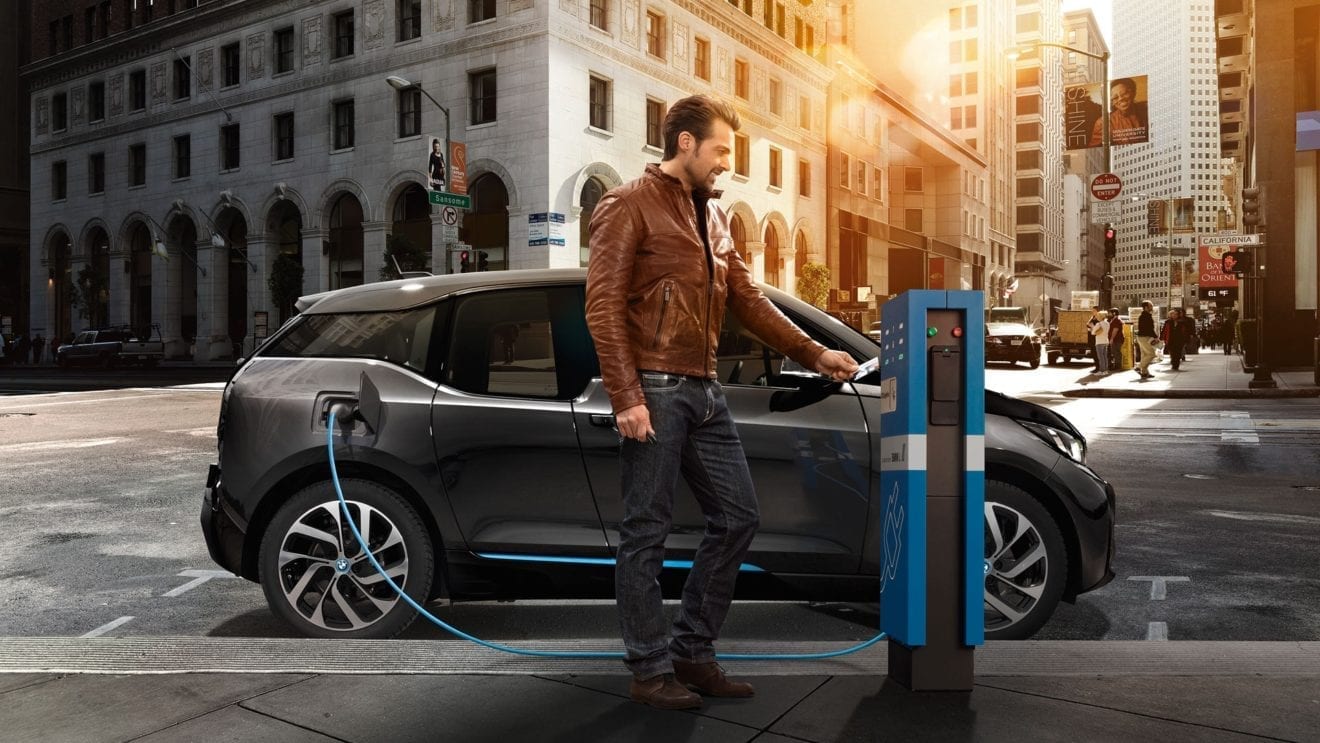
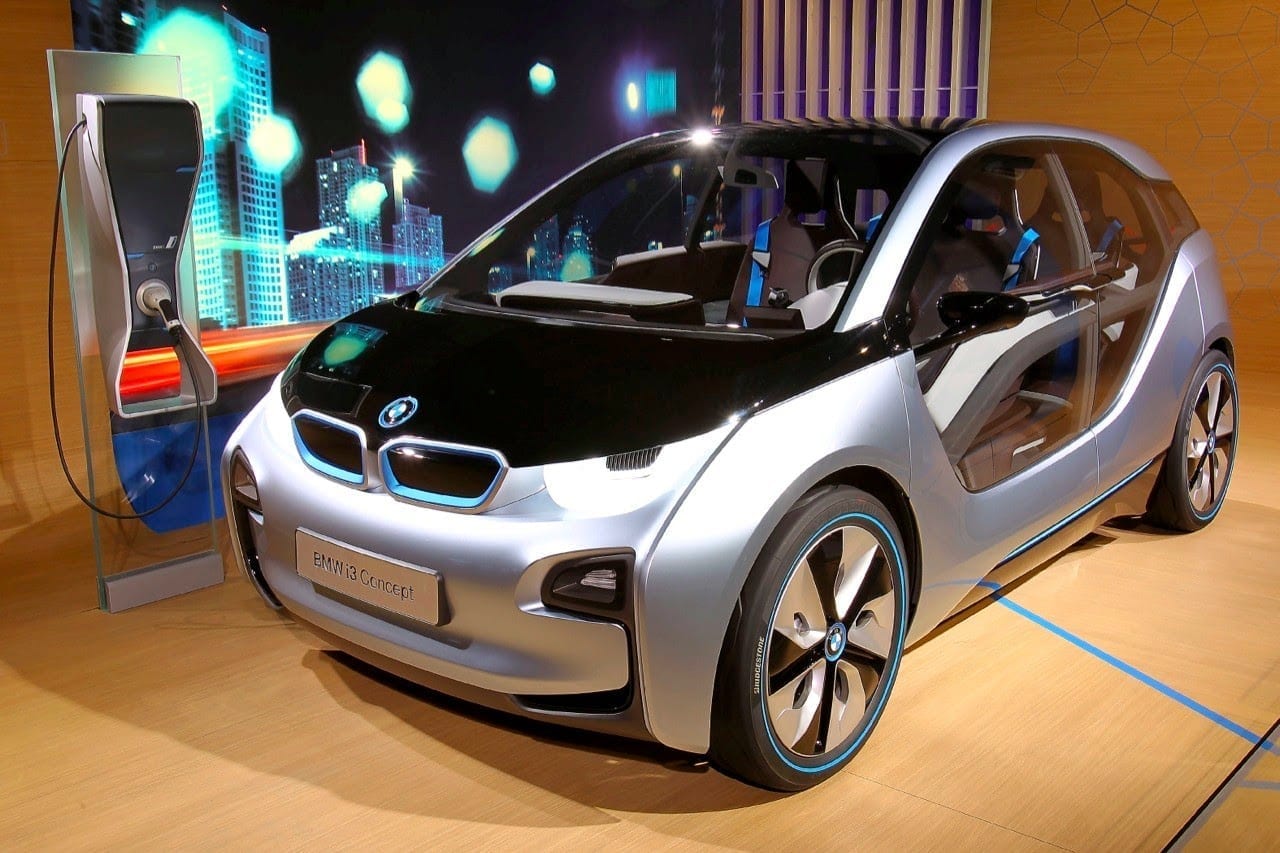
    BMW has transformed its “i” division into a development center for self-driving cars, a board member told Reuters, a major strategic shift for the unit previously focused on making a family of lightweight electric vehicles.

    While Tesla’s (TSLA.O) Model 3 will hit showrooms in 2017, and as rivals Porsche and Audi are working on all-electric cars for release by 2019, the German carmaker appears to have put such cars on the back burner. Its next fully-electric car is not due until 2021.

    The company has changed tack after its only fully battery-powered car, the i3, failed to gain traction with the public, with only 25,000 sales last year. By contrast, Tesla has already received more than 370,000 orders for its Model 3.

    Now, rather than seeking to match the likes of Tesla and Porsche with a new zero-emissions sports limousine for release within the next two years, its main focus will be on developing an electric car with the next generation of technology: autonomous driving.

    In an interview at the company’s headquarters in Munich, BMW board member Klaus Froehlich, who is in charge of development, said he had relaunched the i division in April as a unit devoted to producing cars that drive themselves.

    “It is now in ramp-up stage. We call it Project i Next.”

    The revamp also follows at least four high-profile staff defections from the division this year. Dirk Abendroth, manager of BMW’s “i” powertrain group, Henrik Wenders, vice president product management BMW “i”, and Carsten Breitfeld, vice president engineering, head of the i8 vehicle program, were poached by a Chinese electric vehicle startup.

    As part of its autonomous driving push, BMW is hiring experts in machine learning and artificial intelligence. It is also integrating the functions of existing computer driven assistance systems like cruise control, emergency braking, lane-keeping support and automatic parking.

    RIDE-HAILING

    With a fully autonomous vehicle, BMW could launch a ride-hailing business without having to pay drivers, Froehlich said, giving carmakers a competitive edge over new ride-hailing companies like Uber [UBER.UL] and Lyft which are eroding car sales by making part-time use as convenient as ownership.

    Earlier this month Toyota Motor Corp (7203.T) said it would invest in Uber, and Volkswagen (VOWG_p.DE) announced a $300 million investment in Gett, a smaller ride-sharing company.

    BMW too may partner with a ride-hailing firm, particularly in markets like China, but the Bavarian carmaker’s strategy on potential partnerships with companies in this space is still being worked on, Froehlich said.

    Sales of highly autonomous vehicles – ones where permanent active input from the driver is not required – are not expected to gain traction until 2020, but could then rise to around 9 million a year by 2025, according to analysts at Exane BNP Paribas.

    China, the world’s largest car market, is likely to be the market where autonomous cars will first emerge on a large scale, Froehlich said.

    “China is extremely fast implementing technology. Last year more electric cars were sold in China than in all the other global markets combined,” he added.

    BMW is also considering expanding in the area of reserving parking spaces and electric car charging stations over mobile phones, a market which is still fragmented within countries. The carmaker has already invested in ParkNow and Parkmobile, two digital parking and payment services.

    “We want to actively participate in a consolidation process,” Froehlich said.
  • Tesla calls out to build a million all-electric cars a year by 2020

    Tesla calls out to build a million all-electric cars a year by 2020

    Technology entrepreneur Elon Musk gave a public shout-out to the sharpest minds in manufacturing this week, calling on them to come help Tesla Motors Inc build a million all-electric cars a year by 2020.

    Musk says he is “hell-bent” on making the Silicon Valley automotive upstart a manufacturing powerhouse, but his vision relies on finding veteran auto engineers to ramp up volume ten-fold in four years – a challenge even for established carmakers.

    Tesla on Wednesday said it would build 500,000 cars in 2018, two years ahead of schedule, and close to 1 million by 2020. The same day Tesla said its vice presidents in charge of production and manufacturing were leaving.

    “You’re looking at a company with significant levels of management turnover at the highest ends, people without experience in the planning, design or build of vehicles, and you expect to crank it up at those kinds of volumes?” asked Michigan-based auto manufacturing consultant Michael Tracy.

    Putting aside the issue of capital requirements, auto experts point to a shortage of manufacturing engineers, whose ranks were thinning out even before the U.S. auto crisis hit in 2008.

    “It’s a constant issue we have in this country,” said Garth Motschenbacher, director of employer relations at Michigan State University’s College of Engineering.

    “For the longest time manufacturing was seen as the dirty end of engineering,” he said.

    At the same time, Alphabet’s Google and Apple are working on car programs and courting the same potential employees. So are established auto names like Ford Motor Co, General Motors Co and Toyota Motor Corp .

    A 2015 Deloitte report found it takes three months to hire skilled engineers, and the shortage is crimping manufacturers.

    Robust early reservations for the upcoming Model 3 mass-market car may have assured Musk of demand, but now comes the execution, said automotive recruiter Stephen Parkford.

    “It’s like reservations for a restaurant that’s not open yet. You got the menu, but you don’t have a chef!” he said.

    Hiring a highly proven production engineer from a traditional carmaker who arrived with his entire team could speed the process, Parkford said.

    But while young engineers will jump at the chance to work for Tesla, the “by-the-numbers, disciplined manufacturing guys” with 15-20 years experience will be harder to nab, said Cuneyt Oge, president of the Society of Automotive Engineers. One key obstacle is the high price of living in Silicon Valley.

    Musk needs a visionary auto industry veteran, Oge said. “But anyone with that kind of experience is going to say, ‘Hey, Elon, you can’t do this in two years.’”

    Tesla is known for pushing the envelope on design and technology but has stumbled in manufacturing, with prior launches marked by delays and quality issues.

    Traditional automakers have more human and financial resources than cash-burning Tesla: Tracy pointed to Nissan Motor Co Ltd’s ability in 2004 to bring in 200 engineers from Japan to help fix quality issues at its recently opened assembly plant in Canton, Mississippi.

    “Greybeards” are crucial to build and run factory systems, said Oge. “You can’t just defy the laws of business physics which require you to go down a learning curve collectively to build that systems know-how,” he said.

    While Tesla employees may cite Musk’s tirelessness and attention to detail, even bedding down inside his Fremont, California factory, others like consultant Tracy see a worrying sign.

    “If Elon is sleeping in a sleeping bag in a conference room off of the final assembly line, then there’s an awful lot happening in that factory that’s wrong,” Tracy said.

  • Apple explores charging stations for electric vehicles

    Apple explores charging stations for electric vehicles

    Apple is investigating how to charge electric cars, talking to charging station companies and hiring engineers with expertise in the area, according to people familiar with the matter and a review of LinkedIn profiles.

    For more than a year, Silicon Valley has been buzzing about Apple’s plan to build an electric car. Now the company appears to be laying the groundwork for the infrastructure and related software crucial to powering such a product.
    The moves show Apple responding to a key shortcoming of electric vehicles: “filling up” the batteries. A shortage of public charging stations, and the hours wasted in charging a car, could be an opportunity for Apple, whose simple designs have transformed consumer electronics.

    Apple, which has never publicly acknowledged a car project, declined to comment for this story. Neither the LinkedIn profiles nor sources said specifically that Apple was building charging stations for electric cars.
    But automotive sources last year told Reuters that Apple was studying a self-driving electric vehicle (EV), as the Silicon Valley icon looks for new sources of revenue amid a maturing market for its iPhone.

    Apple is now asking charging station companies about their underlying technology, one person with knowledge of the matter said. The talks, which have not been reported, do not concern charging for electric cars of Apple employees, a service the company already provides. They indicate that Apple is focused on a car, the person added.

    Charging firms are treading carefully, the person added, wary of sharing too much with a company they view as a potential rival.
    It is unclear whether Apple would want its own proprietary technology, such as Tesla Motors’ Supercharger network, or would design a system compatible with offerings from other market players.

    Several charging station suppliers contacted by Reuters declined to comment about any dealings with Apple, which typically requires potential partners to sign non-disclosure agreements.

    Arun Banskota, president of NRG Energy electric vehicle charging business, EVgo, did not respond directly to questions about Apple, but said repeatedly that his company was “in discussions with every manufacturer of today and every potential manufacturer of tomorrow.”

    Apple has hired at least four electric vehicle charging specialists, including former BMW employee Rónán Ó Braonáin, who worked on integrating charging infrastructure into home energy systems as well as communication between EVs, BMW and utilities, according to a LinkedIn review.

    As recently as January Apple hired Nan Liu, an engineer who researched a form of wireless charging for electric vehicles, for instance. Quartz earlier this month reported that Apple had hired former Google charging expert Kurt Adelberger.
    Electric vehicle charging stations are manufactured, installed and operated under varying business models. Players in the space include Car Charging Group and privately held ChargePoint, SemaConnect and ClipperCreek, infrastructure companies such as Black & Veatch and AECOM as well as General Electric, Siemens and Delta Electronics.
    The three largest utilities in California also have plans to install charging stations.

    CHARGER SHORTFALL

    The electric car industry has faced a chicken-and-egg paradox with the installation of charging stations. Property owners have been reluctant to install the stations before EVs hit the road en masse, and drivers are wary of buying EVs until charging stations are widely available.

    Apple’s home state of California by 2020 will need about 13 to 25 times the roughly 8,000 work and public chargers it currently has, to support a projected 1 million zero-emission vehicles on the road, according to an estimate by the National Renewable Energy Laboratory.

    Tesla recently goosed electric vehicle demand, unveiling its more affordable Model 3 sedan, generating hundreds of thousands of reservations from potential buyers and leading many experts to calculate the number of EVs will soon outstrip the charging station supply.

    Tesla has led the way with a proprietary network for customers, who also can use public chargers. Tesla’s more than 600 “Supercharger” stations juice up a car in about 30 minutes, more than twice as fast as the standard “fast charger,” called Level 2.
    One global engineering and construction firm already has reached out to Apple to offer its services, a person at the firm said.
    “It would be natural to assume if Apple is going to have a full battery electric vehicle that creates a seamless consumer experience the way Apple does, the charging infrastructure and its availability would be of paramount importance,” the source said.