Retail News CRM

Tag: Electronics

  • Samsung dreams of a future filled with 8K TVs

    Samsung dreams of a future filled with 8K TVs

    Samsung Electronics will expand its lineup of 8K televisions this year, hoping to launch the premium products in 60 countries around the world. 8K televisions have four times more pixels than 4K, which until recently was the most cutting-edge screen a high-end television could have. When compared to a 4K TV, 8K screens are brighter with more color contrast and sharper edges. Samsung released its first 8K television last year.

    Han Jong-hee, Samsung’s president in charge of the visual display business, said in a press conference Friday that he expects 2019 to mark the start of a new era where 8K becomes the new norm in the high-end television market.

    “4K grew to take up 60 percent [of all Samsung TV sales] in five years – I expect 8K to show a similar level of performance, maybe faster considering how tech develops so fast these days in all sectors including content and displays,” he said at the event held in Samsung’s Suwon complex in Gyeonggi.

    The company’s 2019 goal for 8K TVs is to reach a double-digit year-on-year growth rate for market share in the local high-end TV sector. Han says the goal is “reachable,” adding that half of the large Samsung televisions sold in the country after November were 8K. That month, Samsung started local sales of the product.

    Regarding its global business, the QLED 8K started selling in Europe, Korea, the United States and Russia last year. Tomorrow, the company will unveil new models for 2019 at the Samsung Forum, a showcase event for clients that simultaneously takes place in various regions around the world.

    This year’s plan is to launch sales in 60 countries.

    Whereas last year the QLED 8K lineup came with four size variations with the largest at 85 inches, this year there will be six variations with the largest at 98 inches. The new sizes are in line with Samsung’s strategy to continue strengthening its lineup of massive TVs to keep a competitive edge in the high-end price sector.

    It remains to be seen whether Han’s optimistic views on 8K television will come to fruition as quickly as he projects. Even if 8K TVs exist, the higher definition and the high price it comes at won’t be of much use if video content remains at the 4K level.

    “5G networks will spread this year and the demand for 8K content will go up as well,” responded Han when asked about the problem. Han particularly expressed anticipation for the 2020 Tokyo Olympics. Japan’s national broadcaster NHK plans to live stream the games worldwide in 8K.
  • Courts Asia continues negative trend as Malaysian sales tank

    Courts Asia continues negative trend as Malaysian sales tank

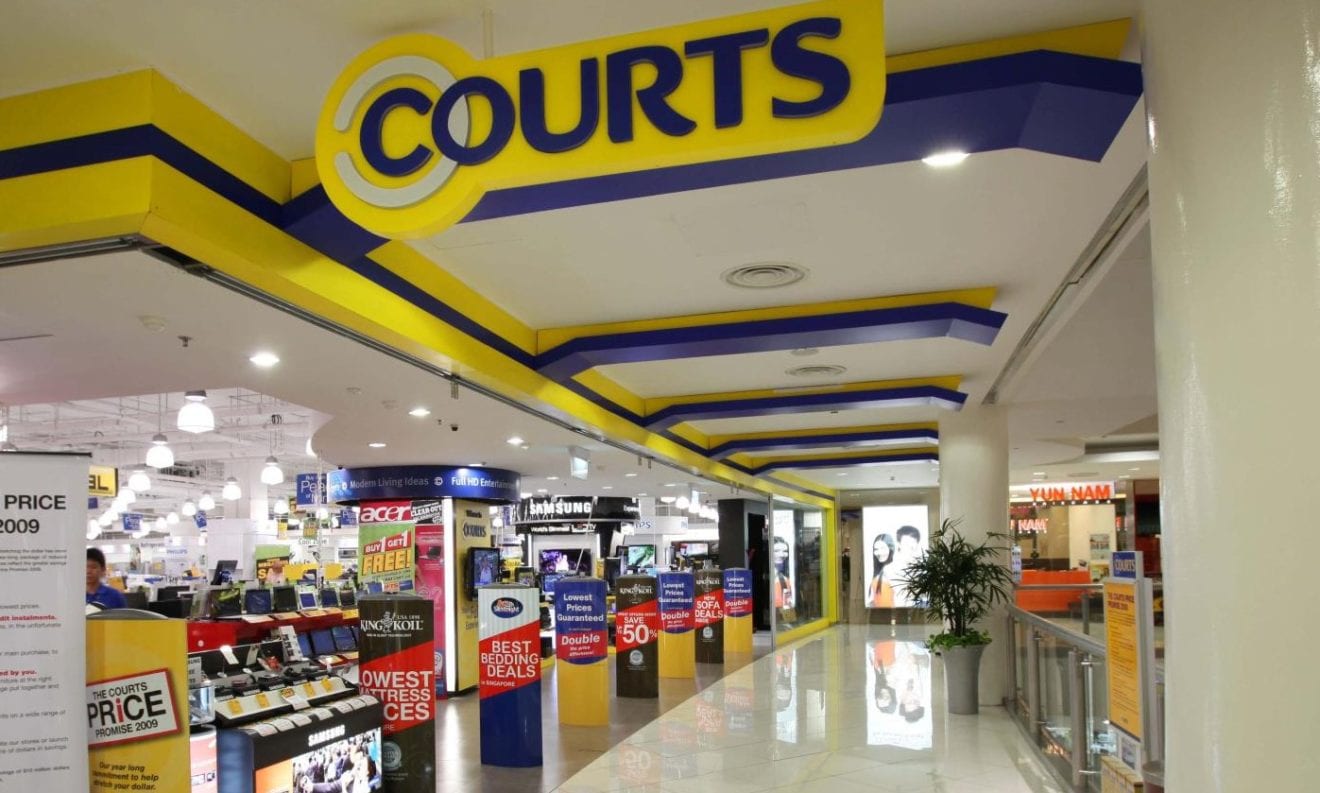
    Group sales fell 6.2 per cent to $175.3 million, largely due to a 22.2 per cent decline in Malaysian sales measured in ringgit with lower consumer demand for goods and services.  Singapore sales, which account for three-quarters of the business’ overall sales, slipped a negligible 0.7 per cent, while the company’s Indonesian woes continued. Although the market accounts for just 3.4 per cent of Courts Asia’s sales, revenue fell 7.3 per cent in local currency. Courts Asia is already taking steps to stem losses in Indonesia, recently announcing the closure of one of its megastores and the downsizing of another.

    Japanese electronics retailer Nojima Corp lodged a takeover bid for Courts Asia last month, conditional only on the formal acceptance by Courts Asia’s majority shareholder  Singapore Retail Group, which has already indicated its acceptance. The Japanese company plans a strategic review of the business and will consider delisting it.

    Meanwhile, Courts Asia says it will continue to endeavour to improve efficiencies in its Malaysian business to improve productivity and return to profit. Twelve underperforming stores have already been closed reducing the network to 54.

  • Where will Apple retail chief go after resigning?

    Where will Apple retail chief go after resigning?

    Within hours of the announcement that Apple retail chief Angela Ahrendts was to leave the role in April, speculation was rife as to where she is headed. Ahrendts, who led the fine-tuning of Apple’s retail business for five years after turning around British fashion house Burberry, has a stellar career in the luxury business. Several fashion industry sources have speculated she may be headed to take the helm of Ralph Lauren.

    In a statement announcing the Apple retail chief’s departure, the company said she is leaving the company “for new personal and professional pursuits”. CEO Tim Cook described her departure as “bittersweet”.

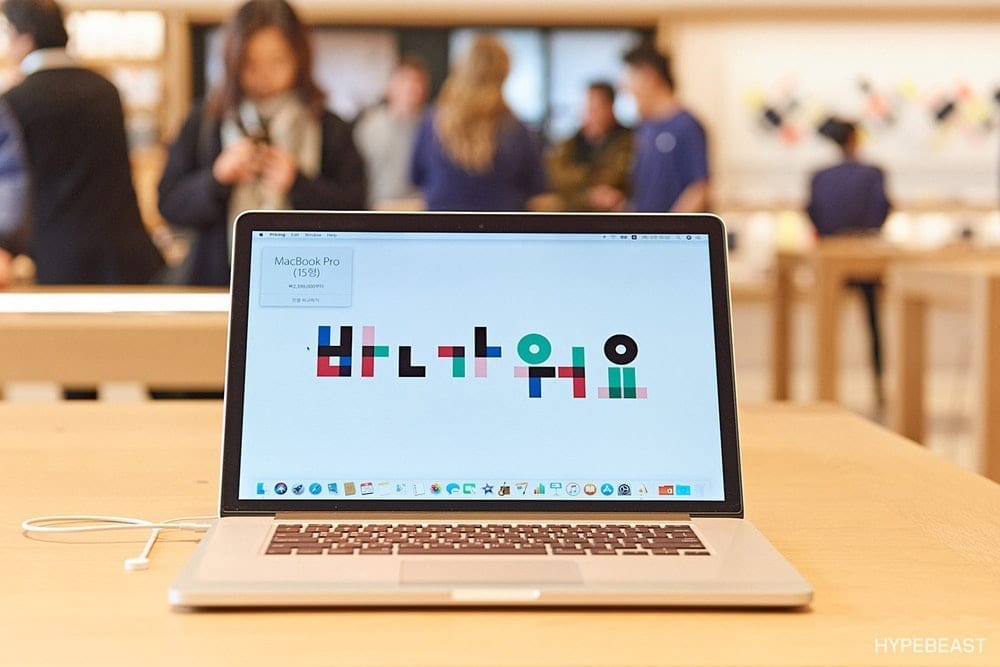
    During her time with Apple, Ahrendts – who was once tipped to take over Cook’s role in the future – has subtly redefined the Apple stores from high-end tech shops into community hubs. She took the renowned Apple Store concept created by predecessor Ron Johnson, dropped the “store” from its title and expanded the network to 506 physical stores and another 35 online.

    “Her vision includes stores as gathering spaces and hubs for creativity,” observed Daphne Howard of Retail Dive.

    “While Johnson is credited with initiating the brick-and-mortar strategy that has been the backbone of Apple’s hardware sales, including minimalist spaces conducive to product demos and customer education, Ahrendts has taken that [a step further].”

    Apple’s retail business will now be overseen by Deirdre O’Brien, the company’s senior VP of people, who will add retail to an already long list of responsibilities including talent development, Apple University, recruiting, employee relations, business partnerships, benefits, compensation and inclusion, and diversity.

    Some might see that as a sign Apple is reducing its focus on its retail business, although O’Brien might be considered something of an Apple acolyte, having been with the company for 30 years.

  • Time for China’s smartphone brands to bloom

    Time for China’s smartphone brands to bloom

    Like many urban Chinese consumers, Shenzhen civil servant Gao Jian has had a long-held belief that the quality of domestic smartphone brands paled in comparison with foreign brands, especially Apple. But in December, Gao joined the growing number of mainland consumers who have made the switch from Apple’s iPhone to a premium Android smartphone from a major Chinese brand. He bought a Mate 20 Pro, the flagship model from the country’s largest smartphone supplier Huawei Technologies.

    “Its design and cameras are better than what I expected,” Gao said. “Also, iPhones have become increasingly unaffordable.”

    His experience reflects the broader success of the Chinese mobile phone industry in smashing people’s perception that domestic suppliers are only good for inexpensive, low-quality products.

    That stereotype has beset many Chinese brands in the home appliances, consumer electronics, personal computer, car and mobile phone markets, where products from more established brands in the US, Japan or Europe were preferred by mainland consumers for many years.

    But brands like Haier Group Corp, Lenovo Group and, more recently, Huawei, have expanded their operations, increased research and development, and made advanced products to change that impression around the world.

    China is now home to some of the most successful smartphone brands, which rival the likes of Samsung Electronics, Apple and LG Electronics.

    Shenzhen-based Huawei, the top global supplier of telecommunications network equipment, was ranked the world’s second biggest smartphone vendor – behind Samsung and ahead of Apple – for the second consecutive quarter in the three months ended September 30, according to research firm IDC. Xiaomi Corp and Oppo took the No 4 and 5 spots in the same quarter.

    The emergence of Chinese smartphone brands on the global stage has mirrored the rising competitiveness of the country’s telecoms network equipment suppliers, which have won market share with value-for-money offerings as well as on heavy investments in research and development.

    The gains have also sparked increasing pushback by the US, which is persuading its allies to boycott Chinese telecoms gear suppliers such as Huawei on grounds of national security.

    With the world’s biggest internet population and smartphone market, China had as many as 300 domestic mobile phone companies about three years ago. Cutthroat competition reduced that number to about 200 last year, as Chinese consumers bought fewer smartphones and the economy grew at a slower pace.

  • Apple again the most valuable US company

    Apple again the most valuable US company

    Apple won back its crown as the most valuable publicly listed US company on Wednesday, ending the session with a market capitalization above recent leaders Microsoft and Amazon.com. Apple edged up 0.03%, putting its market value at $821.5 billion. Microsoft’s market capitalization ended at $813.4 billion after its stock dipped 1.11%, while Amazon’s stock market value finished the day at $805.7 billion, in third place, after its shares slid 1.12%.

    Apple’s stock has risen about 13% since its quarterly earnings report on Jan 29, with investors betting it was oversold following months of concern about a slowdown in iPhone demand and the company’s rare revenue warning on Jan 2 related to soft demand in China.

    But slowing iPhone sales have led to lower expectations for Apple’s stock. The average analyst price target for Apple has fallen from $240 three months ago to $175, less than a dollar more than its current stock price of $174.24.

    After touching a record $1.1 trillion last October, Apple’s market capitalization fell gradually, and it was overtaken in December by Amazon and Microsoft, which have taken turns in the top position since then.

    Apple’s stock market value hit a low of $675 billion on Jan 3 after its revenue warning, but then steadily recovered, helped in part by a quarterly report that was better than feared by investors.

    While Apple has gained in recent sessions, Microsoft and Amazon’s shares fell after their quarterly reports. Amazon has declined almost 5% since Thursday, when it forecast first-quarter sales below Wall Street estimates and said it would step up investments in 2019.

    “That has raised some eyebrows, it’s a perception that Amazon may be settling into a more mature phase in terms of growth,” said Dan Morgan, a senior portfolio manager at Synovus Trust in Atlanta.

    Morgan owns shares in Apple, Amazon and Microsoft, but he said that if forced to choose, he would favor Amazon because of its lead in cloud-computing market share.

    Microsoft’s stock is about flat from last Wednesday, when the software maker met targets for its quarterly results and forecast.

  • Apple sales and profit slip as demand falls

    Apple sales and profit slip as demand falls

    Tumbling iPhone demand drove an uncharacteristic decline in Apple sales in the first quarter trimming back its profit for the period. Sales of its iPhone range slumped 15 per cent year on year, and although burgeoning revenue from services like digital media subscriptions – up 19 per cent to a new high of US$10.9 billion – and other products compensated, total sales were down 5 per cent to $84.3 billion.

    Sales in China slumped 26.6 per cent during the period.

    Net income fell by $100 million, from $20.065 billion in the December 2017 quarter to $19.965 billion in the latest quarter. While the company championed setting “an all-time earnings per share record” that was a consequence of a share buyback program reducing the share pool rather than an improved bottom line.

    Commenting on the results, GlobalData Retail MD Neil Saunders said while Apple is still a money-making machine, the sales decline “symbolises a company that is starting to run out of steam”.

    “In our view, this is something to be corrected, not least because Apple is a costly company to run and it relies on strong revenue growth to drive up the bottom line. As this quarter’s figures show, failure to achieve that results in profit erosion.”

    Saunders said the slowdown in iPhone sales reflected Apple’s inability to come up with meaningful and valuable innovations that wow consumers.

    “The latest iPhones might be works of art from an engineering perspective, but they are essentially incremental products that lack the excitement and newness of earlier models. With the higher price points of top-end models, consumers expect a lot more for their money. The blunt truth is, Apple’s latest line up of phones doesn’t do that much more than the generations that came before.”

    He said the slowdown in China is a problem Apple shares with many other companies.

    “The country is suffering from more sluggish consumer demand which has put the brakes on retail growth rates across many sectors. However, the issue for Apple is that this has coincided with a rise in competition from local phones and devices which has helped to eat into its own growth. In short, China is no longer the engine of growth for Apple that it once was and this makes Apple uncomfortably more reliant on mature markets to drive revenues. Some of those markets, like Europe, are also not delivering – thanks to very high price points and consumers that are hesitant to spend on big-ticket items.”

    From must have to might buy

    Saunders said Apple’s iPads and some of its Macs are good, quality items, however they are simply not impressing the market and Apple is losing its lustre in terms of producing compelling products.

    “In our view, Apple has moved from a position of ‘must have this and must have it now’ to ‘might buy this at some point in the future’. Price increases may mitigate this but, ultimately, such a shift can only ever result in a softer sales performance.”

    While services are performing well, Saunders said Apple must push much harder.

    “Amazon is successfully creating an ecosystem of services through Prime. Apple needs to do something similar by building on its Apple Music subscription and its App Store offering. Movies and television content are also needed to propel sales.

    “In our view, Apple should seriously consider a big acquisition such as Netflix. Content is a big growth area and is becoming increasingly linked to devices. Apple needs to play more heavily in this space both to generate new opportunities but also to defend its own device business.”

    While Apple remains a solid and financially successful company, he said, a lack of serious and significant innovation means it runs the risk of diluting future earnings.

    “Apple thrives off serving a mass market; at the moment its moves to provide more expensive items to fewer people will ultimately do further harm to the bottom line. The clear blue water that once existed between Apple and its rivals is much diminished. The company has time to reopen the gap, but to do so, it needs to pull something new and unique out of its hat sooner, rather than later.”

    Cook’s positive spin

    Apple CEO Tim Cook delivered a positive spin on the results: “While it was disappointing to miss our revenue guidance, we manage Apple for the long term, and this quarter’s results demonstrate that the underlying strength of our business runs deep and wide. Our active installed base of devices reached an all-time high of 1.4 billion in the first quarter, growing in each of our geographic segments. That’s a great testament to the satisfaction and loyalty of our customers, and it’s driving our services business to new records thanks to our large and fast-growing ecosystem.”

    At the end of the quarter, Apple’s net cash balance was $130 billion.

  • Samsung Philippines redesigns its Manila store

    Samsung Philippines redesigns its Manila store

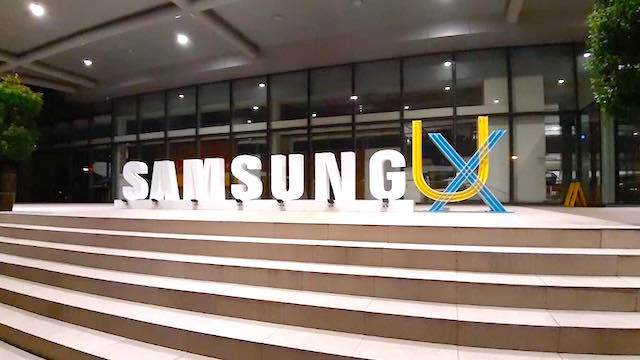
    Samsung Philippines has launched a redesigned flagship store in Manila. Located in CyberZone at SM Megamall, the store is designed to showcase the brand’s latest technologies and aesthetics, with U-shaped center bars built to facilitate one-on-one communication with customers as they interact with the products. A central ‘Newness Table’ serves to show off the most recent Samsung innovations.

    Accessories are given the same exposure as the more expensive offerings with equal opportunities for consumers to examine and try before they buy. Dedicated spaces are reserved for Gear S watches and Samsung Gear VR offerings, as well as audio products such as speakers and headphones.

    The flagship also houses a revamped customer service area, featuring experience lounges and consumer learning programs.

    “Samsung as a brand has always been known to consistently redefine the new normal and to go beyond expectations. Over the years, our mobile phones have set the benchmark for what the consumers need and want”, said Samsung Philippines president James Jung. “The new store design heralds a new chapter in Samsung retail, enabling customers to engage with our brand and products in new ways.”

  • Tech sector forecast to see slower growth ahead

    Tech sector forecast to see slower growth ahead

    Hong Leong Investment Bank (HLIB) Research anticipates slower growth in the technology sector due to downside risks in the macro environment coupled with waning data trends. However, it expects automotive and Internet of Things (IoT) to take the forefront while smartphone takes a backseat. The research house said in a note that for the first 11 months of 2018 (11M18) global semiconductor sales were outstanding after growing 16%, thanks to the explosive growth of memory followed by discrete and optoelectronics.

    As for 2019, consensus is projecting 3% growth for that segment.

    “However, we see further downside to this projection considering the US-China trade conflict, stagnant smartphone demand, industry-wide inventory adjustment and weaker memory prices,” HLIB said.

    The automotive sector is expected to be the major growth driver for global technology industry supported by its development towards full autonomy. The equipment industry remained solid with billings increasing 11% in 11M18, supported by heavy investments in all regions except Taiwan.

    “However, year-on-year growth has been on a snail’s pace for the past five months, translating into a significant deceleration from past 20 consecutive months’ double-digit growth rates,” the research house explained.

    According to SEMI, this reflected the near-term weakening demand for personal computers, mobile phones and servers as well as pulled back investments in response to recent softening of memory prices.

    “This is in line with its expectation of expansion in capital spending not outpacing sales growth on the long run and potentially lead to industry-wide overcapacity,” said HLIB.

    The research house also highlighted that local semiconductor players may experience strong demand to support the disrupted global supply chain should the procurement levy and technology transfer restriction from US take effect.

    Note that China sources substantial fabrication equipment from US players for its expansionary semiconductor industry towards the “Make in China 2025” vision. Vice versa, US fabless semiconductor players outsource their product fabrication and some are produced in China.

    With strong greenback, HLIB expects tech firms to be marginally boosted thanks to their US dollar-denominated sales while partly offset by the US dollar cost items.

    It estimates the ringgit to be weaker in FY19 with at full-year average of RM4.20 against US dollar.

    Nonetheless, pricier commodities, compounded by stronger US dollar projection, will exert pressures on margins for traditional packaging.

    Maintaining a “neutral” call on the sector, HLIB displayed a cautious stance in the absence of near-term catalyst as it expects global sales and capital spending to grow moderately.

    As for stock picks, it gave Frontken a “buy” call at a target price of RM1.05 on the back of bullish global semiconductor market outlook, robust fab investment, leading edge technology, oil and gas recovery and strong balance sheet.

  • Xiaomi opens massive Mi store in Paris

    Xiaomi opens massive Mi store in Paris

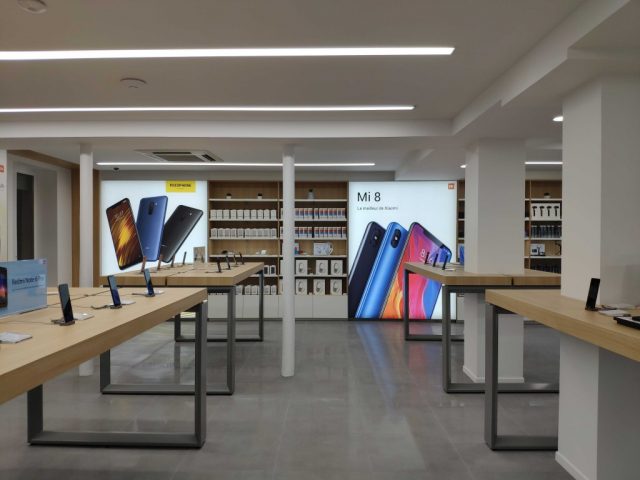
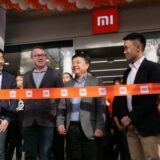
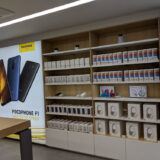
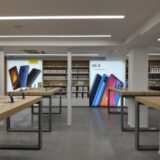
    Chinese electronics firm Xiaomi has opened its largest European Mi Store in Paris. Queues for the January 18 1pm opening started to form at the Champs-Elysees location at sunrise, despite freezing temperatures. The store is hosting a reportedly comprehensive selection of the brand’s full product range, including smartphones, headphones, cameras and home appliances.

    In celebration of the launch, Xiaomi held a three-day sale on its French online store featuring discounts of up to €50. The supersized flagship is Xiaomi’s second location in Paris.

    View the gallery below for images of the stores (11 images) :

  • Apple took unfair profits: Korea FTC

    Apple took unfair profits: Korea FTC

    Korea’s corporate watchdog claimed Apple Korea has bargaining power over local mobile carriers and that it has reaped unfair profits from them in a statement Monday. According to the Fair Trade Commission (FTC), experts called in by the antitrust body said Apple Korea exploited its market position to place part of its advertising costs on local telecommunications companies.

    The statement comes after exchanges between the FTC and the iPhone maker during a deliberation on the company’s position on Jan. 16. It was the second round of hearings since the first deliberation in December.

    Apple Korea has been under investigation by the FTC since 2016 on whether it forced carriers to pay advertising and warranty costs.

    Korea’s fair trade law prohibits abuse of one’s position during a transaction.

    Apple Korea claimed through its expert witnesses, which included economists and business experts, that it does not have leverage over local carriers and defended its actions, saying that its advertisement fund was able to help all parties involved.

    The experts also argued that Apple’s involvement in advertisements was justifiable to maintain the iPhone brand.

    Expert witnesses for the FTC responded that Apple Korea can be regarded as being in a position of power over carriers and that the advertisement fund served to collect additional profit from them. They also stated that the company’s activities in taking part of carrier advertisements cannot be seen as part of their branding strategy.

    The FTC’s Economic Analysis Division provided similar analysis to those made by its witnesses.

    The hearings on the investigation will continue, with the third round of deliberations scheduled for Feb. 20.

    The antitrust body said that the third hearing will discuss specific actions made by Apple. It is unclear whether the third hearing will be the last.

    If found to have abused its position, Apple Korea could face fines worth up to two percent of its related sales.

    The iPhone maker has a history of trouble with the FTC.

    The company made corrective measures under the corporate watchdog for its product replacement policy back in 2011 and its services agreements with local companies in 2016.

  • Samsung spent $3.12M lobbying in U.S. last year

    Samsung spent $3.12M lobbying in U.S. last year

    The American subsidiary of Korean tech giant Samsung Electronics spent $3.12 million on lobbying U.S. politicians and officials last year, the second-largest amount following 2017, data from a Washington-based research group showed Monday. Samsung Electronics’ lobbying expense was the ninth largest among electronics companies operating in the United States, moving up two notches from a year earlier, according to the Center for Responsive Politics (CRP).

    Microsoft spent the most with $7.18 million, followed by Qualcomm with $6 million, Oracle with $5.47 million and Apple with $5.09 million, said the nonprofit research group, which tracks the effects of money and lobbying on elections and public policy.

    Among foreign companies, Samsung Electronics was the second-biggest lobbying spender after German engineering group Siemens.

    The Korean tech conglomerate has been intensifying its lobbying efforts in its key market since U.S. President Donald Trump took office in 2017 and advocated more protectionist trade policies.

    Samsung’s lobbying expenses over the past two years amounted to $6.62 million, far surpassing $6.04 million spent during former President Barack Obama’s second term from 2013-16, data showed.

    Trade-related issues were Samsung’s main lobbying target in the United States last year, with 13 cases out of 81 total in this area.

    The company also made extensive lobbying efforts for the telecommunication sector as it has been exploring ways to expand its foothold in the 5G network equipment market.

    Last month, Samsung and American telecommunication company Verizon announced their plan to launch 5G-compatible smartphones in the U.S. market in the first half of 2019.

  • Courts Asia gets buy offer from Japan retailer Nojima

    Courts Asia gets buy offer from Japan retailer Nojima

    Japanese electronics retailer Nojima Corp has launched a conditional takeover bid for Courts Asia. The deal is conditional upon Courts Asia’s majority owner Singapore Retail Group (SRG) agreeing to the deal. Offering 20.5 cents a share for the business, the offer represents a 35 per cent premium over the price shares were trading at before the bid was revealed.

    Nojima is listed on the Tokyo Stock Exchange. Like, Courts Asia, it is an electrical appliance retailer, boasting more than 8000 employees and a market capitalisation of S$1.4 billion. Sales in the year to March 31 last year were $6.1 billion.

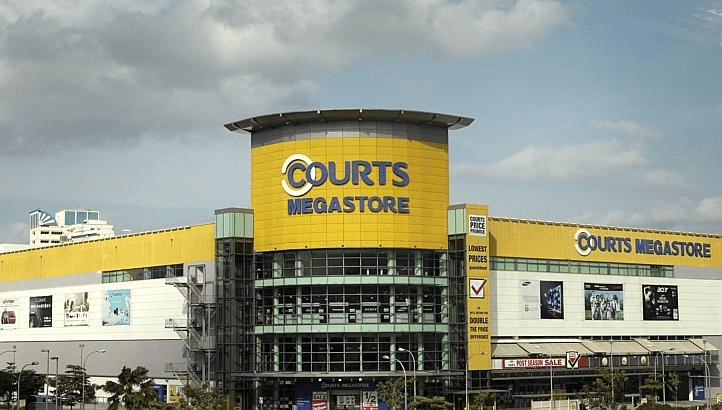
    Courts Asia has 80 stores trading in Singapore, Malaysia and Indonesia and besides electronics sells furniture and IT products as well. The company has enjoyed mixed fortunes in recent years, impacted by external factors such as the imposition of GST in Malaysia. It reported a net loss of $3.1 million in its second quarter, a stark contrast to the net profit of $1.5 million during the same period a year earlier. Sales for the three months to September 30 fell 6.4 per cent to $165.1 million.

    Nojima says if it wins control of the company it may carry out a “strategic and operational review” of the business to realise “synergies, economies of scale, cost efficiencies and growth potential”. It will most likely delist the company in Singapore.

  • Air purifier sales up 414 % after dust attack in Korea

    Air purifier sales up 414 % after dust attack in Korea

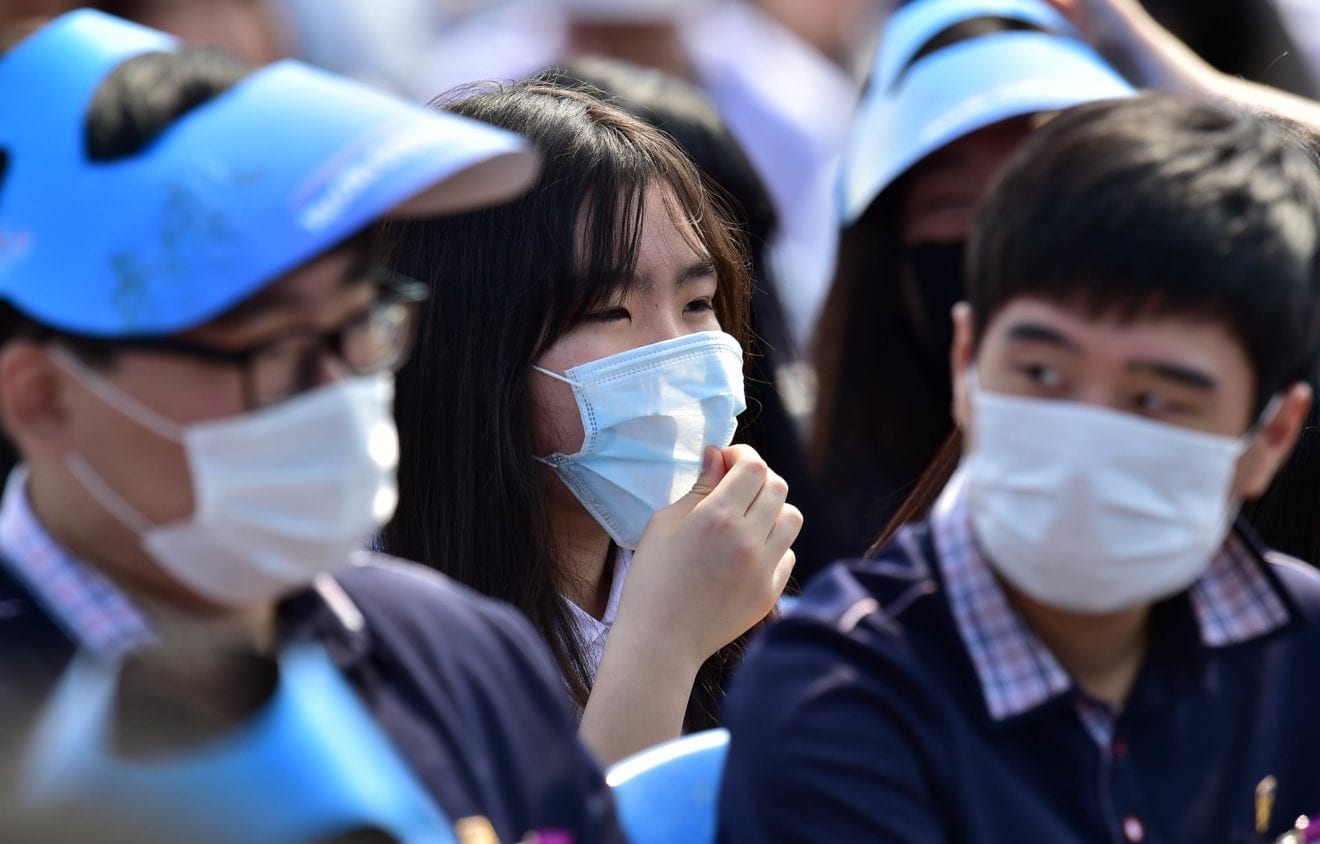
    As fine dust blows into Korea, demand for products that defend against pollution spike. According to an Emart study released Friday, mask sales between Jan. 10 and Jan. 16 surged 458 percent from the same period a year earlier while the sales of air purifiers are up 414 percent. Usually, the products are in high demand around late February and in March, when the yellow dust from the northern deserts descend on the Korean Peninsula. But sales this year are already 95 percent of the total usually reported in March.

    Sales of consumer appliances that clean clothing, such as LG’s Styler clothes closest, are up 186 percent compared to the same period a year ago, according to the retailer. Sales of dryers have increased 67 percent as the worsening pollution has made it difficult to dry laundry outdoors.

    Emart said it will be holding a special sale on fine-dust countering goods through Jan. 30.

    It plans to offer discounts on the bulk purchase of masks: 10 percent when buying two and 30 percent when buying three at a time.

    The Samsung Electronics air purifier with model number AX6ON5081 WDD will be sold at 379,000 won ($338), a 90,000 won discount, while Coway’s AP-1818C model will be sold at 439,000 won, a 60,000 won discount. The purchase of Coway’s air purifier also comes with 85,000 won worth of additional filters and 50,000 won in gift certificates.

    The retailer is also providing discounts on vacuum cleaners, including Dyson’s V10 Fluffy, the LG Electronics A9, which also has a mopping feature, Samsung’s VS8ON8062KKS and Tepal’s Air Force 360.

    Online shopping malls are ramping up their marketing of fine dust-related products. Coupang has been promoting 650,000 fine-dust products since Jan. 10.

    An exclusive study by the JoongAng Ilbo found that much of the recent air pollution is coming from China.

    The Korean Meteorological Administration is forecasting a return of high fine-dust readings. It said the level of concentration of pollutants started rising on Friday and will continue to increase today.

    When the concentration is at 15 micrograms per square meter or lower, the government rates the air quality as “good.” When it is between 16 and 35, it is deemed “normal.” When the figure is between 36 and 75, the government rates the air quality as “bad.”

    On Jan. 14, the fine-dust concentrations in the greater Seoul area peaked at 122 micrograms per square meter, the highest level since related data was first collected in 2015.

    That was two days after air pollution in major areas in China, including Beijing, Tianjin, Tangshan and Hubei Province, peaked.

    The Korean Meteorological Administration forecasts air pollution levels dropping from Sunday afternoon.

    Kweather, a private weather company, has advised people to stay indoors over the weekend and wear a protective mask when having to go outside.

  • Courts Indonesia to close its store soon

    Courts Indonesia to close its store soon

    Courts Asia is to close one of its Indonesian megastores. “The group decided to close the Courts Bumi Serpong Damai (BSD) City Megastore in Tangerang as it is historically not profitable and the group does not want to incur the high rental costs over the remaining lease term,” the retailer said in a statement. Courts Retail Indonesia will also buy the property it currently leases which houses the Kota Harapan Indah (KHI) megastore.

    Both properties were leased from Garwita Sentra Utama. Courts will forfeit a security deposit of Rp14.38 billion (S$1.379 million) and pay a penalty for early termination of the BSD site of Rp 38.7 billion ($3.6 million). The Singapore company will pay Rp97.56 billion (S$9.36 million) to purchase the other site.

    The KHI store has a total gross floor area of 21,800sqm, with about 24 years remaining on the lease.

    Courts said in its statement that the property reorganisation was part of an ongoing review of its store network.

    Having taken ownership of the KHI building, the company can consider options including downsizing its megastore and repurposing the remaining space for other commercial uses.

  • LG teams up with Google to develop VR offerings

    LG teams up with Google to develop VR offerings

    LG U+ is partnering with Google to produce three-dimensional (3-D) virtual reality (VR) video, the company said Friday. Ha Hyun-hwoi, CEO of the mobile carrier, said augmented reality (AR) and virtual reality offerings demonstrate to customers the potential of next-generation 5G networks. He made the comments during a press briefing Wednesday at the Consumer Electronics Show in Las Vegas.

    He added that LG U+ is determined to become the leading player in AR and VR, and the partnership with Google is a stepping stone in achieving that goal.

    According to LG U+, the smallest mobile carrier in the country, with 3-D VR video, viewers feel they are actually at a sports stadium or a performance hall. The technology requires 10 times the bandwidth when compared with two-dimensional high-definition videos, which is why the faster and higher-capacity 5G network is crucial to the mass production and distribution of VR video, LG said.

    The two companies will first establish an equally-invested fund and develop 3-D VR video in the first half of this year. LG U+ will take charge of design and production. The mobile carrier will also have rights to local market distribution. Google’s YouTube will own retail rights globally. The Korean company said its collaboration with Google will continue following the development of pilot material.

    The first offerings will be centered on videos of globally-popular K-pop stars. A tour around K-pop star homes, following the star for the whole day and backstage tours are some of the ideas suggested so far, LG said.

    The video will run exclusively on YouTube and LG U+’s over-the-top (OTT) VR content platform. OTT refers to streaming entertainment that is delivered directly to users over the internet without going through intermediaries, like television.

    The move by LG U+ comes after SK Telecom inked partnerships earlier this month with three local broadcasters – KBS, MBC, and SBS – to create an OTT media service that can counter Netflix.

    It also announced during CES a partnership with Sinclair Broadcast Group to cooperate on media technologies.

    Ha said dependence on OTT will grow together with the commercialization of 5G and that SK Telecom has made a “good choice in partnering with local broadcasters.”

    LG U+ plans to fight competition with its partnership with Google as well as Netflix. Under an agreement reached in November last year, Netflix programing is aired exclusively through LG’s internet protocol TV platform.