Tag: energy

  • Liquid Death Ventures Into Energy Drink Market With Low-caffeine, Sugar-free ‘sparkling Energy

    Liquid Death Ventures Into Energy Drink Market With Low-caffeine, Sugar-free ‘sparkling Energy

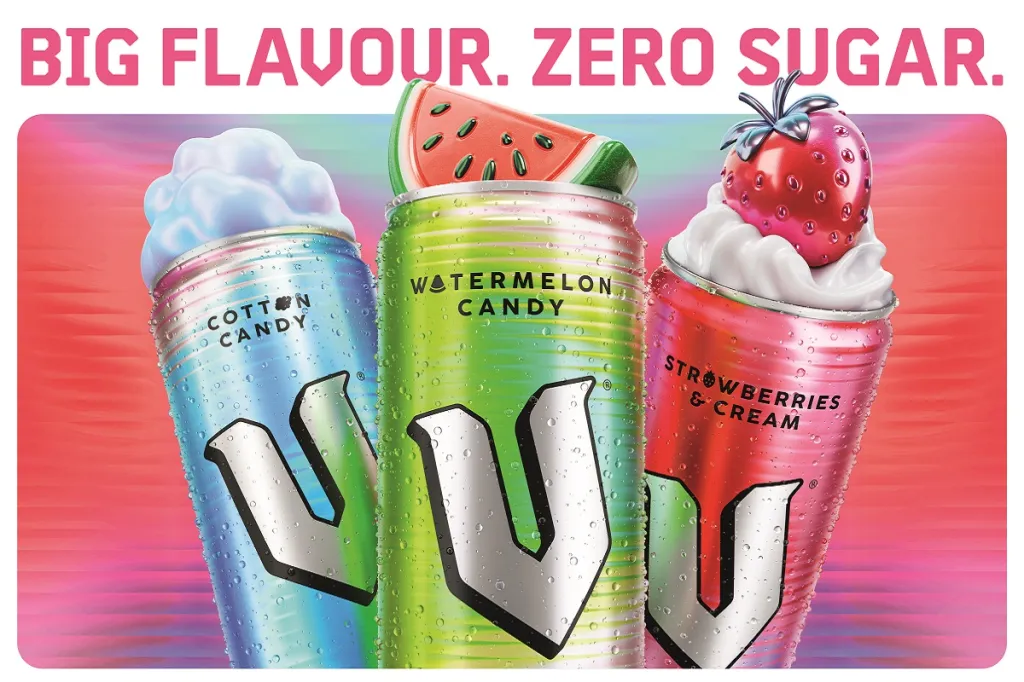
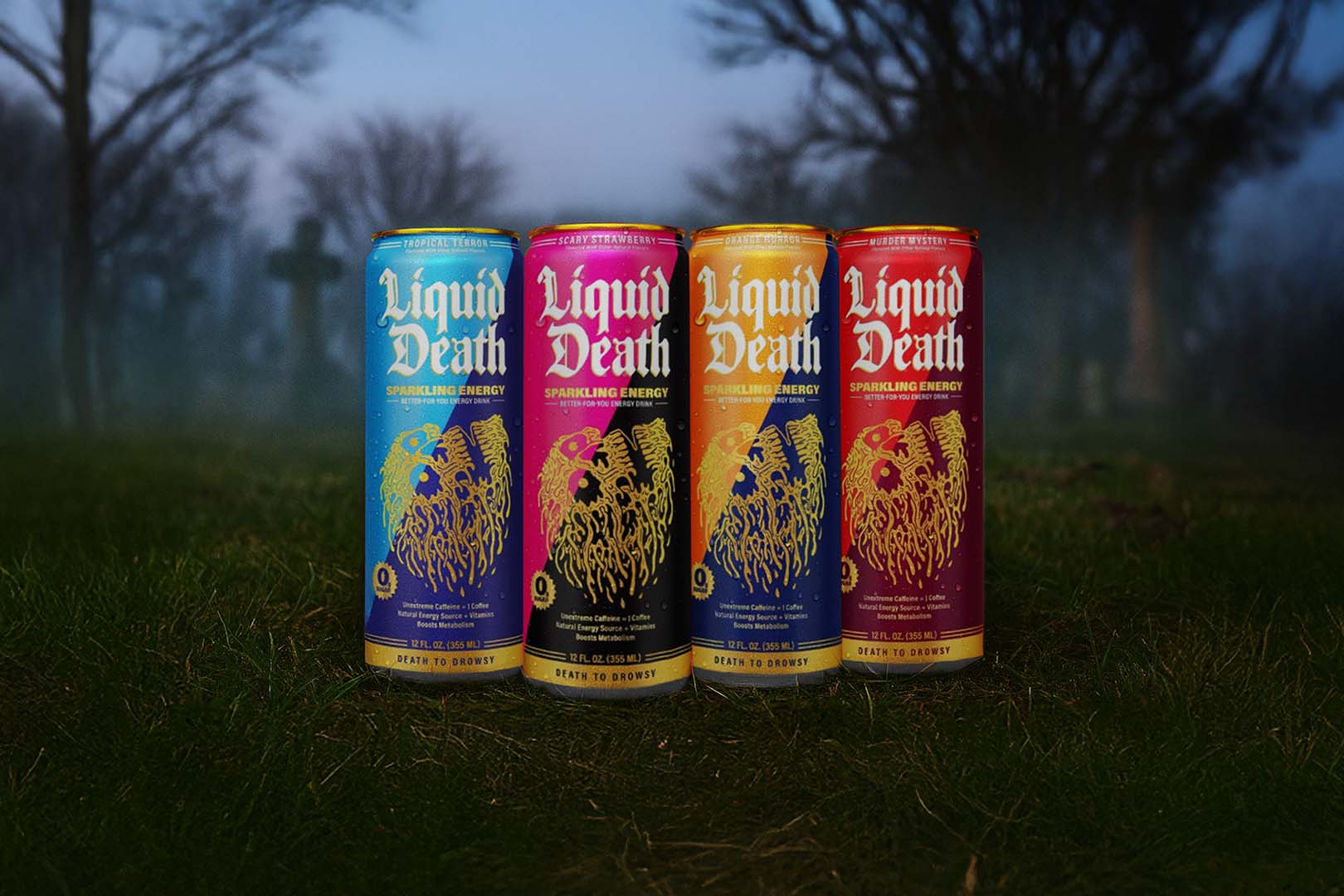
    Liquid Death, a notable canned water company, is set to make a definitive move into the energy drink market. Their new product line, named Sparkling Energy, is a low-caffeine, sugar-free beverage range expected to make its debut in the United States market early next year.

    New Flavours in the Pipeline

    The Sparkling Energy range is slated to roll out in four unique flavours. Tropical Terror, Scary Strawberry, Orange Horror, and Murder Mystery are the enticing names that have been unveiled. These four flavours promise to offer a refreshing and energy-boosting experience to their customers.

    Nutritional Aspects

    Each 355ml can of Sparkling Energy boasts a sensible caffeine content of 100mg, roughly equivalent to a cup of coffee. This seemingly modest caffeine level was purposefully chosen, as a counter-response to the excessive caffeine content perceived in the existing energy drink market.

    Furthermore, Sparkling Energy will leverage natural sweeteners, specifically stevia and allulose, to maintain its sugar-free promise. The drink also includes a beneficial infusion of vitamin B12 and vitamin C, adding another layer of nutritional value.

    Product Pricing and Marketing

    The Sparkling Energy drink is estimated to be priced at approximately US$3 per can. More intricate details about the marketing strategy for this new product range will be released as the launch date approaches.

    Questions & Answers

    What is the new product that Liquid Death is about to launch?
    Liquid Death is gearing up to introduce Sparkling Energy, a new range of low-caffeine, sugar-free energy drinks.

    What are the unique flavours that Sparkling Energy will be available in?
    Sparkling Energy will be available in four flavours: Tropical Terror, Scary Strawberry, Orange Horror, and Murder Mystery.

    What is the expected retail price of a Sparkling Energy can?
    Each can of Sparkling Energy is expected to retail for around US$3.

  • India Boosts Renewable Energy with 22 GW Capacity Surge in First Half of 2023

    India Boosts Renewable Energy with 22 GW Capacity Surge in First Half of 2023

    India has achieved a remarkable milestone, adding 22 gigawatts (GW) to its renewable energy capacity in the first half of 2025—its highest six-month boost to date. According to an analysis by Rystad Energy, this represents a staggering 57% increase from the 14.2 GW installed during the same period last year. The latest expansion includes 18.4 GW of solar energy, 3.5 GW from wind, and 250 megawatts (MW) of bioenergy.

    Government Policies Drive Renewable Momentum

    The surge in renewable capacity is largely attributed to developers racing to capitalize on the government’s Interstate Transmission System (ISTS) charge waiver. This incentive starts with a 25% discount that will increase annually, fully implemented by June 2028, effectively slashing project costs and spurring immediate action among developers, according to Rystad.

    A Step Closer to Clean Energy Goals

    This rapid expansion brings India closer to its ambitious target of sourcing 50% of its installed power capacity from clean energy sources, now reaching a total of 234 GW. Nuclear power is also gaining traction, highlighted by the commissioning of Unit 7 at the Rajasthan Atomic Power Project and the recent approval for the country’s first small modular reactor, set to rise in Bihar. However, the journey forward isn’t all smooth sailing; reliance on coal remains a significant hurdle, and the safety, cost, and waste management debates surrounding nuclear energy persist.

    Battery Energy Storage: An Integral Component

    In another notable advance, India has allocated 5.4 GW of collocated solar-battery energy storage systems (BESS) and 2.2 GW of standalone BESS to developers, marking its highest capacity allocation to date. Major players like Jindal Group secured 990 MW of collocated solar and BESS capacity, while NTPC and ReNew both captured 900 MW in the same area. In the standalone BESS sector, JSW Energy was granted 625 MW, and Reliance Power achieved 525 MW of collocated capacity.

    The Leaders of Renewable Capacity in India

    Geographically, India’s western states are leading the renewable energy charge, with Rajasthan topping the list at 37.4 GW of installed capacity, closely followed by Gujarat at 35.5 GW, and Tamil Nadu with over 20 GW. As India gears up to transform its energy landscape, it appears that the sun is shining ever brighter on its renewable aspirations.

    Questions & Answers

    What has driven India’s recent surge in renewable energy capacity?
    The surge is primarily due to developers moving quickly to take advantage of the government’s Interstate Transmission System (ISTS) charge waiver, which significantly reduces project costs and incentivizes timely action.

    How much renewable energy capacity has India installed recently?
    In the first half of 2025, India added 22 GW of renewable energy, marking a 57% increase from the previous year, with a strong emphasis on solar energy.

    What role does nuclear power play in India’s energy strategy?
    Nuclear power is increasingly being integrated into India’s energy mix, highlighted by the commissioning of new facilities; however, it faces ongoing debates about cost, safety, and waste management.

  • Singapore Hits Record High in Renewable Energy Consumption

    Singapore Hits Record High in Renewable Energy Consumption

    In May, Singapore saw an unprecedented increase in the proportion of renewable energy in its power generation mix, according to recent market data analysis. This considerable achievement is attributed to the country’s efforts to scale up solar power production and import more renewable electricity.

    The National Electricity Market’s data indicated a significant upward trend in Singapore’s domestic solar generation, recording its fastest growth since March of the previous year. The rise in imported renewable energy for the third month in a row, reaching its highest level in over two years, also played a crucial role. These factors led to a record-breaking 2.58% of Singapore’s power mix being from renewable sources.

    Reducing reliance on fossil fuels in the region has become achievable through cross-border electricity trading, particularly as the demand for electricity from data centers continues to rise. Despite its limited potential for renewable energy due to its size and geography, Singapore has set ambitious aims. By 2035, the country hopes to source about one-third of its power needs, or 6GW, from clean electricity imports. Currently, natural gas-fired power plants make up approximately 95% of the nation’s generation capacity.

    From January to May, Singapore imported a substantial 122.7 million kWh of clean electricity, accounting for 0.52% of total power generation. This contrasts with the same period in the previous year, during which Singapore did not import electricity and only began small-scale imports in the last quarter.

    In May, the rising importation of electricity continued to replace some fossil fuel-based power generation, marking the third straight month of growth in import share. The overall electricity output in Singapore rose by 0.4% in the first five months of the year.

    Currently, Singapore is involved in two cross-border power purchase agreements, namely the 200MW Laos-Thailand-Malaysia-Singapore (LTMS) project and a 50MW pilot Energy Exchange Malaysia project with the Malaysian state utility company, Tenaga Nasional.

    Singapore’s Energy Market Authority (EMA) Chief Executive, Puah Kok Keong, noted in October that the extension terms for the LTMS project were still in negotiation as Singapore awaited Thailand’s finalization of transmission fee details under the agreement.

    Questions & Answers

    What has led to the rise in the share of renewable energy in Singapore’s power mix?
    The significant increase in the share of renewable energy in Singapore’s power mix is due to the country’s efforts to scale up solar power production and import more renewable electricity.

    What is Singapore’s aim for clean electricity imports by 2035?
    By 2035, Singapore aims to source about one-third of its power needs, equivalent to 6GW, from clean electricity imports.

    How are imports affecting Singapore’s reliance on fossil fuel-based power generation?
    The country has seen a continuing trend of replacing some fossil fuel-based power generation with imported electricity, leading to an increased share of renewable energy in their power generation mix.

  • Hanwha gets smart about solar cell production

    Hanwha gets smart about solar cell production

    Hanwha Group has been striving to make the solar business its future growth engine since it first entered the industry in 2010, and that hard work is starting to pay off. Hanwha Q Cells, the group’s solar cell producer, is now one of the largest manufacturers in the industry, but competition is getting much tougher. Even some of the more established companies in Europe and the United States are struggling due to fast-growing Chinese manufacturers, according to Hanwha. As a result, the United States imposed tariffs on solar cell and module imports earlier this year.

    In a bid to tackle fierce competition and fortify its leadership, the group invested in making its new solar cell plant smarter using wearable gadgets, big data and robots.

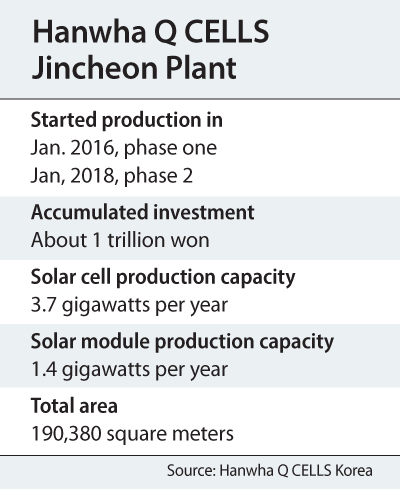
    The Jincheon 2 plant, which started mass production of solar cells and modules in January, is an addition to the original complex built in 2016. With the first and second plant combined, the Jincheon facility is the largest single solar cell production site in the world, according to Hanwha, with 3.7 gigawatt production capacity.

    When we visited the solar cell production line on the third and fourth floor of the newly-built plant on Tuesday, some workers were moving busily from machine to machine wearing what looked like a smart watch.

    “It looks like a smart watch because we took the hardware from electronics companies like Samsung,” a spokesperson from Hanwha said. “But we applied our own software so that workers receive alarms when there are problems with the machines.”

    According to the solar cell maker, the watch does not provide a detailed cause or explanation of the problems, but it makes workers respond immediately to issues by alarming them with notices categorized into four stages – S, A, B and C – depending on the severity and complexity of the problem.

    The system means that just 40 workers are required to manage 220 machines lined-up horizontally in five production lines in the 330-meter-long (1082 feet) solar cell production room, according to Hanwha.

    Another unusual scene inside the plant was a huge stack of 200 solar cells moving around over workers’ heads.

    “We call it a cassette,” said Yang Byung-ki, a manager of cell production at Hanwha Q Cells Korea, the company in charge of cell production in Korea. “This automated overhead logistics system delivers solar cells quickly and safely to the next destination.”

    The automated delivery system moves cells through the 10 stages of production.


  • Philippines Aims for 69.4 TWh in Clean Power Generation by 2035: A Greener Future Awaits!

    Philippines Aims for 69.4 TWh in Clean Power Generation by 2035: A Greener Future Awaits!

    The Philippines is gearing up for a renewable energy revolution, driven by the power of geothermal and hydropower. By 2035, the nation’s renewable energy generation is projected to soar to an impressive 69.4 terawatt-hours, boasting a robust compound annual growth rate of 13.1% from 2024 through 2035.

    Rising Demand and Strategic Responses

    A recent report from GlobalData titled “Philippines Power Market Outlook to 2035, Update 2025 – Market Trends, Regulations, and Competitive Landscape” reveals that the country is witnessing a steady increase in electricity demand, fueled by economic expansion and the enhancement of digital infrastructure. “In response to this escalating need, the nation is executing a range of strategies, which include the development of infrastructure, diversification of energy sources, and the enactment of policy reforms,” notes Attaurrahman Ojindaram Saibasan, senior power analyst at GlobalData.

    Aiming for Renewables

    The Philippines has set ambitious targets, aiming for 35% of its energy to originate from renewable sources by 2030, and escalating that figure to 50% by 2040. However, fossil fuels aren’t going anywhere just yet, as thermal power is expected to retain a significant 62.7% share of the energy mix by 2035, while renewable sources will contribute 33%, and large hydro along with pumped storage will add another 4.3%.

    Investing in the Future

    In an impressive future-forward move, the Philippines is eyeing a 75% increase in geothermal capacity and a remarkable 160% growth in hydropower capacity. Wind power is also on the rise, with plans to expand to 2.3 gigawatts (GW), alongside a modest rise in biomass power by 0.3 GW, all by 2040. Investments are expected to flow abundantly into the energy sector, with Manila poised to secure $26.2 billion from 2025 to 2030. Solar energy alone is projected to account for 38.8% of this investment, followed by onshore wind at 19.4% and offshore wind at 17%.

    As the Philippines strides confidently into a greener future, one has to wonder: will solar panels soon outshine the sun itself?

    Questions & Answers

    What is the projected renewable energy generation for the Philippines by 2035? The renewable energy generation in the Philippines is expected to reach 69.4 terawatt-hours by 2035.

    What percentage of energy does the Philippines aim to generate from renewable sources by 2040? The country aims to achieve 50% of its energy generation from renewable sources by 2040.

    What is the expected investment in the energy sector from 2025 to 2030? Manila is expected to secure $26.2 billion in energy investments during that period.

  • Vietnam Seeks 4,000 Workers to Power Two Upcoming Nuclear Plants

    Vietnam Seeks 4,000 Workers to Power Two Upcoming Nuclear Plants

    Nearly 4,000 employees will be needed to operate Vietnam’s two proposed nuclear power plants, set to rise in the central province of Ninh Thuan by 2030. This ambitious initiative aims to bolster the nation’s energy landscape, but it also raises a significant demand for qualified personnel.

    Specialized Training Abroad

    Among the workforce needed, 670 individuals will undergo specialized training overseas to ensure they are well-prepared for the complexities of nuclear energy. The workforce will predominantly consist of engineers and holders of bachelor’s degrees, while the remainder will be equipped with two-year college qualifications. Those chosen for international training will primarily be graduates in relevant disciplines, committed to serving at the plants upon their return.

    Interestingly, the training program is broadening its net by considering first- and second-year university students eager to join post-training. This opens avenues for a fresh wave of talent ready to dive into the world of nuclear energy.

    Collaboration for Expertise

    To cultivate expertise in nuclear plant management and operations, civil servants, experts, and staff from various ministries will provide short-term training and internships. Moreover, around 120 lecturers are anticipated to be enlisted to teach nuclear science to aspiring master’s and doctoral students at local universities.

    In a strategic move, the Vietnamese government has revived plans for the Ninh Thuan nuclear power plants, with the National Assembly giving its enthusiastic endorsement in November. The first of these plants is earmarked to begin generating electricity by 2030, marking a pivotal moment in Vietnam’s energy journey.

    As the nation gears up for this nuclear adventure, it’s not just about numbers; it’s about preparing a workforce that can harness the power of the atom responsibly and effectively. Let’s hope they’re ready for the nuclear future—and maybe even a little fun along the way!

    Questions & Answers

    What is the timeline for the completion of the nuclear plants in Vietnam?
    The first nuclear plant is scheduled to begin generating electricity by 2030.

    How many workers will be needed for the nuclear power plants?
    Vietnam will require nearly 4,000 employees to operate the two planned nuclear facilities.

    What types of degrees will the workforce possess?
    The workforce will include a majority of engineers and individuals with bachelor’s degrees, alongside those with two-year college diplomas.

  • Vietnam electricity imports from China, Laos set to soar by 2030

    Vietnam electricity imports from China, Laos set to soar by 2030

    The Ministry of Industry and Trade plans to increase electricity imports from China and Laos by 1.6 to five times from between now and 2030.

    Vietnam’s electricity demand is set to rise by 12-14% annually as the government targets an ambitious double-digit growth rate annually to achieve high-income status for the country by 2045.

    This means by 2030 Vietnam’s power capacity would need to reach 210,000 megawatts, up 35% from the current nationwide power plan.

    Imports will therefore play an important role in meeting electricity demand.

    By 2030 imports might account for 5% of total supply as against 4% last year, according to the ministry.

    It wants to import up to 3,700 MW in capacity from China by 2030, a five-fold increase from now.

    But the two sides have made no agreement for this yet. “The governments need to negotiate and sign deals soon,” the ministry said.

    It also wants to buy 6,800 MW from Laos by 2030, 1.6 times the current import.

  • Global energy drinks market reaches $62.89 billion in FY23

    Global energy drinks market reaches $62.89 billion in FY23

    The global energy drinks market’s value reached $62.89 billion in 2023, posting a 7.5 percent compound annual growth rate (CAGR), with the strategic addition of new flavours emerging as a key trend.

    According to The Business Research Company, the increased demand on emerging distribution channels, notably e-commerce, is driving the growth of the energy drinks market.

    The research firm forecasts that the market, dominated by Red Bull, Monster Beverage Corporation, PepsiCo, and Coca-Cola Company, will further increase to $83.83 billion in 2027 at a sustained CAGR of 7.5 per cent.

    It noted that introducing new flavours is an emerging trend, such as Red Bull’s launching of Coconut Edition Sugar-free energy drinks in 2021, a mix of coconut and B-group vitamins, taurine, and acesulfame-K as a sweetening agent.

    Such innovations, which seek to attract new customers and boost sales, demonstrate the dynamism of the energy drinks industry.

  • Electricity prices will rise

    Electricity prices will rise

    The Ministry of Industry and Trade is considering an electricity price hike following the huge loss reported by state utility Vietnam Electricity (EVN) for last year.

    “The rate and time of the increase will be considered carefully to safeguard the benefits of EVN, the public and businesses and control inflation,” Deputy Minister of Industry and Trade Do Thang Hai told VnExpress recently.

    The ministry said last week that EVN’s costs rose by 9.27% last year, and it caused a loss of VND36.29 trillion (US$1.55 billion).

    Deputy CEO of EVN, Nguyen Xuan Nam, said the huge loss puts the company in a difficult financial situation, and so it has sought a hike in tariffs this year.

    According to estimates by the Ministry of Finance, if power tariffs increase by 5% this year the consumer price index will see a 3.9% increase.

    Hikes of 7% and 8% will push the CPI up by 4.4% and 4.8%.

    The government targets containing inflation at 4.5%.

    The prices consumers pay have remained unchanged since March 2019.

  • Zuum energy gum rolls out in Chemist Warehouse stores

    Zuum energy gum rolls out in Chemist Warehouse stores

    A Melbourne-based startup is offering a fresh take on the caffeinated foods market by launching a sugar-free “energy gum” in Chemist Warehouse stores nationwide.

    Zuum is a sugar-free gum infused with caffeine, guarana, and B vitamins that claim to boost energy, reduce fatigue and support focus.

    Each piece of gum contains only four calories but has the equivalent caffeine content of a coffee or energy drink – sans sugar, aspartame, and other nasties.

    Friends Alex Chambers, Eamon Roderick, and Hugo Gray created Zuum in 2020 because they were fed up with sickly-sweet energy drinks and the inconvenience and expense of coffee.

    “We knew there had to be a better way to get a boost,” remarked Chambers.

    “The idea actually came to us whilst we grimaced through a lukewarm energy drink during Covid quarantine. It was as simple as – why don’t we just put caffeine in gum?”

    One packet of Zuum is equivalent to five cups of coffee and is compact enough to keep in a pocket or purse for a “fresh-tasting” energy boost.

    “We were humbled and overwhelmed with the level of interest and excitement this week,” added Roderick.

    “We’ve had a huge number of high-profile athletes, professional sports clubs, entertainers, and even a well-known former politician reach out to us wanting to jump on board because they loved the product so much,”

    Zuum is available at RRP$5.99 in Chemist Warehouse stores nationwide and online.

  • Exploring the Opportunities and Future Potential of the Asia-Pacific Renewable Energy Market

    Exploring the Opportunities and Future Potential of the Asia-Pacific Renewable Energy Market

    The Asia-Pacific region is expected to be a major player in the global renewable energy market, with estimates projecting that it will account for 40% of the world’s renewable energy investments by 2030.

    This is due to several factors, including increasing demand for green energy sources, government initiatives and subsidies, technological advancements, and an increase in awareness about environmental protection.

    Let’s learn more about the potential of renewable energy in the Asia-Pacific region and how it can benefit the environment and economy.

    Overview of Asia-Pacific’s Renewable Energy Market

    Asia-Pacific is currently the largest market for renewable energy investments. It has a total installed capacity of around 1,500 GW and this number is expected to grow in the coming years. China and India are two of the leading countries in terms of investment and capacity.

    China accounts for more than half of the total installed capacity in the Asia-Pacific region, while India is the second-largest market for renewable energy investments.

    The region also has a significant amount of potential for further development, with an estimated 2,700 GW of technical potential available for solar and wind power alone.

    Solar and wind energy in the region is estimated at 5.5 and 2.5 terawatts respectively, which is enough to meet the electricity needs of several countries. Solar energy is also going to be a big part of the Asia-Pacific region’s renewable energy mix.

    There is high solar battery demand in the region making it an ideal spot for investors to take advantage of the technology.

    In addition, Asia-Pacific is home to some of the world’s largest hydropower projects, including China’s Three Gorges Dam and India’s Tehri Dam.

    These projects have been instrumental in providing clean energy to millions of people in these countries.

    Opportunities

    The Asia-Pacific region has some of the world’s fastest-growing economies. This includes China, India, and Bangladesh. As these economies continue to get bigger, the demand for energy will go up too.

    This provides a great opportunity for renewable energy to replace traditional energy sources and make up for the increased demand.

    For example, solar battery energy is becoming more popular in many countries in the region as they look to reduce their reliance on fossil fuels. You can store the energy from solar panels in a solar battery and use them as you, please.

    In addition, countries in the region are increasingly investing in the research and development of new technologies, such as solar photovoltaics and wind turbines. These advancements can help reduce costs associated with producing renewable energy and make it more affordable.

    China produces more solar batteries and wind energy than any other country. It has around 696 gigawatts of renewable energy while India has nearly 118 gigawatts. China also leads the world in most production technologies, such as solar, wind, and hydropower.

    India is quickly emerging in the region as a prominent source of renewable energy, thanks to rigorous industrial tariffs and rules along with an abundance of power plants. Solar energy will be the major contributor to India’s renewable energy portfolio, as it grew 50% in 2018 alone.

    The future of the Renewable Energy Market in Asia-Pacific

    When it comes to the future of the renewable energy market in Asia-Pacific, there are many developments that could potentially drive growth.

    The market is expected to see more growth in the next five years (2023- 2028) because people are becoming more aware of environmental issues. The demand is expected to increase, which could drive investment and innovation.

    In addition, countries in the region are becoming increasingly committed to renewable energy sources, with some committing to producing 100% of their energy from renewables by 2050.

    Finally, technological advancements and cost reductions associated with renewable energy sources will also be a major driver of growth in the coming

    The most important development would be the continued adoption of renewable energy sources across the region. Governments in the region have already begun investing heavily in developing their own energy resources and infrastructure to support this transition.

    Furthermore, technological advancements are also likely to play a big role in the development of the renewable energy market in Asia-Pacific. Advances in solar, wind, and hydropower technology will continue to make renewable energy more cost-effective and efficient.

    Lastly, investments in training and research are also likely to drive the growth of the market. As it stands now, there is a need for trained professionals who can fill positions in the renewable energy industry in Asia-Pacific.

    By providing more resources to train and educate these professionals, the region can benefit from a larger pool of qualified workers who can help drive the renewable energy sector.

    Conclusion

    Overall, the Asia-Pacific renewable energy market is poised for growth in the years to come. With continuing investments in technology and increasing demand for clean energy sources, this market will continue to expand. So the future of the renewable energy market in Asia-Pacific looks bright.

  • Red Bull owner Dietrich Mateschitz dies aged 78

    Red Bull owner Dietrich Mateschitz dies aged 78

    Considered to be the richest man in Austria, the entrepreneur built a global empire around the energy drink.

    Mr Mateschitz’s fortune is estimated at around €25bn (£21.8bn), putting him 51st on Forbes’ list of the world’s richest people.

    Formula 1 praised his “unforgettable contribution” to the sport and said he leaves behind a “lasting legacy”.

    Little is known about Mr Mateschitz’s private life – he was publicity shy and rarely gave interviews.

    After graduating from the University of World Trade in Vienna, he worked as a marketing specialist for various companies in the 1970s.

  • PepsiCo Australia achieves its renewable energy target

    PepsiCo Australia achieves its renewable energy target

    PepsiCo Australia has effectively converted to 100 percent renewable electricity across all of its operations. Focusing on reducing global emissions, this initiative helps PepsiCo limit the amount of CO2 added into the environment – around 26,000 tones per year – and goes some way in helping the business hit its target to achieve net-zero emissions globally by 2040.

    PepsiCo manufactures Smiths chips, Doritos, Red Rock Deli, Twisties, and Grain Waves in Australia, including at Regency Park in SA, Tingalpa in Queensland, and Forrestfield in WA which are now powered by a mixture of solar and wind energy sources. The achievement does not include the manufacturing of beverages that are undertaken by the brand’s local partner Asahi Beverages.

    As one of the global business’ first 15 markets globally to switch to 100 percent renewable electricity, PepsiCo Australia is now seeking sustainable solutions such as converting organic waste into bio-methane, converting its fleet to EV or hydrogen, and decarbonizing its snack manufacturing processes.

    The company has teamed up with Engie and the Northam Solar Farm – developed by Indigenous Business Australia (IBA) and Bookitja – to get Power Purchase Agreements (PPAs) that support a range of wind and solar farms across Australia.

    “Climate change is one of the most pressing concerns facing our global food system and we’re committed to working across our value chain to reduce emissions,” said Danny Celoni, CEO of PepsiCo Australia and New Zealand.

    “The move to renewable electricity is positive for our business and for the local economy. We are pleased to support sustainable initiatives that create local jobs and proud to partner with IBA and Bookitja through the Northam Solar Farm, which aims to provide a sustainable economic base for future generations of Whadjuk people”.

    PepsiCo is also a member of Re100, a global renewable energy initiative led by The Climate Group and CDP to make a commitment to renewable energy as a large business.

    “Companies that join Re100 pledge to go 100 percent renewable with their electricity use by a set date,” added Jon Dee, Re100 Australia coordinator

    “Here in Australia, PepsiCo is one of 110 major companies that have joined Re100. By successfully completing their transition to 100 percent renewable electricity, PepsiCo has demonstrated a high level of commitment to sustainability and it’s set a positive example for other companies to follow.”

  • Siemens Gamesa signs $400 mln wind gear agreement with Vietnam’s BCG Energy

    Siemens Gamesa signs $400 mln wind gear agreement with Vietnam’s BCG Energy

    Siemens Gamesa Renewable Energy has signed a preliminary agreement to supply wind turbine gear worth up to $400 million to Vietnam’s BCG Energy, Vietnam’s government said on Monday.

    The memorandum of understanding is part of the Vietnamese firm’s move to develop wind turbines with a capacity of over 500 megawatts, the Ministry of Industry and Trade said in a statement, adding the deal was signed on the sidelines of the United Nations COP26 summit.

  • Boost to clean energy investment could drive 10 million new green jobs

    Boost to clean energy investment could drive 10 million new green jobs

    If funded, about 13,000 renewable energy projects proposed in nearly 50 countries could slash emissions and create work, researchers find.

    From offshore wind farms in Britain to floating solar power plants in Vietnam, about 13,000 renewable energy projects in nearly 50 countries are waiting for finance – and could create up to 10 million green jobs, consultancy EY-Parthenon said on Wednesday.

    In a report, EY said the projects offered $2 trillion in investment opportunities that would generate jobs locally and in supply chains, and would help slash climate-heating emissions and secure a green recovery from the pandemic.

    Serge Colle, EY’s global energy advisor, said the research showed there was “huge potential to accelerate private-sector renewables investment” with the right government policies and regulation around the world.

    If the projects identified were implemented in the next three years, they would more than double the rate of global renewables deployment, while delivering 22 percent of emissions reductions promised this decade by the 47 countries covered in the research, which include G20 nations, the report said.

    That would amount to 9 percent of the emissions cuts needed by 2030 to keep planetary warming to the most ambitious global target of 1.5 degrees Celsius above pre-industrial times, added the report commissioned by the European Climate Foundation (ECF).

    The biggest potential benefits for workers are in China and the United States, where the projects could create about 2 million and 1.8 million jobs respectively.

    India, Australia, Brazil, Britain and Canada also could generate hundreds of thousands of jobs each from boosting offshore and onshore wind, solar and hydropower capacity.

    The jobs range from lower-skilled work in construction, installation and manufacturing to professional jobs in things like engineering and project management.

    In Britain, greater investment in green energy could support sustained job creation and economic growth especially in the former coal-mining region of northern England and oil-and-gas producer Scotland, where large wind farms are being developed, the research said.

    The UK pipeline of projects seeking finance includes 540 mainly solar and wind power proposals, with the potential for close to 439,000 new jobs, the report said. It noted total jobs could rise to about 625,000 when power storage, transmission and distribution are added.

    That would mitigate 90 percent of job losses from the Covid-19 pandemic, the ECF said.

    Tim Lord, a net-zero expert with the UK-based Tony Blair Institute for Global Change, cautioned that in many places globally workforces do not yet have the skills to redeploy into clean technologies and their supply chains.

    “This transition is not as simple as you take an offshore oil and gas worker and retrain them to operate a wind turbine, and everyone is happy. Clearly there will be some disconnect,” said Lord, who was not involved in the EY report.

    Coordination between governments and companies will be essential to develop the local infrastructure and skills needed to expand generation and use of renewable energy, which would in turn help attract necessary investment, he said.

    The challenge will be even greater in developing countries where large swathes of the population lack access to electric power and strong markets have yet to be fostered, he told the Thomson Reuters Foundation.

    November’s COP26 climate summit in Scotland will be key to providing the incentives for emerging economies to shift away from fossil fuels and into cleaner power – but that will happen only if richer nations show a clear commitment to decarbonizing, Lord said.

    “If you have a situation where lower-income countries feel like bigger countries are pulling their weight … then I think you can start to see that kind of positive cycle being created around investment and people taking this seriously,” he added.