Retail News CRM

Tag: energy

  • Petronas starts trial runs at crude distillation unit for Rapid

    Petronas starts trial runs at crude distillation unit for Rapid

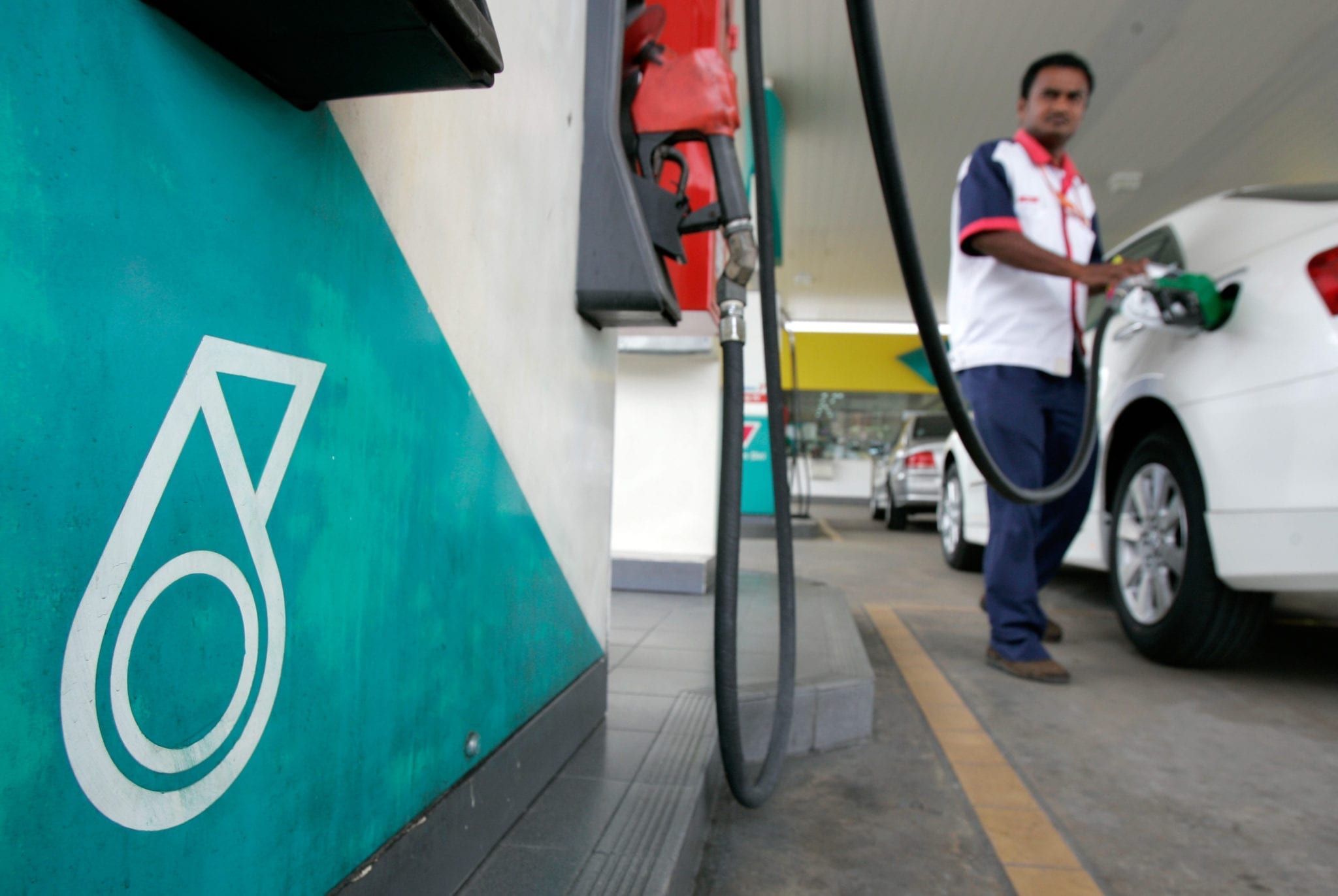
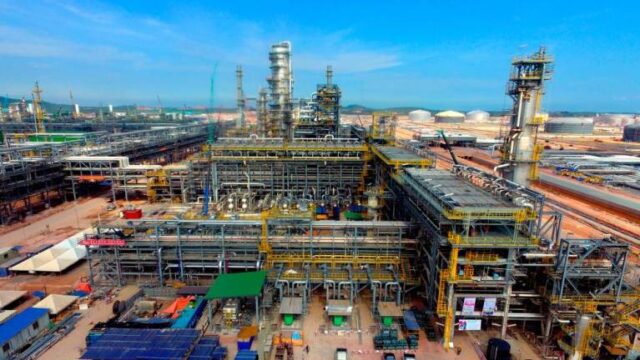
    Malaysian state oil company Petroliam Nasional Bhd (Petronas) started trial runs at the crude distillation unit (CDU) for a joint-venture refinery with Saudi Aramco in Malaysia last week, two sources with knowledge of the matter said this week. The move marks a major milestone for the US$2.7 billion (RM11 billion) project known as Rapid – or Refinery and Petrochemical Integrated Development – in Pengerang, Johor. The test runs put the project on track for commercial operation in 2019.

    The company also received its second cargo of 2 million barrels of Saudi crude last week, according to the sources and data on Refinitiv Eikon.

    Petronas could not be immediately reached for comment.

    Rapid consists of a 300,000-barrel-per-day (bpd) refinery and secondary refining units that will allow the companies to produce refined oil products that meet Euro 5 fuel specifications. The refinery is linked to a petrochemical complex with a capacity of 7.7 million tonnes a year.

    The first crude oil cargo for Rapid was offloaded at Pengerang in September.

    The refinery is one of four new complexes in Asia that represent a combined processing capacity of nearly 1.3 million bpd scheduled to start up from late 2018 to 2019.

    Another of the four complexes, a 400,000 bpd refinery, owned by Hengli Petrochemical in Dalian in northeast China, started trial runs in December.

    These plants will increase Asia’s crude demand while adding to fuel output in the region.

  • Vietnam’s PV Power to list with billion-dollar market cap

    Vietnam’s PV Power to list with billion-dollar market cap

    PV Power, the country’s second largest power producer, will list on the Ho Chi Minh bourse this month with a market capitalization of $1.5 billion. The Ho Chi Minh Stock Exchange (HoSE) has approved that the firm lists 2.34 billion shares (trading code POW) on January 14 at VND14,900 (64 cents) per share. This would bring the market capitalization of PV Power to VND34.9 trillion ($1.5 billion).

    PV Power finished its last transaction on UPCoM, the market for unlisted public companies, on December 27 at VND16,000 (69 cents) per share.

    PV Power was established in 2007 with 100 percent capital from the state. The company finished equitization in the middle of last year with a charter capital of VND23.42 trillion ($1 billion).

    State-owned oil and gas giant PetroVietnam remains PV Power’s largest stakeholder, with 79.94 percent of its charter capital. Foreign investors currently own 14.3 percent. The company is subject to a foreign ownership cap of 49 percent.

    PV Power produces and sells electricity. It also imports and distributes coal and operates five electricity plants. It is the second largest power producer in the country after national utility Vietnam Electricity.

    In the 2016-2018 period, PV Power’s revenues were VND28-30 trillion ($1.2-1.29 billion), 96 percent of which came from selling electricity.

    As of September 30, 2018, its total asset value was VND61.4 trillion ($2.64 billion) and its equity was VND26.55 trillion ($1.14 billion).

    Its dividend rate for last year is expected to be 3 percent and is set at 6 percent this year.

  • Vietnam eyes green power, not to sacrifice environment for growth

    Vietnam eyes green power, not to sacrifice environment for growth

    The government Thursday reaffirmed Vietnam’s desire for a greener energy mix amid the risk of a power deficiency. Environment-friendly coal- and gas-fueled and renewable power plants would make up the mix. While Vietnam faces “obvious risks of an energy shortage in the coming years … it will not sacrifice the environment for economic growth,” Deputy Prime Minister Trinh Dinh Dung said in a meeting with the state-run Vietnam Electricity (EVN), the country’s largest power producer and monopoly distributor.

    Coal-fired power is vital to energy security, but “it must be clean,” he noted. Dung asked EVN to pioneer the use of modern technologies to reduce the environmental footprint of new coal-fired plants and handle the cinder and ash at existing plants.

    The country faces difficulty in increasing power generation since it has decided to put nuclear power on hold, many coal-fired plants are behind schedule and renewables could not be developed on a large scale due to “high costs” and transmission limitations.

    “Hydro power currently meets 40 percent of the country’s demand, but additional supply is almost impossible.

    “Our hydro power plant reservoirs, especially in the central region, are facing a serious water shortage, supply of coal for power development is erratic and gas supply is waning while power station projects for new supplies are being implemented slowly,” the deputy prime minister said.

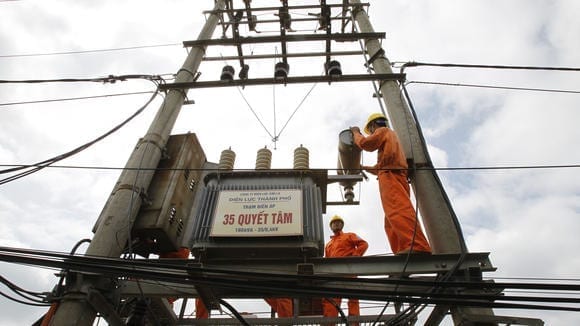
    Dung said “EVN must also focus on investing in transmission systems to bolster the development of renewables.”

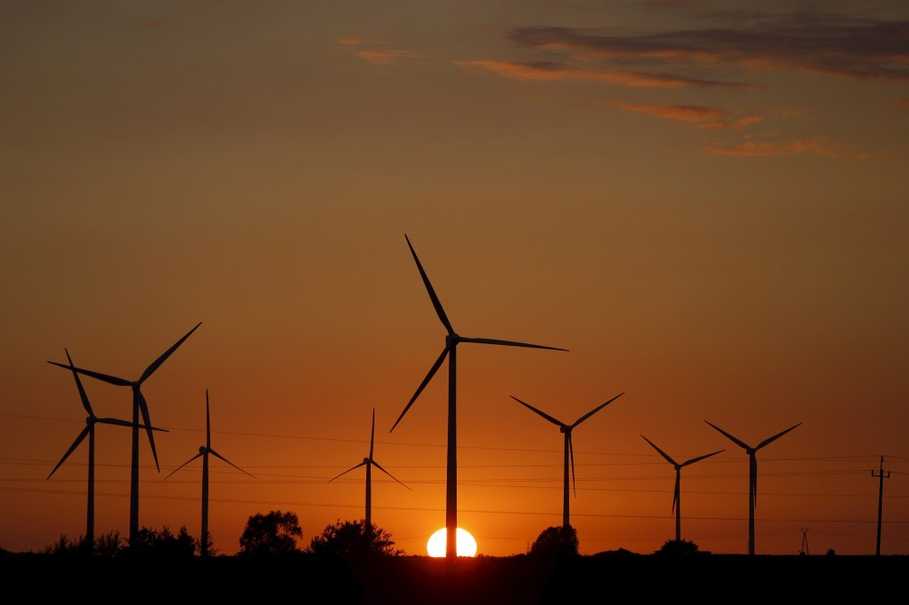
    The inadequate transmission system is now a bottleneck slowing down wind and power projects though a dramatically rising number of investors have shown interest in such projects following the recent increase in feed-in-tariffs (FITs).

    Dung also instructed the Ministry of Industry and Trade to hasten studies for the country’s investment in coal transshipment ports and regasification terminals to support development of gas-fuelled power, and quickly complete negotiations to buy power from overseas.

    He also asked EVN and other investors to speed up the delayed construction of major projects like Nhon Trach 3-4, O Mon 3-4, Tan Phuoc, Long Phuc 2-3, Quang Trach, and Quynh Lap.

    Vietnamese firms lack the resources for major projects while foreign loans are difficult to get due to government guarantee-related issues.

    The regional imbalance in power supply and demand is also a challenge. While the southern region accounts for more than half the demand (the north nearly 40 percent and the central region nearly 10 percent), power is being generated mainly in the north and central region (about 60 percent).

    To make it worse, the installation of transmission lines, both the main grid and branches, has been slow and failed to keep up with the pace of power generation, while negotiations to buy electricity from other countries have been going at a snail’s pace.

    The installed power capacity is around 48,000 MW. Under the revised Power Development Plan VII, a total of 60,000 MW is expected to be generated by 2020, with coal-fired plants accounting for 42.7 percent followed by hydropower (30.1 percent), gas-fired plants (14.9 percent), and renewables (9.9 percent).

    By 2030, the capacity will jump to 129,500 MW, with the ratios of coal and gas-fired power remaining almost unchanged, but renewables doubling to 21 percent.

  • Samsung Heavy lands $189 million LNG carrier deal

    Samsung Heavy lands $189 million LNG carrier deal

    Samsung Heavy Industries said Monday that it has clinched a deal worth 210 billion won ($189 million) to build a liquefied natural gas (LNG) carrier. The contract, with a European shipper, calls for Samsung Heavy to deliver the vessel by March 2021, the company said in a regulatory filing.

    With the latest contract, Samsung Heavy has clinched deals valued at a combined $6.3 billion so far this year to build 49 ships, including 18 LNG carriers and 13 container vessels.

  • Petronas buys 10% of Block 61 onshore Oman

    Petronas buys 10% of Block 61 onshore Oman

    Petroliam Nasional Bhd (Petronas), through its subsidiary, PC Oman Ventures Ltd (PCOVL) has acquired a 10% stake in Block 61, onshore Oman from Makarim Gas Development LLC (MGD), after the conditions for the completion of the transaction were fulfilled. MGD is a subsidiary of Oman Oil Company Exploration & Production LLC. Petronas said the completion of the transaction was formalised at an event held in Muscat, Oman on Dec 27.

    Following the deal, MGD’s stake in Block 61 will be reduced to 30%, while P Exploration (Epsilon) Ltd as the operator holds the remaining 60% stake.

    Petronas noted that the acquisition of Block 61 marks an important step in realising the group’s growth strategy in the upstream sector in the region and globally, as it aligns its activities to ensure sustainable energy supply.

  • Gas Malaysia ups natural gas tariff

    Gas Malaysia ups natural gas tariff

    Gas Malaysia Bhd has announced a higher average effective natural gas tariff for the non-power sector in Peninsular Malaysia at RM32.92 per MMBtu, which is 0.7% higher than the current RM32.69 per MMBtu. The revision will be effective from Jan 1, 2019 to June 30, 2019.

    The group told the stock exchange that the government has issued an instruction for the company to effect the natural gas tariff revision starting early next year.

    The average base tariff will be set at RM32.69 per MMBtu.

    Under the gas cost pass through (GCPT) mechanism, a surcharge of RM0.23 per MMBtu will apply to all tariff categories for the period beginning Jan 1 to June 30, 2019. This translates to an average effective tariff of RM32.92 per MMBtu.

    However, for Category A (Residential), the effective tariff rate fell 0.34% to RM23.72 from RM23.80 per MMBtu.

    Gas Malaysia said while the tariff revision has no material impact on its business operations, it is expected to contribute positively towards its financial position for the financial year ending Dec 31, 2019.

    To note, the government has prescribed the Incentive-Based Regulation (IBR) framework which sets the base tariff for a regulatory period of three years from January 2017 and allows changes in the gas costs to be passed through via the GCPT mechanism every six months.

    Gas Malaysia shares closed 0.74% or two sen lower at RM2.69 with 547,300 shares transacted.

  • Vietnam solar power investment rush poses an overload risk

    Vietnam solar power investment rush poses an overload risk

    The investment rush in solar energy could end up testing Vietnam’s weak power infrastructure, experts say. They say that both transmission capacity and the ability of grids to absorb the energy produced by new projects are suspect, as of now. The 9.35 U.S. cents per kWh Feed in Tariff (FIT) for solar power in Vietnam has sparked an investment rush.

    The latest project to be completed is the 49MW Krong Pa plant in the Central Highlands province of Gia Lai. It began operations last week.

    The investor, TTC Group, a corporation that invests in real estate, energy and education projects, has 19 other solar power projects underway.

    Other corporations have also been rolling out ambitious plans. The Xuan Cau Group plans to invest in a 2,000MW solar power project in southern Tay Ninh Province, while the Xuan Thien Corporation plans a 3,000MW project in the Central Highlands province of Dak Lak.

    September statistics from the Ministry of Industry and Trade show that 121 solar power projects been approved, which are expected to add 6,100 MW of output by 2020 and another 7,200 MW by 2030.

    Of these, 25 have signed power purchase agreements with Vietnam’s biggest power producer and sole distributor, Vietnam Electricity (EVN).

    In addition, another 221 projects await authorization, with a combined 13,000 MW of potential output.

    At this rate, the combined solar power output would accounts for 60 percent of Vietnam’s total output from all power sources kinds of power. It also far exceeds the country’s plan for solar energy output of 850MW by 2020, and 4,000 MW in the 4 following years.

    “There is an investment boom in solar power projects, but this is not good,” said Toby Couture, an expert of the German Corporation for International Cooperation (GIZ).

    He said authorities should come up with a balanced forecasting framework, rather than letting the market overheat.

    On top of the race to get projects completed before June 30, 2019 to enjoy the preferential FIT, the explosion of investment in solar power is also raising concerns over overloading of the power grid once the projects become operational.

    According to Vu Ngoc Duc of the Energy Institute under the Ministry of Industry and Trade, the fact that most projects are concentrated in central provinces of Ninh Thuan and Binh Thuan, and Dak Lak carries the risk of overloading the current power grid.

    Power plants cannot be plugged in without considering the capacity of each power transmission line, he said.

    Dinh Quang Tri, acting general director of EVN, admitted that 9.5 cents a kWh was still cheaper than electricity from oil, but the main problems the utility faces are infrastructural.

    Central Vietnam has relatively weak electricity infrastructure because of low consumption, but it is where the new renewable energy projects will be concentrated, he said.

    “The lines cannot take thousands of megawatts at the same time,” said Tri, adding that EVN had petitioned the government to plan and approve additional transmission lines.

    However, the procedures for planning, land clearance and construction will take a long time, so the existing grid will not be able to keep up with capacity of new solar plants.

    “This is a huge challenge. If we don’t purchase electricity from these solar plants, there will be a shortage. But if these projects are completed too quickly, the grid will not be able to load it all,” Tri said.

    He said that to avoid overloading the transmission grid, the Government should promote household solar panels, suitable for the low voltage grid, so that no additional investment into the transmission grid is required.

    Deputy Minister of Industry and Trade Dang Hoang An said that the ministry was directing the re-planning of local and national power development. It is assigning grid development units the task of resolving infrastructural bottlenecks to support approved solar power projects, he added.

    Solar power currently accounts for just 0.01 percent of the country’s total power output, but the government plans to increase the ratio to 3.3 percent by 2030 and 20 percent by 2050.

  • Vietnam’s wind power tariffs attractive, but concern rises

    Vietnam’s wind power tariffs attractive, but concern rises

    Vietnam’s new feed-in tariffs are attracting great interest in wind power, but investors are concerned about grid connection and purchase agreements. The new feed-in tariffs (FIT) are expected to be attractive to domestic and foreign investors, Tommaso Rovatti Studihard, South East Asia sales director for wind power developer Vestas Asia Pacific said.

    The government recently approved tariff revisions under Decision 39 on support mechanisms for the development of wind power.

    The decision, effective from November 1 this year, raises the tariffs from 7.8 US cents per kWh to 8.5 US cents for onshore and 9.8 US cents for offshore generation respectively.

    “Electricity demand will grow at an estimated 8 – 10 percent a year from now to 2030. This represents realistic opportunities for investors,” Studihard said.

    Conjecturing that the national plan envisages adding 1,000 MW of wind power by 2020 and 6,000 MW by 2030, he said the targets are achievable.

    “Vestas is excited about the Vietnamese market, probably this is the most promising market in the Asian region with very good wind resources,” he said.

    Vestas has so far put three wind power projects into operation in Vietnam and plans to have another project come online by 2019 and “do a lot more in the future.”

    Studihard noted that over the next three to five years there are huge opportunities in Vietnam to have some gigawatts of wind power, but the bankability of the power purchase agreement (PPA) remains an issue with many investors, especially international investors, and banks finding it a little difficult to be comfortable with.

    There are no clear termination and force majeure clauses in the PPA, which hinders the attraction of foreign investment, especially from banks and credit institutions, he explained.

    “One more problem is Vietnam’s weak grid capacity, which would become a bottleneck for developing wind and other renewables. The grid needs to be upgraded to tap the great potential Vietnam has for offerable, sustainable and reliable wind power.”

    Bui Van Thinh, CEO of the Thuan Binh Wind Power JSC (TBW), said having gained success in developing the 24MW Phu Lac wind power project in the central province of Binh Thuan, TBW is completing procedures to start construction of a 30MW wind power project in neighboring Ninh Thuan Province.

    But the weak grid capacity is the biggest challenge to expanding renewables like wind and solar power, he said.

    The transmission line near Phu Lac site could handle 100MW, compatible with two 50MW wind power projects.

    Overload capacity is imminent once a solar power project connects with the transmission line, Thinh noted, citing the concerning fact that there are eight solar power projects in the locality approved to connect with the grid.

    “The government should instruct the state-run Electricity of Vietnam (EVN) to install transmission lines to cope with the renewable power projects across the country, especially those in Ninh Thuan and Binh Thuan.”

    Ninh Thuan and Binh Thuan are central provinces that have the greatest potential for renewable energy in the country.

    While 2,000 MW of solar power are proposed to be generated in Ninh Thuan, the local transmission line can only handle a few hundred megawatts. Thus, 110 kV or 220 kV transmission lines need to be installed before pushing the power to the 500kV transmission line and sending it to Ho Chi Minh City or Danang City, Thinh added.

    Nguyen Van Thanh, deputy head of the Ministry of Industry and Trade’s Electricity and Renewable Energy Authority, said demand for energy, wind power in particular, has been growing rapidly.

    The need for ensuring energy security but also sustainable development has changed Vietnam from an energy seller to buyer, with the country’s dependence on imported energy sources also rising, he said.

    Vietnam also faces a shortage of primary energy, with coal imports posing many risks related to supply, price and transportation, he noted.

    “Given that, efficient exploitation of new and renewable sources would play a key role in the country’s socio-economic development, energy security and sustainable development.

    “The country is working diligently to draft policies for the efficient and economical use of energy, diversification of energy sources and increasing application of new and eco-friendly technologies,” Thanh added.

    Under the revised Power Development Plan VII, power stations in the country are expected to generate a total of 60,000 MW by 2020. Of these, coal-fired stations would make the largest proportion of 42.7 percent, followed by hydropower (30.1 percent), gas-fired plants (14.9 percent) and renewable energy sources (9.9 percent).

    By 2030, the total capacity would soar to 129,500 MW, with coal and gas-fired plants accounting for 42.6 percent and 14.7 percent respectively, similar to the figures set for 2020. But the ratio of renewable energy sources is set to double to 21 percent by then.
  • Vietnam must avoid power cuts next year: PM

    Vietnam must avoid power cuts next year: PM

    Prime Minister Vietnam Nguyen Xuan Phuc has ordered agencies to ensure that the country won’t suffer power shortages in 2019. The Prime Minister has communicated this to relevant agencies several times, Mai Tien Dung, Minister and Chairman of the Government Office, said at the government’s regular press conference on Monday.

    The communiqués have instructed the agencies to ensure that there’s no electricity shortage for both industrial and domestic uses, emphasizing they would be held responsible for failures, Dung said.

    The PM has also tasked relevant agencies with definitively resolving the ongoing issue of coal shortage for thermal power plants, which Vietnam Electricity (EVN) has warned could lead to power cuts early next year.

    The national power utility said in a recent report to Deputy Prime Minister Trinh Dinh Dung that the country will need over 54 million tons of coal for electricity production next year, of which 43.4 million tons will come from domestic production and 10.68 million tons will be imported.

    But the country’s only two suppliers, Vietnam National Coal-Mineral Industries Corporation (Vinacomin) and the North-Eastern Company (NECO) under the Ministry of Defense, will only be able to produce 37.21 million tons of coal next year, 6.19 million tons lower than estimated demand, EVN said.

    Speaking at the press conference, Deputy Minister of Industry and Trade Do Thang Hai said a total of four different electricity supply plans have been drafted, all of which designed to ensure there would be no power shortages next year.

    However, in certain cases, Vietnam would still need to produce 2-7 billion kWh of electricity from expensive oil-powered generators.

    “If we want to have enough electricity then we must increase the production of electricity by oil, which would be more expensive,” he said, asking consumers to make plans to save electricity.

    Regarding the issue of coal shortage, Hai asserted that Vinacomin and NECO have both supplied enough coal for thermal power plants as committed.

    “The two major coal suppliers have tried their best. If coal from domestic sources is not enough to supply [thermal power plants] then we will import more,” he said.

    The deputy minister also said a scenario for regulating electricity prices next year would be reported to the government later this month.

    “The electricity price for next year is being carefully considered and the scenario is being built in accordance with regulations, including factoring in the effect on inflation,” he said.

    Vietnam currently relies largely on hydropower and thermal power plants for its electricity needs. However, its hydropower potential is almost fully exploited and its oil and gas reserves are running low.

    Thermal energy is expected to account for over 48 percent of the country’s power production next year.

    Vietnam, one of Asia’s fastest-growing economies, has been struggling to develop its energy industry, and its heavy reliance on non renewable sources could prove problematic in the future, experts say.

    World Bank country director for Vietnam Ousmane Dione said at a recent forum that Vietnam will need to raise up $150 billion by 2030 to develop its energy sector; that electricity demand in the country will grow by about 8 percent a year for the next decade.

  • Vietnam to experience power cuts early 2019

    Vietnam to experience power cuts early 2019

    The ongoing coal shortage could lead to power cuts in Vietnam early next year, Vietnam Electricity (EVN) has warned. The national power utility said in a recent report to Deputy Prime Minister Trinh Dinh Dung that the country will need over 54 million tons of coal for electricity production next year, of which 43.4 million tons will come from domestic production and 10.68 million tons will be imported.

    But the country’s only two suppliers, Vietnam National Coal-Mineral Industries Corporation (Vinacomin) and the North-Eastern Company (NECO) under the Ministry of Defense, will only be able to produce 37.21 million tons of coal next year, 6.19 million tons lower than estimated demand, EVN said.

    “The lack of coal will lead to a shutdown of thermal power plants, seriously affecting the national power grid and EVN might have to cut electricity in the first months of 2019,” it added.

    EVN estimated that power generation will be reduced by 2,300 MW, which is the average electricity consumption of 13 central provinces.

    EVN said that Vinacomin and NECO had promised to provide enough coal for plants this year, but the amount provided by Vinacomin until this month was 690,000 tons lower than contracted.

    The power utility estimates that the country will need 2.55 million tons of coal of electricity in December, but the two coal producers plan to deliver only 2.05 million tons, which is 500,000 tons short.

    Due to the coal shortage, the Quang Ninh Thermal Power Company has shut down two out of four turbines since November 17.

    The Hai Phong Thermal Power Company shut down one turbine on November 22, and the Nghi Son Thermal Power Plant  reduced its two turbines to minimum operation the same day. The Ninh Binh Thermal Power Company is running low on inventory.

    Vietnam currently relies largely on hydropower and thermal power plants for its electricity needs. However, its hydropower potential is almost fully exploited and its oil and gas reserves are running low. Thermal energy is expected to account for over 48 percent of the country’s power production next year.

    Vietnam, one of Asia’s fastest-growing economies, has been struggling to develop its energy industry.

    World Bank country director for Vietnam Ousmane Dione said at a forum Monday that Vietnam will need to raise up $150 billion by 2030 to develop its energy sector.

    Dione added that electricity demand in the country will grow by about 8 percent a year for the next decade, as reported.

  • Vietnam Jan-Nov coffee exports up 23 pct, rice 4.8 pct

    Vietnam Jan-Nov coffee exports up 23 pct, rice 4.8 pct

    Vietnam’s coffee export volumes from January to November have grown 23 percent year-on-year and rice exports have risen by 4.8 percent, official data shows.

    Coffee

    Coffee exports from Vietnam will climb an estimated 23 percent between January and November from a year ago to 1.725 million tonnes, equal to 28.75 million 60-kg bags, the General Statistics Office said in a report on Thursday.

    Coffee export revenue for Vietnam, the world’s biggest producer of the robusta bean, will edge up 2.9 percent to $3.3 billion in the 11-month period, the report said.

    November coffee exports were estimated at 140,000 tonnes, worth $264 million.

    Rice

    Rice exports in January-November from Vietnam were forecast to rise 4.8 percent from a year ago to 5.7 million tonnes. Revenue from rice exports in the period was expected to grow 16.8 percent year-on-year to $2.86 billion.

    November rice exports from Vietnam, the world’s third-largest shipper of the grain, were estimated at 450,000 tonnes, worth $218 million.

    Energy

    Vietnam’s January-November crude oil exports were seen plunging 42.5 percent year-on-year to an estimated 3.6 million tonnes.

    Crude oil export revenue in the first 11 months of 2018 were expected to decline 20.4 percent to $2.1 billion.

    Oil product imports in the 11-month period were estimated at 10.7 million tonnes, falling 8.1 percent from the same period last year, while the value of product imports rose 15.4 percent to $7.3 billion.

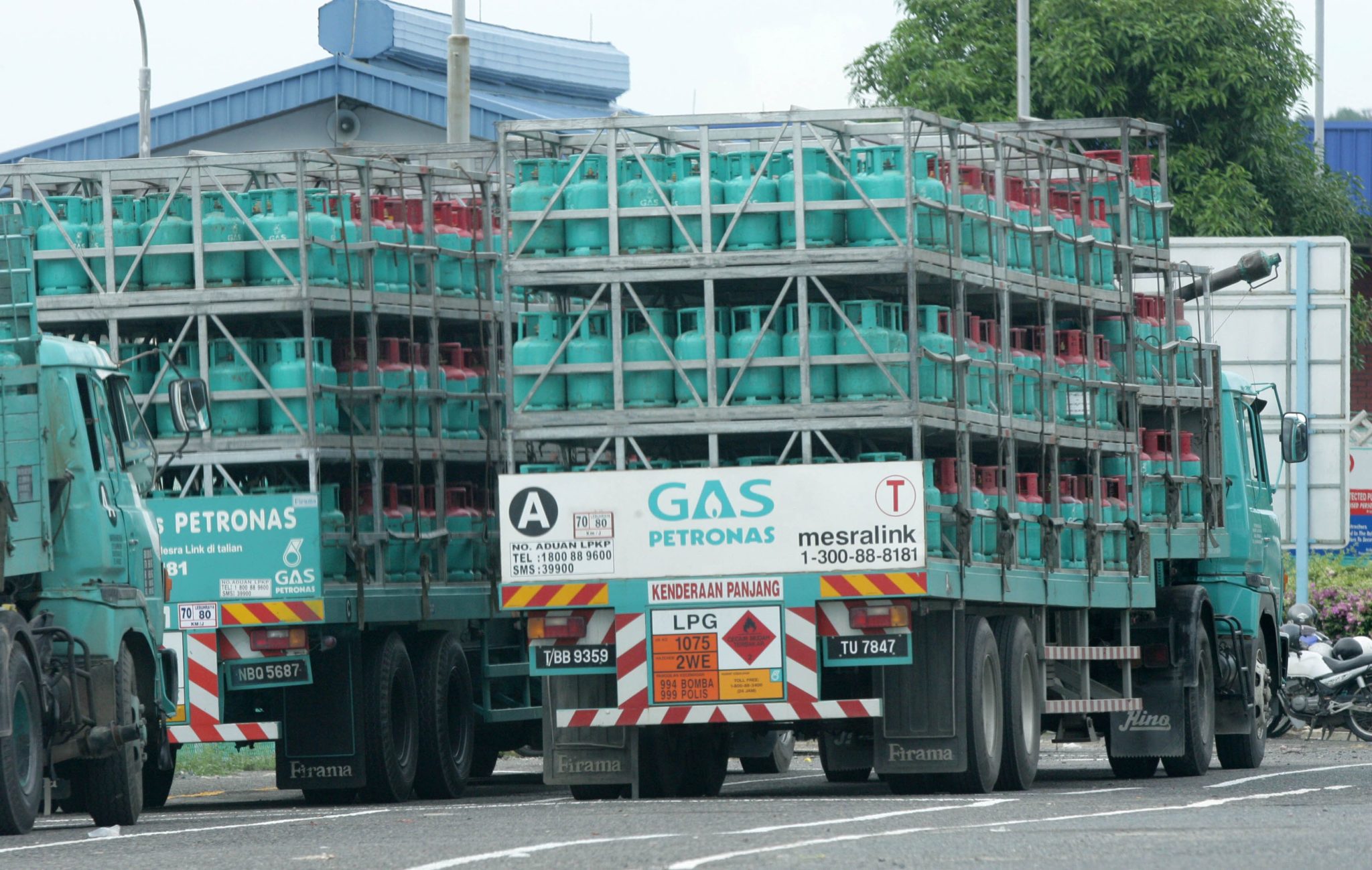
    Vietnam’s January-to-November liquefied petroleum gas imports were seen increasing 1.5 percent from a year earlier to 1.3 million tonnes.

  • LNG Canada investor Petronas signs gas supply deal with Vitol

    LNG Canada investor Petronas signs gas supply deal with Vitol

     LNG Canada, the US$30 billion (RM125.7 billion) liquefied natural gas (LNG) export project, has bagged another client after project shareholder Petroliam Nasional Bhd (Petronas) signed an initial sales deal with trading house Vitol.

    Royal Dutch Shell decided in October to construct the export terminal. It was the first major investment decision in a new North American LNG export project for two years and was expected to launch a new wave of such projects in the region.

    Petronas, the Malaysian state-owned oil and gas company that bought a 25% stake in the project in May, will supply Vitol with 0.8 million tonnes per year (mtpa) of LNG starting from 2024 for 15 years, Vitol said in a statement.

    “The primary supply to Vitol will come from LNG Canada as well as from (Petronas’) other global LNG supply portfolio,“ Vitol said.

    Vitol joins Asian utilities Tokyo Gas, Toho Gas and Korea Gas Corp (Kogas) as buyers, committing to offtake around 2.4 mtpa collectively.

    Such long-term agreements normally underpin project finance and are critical before a final investment decision is taken. But because Shell and partners Petronas, PetroChina, Mitsubishi and Kogas are such large players in the LNG market, they can absorb the output into their global portfolios without needing to find significant other buyers.

    Under previously announced deals, Toho Gas will buy 0.3 mtpa, Tokyo Gas 0.6 mtpa and Kogas 0.7 mtpa from LNG Canada.

  • Murphy Oil said to be in talks to sell Malaysian oil & gas assets

    Murphy Oil said to be in talks to sell Malaysian oil & gas assets

    Murphy Oil Corporation is in talks to sell its Malaysian oil and gas assets after an unsolicited bid that could fetch between US$2 billion to US$3 billion (RM8.4 billion to RM12.6 billion), people familiar with the matter said, in the latest energy merger and acquisition deal in the Southeast Asian nation.

    The independent US oil and gas exploration and production company has tapped banks for the potential sale of its majority interests in eight separate offshore production sharing contracts in Malaysia, said the people, who declined to be identified because the matter is confidential.

    “Murphy wasn’t considering a sale but was approached by a party that put forward a very compelling bid. They are in negotiations,” said one of the people.

    Murphy, which has been in Malaysia since 1999, could agree on a deal in a couple of weeks, the person said. Others familiar with the matter suggested Spanish oil major Repsol, whose presence in Malaysia is focused on its upstream business, or other global majors could be potential buyers for Murphy’s assets.

    The possible transaction comes as M&A activity is heating up in Malaysia’s oil and gas sector, where international companies pursuing expansion plans are spotting opportunities.

    Repsol and Murphy declined to comment on any potential transaction or talks. There was no response to a query to Malaysian state-owned Petroliam Nasional Bhd (Petronas), which partners Murphy in Malaysia.

    “This is a good, balanced portfolio and offers a smart way for someone looking to grow quickly in the region. Otherwise, it’ll take a decade to start from scratch,” said Alex Siow, upstream oil and gas analyst at energy research firm Wood Mackenzie.

    “The buyer will be buying into an operatorship position with Murphy’s stake, therefore having the know-how and will to be an operator is important,” he said.

    Murphy produced nearly 46,700 barrels of oil equivalent a day in the quarter ended Sept 30 in Malaysia, the company said in response to the query.

  • Higher revenue lifts Petronas’ Q3 net profit to RM14.3 billion

    Higher revenue lifts Petronas’ Q3 net profit to RM14.3 billion

    Petroliam Nasional Bhd’s (Petronas) net profit for the third quarter ended Sept 30, 2018 rose 43% to RM14.3 billion from RM10 billion a year ago due to higher revenue. The group said in a statement today that the higher revenue was partially offset by higher product costs in tandem with higher prices, coupled with increased depreciation and amortisation.

    Earnings before interest, taxation, depreciation and amortisation (ebitda) rose 25% to RM26.9 billion from RM21.5 billion a year ago.

    The state-owned oil company attributed the higher earnings to its continuous execution of business improvement activities, focused on increased operational excellence and supported by higher commodity prices.

    Revenue for the quarter rose 19% year-on-year to RM63.9 billion, mainly driven by higher average realised prices for key products coupled with increased efficiency throughout the group.

    Higher sales were partially offset by the strengthening ringgit and lower sales volume, mainly for liquefied natural gas (LNG). Capital investments for the quarter stood at RM6.7 billion, mainly attributed to upstream projects.

    For the nine months ended Sept 30, 2018, Petronas’ net profit rose 50% year on year to RM41 billion, due mainly to higher revenue, lower net impairment on assets as well as other expenses. These were partially offset by higher product costs in tandem with higher prices coupled with increased depreciation and amortisation as well as tax expenses.

    Revenue for the period rose 12% year-on-year to RM181.1 billion mainly due to the impact of higher average realised prices for key products as well as increased efficiency efforts, largely offset by the effect of the ringgit strengthening against the US dollar.

    Capital investments for the period stood at RM26.5 billion mainly attributed to upstream projects while total assets rose to RM623.1 billion as at end-September, compared with RM599.8 billion as at end-December 2017.

    Shareholders’ equity rose to RM402.1 billion as at end-September from RM389.8 billion as at end-December 2017. The gearing ratio remained at 16.1% while return on average capital employed rose to 12.6% from 9.8% during the same period.

    The Pengerang Integrated Complex achieved 95% progress as at end-September and successfully received its first crude oil cargo at the Pengerang Deepwater Terminal 2. The project is on track to be ready for startup in 2019.

    President and group CEO Tan Sri Wan Zulkiflee Wan Ariffin said Petronas is on track to deliver a strong year-end performance by maintaining focus on driving efficiency efforts across its operations.

    “The recent drop in oil prices demonstrate the volatile and cyclical nature of the industry and we will continue to maintain our prudent outlook amidst this landscape while remaining steadfast in pursuing our growth strategies to ensure the long-term sustainability and progress of the company,” he said.

  • Vietnam’s new oil refineries to quadruple capacity by 2023

    Vietnam’s new oil refineries to quadruple capacity by 2023

    Vietnam’s total oil refining capacity will nearly quadruple by 2023 as two new refineries go on stream, market data provider Fitch Solutions reports. The Dung Quat refinery in the central province of Quang Ngai operated by the state-owned PetroVietnam’s subsidiary Binh Son Refinery Limited (BSR) remains the sole facility now, with a crude oil processing capacity of 148,000 barrels per day (b/d).

    Dung Quat will soon be joined by Nghi Son refinery in the central Thanh Hoa Province. Nghi Son is currently testing at full capacity and is scheduled to start commercial operations this month.

    The $9 billion Nghi Son project is owned by the Nghi Son Refinery and Petrochemical LLC (NSRP), a joint venture between PetroVietnam, Kuwait Petroleum, Japan’s Idemitsu Kosan and Mitsui Chemical. It will have a designed capacity of 200,000 b/d of crude oil.

    Meanwhile, the long-delayed construction of the Long Son refining and petrochemical complex in the southern province of Ba Ria-Vung Tau resumed in February this year, putting it on track to go on stream by the first half of 2023.

    Licensed in 2008 and initially slated to begin operations in 2014, Long Son hit a roadblock due to site clearance issues and disagreements over the development strategy between the project partners.

    This caused Qatar Petroleum to withdraw from the project in 2015. Thailand’s Siam Cement Group (SCG) increased its stake to 71 percent after it bought the 25 percent stake owned by Qatar Petroleum, while PetroVietnam held the remaining 29 percent.

    In May this year SCG agreed to acquire PetroVietnam’s 29 percent. The refinery is expected to cost $5-6 billion. Once completed it will be able to process 200,000 b/d of crude oil and produce 1.6 million tons of olefins annually.

    “The two new refineries would increase competition in the domestic fuel market, which could require refiners to upgrade, cut costs and move up the value chain to win market share,” Fitch Solutions said in a report released Monday.

    This also spells an end to Dung Quat’s status as the country’s sole refiner, which it has enjoyed since 2010.

    New oil refineries to quadruple Vietnam capacity 2023

    Competition from Nghi Son will be stiff as the government has granted a host of incentives to successfully commission its second standalone refinery, including tax concessions, tariff exemption on crude imports from primary feedstock provider Kuwait and an offtake guarantee from PetroVietnam for the first 15 years of operation.

    The Quang Ngai provincial government in early November sought the same incentives for the Dung Quat refinery to ensure “fair competition”.

    BSR is also planning to invest $1.8 billion over the next three years to expand Dung Quat’s capacity by 23,000 b/d and upgrade the quality of its fuels to Euro 5 from the current Euro 2.

    Fitch Solutions said the upgrade would enable Dung Quat to process higher-sulphur crudes, helping reduce its dependence on Vietnamese light, sweet crudes, mostly from the Bach Ho field, which is depleting and thus becoming more expensive.

    Besides the competition between themselves, the refineries also face significant pressure from imports, mostly from South Korea and Southeast Asian countries, which are of higher quality and priced competitively due to free trade agreements, the report noted.

    “Competition is likely to peak in 2024, when tariffs on fuel imports from ASEAN and South Korea are scheduled to be cut to zero. Concerns about mounting competition have also led both Dung Quat and Nghi Son to consider exports to countries like Laos, Cambodia and Indonesia.

    “Vietnam’s improving self-sufficiency in refined fuels would reduce its need for imports, reorienting trade flows from some of its major fuel suppliers to alternative markets.”

    While insufficient to entirely meet domestic demand, this nevertheless would weigh on the market positions of Singapore, Malaysia, South Korea, Thailand and China, which account for nearly 95 percent of Vietnam’s fuel imports, according to Fitch Solutions.

    Malaysia and Thailand have the highest exposure to Vietnam’s fuel market — 11 percent and 16 percent of imports.

    Major international fuel suppliers are also likely to find room for growth in the Vietnamese market increasingly hard to come by as their quality advantage over locally produced fuels dissipates with the ongoing upgrades, the firm added.