Retail News CRM

Tag: energy

  • Vietnam’s new oil refineries to quadruple capacity by 2023

    Vietnam’s new oil refineries to quadruple capacity by 2023

    Vietnam’s total oil refining capacity will nearly quadruple by 2023 as two new refineries go on stream, market data provider Fitch Solutions reports. The Dung Quat refinery in the central province of Quang Ngai operated by the state-owned PetroVietnam’s subsidiary Binh Son Refinery Limited (BSR) remains the sole facility now, with a crude oil processing capacity of 148,000 barrels per day (b/d).

    Dung Quat will soon be joined by Nghi Son refinery in the central Thanh Hoa Province. Nghi Son is currently testing at full capacity and is scheduled to start commercial operations this month.

    The $9 billion Nghi Son project is owned by the Nghi Son Refinery and Petrochemical LLC (NSRP), a joint venture between PetroVietnam, Kuwait Petroleum, Japan’s Idemitsu Kosan and Mitsui Chemical. It will have a designed capacity of 200,000 b/d of crude oil.

    Meanwhile, the long-delayed construction of the Long Son refining and petrochemical complex in the southern province of Ba Ria-Vung Tau resumed in February this year, putting it on track to go on stream by the first half of 2023.

    Licensed in 2008 and initially slated to begin operations in 2014, Long Son hit a roadblock due to site clearance issues and disagreements over the development strategy between the project partners.

    This caused Qatar Petroleum to withdraw from the project in 2015. Thailand’s Siam Cement Group (SCG) increased its stake to 71 percent after it bought the 25 percent stake owned by Qatar Petroleum, while PetroVietnam held the remaining 29 percent.

    In May this year SCG agreed to acquire PetroVietnam’s 29 percent. The refinery is expected to cost $5-6 billion. Once completed it will be able to process 200,000 b/d of crude oil and produce 1.6 million tons of olefins annually.

    “The two new refineries would increase competition in the domestic fuel market, which could require refiners to upgrade, cut costs and move up the value chain to win market share,” Fitch Solutions said in a report released Monday.

    This also spells an end to Dung Quat’s status as the country’s sole refiner, which it has enjoyed since 2010.

    New oil refineries to quadruple Vietnam capacity 2023

    Competition from Nghi Son will be stiff as the government has granted a host of incentives to successfully commission its second standalone refinery, including tax concessions, tariff exemption on crude imports from primary feedstock provider Kuwait and an offtake guarantee from PetroVietnam for the first 15 years of operation.

    The Quang Ngai provincial government in early November sought the same incentives for the Dung Quat refinery to ensure “fair competition”.

    BSR is also planning to invest $1.8 billion over the next three years to expand Dung Quat’s capacity by 23,000 b/d and upgrade the quality of its fuels to Euro 5 from the current Euro 2.

    Fitch Solutions said the upgrade would enable Dung Quat to process higher-sulphur crudes, helping reduce its dependence on Vietnamese light, sweet crudes, mostly from the Bach Ho field, which is depleting and thus becoming more expensive.

    Besides the competition between themselves, the refineries also face significant pressure from imports, mostly from South Korea and Southeast Asian countries, which are of higher quality and priced competitively due to free trade agreements, the report noted.

    “Competition is likely to peak in 2024, when tariffs on fuel imports from ASEAN and South Korea are scheduled to be cut to zero. Concerns about mounting competition have also led both Dung Quat and Nghi Son to consider exports to countries like Laos, Cambodia and Indonesia.

    “Vietnam’s improving self-sufficiency in refined fuels would reduce its need for imports, reorienting trade flows from some of its major fuel suppliers to alternative markets.”

    While insufficient to entirely meet domestic demand, this nevertheless would weigh on the market positions of Singapore, Malaysia, South Korea, Thailand and China, which account for nearly 95 percent of Vietnam’s fuel imports, according to Fitch Solutions.

    Malaysia and Thailand have the highest exposure to Vietnam’s fuel market — 11 percent and 16 percent of imports.

    Major international fuel suppliers are also likely to find room for growth in the Vietnamese market increasingly hard to come by as their quality advantage over locally produced fuels dissipates with the ongoing upgrades, the firm added.
  • Korea’s gas prices fall quickly thanks to fuel tax cuts

    Korea’s gas prices fall quickly thanks to fuel tax cuts

    The government fuel tax cut, which was implemented to ease the burden on rising crude oil prices, has turned out to be more effective than initially expected. According to the Ministry of Trade, Industry and Energy on Sunday, the average price of gasoline at gas stations nationwide was 1,575.2 won ($1.40) per liter during the second week of November. This is an 85.2 won, or 5 percent, drop, from the 1,660.4 won average just a week earlier.

    Diesel prices have also dropped to an average 1,419.2 won per liter, down 56.2 won, or 3.8 percent, from the first week of this month, when it was an average 1,475.4 won for the same amount.

    On Saturday, the ministry said the average price of gasoline had further fallen to 1,556.8 won per liter – 133.5 won less than the 1,690.3 won it sold for on Nov. 5, the night before the government’s fuel tax cut went into effect.

    On average, the government cut 15 percent off of all fuel taxes including gasoline and diesel in the hopes of easing the burden created by rising international crude prices. It was the first fuel tax cut adopted in a decade.

    “As the situation [of low-income households and small and medium-sized enterprises] becomes more difficult with rising international crude prices, we have decided to aim for a psychological effect that will help the economy by increasing disposable incomes,” Ko Hyoung-kwon, deputy finance minister said in late October.

    Among gas stations, the government-supported Altteul Gas Station saw the biggest drop in prices – its gasoline costs 135.5 won less than it did on Nov. 5.

    Other major brands including SK, GS, S-Oil and Hyundai Oilbank have cut gasoline prices by 133.3 won.

    By region, Jeju lowered its gasoline prices the most. The island has seen a 169.4 won drop in average price compared to Nov. 5. Daejeon followed, as prices have fallen an average of 149.6 won, while Incheon came in third after seeing a 142 won drop.

    Seoul gas stations on average lowered their prices by 134.9 won while Gyeonggi gas prices fell by 137.2 won per liter.

    Seoul and Gyeonggi account for 39 percent of all fuel sold in the country.

    However, as of Saturday, 173 gas stations around the country – 1.5 percent of the nation’s gas stations – have not taken part in lowering fuel prices. The ministry said that these gas stations failed to deplete all of the gas that they had stockpiled before the Nov. 6 fuel tax cut was implemented.

    The fuel tax cut will be applied for six months.

  • Moody’s downgrades Petronas LNG’s ratings outlook to negative

    Moody’s downgrades Petronas LNG’s ratings outlook to negative

    Moody’s Investors Service has downgraded Petronas LNG Ltd’s (PLL) ratings outlook to “negative” from “stable”, following the same outlook revision for its parent company Petroliam Nasional Bhd’s (Petronas) yesterday. At the same time, the rating agency has affirmed PLL’s A3 foreign and local currency issuer ratings.

    Moody’s said the changes reflects its negative outlook on Petronas’ ratings and its expectation of PLL’s continued strong support from and linkages with its ultimate parent.

    PLL is 100%-owned by Petronas, which is in turn wholly-owned by the government.

    Moody’s said given the negative ratings outlook, a ratings upgrade is unlikely and it will revise PLL’s ratings outlook to stable from negative only if Petronas’ ratings outlook is stabilised.

    It said that PLL’s ratings will be downgraded if: Petronas’ rating is downgraded; there is a decrease in Petronas’ ownership of PLL; there is a reduction in Petronas’ supervision of and operational and financial support to PLL; or there is a material increase in PLL’s risk appetite.

    PLL’s ratings were assigned using a top down approach by evaluating the company’s full ownership by Petronas, its strong operational and financial integration with Petronas, and the willingness and ability of Petronas to extend support to PLL in an event of distress.

    Meanwhile, Moody’s assistant vice president and analyst Rachel Chua said PLL’s A3 ratings are positioned two notches below the A1 ratings of its ultimate parent.

    She noted that PLL enjoys ongoing liquidity support from Petronas and it can draw from Petronas’ umbrella credit facility for liquidity management, adding Petronas has continued to support PLL financially through cash injections of almost $400 million over the past three years.

    “Petronas’ support for PLL extends beyond financial assistance. Petronas also provides PLL with significant management support and oversight, including monthly reporting on risk and governance to a committee chaired by Petronas.

    “PLL also has an integrated treasury function with Petronas, where its cash is held centrally by Petronas and cash flow requirements are shared with its parent,” she added.

  • Petronas has sufficient headroom to absorb one-off exceptional dividend

    Petronas has sufficient headroom to absorb one-off exceptional dividend

    Petroliam Nasional Bhd’s (Petronas) solid balance sheet, sizeable net cash position and ample liquidity provide ample buffer against the payment of one-off dividend to the government that could reach RM30 billion. According to S&P Global Ratings, the financial impact of a one-off dividend of this size is moderate considering Petronas’ cash position and balance sheet quality.

    “The company can finance this dividend, given cash and short-term equivalent of nearly RM180 billion as of June 30, 2018; immaterial reported debt of about RM66.3 billion as of June 30, 2018 and a net cash position of nearly RM114 billion as of June 30, 2018; and solid operating cash flows,” it said in a statement.

    It added that the exceptional dividend of RM30 billion would effectively offset inflows of nearly RM30 billion the company received following the completion of the transaction with Saudi-based oil and gas producer Saudi Aramco in the first quarter of 2018.

    “We project Petronas will remain in a net cash position in 2019 and, depending on the pace of capital spending disbursement, in 2020 as well. This underpins our ‘aa’ stand-alone credit profile on the company.

    “We currently project operating cash flows of at least RM80 billion in 2019 amid higher hydrocarbon prices. These are sufficient to fund capital spending that we forecast at about RM55 billion and regular dividends to the government and minority interest that we estimate at about RM25 billion,” it said.

    The rating agency said the special dividend will not affect Petronas’ solid liquidity as the group’s short-term debt maturities were minimal at about RM11.5 billion as of June 30, 2018, representing less than 10% of its cash balance.

    “We estimate that Petronas’ balance sheet can absorb negative discretionary cash flows of RM40 billion for two years before the headroom under its ‘aa’ stand-alone credit profile starts to reduce. Assuming no change to the company’s investment plan, this implies additional one-off dividends of RM40 billion to RM50 billion, on top of the regular and exceptional dividends in the 2019 budget,” it said.

    It said that the special dividend validates its long-standing credit view that Petronas can be subject to periodic cash calls from the government given its solid financial position, high importance to the national budget and ownership control by the government.

    It added that a sustained period of higher oil prices over the next two to three years will translate into higher dividends from Petronas, and potentially, additional one-off dividends to the state.

    “We cap our issuer credit rating on Petronas (foreign currency A-/Stable/–; local currency A/Stable/–) to that of the sovereign of Malaysia (A-/Stable/A-2; local currency A/Stable/A-1), despite Petronas’ stronger stand-alone credit profile, given this government intervention risk.”

  • Renewable project facing criticism in Korea

    Renewable project facing criticism in Korea

    The government’s plan to build a renewable energy complex at Saemangeum, North Jeolla, is generating controversy as it deviates from plans to develop the reclaimed tidal flat into a regional economic hub and is being pursued without public approval.

    The controversy flared up as President Moon Jae-in announced Tuesday that the government will construct a solar and wind energy complex at Saemangeum.

    The government argues that around 10 trillion won ($8.7 billion) in private investment will flow into the project and that two million workers will be employed annually in the building of the facility.

    Despite the optimistic forecasts, the move is being criticized as an abrupt policy shift.

    When President Moon Jae-in visited Saemangeum last year, he mentioned developing the area into an economic hub for the Yellow Sea region but said nothing of solar or wind power. Opposition lawmakers have raised concerns about the projects.

    “The government’s plan to make Saemangeum, previously touted to be developed into an economic center for the Yellow Sea, into a mecca of renewable energy means a policy change,” said Chung Dong-young, a lawmaker for the Jeolla-based Party for Democracy and Peace. “This is the same as abandoning plans to expedite the development of Saemangeum.”

    The Party for Democracy and Peace, with 14 lawmakers from the Honam region, is especially angry about being bypassed.

    In light of such concerns, the government has explained that plans for Saemangeum’s renewable energy complex, which will cover an area comparable to the size of four nuclear power plants, will not interfere with existing initiatives.

    “The government’s determination to develop Saemangeum into an economic hub of the Yellow Sea area remains unchanged,” Minister of Land, Infrastructure and Transport Kim Hyun-mee said during the annual audit by lawmakers on Monday.

    A spokesman for the state-run Saemangeum Development and Investment Agency explained that it was not the right time for consultations with local residents and the general public.

    “Taking comments from local residents is done during the construction approval process. We are not yet at the development stage, so we haven’t asked for [comments], but we are obviously planning to do so,” he said.

    Opposition lawmakers and energy experts are suspicious that the plans for Saemangeum were changed to accommodate the Moon administration’s pledge to reduce nuclear power dependency.

    The new Saemangeum initiative is part of the government’s 3020 renewable energy plan, which established a renewable target of 20 percent by 2030. With current renewable energy output at just 8 percent of the total, the government is in need of more solar and wind power plants.

    “[The government] seems to be developing Saemangeum as there aren’t vast plots of land in the country suitable for solar or wind power complexes,” said a professor of nuclear energy who requested anonymity.

    Questions regarding the feasibility of the energy project have also been raised.

    “The electrical output produced by the energy complex will be little, at around 60 percent of a nuclear power plant,” said Kim Sam-hwa, a lawmaker for minor opposition Bareunmirae Party. “If it means building six-tenths of a nuclear power plant by spending 10 trillion won, wouldn’t it just be better to continue operating the Wolsong 1 plant?”

    Wolsong 1 is a nuclear plant set to be decommissioned.

    At the moment, renewable energy is less economical when compared with nuclear energy, explained Roh Dong-seok, a senior researcher at the Korea Energy Economics Institute. As the efficiency rate for solar power is about 15 percent, the actual production output of solar power plants is much lower than their rated capacity.

    The government’s promise to return the plots of land to their original state after operating solar and wind power plants at the location for 20 years is in doubt as the energy produced will have to be replaced.

    Local residents remain divided over the new project.

    “Even if it’s a government project, I can’t accept something that is pushed without prior notice,” said Ko Yoon-seok, a local leader of a town adjacent to the tidal flat. “There isn’t enough information to determine whether it’s right or wrong, but it’s difficult to say that everyone is against it.”

  • Vietnam to cut dependancy on crude oil

    Vietnam to cut dependancy on crude oil

    A prime ministerial advisory body has said the state budget is overly dependent on crude oil, an unsustainable income source. The National Financial Supervisory Commission (NFSC) recently said crude oil is not a sustainable income source, both in the short and long term.

    In the short term, crude oil revenue can be affected by global oil prices and mining output; and the state budget has been significantly impacted by such fluctuations over the years, the NFSC noted.

    In the long run, this source of income is also unsustainable as national reserves are limited, it added.

    Earlier, Deputy Prime Minister Vuong Dinh Hue had said at a meeting of the legislative National Assembly that Vietnam needs to stop relying on crude oil and focus on tourism to ensure its economic growth.

    “It is better to welcome one million tourists than trying to find one million tons of crude oil because tourism is more eco-friendly and safe for the economy,” he’d said.

    Vietnam’s September crude oil exports totaled 375,000 tons, down 21.1 percent year-on-year, according to the General Statistics Office. This brought crude oil exports in the first nine months of this year to 2.97 million tons, down 45.2 percent from a year earlier.

    From early this year to September 15, accumulated budget revenue is estimated to be at VND898.3 trillion ($39.06 billion), of which VND43.5 trillion ($1.89 billion) or about 5 percent comes from crude oil, according to the General Statistics Office.

    Vietnam’s domestic crude oil production reached its peak in 2004 with an output of more than 20 million tons, but has declined to an estimated 14.2 million tons in 2017.

    It is forecast that around 11 million tons will be produced in 2018. Crude oil exports have contributed 0.25 percent to the country’s GDP in recent years.

  • PetroVietnam says Tokyo Gas may help with power plant project in Vietnam

    PetroVietnam says Tokyo Gas may help with power plant project in Vietnam

    Tokyo Gas is interested in cooperating with Vietnam’s PetroVietnam Power Corp (PV Power) to develop a natural gas-fired power project in the Southeast Asian country. On Friday, PV Power’s parent said that Tokyo Gas wants to help secure long-term liquefied natural gas supplies and funds for the construction of the Nhon Trach 3 & 4 power plants in the southern province of Dong Nai, state-run Vietnam Oil and Gas Group said in a statement on its website.

    Tokyo Gas did not immediately respond to a request for comment made via its website.

    The statement follows a meeting between senior executives from PV Power and Tokyo Gas in Hanoi this week, PV Power said.

    The two plants, with a combined capacity of 1,500 megawatts, would be operational from 2020, according to PV Power.

  • Indonesia Oil Palm Estate Fund Adequate to Support B20 Biodiesel Policy

    Indonesia Oil Palm Estate Fund Adequate to Support B20 Biodiesel Policy

    The Indonesia Oil Palm Estate Fund is confident that it can shoulder additional subsidies paid out to producers under the government’s new biodiesel policy for the rest of the year.

    The government will require all diesel engines in the country to run on B20, or diesel containing 20 percent biofuel derived from palm oil, from next month to reduce imports. It implemented the policy to reduce the country’s current-account deficit, which grew to 3 percent of gross domestic product in the second quarter of this year – a level the central bank believes is undermining economic stability.

    But the policy will also swell the subsidies paid to 19 biofuel producers, including Wilmar and the Sinar Mas Group. The fund, also known as BPDPKS, estimates that the policy would double biofuel demand in the second half of this year to 2.1 million kiloliters.

    The fund will need around Rp 9.8 trillion ($672 million) in total to subsidize the production of 3.2 million kiloliters of biofuel for the entire year.

    “[The fund] should be enough,” BPDPKS president director Dono Boestami said on Monday (20/08).

    He said the fund has collected Rp 6.4 trillion from the palm oil export levy in the first half of 2018, which is nearly 60 percent of this year’s Rp 10.9 trillion target, most of which is used as incentives to support renewable energy production.

    “We have prepared funds to expand B20 mandatory biodiesel [production], which is expected to absorb the excess supply of palm products in the market,” Dono said.

    Palm oil production has been on the rise over the past few years, and reached a record 42 million metric tons last year, representing a 115 percent increase from 2010. Palm oil production in the first half of 2018 rose to 22.3 million tons from 18.5 million tons last year.

    But palm oil exports have declined 6 percent to 14.16 million tons in the first half of 2018 due to the imposition of higher import tariffs by some of the biggest importers, such as India and the European Union.

    The fund was established in July 2015 to manage the income derived from levies on companies that export palm oil commodities to ensure the industry remains sustainable. Some of the funds are used to subsidize biodiesel, which currently costs more to produce than petroleum diesel. Biodiesel must be sold at more than Rp 9,000 a liter to cover production costs, while petroleum diesel currently costs Rp 5,150 a liter.

    The BPDPKS has disbursed Rp 4.4 trillion in the first six months of this year, most which was used to subsidize biodiesel production. The remainder was used for the development of the country’s palm oil industry, such as plantation rejuvenation, farmer training, research and promotion.

    Rp 288 billion was spent on the rejuvenation of 5,384 plantations covering a total area of 12,063 hectares as of June, much less than the government’s full-year target of 180,000 hectares.

    Dono said the main obstacles involve getting recommendations from the Ministry of Agriculture to restore plantations and legal verification of business licenses and land ownership.

    The BPDPKS has also funded 118 studies by 37 universities and institutions, which resulted in 101 scientific publications and three books.

  • Vietnam eyes power imports from China, Laos

    Vietnam eyes power imports from China, Laos

    Vietnam might have to import power from China and Laos after 2020, says a senior official.

    “There is a real risk of power shortages in 2021-2023, and the risk will get higher if consumption surpasses forecasts in the coming years,” Hoang Quoc Vuong, Deputy Minister of Industry and Trade, told the Vietnam Energy Forum in Hanoi on Thursday.

    Although the sole power distributor Vietnam Electricity (EVN) is currently able to meet the country’s demand, there is a strong likelihood that the increasing needs of a 95-million population outstrip the capacity.

    This can happen as early as 2020 if the generators don’t operate well or there is not enough coal and liquefied natural gas (LNG) to produce power, EVN Deputy Director Ngo Son Hai said at the forum.

    While more coal power projects are being built in the south, shortages can happen if these constructions run behind schedule, he noted.

    Power shortage will increase by 7.2-7.5 billion kilowatts hours a year in the southern region for each delayed project, Hai said, adding that there were seven underway at present.

    Southern provinces need more coal power projects be built to provide over 18,000 megawatts needed in the next five years, but none of them have opened yet, he said.

    Power production plans in southern Vietnam in megawattsby 2022Projects under constructionProjects yet to be builtEVN

    Deputy Minister Vuong proposed that Vietnam starts importing electricity from Laos and China, to meet rising demand in the country.

    Vietnam should also create favorable conditions for renewable power projects, like solar and wind power, be developed near high consumption areas, he said.

    Vuong noted encouraging the installation of rooftop solar power systems could be one solution to address the looming power shortage.

    To meet the high demand for power, Vietnam needs to produce 278 billion kilowatt hours in 2020, and this number needs to double by 2030, according to EVN.

    The country’s installed power capacity is estimated to reach 47,800 megawatts by the end of 2018, 5.4 times that of 2003, making the country second in ASEAN and 25th in the world, EVN said.

  • Indonesia Gov’t Undecided on New Coal Policy

    Indonesia Gov’t Undecided on New Coal Policy

    Indonesia President Joko “Jokowi” Widodo will decide on Tuesday (31/07) whether the government’s policy on coal for domestic use should be revised, considering both the need for price stability and for reducing the current external deficit.

    The government in March set a ceiling price for 25 percent of its coal production bound for state utility company Perusahaan Listrik Negara at $70 a metric ton, in order to keep electricity prices stable ahead of the 2019 elections.

    The quota and price cap mean miners miss out export revenues amid the commodity’s rising global price, to the tune of $5 billion a year, a substantial amount that could reduce Indonesia’s current account deficits, Coordinating Maritime Affairs Minister Luhut Pandjaitan said on Monday (30/07).

    The government may charge a coal sales tax to coal companies at between $2 and $3 per ton to subsidize PLN. A new agency could be established to manage the process.

    The government may also revise the 25 percent quota to allow coal with energy levels above 4,500 kilocalories per kilogram (kcal/kg) or below 4,000 kcal/kg to be exported, because PLN needs it between 4,000 and 4,500 only, said Rosan Roeslani, chairman of Indonesia’s Chambers of Commerce and Industry (Kadin), who was present in a discussion with top government officials on Monday.

    All revisions will still need to be discussed with the coal and power industry, and their impact on state revenue would need to be calculated, Luhut said.

    “Even if this happens it will probably be next year at the earliest,” he said.

    Indonesia is the world’s top exporter of thermal coal, and its economy has benefited from rising demand for the dirty fuel — which hit $104.65 a ton in July — the highest since May 2012.

    Expert and consumer groups are against the government’s proposal.

    “Abandoning the domestic coal price will be a blunder policy, which will not increase foreign exchange from coal exports to reduce the balance of payment deficit, but only increases the income of coal businesses as well as the cost of production for PLN,” Fahmy Radhi, an energy analyst at Gadjah Mada University, said in a statement on Sunday.

    PLN would bear $3.68 billion in additional costs to buy coal at the current market price, Fahmy said. Even with the sales tax on coal companies, which is estimated to bring $1.28 billion, PLN would still be left with an additional expense of $2.40 billion.

    PLN has been under financial pressure for the past few years, trying to meet the government’s plan for 35,000 megawatts of additional power capacity.

    In September, Finance Minister Sri Mulyani Indrawati sent an official letter to Energy and Mineral Resources Minister Ignasius Jonan and State Enterprises Minister Rini Soemarno, warning of PLN’s poor financial performance.

    The company suffered losses of Rp 6.49 trillion in the first half of this year. In the same period last year it recorded a net income of Rp 510 billion.

    “If the rule is really implemented, then it means the government favors more the interests of a handful of people [coal businessmen] rather than the interests of a larger community — electricity consumers,” Tulus Abadi, managing director at the Indonesian Consumer Protection Foundation (YLKI), said in a statement.

  • Indonesia to Postpone Coal, Palm Oil Insurance Rules by Six Months

    Indonesia to Postpone Coal, Palm Oil Insurance Rules by Six Months

    The Ministry of Trade has decided to postpone for six months the application of rules saying coal and crude palm oil export shipments should use Indonesian insurers, the country’s leading coal industry association said.

    The decision would be the second time that application of the rules, issued in October and due to come into effect on Aug. 1, have been postponed.

    The rules were part of trade regulations intended to boost the role of the archipelago’s shipping industry and save foreign currency. Elements of the regulations were postponed in April to 2020 with little clarification from the trade ministry.

    The decision to postpone the insurance rules was announced by the ministry at a brief meeting with industry representatives on Thursday (26/07), Indonesian Coal Mining Association (ICMA) executive director Hendra Sinadia said.

    “Everybody is very anxious,” Hendra said, referring to coal buyers and exporters confused about how they could put the rules into practice for shipments sold on a free-on-board (FOB) basis, on which the vast majority of Indonesia’s coal exports are sent.

    Under FOB terms insurance is the responsibility of the buyer, Hendra noted.

    Trade Minister Enggartiasto Lukita is expected to formally announce the decision on his return from a visit to the United States, Hendra added. Enggartiasto is due to return to Jakarta on July 28, according to the trade ministry, though its representatives did not immediately respond to questions on the matter.

    Ido Hotna Hutabarat, chief executive of coal miner Bumi Resources unit Arutmin Indonesia, said the rules were unworkable.

    “This cannot be carried out for FOB sales because we don’t have rights to control the buyer,” he said, adding that FOB shipping terms were preferable as they were lower risk.

    Indonesian Palm Oil Association (Gapki) executive director Mukti Sardjono said on Wednesday Gapki would discuss how to implement the rules with the Trade Ministry. “We hope the implementation of this regulation won’t be a disincentive for exports,” he said.

    Dody Dalimunthe, executive director of the Association of General Insurance Companies of Indonesia (AAUI), said there were 73 Indonesian insurance companies that can cover coal and CPO shipping. “And many companies already use this insurance,” he said.

    Earlier, ICMA chairman Pandu Sjahrir said diplomats from several countries including Japan had asked the trade ministry for a transition period for the insurance rules to come into effect. The Japanese embassy did not respond to a written request for comment.

  • Malaysia to have ore renewable energy projects in near term

    Malaysia to have ore renewable energy projects in near term

    More renewable energy (RE) projects are expected to come up for bids in the near term as the new Energy, Green Technology, Science, Climate Change and Environment Ministry is committed to push up the nation’s RE capacity.

    MIDF Research, which recently attended the Minister Yeo Bee Yin’s maiden townhall, said the latter pointed that the country already attains abundant reserve capacity of 30%, which is much higher than most countries.

    “While there is no indication of an ideal or target reserve capacity, the new Minister indicated that the abundant reserve capacity gives the industry decent time to build up its RE capacity within the next three to seven years, without the need for much more major new plant-ups in the near-term.

    “This suggests in the near future, sector opportunities could tilt heavily towards RE project awards and a dearth of future fossil fuel plants,” the research firm said in its report last Friday.

    MIDF added that the ministry aims to reduce the reliance on imported fuel by aggressively increasing the RE contribution to the mix from just 2% currently to 20% “in the future”.

    It said the push for RE is not entirely new and efforts had been taken previously to increase RE contribution to the system such as the Large Scale Solar (LSS) projects.

    “Solar accounts for the bulk of Malaysia’s RE. However, there is the issue of getting RE sources to reach grid parity for it to be cost competitive and gain a larger share of generation mix without burdening end-consumers,” it said.

    MIDF also noted that given the indication of excessive reserve capacity, the pace of any major plant-ups in the near-term is likely to be impacted.

    It added that although the new Minister’s intention is to champion RE, it opined that the shift is for RE to eventually dilute contribution from fossil fuel rather than near-term, outright replacement.

    “There is the issue of feasibility to induce RE in a big way into the system too which will have to be sorted out,” it added.

    Positively, MIDF said that most of the incumbent players such as Tenaga Nasional Bhd (TNB) and Malakoff Corp Bhd are already paving way into the RE space (in particular, solar), while Cypark has been moving aggressively into RE in recent years.

    Meanwhile, the research house also highlighted that the four Independent Power Producer (IPP) projects cancellations are likely to hit selective players, the majority of which are likely to be non-listed.

    “Among the major projects in the pipeline, we think Edra’s Track 4B with a massive 2242MW capacity in Malacca could come under scrutiny given that it was a directly awarded project.”

    “While Track 4A (TNB-SIPP) was a controversial project awarded on a directly negotiated basis (previously to the TNB-YTL-SIPP consortium) back in 2014, the project is already well underway (28% completion),” it said, noting that Tadmax is another directly negotiated power plant project at Pulau Indah.

    MIDF said, others might involve LSS project awards such as Quantum Solar which was the first to be awarded LSS projects under the LSS initiative on a direct award basis.

    “Ranhill was recently awarded a 300MW CCGT project in Sandakan Sabah. There has yet to be any development announced on the project so far,” it added.

    Nonetheless, MIDF said it remained positive on the power sector while its top pick include TNB and YTL Power.

  • Jokowi Opens Indonesia’s First Wind Power Plant

    Jokowi Opens Indonesia’s First Wind Power Plant

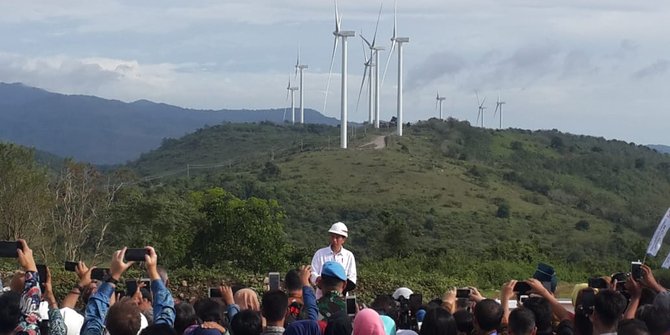
    As President Joko “Jokowi” Widodo inaugurated Indonesia’s first wind power plant in Sidenreng Rappang, South Sulawesi, on Monday (02/07), the government is getting closer to its ambitious target of obtaining more than a fifth of the country’s energy from renewable sources.

    The plant, also known as PLTB Sidrap, consists of 30 wind turbines which can produce up to 75 megawatts and electrify 80,000 households. The turbines in 40 percent consist of locally produced components.

    “This puts Indonesia among the few Asian countries that posses wind power plants, like Japan, China and Korea,” Jokowi said in a statement.

    Sidrap started its development in 2015 with $150 million borne by a consortium comprising of UPC Renewables Asia I, UPC Renewables Asia III, Sunedison and Binatek Energi Terbarukan.

    A similar project in Bantul, Yogyakarta, also developed  by UPC Renewables, was shelved in 2017 due to land clearance problems.

    Jokowi seeks to connect 99 percent of Indonesians to the country’s grid by 2019, when his first presidential term ends. Currently, the electrification rate is 96 percent.

    Indonesia aims to have 23 percent of its total power coming from renewable resources by 2025, also to fulfill its climate change mitigation commitment, in accordance with the Paris Agreement.

    Today, only 14 percent of the country’s energy is clean. More than half of it still comes from coal-powered plants.

  • Chevron Renewal of Indonesia’s Rokan Block Not Assured

    Chevron Renewal of Indonesia’s Rokan Block Not Assured

    United States energy giant Chevron must compete if it wants to continue operating Indonesia’s Rokan block, the country’s biggest source of crude oil, after its contract expires in 2021, Energy and Mineral Resources Minister Ignasius Jonan said on Wednesday (27/06).

    Chevron asked the Indonesian government earlier this year to extend its operating contract for Rokan beyond 2021 and since then has been in discussions with government officials on the issue.

    “I just talked to Chevron’s new chief executive and told him that it is up to him. If they propose to continue to operate the Rokan block the economics have to be justifiable,” Jonan said in the sidelines of the World Gas Conference in Washington.

    “And they may face some competition as well, from foreign operators and from Pertamina,” he said, referring to Indonesia’s state-owned energy company.

    Michael Wirth, who has been with Chevron since 1982, became chief executive in February.

    A Chevron spokesman did not immediately respond to a request for comment.

    Indonesia has earned a reputation for favoring Pertamina to take over expiring oil and gas contracts in the past, stoking concern among foreign energy investors about the security of their projects.

    Jonan, who said he is eager to earn the trust of investors to boost development of Indonesia’s natural resources, said the days of playing favorites were “in the past.”

    “The only maxim we stick to is the economics. There is no favoritism about the origin of the company, there is no political play. The answer is no and no. It is the economics. That applies to everyone, foreign companies, local companies, and government companies,” he said.

    Jonan said Indonesia was also in discussions with Chevron about another project it is operating, Indonesia Deepwater Development, a natural gas production effort in East Kalimantan, after Chevron cut $6 billion in spending plans there.

    “We both agreed to go and find the best way to work on this block for both sides,” he said, adding tat the negotiations now “will go down to the technical level.”

    Jonan said he had not yet used his authority to adjust fiscal terms for oil and gas blocks to encourage investment, but was ready to do so in any cases where investment returns were projected to be below 15 percent.

    Jonan said he is “seriously considering offering fiscal adjustments to a number of smaller blocks” in Indonesia, but he did not name the blocks or the companies involved.

    Gold, Copper, Coal

    Jonan also said he met this week with Freeport McMoRan chief executive Richard Adkerson to discuss the company’s Grasberg gold and copper mine in Papua. The Phoenix-based company has been in tricky negotiations with Indonesia to secure long-term operating rights at the mine after the government introduced rules last year forcing it to divest its controlling interest.

    Jonan said the two agreed that Freeport needs freedom to operate the mine in the way it sees fit in the near term, but that the government insists on having a voice.

    “We agreed that, operations-wise, Freeport has to be in charge at the moment. Honestly, we don’t have the expertise,” he said. “But if you talk about control, it is a very delicate word in terms of management. I would like to say we both control.”

    Jonan added that Indonesia, which produces and exports large amounts of coal, currently viewed the fuel as critical to keeping electricity costs down for its population.

    “We have a serious concern about global warming and are trying to reduce the use of coal as the primary energy for our power plants,” he said. “But we go with the affordability for the public.”

    He said Indonesia would find it difficult to reach its target of generating 23 percent of its power from renewable sources by 2025 – as pledged under the 2015 Paris agreement on climate change – but remained hopeful it could reach somewhere above 20 percent by that time.

  • Vietnam’s renewable energy yet to get wind in its sails

    Vietnam’s renewable energy yet to get wind in its sails

    Vietnam is far away from realizing its short and medium term wind power goals, with no ready solution in sight to several impediments, experts say.

    They said at a recent conference on wind energy development in Vietnam that high interest rates, low selling prices and inadequate power purchase agreements from the investors’ point of view were major stumbling blocks to realizing set targets.

    Vietnam plans to produce 800 megawatts of wind energy by 2020 and 6,000 megawatts by 2030.

    However, the country has just 7 functioning wind energy projects with a total capacity of 190 megawatts, noted Nguyen Van Thanh from the Ministry of Industry and Trade.

    Tran Vinh Thong, technical officer for wind energy firm Thuan Binh, which is currently investing in the Phu Lac wind energy project in southern Binh Thuan Province, said the project’s initial cost was VND1.1 trillion ($49 million) and it generated an annual revenue of about VND100 billion, of which VND70-80 billion goes for just interest payments.

    “We only have VND20-30 billion left each year to pay our employees’ salaries and meet maintenance costs,” he said.

    Low electricity selling prices are also an issue, Thong added.

    Currently, electricity derived from wind energy costs about 7.8 cents per kilowatt per hour. At this price, the Phu Lac wind energy project would need 14 years to recoup its initial cost, while a typical wind energy project only lasts 20 years before it is replaced as maintenance costs soar, he said.

    Meanwhile, the buying price for wind power is 20 cents in Thailand, 29 cents in the Philippines and 30 cents in Japan.

    However, disadvantageous power purchase agreements remain the biggest obstacle to grow Vietnam’s wind energy industry, said Bui Vinh Thang, business development officer for Irish sustainable energy firm Mainstream.

    Currently, businesses in Vietnam who want to produce electricity can only sell their output to national distributor Vietnam Electricity Corporation (EVN), which has a monopoly on the service. Worse still, EVN can cancel the power purchase agreement at any time, regardless of the time agreed upon in the contract.

    “That is too much of a risk,” Thang said.

    Moreover, EVN unilaterally gets to temporarily suspend electricity distribution for energy grid maintenance should it deems necessary to do so.

    “During the time electricity distribution is temporarily suspended, we don’t make any money. And EVN doesn’t have to reimburse us at all,” Thang said.

    Last year, the Ministry of Industry and Trade proposed an increase in selling prices for wind energy. Land and sea projects would have their selling prices increased to 8.77 and 9.95 cents per kilowatt per hour, respectively.

    Vietnam is trying to generate enough energy to sustain the country’s growth and connect those who still do not have access to power, while gradually shifting towards clean and low-carbon energy.

    It aims to produce 10.7 percent of its total electricity through renewable energy by 2030, mainly through solar and wind sources.