Tag: etail

  • Alibaba’s Taobao opens retail store in Malaysia

    Alibaba’s Taobao opens retail store in Malaysia

    Alibaba Group will launch a Taobao retail store at Mytown Shopping Centre in Kuala Lumpur.

    The new outlet is opening in partnership with Mytown and local retailer Lumahgo New Retail, and follows the brand’s first Southeast Asian store in Singapore’s Funan mall.

    The launch was preceded by a pop-up held over the weekend previewing products from local brands that will be traded in the store, including Redtick, BigboxAsia, Vivid Malaysia, DirectD Malaysia and Deep Furniture.

    “The opening of our latest Taobao store demonstrates our commitment to local shoppers and brands, as we further localize services and experiences for the Malaysian market,” said Tmall World Malaysia marketing manager Jess Lew. “We are excited to share a glimpse of this upcoming space as part of our 11.11 celebrations this year, emphasizing how we will integrate local brands and merchants with our New Retail vision.

    “Having a physical space means shoppers will be able to touch and feel a variety of products in person before making a purchase on the Taobao app simply by scanning a QR code, with the help of our staff at the store,” said Lumahgo New Retail CEO Fabian Kong.

  • Alibaba’s Singles Day sales up 26 per cent

    Alibaba’s Singles Day sales up 26 per cent

    Alibaba’s Singles Day retail promotion is over for another year – and predictably a new record was set.

    The Chinese internet behemoth says its gross merchandise volume (GMV) reached RMB268.4 billion (US$38.4 billion) when midnight fell, ending the 24-hour Shopatron which engages with hundreds of millions of Chinese online and on TV.  That figure is 26 per cent ahead of last year’s GMV.

    “Today we showed the world what the future of consumption looks like for brands and consumers,” said Fan Jiang, president of Taobao and Tmall, perhaps unaware of the real meaning of the word ‘consumption’, defined by Oxford dictionary as “the action of using up a resource”.

    “We are meeting the growing demand of Chinese consumers and helping them upgrade their lifestyles, while introducing new users to our digital economy from across China and around the world.”

    While Alibaba’s Singles Day turnover figures seem to shock commentators with their predictable annual increase, a large proportion of the total sales are lined up well in advance of November 11, especially big-ticket items like motor vehicles and – for the first time this year – apartments.

    More than 200,000 brands participated in this year’s event which was launched via a televised countdown variety show on Sunday night headlined by American singer Taylor Swift.

    Of those brands, 299 achieved sales in excess of RMB100 million (US$14.3 million) and 15 of them surpassed RMB1 billion (US$143.0 million). Curiously, Alibaba listed just 14 of them: Apple, Bose, Estee Lauder, Gap, H&M, L’Oreal, Levi’s, Muji, Nestle, Nike, Philips, The North Face, Under Armour and Uniqlo.

    It took 16 hours and 31 minutes this year to surpass last year’s total GMV of RMB213.5 billion.

    While Singles Day was launched by Alibaba in 2009, the retail frenzy has since extended across Asia’s retail industry with many independent online retail brands, platforms and marketplaces launching promotions to keep pace with Alibaba.

    In Singapore, for example, cashback platform ShopBack reported a 250-per-cent increase the number of unique users during the first hour of 11.11 compared with last year. Lazada, Shopee and Qoo10 were the most popular merchants, the Straits Times reported.

    Pascal Martin, partner at OC&C Strategy Consultants, notes three trends that supported the growth of Alibaba’s Singles Day this year: New Retail, globalization and diversification.

    “This year’s Singles Day included even more partners than last year, not only online but also offline. For example, Tmall ‘s3000+ convenience stores, Hema and RT Mart supermarkets, Suning and Auchan, all members of the Alibaba New Retail ‘family’ have been part of the event.”

    In terms of globalisation, he says Singles Day has expanded beyond China through Lazada, Alibaba’s Southeast Asia platform.

    “Also, there is increasing participation by international brands that are taking advantage of the Tmall Global platform – number one by far among Chinese cross-border platforms – to get introduced to Chinese consumers without having to build a direct presence in China. The choice of an international celebrity like Taylor Swift as an anchor for the 11.11 Singles Day show is testimony to Alibaba’s global ambition.”

    Diversification is highlighted by the expansion of the event beyond products to include a variety of services from food delivery on Ele.com, videos on Youku to mobile games on UC, theatre tickets on Taopiaopiao, music on Xiami music and travel on Feizhu.

  • E-commerce competition flares up as holiday shopping season begins

    E-commerce competition flares up as holiday shopping season begins

    Vietnam’s e-commerce platforms are going all out with promotions and other marketing campaigns to woo customers for the year-end shopping season. Immediately after Apple’s latest iPhone 11 was released in Vietnam on November 1 at midnight, CEO of Singapore-owned Lazada Vietnam James Dong was seen riding a bicycle delivering the first phones to promote his company’s two-hour delivery service.

    Lazada’s latest PR stunt, along with discounts on the newest iPhones, kicked off a series of promotions, many of which will begin deployment from November 11 as the company gears up for the year-end shopping season, generally a peak time for the retail sector.

    Vietnam’s e-commerce players have now latched onto promotional trends that have been ignited by major regional players like Chinese e-commerce giant Alibaba, which launched the first Singles’ Day shopping event on November 11, 2009, offering heavy discounts on its platform.

    In addition to Singles’ Day, Vietnam’s e-commerce sites have been offering heavy promotions on October 10 and December 12, both spin-offs, as well as Black Friday and Cyber Friday events that originated in the U.S.

    “The fourth quarter is always the most exciting time for the retail sector. There will be peak days when the whole market spills out to shop,” said Steven Tuan Nguyen, Senior Regional Manager for Southeast Asia of Paris-headquartered internet advertising company Criteo.

    Lazada has also followed up the night of discounts for the iPhone 11 with a strategy it calls “Shoppertainment”, hosting live game shows in which competitors guess prices, and inviting famous artists who give out nearly 10,000 discount codes worth a total VND300 million ($12,900).

    The retailer has also hosted promotional concerts in Ho Chi Minh City. Instead of hiring artists, Singapore-based Shopee has enlisted international football superstar Christiano Ronaldo. Ronaldo’s brand ambassador contract for Shopee in Southeast Asia was announced in mid-August.

    “Together with Cristiano Ronaldo, we look forward to making a positive and lasting impact on Shopee’s development in the region,” said CEO Chris Feng.

    Shoppers not only in Vietnam but also Malaysia, Singapore and Indonesia have seen CR7’s ads pop up everywhere through various online media channels. The player is also currently associated with Shopee’s November 11 “Super Sale, free nationwide shipping” campaign in Vietnam.

    Home-grown e-commerce platform Sendo, which saw a traffic surge last quarter, is also investing heavily in year-end promotions, prioritizing Black Friday (November 29). After diva My Tam, Sendo has just added actor Ninh Duong Lan Ngoc to its roster of celebrities.

    “This year, we’ve decided to invest a great deal in the Black Friday campaign, not just on the day but for the whole week. We will advertise on all channels, from mass media to social media, so that 90 percent of customers nationwide aged between 18 and 35 years will be reached by Sendo’s ads,” said Vo Dang Minh Tuan, Brand Communication and Social Media Manager of Sendo.

    Similarly, Vietnam’s Tiki announced it will also engage in year-end promotion peaks, having invested heavily in October 10 promotions.

    The company said it has primarily been focusing on promotions related to its two strengths: a two-hour express delivery service that applies to 70 percent of items in its shop; and sales of genuine branded items with a return policy.

    According to a recent report by Criteo, Black Friday last year saw online sales traffic in Vietnam spiking 64 percent, and online sales revenue 149 percent over the average day of the month.

    Traffic and sales revenue rose 23 and 64 percent respectively for Singles’ Day, and 34 and 97 percent for December 12, a trend that is expected to continue this year, the report said.

    “The year-end shopping season usually commences with October 10 sales. Singles Day remains the key shopping festival and post-Singles Day sales ride on the festivity’s traction,” said Steven Tuan Nguyen. “As we approach the year-end holidays, there is also a spike in online retail as part of the celebration. This sustained sales season presents retailers with more opportunities to engage their audiences.”

    However, they are also faced with a real challenge to differentiate themselves. This could be achieved with the power of data – by being able to identify top-selling categories amidst millions of products, predict shopping behavior and integrate online and offline shopping data, he added.

    Vietnam’s e-commerce market is estimated at $5 billion this year and is set to reach $23 billion in 2025, according to a recent report by Google, Singapore-based investment firm Temasek, and U.S.-based consultancy Bain.

  • Accor and Alibaba form strategic partnership

    Accor and Alibaba form strategic partnership

    International hospitality group Accor and e-commerce giant Alibaba have entered a strategic partnership to develop a series of digital applications and loyalty programs to improve the consumer and traveler experience over the next five years.

    The announcement was made at a ceremony in Beijing during this year’s China International

    Import Expo. Accor was among the delegation of French companies accompanying President Emmanuel Macron on a state visit to China.

    The strategic collaboration will leverage Alibaba’s nearly 700 million consumers across its China retail marketplaces to enable more Chinese travelers to access Accor’s consumer offerings. It will allow for seamless integration of Accor’s customer journeys within Alibaba’s ecosystem. Alibaba’s travel arm Fliggy will allow consumers to book hotels, access catering services, book entertainment and take advantage of other lifestyle services. Payments can be made using Alipay, a digital payment service operated by Alibaba affiliate Ant Financial.

    Accor will also offer Chinese consumers a hassle-free hotel experience through its “Haoke” program – geared towards Chinese travelers. Haoke, which means “Welcome” in Chinese, is a certification program that ensures Accor’s hotels are ready to welcome Chinese guests by incorporating Chinese-language, Chinese dishes on menus, Chinese-speaking staff, and other services and payment systems that meet the needs of Chinese travelers.

    The collaboration between Accor and Alibaba will be instrumental to the roll-out of Accor’s soon-to-be-launched lifestyle loyalty program, ALL – Accor Live Limitless. Alibaba will make the program’s services and benefits available to its massive consumer base, using its ecosystem, consumer insights and digital marketing capabilities, accelerating the roll-out of ALL in China and around the world.

    “We are excited to enter into this strategic global partnership with Alibaba, a leading global technology company in the world,” said Accor’s chairman & CEO Sebastien Bazin. “China’s importance to the world’s tourism industry and this key collaboration with Alibaba will symbolically strengthen economic ties between China and France, while giving Chinese travelers access to exciting events and benefits through ALL – Accor Live Limitless.”

    “Over the past 20 years, Alibaba has formed two flywheels with one focused on consumers and the other on enterprises, said Alibaba Group executive chairman and CEO Daniel Zhang. “Our consumer-facing business facilitates and stimulates consumption, of which travel consumption is an important segment. Through the Alibaba business operating system, we enable tourism industry partners such as Accor to fully digitize their business operations, from sales to marketing, brand building to member management and service Innovations.”

  • Alibaba revenue surges

    Alibaba revenue surges

    Chinese e-commerce giant Alibaba enjoyed a 40 percent rise in sales during its second financial quarter, performing beyond expectations.

    Alibaba revenue rose to RMB119.02 billion (US$16.91 billion) in the September quarter, 40 percent above the RMB85.15 billion ($12.1 billion) during the same period last year, and ahead of projected revenues of RMB116.8 billion ($16.6 billion).

    The results reflected leaps in both of the firm’s core businesses – a roughly 40-per-cent jump in e-commerce and a 64-per-cent leap in cloud computing.

    Alibaba’s net income attributable to ordinary shareholders hit RMB72.54 billion ($10.32 billion).

    Alibaba has been focusing on building its business in lower-tier Chinese cities to counter the effects of saturated markets and the US-Sino trade war.

    “Average revenue per user in lower-tier cities is not as low as people imagine,” said Alibaba CFO Maggie Wu. “I think we have addressed very well in our Taobao apps different demands and levels of consumers.”

  • E-commerce platform Suning.com boosts sales

    E-commerce platform Suning.com boosts sales

    Chinese O2O retailer Suning.com says sales from its online platforms and physical stores rose by 24.27 percent in the third quarter, reaching RMB 171.43 billion (US$24.4 billion).

    The company closed the quarter with 470 million registered members and the number of active monthly users rose by 48 percent. Suning.com now hosts 8407 self-operated and franchised stores.

    Net income attributed to shareholders was RMB 11.9 billion ($1.7 billion)

    The company expects to receive a significant boost from the acquisition of an 80-per-cent share in the Carrefour China operations in late September, adding to the previously acquired Wanda department store network. It describes the move as part of a mission to create a multi-platform retail business for China, spanning third-party marketplaces, its own physical stores and its own online offer.

    Following the Carrefour deal, Suning.com has now formed a network comprising Suning supermarkets, offline Carrefour supermarkets, SuFresh boutique supermarkets and Suning Xiaodian (neighborhood convenience stores). More than 200 Carrefour stores will launch a full upgrade by the end of the year.

    “The introduction of Carrefour’s supply-chain capabilities will effectively leverage the advantages of large-scale procurement, and help establish an efficient warehouse allocation system to promote the rapid development of Suning.com’s FMCG categories,” the company said in a statement.

    In the prior three quarters, Suning.com increased investment in logistics, technology and in building out other core capacities to lay a solid foundation for growth over the next decade.

  • Zalora launches childrenswear category

    Zalora launches childrenswear category

    Online fashion platform Zalora is entering the childrenswear market.

    The launch of the Kids category on Zalora’s website and app lists more than 5000 items for children aged up to 12 years old from global label-favourites Disney, Mango Kids, Mango Baby and Oshkosh B’gosh as well as sports brands Nike, Adidas and Puma, among others.

    Zalora describes the range as “a wide array of local and international brands … great for any occasion; from birthdays to baptisms, hijabs and modest wear, and even travel to festive”.

    The site also retails products for newborns from rompers and onesies to swaddling blankets and baby carriers.

  • Amazon opening new warehouse in Perth

    Amazon opening new warehouse in Perth

    Amazon will open a new fulfillment center in Perth by the end of the year to keep up with increasing demand and offer fast delivery to more customers, the e-commerce company has said.

    The facility, which is expected to be operational in late 2019, is Amazon’s third warehouse in Australia. It also has warehouses in Melbourne and Sydney.

    “This expansion represents the investment and development of our growth strategy in Australia, following a steady and progressive increase in customer demand,” said Craig Fuller, director of operations at Amazon Australia, said in a statement.

    “We strongly believe that this further investment will benefit both customers and the local economy and give Western Australian (WA) customers quicker delivery of high demand items.”

    Located in the Perth Airport Business Precinct, the new facility is expected to give customers in WA access to the same delivery options as customers on the East Coast of the country.

    Amazon currently offers same-day delivery only to customers in eligible postcodes in Sydney and Melbourne. It costs $9.99 for those with Prime and $12.99 for those without.

    Customers in Sydney, Melbourne, Brisbane, Adelaide, and Canberra can also get free expedited delivery (1-2 business days) if they have Prime, or pay $5.99 if they don’t.

    But the fastest delivery option (1 business day) for customers in other metropolitan areas, including Perth and the Gold Coast, costs $9.99 – even for those with Prime. Those without currently need to pay $11.99.

  • Shopee to focus on growing market share in SEA

    Shopee to focus on growing market share in SEA

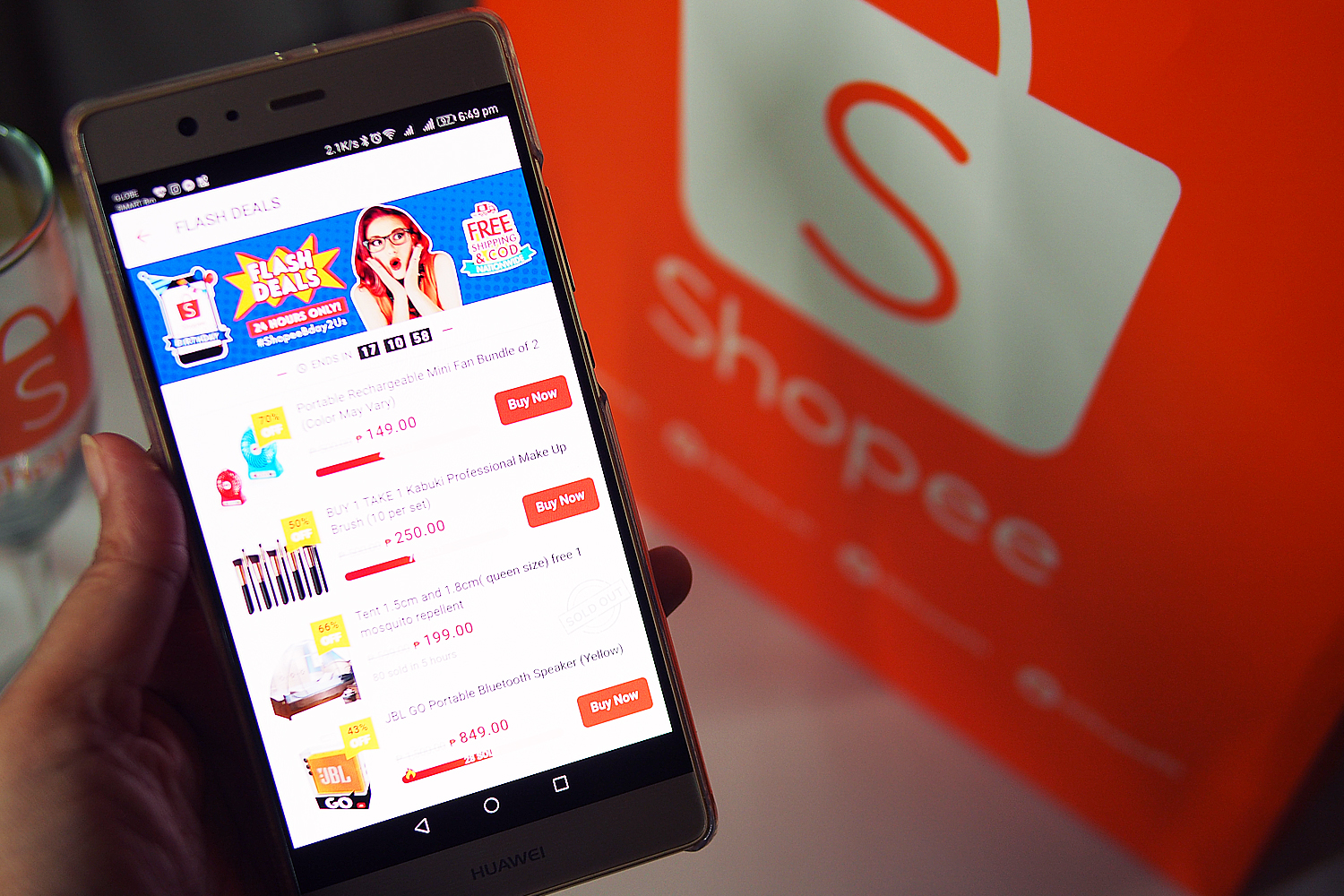
    Singaporean online shopping business Shopee is aiming to boost its market share in Southeast Asia.

    The firm is targeting an expected exponential increase in the number of online shoppers in the region, according to a recent interview published in Yahoo Finance Singapore with Shopee’s CCO Zhou Junjie.

    “We believe that there should be a lot more growth potential in Southeast Asia so we should focus our effort and resources in this region,” said Zhou in the interview. “Whereas the e-commerce industry in China is more mature, Southeast Asia markets are still at the very beginning stage.”

    E-commerce in the region is projected to pass US$150 billion by 2025, nearly four times the current levels.

    “Our priority is to grow the market share,” said Zhou. “We will continue to invest to make sure that we strengthen our lead position, we want to make sure that we grow faster than others.”

    Beyond Singapore, Shopee operates in Thailand, Malaysia, Vietnam, the Philippines, Indonesia and Taiwan.

  • Alibaba launches 2019 11.11 Global Shopping Festival

    Alibaba launches 2019 11.11 Global Shopping Festival

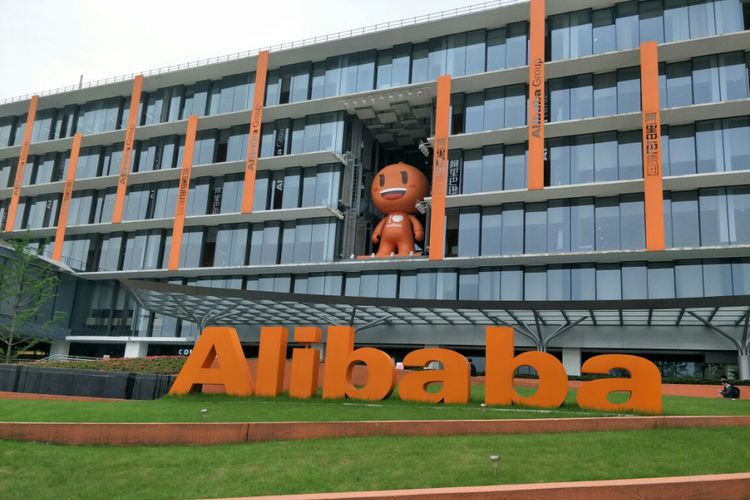
    Alibaba Group has launched its 2019 11.11 Global Shopping Festival, taking the annual event into its second decade.

    The shopping holiday this year focused on “new consumption,” “new business” and actively contributing to a greener society.

    “Our goal is to stimulate consumption demand and support lifestyle upgrade in China through new brands and products,” said Taobao and Tmall president Fan Jiang. “We will enable merchants in China and around the world to grow their businesses through data-driven product innovation and consumer insights, as well as leverage our recommendation technology and content-driven user engagement to delight consumers in urban coastal cities and less-developed areas of China.

    “Given its scale, minimizing environmental impact is essential and our technology will ensure it is a green 2019 11.11 Global Shopping Festival.”

    The festival taps a global supply chain to meet the growing demand of Chinese consumers for new brands and new products. More than 200,000 brands are participating; one million new products are on offer and more than 500 million users are expected to participate in this year’s festival – about 100 million more than last year.

    Estimated consumer savings from brand and platform promotions and coupons are around RMB 50 billion (US$7 billion).

    For the first time, Alibaba held a concurrent kickoff event in the northeastern city of Harbin, underscoring its focus on serving consumers and small businesses in China’s less-developed markets. In the last quarter, more than 70 percent of Alibaba’s new annual active consumers came from lower-tier cities.

    “The success of our focus on less-developed markets in China is reflected in our new customer acquisition growth,” said Alibaba Group CMO Chris Tung. “We are equally driven to help local enterprises and factories digitize, which improve their operational efficiency and ability to engage with customers across the country.”

    More than 22,000 international brands from 78 countries and regions will participate in this year’s 11.11 on Tmall Global, Alibaba’s cross-border online marketplace, providing an expansive international product selection for consumers.

    For the second year, Lazada will take part and expects its “shoppertainment” – a blend of shopping and entertainment – to attract a record number of participating merchants and consumers in its six markets.

    While continuing to serve over 200 countries and regions, AliExpress will enable local merchants from Russia, Spain, Italy, and Turkey to participate in 11.11 for the first time.

    Daraz disrupted South Asia’s retail market with 11.11 last year and is gearing up again with celebrations in Pakistan, Bangladesh, Sri Lanka, Myanmar, and Nepal. India will celebrate with the UC Shopping Fest, in association with Paytm, VMate, and 9Apps.

    Fliggy will offer 30,000 different vacation packages to over 200 destinations to serve Chinese tourists. Thousands of travel experts will offer tips and suggestions via live streams during 11.11.

    Cainiao and its partners will make November 20th a day focused on the recycling of cardboard packaging. They will work to convert 75,000 locations into permanent recycling stations, and express courier companies to pick up used cardboard boxes and wrapping.

    Consumers will be incentivized to recycle through rewards of “green energy” points on Ant Forest.

    Alibaba Cloud expects to save 200,000 kilowatt-hours of energy on November 11th at its data centers, which will be powered by renewable energy and energy-conserving technology such as liquid-cooled servers.

  • Amazon has no specific time frame for Vietnam website

    Amazon has no specific time frame for Vietnam website

    A senior Amazon official says the firm sees Vietnam’s potential but has not decided on a time to launch services for Vietnamese buyers.

    Bernard Tay, head of Amazon Global Selling Southeast Asia, Australia and New Zealand, said at an event Thursday that the global e-commerce giant sees Vietnam has a potential market.

    He noted that after launching Amazon in Singapore, they would look at opportunities to expand their services to more countries, including Vietnam.

    Amazon Thursday established a team of specialists in Vietnam to support Vietnamese sellers in taking their products to global customers. The company stated that it sees the majority of Vietnamese businesses are small and medium enterprises with large demand for global sales.

    Many Vietnamese leather, footwear, handmade and consumer goods items are selling well on Amazon’s website, Tay said.

    Vietnamese sellers can reach up to 300 million Amazon accounts in 185 countries and territories. Amazon also has 175 fulfillment centers worldwide, he added.

    Bui Kim Thuy, owner of a textile company whose products are being sold on Amazon, said that the e-commerce giant has strict criteria on product origin and quality which Vietnamese sellers will have to meet.

    An apparel product that suits Vietnamese customers might not suit Americans, therefore Vietnamese sellers need to make careful research for international sales, she added.

    Amazon launched a Singapore website last week, the first in Southeast Asia. Vietnamese shoppers can access Amazon.com, but many products are not available for shipping to Vietnam, and those that are available typically involve high shipping fees.

  • Jack Ma Explains the key to Alibaba’s success

    Jack Ma Explains the key to Alibaba’s success

    Forbes Media has presented the Malcolm S Forbes Lifetime Achievement Award to Alibaba Group founder and partner Jack Ma, hailing his commitment to small businesses in addition to the impact that Alibaba has achieved since its launch 20 years ago.

    The annual award celebrates an individual who embodies and exemplifies the ideals of entrepreneurship championed by Forbes, the company said in a release.

    “Jack Ma not only created one of the most outstanding companies of the world but also a company that nourished the vibrant small-business community in China – and small businesses around the globe,” Forbes Media chairman and editor-in-chief Steve Forbes said. “He is indeed one of the most influential figures of our time.”

    Ma received the award at the 19th annual Forbes Global CEO Conference, held this year in Singapore, where he and Forbes talked for about an hour about Alibaba’s history, Ma’s thoughts on entrepreneurship and his philanthropy work. Forbes started by calling Ma “one of the greatest liberators in history, enabling people who wanted to … do commerce. You gave them the means to do it.”

    Ma explained how that came about: “We believed in the future and I believe the internet can empower people,” he said, speaking of Alibaba’s 17 other founders in 1999. “So, we do Alibaba because there are so many small businesses that don’t know when and how, where they can sell the products.”

    That led to the launch of B2B e-commerce platform Alibaba.com at first and later other sites, including Taobao, which has grown from a C2C marketplace to become China’s largest mobile-commerce destination. To enable payments on these platforms, Alibaba developed Alipay. The company also wanted to get products from sellerss to consumers quickly and efficiently, so Ma and his team turned their attention to logistics, eventually launching what is now Cainiao Smart Logistics Network. Alibaba also wanted to support small businesses in need of computing power, so Alibaba Cloud was born. And the company continues to build new businesses to address new demands as the market evolves.

    “So, it’s all about solving problems. I think this is what we did in the past 20 years,” Ma said. “We always think about what we can do to solve social problems instead of complaining. That’s the journey and … millions of people change their lives because [of our] efforts.”

    Ma expanded on the company’s mission to help small businesses, young people and women – those largely outside the traditional financial system – via Alipay, the largest mobile payments and lifestyle app in China. Traditional financial companies focus on the top economic levels of society, he said, not the bottom. But Alipay was always a bottom-up operation. While the wealthy elite wasn’t willing to test the technology when it was first made available, in 2004, many of China’s less wealthy consumers were.

    “They tried it, they loved it, they benefitted from it,” Ma said. “So, this is very, very inclusive.”

    “We feel that the financial system for the 21st century should be inclusive, should empower people,” he continued. All “people have the right to reach the money they need.”

    Alibaba has achieved tremendous success during its two decades, as it now serves 730 million annual active consumers in China and another 130 million overseas. Alipay parent Ant Financial, in which Alibaba holds a 33-per-cent stake, serves 900 annual active consumers in China and 1.2 billion worldwide, including active users of Alipay’s local e-wallet partners. The $456.4 billion Alibaba currently employs about 100,000 people globally, and its e-commerce platforms reach merchants and consumers in more than 200 countries and regions. This year, Alibaba will host its 11th 11.11 Global Shopping Festival, which has grown into the largest one-day shopping festival in the world.

    Ma said he would build on that success – and the money he’s made from Alibaba – to continue helping others. He has already worked through his namesake philanthropic organization, the Jack Ma Foundation, to help improve education and conservation efforts in China. But he has turned his attention to points outside of China as well. Most recently, Ma has focused his attention on supporting entrepreneurs in Africa. He has said that entrepreneurs are “the most important element to develop a society,” and therefore they will be central to Africa’s economic development in the decades ahead.

    “I have the money, I have the resources and I won’t go there, empower the entrepreneurs,” Ma told Forbes. “If we can be able to discover and help more Jack Mas, more Bill Gates or Warren Buffetts – more Steves – Africa will be different.”

    Next month, Ma will travel to Ghana to host the first Africa Netpreneur Prize competition. The $10 million initiative will award $1 million a year for the next 10 years to African entrepreneurs as a way to support the growth of the continent’s digital economy. Nearly 10,000 people from 50 of Africa’s 54 countries applied.

    The remaining 10 contestants – hailing from Egypt, Nigeria, Liberia, Rwanda and Cote D’Ivoire – will make their final pitches to Ma and a panel of judges during the Nov. 16 taping of “Africa’s Business Heroes,” a televised event scheduled to air Nov. 29 in countries across Africa.

  • India’s Flipkart to enter food retailing, launch private label

    India’s Flipkart to enter food retailing, launch private label

    Walmart-owned Indian e-commerce platform Flipkart is launching a food retail business.

    The new initiative will see the firm release its own private label, Flipkart Farmermart, as well as a grocery supply chain and potentially physical stores.

    A spokesman for the firm told news outlet Moneycontrol that Flipkart plans to “deepen its penetration in the food retail space, take on Amazon, and run a farm-to-fork operation,” with the board consenting to invest ₹2,500 crore (US$350,000) to expand its operations in the grocery business.

    The firm plans to leverage parent company Walmart’s experience in the cash-and-carry sector in the territory, which has helped build connections in the farming industry for grocery and food produce.

    Research shows that just 0.15 percent of Indian nationals buy online, although this figure is expected to increase exponentially over the next few years.

  • Japan’s RMK aims for Chinese consumers with Tmall Global launch

    Japan’s RMK aims for Chinese consumers with Tmall Global launch

    Japanese cosmetics brand RMK has launched a flagship store on Chinese e-commerce platform Tmall Global.

    The move has been described as part of RMK’s broader focus to tap the lucrative Asia-Pacific beauty market and create a stable platform for beauty brands in China.

    Shagun Sachdeva, a consumer insights analyst at GlobalData, says RMK is already available in Japan, Taiwan, Hong Kong and South Korea.

    “The calculative move to tie up with Tmall Global has been made to indulge in omnichannel retailing with an aim to increase its presence in the high-value Chinese market and get access to a wider customer base,” he said.

    According to GlobalData, the Cosmetics and Toiletries market in China is growing at a steady pace and is almost double than that of in Japan last year.

    GlobalData’s 2018 fourth-quarter consumer survey revealed that 63 percent of Chinese consumers prefer online channels to buy beauty and grooming products.

    “The strategic decision to expand seems to be driven by rising popularity and growing demand of Japanese beauty products among Asia-Pacific consumers owing to perceived safety, better quality and multi-functionality,” said Sachdeva.

    “The brand has grabbed the opportunity of looking at the high intensity of J-beauty products being imported in China or bought by Chinese visitors in Japan. With the launch on Tmall Global, the company aims to target such customer base first and then include more products in its range soon.”

  • Most Singaporeans purchase online overseas every month

    Most Singaporeans purchase online overseas every month

    A recent survey has shown that around 75 percent of Singaporeans purchase overseas products at least once a month.

    According to Southeast Asian and Taiwanese e-commerce platform Shopee’s Global Deals Survey 2019, which polled more than 4000 Singaporeans about their overseas online purchasing habits, more than 90 percent of survey respondents indicated that they buy overseas products on Shopee more today, as compared to three years earlier. Reasons cited include convenience, cost-savings, increased product variety and being able to purchase products not available in Singapore. The survey also found that shoppers prefer to purchase overseas products from sellers who have a wide variety of products available (70 percent) and offer free shipping (30 percent).

    A recent YStats report found Singapore to be the top market for cross-border shopping in Southeast Asia, and according to a Forrester report, 60 percent of e-commerce sales consist of overseas orders.

    Japan is the fastest-growing market for overseas purchases, as demand for health supplements rises. Over the years, Japanese brands have increasingly made inroads in Singapore, gaining ground in the local retail scene with the entrance of a new wave of Japanese fashion labels and discount stores.

    According to Shopee’s survey, when it comes to purchasing Japanese products, quality (70 percent), variety (75 percent) and items that are not available in Singapore (73 percent) are what fuels the appetite of Singaporean shoppers.

    Shopee has recently unveiled a dedicated in-app space where users can access more than 50 million deals from six popular shopping destinations. Named Global Deals, the feature introduced deals from China, Korea, Japan, Taiwan, Malaysia and Hong Kong, and is accessible via a dedicated button on the Shopee homepage.

    “Singaporean shoppers have become globalized consumers who now have the world at their fingertips, and they are constantly on the lookout for convenience, quality and variety,” said Shopee CCO Zhou Junjie.