Tag: etail

  • Alibaba’s Ma steps down as chairman after reflection

    Alibaba’s Ma steps down as chairman after reflection

    Alibaba Group founder Jack Ma, who helped launch China’s online retailing boom, has stepped down as chairman of the world’s biggest e-commerce company as its fast-changing industry faces uncertainty amid a US-Chinese tariff war.

    Ma, one of China’s wealthiest and best-known entrepreneurs, gave up his post on his 55th birthday as part of a succession announced a year ago.

    He will stay on as a member of the Alibaba Partnership, a 36-member group with the right to nominate a majority of the company’s board of directors.

    Ma, a former English teacher, founded Alibaba in 1999 to connect Chinese exporters to American retailers.

    The company has shifted focus to serving China’s growing consumer market and expanded into online banking, entertainment and cloud computing. Domestic businesses accounted for 66 per cent of its $US16.7 billion in revenue in the quarter ending in June.

    Chinese retailing faces uncertainty amid a tariff war that has raised the cost of US imports.

    Growth in online sales decelerated to 17.8 per cent in the first half of 2019 amid slowing Chinese economic growth, down from 2018’s full-year rate of 23.9 per cent.

    Alibaba says its revenue rose 42 percent over a year earlier in the quarter ending in June to $16.7 billion and profit rose 145 per cent to $US3.1 billion. Still, that was off slightly from 2018’s full-year revenue growth of 51 percent.

    The total amount of goods sold across Alibaba’s e-commerce platforms rose 25 percent last year to $US853 billion. By comparison, the biggest US e-commerce company, Amazon.com Inc., reported total sales of $US277 billion.

    Alibaba’s deputy chairman, Joe Tsai, told reporters in May the company is “on the right side” of issues in US-Chinese trade talks. Tsai said Alibaba stands to benefit from Beijing’s promise to increase imports and a growing consumer market.

    Alibaba was founded at a time when few Chinese were online. As internet use spread, the company expanded into consumer-focused retailing and services. Few Chinese used credit cards, so Alibaba created the Alipay online payments system.

    Ma, known in Chinese as Ma Yun, appears regularly on television. He pokes fun at his own appearance, saying his oversize head and angular features make him look like the alien in director Steven Spielberg’s movie “E.T. The Extraterrestrial.”

    The company’s $US25 billion initial public offering on the New York Stock Exchange in September 2014 was the biggest to date by a Chinese company.

    The Hurun Report, which follows China’s wealth, estimates Ma’s fortune at $US38 billion.

    Ma’s successor as chairman is CEO Daniel Zhang, a former accountant and 12-year veteran of Alibaba.

    Alibaba’s e-commerce business spans platforms including business-to-business Alibaba.com, which links foreign buyers with Chinese suppliers of goods from furniture to medical technology, and Tmall, with online shops for popular brands.

    Ma faced controversy when it disclosed in 2011 that Alibaba transferred control over Alipay to a company he controlled without immediately informing shareholders including Yahoo Inc. and Japan’s Softback.

    Alibaba said the move was required to comply with Chinese regulations, but some financial analysts said the company was paid too little for a valuable asset. The dispute was later resolved by Alibaba, Yahoo and Softbank.

    Corporate governance specialists have questioned the Alibaba Partnership, which gives Ma and a group of executives more control over the company than shareholders.

    Ma has said that ensures Alibaba focuses on long-term development instead of responding to pressure from financial markets.


  • Alibaba founder Jack Ma prepares to step aside

    Alibaba founder Jack Ma prepares to step aside

    Alibaba Group celebrated its 20th anniversary on Tuesday in Hangzhou, highlighting its journey from 18 founders of a tiny e-commerce startup in a small apartment into the US$447 billion enterprise it is today.

    It was also Jack Ma’s final appearance as executive chairman, as CEO Daniel Zhang was set to take over at the helm of the company, which now has about 100,000 employees working in dozens of businesses in offices around the world.

    In his final speech, Ma addressed those staff, telling them that the celebration was not about his retirement but rather “the beginning of a legacy of succession.”

    Alibaba has long prided itself on its corporate governance, particularly its use of a partnership system that was created to ensure that the culture and ethos that have underlined the company and its approach to business for two decades remained intact long after the founders were gone. That focus on a responsible transition is what drove Ma’s decision to announce that Zhang would succeed him as chairman a year ago, offering customers, employees and shareholders that same visibility.

    “It’s not about the choice of an individual, but the success of a system,” Ma said during his speech.

    Alibaba’s rise has closely tracked – and, the company said, contributed to – China’s economic development. When Alibaba launched in 1999, China had only the most basic retail infrastructure, just 8.8 million internet users and a per-capita income of less than $800. Now, those numbers have soared to more than 800 million internet users, a per-capital income of more than $8000 and total e-commerce turnover of more than $1 trillion. According to research firm eMarketer, China currently represents 54.7 per cent of the global e-commerce market, a share nearly twice that of the next five countries combined. In a release, Alibaba said that about 40 million people were directly and indirectly employed by Alibaba’s e-commerce ecosystem in China.

    Ma, who turned 55 on Tuesday, also used his speech to emphasise that Alibaba should be a company focused on effecting change in the world rather than one in business only for profits. He said that Alibaba’s biggest decisions, in fact, had nothing to do with money at all.

    “Behind each of our decisions – the technology we invest in, the products we create – we consider whether they can solve society’s problems, whether they are driven by our mission, vision and values,” said Ma.

    For the next 20 years, Ma called for Alibaba to make the world “greener, more inclusive and sustainable.”

    Zhang spoke about the future as well, saying that Alibaba’s goal was to service more than 1 billion consumers globally and handle over RMB 10 trillion in transactions by 2024.

    Alibaba also needs to help enterprise customers fully digitise their businesses, including commerce, finance, logistics and cloud computing, he said. Marketing, channel management, manufacturing, product design, customer service and organisation management were all things that the “Alibaba Operating System” could help to digitise as well.

    “Only through this can we help all businesses move towards a digitised and intelligent future,” Zhang said.

    But, like Ma, there was a sense of altruism in that mission.

    “We want to continue to create value for society, solve society’s problems and be a company that shoulders social responsibility,” said Zhang.

    “If our efforts help improve society even in a small way, that makes us truly happy. We hope our customers and partners perform better than we do,” he said.

    Alibaba marked its anniversary by updating its corporate values. In a release, Alibaba said that just as its business has evolved, so had the world. Therefore, the company’s values had to keep pace with those changes and remain relevant to its global workforce. The announcement follows Alibaba’s recent reaffirmation of its mission statement – “To make it easy to do business anywhere” and an update to its vision, clarifying its intent to be a “good company that will last for 102 years” in the digital era, rather than pursuing power or scale.

  • Amazon launches outdoor and garden range

    Amazon launches outdoor and garden range

    Amazon, banking on the weekend warrior set being as susceptible to the convenience of home delivery as any other consumer group, has now entered the garden and outdoor category.

    The online retailer, which launched in Australia in 2017, has continued to expand its offer over the past two years, and now offers more than 125 million products.

    It launched a new range of garden and outdoor products on Tuesday.

    “Our new Garden store has a range of enticing outdoor products from gardening equipment to pool supplies to patio furniture to BBQs,” Rocco Braeuniger, country manager of Amazon Australia, said in a statement.

    This puts the e-commerce giant in direct competition with major brick-and-mortar retailers, including Bunnings and Barbeques Galore, which offer similar products through their national store networks, as well as online stores.

    “We’ve been competing with a wide range of retailers across a broad spectrum of categories and products for a long time and we always welcome competition,” Mike Schneider, Bunnings’ managing director said.

    “While we don’t comment on our competitors, our focus is always on our customer.”

    While Bunnings only started selling online in select areas in June 2018, it expects to have a full e-commerce offer in Australia by Christmas 2019.

    At the same time, it’s investing heavily into its click-and-collect offer, having conducted research internally that shows most consumers prefer to buy online and pick-up in-store, rather than have it delivered to their home.

    “Having our team of experts in-store means we are also able to offer great service to run alongside our online transaction capability and we typically find that many of our online customers like to head into the store to pick their items up,” Schneider said.

  • South Korean retailers are fighting the e-commerce

    South Korean retailers are fighting the e-commerce

    Cornered by a low-price offensive from online sellers, South Korean retailers are striking back with a so-called ‘malling’ strategy.

    ‘Malling’ refers to all leisure activities at the mall, including shopping, dining, and watching movies or experiencing other forms of entertainment.

    Retail stores are focusing on children. The logic is that if they create a space where children can play, it will motivate parents to come and be more willing to spend money.

    Lotte Mall Suji, which opened in Yongin, Gyeonggi Province last Thursday, features South Korea’s very first indoor ice rink inside a shopping mall. The mall offers various leisure activities, including rock climbing, and 1100sqm kids park.

    Shinsegae Premium Outlet in Paju, which reopened on Sunday following renovations, now has a 530sqm kids’ cafe and the region’s largest fashion zone for children.

    South Korean retailers are also introducing a variety of attractions to draw in diverse groups of customers.

    Starfield Bucheon has recently set up an academy for young mothers, offering programs for childcare as well as other courses for all adults on various hobbies and self-development.

    Shinsegae Premium Outlet in Paju plans to come up with a more diverse set of interpretation services for foreigners. On top of Chinese and English, it plans to add Thai, Mongolian, and Tagalog to attract more customers.

    Parking space is another critical factor for retail stores as they want customers to spend time at malls without having to worry about parking or other traffic needs. Lotte Mall Suji comes with a parking lot across basement floors 2 to 6 with a capacity to accommodate 1700 cars.

    Starfield Bucheon has a parking lot stretching from basement floor 5 to the 9th floor above ground, capable of accommodating as many as 1900 cars.

    Shinsegae Premium Outlet in Paju, located on the outskirts of the city that allows for a size much larger than Starfield Bucheon and Lotte Mall Suji, chose to focus on dining, doubling the number of restaurants to accommodate many popular cuisines.

  • Chinese E-commerce retailer rejects Australian daigou buyers

    Chinese E-commerce retailer rejects Australian daigou buyers

    Daigou buyers from Australia – individuals and groups who buy infant formula and other consumables in offshore retail outlets, selling them at huge mark-up prices in China – have been locked out of one China’s fastest-growing online malls.

    Aomaijia, which boasts more than 30 million registered customers, will not allow individuals or unauthorized distributors to set up online stores selling Australian products. The company instead offers a high level of back-end services to its suppliers, which it says is a far more sustainable business model.

    “Daigou have filled a market need in China,” said Aomaijia Group CEO Maggie Liu; “while they actively promote Australian brands, in reality they operate a rather unsophisticated and inefficient distribution network. The Aomaijia platform was created to give suppliers, like those in Australia, better control of their branding in China but also control over supply chain, distribution, sales volumes and ultimately their profits.”

    The company’s global chief was in Sydney for the official opening of its Australasian procurement and supply chain office. It is the fifth such international office, with other procurement centres in Paris, Los Angeles, Seoul and Tokyo.

    Five Australian consumer product companies – Sukin, Kids Smart, Nestle Australia, B.box and Tasman Ugg – were at the Sydney event, where they signed supply agreements with Aomaijia. They will join a dozen other leading Australian brands, headed by Swisse and Blackmores, which are already available across the e-commerce platform.

    In total Aomaijia sells more than 100,000 product lines across 3,000 individual brands mainly from the US, Europe, Japan, South Korea and Australia.

    Aomaijia connects with its customers across three platforms – a mobile phone app, an online retail site (www.aomygod.com), and a mini sales program operated on the WeChat social media app, which has more than 1 billion users. The company has 14 physical stores in key locations across all of China’s major first-tier cities, with plans to open 100 more over the next year.

    The physical stores give customers the chance to test products, reassuring them of authenticity – a key selling point in China where consumers are increasingly wary of fake products, particularly in supplements, vitamins and infant formulas where Australian and New Zealand brands are very highly regarded.

    “Aomaijia does not just offer product displays,” said Nestle Australia’s head of cross border development Matthiew-Nicolas Quentin. “Chinese consumers are highly demanding, they want to know everything about our products and that’s the role this platform plays.”

  • Shopee opens headquarters in Singapore

    Shopee opens headquarters in Singapore

    Southeast Asian e-commerce platform Shopee will open its new regional headquarters in Singapore at Kent Ridge.

    The firm characterized the move as a reflection of the homegrown company’s commitment to invest and innovate in Singapore and the region.

    “Shopee’s rapid growth since its inception and their new headquarters here is a testament to the strength and vibrancy of Singapore’s technology ecosystem,” said Digital Industry Singapore spokesperson Kiren Kumar. “We’re heartened by their commitment to build a strong pool of tech talent, not just for their own needs, but also for the larger ecosystem here. We look forward to Shopee’s contribution to Singapore’s growing digital economy, as they continue to innovate and expand their footprint in the region using Singapore as a springboard.”

    Shopee’s new headquarters spans 244,000sqft and will be able to accommodate up to 3000 employees, contributing to its established presence in seven markets across Southeast Asia. The purpose-built space boasts a host of features to facilitate a more collaborative and creative working environment, including a marketing studio where Shopee Live and Shopee Quiz are filmed, a gym and a fun zone for employees.

    In less than four years, Shopee has become the leading e-commerce platform in Southeast Asia and Taiwan. In the second quarter of this year, Shopee achieved 246.3 million orders regionally and recorded a gross merchandise volume of US$3.8 billion. According to a report by App Annie, Shopee was the number one shopping app in Southeast Asia by average monthly active users in the second quarter.

    “Shopee has grown from a start-up to the region’s leading e-commerce platform in less than four years,” said Shopee’s chief commercial officer Zhou Junjie. “Singapore has been our headquarters, even when we were just 10 employees strong. This new office marks our rapid growth so far and sets the stage for us to solidify our leadership position.”

  • Fjallraven launches local E-commerce initiative

    Fjallraven launches local E-commerce initiative

    Swedish outdoor heritage brand Fjallraven has launched a local online presence in New Zealand, as part of a broader push into the ANZ market.

    The move follows the launch of a local Australian site in 2017, and the opening of two brick-and-mortar stores, including the launch of a Sydney flagship store last month.

    Brand manager Susan Park said a bricks-and-mortar store is on the agenda for New Zealand as well.

    “New Zealand is definitely in our brand strategy for a store,” Park said.

    “We just launched Fjallraven.co.nz to satisfy the growing demand in New Zealand. We have some other locations on our radar and plan to look at them when Sydney has established itself as a leading destination.”

    Demand for the brand has been growing in Australia and New Zealand since Zen Imports became Fjallraven’s local distributor in 2017, establishing new partnerships with retailers in the region.

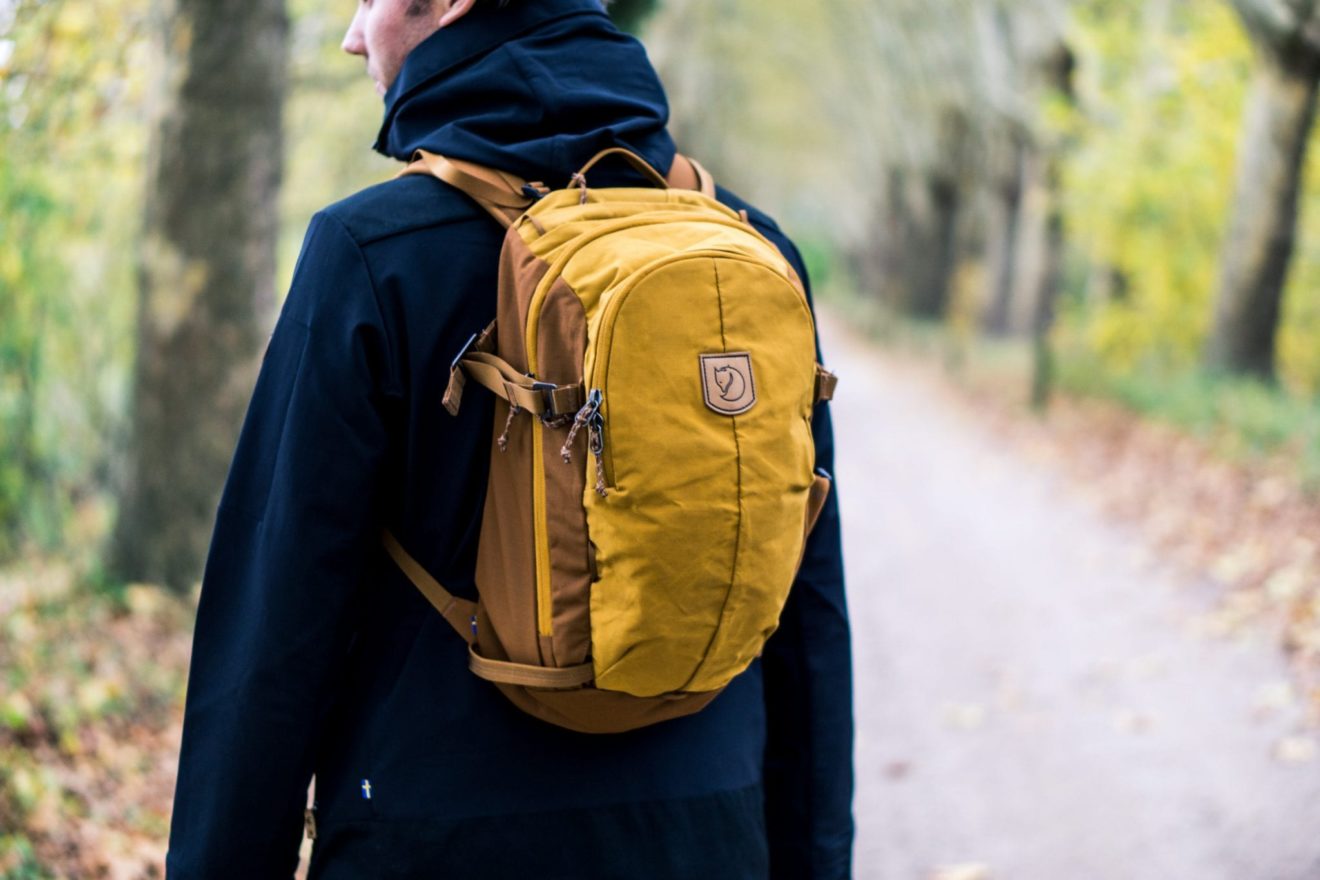
    The brand’s most popular product is its Kanken rucksack, a style Fjallraven first debuted in 1978, which has become hugely popular around the world.

    According to Park, however, interest in the brand’s broader range of jackets, trousers and other outdoor apparel has been growing in Australia since the brand’s first brick-and-mortar store opened in Melbourne last year.

    Introducing customers to the brand’s full range of products, and its Swedish heritage – through a daily ‘fika’ or coffee break, offered free to customers in-store – is a key part of Fjallraven’s store strategy.

    The retailer is also planning to reach customers in new ways with the launch of Fjallraven Discovery Australia, a three-day hike in the Grampians designed to get people outdoors and back to nature.

    This is in keeping with the growing theme of Fjallraven hikes all over the world.

  • Domestic online E-commerce spending up

    Domestic online E-commerce spending up

    Online spending on local sites has strengthened in July and helped to boost the country’s total online retail sales compared to the previous corresponding period.

    Spending on New Zealand sites rose 18 percent compared to the previous year – again driven by food and grocery categories in recent months.

    New Zealand’s total online retail spending in July was 9 percent higher than a year ago. Excluding the food and liquor sectors, annual online spending was equivalent to 11.1 percent of retail sales, according to both Statistics New Zealand and Bank of New Zealand’s indices.

    Spending growth at offshore sites fell slightly in July, with online spending down 3 percent on July last year.

    Spending on entertainment media among international e-commerce companies grew strongly but was offset by broad-based softening across most other categories at offshore sites.

    Gary Baker, director of institutional research at Bank of New Zealand, said annual online spending across the retail categories they cover is running at just over $4.6 billion, excluding GST.

    “This is equivalent to 8 percent of total retail sales reported in Statistics NZ’s Retail Trade Series (RTS), comparing like-for-like categories,” Baker said.

  • Everlane launches on Chinese Tmall Platform

    Everlane launches on Chinese Tmall Platform

    US fashion brand Everlane has opened a store on Alibaba’s cross-border e-commerce marketplace Tmall Global.

    The Tmall Global store will offer Chinese consumers access to Everlane’s latest products, including womenswear, menswear, shoes, and accessories. It is the San Francisco-based label’s first sales channel in China, apart from its own site.

    The brand is known for championing sustainable practices and its ethos of “radical transparency,” revealing the costs behind each product – from materials and labor to transport and duties – and offering it to consumers at a price below the traditional retail markup. When shoppers look at the Tmall Global product page for its Day Market Tote, for example, they will see the leather bag costs about RMB807 (US$112.9) to make and is sold at RMB1514 – nearly half the traditional market price, according to Everlane.

    “China is one of the most thoughtful and sophisticated consumer markets in the world,” said Everlane’s founder and CEO Michael Preysman. “The Chinese consumer cares about beautiful quality at a great price and cares about the planet and their impact on the world. We want to help support their vision and offer beautiful basics that are also ethically made.”

    “As the consumer demand for ethical clothing and sustainable products grows, we believe Everlane will welcome a new era of shopping on the platform,” said Tmall Global deputy GM Yi Qian.

    “Everlane has pioneered the idea of radical transparency in their supply chain by showing their costs and factories, and we look forward to partnering with them closely to bring their products and stories to Chinese consumers.”

  • Singapore Insurtech Inks Indonesia E-Commerce Deal

    Singapore Insurtech Inks Indonesia E-Commerce Deal

    The firm hopes to capitalize on the booming e-commerce market in the country by offering protection against loss or damage during transit.

    Singapore-based insurtech firm Axinan is partnering Indonesia e-commerce giant Bukalapak to offer merchants and consumers transit protection for goods purchased on its platform, the firm announced on Tuesday.

    Founded in 2010, Bukalapak is one of the largest e-commerce companies based in Indonesia valued at over US$1 billion. Axinan is working with underwriter Sompo Insurance Indonesia and offering the product through its igloo platform. It will be fully digital and have dynamic pricing and digital claims management.

    The firm, founded in mid-2016 by former Grab chief technology officer Wei Zhu, leverages big data, actuarial risk management and machine-learning processes to develop insurance products tailored for the online space.

    Axinan graduated from PayPal Singapore’s startup incubator in 2017 and has signed partnerships with several e-commerce companies including Indonesian marketplace Tokopedia. In 2018, it announced the close of its series A fundraising round, led by NSI Ventures (now Openspace Ventures), the venture capital arm of private equity group Northstar.

    In 2019, it launched igloo, an app that provides on-demand digital insurance solutions targeted at younger consumers. Its first direct-to-consumer offering was a phone screen protection plan, offered in conjunction with FWD Singapore.

    Axinan has operations in Australia, Hong Kong, Indonesia, Malaysia, the Philippines, Singapore, and Thailand, with development offices in mainland China and Taiwan.

  • Shopee app Singapore’s most downloaded

    Shopee app Singapore’s most downloaded

    The Shopee app has emerged as Singapore’s most downloaded shopping app.

    The Sea company platform had 2.8 million visitors per month on average during the second quarter, with an 11 percent increase compared to the previous quarter. It is currently the most-used app of its kind throughout the whole of Southeast Asia, while rival firm Lazada remains the most actively used e-commerce app within Singapore itself.

    “Apps by Alibaba such as Taobao and AliExpress remained prominent among Singaporean consumers probably due to the increased popularity of Chinese products and Chinese language proficiency in the country,” read a report by iPrice Group.

  • Alibaba Hong Kong IPO postponed due to city unrest

    Alibaba Hong Kong IPO postponed due to city unrest

    The planned US$15 billion Alibaba Hong Kong IPO has been postponed due to continuing political unrest in the city.

    The firm’s stance towards the issue is being taken by observers as indicative of the general mood of both mainland businesses and the Beijing administration towards Hong Kong.

    Alibaba made the decision at a board meeting last week noting financial and political instability in the area. A new schedule for the listing has yet to be established, pending an improvement in the situation.

    “It would be very unwise to launch the deal now or anytime soon,” said an anonymous source familiar with the board’s thinking on the matter. “It would certainly annoy Beijing by offering Hong Kong such a big gift given what’s going on in the city.”

    The Alibaba Hong Kong IPO would likely be the world’s largest listing this year when it proceeds. It follows the sale of an 11-per-cent stake in Alibaba by Yahoo offshoot Altaba earlier this year.


  • KrisShop marks rebranding by taking to the ground

    KrisShop marks rebranding by taking to the ground

    Singapore Airlines’ inflight and online travel retail store KrisShop has revamped its brand and launched a new website.

    To mark the launch, KrisShop is curating a pop-up exhibition in downtown Singapore, divided into several experiential zones, each showcasing a different retail feature of the new site. KrisShop.com now sports a cleaner look with a new interface that includes more intuitive features for swift and smooth navigation.

    KrisShop has also introduced multiple initiatives for convenient payment and pre-order and delivery services, aiming to provide personalised experiences to suit the varying lifestyles of customers. It is targeting both travellers and non-travellers.

    “Over the years, the travel retail industry has experienced a radical disruption driven by digitalisation,” read a statement from the firm on the rebranding. “KrisShop seeks to embrace a holistic omnichannel approach to deliver an integrated shopping experience that engages its customers at every step of the journey – both online and offline.

    “Advancing beyond a retail catalogue, KrisShop.com aims to re-invent itself as the go-to lifestyle e-commerce website that caters to the needs of all shoppers, whether they are travelling or not.”

    In the coming months, the firm will progressively roll out the site’s new features, including multiple payment options, pre-ordering up to 60 minutes before flight, hotel delivery, in-flight entertainment, and self-collection at PopStations.

    “Beyond being a retail e-commerce site, KrisShop seeks to establish itself as a one-stop shopping destination, and is continually evolving to meet the needs and demands of today’s consumers,” said KrisShop CEO Chris Pok. “Leveraging our expertise in retail, we are proud to unveil the new Krisshop.com that aims to modernise the consumer shopping journey.”

    The KrisShop popup is located at Raffles Hotel’s Palm Ballroom, and will be open to the public from August 23 to 24.

  • JD may list Dada-JD Daojia in the US Store

    JD may list Dada-JD Daojia in the US Store

    Chinese e-commerce giant JD is considering a share listing in the US, according to a Reuters report.

    The firm has entered into early-stage discussions with bankers about a deal that could raise US$500 million for the firm’s joint venture in the territory, Dada-JD Daojia.

    According to Coresight Research, Dada-JD Daojia was created in 2016 through the merger of JD’s supermarket business and the crowdsourcing delivery service Dada Nexus, with a 10-per-cent stake owned by US retailer Walmart.

    Dada-JD Daojia provides a one-hour professional delivery service for more than 74 million users, working with more than 5000 retailers including Walmart, Carrefour, Vanguard, Yonghui supermarket and Watsons.

    The JV has already secured roughly the same amount in funding last year with investments from JD and Walmart.

    JD itself has just come off a solid second quarter thanks to strong online sales in recent months.

  • International retailers rethink strategy for Black Friday

    International retailers rethink strategy for Black Friday

    The growth of major sales events such as Black Friday, Cyber Monday, and Amazon Prime Day is changing the shape of peak season, according to a new survey from marketing firm Yieldify.

    In a survey of more than 400 US and UK retail marketers, Yieldify found that retailers are anticipating Black Friday revenue this year to be 25 percent higher than 2018, and revenue from the wider holiday season to be 28 percent up on last year.

    Taking a closer look, however, it is clear that attitudes towards the discount-driven event are evolving. Twenty-two percent of pureplay online businesses surveyed said they are opting out of Black Friday altogether, and those that are participating will offer smaller discounts than their omnichannel peers.

    In addition, rather than offering heavy discounts over the Black Friday period, many retailers are looking to spread discounting across the holiday quarter, with price cuts peaking in the weeks leading up to Christmas.

    Eighty-five percent of retailers surveyed said they will offer discounts in the weeks leading up to the Christmas period, and more than half (57.6 percent) will offer discounts across their entire range during the Christmas period – higher than on Black Friday (50.6 percent) or Cyber Monday (44.4 percent).

    US retailers are more likely to favor this approach to discounting, even on Black Friday, with 61.9 percent discounting across all ranges versus just 39.3 percent of their British counterparts.

    “[This] attests to the trends we’ve been seeing in recent years with our clients – what used to be a race to the bottom for discounts has evolved into a more diverse set of approaches to the traditional peak season,” Yieldify chief executive and founder Jay Radia said.

    “With competition stronger than ever, it pays to be different as much as it pays to discount.”

    Shippit joint chief executive and co-founder Rob Hango-Zada recently told Inside Retail that online discounting was beginning to have a negative effect on the industry as a whole.

    “The discounting in online retail is reaching a point of unsustainability, as it’s not triggering offline shoppers to buy online, but online shoppers to pull forward their spend,” Hango-Zada said.

    However, not participating in a broader sales event can be dangerous for retailers with underdeveloped offerings, as it becomes easy to be pushed out of the customers’ mind – if only for a few days.

    “Only those with compelling everyday low pricing and free or flat shipping rates tend to benefit from not partaking in a promotional event,” Hango-Zada said.