Tag: etail

  • Zalora Philippines targets 50-per-cent annual sales growth

    Zalora Philippines targets 50-per-cent annual sales growth

    Fashion e-tailer Zalora Philippines is targeting 50 percent annual growth in sales over the next five-year period.

    The firm’s confidence in its target is based on the number of Filipinos embracing online shopping.

    “We will end the year with more than 50 percent growth year on year,” said Zalora Group CEO Gunjan Soni, “and we expect that trajectory to continue”.

    “We actually see that trend continuing in terms of very high double-digit growth for at least the next five years,” said ZPH president and CEO Paolo L. Campos III. “We don’t see growth tapering, we see it sustaining at the very high double-digit level.”

    Zalora also operates in Singapore, Malaysia, Thailand, Vietnam, Taiwan, and Hong Kong.

  • Alibaba’s flash sale and marketing platform Juhuasuan has launched

    Alibaba’s flash sale and marketing platform Juhuasuan has launched

    Alibaba’s flash sale and marketing platform Juhuasuan has launched an upgraded version of Jutudi, a digital initiative to help Chinese farmers optimise their supply chain and offer consumers better deals.

    Juhuasuan is Alibaba’s sales and digital marketing platform, enabling brands and merchants to broaden their reach to consumer segmentations across China through online and offline campaigns. Brands design and hold flash sales through the platform, using analytics and recommendations powered by Juhuasuan, to identify the most preferred product assortment for targeted regional consumers. It also offers a group-buying option to offer limited-time best deals to consumers.

    The Jutudi initiative first debuted in 2014, allowing consumers to become “virtual farmers” by “purchasing” a small plot of land online from the growers. The farmers would ship the produce to the consumer when the crop ripened. The new Jutudi moves to help boost farmers’ digital competitiveness, offering farmers and cooperatives science-backed analytics to improve their crop and supply chain management.

    Currently, 20 different cooperatives from a dozen provinces around China have joined the initiative. The plan is to widen the reach to at least 1,000 farming cooperatives within two years.

    “Going beyond flash sales and promotional campaigns, the new Jutudi offers the farmers a solution that taps into the Alibaba digital economy, giving farmers broader opportunities to move their produce,” said Tmall and Taobao marketing GM Liu Bo. “Supported by the entire Alibaba ecosystem, Jutudi uses the algorithm from Alibaba Cloud to help farmers plan their crops and harvest. Our smart-logistic network, Cainiao, offers expedited delivery services to ensure freshness. Moreover, consumers can take advantage of flash sales on Juhuasuan to get the best bargains.”

    One example is peaches from Hubei Province – by collaborating with Juhuasuan, peach growers there sold 100 tons of fresh peaches within just two hours last month. The performance encouraged the farmers to embrace other digital tools offered by the Alibaba ecosystem, such as leveraging Alibaba Cloud’s AI technology to standardise their crop management. As a result, costs for the farmers decreased by 10 per cent.

    Juhuasuan further boosted the region’s value chains by connecting the peach growers to Three Squirrels, a China-based food conglomerate and snack maker that turned fresh peaches into popular dried fruit snack packets to be sold on Taobao and Tmall.

    Based on Juhuasuan’s flash sale and collective buying model, Jutudi lets consumers pre-order agricultural products before the harvest. The platform works directly with the cooperatives or the farmers. By bypassing the middlemen and traditional wholesalers and distributors, subsequent savings are passed on to consumers. For many items, the discounts can be 30- to 50-per-cent lower than regular prices.

    For farmers, the pre-sale model confers a higher degree of certainty that at least a portion of their crop will be sold. Once orders have been locked down, the farmers can harvest and pick fruits or vegetables according to the orders they’ve received. This can help prevent surpluses or shortages, and also reduces cost. Another benefit of the model is that consumers can always get fresh, in-season produce. According to the platform, the farm-to-table journey time can be as short as 48 hours once the order has been placed.

    Harnessing consumer insights from Tmall and Taobao, as well as data from Alibaba Cloud, Jutudi can boost farmers’ ability to forecast what would be popular in the coming year and approximately how much to plant to meet future demand. Traditionally, farmers plan their crop based on sales of the previous season. This often incurs the risk of overproduction or underproduction. However, by using data and scientific insights provided by Jutudi, farmers can more accurately predict the next hot items. Such predictions are especially crucial for farmers of specialty crops to capture niche market share.

    An example is the pumpkin growers in desert areas of Gansu province. Based on data and shopping trends provided by the platform, farmers now know through some light processing, they can turn the whole pumpkins into easy-to-carry microwave meals targeting office workers. The explosive popularity of these pumpkin meals have encouraged pumpkin farmers to double their crop area from the current 396 acres in preparation for next year’s sales.

    Juhuasuan has successfully promoted an array of agricultural products. In the past six months, through flash sales, 330 tons of lychees from Hainan Province, 165 acres of fresh roses and 3 million mandarin oranges from Yunnan Province were completely sold out within 72 hours.


  • Indian fashion house Ritu Kumar looks to raise $20 million

    Indian fashion house Ritu Kumar looks to raise $20 million

    Indian apparel label Ritu Kumar is seeking a cash injection of up to US$20 million.

    The firm will branch into new retail segments such as home furnishings and accessories.

    “We are in the market this year looking for another injection, a larger injection than last time,” said Ritu Kumar MD Amrish Kumar. “Also, [private equity firm] Everstone is coming to the end of their cycle, so they will be looking for an exit sometime soon.”

    Everstone invested $14.5 million in Ritu Kumar five years ago. The firm currently operates 90 outlets under three designer labels.

  • Warehouse gears up for e-commerce launch

    Warehouse gears up for e-commerce launch

    New Zealand’s biggest retailer is in the final stages of launching an e-commerce site, according to media reports.

    The Warehouse Group, which operates The Warehouse, Warehouse Stationery, Noel Leeming and Torpedo7 stores, is reportedly planning to launch an online-only offering called TheMarket next month.

    The website, which is currently accessible in beta form at www.themarket.com/nz, advertises a wide range of product categories, including men’s, women’s and kids’ clothing, homewares, health and beauty, toys and games, electronics, sports and more, and in-demand brands, including Billabong, P.E Nation, Cooper St, Matchbox and Kevin Murphy.

    The range would put TheMarket in competition with cross-border e-commerce players, such as The Iconic and Asos, which have localised their offerings to the New Zealand market, where online shopping currently makes up just 8.1 per cent of total retail spend, according to the latest NZ Post report.

    Like The Iconic and Asos, it seems TheMarket will operate as an online marketplace, where brands pay a fee to sell products directly to customers via the platform. On the website, TheMarket says it will provide access to 3.5 million active customers, localised customer service and last-mile delivery and return network.

    TheMarket will offer customers a subscription option that would wipe the delivery on all orders.

  • Michael Kors launches on Tmall Luxury Pavilion

    Michael Kors launches on Tmall Luxury Pavilion

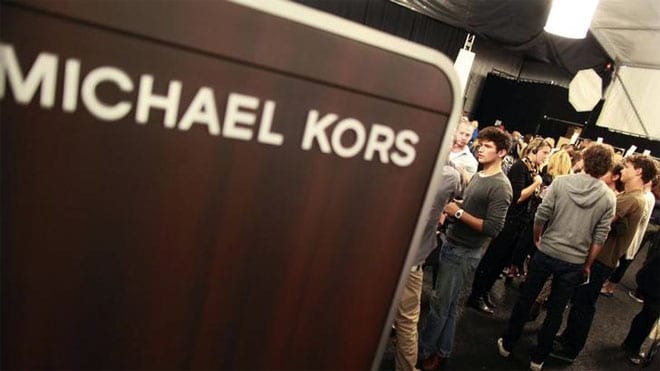
    US fashion brand Michael Kors is to launch a digital flagship store on Alibaba’s Tmall and the Tmall Luxury Pavilion.

    The launch marks Michael Kors’ first e-commerce channel in China, apart from its own site, offering consumers the full line of clothing sold offline, as well as a selection of handbags and footwear. The brand said Tmall would be its main destination for debuting products in China, including new items that will be exclusive to the platform – not sold anywhere else in the world.

    John D Idol, chairman and CEO of Capri Holdings, the parent of Michael Kors, Versace and Jimmy Choo, said consumers are becoming more digitally engaged with luxury shopping in China and Tmall Luxury Pavilion is the perfect venue for the Michael Kors brand to communicate its vision.”

    The label will hold a series of events in the coming months, including during New York Fashion Week in September, to celebrate the flagship’s grand opening. On Chinese Valentine’s Day, on August 7, Michael Kors will launch a capsule collection featuring graffiti-inspired clothing, handbags, footwear, jewellery and wristwatches, samples of which are pictured below

    “Michael Kors is an iconic, beloved brand and we are delighted to partner with it as it looks to accelerate its momentum in the Chinese market. This collaboration will bring both exciting products and elevated shopping experiences to the more than 700 million Chinese consumers on our platforms,” said Jiang Fan, president of Taobao and Tmall.

    Launched in 2017, Tmall Luxury Pavilion now offers more than 115 brands, ranging from apparel and beauty items to watches and luxury cars, including Chanel, Bottega Veneta, Valentino, Burberry, Tod’s, Versace, Stella McCartney, Moschino, Gentle Monster, Giuseppe Zanotti, MCM, Maserati, and LVMH-owned Rimowa, Guerlain, Givenchy, Tag Heuer and Zenith.

    Tmall wants to double that number by the end of next March.

  • Amazon expands anti-counterfeit program

    Amazon expands anti-counterfeit program

    Amazon is expanding its successful anti-counterfeiting program to more countries.

    Transparency is now available to sellers and customers in France, Germany, Italy, Spain, the UK, India and Canada, the e-commerce giant announced on Wednesday. Previously it only operated within the US.

    Online marketplaces are rife with counterfeit products sold cheaper than the genuine product, though often at a much lower quality.

    Fellow online marketplace Alibaba revealed its ‘Anti-Counterfeiting Alliance’, launched in early 2017, has resulted in the arrests of 1277 suspects, the shutdown of 524 manufacturing and distribution locations, and product seizures totalling US$536.2 million.

    EBay, as well, launched a program known as ‘eBay Authenticate’ which allows sellers to have items examined by a third-party to ensure the consumers can be confident they’re getting the real thing.

    Amazon’s Transparency program enables marketplace sellers to apply unique codes to their products when they are manufactured. These codes are scanned before orders are shipped to ensure the products are authentic. Online shoppers can also check the unique codes to verify the products they buy.

    “Counterfeiting is an industry-wide concern – both online and offline,” said Amazon customer trust and partner support vice president Dharmesh Mehta.

    “We created Transparency to provide brands with a simple, scalable solution that empowers brands an dAmazon to authenticate products within the supply chain, stopping counterfeit before it reaches a customer.”

    According to Amazon, more than 4000 brands are enrolled in the initiative in the US, and have generated more than 300 million unique codes, stopping over 250,000 counterfeits from reaching customers.

    The program also allows customers to scan products using a Transparency app, and see unit-level information about a product – though currently the app is only available in the US.

    Inside Retail has reached out to Amazon to see if this initiative will be expanded to Australia.

  • Lazada to launch its first Mid-Year Festival

    Lazada to launch its first Mid-Year Festival

    Following its new theme ‘Go Where Your Heart Beats’, the festival will launch across all six of its markets in Southeast Asia for 24 hours. Lazada held its first Lazada Mid-Year Festival on July 12.

    Consumers will get access to a wide assortment of product deals on Lazada including branded goods and new arrivals. Other benefits during the festival include free shipping deals with participating sellers, and give-away vouchers.

    “Introducing our new Mid-Year Festival during a traditionally quieter shopping season presents more chances in a year for us to bring excitement to shoppers and provide our sellers more opportunities to boost their performance,” said Jing Yin, president of Lazada Group.

    As part of Lazada’s new Mid-Year Festival, the e-commerce company is expanding its ‘Shoppertainment’ strategy with its first region-wide live-streamed game show “Guess It” across six countries. The 30-minute in-app show combines a gameshow concept with professionally-generated live-streamed content.

    A local personality will play host, giving away clues for viewers to guess the price of products.=

    A total of 672 Guess It episodes across the region will feature more than 4000 items from a variety of sellers, with a focus on newly-launched and special edition products.

    Lazada’s live-streamed game show has already resulted in 68,000 new live-streaming account followers in the Philippines, 10 times the number of viewers per average livestream session in Thailand, and double the number per average livestream session in Singapore to-date.

    “Our professionally-generated Guess It content offers a new way to feature brands and sellers, while increasing in-app consumer dwell time and purchase,” said Mary Zhou, CMO of Lazada Group.

    “This is a result of a holistic approach to our shoppertainment strategy – tying in a seller collaboration approach and integrating seamlessly with our payments and customer engagement priorities.”

  • E-Commerce Giant Lazada Joins Mobile Game EvergleamHill

    E-Commerce Giant Lazada Joins Mobile Game EvergleamHill

    HotNow, the retail marketing platform has announced the soft launch of Evergleam Hill, a casual mobile game where users mine their way to discounts, vouchers, and giveaways. After months of testing, the soft launch version is now available on both the Android Google Play and Apple App Stores, having successfully accrued over 3000 downloads in the past few weeks without any marketing efforts. The game includes new merchant partners including Southeast Asian e-commerce giant Lazada and leading Thai coffee chain D’Oro Coffee.

    Developed as HotNow’s flagship game for its proprietary in-game advertising solution, HotPlay, Evergleam Hill has seen approximately one thousand coupon downloads by avid consumers in the past few weeks. To date, the coupons on the game hold a total discount value exceeding THB 2.5 million (US$80,000), highlighting the benefits of HotPlay as merchants have been able to measurably engage with an ever-growing consumer base by effectively bridging virtual gameplay with real-world rewards.

    Nithinan Boonyawattanapisut, CEO and Co-Founder of HotNow said, “Following a rigorous testing phase with the help of a dedicated gamer community, we are thrilled to celebrate this milestone in the development of Evergleam Hill as we welcome new merchant partners onboard. By successfully bridging the worlds of gaming, retail, and virtual currencies, we’ve been able to leverage the existing synergies within these industries to the benefit of our merchant partners and users alike”.

    Set in the eponymous mining village, Evergleam Hill is a mobile role-playing game where players are rewarded with branded prizes, discounts, and promotions with real-world value from participating merchant partners. As a highly interactive game with stunning visuals, players currently have the opportunity to mine their gold chunks for HOT tokens by exchanging them at the game’s bank, the First Bank of Evergleam Hill. HOT tokens can then be used to purchase in-game items. Further updates to the game’s infrastructure will see branded coupons and discounts from retail partners sold within an in-game marketplace which can then be used in real-world transactions at partnering brick-and-mortar retailers. Users will also be able to sell these coupons and discounts to other players through the game’s marketplace in the near future.

    Benjamin Scherrey, Group CTO of HotNow said, “As we work towards the full global launch of Evergleam Hill, it’s important to recognise that our HotPlay platform offers a new, unprecedented form of mobile advertising that is truly the first of its kind. We are excited to be working with these merchants who have taken a progressive approach to consumer engagement and we look forward to supporting them along with our community of game developers as we work to revolutionise the in-game advertising landscape”.

    Participating retail partners at this time are local to Thailand, including American ice cream chain, Baskin-Robbins; Thailand’s coffee chain, D’Oro Coffee; and globally-recognised fast food chain and donut brand, Mister Donut. Apart from food and beverage discounts, Evergleam Hill now features discount coupons from Lazada along with a coupon for a free one-night stay worth THB 6,799 from five-star beachfront resort U Pattaya.

  • Amazon increases efforts to tackle counterfeit goods

    Amazon increases efforts to tackle counterfeit goods

    Online retail giant Amazon is expanding its product serialization service to Canada, India and some European countries to tackle counterfeit products in the supply chain.

    Amazon Transparency involves the application of unique codes to products to allow the retailer, its customers, brands and other members of the supply chain to authentic every unit of a product.

    “Counterfeiting is an industry-wide concern – both online and offline. We find the most effective solutions to prevent counterfeit are based on partnerships that combine Amazon’s technology innovation with the sophisticated knowledge and capabilities of brands,” said Dharmesh Mehta, vice president, Amazon Customer Trust and Partner Support.

    “We created Transparency to provide brands with a simple, scalable solution that empowers brands and Amazon to authenticate products within the supply chain, stopping counterfeit before it reaches a customer.”

    With Transparency, each brand puts the codes on its products, which is then scanned and verified by Amazon to ensure its authenticity.

    Customers can also use a mobile app to check for themselves, regardless of where they purchased the units.

    Brands also use Transparency to communicate unique unit-level information, including manufacturing date, manufacturing place or other product information such as ingredients.

    Over 4,000 brands are using the service in the US and Amazon said that it has proactively prevented over 250,000 counterfeits reaching customers.

  • Tmall offers new tools for retailers to revamp online storefronts

    Tmall offers new tools for retailers to revamp online storefronts

    Alibaba’s marketplace Tmall has rolled out a suite of tools for brands to customize their online storefronts and offer a more personalized experience for shoppers.

    The platform’s “Flagship Store 2.0” solution pulls both analytics and popular technologies together into the Tmall app, offering brands new tools to revamp their existing flagship online storefronts and provide each consumer a personalized page based on their previous shopping patterns. It also allows brands to display and order offline specials and inventory through their newly designed online stores.

    “We aim to offer new tools to all brands and merchants on our platform to transform their operations with digital technology,” said the president of Taobao and Tmall Jiang Fan. “By supporting players on our marketplace to push the New Retail boundary, we will reinforce Tmall’s position as the go-to platform for innovative e-commerce and brand new shopping experiences”.

    This is the most significant upgrade of Tmall’s flagship stores since its PC-based launch in 2008. With Flagship Store 2.0, Tmall is opening its back end to independent software vendors so they can develop new virtual shopping spaces for online store operators. At the same time, Tmall will start including 3D and augmented reality product-display technology in its apps, allowing customers to, for example, see how a piece of furniture will look in their own living room or let them “try on” lipstick in a virtual mirror before placing an order.

    Another feature of the Flagship Store 2.0 solution is the ability to connect brands’ Tmall flagship online storefronts to their offline outlets. This means online shoppers can browse and purchase from a similar product assortment as offered at the brands’ physical locations. The seamless integration can bolster store traffic, both online and offline.

    The use of demographic analytics and a shopper’s history by brands means customers will get a unique, more individualized product recommendations on the platform, along with privileges based on their Tmall membership status.

  • Walmart to relist Seiyu in global business revamp

    Walmart to relist Seiyu in global business revamp

    Walmart says it plans to relist its Seiyu retail business in Japan on the stock market, freeing capital to focus on its China and India business units.

    While the US retailer will retain a majority interest in Seiyu, it believes floating the unit will allow it to operate more independently.

    The move is part of a three-year business plan for Seiyu, part of a broader push to reshape Walmart’s international business.

    “As the parent loses the wherewithal to support low-performing overseas units, revamping those operations has become imperative,” observed Nikkei writer Kento Hirashima.

    Walmart had previously been tipped to sell the Japanese business unit, but has discarded that option.

    Seiyu also plans to expand its online grocery retail business and boost its range of fresh produce and prepared foods.

    Walmart forged an investment and operational alliance in 2002 before Walmart took full control six years later and Seiyu was delisted from the Tokyo Stock Exchange.

  • Suning.com ranked China’s most-valuable retail brand

    Suning.com ranked China’s most-valuable retail brand

    Suning Holdings’ retail subsidiary Suning.com has been ranked China’s most valuable retail brand, finishing 13th on World Brand Lab’s 16th “China’s 500 Most Valuable Brands” list.

    This was the second consecutive year Suning finished in 13th place with its brand value totaling RMB269.198 billion (US$39.093 billion), an increase of 17 percent compared to last year. Its listed brand value has increased by a factor of six since 2009.

    In the past year, Suning.com announced operational revenue of RMB244.96 billion ($36.479 billion), up 30.35 percent year on year; and a sales volume of RMB336 billion ($50.16 billion), an increase of 38.39 percent.

    By the end of March this year, the company owned 12,329 offline brick-and-mortar stores in Mainland China, Hong Kong, Macao and Japan, covering diversified consumption scenarios that include Suning Retail Cloud Franchise Stores, SuFresh (fresh food supermarkets), Suning Xiaodian (providing neighbourhood products and services) and Redbaby (maternal and child supplies stores).

    Last February, the company announced the acquisition of 37 Wanda department stores nationwide and in June, it acquired 80 percent of Carrefour China to improve its full-scenarios ecosystem and expand its all-categories merchandise retailing by reinforcing its market competitiveness in fast-moving consumer goods operations.

  • Fave Wants to Be Merchant Super App

    Fave Wants to Be Merchant Super App

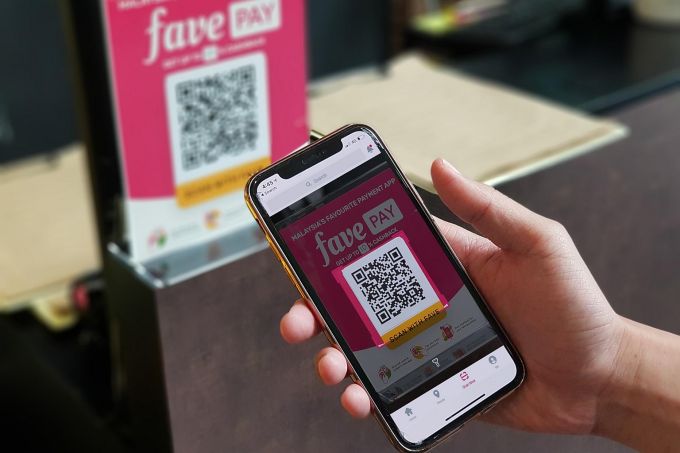
    Singapore-based Fave is onboarding merchants quickly to distinguish itself, as competition in the mobile rewards and mobile wallet space heats up.

    Fave has recently moved into the fringes of financial services, with a pilot project to help small and medium enterprises (SMEs) obtain micro-loans from financial institutions. The move appears to follow similar moves by lifestyle apps such as Grab, that offer micro-loans to consumers in other parts of Southeast Asia.

    There are all these consumer super-apps, but then, actually we are like a merchant super-app platform,» said Fave’s chief executive Joel Neoh.

    Fave distributes coupons for the merchants while rewarding customers with cashback. After its launch in 2017, Fave acquired the Singapore, Malaysia and Indonesia units of Groupon. Neoh was the founder of Fave Malaysia (originally GroupsMore) and previously led Groupon’s Asia-Pacific business.

    So far, the platform has more 25,000 merchants on its platform in Singapore, Malaysia and Indonesia, where the company had acquired the units of Groupon. In September 2018, Fave raised $20 million in Series B funds from existing investors Sequoia Capital India, SIG Asia Investments and venture capital firm Venturra Capital, which is backed by Indonesia’s Lippo Group.

  • Tmall Global launches new English-language website

    Tmall Global launches new English-language website

    Tmall Global today launched its first English-language website to attract more merchants and businesses from around the world to join China’s largest cross-border online shopping platform.

    The portal makes it easier for sellers of all sizes to capitalize on burgeoning demand from Chinese consumers for high-quality imported products.

    Tmall Global already features 20,000 international brands in over 4,000 categories from 77 countries and regions. This outreach aims to make Tmall more appealing to small, medium-sized and niche brands from other countries with products that would sate the demands of China’s post-1995 generation.

    The website details Tmall Global and the solutions it offers to overseas merchants entering the China market. It includes steps on how to open a flagship store on Tmall Global and tap direct import tools, such as Tmall Overseas Fulfillment (TOF), a new initiative launched later last year to provide international merchants a low-cost, low-risk way to take a first step toward selling to China before making a more full-fledged market entry.

    The portal also provides tools that streamline the process to join Tmall Global. Businesses wanting to open a flagship store can fill out a questionnaire and input basic information about their operation. That information will be pre-screened, and qualifying applicants will be contacted within 72 hours. Apart from offering assistance during the onboarding process, Tmall Global will also advise merchants on how to optimize their operations after they establish a presence on the platform.

    “Tmall Global’s mission is to connect high-quality international brands across the globe with Chinese consumers. We believe the launch of this English-language website will expedite the process for brands and merchants to introduce their products to Chinese consumers. The website will widen our reach to merchants, especially to those medium and small sized businesses around the world,” said Yi Qian, Deputy General Manager of Tmall Global.

    In addition to English, Tmall Global plans to launch other language versions of its entry portal for merchants, including Spanish, Japanese and Korean.

    Tmall Global has notched significant growth in the past year and looks to continue the strong momentum. In 2018, the number of new flagship store openings on Tmall Global doubled from the previous year, and that growth rate is expected to accelerate further this year.

  • Amazon offering free international shipping on Prime Day

    Amazon offering free international shipping on Prime Day

    Amazon’s massive annual sale, Prime Day, will kick off on Monday, July 15th and run for 48 hours until 5pm AEST on Wednesday, July 17th.

    For the duration of the event, Prime members will also enjoy free expedited international shipping, with no minimum order threshold, on all Prime eligible products through the global store.

    “We all love a bargain, and last year’s Prime Day confirmed this, being our biggest day since the launch of amazon.com.au,” Amazon Australia country manager Rocco Braeuniger said.

    “We are excited to announce that this year will be even bigger, with Prime members down under not only being the first in the world to have access to Prime Day but also having the longest Prime Day event worldwide.”

    Prime Day deals will be split across all categories, including TVs, smart home, kitchen, pantry food and drinks, toys, fashion, video games, books, as well as everyday essentials.

    According to Amazon, small and medium-sized businesses surpassed US$1.5 billion in sales globally during last year’s Prime Day, with Brisbane-based Astivita noting it was the company’s “biggest single day of online sales ever.”

    “It was mainly down to one product, a monitor,” Astivita chief executive Joseph Mizlkovsky said.

    “We are excited to be taking part again this year and we will be discounting that same product at an even lower price, alongside a number of bathroom products.

    “We hope that customers will snap up the change to shop our products at brilliant discounts, making this Prime Day even bigger than last year for us.”