Tag: etail

  • Valiram opens duty-free store at Kota Kinabalu

    Valiram opens duty-free store at Kota Kinabalu

    Malaysian luxury and lifestyle retail specialist, Valiram, together with East Malaysian property developer, Jesselton Waterfront Holdings, has opened a duty-free store in the Jesselton Mall in Kota Kinabalu.

    The 37000sqft sea-front mall presents the first downtown travel-retail concept in the vicinity, offering international travellers an opportunity to shop in a duty-free environment and bringing luxury beauty, fashion and timepiece brands to the Kota Kinabalu city centre.

    “Valiram continues to invest in Sabah and is excited with the opening of our latest venture, the Jesselton Duty-Free,” said Valiram executive director Sharan Valiram.

    “This exception offering redefines the shopping experience for tourists in Kota Kinabalu. We are indeed privileged to be able to partner Jesselton Waterfront Holdings in developing this first-of-its kind downtown duty-free retail in East Malaysia. The shopping experience here is set to reshape the retail environment in Sabah.”

  • Sim Lim Square goes online, opening an E-commerce site

    Sim Lim Square goes online, opening an E-commerce site

    Sim Lim Square plans to launch its new e-commerce platform while it prepares for a collective sale.

    The platform is being tested before it goes live to the public on July 1.

    The initiative is a bid to develop new channels of customer outreach and engagement for Sim Lim Square’s tenants.

    Each of the mall’s tenants will run their own e-commerce business on a common platform, which has categories including computer accessories, desktop computers, laptops and repair services.

    Currently, around 50 tenants are on the new marketplace, with the aim to eventually include  about 300 of the 480 Sim Lim Square retailers.

    Training sessions for all tenants are being conducted to train them on the capabilities of e-commerce and how to manage their online shops.

    Advertising on digital media, radio, TV, other media platforms and newspapers will drive traffic to the site.

    Sean Chia, head of advertising and promotions at Sim Lim Square said the mall needs to “constantly evolve” to meet the needs and demands of its digital-savvy customers.

    “With our new e-commerce website, we are proud to be at the forefront of IT retail,” he added.

  • Amazon listed as most valuable brand

    Amazon listed as most valuable brand

    E-commerce giant Amazon has clinched the top spot in the world’s most valuable brand ranking, surpassing Google and Apple, according to a recently released ranking of global companies.

    The Seattle-based retailer has been valued at US$315.5 billion, up 52 per cent on last year with tech giant Apple coming in second, valued at $309.5 billion and Google in third place at $309 billion, Brand Z’s Top 100 Most Valuable Global Brand 2019 ranking (compiled by WPP research agency Kantar) revealed.

    Google and Apple had spent a combined 12 years at the top of Brand Z’s list, with Google taking the top spot last year.

    “Amazon’s smart acquisitions that have led to new revenue streams, excellent customer service provision and its ability to stay ahead of its competitors by offering a diverse ecosystem of products and services, have allowed Amazon to continuously accelerate its brand value growth,” Brand Z’s report indicated.

    Chinese e-commerce company Alibaba has overtaken Tencent for the first time to become the most valuable Chinese brand, moving up two places to number seven, growing 16 per cent to $131.2 billion.

    Tencent dropped three places to number eight, declining by 27 per cent to $130.9 billion year-on-year.
    Social media platform Facebook has retained its sixth spot while Instagram, at number 44, was named as this year’s fastest riser, climbing 47 places with a massive 95 per cent growth in brand value with $28.2 billion.

    Athleisure retailer Lululemon was named the second fastest riser, showing a 77 per cent growth year-on-year to $6.92 billion.

    “We’re seeing a move from individual product and service brands to a new era of highly-disruptive ecosystems,” said David Roth, CEO of The Store WPP EMEA and Asia and chairman of Brand Z.

    “Brands need to understand the value this type of model can create and should embrace its approach to be successful in the future,” Roth said.

  • Alibaba signs deal for AliExpress Russia

    Alibaba signs deal for AliExpress Russia

    Alibaba Group has formed a US$2 billion joint venture AliExpress Russia to create a major e-commerce venture in the Russian-speaking market.

    Alibaba and the Russian government-backed RDIF sovereign wealth fund will each invest US$100 million in the venture which will absorb Alibaba’s existing AliExpress business. Russian mobile phone network Megafon will sell its 9.97 per cent interest in internet group Mail.ru to Alibaba in return for a 24.3 per cent stake in the new JV.

    In return, Mail.ru will roll its Pandao e-commerce business into AliExpress Russia and contribute $184 million in cash for a 15 per cent share.

    AliExpress Russia has been created to expand the three companies’ e-commerce offer in both Russia and neighbouring countries.

    Documents to create AliExpress Russia were signed last week. The company will be jointly run by Alibaba and Mail.ru, each of which will appoint a CEO.

    “This partnership will enable the AliExpress Russia JV to accelerate the development of the digital consumer economy of Russia and CIS countries in ways that no one party could accomplish alone,” said Daniel Zhang, CEO of Alibaba Group. “Together, we are uniquely positioned to offer consumers in Russia and neighbouring countries an innovative shopping experience by combining social platforms with commerce, as well as enabling regional brands and SMEs to sell their products locally and globally.”

    He said Alibaba’s mission is to make it easy to do business anywhere. “This JV is an important part of Alibaba’s international expansion and step toward our goal of supporting 10 million small businesses reach profitability and serving 2 billion consumers around the world.”

  • Love, Bonito to open in Funan Mall

    Love, Bonito to open in Funan Mall

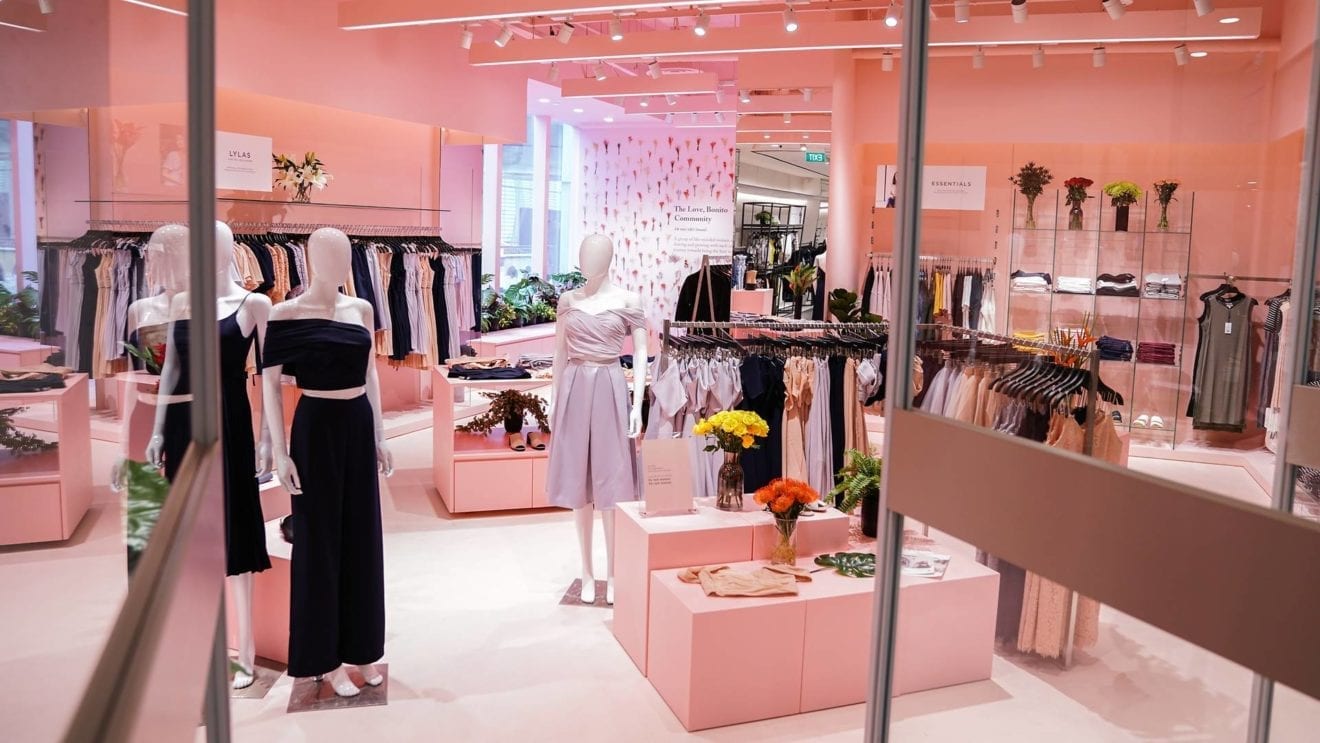
    Online fashion retailer Love, Bonito is about to open its third and largest physical store yet, at Funan mall.

    Set to offer a “thoughtful and feminine” retail experience, the store will have customer touch points such as “Instagrammable” spots, and an express counter for click-and-collect orders.

    “More importantly, the store will hold dedicated and designated space for us to bring our community together to experience the brand, via workshops and events,” Rachel Lim, Love, Bonito co-founder said.

    The store will also offer personal stylists on demand who will be ready to give fashion advice to customers.

  • Amazon Fashion drops first influencer collection

    Amazon Fashion drops first influencer collection

    Amazon Fashion has just released the first collection from an influencer as part of its new shopping experience, The Drop.

    For the next 30 hours, customers will be able to purchase pieces made on-demand from the collection designed by influencer Paola Alberdi via the Amazon app or mobile browser. The Drop collections are available in more than 100 countries and regions.

    Fashionistas are encouraged to sign up for Amazon text alerts, as the next Drop influencer collaboration could be released at any time. Other influencers slated to design future collections include Emi Suzuki, Sierra Furtado, Leonie Hanne and Patricia Bright.

    “Influencers are able to turn their creativity and style into beautifully designed collections that capture the latest street style trends from around the world,” said a statement from Amazon.

    “Amazon Fashion is excited to enable influencers to be designers and bring fresh Fashion assortments directly to customers via The Drop.”

    Amazon Fashion is also offering Staples By The Drop, wardrobe staple pieces to complement the influencer collections.

    “I am beyond grateful to Amazon for entrusting me to be the first influencer to launch The Drop, their innovative new shopping experience. I have worked hard for many years to create a brand that is true to myself and did the same with this collection,” said Alberdi.

    “Fashion can be so expensive but my belief is that it should not have to be expensive to feel beautiful. The primary goal of my collection is simply to help women feel good about themselves. I’m so excited to share these pieces with the world!”

    Other retail brands have been tapping into the power of influencers and collaborating with them on collections for some time, such as Nordstrom, which is currently selling the Cupcakes and Cashmere range from fashion blogger and designer, Emily Schuman.

    When the department store engaged with influencer Arielle Charna in 2017, her collection reportedly brought in $1 million in sales in less than 24 hours, according to an article from Fashionista.

  • Tokopedia expands delivery promise Same Day Delivery

    Tokopedia expands delivery promise Same Day Delivery

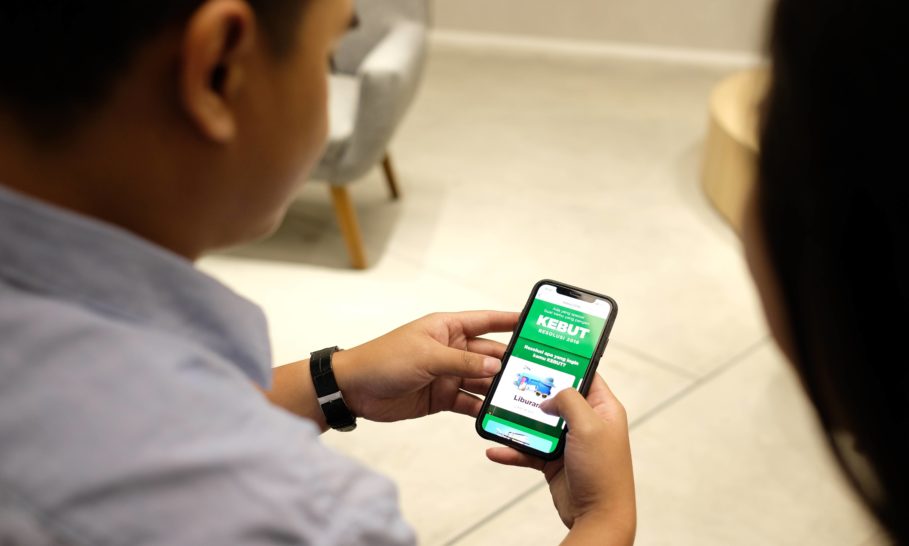
    Indonesian e-commerce company Tokopedia is expanding its one-day delivery guarantee to almost all of its products as it prepares to battle Amazon and other foreign rivals.

    Backed by Alibaba Group and SoftBank, Tokopedia’s greatest strength might lie in the fact it is a 100-per-cent Indonesian focused company, unlike its rivals – and shareholder – which are simultaneously trying to build share in many different markets simultaneously.

    “We focus on Indonesia,” Tokopedia founder and CEO William Tanuwijaya said in an interview in Tokyo. “Our mission is really to solve the Indonesian customer problem. And we see the room for growth is still tremendous.”

    Online shopping in Indonesia is expected to grow by more than 400 percent within the next five or so years, to US$53 billion. That sort of growth is attracting Amazon, which opened in Singapore two years ago and subsequently launched in Australia, along with existing Indonesian rivals including Alibaba-backed Lazada and Shopee.

    Tokopedia already offers same-day or one-day delivery for about 65 percent of the products it sells. Expanding that to almost its entire catalog would be made possible by alliances with 11 logistics companies covering the most populous of the country’s 17,000 islands.

    The company is a marketplace, linking more than 5 million sellers with the nation’s largest database of online shoppers. It has no inventory of its own.

    Tanuwijaya admitted getting more than 90 per cent of goods delivered within 24 hours was a goal that might take two years or more to achieve.

  • Kiehl’s pop up opens at Sha Tin, using AR to engage

    Kiehl’s pop up opens at Sha Tin, using AR to engage

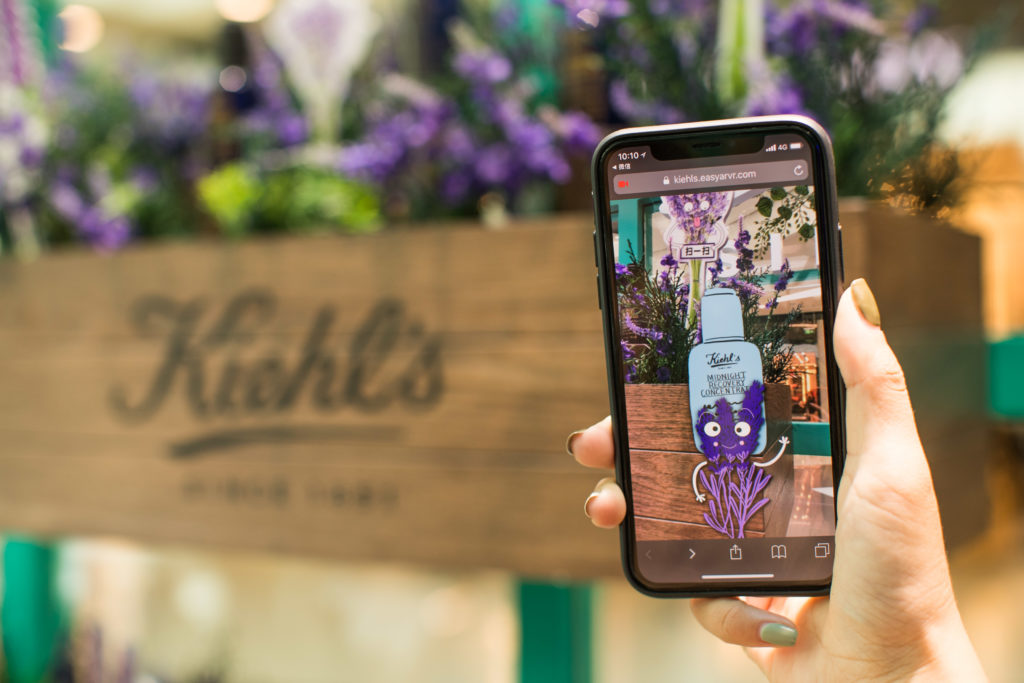
    A Kiehl’s pop up at Sha Tin features an AR gaming app to engage with shoppers.

    The beauty products retailer’s short-term store at the New Town Plaza in Sha Tin has been launched to promote Kiehl’s Calendula Serum-Infused Water Cream, and displays a giant 3D Calendula flower in the centre of the atrium that is only visible through visitors’ mobile phones.

    Visitors who upload images from the pop-up to their social media can redeem a special cosmetics product. Other product samples and a skin analysis are available for customers browsing the store.

    Kiehl’s has also designed an AR game that can be used at its regular stores after the pop-up closes, which will be playable until June 30. The game has collected 8000 registrations over the course of the campaign.

  • Ikea Thailand opens full E-commerce store

    Ikea Thailand opens full E-commerce store

    After two years of planning, furniture and homewares retailer believes it can match a physical store experience.

    Ikea Thailand has launched an online store, with a view to matching the journey and impression customers experience at a physical Ikea shop.

    “We see the potential – it is a potential in Thailand for Ikea,” said deputy retail manager for Ikea Thailand, Singapore and the Philippines, Lacia Sherlock. “We have only been accessible within Bangkok so far, and now we will be accessible for people from across the country.

    “The delivery prices need to be affordable and all the services need to be accessible for consumers living outside of Bangkok, so that they are able to get the assembly or whatever they need.”

    According to Sherlock, the new e-commerce platform, which is already available in Malaysia and Singapore, now covers the whole of Thailand. It took about two years to develop based on studies of market demand and building the necessary infrastructure.

    “We are pleased to now be able to provide this access to Thais. We have been wanting to do this for a long time, along with providing them with a superior experience and inspiration through both of our two Bangkok stores,” said Sherlock.

    Ikea is aiming to hit 17,000 online orders this year within the territory.

  • Online retail sales slows down last Month

    Online retail sales slows down last Month

    Online retail sales fell 3.8 per cent month on month in April, after a less than stellar March, according to the National Australia Bank’s monthly Online Retail Sales Index.

    The result is consistent with a general slowdown in retail observed by NAB, while the result itself is up 1.7 per cent on a year on year basis.

    “This month, both online retail and broader cashless retail series indicated very weak retail conditions,” NAB chief economist Alan Oster said.

    “While year-on-year growth in online sales has also slowed considerably in recent months, these comparisons are made to a period of elevated sales in 2018, with major new merchants to Australia, and also pre-GST exemption effects.”

    While all categories suffered a contraction in sales during April, games and toys suffered least with only a 0.2 per cent reduction in sales, while takeaway food fell 8.6 per cent – the steepest drop.

    International retailers outperformed domestic retailers on a monthly basis, with international retail enjoying a 0.7 per cent increase in sales, compared to the 4.4 per cent fall in domestic trading.

    However, NAB identifies a considerable weakness in international online sales on a year-on-year basis, most likely owing to the change in how GST is calculated and charged.

    “Tasmania, with about 2 per cent of online sales, was weakest in April after leading growth in March,” Oster said.

    “New South Wales, Victoria and Queensland represent over three quarters of the online market in Australia by sales value. Of these larger sales states, Queensland was strongest over the year.”

  • Walmart hires former Amazon executive on new role

    Walmart hires former Amazon executive on new role

    Retail giant Walmart has hired former Amazon exec Suresh Kumar as its new chief technology officer and chief development officer as it aims to compete more with other tech savvy retailers.

    Kumar, who will take on the newly expanded role on July 8, has held senior positions in Google, Microsoft and Amazon. He has recently been working at Google where he serves as vice president and general manager of display, video, app ads and analytics and before that, he was corporate vice president of Microsoft’s cloud infrastructure operations.

    Before he joined Microsoft, Kumar was with Amazon for 15 years, holding several roles including vice president of technology for retail systems and operations and head of Amazon’s retail supply chain and inventory management systems.

    He will report to company CEO Doug McMillion and will be based at the company’s Sunnyvale, California office.

    According to Walmart, Kumar is joining the company at a time when it is rapidly transforming its customer and associate experiences.

    “The technology of today and tomorrow enables us to serve our customers and associates in ways that weren’t previously possible. We want to take full advantage of those opportunities,” McMillon said.

    “Suresh has a unique understanding of the intersection of technology and retail, including supply chain, and has deep experience in advertising, cloud and machine learning,” he said. “And, he has a track record of working in partnership with business teams to drive results.”

  • Reebonz launches buy-back guarantee Program in Thailand

    Reebonz launches buy-back guarantee Program in Thailand

    Online luxury marketplace Reebonz has launched a guaranteed buy-back program in Thailand.

    The service, which applies to leather goods and jewellery, gives customers a guaranteed price that the company will pay to buy back products initially sold on its platform.

    Customers will be offered currency, called Reebonz Credits, that can be used for future purchases on the platform.

    Pre-owned jewellery from selected brands such as Chanel, Harry Winston, Hermes, and Christian Dior, among others, will be eligible.

    Daniel Lim, Reebonz co-founder and CPO, said the company hopes to further expand its services across new geographies and categories, giving customers even more ways to engage with the brand. “We truly believe we can be a one-stop ecosystem for everyone’s luxury needs.”

    The guarantee is now available in Singapore, Hong Kong, Taiwan, Malaysia, Australia, Indonesia, and the US.

    Headquartered in Singapore, Reebonz is a C2C platform that allows customers to buy and sell their pre-owned items to a community of more than 5.5 million members.

  • Swee!’s celebration of Singaporean culture through creative branding lands RedMart global brand award recognition

    Swee!’s celebration of Singaporean culture through creative branding lands RedMart global brand award recognition

    Swee!, a hyper-local brand under the Private Label umbrella of RedMart, Singapore’s leading online grocery retailer, has been awarded Gold in the New Brand category at the 2019 Vertex Awards. The annual Vertex Awards celebrates and recognises the best in private brand packaging design across the globe.

    Other Gold Award winners this year include renowned overseas retailers such as Woolworths Supermarkets in Australia, 7-Eleven in the US, Sobeys in Canada, Albert Heijn and SPAR in the Netherlands, El Corte Inglés in Spain, and German supermarket chain Aldi.

    Launched in February 2018, the Swee! brand is a celebration of Singaporean tastes and preferences, offering entry-level, everyday groceries and household items ranging from oyster sauce and sesame oil to sausages and scourers for Singapore shoppers. It is one of three brands under RedMart’s Private Label range, along with RedMart Label and World’s Cellar. Launched in May 2015, the three brands together house more than 320 products across 13 categories, all sold exclusively on RedMart.

    Richard Ruddy, Chief Retail Officer and Head of Grocery for Lazada Singapore, said, “We launched our RedMart Private Label range in May 2015 with the aim of delivering value for money to customers with no compromise on quality or innovation. Since then, the range has grown by leaps and bounds – we have experienced 80 percent year-on-year growth and more than tripled our Private Label revenue since June 2017, and almost 50 percent of RedMart shoppers now buy RedMart Private Label products.”

    Nupur Agrawal, Private Label Lead at RedMart, said, “We are thrilled to receive this award with Anthem Singapore for RedMart’s Swee! Label, which is under our Private Label umbrella. We will continue to expand our offerings to provide Singapore grocery shoppers with the best product range and quality regardless of price point, as well as look for ways to enhance the online-to-offline experience, such as through innovative and iconic packaging designs.”

    Anthem, the global creative agency responsible for Swee!’s packaging design, was challenged by RedMart to deliver a brand story with local relevance and ultimately attract more traditional shoppers who are more comfortable buying from their regular brick-and-mortar supermarket. RedMart and Anthem’s goal was to create a brand proposition that connects with the local consumer and answers their need for a range of simple, fit-for-purpose items.

    Spencer Ball, Creative Director of Anthem Singapore, said, “It is a proud moment seeing Swee!, a brand born out of Singapore’s heartland, being honoured on the world stage. This is a perfect example of the shared belief in a simple, strong idea, from a talented creative team and a bold client.”

    As a strictly online brand, packaging presentation and branding is paramount. RedMart and Anthem collaborated to create a brand with a ‘chirpy’ personality, but with a familiar simplicity. Drawing on inspiration from Singapore’s heartland, with a nod to the utilitarian aesthetics of high-rise public housing estates and the unpretentious language of the neighborhood wet market, Anthem landed with the brand name ‘Swee!’ – a Hokkien expression that roughly translates to ‘works perfectly’. Since its debut on RedMart, the line has continued to grow with a diverse range of products.

    Anthem is known for choosing to collaborate exclusively with retailers and brand owners who share their company values in ensuring the highest quality products. The brand development partnership with RedMart was a great fit, as RedMart’s Private Label is built on stringent quality guidelines with a deep commitment to supporting sustainably and responsibly sourced products.

    Anthem, part of SGK group, had previously won Vertex awards for other projects. This year, the group has also won Gold Vertex Awards for the work developed for Woolworths Supermarkets.

    The 2019 Vertex Awards received a record number of entries from 33 countries representing the absolute best in packaging design from across the globe.

    RedMart is fully owned by Lazada Group, Southeast Asia’s leading eCommerce and shoppertainment platform.


  • Online fashion retailer Mogu reports Steep Growth Numbers

    Online fashion retailer Mogu reports Steep Growth Numbers

    Chinese online fashion and lifestyle retailer Mogu has reported an 18.7 per cent increase in gross merchandise value (GMV) for the year to March 31, to RMB17.408 billion (US$2.594 billion).

    The company’s revenue for the year reached RMB1.074 billion (US$160.1 million), an increase of 10.4 per cent year on year.

    However the number of active buyers in the year to March remained the same as the previous year, at 32.8 million.

    The company said it live-video broadcast business continued to grow strongly with associated GMV increasing 138.1 per cent year on year.

    “We delivered another quarter of solid growth,” said Qi Chen, Mogu’s chairman and CEO. “During the past quarter, we continued to expand, optimise and elevate the supply chain for our fashion ecosystem by enriching content, increasing user engagement on our live-video broadcasts, and facilitating more repeat repurchases,” he said.

    “Looking ahead, we will continue to strengthen our unique three-way fashion ecosystem by further growing our content creation community of fashion key opinion leaders and live-video broadcast hosts, elevating the fashion-product supply chain and supporting deeper collaboration between merchants and KOLs, and ultimately facilitating greater user and community engagement through rich and high-quality interactive fashion content and products.”

  • Amazon cutting prices on thousands of online items

    Amazon cutting prices on thousands of online items

    Amazon Australia is holding its second mid-year sale, slashing prices on tens of thousands of products from Friday, May 31, through the month of June. The deals include up to 50 percent off select clothing, shoes and accessories from brands such as Calvin Klein, Berlei and Bonds; discounts on select TVs, video games and books; and 15 percent off household and pantry essentials when you spend $50 or more.

    Savings are advertised across all of Amazon’s 29 product categories, including kitchen, baby and pets.

    “With tens of thousands of products available at discounted prices and new deals going live every day throughout June, we hope our Mid-Year Sale provides something for everyone,” Rocco Braeuniger, country manager of Amazon Australia, said in a statement about the sale.

    Since launching in December 2017, Amazon Australia now claims to offer over 125 million products.

    This is the second time Amazon Australia has held a mid-year sale, joining many retailers in marking down stock for End of Financial Year (EOFY) sales during the month of June.

    Recent research from PayPal shows that EOFY sales are the most popular times for Aussies to pick up a bargain online, alongside Boxing Day.

    That same report also revealed that while some retailers are starting to move away from markdowns, most shoppers are still driven to purchase by discounts.

    PayPal found that 68 percent of Australian consumers are always on the lookout for an online sale or discount, and half of the consumers have waited for an item to go on sale before buying it online. Among Gen Z and Gen Y shoppers, that figure increases to 73 percent and 65 percent, respectively.

    But this doesn’t have to be bad news for retailers. According to PayPal, online sales present an opportunity for brands to build awareness and reach new customers: 39 percent of consumers have bought a brand online they wouldn’t usually buy because it was on sale, and 39 percent of retailers said online sales increase revenue.

    But it’s necessary to take a strategic approach. For instance, Amazon’s biggest sales – including its Mid-Year Sale, Prime Day sale, and Black Friday and Cyber Monday sales – are all about driving app downloads and Prime subscriptions. In turn, this drives more frequent purchasing on the platform.

    According to Retail Dive, Amazon saw more than 1 million consumers use its app for the first time on Prime Day 2018.