Tag: exchange

  • Singapore Exchange Broadens Horizons with SpaceX and Grab Depository Receipts Launch

    Singapore Exchange Broadens Horizons with SpaceX and Grab Depository Receipts Launch

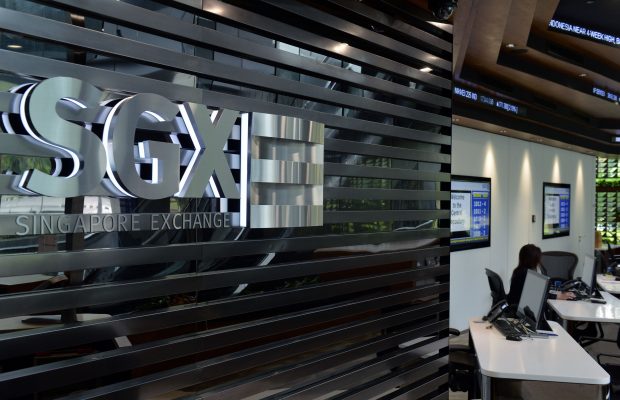
    Singapore Exchange (SGX), the country’s stock exchange, has announced that it will introduce depository receipts for three major tech companies: SpaceX, Grab, and Sea. This announcement was made on Tuesday, with the trading of the depository receipts set to commence the following day. The addition of these companies allows investors to trade in Singapore Dollars during local trading hours.

    The introduction of these three businesses expands the SGX’s offering to a total of 38 depository receipts, adding to those already available from companies across Thailand, Indonesia, Hong Kong, and the United States. This expansion serves to further diversify and enhance the offerings available to investors in the local market.

    The Impact on Retail Investors

    The SGX highlights that the inclusion of these companies, especially the launch of SpaceX’s depository receipts following its historic IPO last month, provides retail investors with unprecedented access to these equities. The depository receipts offer a simplified and convenient method for investors to gain exposure to these equities, using local currency.

    Grab and Sea, while both listed in the U.S., are headquartered in Singapore, further solidifying the SGX’s position as a global hub for investment. Bernice Tan, a representative from the Securities Market & Depository with SGX, expressed that the new addition mitigates traditional challenges such as foreign exchange friction and the complexities of overseas markets. She added that this allows investors to build a globally diversified portfolio in the Singapore Dollar, within a familiar trading environment.

    Questions & Answers

    What is the significance of introducing depository receipts for SpaceX, Grab, and Sea to the Singapore Exchange?
    Introducing depository receipts for these companies provides investors with more diversification options. It allows them to invest in these companies using local currency and during local trading hours.

    How does the introduction of these companies impact the SGX’s portfolio?
    The addition of SpaceX, Grab, and Sea expands the SGX’s portfolio to a total of 38 depository receipts, alongside those from Thailand, Indonesia, Hong Kong, and the U.S., enhancing its offerings.

    What advantages do these new additions offer to retail investors?
    The new additions provide a simplified and convenient way for retail investors to gain exposure to these equities, mitigating challenges such as foreign exchange friction and overseas market complexities.
  • Nestlé Triumphs in Q1 Amidst Foreign Exchange and Recall Challenges: Coffee, Food, and Snacks Lead the Charge

    Nestlé Triumphs in Q1 Amidst Foreign Exchange and Recall Challenges: Coffee, Food, and Snacks Lead the Charge

    Nestlé, the multinational FMCG powerhouse, began the year with consistent growth. It did so despite a decline in sales attributed to currency fluctuations and the residual effects of a product recall involving infant formula.

    First Quarter Performance

    During the first quarter of the year, Nestlé’s performance illustrated the efficacy of its internal strategy. According to CEO Philipp Navratil, the company experienced strength across multiple sectors and categories, with coffee, food, and snacks being the standout performers. The company experienced notable growth in emerging markets, while in Europe and the United States, the performance remained solid despite the prevailing conditions.

    The reported total sales for the first quarter amounted to $27 billion (or CHF $21.3 billion). This represents a year-on-year decrease of 5.7 percent. In addition, foreign exchange fluctuations resulted in a 9.3 percent reduction in sales.

    Category Performance

    In terms of categories, coffee, food, and snacks were the leading performers. All sectors experienced positive growth, with the exception of infant formula within the nutrition business. The company reported that the infant formula recall caused a reduction in organic growth of approximately 90 basis points during the quarter. However, they also noted that product availability has since returned to normal.

    Emerging markets continued to excel, producing organic growth of 6.8 percent, excluding China. Europe demonstrated consistent trends, while the United States proved robust.

    Future Projections

    Navratil spoke about the momentum built in the first quarter and the company’s continued efforts to execute its strategy for a stronger Nestlé. In light of the complex and uncertain climate, he expressed gratitude to the teams for their commitment and customers for their trust.

    Looking to the future, the company anticipates organic growth of around 3 to 4 percent. This projection has been made despite the increasing global economic and geopolitical uncertainty. Profit margins are also expected to improve in comparison to last year, with gains likely to pick up speed in the second half of the year. Nestlé forecasts that free cash flow will exceed $11.4 billion.

    Questions & Answers

    What factors have led to Nestlé’s sales decline in the first quarter?
    The decline in sales has been attributed to currency fluctuations and the residual effects of a product recall involving infant formula.

    What categories have been the standout performers for Nestlé?
    According to the company, the categories that have led performance are coffee, food, and snacks.

    What are Nestlé’s expectations for future growth?
    Despite increasing global economic and geopolitical uncertainty, the company anticipates organic growth of around 3 to 4 percent. Profit margins are also expected to improve in comparison to last year.

  • Vietnam Preps for Gold Trading Revolution: National Assembly Mandates Roadmap for Gold Exchange Amid Surging Prices

    Vietnam Preps for Gold Trading Revolution: National Assembly Mandates Roadmap for Gold Exchange Amid Surging Prices

    The National Assembly of Vietnam has directed the government to construct a strategic plan for establishing a gold trading exchange. This endeavor is in response to the escalating prices of gold and aims to control and regulate the bullion market.

    The Need for a Gold Exchange

    Lawmakers have been emphasizing the importance of such an exchange in order to guarantee transparency in gold trading. This concern arises from the current market situation where the gold price in Vietnam is approximately 15% more than the global rates.

    The State Bank of Vietnam’s Plan

    The State Bank of Vietnam has introduced a plan to instigate a gold trading platform in three successive phases. The first phase involves trading raw gold, followed by trading gold bars in the second phase. The final phase will encompass trading gold certificates and derivatives.

    Current Gold Market in Vietnam

    The Saigon Jewelry Company recently listed the price of gold slightly lower than the highest peak recorded on Dec.1, at VND154.7 million (US$5,873.31) per tael of 37.5 grams. Furthermore, the price of gold in Vietnam has increased by more than 80% since the start of the year.

    In an effort to liberalize the market, the government in October lifted its monopoly on gold production. Private firms meeting specific financial criteria are now allowed to produce bullion.

    Questions & Answers

    What is the new directive given by The National Assembly of Vietnam?
    The National Assembly has directed the government to establish a gold trading exchange to control the bullion market and ensure transparency amid rising gold prices.

    What is the plan of the State Bank of Vietnam regarding the gold trading platform?
    The State Bank of Vietnam intends to set up a gold trading platform in three phases. These include trading raw gold initially, followed by gold bars, and finally gold certificates and derivatives.

    What changes have occurred in the gold market in Vietnam recently?
    Two significant changes have taken place. First, gold prices have risen by more than 80% since the start of the year. Second, the government has lifted its monopoly on gold production, now allowing private firms, that meet certain financial conditions, to produce bullion.

  • Human Made Leaps to Tokyo Stock Exchange: A Pivotal Move in Global Retail Expansion Strategy

    Human Made Leaps to Tokyo Stock Exchange: A Pivotal Move in Global Retail Expansion Strategy

    Japanese lifestyle company Human Made has successfully been registered on the Tokyo Stock Exchange Growth Market, indicating a significant development in the firm’s expansion strategies both locally and internationally.

    Company Overview

    Human Made was established in 2010 by designer Nigo, gaining recognition for its streetwear design. The brand has gradually grown its presence, both within Japan and globally. Presently, Human Made runs seven outlets throughout Japan and has extended its reach to China, Hong Kong, and South Korea. Additionally, it has formed alliances with local distributors in Singapore, Thailand, Indonesia, and Australia.

    Diversification of Business

    Apart from its fashion-centric operations, Human Made has branched out into the food and beverage industry with its Curry Up restaurant chain. The chain expanded its operations beyond Japan for the first time, opening a location in Hong Kong in the previous year.

    Global Creative Direction

    In the previous year, the company welcomed global music and fashion figure Pharrell Williams as a creative advisor. This move reinforced the company’s global creative direction. In alignment with its flagship lifestyle brand, the company changed its name from Otsumo Co to Human Made Inc in May.

    Future Prospects of the Company

    Looking forward, Human Made has plans to inaugurate its first-ever global flagship store in Harajuku in the summer of 2026. This will be followed by a second store opening in Aoyama in 2027. These plans underscore the brand’s dedication to creating immersive retail experiences.

    Questions & Answers

    What is Human Made’s primary line of business?
    Human Made is a lifestyle brand known for its streetwear designs.

    What other industry does Human Made operate in?
    Apart from fashion, Human Made is also involved in the food and beverage sector through its Curry Up restaurant chain.

    What are some future plans of Human Made?
    The company plans to open its first global flagship store in Harajuku in 2026, followed by a second location in Aoyama in 2027.

  • Dollar Dips Slightly Against Dong: Key Trends to Watch in Currency Exchange

    Dollar Dips Slightly Against Dong: Key Trends to Watch in Currency Exchange

    The U.S. dollar took a dip against the Vietnamese dong on the black market Saturday morning, rounding out a week of financial fluctuations. The greenback slid 0.34% to VND26,290 at unofficial exchange points, signifying a notable shift as currency dynamics remain in flux.

    Meanwhile, Vietcombank maintained its rate at VND26,223, while the State Bank of Vietnam’s reference rate held steady at VND24,975, suggesting a calm amidst the stormy seas of international currency markets.

    Globally, the dollar experienced a surprising uptick against major currencies like the euro and yen on Friday. Investors rushed to secure safe-haven assets in response to escalating geopolitical tensions in the Middle East following an Israeli attack on Iran, according to Reuters. In the afternoon trading session, the dollar notched a 0.3% gain to reach 143.88 against the Japanese yen and edged up 0.1% to 0.8110 against the Swiss franc. Despite this bounce, the dollar remains set for a weekly decline against both the yen and franc, and is down nearly 1% versus the yen—a trajectory that could mark its most significant weekly drop since mid-May.

    “Historically, geopolitical events trigger knee-jerk reactions in the markets,” noted Jack Janasiewicz, portfolio manager at Natixis Investment Managers in Boston, emphasizing the importance of looking past temporary turbulence.

    As we navigate these treacherous financial waters, the question remains: how will currencies dance in the face of shifting global dynamics?

    Questions & Answers

    What happened to the U.S. dollar against the Vietnamese dong?

    The U.S. dollar dropped 0.34% to VND26,290 on the black market.

    How did the U.S. dollar perform globally?
    On Friday, the dollar rose against major currencies like the euro and yen amidst geopolitical tensions in the Middle East.

    What are the implications of these fluctuations?
    While the dollar gained temporarily, it is still on track for a weekly loss against the yen and franc, raising concerns about ongoing market stability.

  • Dollar Dips as Vietnamese Dong Gains Strength

    Dollar Dips as Vietnamese Dong Gains Strength

    The U.S. dollar has taken another tumble against the Vietnamese dong, marking a trend that could signal continuous challenges for the greenback. As traders eyed a tumultuous month ahead, Friday morning saw the dollar heading for its fifth consecutive monthly decline against prominent currencies.

    Dong Gains Ground While Black Market Sees Tweaks

    Vietnam’s leading bank, Vietcombank, set the dollar price at VND26,170, reflecting a slight dip of 0.11% from the previous day. Interestingly, the black market didn’t seem to follow suit, with the dollar inching up by 0.08%, trading around VND26,380.

    Just before the weekend, the State Bank of Vietnam nudged its reference rate up by 0.06%, settling at VND24,978, demonstrating its ongoing commitment to managing currency strength amid fluctuating market conditions.

    Global Dollar Dynamics: A Look at the Numbers

    Globally, the dollar showed signs of softness, aligning with traders’ apprehensions about potential instability surrounding trade and fiscal health. Many investors were eagerly awaiting a crucial inflation report that was set to release later that day, poised to influence market sentiment dramatically.

    That day, the dollar index—often seen as a barometer of the dollar’s strength compared to six major currencies—was lackluster. Set to decline by 0.4% for May, this would make it the fifth month in decline—a trend that’s causing whispers among market analysts.

    The euro slightly strengthened, phrased at $1.1378, while the Swiss franc also gained some traction at 0.8216 against the dollar. Over in Japan, the yen surged by 0.3% to 143.73 per dollar, bolstered by recently released data showing that inflation in Tokyo reached a peak not seen in over two years.

    As the week came to a close, the dollar had navigated a tumultuous landscape, marked by recent court rulings that altered the landscape for trade tariffs. The federal court temporarily reinstated tariffs initiated during President Donald Trump’s tenure, stirring uncertainty after a trade court had just directed a halt on those tariffs. Kyle Rodda, a senior financial market analyst at Capital.com, reflected on the market’s mood, emphasizing how this judicial tug-of-war has reignited worries among traders.

    If only the dollar could learn to ride these waves with the grace of a balletic dancer!

    Questions & Answers

    How has the dollar’s performance affected the Vietnamese economy?
    The dollar’s decline against the dong has implications for imports and exports, potentially making foreign goods more expensive while bolstering domestic products in the international market.

    What factors are driving the dollar’s depreciation?
    Traders are unsettled by ongoing uncertainties related to trade policies, possible tariff reinstatements, and upcoming inflation reports that could reveal more about the U.S. economic landscape.

    How might the situation evolve in the coming months?
    Keep an eye on economic indicators and regulatory shifts; shifts in inflation rates and monetary policy could significantly impact the dollar’s strength moving forward.

  • Dollar Gains Ground Against Dong in Latest Currency Exchange Update

    Dollar Gains Ground Against Dong in Latest Currency Exchange Update

    The U.S. dollar experienced a slight uptick against the Vietnamese dong on Thursday morning, but faced declines when matched against various major currencies.

    Vietcombank Adjusts Rates

    In an intriguing shift, Vietcombank increased its dollar exchange rate by 0.04%, setting it at VND 26,150. Meanwhile, the State Bank of Vietnam took a different approach, reducing its reference rate by 0.03% to VND 24,955. On the black market, the dollar saw a 0.19% drop, marking a noteworthy twist in the ongoing currency dynamics. Despite these fluctuations, the greenback has seen a rise of 2.34% against the dong since the beginning of the year.

    Global Concerns Weigh on the Dollar

    Internationally, the U.S. dollar faced headwinds driven by fiscal uncertainties and a lackluster Treasury bond auction, causing it to hit a two-week low against the yen. According to reports, President Donald Trump was making an attempt to shepherd his ambitious spending and tax-cut proposal through Congress. As a result, the dollar dipped to 143.27 yen, its lowest since May 7. In the European currency market, the euro remained stable at $1.1330 following a 0.4% rise on Wednesday, marking a third consecutive day of gains.

    Bitcoin and Gold Shine

    In the world of alternative investments, Bitcoin soared to a new all-time high on Thursday, capturing the attention of investors seeking options beyond U.S. assets. Gold also enjoyed a boost, hitting an almost two-week peak of $3,325.79—just $175 shy of its record high from April. It seems that, in a world rife with uncertainties, some assets just know how to dazzle!

    Questions & Answers

    What sparked the rise in the dollar against the Vietnamese dong?
    Vietcombank’s increase of its exchange rate contributed to the dollar’s rise, despite mixed signals from the State Bank of Vietnam.

    How did the dollar perform in global markets?
    While it rose against the dong, the dollar struggled against major currencies, dropping to a two-week low against the yen.

    What trends did Bitcoin and gold exhibit recently?
    Bitcoin reached an all-time high as investors sought alternatives to the dollar, while gold climbed to nearly a two-week high, heightening its appeal in this uncertain financial landscape.

  • Vietnam Stock Exchange posts first profit decline

    Vietnam Stock Exchange posts first profit decline

    Vietnam Stock Exchange, which operates the country’s two main bourses, saw profit dropping 8% to VND1.92 trillion ($75 million) last year, its first decline since establishment.

    The operator of Ho Chi Minh Stock Exchange and Hanoi Stock Exchange saw revenue falling 10.5% to VND3.06 trillion.

    92% of its revenue came from stock transaction services.

    Around 60% of its revenue and profit were recorded in the second half of the year when VN-Index recovered rose 20% between May and August.

    The Vietnam benchmark closed the year 12% higher.

    Vietnam Stock Exchange was stablished in 2020-end and began operation in mid-2021. It is entirely owned by the Ministry of Finance.

  • Gold prices continue to drop

    Gold prices continue to drop

    Prices of gold bars branded SJC on Monday dropped 0.4% from the weekend to VND67.35 million ($2,716.82) per tael.

    Selling prices of gold rings remained unchanged, reaching VND54.05 million per tael. A tael is equal to 37.5 grams or 1.2 ounces.

    Globally, gold prices slipped on Monday, as a stronger U.S. dollar made the greenback-priced metal more expensive for buyers holding other currencies.

    Spot gold was down 0.2% at $1,752.66 per ounce, as of 0016 GMT. U.S. gold futures fell 0.1% to $1,751.80, according to Reuters.

    SPDR Gold Trust, the world’s largest gold-backed exchange-traded fund, said its holdings rose 0.2% to 908.96 tonnes on Friday from 906.93 tonnes on Wednesday.

  • Russia’s large holdings of foreign exchange could pose a problem for financial markets.

    Russia’s large holdings of foreign exchange could pose a problem for financial markets.

    Russia holds vast foreign exchange reserves, a large chunk of which are held offshore, having the potential to upend money markets.

    The country had international reserves totaling $630 billion at the end of January, consisting of $467 billion in foreign exchange and $132 billion in gold. The rest consists of special drawing rights (SDRs) and IMF reserves, Bank of Russia data showed.

    With the country’s invasion of Ukraine Thursday, a critical question is how much of these reserves are outside of Russia.

    Credit Suisse strategist Zoltan Pozar, crunched the numbers to determine just that. The resulting figure using Bank of Russia data with that from financial markets was that $300 billion is being held offshore, according to the report.

    Pozar estimates around  $200 billion is held in swap agreements with an additional $100 billion in overseas bank deposits, a sum more than enough to cause a shift in funding markets.

    If things escalate, it’s hard not to see a direct impact on FX swaps and U.S. dollar Libor fixings given Russia’s vast financial surpluses and where those surpluses are deployed, he said.

    On Thursday, the Bank of Russia announced emergency measures to maintain financial market stability, including intervening in the foreign exchange markets.

    Markets are likely hoping the mountain of cash doesn’t turn out to be an erupting volcano.

  • Trading value jumps to six-session high

    Trading value jumps to six-session high

    Vietnam’s benchmark VN-Index fell 0.01 percent to 1,476.02 points Tuesday with trading value the highest in six sessions.

    The index closed 0.19 points lower after gaining nearly 13 points Tuesday.

    Trading value on the Ho Chi Minh Stock Exchange (HoSE), on which the index is based, rose 6.75 percent to VND27.65 trillion ($1.2 billion).

    The VN30 basket, comprising the 30 largest capped stocks, saw 19 tickers in the red, with PDR of Phat Dat Real Estate Development losing 5.9 percent to a near three-week low.

    The ticker has gone sideways for over two months.

    PNJ of Phu Nhuan Jewelry lost 2.3 percent, having fallen nearly 13 percent since its peak in mid-November.

    KDH of real estate firm Khang Dien House fell 2.2 percent, and STB of Ho Chi Minh City-based lender Sacombank, 1.9 percent.

    Nine blue chip tickers closed in the green, with HPG of steelmaker Hoa Phat Group and POW of electricity producer Petrovietnam Power Corporation gaining 2.5 percent each.

    Foreign investors were net sellers for the third straight session to the tune of VND879 billion, the highest in nine sessions.

    They focused on selling HPG of steelmaker Hoa Phat Group and VPB of private lender VPBank.

    The HNX-Index for stocks on the Hanoi Stock Exchange, home to mid and small caps, fell 0.63 percent while the UPCoM-Index for the Unlisted Public Companies Market dropped 0.19 percent.

  • Swissquote To Launch Crypto Exchange

    Swissquote To Launch Crypto Exchange

    Switzerland’s largest online bank is riding the crypto wave. Swissquote’s ambitions include setting up its own trading platform for digital currencies, sales manager Jan De Schepper said.

    Swissquote plans to open its own crypto exchange before the end of the first half of 2022. We want to enable more trading in various cryptocurrencies on the platform, Jan De Schepper said.

    Other ambitions in the crypto space include becoming the leading Swiss provider of digital assets. To achieve this the broker aims to add more cryptocurrencies to its offering, in addition to stablecoins and staking services, which are currently in high demand.

    Swissquote’s crypto exchange starts its operations as planned, there will be a sudden surge in trading platforms for digital assets in Switzerland.

    In recent weeks, Swiss Stock Exchange SIX launched a fully licensed digital exchange, SDX. Just days later, Berner Kantonalbank launched SMEIX, a platform that lists tokenized small caps.

    In September 2020, crypto bank Sygnum got the green light from regulators to launch its new trading system, which also acts as an exchange for crypto assets.

    Last June, Deutsche Boerse bought Swiss fintech Crypto Finance; the acquisition gives Germany’s exchange a direct entry point for digital asset investments, including post-trade services.

    Swissquote has already bulked up its workforce in response to the surging demand for digital tokens and coins last spring and will continue hiring to fuel further expansion. Our compliance and customer service teams were almost overrun by the crypto rush, recalls De Schepper.

    The hiring spree has paid off in reducing waiting times for clients calling in. Now, we regularly manage to open a trading account on the same day, De Schepper says. In exceptional cases when special clarification is needed, account opening can take up to a week, he says.

    Net income from crypto investments increased by over 1000 percent to 63.2 million Swiss francs in the first half of 2021. At the end of 2021, Swissquote expects to double its pre-tax profit.  However, expenses will also rise: Swissquote is investing heavily in infrastructure.

    The online brokers have a clear head start over other institutions as many Swiss institutions remained cautious about cryptocurrencies for a long time, mainly for compliance reasons.

    However, with recent record prices, the mood has changed as Swissquote CEO Marc Buerki recently said in an interview: Traditional banks have at times gone into panic mode, trying to catch up with developments in the space.

    Setting up a brand new crypto offering from scratch is costly and requires a lot of time and expertise, De Schepper points out while spotting a sales opportunity: In the current market phase, banks would be better off partnering with an established bank like Swissquote, he says.

  • Binance Asia Invests in Private Securities Exchange

    Binance Asia Invests in Private Securities Exchange

    Binance Asia Services, which operates Binance’s Singapore entity, has taken an 18-percent stake in Hg Exchange (HGX), a Singapore-based private securities exchange.

    Binance Singapore will work with HGX in enhancing offerings of products and services supported by blockchain technology, following its strategic investment in the platform, according to an announcement on Wednesday.

    HGX, founded by PhillipCapital, PrimePartners and powered by Zilliqa’s blockchain, aims to facilitate cross-border issuance and trading of securities. Earlier this year, the platform was granted a Recognised Market Operator license by the Monetary Authority of Singapore.

    HGX announced its first trades in September 2020. As of mid-2021, the exchange has listed 13 different products, with a total average monthly trading volume exceeding $500,000 in the first half of the year. In addition to shares in private companies, HGX is working to list alternative assets including wines, art and real estate.

  • Singapore-Based Crypto Platform Inks Blockbuster Sports Deal

    Singapore-Based Crypto Platform Inks Blockbuster Sports Deal

    Crypto.com has bought the naming rights to the arena that is home to NBA team Los Angeles Lakers, in what is said to be one of the largest naming deals in sports history.

    The Staples Center in Los Angeles, home to the Lakers basketball team as well as the L.A. Kings hockey team and women’s basketball team Los Angeles Sparks, will be renamed the Crypto.com Arena, following a $700 million deal announced on Wednesday.

    The partnership, which takes effect on December 25, will last for 20 years, and ends the arena’s 22-year partnership with the office supplies retailer.

    The deal underscores the rapidly growing influence and widespread adoption of Crypto.com’s cryptocurrency platform and NFT marketplace worldwide, Crypto.com said.

    Crypto.com was founded by e-commerce exec Kris Marszalek as Monaco in 2016, before its rebranding as Crypto.com in 2018. The platform boasts more than 10 million customers today. The crypto exchange’s logo already adorns the jerseys of the National Basketball Association (NBA) Philadelphia 76ers team.

    Earlier this year, rival crypto exchange FTX became the first crypto business to secure naming rights to a major sports venue when it paid $135 million for the naming rights to the home of NBA team Miami Heat in a 19-year deal. Crypto.com then secured a sponsorship deal with hockey team Montreal Canadiens to have its logo brandished on the ice at its home arena, the Bell Centre.

    The platform’s native token, CRO, currently the 16th largest cryptocurrency by market cap, jumped 35 percent in the 24 hours after the announcement to reach $0.545.

  • OneDegree Offers Crypto-Linked Insurance

    OneDegree Offers Crypto-Linked Insurance

    Hong Kong-based OneDegree has launched a new insurance solution that provides digital asset protection for cryptocurrencies.

    Digital insurer OneDegree has partnered with crypto exchange Hong Kong Digital Asset Exchange (HKbitEX) to offer protection for digital currencies, according to a statement.

    In its bid to strengthen the exchange’s safety and security for institutional investors, OneDegree will offer up to $100 million in coverage to HKbitEX to cover covering losses from damage, hacking, and theft.

    In addition to private key loss, OneDegree will also cover misappropriation due to physical damage to wallets caused by natural events; cybersecurity threats and employee theft.

    We have witnessed a very strong inbound demand for insurance to protect against threats to digital assets, said OneDegree co-founder Alvin Kwock.