Retail News CRM

Tag: exchange

  • VietJet stock jumps 20 pct on debut – exchange

    VietJet stock jumps 20 pct on debut – exchange

    That’s the maximum jump allowed for stock price on its debut day by Ho Chi Minh Stock Exchange. Vietnam’s biggest private airline, jumped by the maximum 20 percent limit in early trading on debut on Tuesday to hit 108,000 dong ($4.74), data from Ho Chi Minh Stock Exchange showed.

    The budget airline’s stocks rose from a starting price of 90,000 dong per share. A combined 103 shares were traded by 0233GMT, the data showed.

    The bourse allows the stock price to move a maximum of 20 percent up or down from the starting price on its debut day.

    On February 13, Vietnamese budget airline Vietjet Aviation VJC.HM would list on the domestic Ho Chi Minh Stock Exchange on February 28 at a starting price of 90,000 dong ($3.97) per share.

    The price announced by Vietjet would put the capitalization of Vietnam’s biggest private airline at $1.19 billion.

    The airline had intended to list overseas by last year, but the plan was put on ice. Singapore sovereign wealth fund GIC and a Morgan Stanley investment fund are among 26 foreign investors which recently bought a stake in VietJet.

    Company CEO Nguyen Thi Phuong Thao, the nation’s first female billionaire, is the biggest shareholder.

    The CAPA Center for Aviation has said that VietJet, which currently commands 40 percent of Vietnam’s domestic market, will likely surpass flag carrier Vietnam Airlines this year as the nation’s top domestic carrier.

    VietJet currently operates about 60 routes both locally and internationally, and expects to have a fleet of 200 aircraft by 2023. It had ordered billions worth of jets from both Airbus and Boeing in recent years.

    Its 2016 net profit jumped 96 percent annually to VND2.29 trillion on rising revenue, the filing showed, while its CEO Thao told the bottom line is expected to climb 30 percent this year.
  • Nice start to the year. Pity about the rest of it

    Nice start to the year. Pity about the rest of it

    There are too many uncertainties ahead to know whether it will continue or crumble, economists say. The world economy has begun the year in fine form. America is cruising along, China is growing faster than expected, Britain is muffling the Brexit downdraft. Even the usually lagging euro zone is perky.

    Pity about what lies ahead.

    Almost every major economy’s data releases these days seem to follow a similar pattern.

    First, they are generally positive – either better than previously or only a little weaker. Then, policymakers and economists come out and say there are too many uncertainties ahead to know whether it will continue or crumble.

    “Geopolitical risks are mounting and increasingly catching market attention in such fashion as to risk overshadowing most other developments,” Canada’s Scotiabank told its clients.

    The risks are primarily political. How will U.S. President Donald Trump’s “America First” protectionist talk translate into policy? Will Brexit finally come back to bite Britain by cutting off commercial growth and breeding inflation?

    For the euro zone, meanwhile, the risks are existential. Elections in France, Italy, Germany and the Netherlands could result in anti-euro political parties gaining significant ground or even taking office. And Greece’s hold on its place in the currency union remains flimsy.

    In the past week the extra money investors demand to buy French bonds rather than German ones jumped – much of it because of a comment by an official of the far-right National Front that it would put leaving the euro at the heart of its economic platform.

    Polls suggest National Front candidate Marine Le Pen will not win the presidency – but after the Trump and Brexit surprises last year nothing can be ruled out.

    Other risks are more Keynesian, revolving around whether years of stimulus from central banks in the form of asset-buying and negligible interest rates are finally producing inflation, which in turn will stop consumers from buying, slowing economic growth.

    Economics can be very much a game of whack-a-mole.

    Up next

    The coming week may well be dominated by China, which returns from a holiday with a large slate of data, including the services purchasing managers index – which implied steady if slightly slower growth – foreign reserves data and possibly trade figures.

    China grew a faster-than-expected 6.8 percent in the fourth quarter, boosted by higher government spending and record bank lending.

    But the economy still faces headwinds from a cooling housing market and possible protectionist measures from the U.S.

    The foreign exchange reserves, meanwhile, are on the verge of falling below $3 trillion, although the pace of declines could be slowed by capital controls and the dollar’s retreat.

    China is being cautious. It raised a number of policy rates on Friday against what Deutsche Bank described as a dilemma.

    “Policy needs to be tightened for financial stability considerations, but (the central bank) wants to control the pace and magnitude so that … the tightening does not trigger disruptive adjustments (bubble burst), and … does not jeopardize the stabilizing growth outlook,” it said.

    In the euro zone, there will be German, French, Spanish and Italian industrial production data. All are expected to show growth.

    Germany’s volatile factory orders may be under particular scrutiny. They fell 2.5 percent month-on-month in November, a plunge from a 5 percent rise the month before.

  • Indonesia Stock Exchange Opens More ‘Go Public Information Centers”

    Indonesia Stock Exchange Opens More ‘Go Public Information Centers”

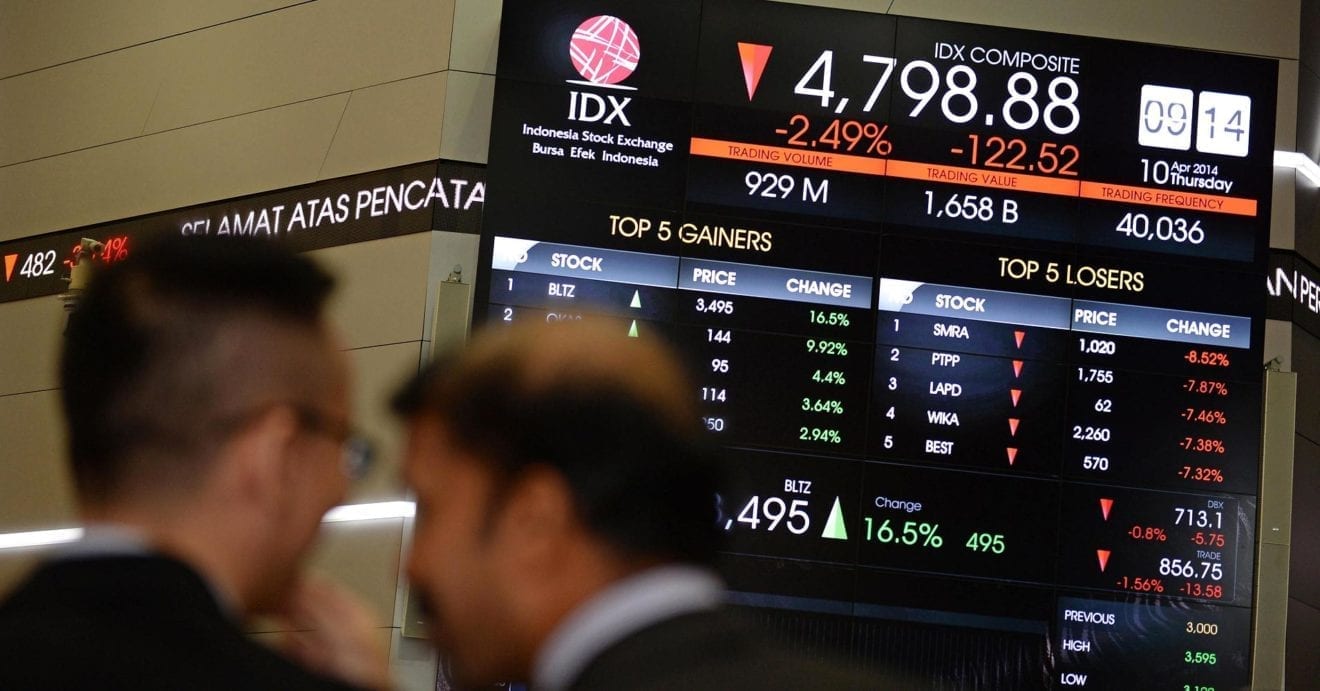
    The new information service – Go Public Information Center – will present all necessary information to private firms about the steps and processes required to become a listed company in Indonesia (including information about underwriters). The center was first opened in Indonesia’s capital city of Jakarta (in June 2016), located at the ground-floor of the Indonesia Stock Exchange Building. Over the next couple of years the IDX plans to open information centers in 15 more cities.

    The IDX targets to see 35 companies conduct on IPO on the local bourse in 2016. However, this probably is a too ambitious target. So far this year only eight companies have been added to the IDX.

    Only 529 companies are listed on the Indonesia Stock Exchange (while there may be more than 60 million business units active in Indonesia; mostly small and medium sized enterprises). This figure is much lower compared to listed companies in Thailand (644), Singapore (766) and Malaysia (904). Being Southeast Asia’s largest economy, Indonesia is eager to top this ranking somewhere in the future. Meanwhile, in the advanced Asian nations, the number of listed companies is much higher.

    According to the IDX, costs of an IPO (paid to the bourse, auditors, underwriters, independent appraisers and legal counselors) is approximately 3.16 percent of the total funds raised in the IPO. Those companies that have existed for at least a year and have a minimum of IDR 5 billion (approx. USD $373,340) in net assets can undertake an IPO on the IDX. To make it more attractive to conduct an IPO, companies are offered several tax incentives, including a discount of income tax up to 5 percent.

    Advantages for a company to go public:

    • Generate fresh funds that can be used for business expansion or to pay off debt
    • Raise public awareness of the company/adding a new group of potential customers
    • Increase the company’s market share
    • Lucrative exit strategy for founding individuals
    • Improved management due to mandatory higher degree of financial and corporate transparency to the public

    Disadvantages for a company to go public:

    • Higher costs of complying with regulatory requirements
    • Adjust to a higher degree of financial and corporate transparency
    • “Market pressure” causes companies to focus on short-term instead of long-term growth

  • Bitcoin plunges after Hong Kong exchange hacked

    Bitcoin plunges after Hong Kong exchange hacked

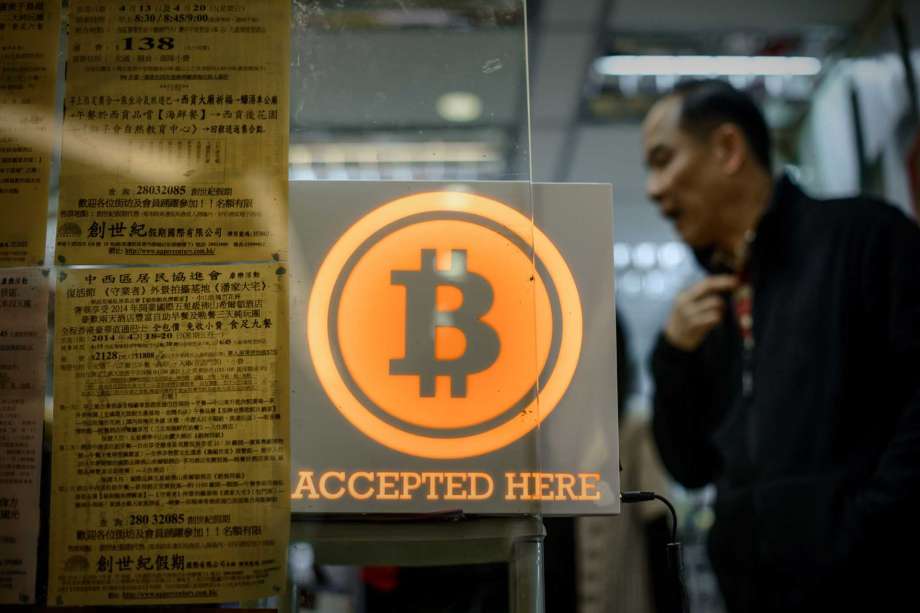
    The digital currency Bitcoin plunged Wednesday after Bitfinex, an exchange based in Hong Kong, said it had been hacked and funds stolen.

    The exchange said it had halted trading, deposits and withdrawals while it investigated which users had been affected. Bitcoin’s trading value fell about 20 percent early Wednesday, local time in Hong Kong, but had recovered about half the loss by afternoon.

    Zane Tackett, Bitfinex’s director of community and product development, did not immediately respond to requests for comment. But he said in a posting on Reddit that 119,756 Bitcoins had been stolen.

    Before the hacking was made public, that number of Bitcoins would have been worth about $72 million. Now that the currency has slumped, the figure is closer to $65 million. The exchange, one of the world’s largest, said in a blog post that any outstanding settlements would be made at the price before the hacking.

    “As we account for individualized customer losses, we may need to settle open margin positions, associated financing, and/or collateral affected by the breach,” Bitfinex said in the post.

    Local Business

    It added that customers’ losses would be addressed later.

    Security breaches of this type have raised questions about the viability of Bitcoin. The most notable episode was the collapse in 2014 of Mt. Gox, an exchange based in Tokyo, in which hundreds of thousands of Bitcoins were stolen in a heist that experts and law enforcement officials are still trying to unravel. This past June, a hacker stole more than $50 million worth of Ether, another digital currency, from an experimental virtual currency project called the Decentralized Autonomous Organization.

    Jack Liu, chief strategy officer at OKCoin, a large digital currency exchange, said he was not concerned about the security of his company because it uses a different system. But he noted that there should be more discussion between exchanges over best practices.

    “We care about the health of the ecosystem,” he said, although he emphasized that nobody should be dictating how Bitcoins are secured. “Hackers are only getting better, and so adoption of the same solution may not be the safest for the industry.”

    Although some view Bitcoin as the future of finance, allowing for faster and cheaper transactions, the Bitcoin community has been rived with infighting over the development of the technology. The blockchain ledger, part of the coding that underlies the currency, has also gained more mainstream traction, as banks see an opportunity to use the technology to speed up trades.

    Bitfinex said the theft had been reported to law enforcement.

  • Equinix launches data hub service

    Equinix launches data hub service

    The ways in which enterprises assemble their network infrastructure have been evolving rapidly as the industry-wide shift to the cloud accelerates. This week Equinix offered another piece of its ongoing response to that shift, unveiling a new Data Hub service that lets enterprises store their data next to the clouds they use but keep control over it.

    Equinix already has Cloud Exchange, providing connectivity to an ecosystem of cloud providers, as well as Performance Hub, which gets the enterprise WAN into the data center.

    This new offering simply bundles the space and power needed to house big data in a pre-configured package and with partners lined up to help with the particular storage technology.

    The idea is to let folks put their data as close as possible to the cloud services that use it, while at the same time not ceding control or access to it.

    That might be for compliance reasons, it might be to leverage a common data store from multiple cloud providers, it might be simply for data protection or replication, or simply to keep latency as low as possible for things like IOT.

    It’s all part of the industry shift toward caring where data actually is on the internet. From low latency trading, to sovereignty issues, to the caching of content at the edge, to small cells, to proximity to renewable energy, the recurring theme in this era of internet infrastructure has been the old real estate saying, ‘location, location, location’. It’s a quite different theme from the prior decade, in which everything was about achieving scale.