Retail News CRM

Tag: exchange

  • OneDegree Offers Crypto-Linked Insurance

    OneDegree Offers Crypto-Linked Insurance

    Hong Kong-based OneDegree has launched a new insurance solution that provides digital asset protection for cryptocurrencies.

    Digital insurer OneDegree has partnered with crypto exchange Hong Kong Digital Asset Exchange (HKbitEX) to offer protection for digital currencies, according to a statement.

    In its bid to strengthen the exchange’s safety and security for institutional investors, OneDegree will offer up to $100 million in coverage to HKbitEX to cover covering losses from damage, hacking, and theft.

    In addition to private key loss, OneDegree will also cover misappropriation due to physical damage to wallets caused by natural events; cybersecurity threats and employee theft.

    We have witnessed a very strong inbound demand for insurance to protect against threats to digital assets, said OneDegree co-founder Alvin Kwock.

  • Trading Volume Surges on DBS Digital Exchange

    Trading Volume Surges on DBS Digital Exchange

    A shift to round-the-clock trading in August has seen trading volumes in the two months surpassing the total trading volume of the first eight months of the year by 40 percent.

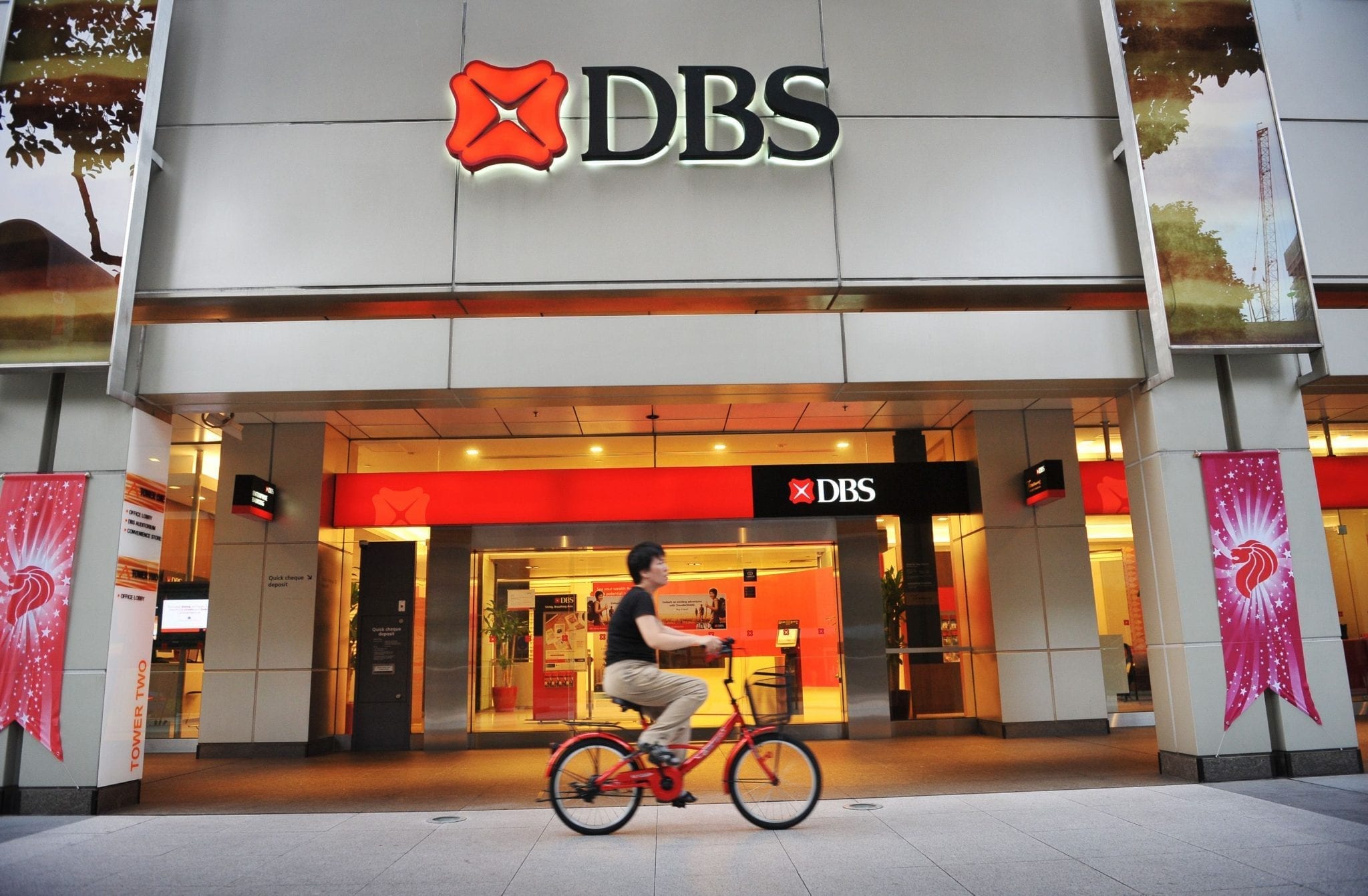
    DBS has reported strong growth in its digital asset ecosystem, anchored by DDEx, or the DBS Digital Exchange, which now has over S$600 million in digital assets under custody as of end-October, triple the amount recorded in the previous month, according to the bank.

    The bank also said it is seeing a growing number of corporate and institutional customers among its participants, with other banks, a central bank and other digital asset exchanges among the 500 participants on the exchange.

    Becoming a participant of DDEx opens many gateways for our customers to access the burgeoning cryptocurrency and digital asset economy, Eng-Kwok Seat Moey, group head of capital markets and DDEx chair, said in a statement on Thursday.

    DDEx was launched in December 2020 with an initial offering that covered cryptocurrency trading. It has since issued a  bond through a security token offering (STO) on the exchange, and plans to list at least half a dozen security tokens by end-2022. The bank also launched a crypto trust offering that combined wealth planning services with emerging digital currencies, and its brokerage arm received formal approval from the Monetary Authority of Singapore (MAS) to provide digital payment token services.

    At the presentation of its third-quarter results last week, the bank’s chief executive Piyush Gupta said it is planning to open the crypto exchange to the broader retail market in 2022.

    DBS previously said it expects to double the number of participants on DDEx to 1,000 and to grow its base by 20-30 percent annually for the next three years, as investments in digital tokens gain greater acceptance.

  • SGX Directors to Retire

    SGX Directors to Retire

    Singapore Exchange (SGX), has announced personnel changes to its board of directors.

    Jane Diplock, non-executive non-independent director, will be retiring from the board by rotation at the end of the bourse’s 22nd Annual General Meeting on 7 October, SGX said in a filing on Tuesday.

    Diplock, 72, was also a member of SGX’s audit and risk management committees. She was appointed to her role in 2011.

    Also retiring from office on 7 October is non-executive non-independent director Ng Wai Keng, who is being considered for an appointment that requires him to address any potential conflict of interest. Ng, 54, was appointed to the position in 2018, and was also a member of SGX’s remuneration and staff development committee.

  • Crypto Exchange Searches Blocked in China

    Crypto Exchange Searches Blocked in China

    Chinese users were reportedly unable to find results for popular cryptocurrency exchanges on major search engines in the country.

    Keyword searches for trading platforms such as Binance, OKEx and Huobi yielded no results, according to various media outlets.

    The searches were conducted on major search engines like Baidu, Sogou, Zhihu, and Weibo.

    This marks yet another sign of further tightening on cryptocurrencies, especially with regards to online content.

    Earlier this month, multiple popular Weibo accounts featuring related content were reportedly suspended or shut down over violation of the social media platform’s rules.

  • SGX Reduces MSCI License Agreement

    SGX Reduces MSCI License Agreement

    The bourse said it will continue to broaden and deepen coverage of Asia by developing more derivatives products on its own or in collaboration with its partners.

    Singapore Exchange (SGX) will discontinue its license agreements with index provider MSCI for equity futures indices and futures contracts when they expire in February 2021, SGX announced on Wednesday.

    The two parties will retain their partnership on MSCI Singapore Index products and will both work to extend it well beyond 2021, the announcement said, noting that MSCI Singapore futures and options remain listed. SGX said it will work closely with the relevant stakeholders in managing their open interest during this period.

    While this may have a near-term impact on our equities derivatives open interest, our multi-asset portfolio shelf has reached a critical mass. SGX’s track record in derivatives positions us well to refresh and grow our suite of pan-Asian access products in a new direction, Loh Boon Chye, SGX chief executive, said.

  • Australian Crypto Exchange Debuts in Singapore

    Australian Crypto Exchange Debuts in Singapore

    The firm wants to offer its platform and services to a wider audience in APAC, following a number of strategic partnerships and business growth in 2019.

    Sydney-based cryptocurrency exchange Independent Reserve, announced its launch in Singapore this week as a separate entity, which will allow Singapore residents to buy, trade and hold digital currencies like Bitcoin, Ethereum, Litecoin, and XRP, on its platform, with Singapore-dollar trading pairs to be added.

    We felt the time was right to make this move, said Adrian Przelozny, CEO and founder, in a press release, noting the introduction of the Payments Services Act by the Monetary Authority of Singapore, which entered into force on Tuesday. The response we’ve received so far from the Singapore market has been overwhelmingly positive, he added.

    Independent Reserve was established in 2013 and has the backing of the Australian finance industry heavyweights Mike Tilley (ex-CEO of Challenger Financial and Chairman of Latitude Financial), Martin Rogers (KTM Ventures) and Steve James (Seer Asset Management), who are investors and board members.

    The firm has already built a strong presence in Australia and New Zealand, with over 120,000 customers and around 8,000 self-managed super funds (SMSFs), and recently introduced insurance coverage for cryptocurrency held by its clients.

    It has also been working closely with regulatory bodies including AUSTRAC to formulate AML/CTF regulatory frameworks for the industry.

  • China’s Crypto Crackdown Hits Five Exchanges

    China’s Crypto Crackdown Hits Five Exchanges

    China’s crackdown on cryptocurrencies has led at least five local exchanges to halt servicing of domestic users or their whole operations altogether.

    Last week, Chinese exchange operators Bitsoda and Akdex announced that it would cease its operations. Btuex and Idax said they would close domestic operations and focus on overseas users. Biss said it had halted ops while it cooperates in investigations with local authorities.

    The exchanges account for the five known exchanges that have suspended or shut down their operations. Other players that are believed to be affected include Binance and Tron whose Webio accounts have reportedly been suspended.

    Weeks after Beijing declared support for blockchain technology, the market has been rushing to capitalize on perceived opportunities from digital currencies. This subsequently led regulators in Shanghai, Shenzhen, and Beijing to ramp up efforts to probe or shut down exchanges.

    Concurrently, China is readying to realize part of its blockchain ambitions with the launch of its own central bank-backed digital currency. It is already making accelerated efforts to ready the regulatory grounds for the launch including the introduction of new standards in 17 areas of emerging technologies which include not only blockchain but also cloud services and artificial intelligence.

  • Shanghai-Frankfurt Stock Link in the Works

    Shanghai-Frankfurt Stock Link in the Works

    In another move to internationalize Chinese markets, plans are underway for a Shanghai-Frankfurt stock link driven in part for Europe’s «unabated eagerness» for collaboration with the second-largest economy.

    The China Europe International Exchange (CEINEX) is currently preparing for a stock connect program, according to state media, which reflects European countries’ «unabated eagerness» for Chinese collaboration in areas such as finance.

    CEINEX did not disclose the exact data of the Shanghai-Frankfurt stock link launch but state media highlighted that it could be rolled out in the next one or two years.

    The program is expected to allow Germany-based blue chips to issue Chinese depositary receipts on the Shanghai Stock Exchange and for mainland-based firms, especially manufacturers, to issue global depository receipts on exchanges in Frankfurt.

    Listings aside, onlookers believe there are synergies to be realized by Germany due to its significant base of industrial powerhouses such as Mercedes Benz or BMW which could benefit from cooperation with China which has withstood the downward economic cycle in sectors such as an automobile.

    In addition to opening up markets, stock link is expected to be the first in a series of moves to boost financial cooperation between China and Europe.

  • Vietnam reduces penalties for illegal currency exchange

    Vietnam reduces penalties for illegal currency exchange

    Vietnam has significantly lowered penalties for illegal currency exchanges following outrage over a man being fined VND90 million ($3,900) for exchanging $100 last year.

    The fine was revoked after a public outcry erupted over disproportionate punishment.

    An individual or a shop illegally exchanging up to $1,000 will receive a warning instead of a fine of up to VND100 million ($4,300), according to a new government decree set to take effect December 31.

    The fine will increase progressively, with a maximum penalty of VND100 million levied for illegally exchanging more than $100,000, the decree says.

    Illegal exports and imports of currency will be fined up to VND250 million ($10,800).

    The legal amendments come after a resident of the southern city of Can Tho was fined VND90 million ($3,900) in October 2018 for exchanging a $100 note at a gold shop.

    It is a common practice for Vietnamese citizens to exchange currencies at local gold shops that offer better prices than banks, even though very few of the shops are licensed exchangers.

    Can Tho authorities revoked the punishment after Deputy Prime Minister Truong Hoa Binh said such a heavy fine should be reviewed, and lawyers and lawmakers also said it was unreasonable?

    However, the province confiscated the $100 note from the man, an electrician who makes VND4 million ($171) a month.

  • Hong Kong Stock Exchange Website Hit By DoS Attacks

    Hong Kong Stock Exchange Website Hit By DoS Attacks

    The Hong Kong Exchanges and Clearing Limited faced a day of tech hiccups, including the latest denial-of-service attacks on its website.

    According to HKEX CEO, Charles Li Xiaojia, the bourse’s website was subject to distributed denial-of-service attacks (DDoS) – a cyberattack whereby overwhelming traffic is imposed to slow or restrict access from other browsers – and was subsequently unable to display exchange prices and other financial data.

    We will continue to invest more to safeguard and improve” the information and technical infrastructure at the exchange, Li said at a press conference. We hope the public has confidence in the robustness of our system.

    The cyberattack was not the only tech hiccup the HKEX faced just in that single day. Earlier yesterday afternoon, the HKEX had to halt derivatives trading due to a bug in the system before resuming today. According to an update from its website, the issues were caused by software issues in the vendor-supplied trading system.»

  • Telenor Pakistan and National Defence University exchange Ideas to Leverage Technology for Development

    Telenor Pakistan and National Defence University exchange Ideas to Leverage Technology for Development

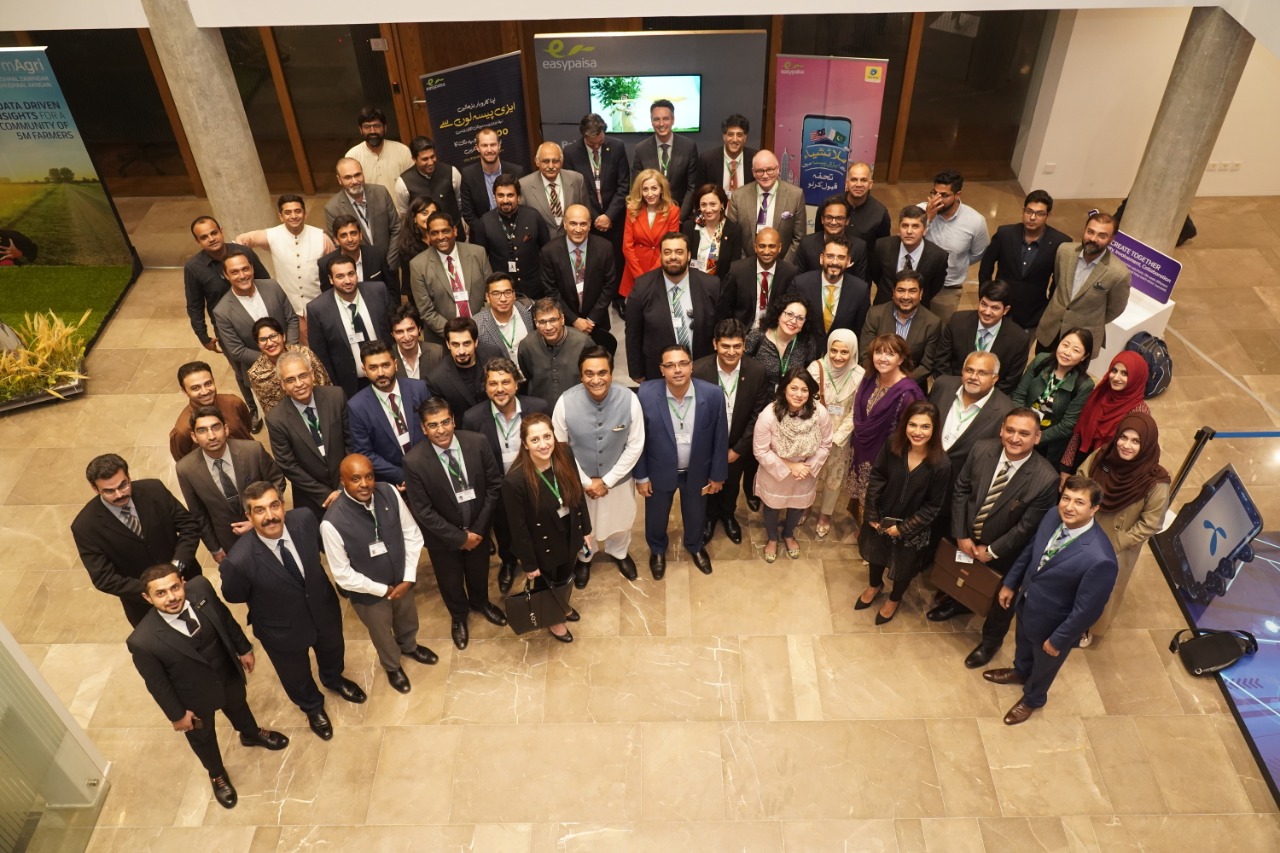
    Telenor Pakistan recently hosted a dinner for a delegation from National Defence University (NDU) Islamabad at its 345 Campus comprising of management of two organizations and participants of International Workshop on Leadership and Security (IWLS).The purpose of the event was to engage in a dialogue on how technology can play a vital role towards national development and empowering societies and to highlight to the international delegates some of the successful and impactful digital initiatives of Telenor Pakistan.

    The high level event was hosted by Irfan Wahab Khan, CEO Telenor Pakistan along with his management team and attended by the faculty and participants of IWLS-1 including delegates from China, Kingdom of Saudi Arabia, Jordan, Myanmar, Tunisia, South Africa, Argentina, Portugal, New Zealand, Sri Lanka, Finland, Romania, UAE, Syria and The UK. The delegates were given a walkthrough of the latest digital innovations at Telenor Pakistan followed by the tour of the Telenor 345 Campus.

    Mr. Irfan Wahab Khan, CEO Telenor Pakistan opened the event and said that access to technology can have important ancillary benefits and it can help empower people, increase productive investment and consumption and raise productivity and income. “As Pakistan’s leading digital services provider with a strong rural presence, and movers of many industry-first initiatives, we at Telenor Pakistan are fully geared to impact and transform various sectors of Pakistan’s economy through smart connectivity, digitalization of services and platforms and greater financial inclusion of the people of Pakistan. As a forward-looking growth organization, Telenor Pakistan is driven by its ambition to provide intelligent technologies to create better national outcomes through our innovation focus involving the use of Artificial Intelligence, Data Analytics and Blockchain. This model is aligned with our purpose to provide the Government, businesses and people of Pakistan to what matters most to them and allows us to be their partner of choice in their digital transformation.” he added.

    Telenor is leading the ICT-powered digital revolution in Pakistan with a number of innovative products and industry first solutions. The company is firmly focused on digitalization for the masses and has pioneered financial services aimed at higher financial inclusion.

    The participants of the International Workshop being held at NDU appreciated Telenor Pakistan’s ambitions for digital development which are well aligned with the Government’s ambition of a Digital Pakistan. “It’s imperative that we know what developments have taken place in the recent past and what technology holds in store for our future, in order to harvest the benefits. Our findings show that responsible tech is on the rise, even in the midst of technology’s rapid leaps. Technology used in the efficient way will contribute to a sustainable tomorrow.” they added.

    Telenor Pakistan believes there are immense opportunities through technology with a stronger focus on value creation, innovation, enterprise solutions, customer experience and strategic partnerships which are aligned with the company’s promise to deliver on its vision of empowering societies and connecting people to what matters most.

  • Dollar eases as trade deal prospects bolster risk, sterling gains

    Dollar eases as trade deal prospects bolster risk, sterling gains

    The dollar was marginally weaker on Monday, as increasing expectations of a U.S.-Sino trade deal led investors to shift away from the safety of the greenback into riskier assets. Both the United States and China reported progress in five days of negotiations in Beijing last week, although the White House said much work remains to be done to force changes in Chinese trade behaviour.

    Negotiations will continue next week in Washington as investors hope for an end to the trade war between the world’s two largest economies.

    “Trade is the big focus for the markets…with talks shifting from Beijing to Washington, we could get more news flow,” said Michael McCarthy, chief markets strategist at CMC Markets.

    “I expect the euro to remain under pressure this week while dollar/yen could also fall if we see risk-aversion based on negative trade news flow.”

    In Asia, the yen was marginally higher versus the greenback at 110.53.

    The Aussie gained 0.1 percent to $0.7144, after gaining 0.48 percent on Friday on hopes of a trade breakthrough between the United States and China. The kiwi dollar also gained around 0.1 percent on the dollar to $0.6868.

    U.S.-China trade tensions have kept markets highly volatile since last year.

    U.S. duties on $200 billion worth of Chinese imports are set to rise from 10 percent to 25 percent if no deal is reached by March 1 to address U.S. demands that China curb forced technology transfers and better enforce intellectual property rights.

    The dollar index, a gauge of its value versus six major peers was marginally lower at 96.85. The index has gained 1.4 percent so far this month despite weaker-than-expected U.S. data as well as a cautious Federal Reserve which is widely expected to keep rates steady this year due to a slowdown in growth and muted inflation.

    The dollar index has gained mainly because of the euro , which has around 58 percent weightage in the index.

    The single currency was flat at $1.1292 in early Asian trade and has had two straight weeks of losses. Traders are betting on a weaker euro in the coming months as they expect the European Central Bank to keep its monetary policy accommodative due to low growth in the common area, tepid inflation and political uncertainties.

    On Friday, Benoit Coeure, a member of the European Central Bank’s executive board, said a new round of cheap multi-year loans to banks was possible. Coeure added that the euro zone’s recent economic slowdown is more pronounced than earlier expected, suggesting the path of inflation will also be more shallow.

    The ECB will next meet on March 7 and policymakers are widely expected to slash growth and inflation projections as the euro zone is suffering its biggest slowdown in half a decade.

    Elsewhere, sterling was up by 0.1 percent to $1.2903, building on its gains from Friday.

    The pound rallied 0.6 percent on Friday, helped by reports of some hedge fund buying, a conciliatory tone on Brexit from the Irish foreign minister and stronger-than-expected British retail sales data.

  • Asia stocks quiet, dollar firm after upbeat US job data

    Asia stocks quiet, dollar firm after upbeat US job data

    Asia stocks hovered near four-month highs on Monday after a mixed performance on Wall Street at the close of last week, while the dollar firmed against the yen following strong US job and manufacturing data. MSCI’s broadest index of Asia-Pacific shares outside Japan was almost flat. It had scaled a four-month peak on Friday along with a surge in its global peers.

    Trade was subdued with many of the region’s markets closed for the Lunar New Year. China’s financial markets are closed all week, while those in South Korea are shut until Thursday.

    Hong Kong’s Hang Seng, which is trading for only half a day, edged up 0.2%.

    Japan’s Nikkei added 0.5%.

    On Wall Street on Friday optimism from a surge in January US job growth was offset by a weaker-than-expected outlook from Amazon.com Inc that battered retail stocks. The Dow nudged up 0.26% while the Nasdaq shed 0.25%.

    “Key points for the markets this week will be how the remaining US corporate earnings releases turn out, and whether they are in line with recent upbeat data,” said Junichi Ishikawa, senior FX strategist at IG Securities in Tokyo.

    “While corporate earnings and fundamentals remain key, political developments, notably the US-China trade situation, remain potential risk factors,” he said.

    A US Labor Department report on Friday showed nonfarm payrolls jumped by a stronger-than-forecast 304,000 jobs last month, the largest gain since February 2018.

    That report, along with better-than-expected ISM manufacturing activity numbers for January, pointed to underlying strength in the world’s biggest economy.

    “After last week’s risk appetite revival, the data pulse and the tone of Fed speakers will be important. For the Goldilocks market to continue, we need to find a delicate balance between improving data and still-neutral central banks,” strategists at ANZ wrote.

    Global equity markets performed strongly last week after the Federal Reserve pledged to be patient with further interest rate hikes, signalling a potential end to its tightening cycle.

    Friday’s robust economic data triggered a sharp rebound in US Treasury yields, in turn lifting the dollar.

    On Monday, the US currency was a shade higher at 109.555 yen after advancing 0.6% on Friday.

    The euro was little changed at $1.1456 after getting pulled back from a high of $1.1488 on Friday.

    The Australian dollar was mostly steady at $0.7244 after slipping 0.4% the previous session.

    The benchmark 10-year U.S. Treasury yield was at 2.686% after climbing nearly 6 basis points on Friday to pull away from a four-week low of 2.619% earlier last week.

    West Texas Intermediate (WTI) US crude oil futures extended Friday’s rally and were last up 0.3% at $55.42 per barrel.

    On Friday, WTI futures had rallied 2.7% on the upbeat US job report, signs that Washington’s sanctions on Venezuelan exports have helped tighten supply and data showing US drillers cut the number of oil rigs.
  • Gas Malaysia ups natural gas tariff

    Gas Malaysia ups natural gas tariff

    Gas Malaysia Bhd has announced a higher average effective natural gas tariff for the non-power sector in Peninsular Malaysia at RM32.92 per MMBtu, which is 0.7% higher than the current RM32.69 per MMBtu. The revision will be effective from Jan 1, 2019 to June 30, 2019.

    The group told the stock exchange that the government has issued an instruction for the company to effect the natural gas tariff revision starting early next year.

    The average base tariff will be set at RM32.69 per MMBtu.

    Under the gas cost pass through (GCPT) mechanism, a surcharge of RM0.23 per MMBtu will apply to all tariff categories for the period beginning Jan 1 to June 30, 2019. This translates to an average effective tariff of RM32.92 per MMBtu.

    However, for Category A (Residential), the effective tariff rate fell 0.34% to RM23.72 from RM23.80 per MMBtu.

    Gas Malaysia said while the tariff revision has no material impact on its business operations, it is expected to contribute positively towards its financial position for the financial year ending Dec 31, 2019.

    To note, the government has prescribed the Incentive-Based Regulation (IBR) framework which sets the base tariff for a regulatory period of three years from January 2017 and allows changes in the gas costs to be passed through via the GCPT mechanism every six months.

    Gas Malaysia shares closed 0.74% or two sen lower at RM2.69 with 547,300 shares transacted.

  • New crypto-exchange lets you convert Singapore, Malaysia, Indonesia currencies

    New crypto-exchange lets you convert Singapore, Malaysia, Indonesia currencies

    Singapore-based fiat-crypto exchange EurekaPro, led by a team consisting of Junus Eu, Douglas Gan and Lau Kin-Wai, today announced its entry into the Southeast Asian blockchain market. EurekaPro offers Asian-wide fiat-to-cryptocurrency support, allowing holders of the Singapore dollar, Malaysian ringgit, Indonesian rupiah, and other Asian fiat currencies to transact on the EurekaPro exchange.

    EurekaPro has already launched an open public beta, in which over 8,000 users have signed up in its first week.

    Eu, the exchange’s CEO, was previously the investment manager of zVentures, the venture capital arm of US- and Singapore-based gaming hardware and software firm Razer. Before that, she was an investment manager at VC firm Jafco Asia.

    On the other hand, Gan and Lau co-founded iFashion, a holding firm that invests in various fashion ecommerce sites. Gan also started beauty services marketplace Vanitee and subscription ecommerce business Vanity Trove. Lau set up FatFish Internet Group, a startup accelerator.