Retail News CRM

Tag: facebook

  • Facebook takes another shot at Apple

    Facebook takes another shot at Apple

    Facebook continues to take aim at Apple for the latter’s introduction of the App Tracking Transparency (ATT) feature in iOS 14.5. With the majority of iPhone users in the U.S. (94%) and globally (84%) opting out of being tracked, Facebook says that damage is being done to small businesses who depended on the tracking to promote their wares to consumers.

    Since Facebook generated approximately $84 billion of its revenue last year from ads, it naturally was against Apple’s ATT feature. CEO and co-founder Mark Zuckerberg was so upset about it that he wrote two full-page newspaper ads blasting Apple. However, it turns out that some companies are doing the same amount of data tracking as they were before ATT launched.

    As we told you yesterday, marketing strategy consultant Eric Seufert says that third-party apps are still able to collect data from 95% of its iOS users by using IP addresses obtained from their phones and the networks they employ. A technique called “fingerprinting,” banned by Apple, is employed. Zuckerberg yesterday took a shot at the 30% cut of in-app payments that Apple collects in the App Store by forcing developers to use its in-app payment platform for such transactions.

    The beleaguered executive said in a Facebook post-Monday, “To help more creators make a living on our platforms, we’re going to keep paid online events, fan subscriptions, badges, and our upcoming independent news products free for creators until 2023. And when we do introduce a revenue share, it will be less than the 30% that Apple and others take.” Zuckerberg added that “We’re also launching a new payout interface so creators can see how different companies’ fees and taxes are impacting their earnings,” another shot at Apple.

    But Apple was able to get some revenge by announcing new features yesterday for iOS 15 that will interfere with Facebook’s own app assets. Take the Messages app for iOS which is receiving new features that will allow users to share photos, tunes from Apple Music, articles from Apple News, weblinks and more. These are things that Instagram, Facebook, and WhatsApp users would be more apt to share (all three of those apps are owned by Facebook).

    Zuckerberg has called Apple a major competitor because of apps like FaceTime and Messages which come pre-installed on the 1 million+ active Apple devices in use today. And with that in mind, Apple previewed some new features for FaceTime that will start working with the release of iOS 15 this coming fall. For example, Android and Windows users will be able to tap into FaceTime videos for the first time.

    SharePlay will allow a user to host a FaceTime call while sharing with his buddies a streaming video, streaming audio and more. Apple is trying to take the features that you otherwise might find on Instagram, WhatsApp and Facebook and place them on iOS 15 with additional privacy features.


  • Facebook launches new video shopping feature on iOS devices

    Facebook launches new video shopping feature on iOS devices

    Facebook made all sorts of tools available to those who’d like to shop via its social network. The most recent one is called Live Shopping and it’s now available on iOS devices. The new feature combines the fun (or stress) of online shopping with the convenience of live video.

    iPhone users should be able to start using Live Shopping every Friday starting this week through July 16. Facebook users will be allowed to tune in to the Live Shopping streams on each brand’s Facebook Page or by visiting the Shop tab or bookmark on mobile.

    If anything shown during these live presentations catches your eye, you’ll be able to purchase it by tapping the products featured in the stream and checking. Everything can be done directly on Facebook without having to leave the app.

    Furthermore, Facebook announced the three brands will go live around a common theme each Friday: Glow Up, New Fashion Finds, and Self Care Spotlight. Here is when you can tune in to watch these presentations:

    • Glow Up – May 21, June 11 and July 2 12:00 PM – 1:30 PM PT/3:00 PM – 4:30 PM PT
    • New Fashion Finds – May 28, June 18 and July 9 12:00 PM – 1:30 PM PT/3:00 PM – 4:30 PM PT
    • Self Care Spotlight – June 4, June 25 and July 16 12:00 PM – 1:30PM PT/3:00 PM – 4:30PM PT

    Finally, Facebook revealed the full list of brands that will participate in Live Shopping Fridays until July 16: Abercrombie & Fitch, Alleyoop, Bobbi Brown Cosmetics, Clinique, Dermalogica, Dolce Vita, Sephora, and ZOX.

  • Facebook tests new plan to reduce the spread of conspiracy theories

    Facebook tests new plan to reduce the spread of conspiracy theories

    Facebook is often a lightning rod for criticism and to be honest, there are many things that the social media network does that look bad when it comes to protecting one’s privacy, or in the dissemination of conspiracy theories. In an attempt to deal with the latter, Facebook announced on Monday that it is testing something new. Before an article can be shared on the platform, Facebook will suggest that it be read first.

    This new feature will be tested on 6% of Facebook users globally who use the Android platform. By suggesting to users that they completely read a story before sharing it, Facebook hopes to cut back on the number of misleading articles being passed along by subscribers because of an inflammatory headline that riles users’ passions before the whole story is read and digested.

    Facebook announced the test on Twitter, showing an image of what prompt users will see when they try to share a story without reading it. It says, “You’re about to share this article without opening it. Sharing articles without reading them may mean missing key facts.” The prompt offers two options allowing the user to open the article or continue sharing the content without reading it.

    Keep in mind that Facebook isn’t forcing a user to read a story without sharing it. Users can select the option to open the story and never read it before sharing the content. Or, they can skip the subterfuge and tap to continue sharing the story without reading it. While it isn’t clear whether this new feature can slow down the spread of baseless conspiracies on Facebook, a similar plan used by Twitter appeared to show some positive results.

    Twitter tested a similar feature last June and expanded the test to cover more of its users in September. The test revealed that the prompts led users to open articles 40% more often. Ultimately, if the tests prove successful, Twitter and Facebook could expand the feature to cover all of their subscribers.

  • Facebook uses scare tactic to get iOS users to opt-in for tracking

    Facebook uses scare tactic to get iOS users to opt-in for tracking

    Researcher Ashkan Soltani disseminated a tweet on Friday about Facebook’s plan to take on Apple’s App Tracking Transparency (ATT) feature. ATT sends out a prompt from third-party apps asking whether users want to opt-in to being tracked through their travels on other apps and online. This information is collected and used to send out personal advertisements and also to collect personal data.

    The prompts just started rolling out last Monday with the release of iOS 14.5 and while the data might be too early to be considered significant, 47% of those responding to a survey by app figures said that they chose to allow themselves to be tracked by third-party apps. Before the update dropped, estimates called for 32% of users to allow tracking while 68% were forecast to opt-out.

    When Apple first announced that it was going to launch App Tracking Transparency, one company, in particular, went totally bonkers. Facebook published two newspaper ads complaining that ATT would kill small businesses since it would reduce the reach that these firms get from online advertising. Of course, let us not forget that Facebook took in $84 billion last year from online ads.

    Do you really believe that Facebook was concerned about the future of small businesses with ATT enabled? The social media firm and its beleaguered Chief Executive Mark Zuckerberg were probably more concerned about the future of Facebook; the latter is an advertising company more than it is a social media app.

    Some companies have been trying to find ways to gently guide iOS users to allow themselves to be tracked even though Apple has a number of rules and guidelines that companies must follow when creating their ATT pre-prompt and prompt, or face getting booted out of the App Store. One amazingly blatant prompt gives users just one choice-to allow themselves to be tracked.

    What Facebook is doing, according to Soltani, is using “scare tactics” to get Facebook and Instagram users to choose to be tracked. Images of pre-prompt notifications that are reportedly being considered make it sound that by withholding permission to be tracked, both social media apps might have to charge users for access.

    The text on Facebook’s and Instagram’s pre-prompt pages say, “This version of iOS requires us to ask for permission to track some data from this device to improve your ads. Facebook and Instagram go on to say that thanks to the information it receives from tracking users, it shows ads that are more personalized while keeping Facebook (and Instagram) free of charge.” The insinuation is crystal clear: if you decide to disable tracking, you eventually might have to pay to use Facebook or Instagram.

    Last week we told you about the guidelines that Apple had developed for ATT prompts, such as banning those that bribed users to allow tracking. While it is not yet known whether Facebook/Instagram will use these exact screens, if they do, both would seem to be permissible under Apple’s rules.

    We can see where Facebook might simply be explaining a business decision that it could have to make. On the other hand, Black’s Law Dictionary says that a Bribe is “the offering, giving, receiving, or soliciting of any item of value to influence the actions of an official, or another person, in charge of a public or legal duty.” Facebook has not made a definitive offering, but as we said, the insinuation is clear.

    Back in March, Facebook CEO Zuckerberg reversed his stance, saying that Facebook might actually benefit from ATT and stated that “It’s possible that we may even be in a stronger position if Apple’s changes encourage more businesses to conduct more commerce on our platforms.” In other words, ATT could end up delivering more traffic to Facebook’s platforms.

    However, it appears that Facebook has reverted back to its adversarial position in a note to advertisers written last week. The note says, “As more people upgrade to iOS 14.5, opted-out users will automatically be excluded from certain targetable audiences, which may result in decrease of audience sizes.”

  • Gucci, Facebook file joint lawsuit against alleged counterfeiter

    Gucci, Facebook file joint lawsuit against alleged counterfeiter

    Gucci and Facebook have filed a joint lawsuit in California against an individual who allegedly used the U.S. group’s social media platforms to sell fake Gucci products, the two companies said on Tuesday.

    The initiative, a first of its kind for both Gucci and Facebook, is the latest example of an Internet giant joining forces with a luxury label to fight the proliferation of counterfeit goods being sold via social media.

    Amazon has filed similar lawsuits over the past year with Valentino and Ferragamo.

    In a statement, Gucci – the profit engine of French group Kering – and Facebook alleged the unidentified defendant used multiple Facebook and Instagram accounts to promote her international online counterfeit business.

    Online sales of luxury handbags, shoes, and garments have boomed over the past year as the coronavirus pandemic forced retailers to temporarily close their stores.

    Groups like Facebook are keen to make a bigger push into the luxury market and “social commerce”, but to do so they need to show that their platforms are not a conduit for counterfeiting and are safe for brands, some of which are reluctant to sell their products through third-party players.

    “More than one million pieces of content were removed from Facebook and Instagram in the first half of 2020, based on thousands of reports of counterfeit content from brand owners, including Gucci,” the statement said.

    It added that in 2020 alone the actions of Gucci’s in-house intellectual property team had resulted in four million online counterfeit product listings being taken down, the seizure of 4.1 million counterfeit products, and 45,000 websites, including social media accounts, being disabled.

  • 5 Ways Universities Can Use Facebook to Market to and Connect with Students

    5 Ways Universities Can Use Facebook to Market to and Connect with Students

    If you’ve been looking at the marketing tactics that top colleges have been using to attract and enroll new students, you’ve probably noticed that social media platforms have helped a lot in this. Most college students spend several hours on social media every day. It’s quite difficult to market to college students without using social media platforms.

    Since most brands have used social media successfully to market the products and services they offer, shouldn’t universities and colleges use the same tactics to engage students? Research studies have shown that two-thirds of high school students decide to choose the college they’ll attend after looking it up on social media. The most successful colleges are using social media platforms to grab the attention of a student. Here are five ways that they can use to connect with new college students.

    1.    Focus on promoting a campus culture

    One of the things that attract new students to a university is an exciting campus culture. That’s why you need to use social media platforms to show your followers that your campus is an exciting place. Universities that use this strategy don’t just post boring announcements about various calendar events They show users every action with videos and photos in real-time.

    Whether your college is putting on a festival, hosting a sports game, or a guest speaker, you can use social media to create a sense of urgency for students who are looking for a place to study. Your brand voice plays an integral role here. You should use it to guide your social media posts with a sense of tradition and history which are the things that make your education culture unique.

    2.    Post big wins and fix plagiarism

    Every student wants to be associated with a school that excels. And current students should be proud of wearing that jacket that has the school logo. Great schools use social media platforms to share with the world their big wins. This could be a win on the field, a plagiarism-free study that was published in a famous journal thanks to essay fixer online, or top-performing students in class. Big wins help in building the school’s reputation. And it’s one of the most important factors that parents consider before spending on tuition.

    3.    Encourage students to share their stories

    The majority of students expect brands including universities to have a strong presence on social media. One of the ways learning institutions are fulfilling and exceeding their followers’ expectations is by encouraging students to share interesting stories. A good example is the University of Hampshire which came up with a hashtag on Instagram for this purpose.

    This hashtag allows students to share their experiences on their profiles and this automatically adds them to a network of students. Potential students can enroll in such posts to get a feel of what life is like at the university. Some colleges scan social media regularly to look for school mentions even in cases where they haven’t been tagged directly. Sharing positive posts from either incoming or current students is a great way to show students that their voice is important.

    4.    Share the success stories of alumni

    Alumni become champions in business, politics, and sports. Some rise so high to become presidents of big nations like the US. That’s why universities need to share the stories of their alumni. Highlighting the successes of alumni shows prospective students what they should expect from the school. Engaging with alumni helps in retaining them as advocates. They can help universities get referrals. Plus, sharing the success stories of alumni in social media can spread like wildfire and increase the chances of it landing on fresh eyes.

    5.    Engage with followers directly

    Everyone loves winning contests. Social media gives learning institutions a chance to host contests, giveaways, and polls. Such posts add variety and give followers a chance to engage by sharing their thoughts and opinions on a particular subject. Successful schools use such contests to collect information and give their followers a chance to share study posts.

    Conclusion

    Facebook is a leading social media network that was created back in 2004. And it’s the biggest social media network in the world today. It remains the most popular platform among young learners. Schools can increase the enrollment rate by sharing interesting news and updates that are relevant to their target audience.

    More features are being added to Facebook every day to make it interesting. For instance, Facebook Live is a new feature that universities to communicate with their audience directly. By using the five tips that we’ve discussed in this article, Universities will boost their productivity and performance in the long run.

    Author Bio:

    Paul Calderon is an experienced editor and writer. He enjoys painting, reading literature books, and writing essays. You’ll find him playing with his furry friend or working out during his free time.


    https://www.pexels.com/photo/facebook-application-screengrab-479358/

  • Facebook set to announce new audio products – Recode

    Facebook set to announce new audio products – Recode

    Facebook will announce a series of products under the umbrella of “social audio” on Monday, including its take on audio-chat app Clubhouse and a push into podcast discovery and distribution, Recode reported on Sunday.

    These plans include an audio version of Rooms, a video-conferencing product Facebook launched a year ago. The Clubhouse-like product will let groups of people listen to and interact with speakers on a virtual “stage”.

    Facebook will also launch a product allowing its users to record brief voice messages and post them in their newsfeeds, and a podcast discovery product that will be connected with Spotify, according to the report, which cited sources.

    The announcement will be made on Monday but some products will not show up for a while, the report added.

    A Facebook spokeswoman declined to comment. Spotify did not immediately respond to a request for comment on

    Facebook started public testing of a new application dubbed Hotline earlier this month, where creators can speak and take live questions from an audience.

    This Q&A product combines audio with text and video elements and comes as social media platforms experiment with a rush of new live audio features.

    The success of the invite-only, year-old app Clubhouse, which has reported 10 million weekly active users, has demonstrated the potential of audio chat services, particularly during the COVID-19 pandemic.

    Twitter has been testing its audio feature Spaces and Facebook is also dabbling with a live audio room offering within its Messenger Rooms.

  • Facebook just made the world a better place: 100% renewable energy

    Facebook just made the world a better place: 100% renewable energy

    It’s a big day in the book of the Earth! Facebook has officially reached the goal of one-hundred-percent renewable energy for its global operations. The social media giant might have come under fire for security issues and political scandals, but we’ll give it to them on this one.

    According to the company’s own news channel, the journey was gradual. It started back in 2011 with a ‘wind project’ in Iowa, and about ten years later, it has come full circle. At least as far as Facebook’s own operations are concerned, they are now operating with net-zero emissions!

    We recognize the urgency of climate change. We know the next ten years will be the defining time for a reduction in greenhouse gas emissions and that we have a role to play in this effort—both as a platform that connects people to information and as a global company that supports climate action.

    Mark Zuckerberg and the company have already set another goal for a more sustainable future. The social media platform aims to bring emissions down to zero, but this time across its entire value chain, including suppliers, business travel, and employee commuting. This goal has been given a due date of 2030. The part about zero-emission employee commuting, for one, sounds particularly interesting. We’re wondering how exactly they plan to do that; are they going to give away Teslas? Bicycles? Or maybe accommodate employees so they never have to leave the office? Theirs is indeed a very ambitious goal, but also very ambiguous—we call it “ambiguities.” Try saying it out loud!

    The transition will be handled by their Responsible Supply Chain Program, which works to discover innovative ways for making operations greener. Whatever they have in mind, we are curious to see how it turns out. If you are too, Facebook’s team has released a video dedicated to the long journey from 2011 to today. Take a look for yourself:

    As reported by Facebook’s Director of Renewable Energy, Urvi Parekh, the company’s goal for 100% renewable energy was set back in 2018.

    We couldn’t help but notice that this timeframe coincides with Apple’s move towards greener operation. Back in April 2018, the company from Cupertino announced that their global facilities were finally powered with one-hundred-percent clean energy.

    Whether Facebook took inspiration from Apple or not, we applaud their commitment. Google and Amazon have also taken steps in that direction, and we’d be happy to see more tech corporations follow suit.

  • Facebook’s First transpacific subsea cable Echo and Bifrost

    Facebook’s First transpacific subsea cable Echo and Bifrost

    Advancing connectivity between the Asia-Pacific and North America regions, Facebook is set to build two new subsea cables — Echo and Bifrost — with leading regional and global partners.

    These subsea cables will connect Singapore, Indonesia, and North America, making it the first transpacific cables through a new diverse route crossing the Java Sea. Moreover, it will increase the overall transpacific capacity by 70 percent and deliver increased internet capacity as well as network redundancy and reliability.

    The demand for 4G, 5G, and broadband access is rapidly increasing within the Asia-Pacific region. Thus, Echo and Bifrost will support further growth by ensuring a widely accessible internet for people and businesses.

    According to Facebook Vice President of Network Investments, Kevin Salvadori, Echo is being built in partnership with Alphabet’s Google and Indonesian telecommunications’ company XL Axiata while Bifrost is being done in collaboration with Telin, a subsidiary of Indonesia’s Telkom, and Singaporean conglomerate Keppel. These two are set to be completed between 2023-2024.

    “These new projects add to our foundational regional investments in infrastructure and partnerships to improve connectivity to help close the digital divide and strengthen economies,” the American technology conglomerate declared on its statement.

    As of the moment, the two new ventures are still subject to regulatory approvals.

  • Facebook and the very real problem of keeping student data private

    Facebook and the very real problem of keeping student data private

    After a serious data privacy scandal that happened on Facebook a few years ago, almost everybody knows about the security issues with this social network. Experts say that the company has a long track record of incidents that prove inadequate measures for users’ data protection. Repeated failures make many of us worried about the safety of our personal information. Keep reading the article if you want to learn more about the problem itself and the ways of dealing with it.

    The Facebook data privacy scandal

    It all started in 2009 when the New York Times reported an incident in which private users’ information was shared publicly. Two years later, after an FTC investigation, Facebook promised to address concerns about tracking and sharing personal information.

    In 2013, another data failure happened. It turned out that there was a bug, which exposed email addresses and phone numbers of 6 million accounts. It’s important to note that this data had not been given to Facebook by its users. Instead, it was vacuumed from the contact lists of other social network users who were acquainted with a particular person.

    In 2014, Cambridge Analytica joined the investigation of data security on Facebook. To begin with, Aleksandr Kogan asked users of a particular review platform to add the thisisyourdigitiallife app to their Facebook account. This allowed him to gather some demographic data and information about users’ likes, friends lists, and private messages, which he shared with Cambridge Analytica.

    Once Mark Zuckerberg revealed this, he claimed that Kogan’s app was immediately banned on Facebook. He also asked Cambridge Analytica to officially confirm that they had deleted all the data acquired from the app, so they provided formal certifications of that.

    But in 2018, Christopher Wylie, the creator of thisisyourdigitiallife app reported that Cambridge Analytica harvested up to 87 million profiles instead of 50, as was stated before. He said that the data was used to develop “psychographic” profiles of target users with the pro-Trump advertising campaign.

    After that, another investigation by FTC was opened to determine if Facebook violated the settlement terms from the 2011 investigation. It was revealed that Facebook was involved in data-sharing partnerships with a few big manufacturers, such as Apple, Microsoft, Amazon, Samsung, and BlackBerry. Later, in 2020, Facebook admitted to sharing its data with approximately 5,000 third-party developers

    Use essay writing services carefully

    As you can understand, privacy is one of the most acute issues in the era of social networks. It’s really hard to protect large sets of personal information so they are not used by third parties. Hence, everybody must be aware of different ways to keep their data secure. Especially, if you are a student that frequently shares study materials with peers or instructors, you should be very careful. Remember that when some experts or services similar to Edubirdie do essays for you , you should avoid providing personal details to them. If possible, don’t share your address, school name, and phone number to save your student image in case of data leakage.

    Danger for students

    Students should be aware that they are quite vulnerable to data exposure. Since Facebook harvests and shares different types of data, such as messages and voice call records, young people must know that they are at risk. If your data is incidentally or accidentally exposed, you might become a victim of cybercriminals.

    Also note, that deleting or deactivating Facebook apps can’t prevent you from all the dangers. Sounds a little bit frightening, doesn’t it? But the good news is that Facebook is actively developing a Clear History button that allows users to remove some database records.

    How to avoid privacy issues?

    To secure your data, you should review  Facebook’s Terms of Service, Data and Cookies Policy first. According to these documents, the company prevents apps from collecting information about individual users. Hence, if you want to disable third-party use of this social network, including features like Login With Facebook and apps that rely on FB profiles (like Tinder), go to the Settings menu and click a special button. Moreover, you can manually check if your data was shared with Cambridge Analytica a few years ago. To find out if your personal information was collected, go to Facebook Help page.

    Final thoughts

    Even though Facebook is one of the largest social networks in the world, it has some major issues. It’s really difficult to rely on its security system and trust its developers after all the scandals that have recently happened. But still, this company does its best to protect all loyal users, which deserves respect.


    Author’s BIO

    Julius Sim is the Head of the Support Team at Edubirdie, which is a leading assignment writing company in the world. He is responsible for high-quality customer service and does his best to meet clients’ needs. Julius believes that a good user experience and great customer support are the keys to Edubirdie’s success.


    https://www.pexels.com/photo/photo-of-laptop-near-plant-927629/

    https://www.pexels.com/photo/access-app-application-apps-267399/


  • Twitter might bring Facebook-style emoji reactions to Tweets

    Twitter might bring Facebook-style emoji reactions to Tweets

    Remember that controversial switch from Favorites to Likes on Twitter in 2015? Well, soon the social media platform could introduce another big change to the way people interact with Tweets, and this time it’ll to take some inspiration from Facebook.

    Twitter is considering the introduction of emoji-style reactions to Tweets. Users can only ‘heart’ tweets at the moment, but a feature like this one would let users react to Tweets with different emojis.

    LinkedIn and Facebook offer similar features on their platforms. Examples of their reactions include a laughing face emoji, a thumbs up, clapping hands, an angry face, a sad face, and a shocked face.

    Twitter still hasn’t made a final decision on the feature and has been surveying a select group of users this month about it, as shown in screenshots shared by users @jdm0079 and @WFBrother. It’s planned reactions include a heart, laughing face, thinking face, and a crying face.

    It has also proposed ‘awesome’ and ‘support’ reactions, in addition to ‘angry,’ ‘agree,’ and ‘disagree.’ In response to the surveys, a Twitter spokesperson said: “We’re exploring additional ways for people to express themselves in conversations happening on Twitter.”

    Twitter already offers a similar feature in the DMs section, but that doesn’t necessarily mean the company will move ahead with its plans to expand emoji reactions to Tweets. After all, some users might be put off by the idea of their Tweets being downvoted or laughed at, for example.

  • Facebook tests new app for prisoner re-integration into society

    Facebook tests new app for prisoner re-integration into society

    Some Instagram users have caught on lately that parent company Facebook had something up its sleeve when they started seeing a strange notification in their feed titled “preparing for life after prison with community support.”

    It turns out Facebook has been experimenting with a brand new app concept called Re-Entry, whose sole purpose is to facilitate released prisoners’ re-integration into normal society. Although Facebook quickly removed the notification from public view, admitting that it was only meant for internal testing, we know that they are at least considering a potentially useful re-socialization system for ex-prisoners.

    This is a product of Facebook’s Equity Team, which was founded last year for the purpose of supporting marginalized communities through the platform and challenging racial bias, among other things. In an ambitious blog post announcement back in September last year, Instagram head Adam Mosseri laid out his hopes for the new team, calling for better inclusivity, algorithm fairness, and eliminating bias, harassment, and hate in Instagram’s future.
    The Equity team will focus on creating fair and equitable products. This includes working with Facebook’s Responsible AI team to ensure algorithmic fairness. In addition, they’ll create new features that respond to the needs of underserved communities.
    Whether we will ever see Re-Entry published in app stores or not, it’s a commendable initiative on Instagram’s part, as the difficulty of starting a new life in a new community can seem like an insurmountable challenge for many former inmates.
    On a side note, we also found out recently that Mosseri is heading the development of an “Instagram for Kids,” following in the footsteps of Facebook’s Messenger Kids created back in 2017. Instagram is certainly pushing lately towards expanding its user base and reaching out to new groups.
  • Australia’s News Corp signs content deal with Facebook

    Australia’s News Corp signs content deal with Facebook

    Rupert Murdoch’s News Corp and Facebook Inc in Australia have agreed on a content-supply deal, easing the tension between media companies and the social media giant involving a new world-first law that seeks payment from social media companies for content displayed on their platforms.

    Through this deal, News Corp becomes the first major media outlet to strike a contract with Facebook under the new laws. The terms of the agreement have not been disclosed.

    Last month Facebook had banned all news content from their platform in opposition to the law. However, it lifted the ban after the Australian government made some amendments.

    “The agreement with Facebook is a landmark in transforming the terms of trade for journalism, and will have a material and meaningful impact on our Australian news businesses,” News Corp CEO Robert Thomson said in a statement.

    Meanwhile, Facebook’s head of news partnerships in Australia, Andrew Hunter, said the deal meant Facebook’s 17 million users in the country “will gain access to premium news articles and breaking news video from News Corp’s network of national, metropolitan, rural and suburban newsrooms”.

    News Corp was among media companies calling for the Australian government to make Facebook and Alphabet Inc’s Google pay for the media links that drive viewers, and advertising dollars, to their platforms. News Corp owns about two-thirds of Australian metropolitan newspapers.

    Google had signed a deal with News Corp and other media outlets before the law was implemented. According to news reports, free-to-air television broadcaster and newspaper publisher Seven West Media had also said it signed a letter of intent for a deal.

    The development is being keenly observed by media companies across the globe and the implementation of the Australia’s law could follow suite in other countries to get payment from digital platforms for news.

  • Facebook launches Instagram Lite for improved experience on budget phones

    Facebook launches Instagram Lite for improved experience on budget phones

    Since the start of the COVID-19 pandemic everyone has become strongly dependent on their smartphone and internet connection. While many of us are used to upgrading their phone regularly (even when we might not need to), those in developing countries aren’t as fortunate.

    As you may know, smartphone innovation is mainly driven by hardware, which gets assembled in places like India, Vietnam, Taiwan and more. China is still the main smartphone-making hub, but this is slowly changing, with manufacturers like Samsung and Apple moving production away to other Asian countries mostly for economic reasons.

    While hardware is an asset, which involves a number of stakeholders, software is much easier to distribute. it can reach many more people, much quicker. That’s exactly what Facebook’s team is trying to achieve with the introduction of Instagram Lite.

    In a nutshell, this is a less demanding version of the Instagram app, which happens to cut only a few corners. Why? Well… not every country boasts yearly deals on the latest smartphones with unlimited data plans. Moreover, Apple simply isn’t a brand that fits everyone’s economic status. Brands like Xiaomi, VIvo and Oppo dominate markets like India, where the best-selling smartphones are budget models. They often offer less processing power, less storage and lower-tier connectivity hardware, which makes for limited performance under heavier load.

    You might not realize how demanding an app like Instagram or Facebook is, if you are using a high-end device (even if it’s from 2019). Running multiple apps, using navigation, taking photos etc., can quickly cause a budget phone to start acting up, so the Instagram Lite app will require only 2MB to download on Android (versus nearly 30MB for Instagram). Important features for the user experience such as dark mode, GIFs and Reels (Facebook’s version of TikTok, which is banned in countries like India and Pakistan), are kept in-tact. Corners are cut where it matters least: animations, icons, transitions are stripped-back and simple.

    This isn’t Facebook’s first attempt at such an app – Facebook Lite and Messenger Lite are great alternatives to the main versions of their full-sized brothers (or sisters!?). Speaking of family members, the main goal of the team behind this ‘lite’ idea is simple: help families and friends stay connected, despite the slower internet speeds and modest devices.

    Apps aren’t the full story. Google has made similar efforts to equip lower-end devices with Android Go, a much less-demanding version of Android, which is made to run apps like Instagram Lite, which is now rolling out in more than 170 countries worldwide, and will soon be available virtually anywhere with the upcoming global version.

    Tech can change the world, but the world can change tech too. It’s important to make phones and apps that can be used by anyone and anywhere!

  • Instagram introduces Live Rooms

    Instagram introduces Live Rooms

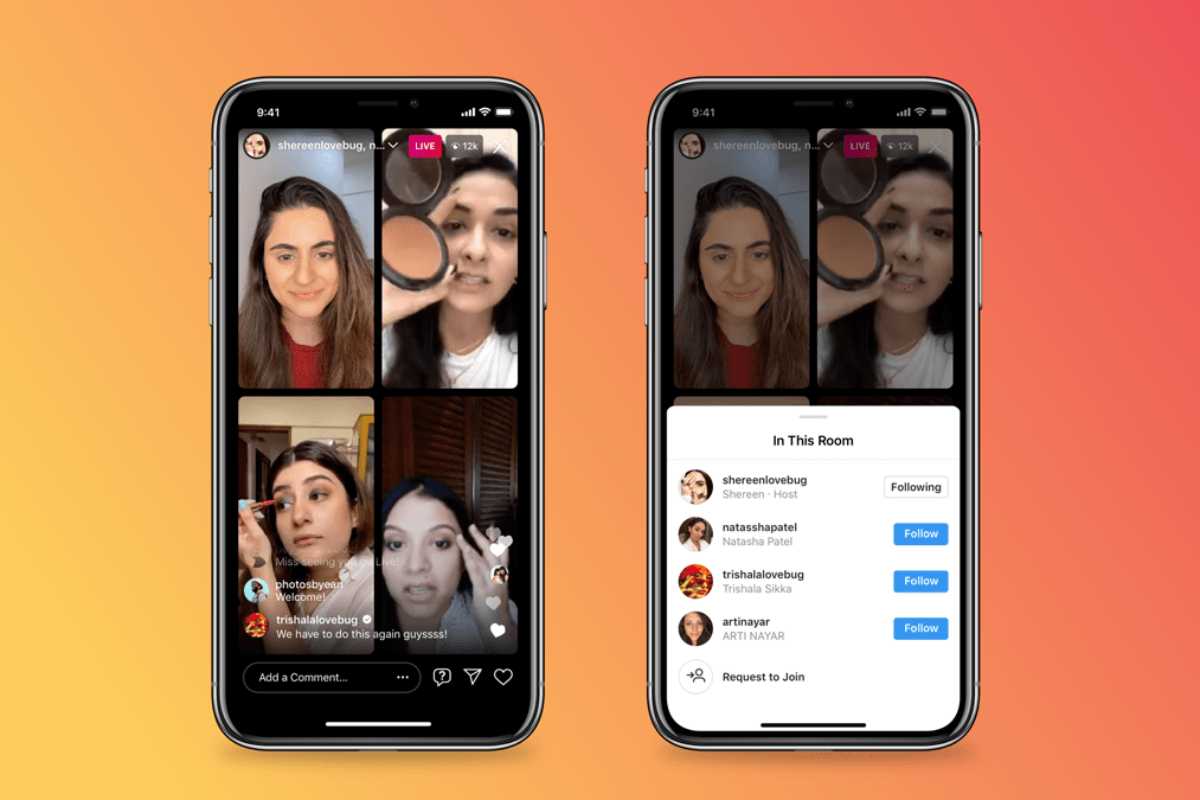
    Instagram is further improving the live features of its app with new functionalities that allow up to four people to go live at the same time. The new feature is called Live Rooms and bumps up the number of Instagram users that could go live at the same time from two to four.

    Furthermore, Instagram revealed that Live Rooms offers creators additional ways to earn money and built their businesses. For example, Live viewers will now be able to purchase badges for the hosts and use other interactive features like Shopping and Live Fundraisers.

    At the moment, Live Rooms lacks any moderation controls, but Instagram announced that it’s “exploring more interactive tools such as offering moderator controls and audio features.” However, these won’t be available until at least a few months from now.

    Instagram users who’d like to take advantage of the new Live Room feature can easily swipe left and pick the Live camera option. Next, simply add a title and click on the Rooms icon to add your friends who you wish to join the live chat. As mentioned earlier, you can add up to three other people when you start a Live Room, but you don’t have to add them all at once.