Tag: facebook

  • Facebook opens its first pop-up store in Hong Kong

    Facebook opens its first pop-up store in Hong Kong

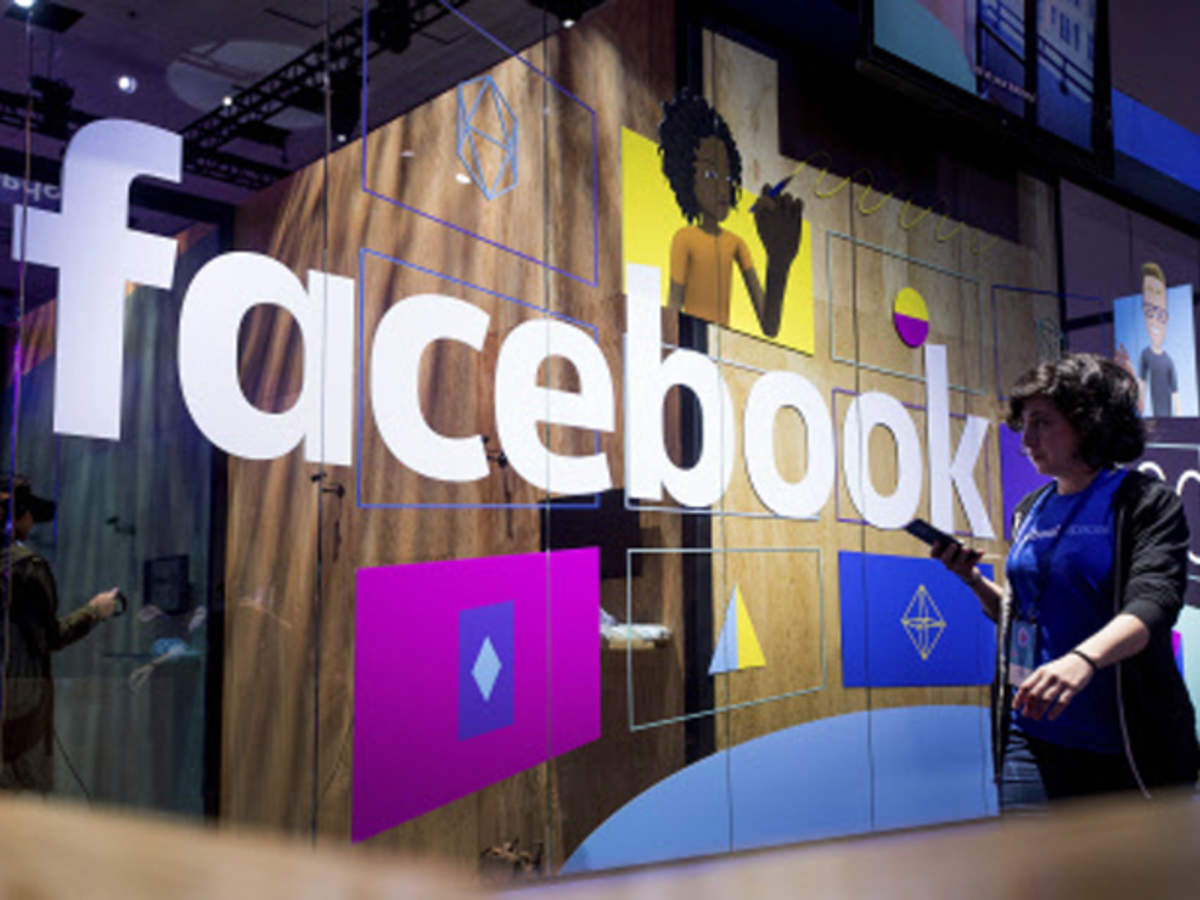
    Facebook has opened doors to its first pop-up store in Hong Kong to educate consumers on how to personalize their Facebook experience and unlock exciting possibilities while maintaining their online privacy and safety. From December 3 to 7, Preface Coffee & Wine in Central, the F&B and lifestyle concept space, will be transformed into a temporary “Facebook home” to showcase the true benefits of technology and demonstrate the different ways users can personalize their Facebook – the way they want it – through digital experience and AR filters.

    Inspired by the way people customize their homes, Facebook last week launched “Your Profile, Your  Home” a digital consumer experience to educate people on Facebook settings that enable personalization, and to reinforce Facebook’s commitment to protecting the privacy and safety of users.

    Along with Preface Coding, Facebook has transformed Preface Coffee & Wine (Central) into a pop-up store that showcases the app’s privacy control and settings. With the tagline “What makes a perfect home?”, the pop-up store is set to be the newest Instagrammable spot in Central. Renowned local celebrity Alfred Hui attended the kick-off event to demonstrate the customizable settings.

    From December 3 to 7, anyone can visit the “Your Profile, Your Home” pop-up store and play with two fun and interactive AR filters developed by Preface Coding, including photo-taking with an avatar of Alfred Hui. Visitors can also immerse themselves in the “Your Profile, Your Home” digital experience, in which they’ll have tools to build and design their very own home as they explore the exciting possibilities of personalization on Facebook. Visitors can test their knowledge of Facebook’s new privacy settings with an on-site quiz; the first 10 winners of each day will receive Alfred Hui’s autographed gift.

    In November, Meta, also formerly known as Facebook said it plans to remove its detailed targeting options from January 2022 onwards. With this move, advertisers will not be able to target users who have interacted with content related to health causes, sexual orientation, religious practices, political beliefs and social issues, among others.

    While this move limits the way Meta’s targeting tools can be abused, VP of product marketing, Graham Mudd said the company is aware that this change may negatively impact some businesses and organizations. “We have heard concerns from experts that targeting options such as these could be used in ways that lead to negative experiences for people in underrepresented groups,” he explained. He added, “It is important to note that the interest targeting options we are removing are not based on people’s physical characteristics or personal attributes, but instead on things like people’s interactions with content on our platform.”

    According to Mudd, this decision was not simple and required a balance of competing interests where there was advocacy in both directions. While some of Meta’s advertising partners have expressed concerns about these targeting options going away because of its ability to help generate positive societal change, others understand the decision to remove them. He added, “Even after we update our targeting options, people may still see ad content they aren’t interested in, which is why we are also working to expand the control that allows people to choose to see fewer ads about certain types of content. Today, people can opt to see fewer ads related to politics, parenting, alcohol, and pets. Early next year, we will be giving people control of more types of ad content, including gambling and weight loss, among others.”

    Meanwhile, Meta said it will maintain its commitment to helping small businesses, non-profits, and advocacy groups reach their audiences. Meta will be working to expand the control that allows users to choose to see fewer ads about certain types of content, said Mudd. Today, users are able to opt to see fewer ads related to topics such as politics, parenting, alcohol and pets. Early next year, Meta aims to give users control on more types ad content which includes gambling and weight-loss, among others.
  • Messenger to start testing bill splitting feature in the US

    Messenger to start testing bill splitting feature in the US

    Recapping everything that’s been released from the beginning of the year, Messenger revealed a couple of surprises that haven’t yet been implemented. One of these surprises is a sneak peek at the bill splitting feature that Messenger will be testing in the United States.

    Starting next week, Messenger users in the US will be able to test Split Payments, a free way to share the cost of bills and expenses. If you’re selected for the testing sample, you can find the Split Payments feature by clicking the “Get Started” button in a group chat or the Payments Hub in Messenger.

    Any bill can be split evenly, but Messenger users can also modify the contribution amount for each individual in the chat, with or without themselves included. All requests will be sent and viewable in the group chat thread after entering a personalized message and confirming Facebook Pay details.

    Messenger doesn’t say when Split Payments will be available for everyone, but if we were to guess, they will probably be ready for prime time early next year.

  • Apple and Meta/Facebook war is coming

    Apple and Meta/Facebook war is coming

    There is no denying that Apple and Google are rivals. Think of all the battles they have fought on the field over the dead wallets and credit cards of consumers. There is the iOS vs. Android battle which has been turned by consumers posting on tech forums into the Uncivil War. There are competing apps such as the up-and-coming Apple Maps vs. the currently reigning champion, Google Maps.
    And now that Google has taken the Pixel to a new level for hardware, the Pixel 6 series is a true iPhone challenger. But as Bloomberg’s Mark Gurman reminds us in the latest edition of his weekly Power On newsletter, Apple has a newer rivalry that might lead to another tech war. This rival is Meta Platforms Inc., the company you probably still think of as Facebook.
    It’s not that Facebook and Apple haven’t had verbal battles before and we all remember when Apple CEO Tim Cook told the media that he would never make his customer the product like Facebook does (this came in the aftermath of the Cambridge Analytica scandal that saw 87 million Facebook subscribers have their personal data sold without their permission). Facebook CEO Mark Zuckerberg criticized Apple’s App Tracking Transparency feature for damaging small businesses.
    But now it appears as though the Facebook-Apple skirmish will be more than just a war of words. Back in October, we passed along a photo of a smartwatch that Meta is supposedly going to release next year. With looks borrowed from Apple, the upcoming wearable will also include a camera for video chats. As Gurman points out, if Meta can successfully integrate video chat with its timepiece, Apple will have no choice but to add a similar feature for the Apple Watch using its FaceTime platform.
    Both Apple and Facebook are rumored to release mixed-reality headsets next year. Mixed reality includes both virtual realities (VR) and augmented reality (AR). Facebook, which already makes the Oculus brand of VR headsets, calls its mixed reality device by the codename of Project Cambria. Apple’s mixed-reality product is expected to be a premium device sold at a premium price (in the area of $2,000 Gurman forecasts) vs. the Meta device which will probably be more affordable than Apple’s headset.
    Virtual reality immerses the headset wearer and makes him feel as though he is in a different location and even a different time period. Augmented reality places an overlay over a real-time image. Both companies could feature content for their mixed reality headsets that would allow users to exercise at different venues using VR. As Gurman suggests, Apple could make its Fitness+ exercise app available for its mixed reality headset.
    One area where Apple may or may not decide to get in Meta’s face is with home products. Meta has its smart display and video chat products that it calls Portal and even offers a battery-powered mobile unit called Portal Go. These devices use Facebook Messenger and WhatsApp for video chat and Alexa as its voice-activated digital assistant.
    Apple has its HomePod smart speakers. The full-sized model was released at a ridiculously high price of $349 before Apple slashed the price. A year ago it launched the HomePod mini, which at $99 has seen more demand than the OG model ever did. Gurman says that Apple is about to get more involved in such devices and points out two such products that Apple is rumored to be working on.
    One of the two devices is a smart screen that might end up competing with the Portal lineup, and the Amazon Echo Show. The other product reportedly combines a speaker and a TV set-top box with a camera.
    While the Apple-Google battles have been genteel for the most part, the Apple-Meta battles should be closer to a rough and tumble street fight.
  • Meta looking into launching its own retail stores in the US

    Meta looking into launching its own retail stores in the US

    Facebook’s parent company Meta is looking into opening its own retail stores in the United States, according to a report.

    The stores will largely be used to show off the business’ physical goods, such as its virtual reality headsets and video chat tablets which are already sold in other chains across the country, and allow customers to try them out in a bid to get them hooked into Meta’s forthcoming ‘metaverse’.

    “Today we are seen as a social media company, but in our DNA we are a company that builds technology to connect people, and the metaverse is the next frontier just like social networking was when we got started,” Meta CEO Mark Zuckerberg said when announcing Facebook’s name change.

    The first Meta flagship store is likely slated for Burlingame, California. The store was likely going to be called the ‘Facebook Store’, though it remains to be seen if this will still be the case after the business’ rebrand last week.

    Meta is late to the party on launching its own physical stores, with fellow tech giants Amazon and Google both having launched their own stores in the last few years.

    However, with its roughly 2.9 billion monthly active Facebook users globally as of the third quarter of 2021 (according to Statista), the business has a large pool of potential consumers to market itself toward.

  • Facebook has a new corporate name and vision

    Facebook has a new corporate name and vision

    As expected, Facebook today announced a new corporate name. Earlier today during the Facebook Connect event, the company said that it will now be known as Meta. Keep in mind that the website and the app will not have a new name and will still be known as Facebook.

    CEO Mark Zuckerberg said that the Facebook name isn’t a valid reflection of what the company does now and said that Facebook is only one of its products. “We are a company that builds technology to connect. Together, we can finally put people at the center of our technology. And together, we can unlock a massively bigger creator economy.”

    The executive added that “But over time, I hope we are seen as a metaverse company.” A metaverse is “a virtual-reality space in which users can interact with a computer-generated environment and other users.”

    In a blog post disseminated today, Zuckerberg wrote, “The next platform will be even more immersive — an embodied internet where you’re in the experience, not just looking at it. We call this the metaverse, and it will touch every product we build.”

    Zuckerberg added, “The defining quality of the metaverse will be a feeling of presence — like you are right there with another person or in another place. Feeling truly present with another person is the ultimate dream of social technology. That is why we are focused on building this. In the metaverse, you’ll be able to do almost anything you can imagine — get together with friends and family, work, learn, play, shop, create — as well as completely new experiences that don’t really fit how we think about computers or phones today.”

    In the blog, the beleaguered executive writes about a future where you can teleport as a hologram and arrive at your office without a commute. Or attend a concert, or even visit your parents without losing the time it takes to travel and deal with traffic. Many of the things that are part of the physical world right now could end up being holograms in the future such as “your TV, your perfect work setup with multiple monitors, your board games and more — instead of physical things assembled in factories, they’ll be holograms designed by creators around the world.”

    According to the Facebook co-founder, “You’ll move across these experiences on different devices — augmented reality glasses to stay present in the physical world, virtual reality to be fully immersed, and phones and computers to jump in from existing platforms. This isn’t about spending more time on screens; it’s about making the time we already spend better.” He repeated a comment made in his original founder’s letter: “We don’t build services to make money; we make money to build better services.”

    That last comment may not be sincere. Recently, Facebook whistleblower Frances Haugen said that the company would rather make money than change its algorithm and make the world a safer place. Haugen stated, “Facebook makes more money when you consume more content. People enjoy engaging with things that elicit an emotional reaction. And the more anger that they get exposed to, the more they interact and the more they consume.”

    Zuckerberg appears to realize the need for change, and not just changing the company’s name. He says that privacy and safety need to be built into the metaverse from the beginning. And from now on, the company will be metaverse first instead of Facebook first. Eventually, you won’t need to have a Facebook account to use the company’s other services. He says, “As our new brand starts showing up in our products, I hope people around the world come to know the Meta brand and the future we stand for.”

    By the way, for you Facebook stock traders, the company’s stock symbol will change from FB to MVRS.

  • Facebook criticizes App Tracking Transparency on iPhones

    Facebook criticizes App Tracking Transparency on iPhones

    When Apple introduced App Tracking Transparency back with iOS 14.5, a feature that allows iPhone users to opt-out of ad-related activity tracking on their phones, Facebook was not happy with it. Back then, Facebook criticized the new privacy feature claiming it would hurt small businesses’ advertising. Now, Mark Zuckerberg is at it again.

    On Monday, Facebook reported its third-quarter financial results that showed $29.1 billion in revenue from advertisements. Despite these results though, the company’s CEO Mark Zuckerberg has remained upset about Apple’s privacy changes that prevented ad tracking if the user didn’t want to be tracked. Reportedly, he stated in an investor call that Apple has been hurting not only Facebook but “millions of small businesses” with these changes.

    Zuckerberg stated that Facebook experienced “revenue headwinds” because of Apple’s App Tracking transparency and its impact on the advertising business. He criticized the iOS privacy features stating that they affect small businesses that rely on ad platforms in the “difficult times”.

    He also said that despite the impact these changes had on the social media platform, the company will learn to navigate the “headwinds” over time with investments Facebook is making today.

    Another participant in the investor call was Facebook COO Sheryl Sandberg stated that the iOS privacy changes advantaged Apple’s own advertising business. Additionally, Sandberg stated that now it is more difficult to target an ad or measure campaign results when it comes to iPhone and iPad users.

    Apple’s App Tracking Transparency, which was introduced back in April with iOS 14.5. The feature presented iPhone users with a prompt to opt-out of advertisement tracking on apps. If people wanted, they could click on a button and thus prevent tracking so they won’t receive targeted apps. Understandably, a large number of iPhone users opted out of tracking.

    Companies such as Facebook which rely heavily on advertisements disagreed with the new change ever since it was introduced back in April. Facebook criticized Apple on the move, stating multiple times that this change was hurting small businesses.

    It was not only Facebook complaining though. Last week, Snap’s CEO also stated the company’s revenue from Snapchat was affected by the new App Tracking Transparency technology. However, Snap’s CEO stated that these changes might be positive in the long run.

    By September of this year, according to data from analysis firm Statista, only 21% of iPhone users have decided to opt-in for app tracking and to allow for their activity to be tracked in order to receive targeted ads. The remaining percentage is, understandably, for iPhone users that have opted out and prevented apps from tracking them for ads.

    The App Tracking Transparency feature has now started to change the advertising market across the mobile industry. Right now, many advertisers focus primarily on Android devices, as many iPhone users have decided that they do not wish to be tracked for targeted ads.

    Apparently, it’s not only advertisers like Facebook that are affected by this change. A couple of months ago, we reported that the new App Tracking Transparency feature is also changing the mobile game industry and is influencing the way game makers have to go about in order to advertise in games, as they cannot be targeted to specific users.

    Recently, we reported on another fact: Apple’s in-house advertisement business has been experienced growth since the change. Apple has an ad service named Search Ads and it has grown since App Tracking Transparency was introduced on iOS devices.

  • Facebook blames Monday’s outage on “an error of our own making

    Facebook blames Monday’s outage on “an error of our own making

    Yesterday’s six-hour outage affecting Facebook, Facebook Messenger, Instagram, and Whats App had a severe impact on more than just users of those apps. The outage might have cost Facebook over $100 million in lost advertising revenue as the company happens to own all of the aforementioned apps.

    The company points the finger of blame at itself and says that the outage started when Facebook engineers were working on “routine maintenance.” In a blog post written by the firm’s VP of infrastructure, Santosh Janardhan, the executive says that the company is trying to learn from the outage so that it doesn’t get repeated.

    Janardham adds, “This outage was triggered by the system that manages our global backbone network capacity. The backbone is the network Facebook has built to connect all our computing facilities together, which consists of tens of thousands of miles of fiber-optic cables crossing the globe and linking all our data centers.” Data centers, like Facebook users, come in different sizes and shapes.

    Some data centers are big buildings that house huge numbers of computers that store data and do the heavy lifting to keep the network running. Others are smaller facilities where device owners’ requests for data are sent and then moved using Facebook’s backbone network to larger data centers. That is where the data that your app needs is discovered and sent to your phone.

    Hours after the outage started, Facebook’s shares declined to reduce the worth of co-founder and CEO Mark Zuckerberg by $6 billion. Over the last month, Facebook shares declined by 12.88%  dropping Zuckerberg’s personal worth down from nearly $140 billion to $120.9 billion. However, we don’t expect to see Facebook run a bake sale for its beleaguered chief executive.

    Routers are used to determine where all of the incoming and outgoing data should be sent. And occasionally Facebook engineers need to take the backbone offline for maintenance. And yesterday, a command was issued that was supposed to check the available capacity of Facebook’s backbone. Instead, it accidentally took down all of the connections in the backbone network which disconnected Facebook’s data centers around the world.

    Facebook has a system in place that is designed to audit commands to make sure that an accidental outage like the one that went down yesterday doesn’t take place. But the audit tool had its own bug that prevented it from stopping the command from shutting down the system.

    A second problem affected Facebook’s DNS servers. As stated in today’s blog post, “The end result was that our DNS servers became unreachable even though they were still operational. This made it impossible for the rest of the internet to find our servers.” Facebook notes that everything happened so fast that its engineers had two big problems: because its networks were down, the data centers could not be accessed by normal means and the loss of DNS broke the tools that Facebook would normally use to investigate and fix outages.

    Once Facebook was able to restore its backbone network connectivity, everything came back up. But Facebook had another problem to consider. If it turned all of its services back on at once, the amount of traffic running through the system could cause the system to crash again. But thanks to the “storm drills” that Facebook has been practicing, it was well prepared to handle the incident.

    The social media company says that it will learn from the outage so that it never happens again. “Every failure like this is an opportunity to learn and get better, and there’s plenty for us to learn from this one. After every issue, small and large, we do an extensive review process to understand how we can make our systems more resilient. That process is already underway.”

  • Facebook, Instagram, WhatsApp, Messenger are all up again

    Facebook, Instagram, WhatsApp, Messenger are all up again

    If you’re having a problem using Instagram, WhatsApp, Messenger, and Facebook this morning, it’s not you. It’s them. subscribers to the two social media sites and the two messenger apps have been having problems refreshing their screens this morning as a worldwide outage is affecting those apps. These sites are also not working on desktop devices as well.

    If you’re wondering why those four sites are having problems at the same time, it might have slipped your mind that Facebook owns Instagram, Messenger, and WhatsApp. DownDetector shows that the outages started this morning at 11:45 am ET. The number of complaints about the loss of Facebook connectivity surged to 124,000 on DownDetector from 22 in just 30 minutes.

    Facebook was forced to turn to Twitter to issue a statement that says “We’re aware that some people are having trouble accessing our apps and products. We’re working to get things back to normal as quickly as possible, and we apologize for any inconvenience.”

    Facebook issuing a tweet to make an important statement about a major worldwide outage is like the CEO of Pepsi enjoying a Coke at lunch. Or imagine if Tim Cook was caught with the Samsung Galaxy S22 Ultra in his hands.

    Third-party experts believe that the problem is related to a change made to networking instructions that are used globally to access Facebook’s systems. It could take some time for everything to return to normal for Facebook and its apps. That’s because the outage has been described by DownDetector as “widespread and global in scale.

    An internal memo sent to all Facebook employees says that the company’s global security team “was notified of a system outage affecting all Facebook internal systems and tools.”

    Those familiar with what is going on inside the company say that the outage has also impacted Facebook’s internal systems as well as with voice calls and work apps used for calendar appointments. The office staff is reportedly communicating with each other via Zoom.

    In a company memo, Facebook’s global security operations center said that the outage was “a HIGH risk to the people, MODERATE risk to Assets and a HIGH risk to the reputation of Facebook.” There have been messages posted on social media that have tied today’s global outage with some of the scrutiny and bad publicity Facebook has recently received. On CBS-TV’s 60 Minutes newsmagazine, a Facebook whistle-blower named Frances Haugen, who worked on the company’s civic misinformation team, said Facebook would always choose “profit over safety.”

    Among those who enjoy passing along conspiracy theories, the timing of the outage seems suspicious having occurred the morning after Haugen’s interview on national television. Those who believe that the outage was created on purpose by Facebook say that the company didn’t want subscribers posting negative comments about.

    Instagram was acquired by Facebook in 2012 for $1 billion in a deal that many consider the most lucrative in tech history. Today, Instagram is valued at over $100 billion. A little more than two years later, Facebook closed on its acquisition of WhatsApp, a deal that was valued at over $21 billion by the time it closed.

    The outage has currently been going on for over five hours which is unusually long for such a service disruption. Tom Daly, a networking expert who co-founded internet company Dyn, explained this by noting that “They have a massive infrastructure with a massive amount of complexity and they have to resolve all of that complexity to recover.”

  • Facebook has always known how toxic Instagram can be

    Facebook has always known how toxic Instagram can be

    Most of us social media users are aware it’s not a good idea to be drawn in too much by the “perfect lifestyle,” “perfect body” illusions that Instagram throws at us on a daily basis. Doing so often leads to a lack of satisfaction and disappointment in ourselves, so it’s always a good idea to know when to time out from the platform.

    However, there is one group of users that is particularly vulnerable to Instagram’s deceptions, and that is young teenage girls, who are often prone to body image issues triggered by the bombardment of such unrealistic figures. And Facebook has known about it all along, according to recently discovered documents.

    A detailed report by Wall Street Journal elaborates on these details. Apparently, Facebook has been very well aware of this damage caused to young girls at least for the last three years, with researchers constantly bringing up very worrying statistics—which have been kept secret and seemingly ignored.

    Facebook’s internal findings were discovered by WSJ , and they show that Facebook was in on everything, even while downplaying the harsh reality in public, and refusing to share any of its research openly.

    Various slides from multiple presentations from past research laid bare the harm done. “We make body image issues worse for one in three teen girls,” openly declared one 2019 slide.

    Putting this harm into solid numbers, another slide from a 2020 presentation revealed that “thirty-two percent of teen girls said that when they felt bad about their bodies, Instagram made them feel worse. Comparisons on Instagram can change how young women view and describe themselves.”

    “Teens blame Instagram for increases in the rate of anxiety and depression,” the presentation posted to Facebook’s internal message board continued. “This reaction was unprompted and consistent across all groups.”

    If this doesn’t sound bad enough, the findings get worse. According to a different presentation, Facebook’s researchers had discovered that among young people who struggle with suicidal thoughts, 13% of British teens and 6% of American teens felt that the source of these thoughts of self-destruction was none other than Instagram.

    WSJ’s story is accompanied by the testimony of one Anastasia Vlasova from Virginia, who signed up to the social media platform at 13. Not long after, she found herself consuming unrealistic body images and ideals a full three hours a day. By 18, Anastasia was in therapy struggling with an eating disorder.

    While back in May, Adam Mosseri (head of Instagram) had reported that Instagram’s negative effects on young teens was actually “quite small,” he seems to have turned over a new leaf after these new findings became public.

    “In no way do I mean to diminish these issue Some of the issues mentioned in this story aren’t necessarily widespread, but their impact on people may be huge.”

    “I’ve been pushing very hard for us to embrace our responsibilities more broadly,” Mosseri insisted recently. “For me, this isn’t dirty laundry. I’m actually very proud of this research,”

    It remains to be seen whether or not initiatives will be taken in the coming future to actually change these statistics. Making these findings public about the reality of Instagram’s effect on young people would be a start, for certain.

  • Instagram CEO says that there are no plans to create a native iPad app

    Instagram CEO says that there are no plans to create a native iPad app

    If you don’t own an iPad, you might not know that there is not an Instagram app for Apple’s tablets. But that might not be surprising since stablemate WhatsApp is only now developing an app for the iPad. Instagram chief Adam Mosseri responded to the question “Where’s the Instagram iPad app?” by saying, “I spent a bit of a time on an iPad because I was on a flight, but still no iPad app for Instagram. It would be nice to do, but there’s a lot to do and only so many people, so it hasn’t made the cut.”

    This response doesn’t make sense to many iPad owners. And back in June, Instagram started to allow those accessing the site from their computer to post to it from the desktop. Once iPadOS 15 is released (which could happen as soon as this coming week), a change will allow iPhone apps without an iPad counterpart to be viewed in landscape mode. The scaled-up iPhone version of Instagram will be able to switch orientation on the iPad following the release of iPadOS 15.

    Back in 2010 when the iPad was brand new, Apple wanted to bring apps to the tablet that were available on the iPhone but not yet developed for the iPad. This way iPhone users could purchase an iPad with the knowledge that their favorite apps would be available.

    Currently, Instagram does have a pair of camera apps for the Apple iPad. Hyperlapse creates time-lapse videos using Instagram’s in-house stabilization. This allows users to make time-lapse videos without requiring the use of a tripod or other gear. An entire sunrise can be captured in just a 10-second video and an entire video can be sped up to 12 times normal. Videos can be shared seamlessly over Instagram and Facebook or saved on the camera roll to be shared with any platform.

    The other Instagram camera app available for the iPad is Boomerang. With this app, you can record looping videos. As the App Store listing says, “Find something (or someone!) that’s moving, or create a video selfie by switching to the front-facing camera. There’s just one button. Tap it once and Boomerang does the rest: shoots a burst of 10 photos and turns them into a delightful mini video. Share it on Facebook and Instagram right from the app, or save your video to your camera roll to share later.”

    As delightful as this sounds, iPad users would prefer to have an Instagram app made specifically for the tablet. While Facebook and Messenger do have iPad versions of their apps, it is the rest of the Facebook app family that acts as though the iPad doesn’t exist. The WhatsApp for iPad native app is supposedly incoming but has yet to surface, and of course, there is the lack of an Instagram app for the tablets.

    Facebook purchased WhatsApp in a transaction valued at over $21 billion when it closed in 2014. A couple of years earlier, Facebook purchased Instagram for $1 billion in a deal that has become one of the best investments ever made in the tech space. Bloomberg estimates that Instagram now has a current valuation of $100 billion providing Facebook with a huge paper profit.

    Originally a photo filter, Instagram matured to become more of a social media/messaging app. One of the biggest moves it made was to steal away Snapchat’s stories feature which allows pictures and videos to remain posted for 24 hours before they are removed. Ironically, Instagram’s version of stories has been much more successful than Snapchat’s and other apps have joined the club by offering their own stories-like feature.

  • Facebook, EssilorLuxottica unveil first smart glasses

    Facebook, EssilorLuxottica unveil first smart glasses

    Facebook launched its first smart glasses on Thursday in a step toward its aim of offering true augmented-reality spectacles.

    The glasses, which were created in partnership with Ray-Ban maker EssilorLuxottica, allow wearers to listen to music, take calls or capture photos and short videos and share them across Facebook’s services using a companion app. Facebook said the glasses line, called “Ray-Ban Stories,” would start at $299.

    The social media giant, which reported revenue of about $86 billion in 2020, makes most of its money from advertising but has invested heavily in virtual and augmented reality, developing hardware such as its Oculus VR headsets and working on wristband technologies to support augmented reality glasses.

    Facebook’s chief scientist said last year the company was five to 10 years away from being able to bring to market “true” AR glasses, which would superimpose virtual objects onto the wearer’s view of the real world.

    Major tech firms including Amazon.com, Alphabet Google, Microsoft, Apple and Snap have raced to develop various smart glasses products, but early offerings like Google Glass proved difficult to sell to consumers put off by high price points and design issues.

    Snap, which unveiled its smart Spectacles in 2016, this year launched AR glasses but they are not for sale and are offered only to AR creators. Snap’s CEO, Evan Spiegel, said in 2019 that he expected it would be a decade before consumers widely adopted AR smart glasses.

  • Microsoft’s Outlook for Android and iOS will no longer sync with Facebook calendar

    Microsoft’s Outlook for Android and iOS will no longer sync with Facebook calendar

    Microsoft has decided to remove one functionality from its Outlook for Android and iOS app: the ability to sync calendars. The good news is the change will only affect three services: Facebook, Meetup and Evernote.

    The Redmond giant put up a post to inform Outlook users on Android and iOS that beginning September 13, the app will no longer sync calendars from the three services mentioned above. No explanation has been given, but Microsoft promised to give users a 2-week reminder within the app, if they are currently syncing any of these calendars in Outlook.

    Apart from the fact that syncing with Facebook, Meetup and Evernote calendars will no longer be possible after September 13, the change will not affect Outlook mobile users in any other way.

    Microsoft hasn’t said whether or not the calendar sync functionality for these three services will ever return and didn’t offer any alternative solution. If you’re currently syncing Outlook calendar with any of these three services, you’ll be getting a reminder soon if you keep using the feature.

  • Twitter begins testing shopping feature on brand profile pages

    Twitter begins testing shopping feature on brand profile pages

    Twitter will begin allowing businesses to showcase products for sale at the top of their profile page, the social networking company said on Wednesday, as it seeks to grab a piece of the lucrative online shopping world.

    The San Francisco-based company is following in the footsteps of larger rival Facebook which opened a “Shops” feature last year to let consumers purchase products directly through Facebook and Instagram.

    Twitter said it will begin testing the new shopping feature with “a handful of brands” in the United States.

    Users can scroll through a carousel of products at the top of the brand’s profile. The customer can tap on a product and then pay through the retailer’s website.

    The test is a renewed attempt to offer shopping on Twitter. The company previously experimented with a “Buy Now” button and product pages in 2015.

  • Instagram tests banner reminding subscribers to use Facebook

    Instagram tests banner reminding subscribers to use Facebook

    In April 2012, Facebook purchased Instagram for $1 billion in cash and stock. At the time, many analysts felt that Facebook had overspent since Instagram was a photo-sharing app known mostly for its filters. But the last laugh belongs to Facebook as Instagram has matured to become one of the most visited social media destinations online with an estimated valuation of $102 billion.

    Instagram is testing a new banner at the top of users’ feeds that suggests that they check out features that are “only available” on Facebook. In a statement, an Instagram spokesperson said, “We’re testing a way to let people who have connected their Instagram accounts to Facebook know about features only available there, such as how to find a job, date online, buy and sell goods, or catch up on the latest news.”

    “A very small group” of Instagram users who have agreed to link their accounts will see the banner according to Facebook. Those Instagram users tired of being reminded over and over again that Facebook exists can dismiss the banner. And despite the limited nature of this test, it is another attempt by Facebook to bring the two apps closer together.

    It appears that the goal here is for Instagram, with over 500 million average daily users, to promote Facebook and bring users back to the mothership. Facebook had 1.88 billion daily average users during the first quarter of this year. An unnamed book published last year said that Facebook co-founder and CEO Mark Zuckerberg is jealous of Instagram’s success leading the executive to fret that Instagram could eventually cannibalize Facebook.

  • Facebook, Google, Twitter considering quiting Hong Kong

    Facebook, Google, Twitter considering quiting Hong Kong

    US tech giants Facebook, Google, and Twitter have privately warned the Hong Kong government that they could stop offering their services in the city if authorities proceed with planned changes to data protection laws, the Wall Street Journal reported on Monday, citing a letter.

    The laws could make the tech companies liable for the malicious sharing of individuals’ information online, the newspaper added.

    A letter sent by an industry group that includes the internet firms said companies are concerned that the planned rules to address “doxing” could put their staff at risk of criminal investigations or prosecutions related to what the firms’ users post online, Journal reported.

    Doxing is an act of revealing people’s personal information such as real name, home address or workplace online without the user’s permission.

    Facebook, Google, and Twitter did not immediately respond to Reuters’ requests for comment.

    Hong Kong’s Constitutional and Mainland Affairs Bureau in May proposed amendments to the city’s data-protection laws that it said were needed to combat doxing, a practice that was prevalent during 2019 protests in the city, the newspaper said.

    According to the newspaper, the letter dated June 25 was sent by the Singapore-based Asia Internet Coalition.

    “The only way to avoid these sanctions for technology companies would be to refrain from investing and offering the services in Hong Kong,” the Journal reported, quoting the letter.